
A new vehicle can feel perfect under showroom lighting, yet become frustrating once payments, commuting, maintenance, and family routines take over. Many regrets are not caused by mechanical failure. They begin with decisions that seemed reasonable during a rushed purchase but did not account for the full cost or daily reality of ownership.
These 19 car-buying decisions commonly create disappointment within the first year. Some leave owners paying more interest or insurance than expected. Others involve impractical interiors, unnecessary equipment, uncomfortable wheels, weak resale prospects, or charging arrangements that never fit real life. Recognizing these pressure points helps separate short-term excitement from a vehicle that can remain affordable, comfortable, and useful long after the new-car smell disappears.
Negotiating Around the Monthly Payment

A manageable monthly payment can make an expensive vehicle appear affordable. However, payments can be lowered by extending the loan, increasing the down payment, or moving fees into a different part of the transaction. None of those changes necessarily reduces the vehicle’s total cost. A buyer celebrating a $50 monthly reduction may later discover that the loan lasts an extra year and costs considerably more in interest.
The more useful figures are the out-the-door price, annual percentage rate, finance charge, loan length, and total of all payments. Consider two similar shoppers: one negotiates a lower purchase price, while the other asks only for a smaller payment. The second shopper may drive away happier that evening, but the first is more likely to remain satisfied after reviewing the loan balance several months later. Monthly affordability matters, but it should be evaluated alongside the complete financial commitment.
Choosing the Longest Available Loan Term

Seven- and eight-year car loans can place a newer or better-equipped vehicle within reach without dramatically raising the payment. The trade-off becomes clearer after the first year. A large share of the early payments may have gone toward interest, while depreciation has reduced the vehicle’s market value. The owner can remain financially tied to the car long after its warranty, technology, and initial appeal have faded.
Longer terms also reduce flexibility. A household facing a move, growing family, job change, or unexpected repair may want to sell the vehicle but discover that the loan balance is higher than its trade-in value. Federal Reserve analysis has linked longer-maturity auto loans with greater default risk, partly because borrowers can fall deeply into negative equity. A shorter term produces a larger payment, but it usually lowers total interest and allows ownership equity to build faster.
Rolling an Old Loan Balance Into the New Car

Trading a vehicle before its loan is paid off can seem painless when the dealership offers to handle the remaining balance. When the trade-in is worth less than the payoff amount, however, the difference does not disappear. It is often added to the next loan, meaning the buyer begins ownership already owing more than the replacement vehicle’s purchase price.
The Consumer Financial Protection Bureau found that borrowers who financed negative equity had average monthly payments of $626, compared with roughly $493 to $496 among borrowers without negative equity or with positive trade-in equity. Their average loan terms were also longer. Imagine replacing a $30,000 vehicle while carrying $5,000 from the previous loan: the new car may effectively begin as a $35,000 obligation before taxes, fees, or optional products. Within months, that financial baggage can feel more burdensome than the upgrade feels rewarding.
Accepting the First Financing Offer

Dealer financing can be competitive, especially when manufacturers offer promotional rates. The regret comes from assuming the first proposal must also be the best. Dealers may work with several lenders, and the rate presented to the customer can differ from the underlying rate offered by the financing institution. Without another approval for comparison, it is difficult to judge the offer.
Obtaining quotes from a bank, credit union, or online lender before visiting the dealership establishes a useful benchmark. Even a modest interest-rate difference can matter across a large loan lasting five or six years. Preapproval also separates two negotiations that are often blurred together: the vehicle price and the cost of borrowing. A buyer who arrives with outside financing can still accept the dealer’s proposal when it is better, but the choice becomes informed rather than automatic. Regret often begins when the financing conversation happens only after emotional commitment to the car.
Spending the Entire Transportation Budget on the Payment

A payment that fits the household budget does not prove that the vehicle itself is affordable. Insurance, fuel, registration, parking, tires, maintenance, repairs, and depreciation continue after the purchase paperwork is signed. These expenses can vary sharply between two vehicles carrying similar monthly payments, particularly when one requires premium fuel, larger tires, or more expensive insurance coverage.
AAA’s 2025 ownership analysis estimated that a typical new vehicle cost $11,577 annually, or about $965 per month, when depreciation, financing, insurance, fuel, taxes, maintenance, repairs, and tires were included. Actual costs differ by model and location, but the broader lesson is important. A household spending nearly all of its transportation allowance on the loan may have no cushion when registration arrives or a damaged tire needs immediate replacement. The car then feels unaffordable even though the original payment calculation appeared responsible.
Buying More Vehicle Than Daily Life Requires

Large SUVs and pickups can be reassuring during occasional vacations, home projects, or severe weather. Regret develops when the vehicle is selected around rare scenarios rather than ordinary driving. An owner may use the third row twice a year but pay for additional fuel, larger tires, tighter parking, higher purchase costs, and reduced maneuverability every day.
A realistic needs assessment should examine how many passengers usually travel, how often towing occurs, what cargo is carried, and where the vehicle will be parked. Renting a truck for an annual project or using a roof box for occasional trips may cost less than operating an oversized vehicle for years. Consumer-oriented ownership studies evaluate fuel, maintenance, insurance, depreciation, and financing because purchase price alone cannot capture these differences. The vehicle that handles every imaginable task is not always the one that handles normal life most comfortably or economically.
Assuming the Heaviest Vehicle Is Automatically the Safest

Vehicle size can influence crash protection, and extremely small, light vehicles generally provide less protection than larger ones. That does not mean safety improves indefinitely as weight increases. Some shoppers buy the largest model available because they assume every additional pound creates a meaningful advantage, only to spend more on fuel and maneuver a cumbersome vehicle without receiving the expected safety benefit.
A 2025 Insurance Institute for Highway Safety analysis found that occupant benefits from added weight diminish rapidly after a vehicle exceeds the fleet’s average weight. Extra weight on already-heavy vehicles can also increase the danger posed to occupants of other vehicles. Safety decisions should therefore consider crash-test performance, structural design, automatic emergency braking, visibility, handling, and vehicle compatibility—not weight alone. A well-rated midsize vehicle may deliver a more balanced safety package than an oversized model purchased primarily for a feeling of invulnerability.
Waiting Until After Purchase to Price Insurance

Insurance can turn a seemingly affordable upgrade into a monthly strain. Premiums depend on more than the driver’s record. Insurers may consider the vehicle’s price, repair costs, safety record, engine performance, theft exposure, and claims history. Two similarly priced models can therefore produce noticeably different quotes, particularly when one contains costly lighting, sensors, body panels, or theft-prone components.
The uncomfortable discovery often comes after the deposit has been paid. A buyer replaces an older sedan with a sporty crossover and expects only a small increase, then learns that the annual premium is several hundred dollars higher. At that point, reversing the purchase is difficult. Requesting model-specific insurance estimates before signing takes little time and makes comparisons more realistic. The lowest sticker price does not necessarily belong to the least expensive vehicle to insure, and advanced technology does not always translate into cheaper repairs.
Ignoring Depreciation and Likely Resale Demand

Most shoppers naturally focus on what a vehicle costs today. Far fewer consider what the same vehicle may be worth when it is sold or traded. Depreciation is not visible in a monthly bank statement, yet it can become one of ownership’s largest expenses. A model with heavy incentives, weak demand, an unpopular configuration, or a rapidly changing technology platform may lose value faster than expected.
This becomes painful when circumstances change during the first year. A buyer who must relocate or reduce expenses may discover that a nearly new vehicle cannot be sold without bringing cash to the transaction. AAA includes depreciation as one of the six major categories in its vehicle-cost analysis for good reason. Buyers do not need to predict future prices perfectly, but they can compare historical resale patterns, fleet sales, incentives, model popularity, and competing vehicles. A large discount at purchase can sometimes signal that the market is already struggling to support the original price.
Choosing Oversized Wheels for Appearance

Large alloy wheels can make an ordinary trim look more expensive, which explains why they feature prominently in showroom displays and advertising photographs. The drawbacks appear on imperfect roads. Larger wheels commonly use shorter tire sidewalls, leaving less rubber to absorb potholes and sharp pavement edges. The result may be a firmer ride and greater vulnerability to damaged tires or bent wheels.
Replacement costs can also surprise owners. Consumer Reports has repeatedly advised shoppers to examine tire size before buying because tires fitted to large wheels often cost more and may reduce ride comfort. A family choosing the appearance package may enjoy the stance for several weeks, then resent every jolt during the daily commute. Before paying for upgraded wheels, buyers should compare replacement-tire prices and drive the same model on both available wheel sizes. The visually modest setup may be quieter, softer, and considerably easier to maintain.
Paying for All-Wheel Drive Without a Clear Need
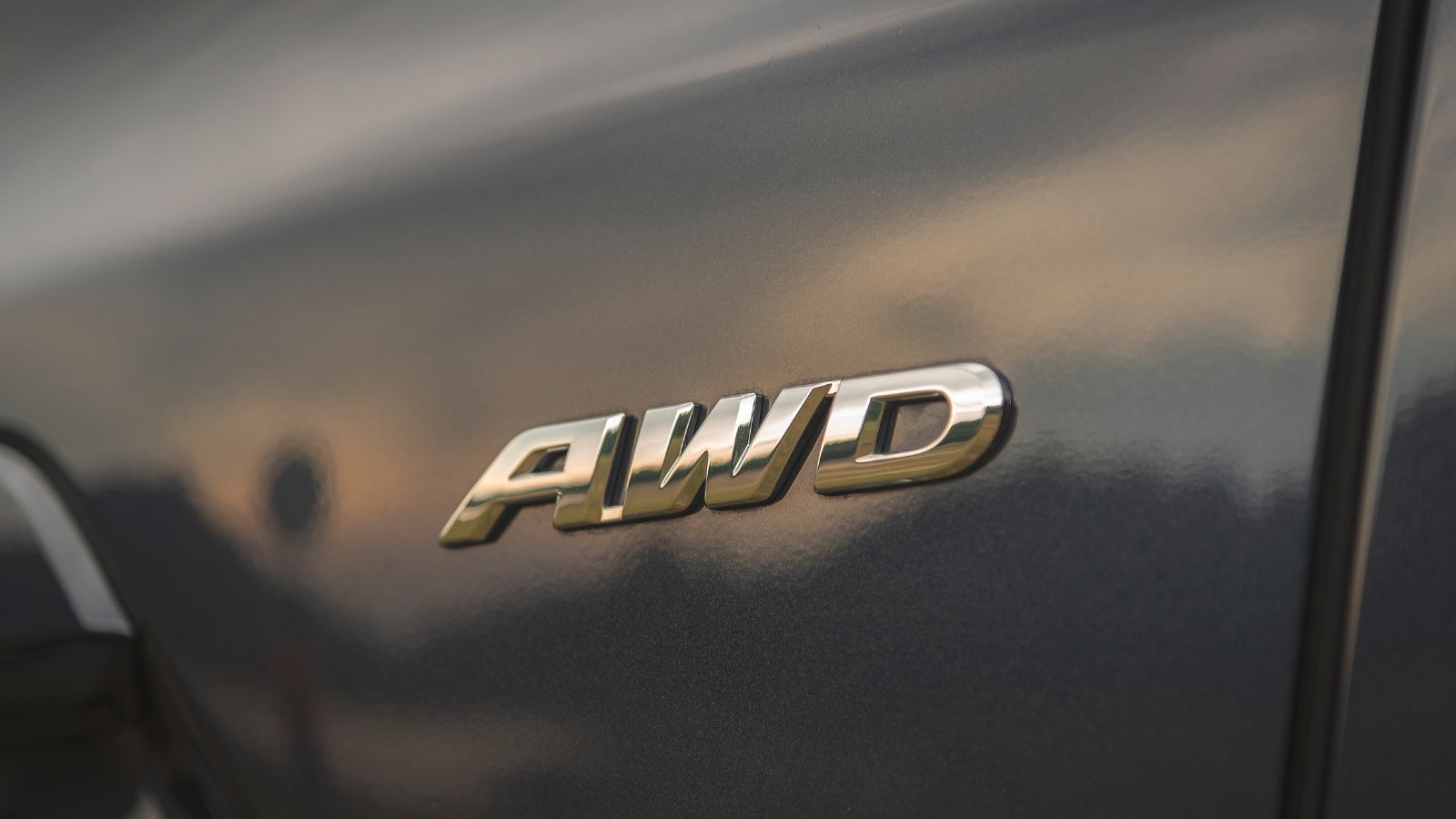
All-wheel drive is valuable for drivers who regularly face snow, steep unpaved roads, mud, or difficult launch conditions. It is less transformative for motorists travelling mainly on cleared streets in mild climates. AWD improves the ability to accelerate when traction is limited, but it cannot repeal the physics of braking or cornering. Tires, speed, and road conditions remain critical.
The system can also add purchase cost, mechanical complexity, weight, and fuel consumption. Consumer Reports has noted that winter tires on a front-wheel-drive car may cost less than the premium charged for AWD and that AWD does not automatically improve snow braking. The regret is often subtle: the owner pays for a capability that is rarely activated while accepting its costs every day. Buyers should compare identical two-wheel- and all-wheel-drive versions, examine local weather, and consider whether suitable seasonal tires would address the actual problem more effectively.
Taking Only a Brief, Easy Test Drive
A slow loop around a dealership rarely reveals how a vehicle behaves during real life. Wind noise may emerge at highway speed, seats may become uncomfortable after 30 minutes, visibility may deteriorate during lane changes, and an awkward touchscreen may demand too much attention. None of those problems is obvious while a salesperson explains features on a smooth neighbourhood road.
A meaningful test drive should recreate the owner’s normal conditions. That might include rough pavement, parking, merging, tight turns, hills, stop-and-go traffic, and a stretch at cruising speed. Drivers should adjust the seat and mirrors, connect a phone, operate climate controls, and test commonly used functions without coaching. A buyer once impressed by a panoramic roof may care far more, six months later, about a headrest that pushes forward or a transmission that hesitates in traffic. Comfort and usability cannot be confirmed from specifications alone.
Forgetting to Test Passenger and Cargo Fit

Published cargo volumes and seating capacities can be misleading in practice. A vehicle advertised for seven passengers may have a third row suitable mainly for children, while raising those seats may leave little room for luggage. Sloping roofs, narrow hatch openings, high cargo floors, and bulky wheel wells can make a supposedly spacious vehicle difficult to use.
Families should bring the equipment that matters: child seats, strollers, sports bags, mobility devices, work cases, or pet carriers. NHTSA notes that not every child restraint fits every vehicle and recommends testing compatibility. Adults who will regularly use the rear seats should sit there before the purchase rather than relying on the front-seat impression. A crossover can look generous in a brochure but become irritating when a stroller must be disassembled for every trip. Daily loading inconveniences are small individually, yet they are repeated often enough to become a major source of first-year regret.
Skipping an Independent Used-Car Inspection

A clean body, quiet engine, and fresh detailing can create confidence during a short visit. They cannot reveal every leak, worn suspension component, previous repair, cooling-system weakness, or electronic fault. Dealer inspections and certification programmes can provide value, but they are not substitutes for an evaluation performed by a mechanic chosen by the buyer.
The Federal Trade Commission recommends asking whether an independent mechanic may inspect a used vehicle on or off the lot. The cost of that inspection is small compared with repairs involving transmissions, engines, air-conditioning systems, or advanced electronics. A buyer may hesitate to spend money inspecting a vehicle that might not be purchased, yet that is precisely the purpose: paying a modest amount to avoid a far larger mistake. Resistance from a seller should also be treated as information. A sound vehicle should generally withstand professional scrutiny.
Relying on Appearance Instead of the Vehicle’s History

Vehicle-history reports are not perfect, but buying without one removes a valuable layer of protection. Reports may reveal salvage branding, ownership patterns, odometer records, accident information, or prior use that is not obvious during a walk-around. A polished vehicle can still have flood exposure, unresolved title complications, or damage repaired outside the standard insurance process.
The FTC advises used-car shoppers to obtain a history report, while NHTSA provides VIN-based recall searches. Buyers should also compare the report with service records, title documents, physical condition, and an independent inspection. A report showing no accident is not proof that an accident never occurred, and a minor recorded incident does not automatically make the vehicle unacceptable. The goal is consistency. When mileage, wear, ownership history, repairs, and the seller’s explanation do not align, the safest decision may be to keep shopping.
Agreeing to Add-Ons During the Final Paperwork

The finance office often presents optional products after hours of shopping and negotiation, when the buyer is tired and eager to leave. Service contracts, protection packages, key replacement, wheel coverage, paint treatments, theft products, and prepaid maintenance may each sound inexpensive when converted into a monthly amount. Combined and financed, however, they can add thousands of dollars plus interest.
The FTC has warned that buyers should identify unfamiliar charges, remove unwanted products, and focus on total cost rather than the payment alone. In one enforcement case, a cited dealership survey found that 83 percent of buyers had been charged add-on fees without authorization or through deception. Some products can be useful for particular owners, but the decision should be made after reading exclusions, deductibles, cancellation terms, and existing warranty coverage. A hurried signature is a poor substitute for comparing the product independently.
Choosing Fuel Economy That Does Not Match the Commute
A vehicle’s fuel-economy label is designed for comparison, not as a guarantee of a specific owner’s result. EPA estimates rely on standard assumptions, while actual consumption changes with speed, weather, traffic, trip length, load, maintenance, and driving style. A highly rated highway cruiser may disappoint during short, congested urban trips, just as a hybrid’s strengths may be less dramatic during constant high-speed travel.
EPA labels allow shoppers to personalize estimates using local fuel prices, annual mileage, and the proportion of city driving. That step can expose meaningful differences. A five-mile-per-gallon gap may seem minor during the showroom visit, but it repeats across every tank for years. Buyers should examine the city and highway figures separately and calculate fuel cost using their own commute. The most efficient vehicle on paper is not necessarily the most efficient choice for a particular routine, especially when premium fuel is recommended or required.
Buying an EV Without Securing Reliable Charging
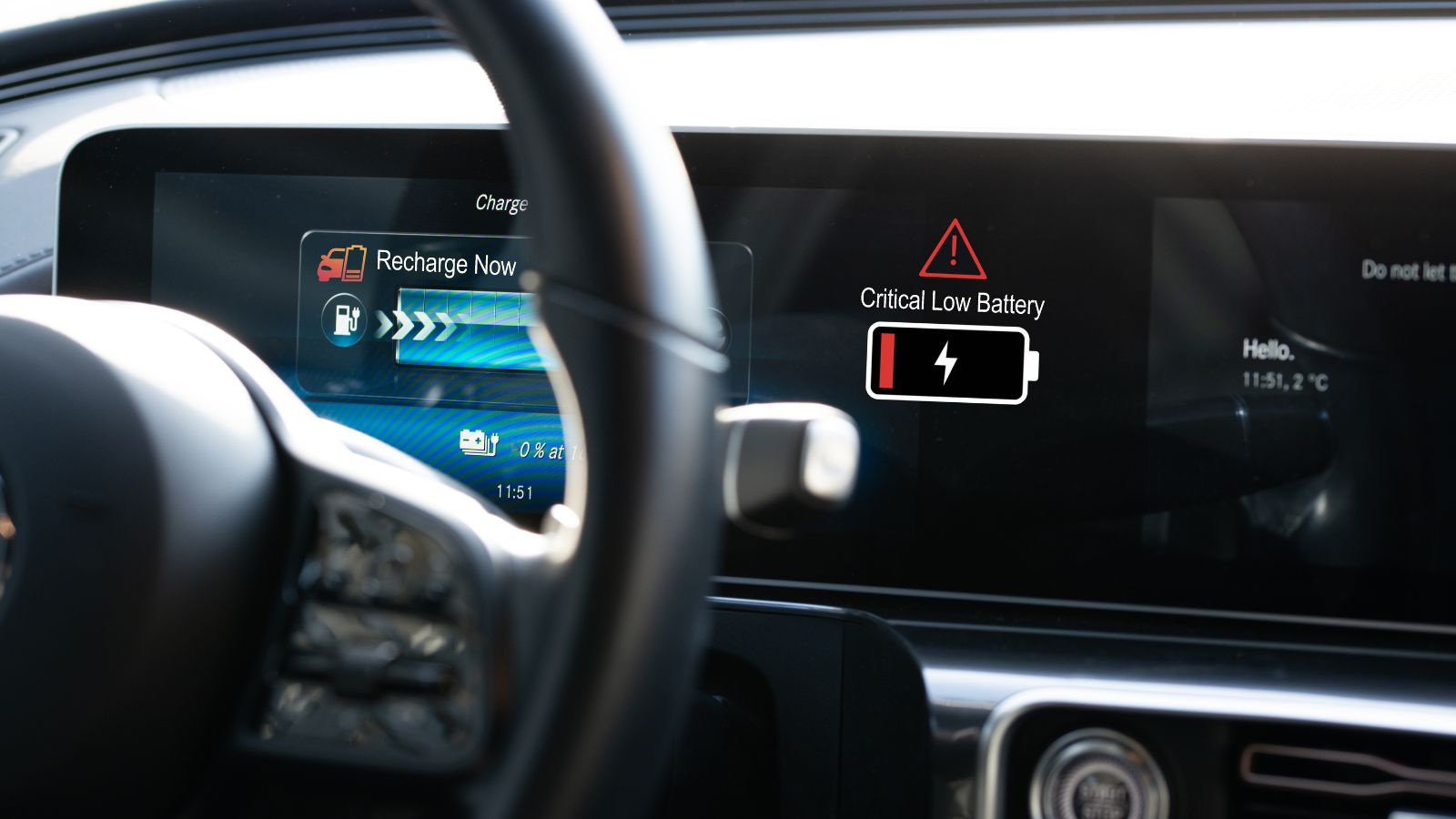
An electric vehicle can be convenient and economical when charging fits naturally into the owner’s routine. The experience is very different when the buyer cannot charge at home or work and must depend on busy, unreliable, or expensive public stations. A vehicle selected for low operating costs may instead require detours, waiting time, parking fees, and frequent planning.
The EPA describes home charging as typically the most time- and cost-effective approach, while energy research identifies access to home charging as an important factor in EV adoption. Before purchasing, buyers should confirm parking rights, electrical capacity, installation cost, charging speed, utility pricing, and alternatives during outages or equipment failures. Apartment residents may need written approval rather than a verbal assurance that charging will be added later. Public charging can support travel and occasional needs, but building an ownership plan around infrastructure that has not been tested can quickly turn enthusiasm into inconvenience.
Rushing Because the Deal Feels Scarce

Limited-time discounts, another interested buyer, low inventory, and end-of-day pressure can make immediate action feel necessary. Scarcity may be real, but it does not change whether the vehicle fits the budget, family, commute, or ownership plan. The cost of losing one deal is often smaller than the cost of spending years with the wrong car.
A rushed buyer is more likely to skip competing loan offers, overlook unwanted add-ons, shorten the test drive, or accept an out-the-door price that was never provided in writing. The FTC recommends obtaining written pricing so offers can be compared on an equal basis and last-minute charges can be identified. Walking away is not a failed negotiation; it is one of the buyer’s strongest safeguards. Another suitable vehicle will normally appear, while an unsuitable loan can remain for six or seven years. Urgency should never replace verification.
22 Things Canadians Do to Their Cars in Spring That Mechanics Hate

Spring brings relief to many Canadian drivers after months of snow, freezing temperatures, and icy roads that put serious strain on vehicles. As temperatures rise across the country, drivers begin washing cars, switching tires, and preparing vehicles for warmer weather and upcoming road trips. However, mechanics across Canada notice the same mistakes every spring when drivers attempt to recover from winter damage. Road salt, potholes, and harsh winter driving conditions often leave vehicles with hidden problems that drivers ignore. Some spring habits even create new mechanical issues that could have been avoided with proper maintenance. Here are 22 things Canadians do to their cars in spring that mechanics hate.

Alanna Rosen is an experienced content writer that focuses on many EV and educational content. Her articles are regularly published on Get CyberTrucked and syndicated on large publications.