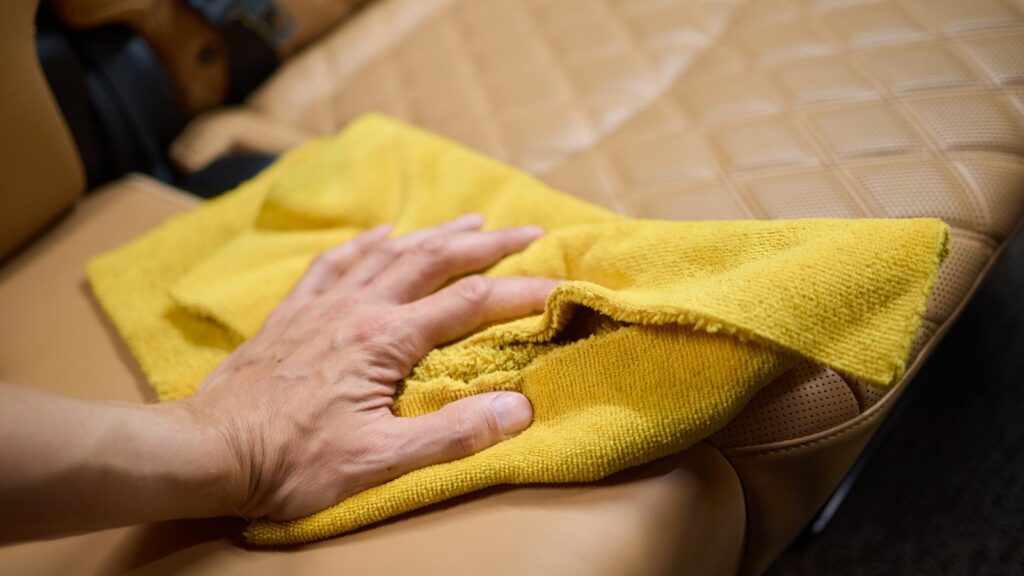
A spotless cabin can hide the beginnings of expensive cosmetic damage. The probt a powerful cleaner, generous spray, or vigorous scrub will work everywhere. Vehicle interiors combine delicate coatings, electronics, fabrics, plastics, leather, synthetic upholstery, glass, and safety equipment, each with different limits. A product that improves one surface can permanently haze, fade, soften, stain, or weaken another. These 12 problem areas explain how the wrong chemical, too much moisture, excessive heat, or an abrasive tool can turn routine cleaning into lasting damage—and why the safest results usually come from mild products, careful testing, minimal liquid, and the vehicle manufacturer’s instructions.
Using One Cleaner on Every Surface
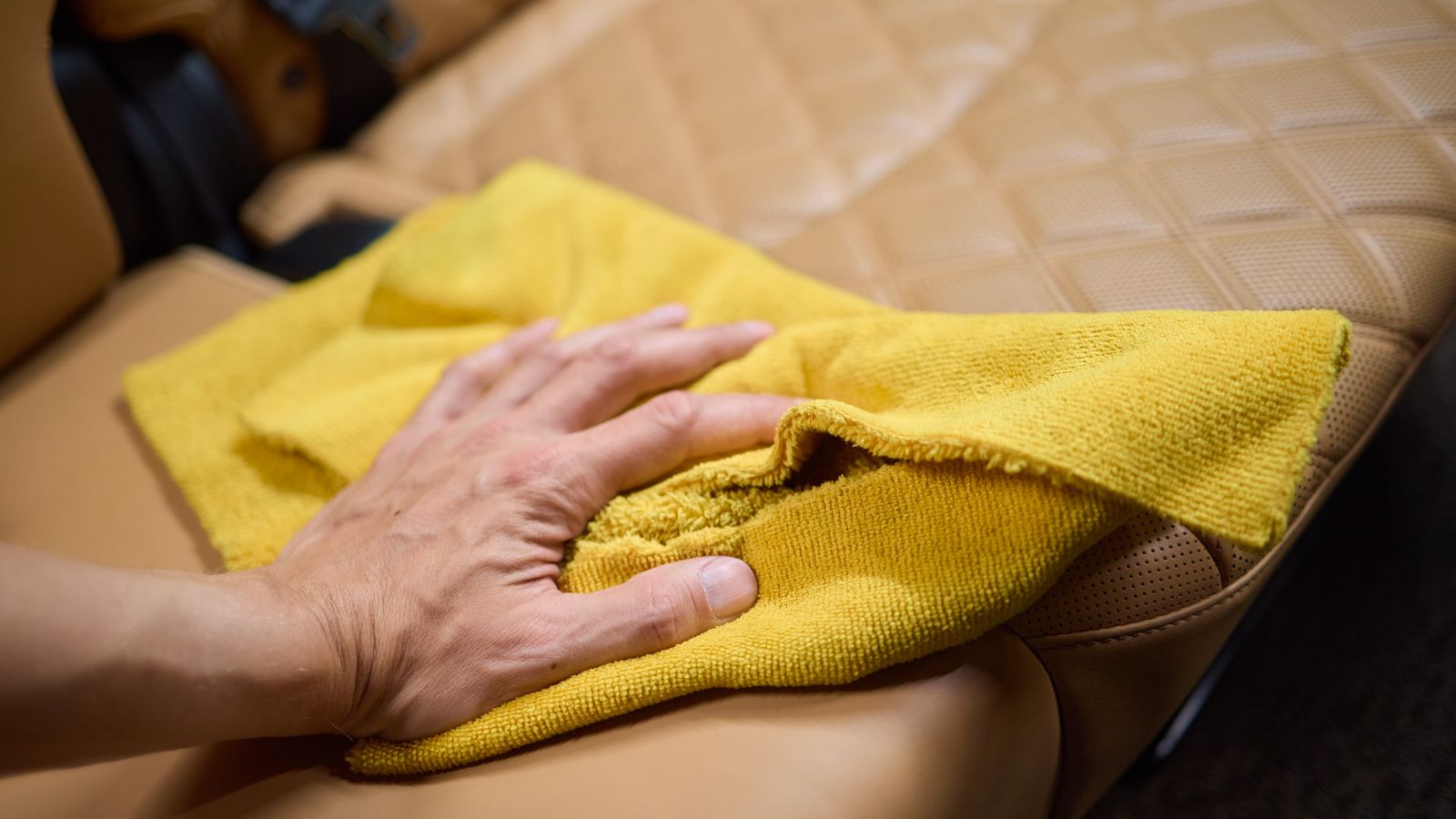
The most damaging interior-cleaning mistake is assuming that one household product can safely handle the entire cabin. A vehicle may combine coated leather, synthetic upholstery, soft-touch plastic, trim, clear instrument lenses, glass, fabric, rubber, metal finishes, and electronic displays. A cleaner that removes grease from a cupholder may cloud a screen, discolor a seat, or soften a decorative coating. The damage is gradual, appearing later as shininess, fading, peeling, stickiness, or fine cracking.
A safer approach begins with identification rather than scrubbing. The owner’s manual should determine what belongs on each surface, while product labels should confirm compatibility. Mild soap and water may be suitable for many routine jobs, but even that does not make every part washable. The practical rule is simple: use the least aggressive method that works, safely keep separate cloths for separate materials, and stop when a mark requires force rather than escalating the chemical strength.
Touchscreens Can Lose Their Protective Finish
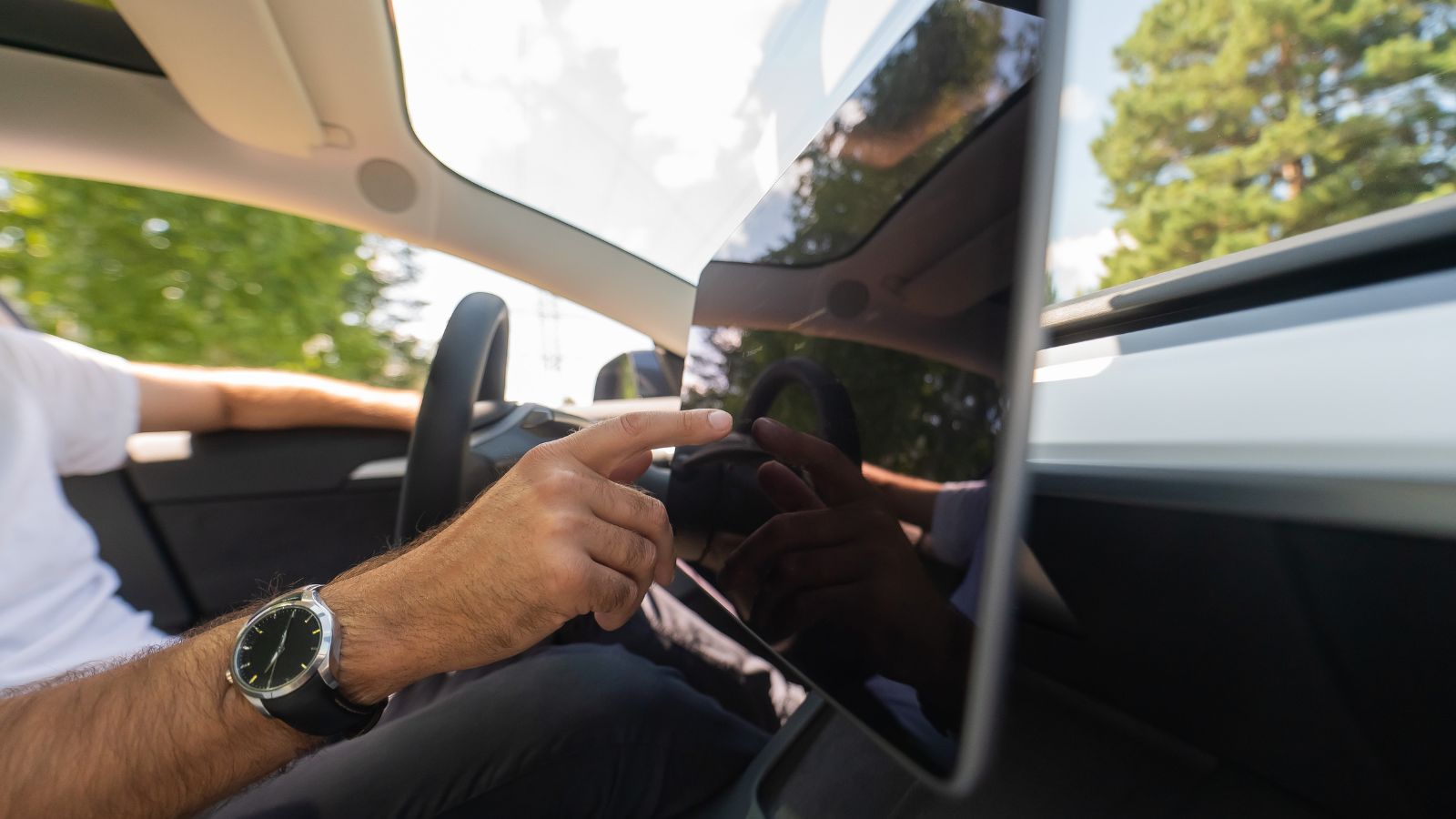
Infotainment displays look like household glass, yet their surfaces may include anti-glare, anti-fingerprint, polarizing, or other functional layers. Ammonia-based glass cleaner, alcohol gel, abrasive powder, and rough wiping can damage or haze those layers. The result may resemble smearing at first, encouraging more cleaning and greater pressure. Once a coating is altered, however, the cloudy patch or uneven gloss may remain visible whenever sunlight crosses the dashboard.
Manufacturers commonly recommend a soft, lint-free cloth intended for displays, sometimes only lightly dampened. The screen should be switched off so fingerprints and streaks are easier to see, and liquid should never pool around its edges. A familiar example is the driver who sprays cleaner onto the centre display, watches droplets run toward the bezel, then wipes in hurried circles. The safer sequence reverses that habit: put a small amount on the cloth, wipe gently, and finish immediately with a clean, dry cloth.
Direct Spraying Sends Liquid Where It Should Not Go
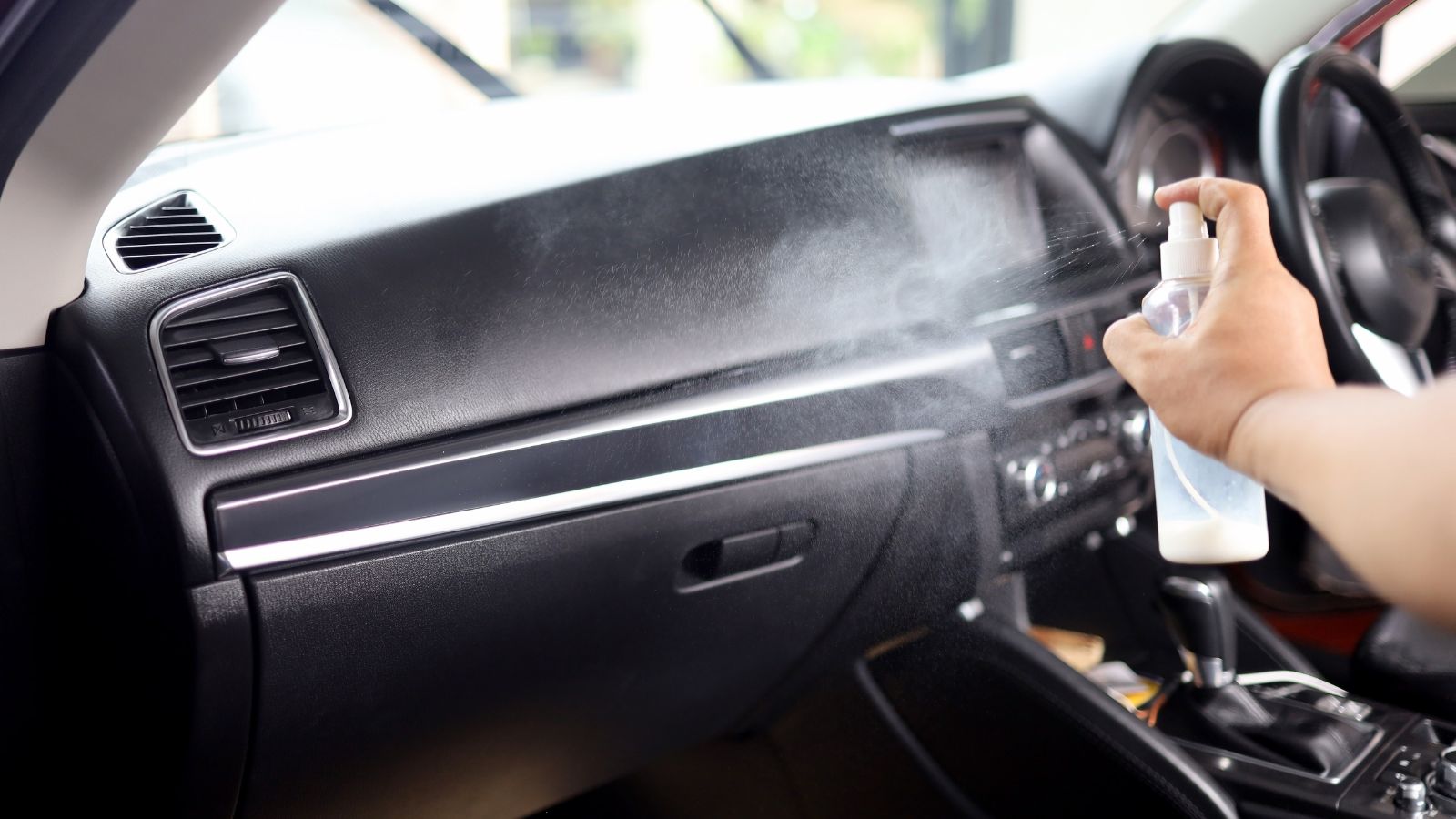
Spraying the dashboard or screen directly feels efficient because it covers a large area quickly. It also removes control over where liquid travels. Cleaner can run through button gaps, collect along bezels, seep into speaker grilles, enter switches, or settle inside seams near electronics. Even when no immediate malfunction appears, residue may dry beneath an edge or leave a visible tide mark that cannot be reached without disassembly.
The cloth-first method reduces that risk. A light mist applied to microfiber can be distributed thinly, while cleaner strength and contact time remain easier to manage. Tesla warns against spraying seats directly, and Ford advises against spraying liquid onto display screens. Similar caution makes sense around instrument clusters, climate controls, charging pads, and seat-belt retractors. The goal is not to soak dirt loose. It is to lift contamination with the smallest amount of moisture, then dry the area before liquid can migrate.
Leather Can Be Cleaned Through Its Protective Coating
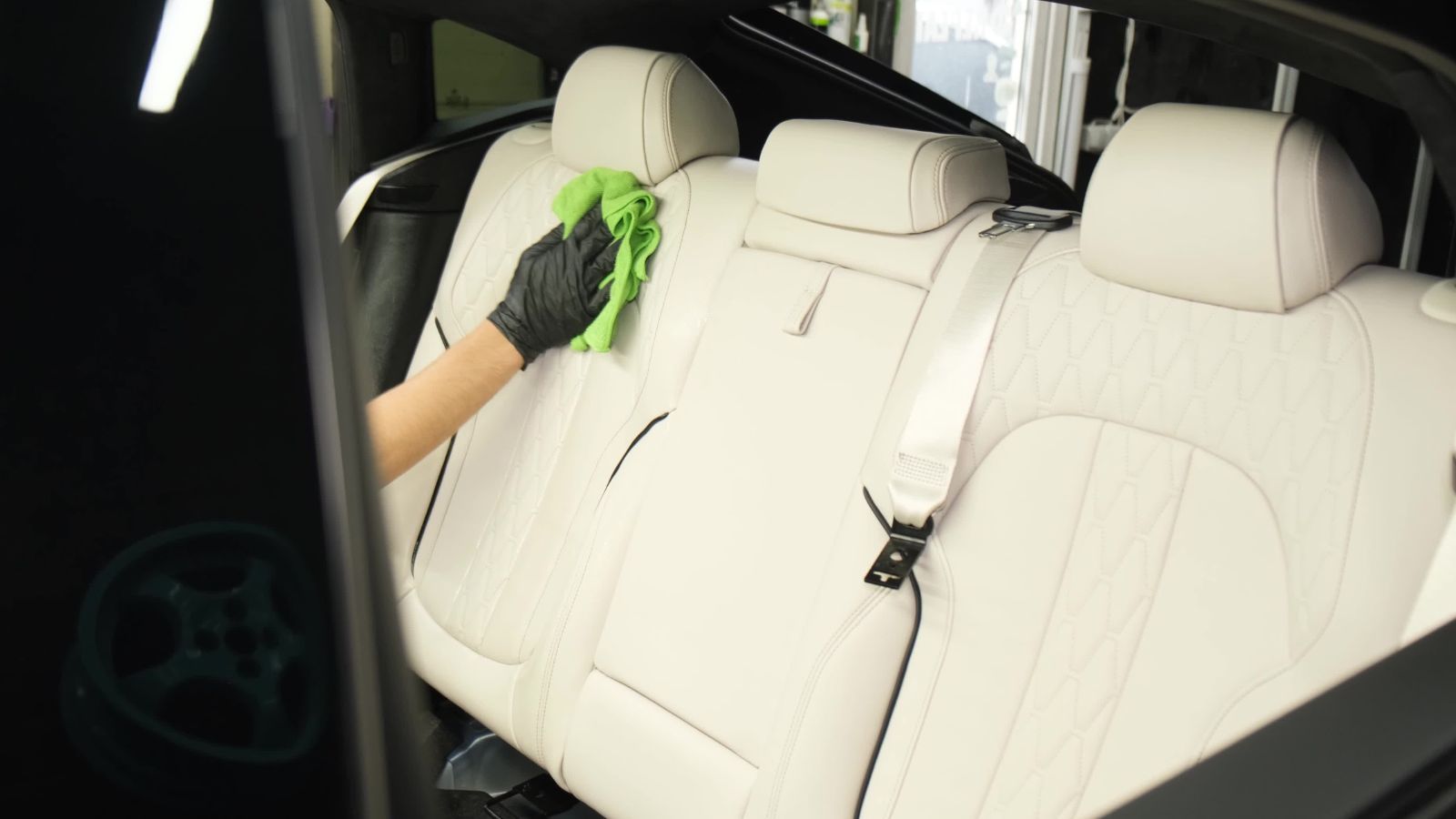
Most automotive leather is not exposed hide waiting to absorb conditioner. It is usually dyed and protected by a surface coating designed to resist wear, spills, and colour transfer. Strong solvents, household degreasers, alcohol, petroleum products, or harsh scrubbing can attack that finish. A seat may look cleaner because grime and part of the coating were removed together. Later, the treated area may appear duller, lighter, shinier, or more vulnerable to staining.
Vehicle-specific guidance matters more than generic furniture advice. Ford lists household cleaners, alcohol solutions, solvents, and silicone- or petroleum-based conditioners among products that can damage automotive leather. Nissan notes that harsh chemicals may remove protective coatings and aggressive rubbing can fade dyed leather. Routine care is restrained: vacuum first, use a soft damp cloth or approved leather cleaner, avoid flooding perforations, and dry naturally. A hidden test area can reveal colour transfer before a seat bolster is affected.
Synthetic Leather Is Not Automatically Chemical-Proof

Synthetic upholstery is often marketed as durable and stain resistant, creating false confidence around disinfectants and strong stain removers. These materials still rely on engineered topcoats for colour, texture, flexibility, and wear resistance. Alcohol, bleach, citrus solvents, naphtha, silicone additives, and repeated aggressive cleaning may weaken or discolor those layers. Damage can begin as a different sheen before progressing to tackiness, cracking, or easier dye transfer.
Manufacturer instructions can be specific. Tesla recommends mild soap and warm water for routine cleaning of its coated seating materials and warns that extended use of isopropyl alcohol can damage the topcoat. It also discourages aftermarket conditioners and protectants for those seats. That reminder means “leather-look” surfaces should not automatically receive leather balm, kitchen disinfectant, or hand-sanitizer treatment. When a stubborn stain appears, consult the manual, test discreetly, use short contact time, and remove residue with a clean damp cloth rather than scrubbing repeatedly.
Fabric Seats Can Be Stained by the Cleaner
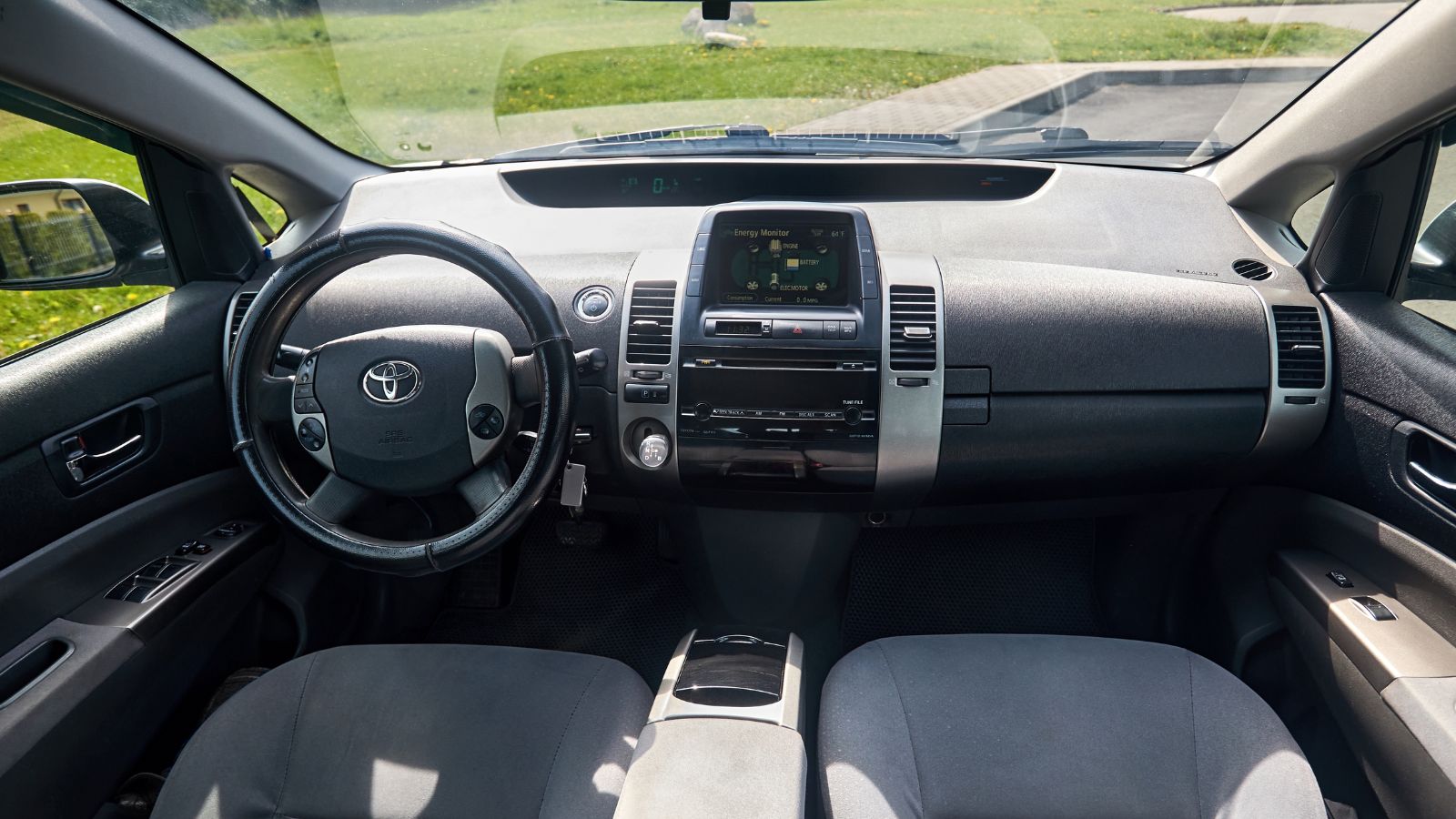
Cloth upholstery appears forgiving, but it can develop rings, faded patches, stiff fibres, or residue when household cleaners are used carelessly. Ford warns that household products and glass cleaners can stain or discolor vehicle fabrics and may affect flame-retardant properties in seats. Spot cleaning can also create a boundary between the treated area and surrounding fabric, especially when too much solution is used or cleaner is not removed evenly.
An example is a coffee mark becoming a larger pale circle. The stain may disappear, yet the detergent edge remains visible after drying. Vacuuming before wet cleaning helps prevent loose grit from becoming muddy residue. An automotive upholstery product should be applied according to its label, worked gently, and blotted rather than saturated. When a ring begins to form, manufacturers may advise cleaning the full panel evenly without soaking it. Complete air-drying is essential before passengers sit down or covers return.
Over-Wetting Carpets Creates a Second Problem
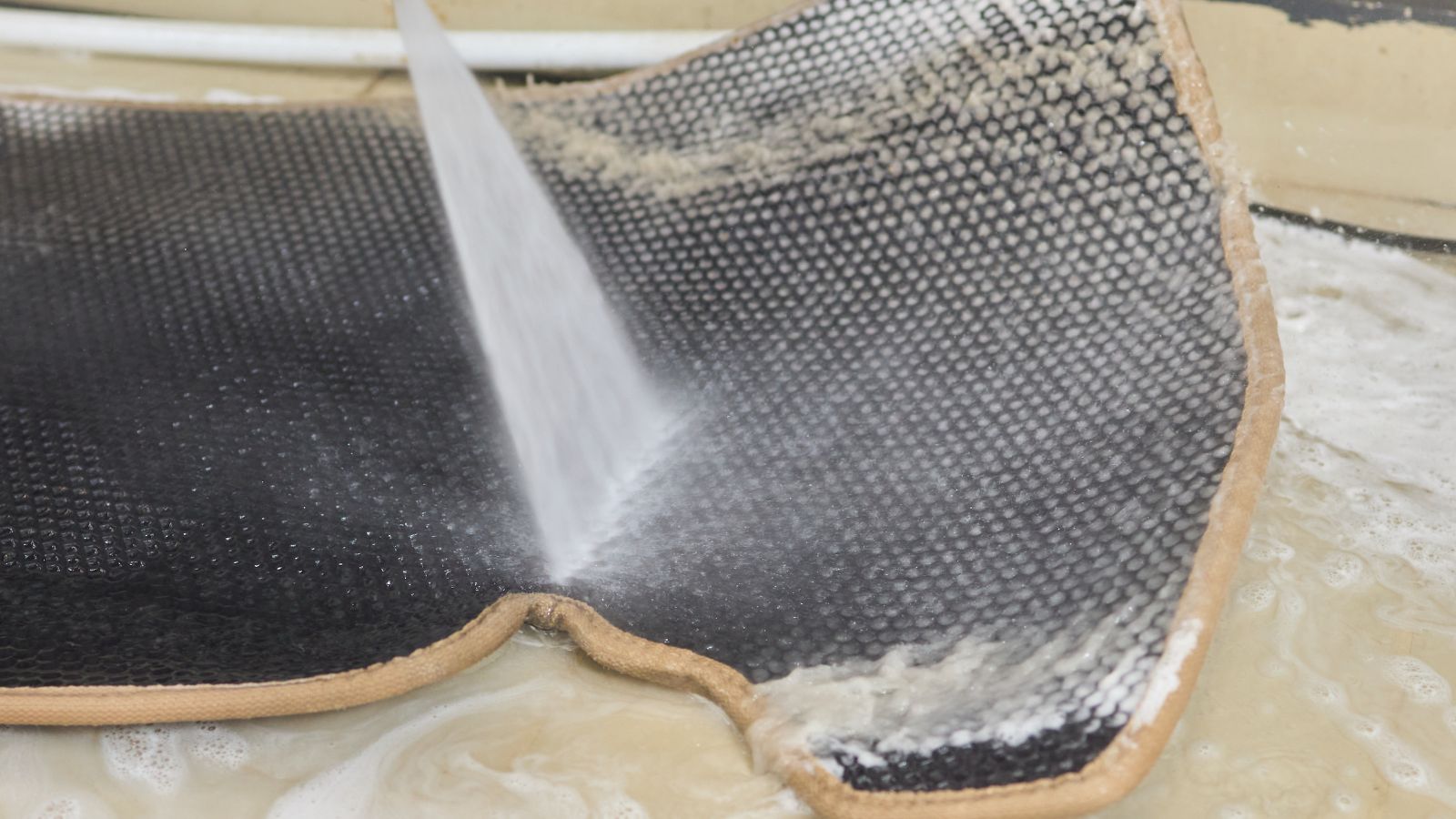
A carpet stain invites more water because each pass lifts dirt. The visible carpet, however, sits above backing, padding, seams, wiring routes, and floor cavities that dry slowly. Excess moisture can leave rings, encourage musty odours, and create conditions in which mold or mildew develops beneath upholstery. The cabin may smell clean for a day, then turn sour after the windows remain closed in warm weather.
Tesla and Ford caution against soaking interior surfaces, while Nissan notes that too much water can reach cushioning below cloth upholstery and encourage mold and mildew. Effective extraction is about moisture control, not suction after flooding. Vacuum debris first, treat only the affected zone, agitate gently, blot or extract, and repeat with small amounts if necessary. Removable mats should dry completely outside the vehicle. Built-in carpet needs airflow, open doors when possible, and patience before rubber mats or cargo liners trap residual moisture underneath.
Steam Is Too Aggressive for Some Materials
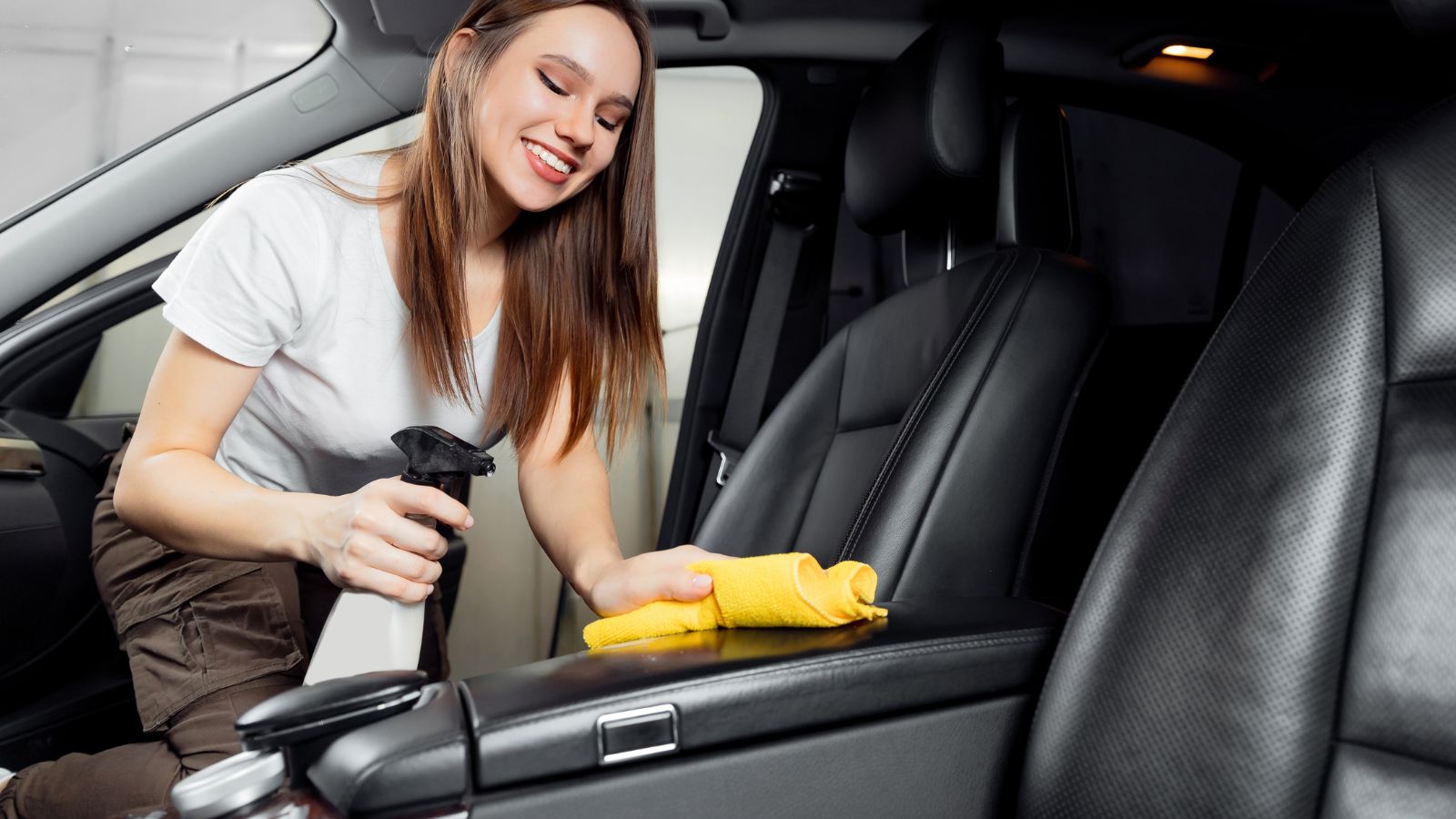
Steam is attractive because it appears to clean without chemical residue, but heat and moisture arrive together. That combination can be unsuitable for coated leather, suede-like microfiber, adhesives, laminated trim, headliners, switches, and seams containing electronics. Volvo says not to use a steam cleaner on leather, while Ford advises against steam cleaning suede microfiber upholstery. A technique that works on a floor mat may therefore be risky on a seat bolster or door insert.
Headliners deserve caution. Their fabric is bonded to foam and a backing layer, so heat, moisture, or rubbing can contribute to sagging or distortion. Even without immediate separation, steam can drive contamination deeper or leave uneven dampness. Professional detailers may use controlled steam on selected surfaces, but that does not make household-steamer use safe. Owners should follow instructions, keep heat away from trim and electronics, and prefer low-moisture methods whenever construction beneath the surface is uncertain.
Abrasive Tools Can Turn Dirt Into Scratches
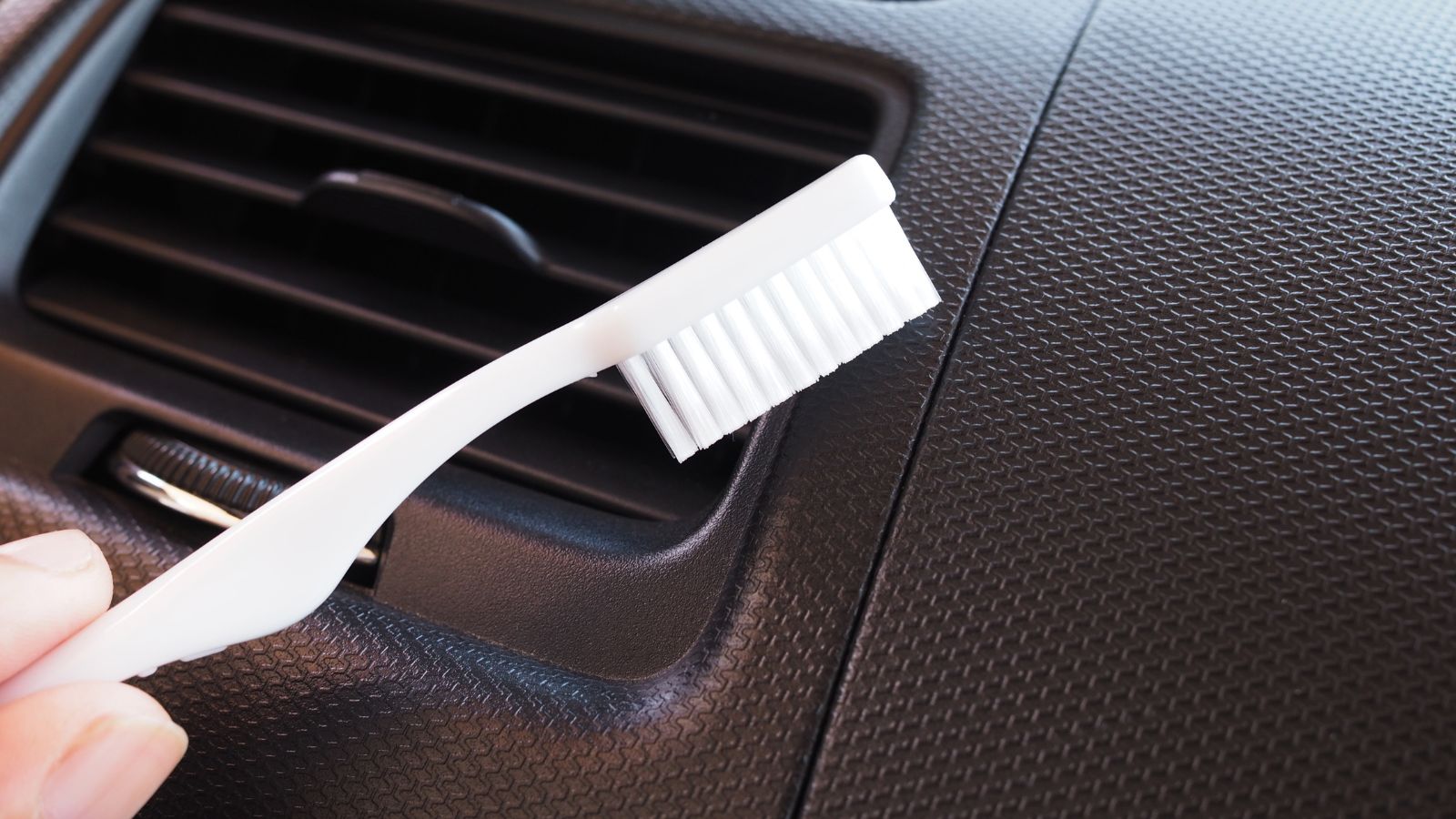
The wrong tool can be as damaging as the wrong chemical. Scouring pads, stiff brushes, rough towels, powdered cleaners, and eraser products remove contamination through abrasion. On textured plastic they may flatten the grain; on piano-black trim they can leave scratches; on clear instrument lenses they may create haze. Volvo cautions that abrasive materials can damage a vehicle, while Toyota and Ford warn against abrasives on touchscreens, display lenses, mirrors, and rear-window surfaces.
Microfiber becomes risky when dirty. Hard particles trapped in the fibres can be dragged across glossy trim like polishing compound. Vacuuming or lifting loose dust first reduces that danger. Cloths should be clean, folded to expose fresh sides, and task-specific so door-sill grit never reaches the dashboard. Use light pressure. When a mark does not release, the next step should be a compatible cleaner and dwell time, not harder scrubbing that removes the finish with the stain.
Dashboard Shine Can Create Glare
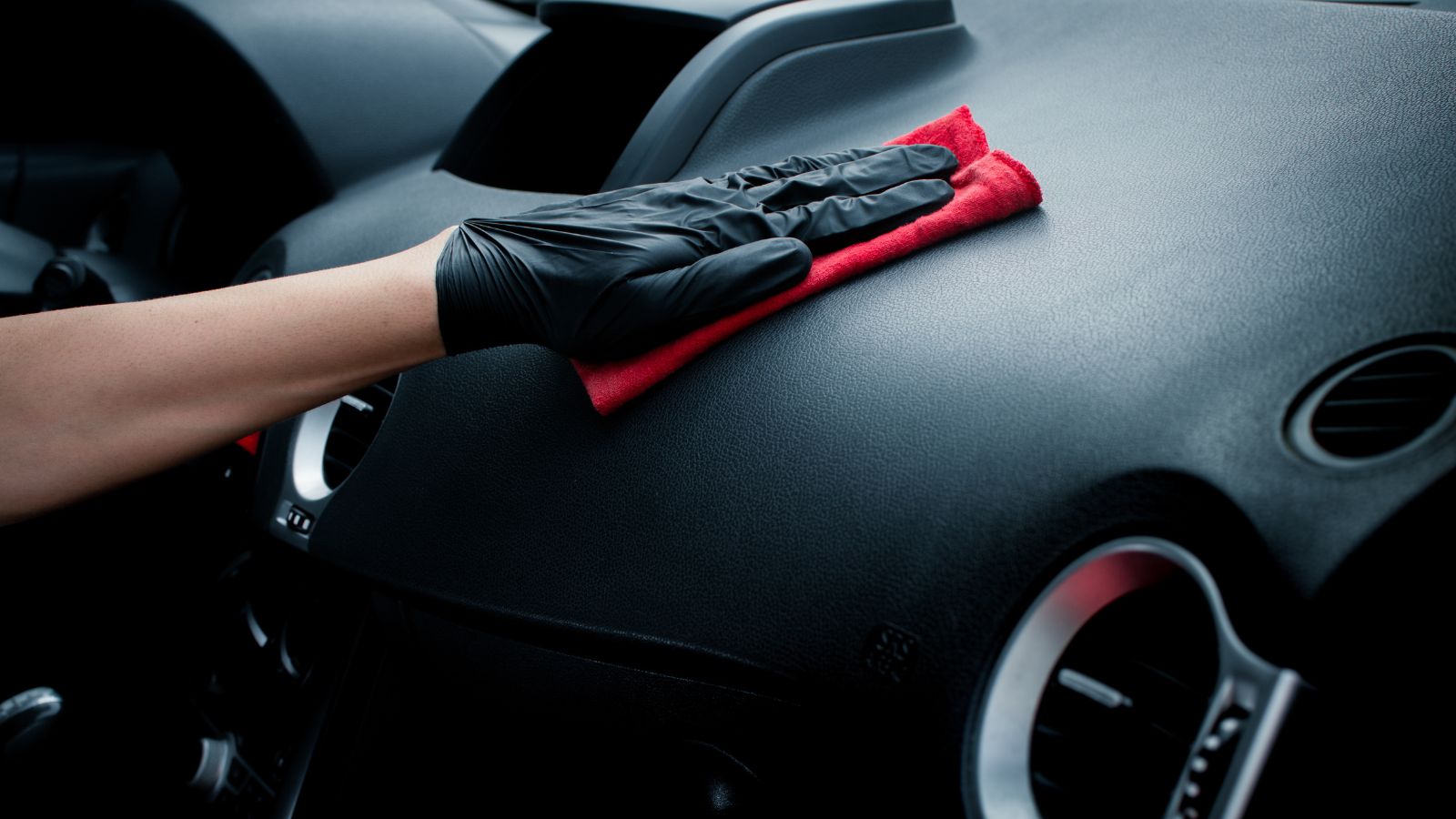
A glossy dashboard may look appealing, but excessive polish can turn the upper dash into a reflective surface. Tesla advises owners not to polish upper dashboards because reflections may interfere with the driving view. General Motors has issued similar guidance, warning that silicone- or wax-containing sprays can create reflections and make outward visibility more difficult in some conditions. This turns a cosmetic choice into a safety concern.
A safer finish looks clean, not wet. Apply protectant sparingly to a cloth, not across the dash, and buff away excess until the surface no longer feels oily. Steering wheels, shift controls, and pedals should never be left slick. One clue is the driver who notices dashboard shapes floating in the windshield during low morning sun. More dressing will not solve that problem; careful removal will. Interior products should preserve appearance and grip, not advertise their presence through glare, residue, or slippery film.
Seat Belts and Airbag Areas Are Not Ordinary Trim

Seat belts, airbag covers, and seat seams may resemble ordinary trim, but they are restraint-system parts. Ford warns that solvents, bleach, or dye can weaken belt webbing, and that detergents or chemical solvents around seat-mounted airbags may contaminate components and impair performance in a crash. Tesla says liquids, cleaners, and fabric should not enter a seat-belt mechanism and cautions against substances entering airbag covers.
Cleaning these areas should be conservative. Belts can be extended and wiped with mild soap and water when permitted, then left extended to dry naturally. They should not be soaked, heat-dried, recoloured, or treated with protectants. Around seat seams and airbag-marked panels, avoid aggressive brushing and saturating sprays. A stain beside an airbag seam is less important than preserving the deployment path. When contamination is severe, after flooding, chemical spills, or bodily-fluid exposure, professional guidance is preferable to improvising with bleach, solvent, or a pressure extractor.
Skipping the Test Spot Makes Small Errors Expensive
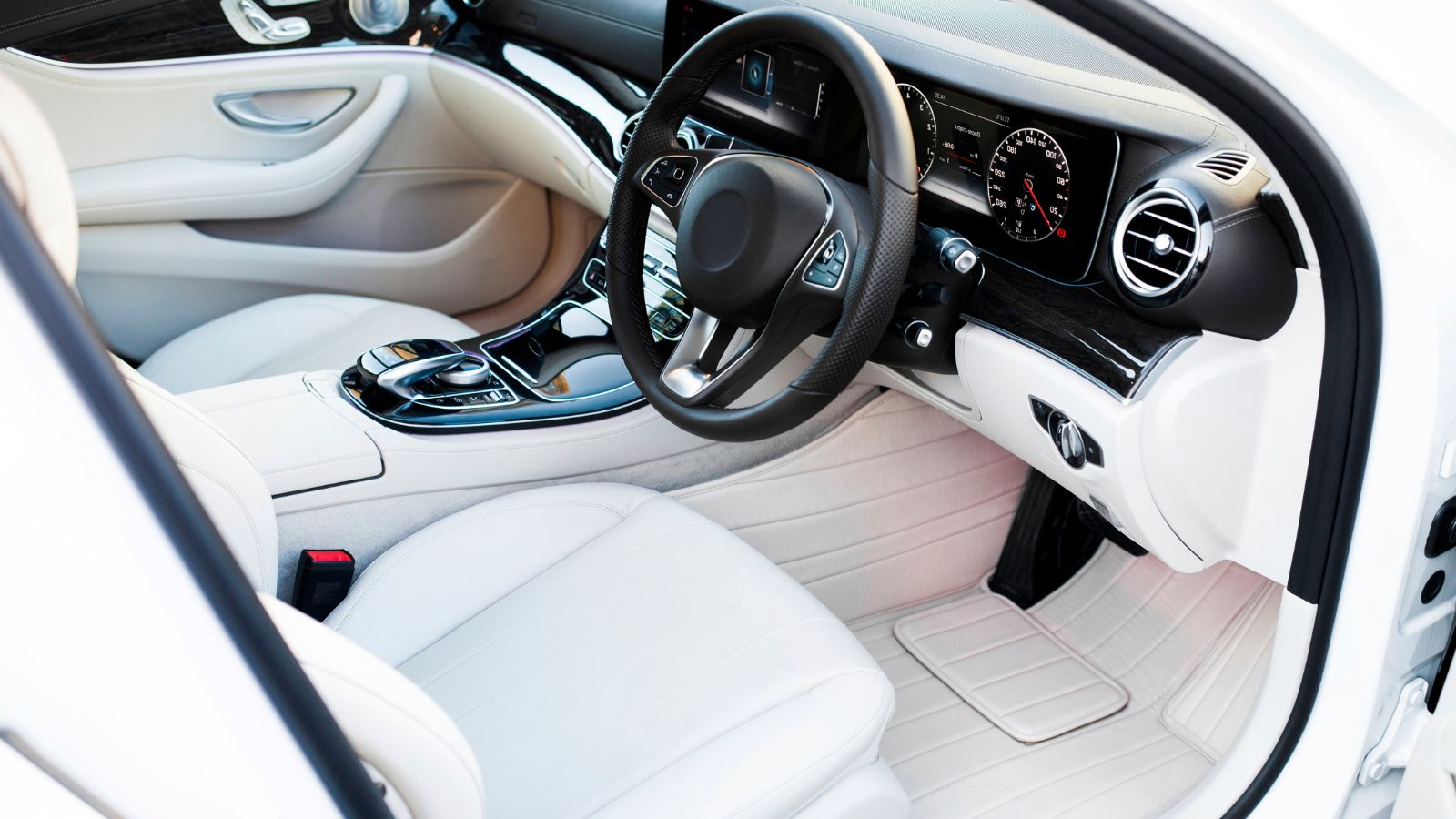
Interior materials vary between brands, model years, trims, colours, and option packages. A method that works on one vehicle can alter another vehicle’s dye, gloss, grain, or coating. Tesla recommends testing cleaners on a concealed area, and Volvo advises using only recommended car-care products while following their instructions. The owner’s manual is the best reference because it reflects surfaces and equipment fitted to that model.
A proper test is small, discreet, and allowed to dry completely before judgment. Drying time can reveal delayed reactions. A seat’s rear edge or trim underside may reveal colour transfer, stickiness, whitening, or a change in sheen. This matters with an unfamiliar product or a used car whose surfaces may have been refinished. The final lesson is restraint: identify the material, vacuum first, use minimal moisture, work gently, remove residue, and stop if the finish changes. Preventing damage is easier than restoring a stripped coating.
22 Things Canadians Do to Their Cars in Spring That Mechanics Hate

Spring brings relief to many Canadian drivers after months of snow, freezing temperatures, and icy roads that put serious strain on vehicles. As temperatures rise across the country, drivers begin washing cars, switching tires, and preparing vehicles for warmer weather and upcoming road trips. However, mechanics across Canada notice the same mistakes every spring when drivers attempt to recover from winter damage. Road salt, potholes, and harsh winter driving conditions often leave vehicles with hidden problems that drivers ignore. Some spring habits even create new mechanical issues that could have been avoided with proper maintenance. Here are 22 things Canadians do to their cars in spring that mechanics hate.

Alanna Rosen is an experienced content writer that focuses on many EV and educational content. Her articles are regularly published on Get CyberTrucked and syndicated on large publications.