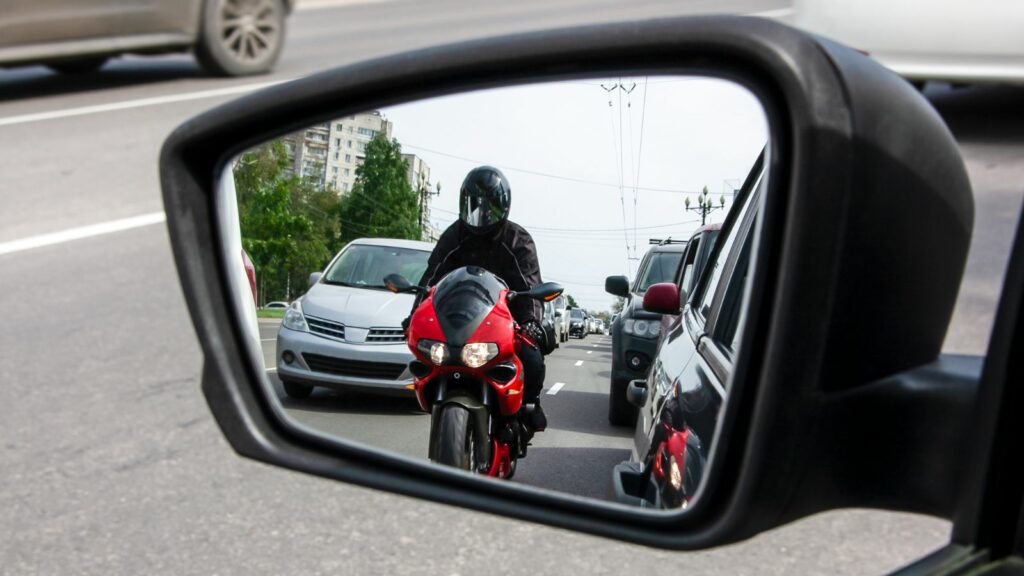
A car can feel perfectly visible while still hiding an entire vehicle beside it. The problem often begins with a familiar habit: aiming both side mirrors inward until a generous slice of the car’s doors and rear fenders fills the glass. That view may feel reassuring, but it repeats information already available in the centre mirror and sacrifices valuable coverage of the adjacent lanes.
These 12 points explain how this simple setup error creates larger blind spots, how to correct each mirror without losing orientation, and why proper adjustment still needs to be paired with shoulder checks and attentive driving.
The Mirror Is Showing Too Much Car
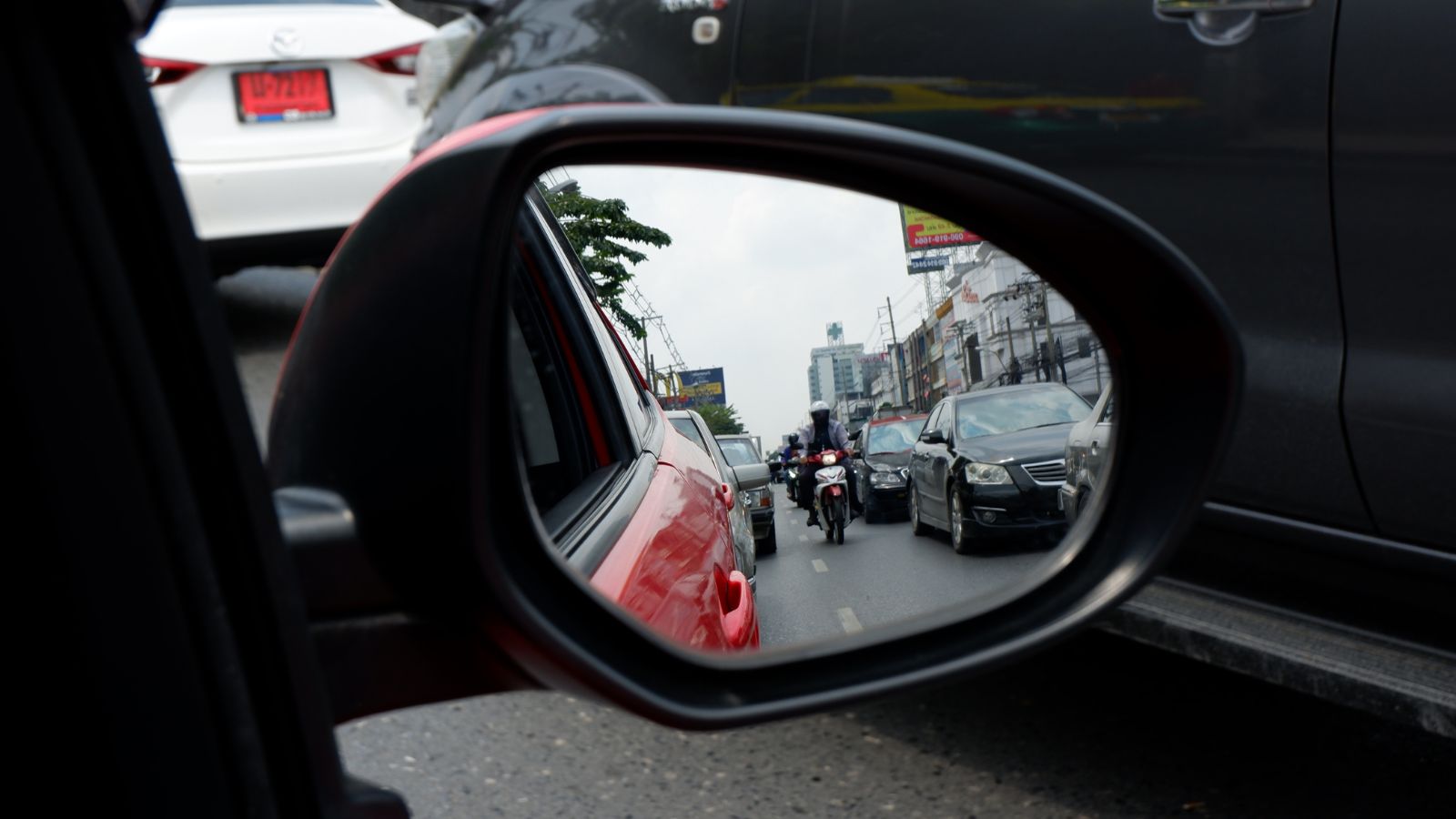
The most common mistake is treating the side mirrors like tools for watching the vehicle’s own bodywork. A narrow sliver of the car can help with orientation, but a large view of the doors, handles, or rear quarter panels uses space that could be showing traffic. The car itself is not the main hazard during a lane change; the unseen motorcycle, bicycle, or sedan beside it is.
This inward angle feels natural because many drivers learned to keep the vehicle clearly visible in both outside mirrors. Yet current safety guidance recommends moving those mirrors slightly outward to increase roadway coverage. Picture a three-lane highway: if half the left mirror is filled with paint and door handles, a fast-approaching car can remain hidden longer between the centre mirror and direct peripheral vision. The reassuring image of the car therefore creates the opposite of reassurance—it expands the area that must be checked by turning the head.
Overlapping Views Waste Valuable Coverage
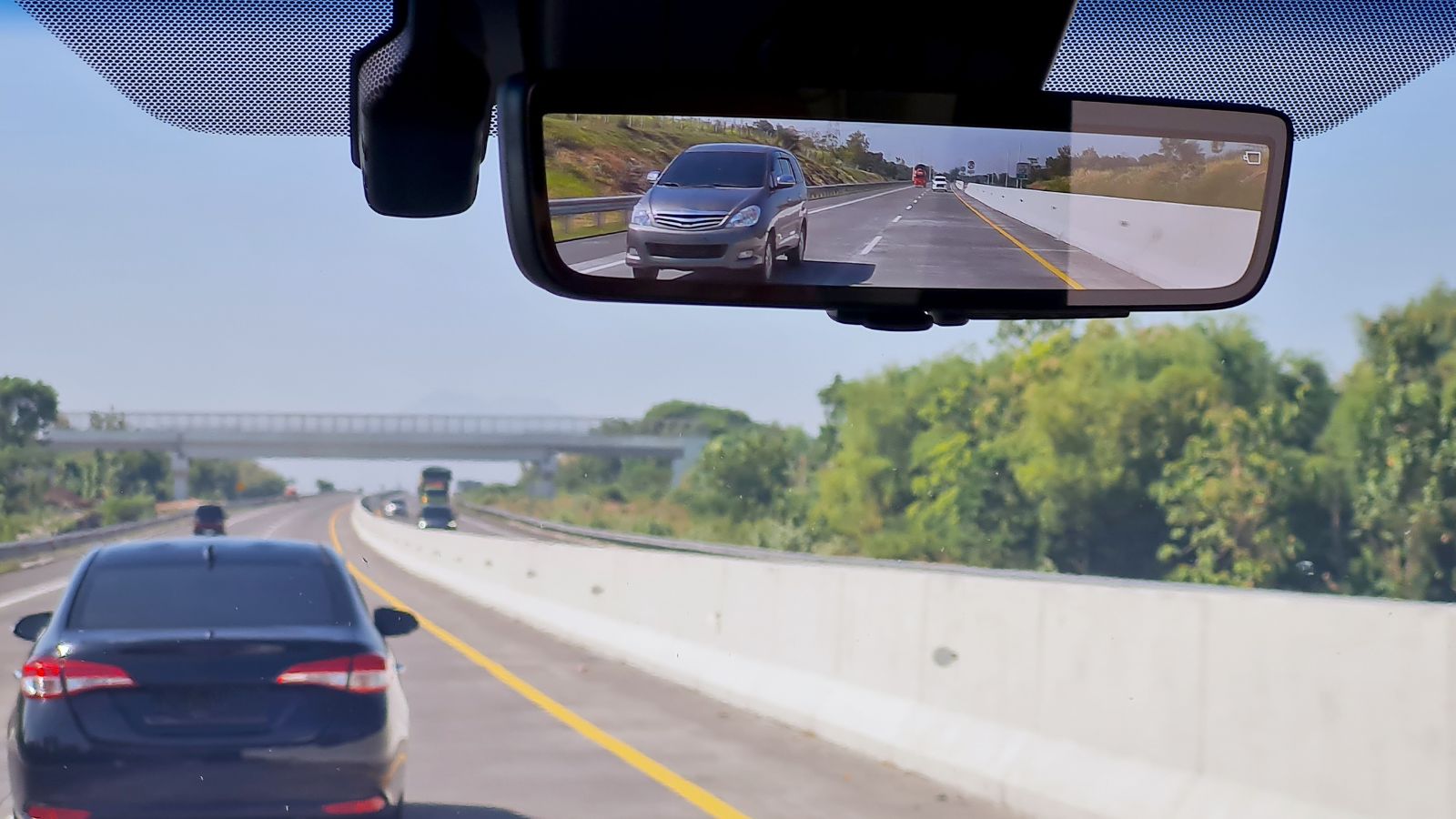
Each mirror should contribute a different piece of the scene around the vehicle. The centre mirror is designed to provide the broadest straight-back view through the rear window. When both side mirrors are aimed inward, they repeat much of that same view instead of extending visibility into the lanes beside the car. The result is three mirrors showing nearly the same traffic while the critical side-rear zones remain poorly covered.
This overlap is easy to notice in slow traffic. A vehicle behind may appear simultaneously in the centre mirror and in much of the side mirror, yet vanish as it begins to pull alongside. Properly spread views create a visual handoff: the approaching vehicle appears in the centre mirror, moves into the side mirror, and then reaches peripheral vision. Reducing unnecessary overlap does not make the mirrors less useful. It assigns each one a clearer job and reduces the size of the gaps between them.
Seat Position Must Come Before Mirror Position
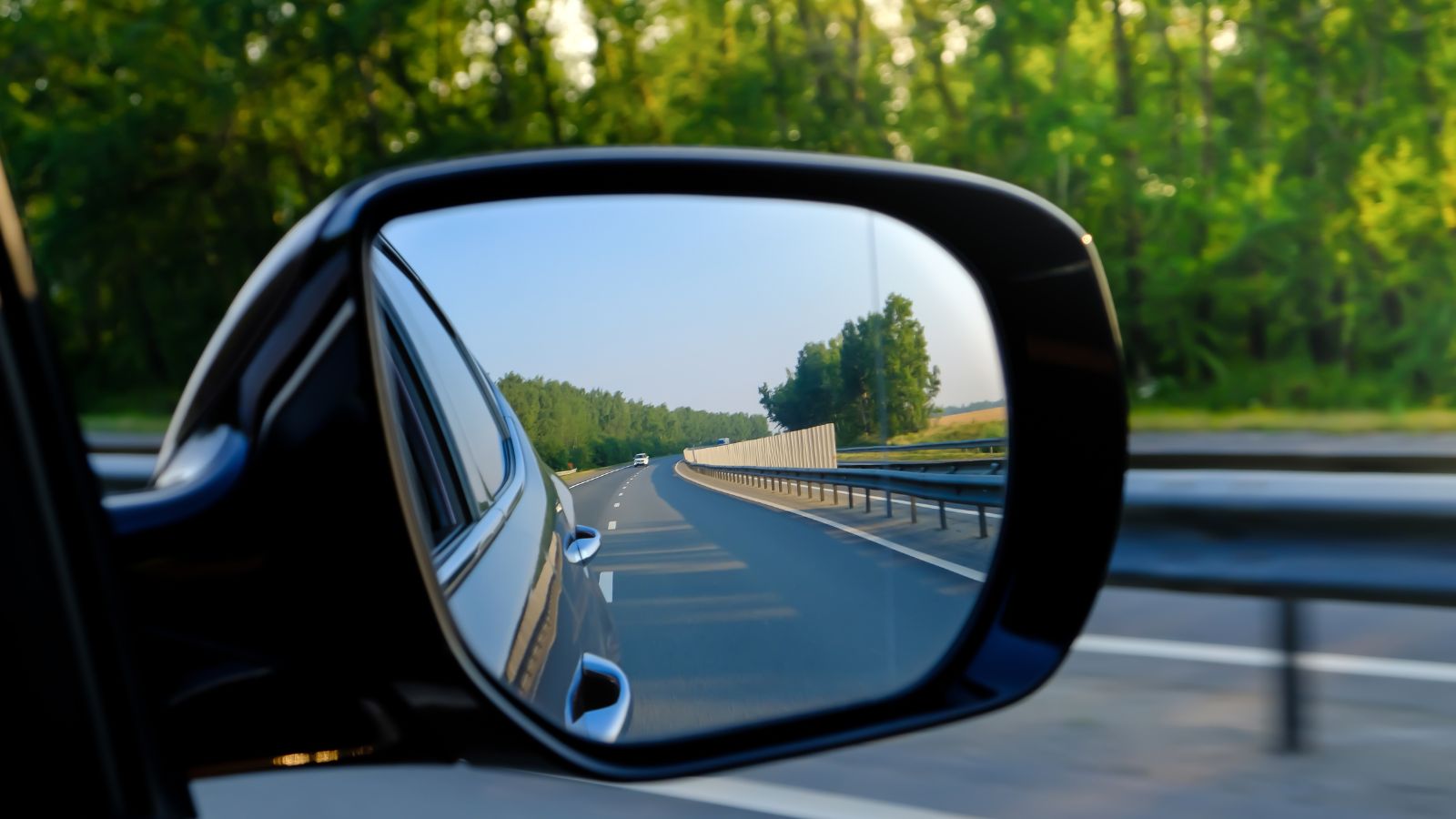
Mirrors are only correct for one eye position, so the driver’s seat must be set first. Moving the seat forward, reclining the backrest, or raising the cushion changes the angle from the driver’s eyes to every mirror. A mirror adjusted by a taller family member can leave a shorter driver looking at sky, pavement, or too much of the vehicle’s flank, even though the glass itself has not moved.
The practical order is simple: establish a comfortable driving posture, ensure the pedals and steering wheel can be controlled without stretching, fasten the seat belt, and then adjust all three mirrors. Shared vehicles make this step especially important. Consider a household in which one driver sits upright and another reclines the seat significantly. Their outside mirrors cannot provide the same field of view. Memory seats may restore a preferred position, but drivers should still confirm the mirror image before moving because cargo, passengers, and manual adjustments can alter what is visible.
The Centre Mirror Should Own the Straight-Back View
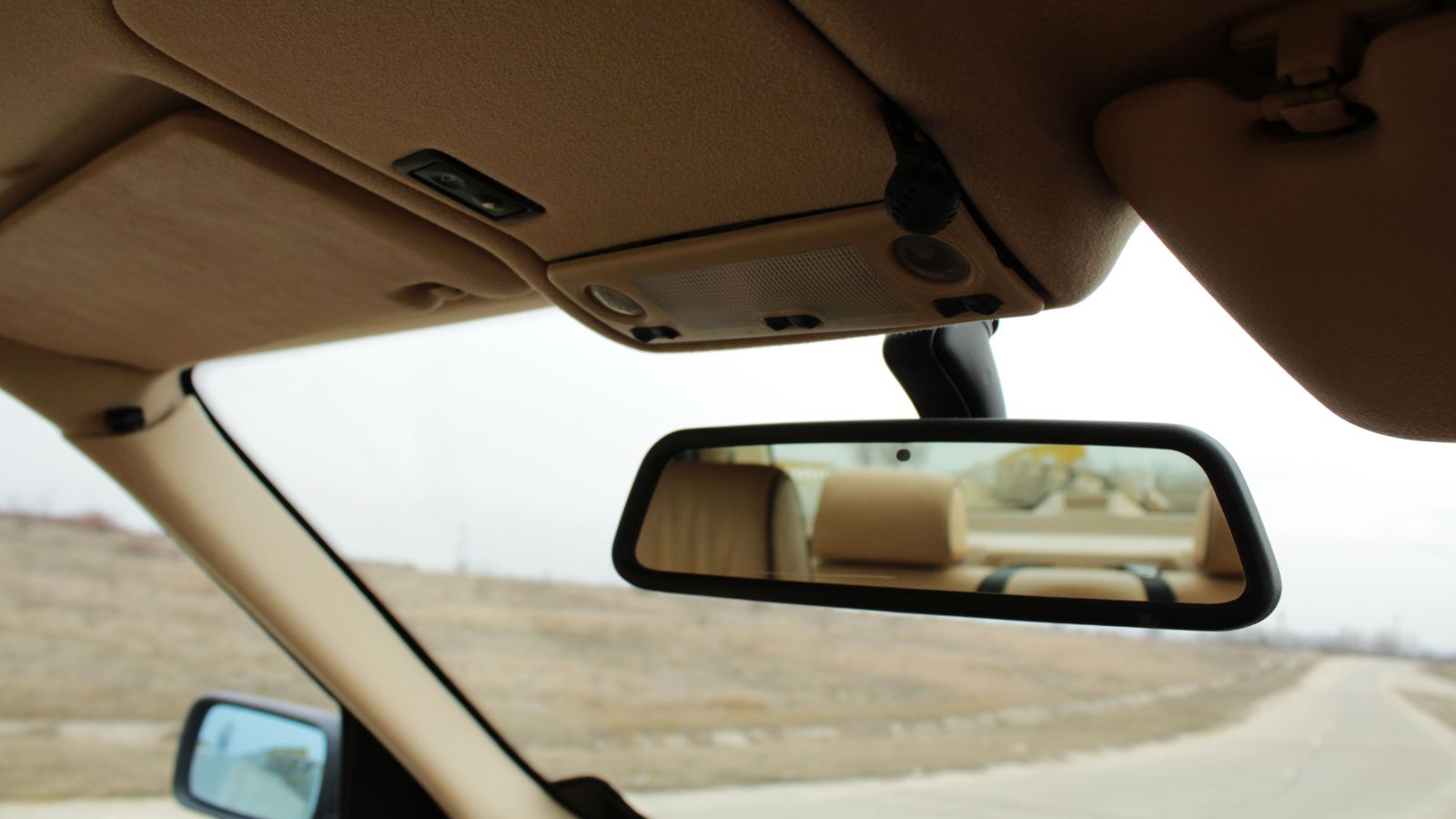
The inside rear-view mirror should be centred on the rear window, not tilted toward the driver’s face or biased toward one side of the cabin. From the normal driving position, it should show as much of the rear glass as possible with a quick eye movement. This establishes the central portion of the vehicle’s rearward field and gives the outside mirrors room to cover areas farther left and right.
A badly aimed centre mirror encourages drivers to pull the side mirrors inward as compensation. For example, if the inside mirror mostly shows the right rear head restraint, the driver may rotate the right outside mirror toward the tailgate just to regain a straight-back view. That correction creates a new blind zone beside the passenger door. Head restraints, luggage, fogged glass, or a high stack of cargo can still limit the interior view, but the answer is not to make all three mirrors duplicate one another. The interior mirror should remain the primary straight-back reference whenever visibility permits.
The Left Mirror Needs a Deliberate Outward Shift
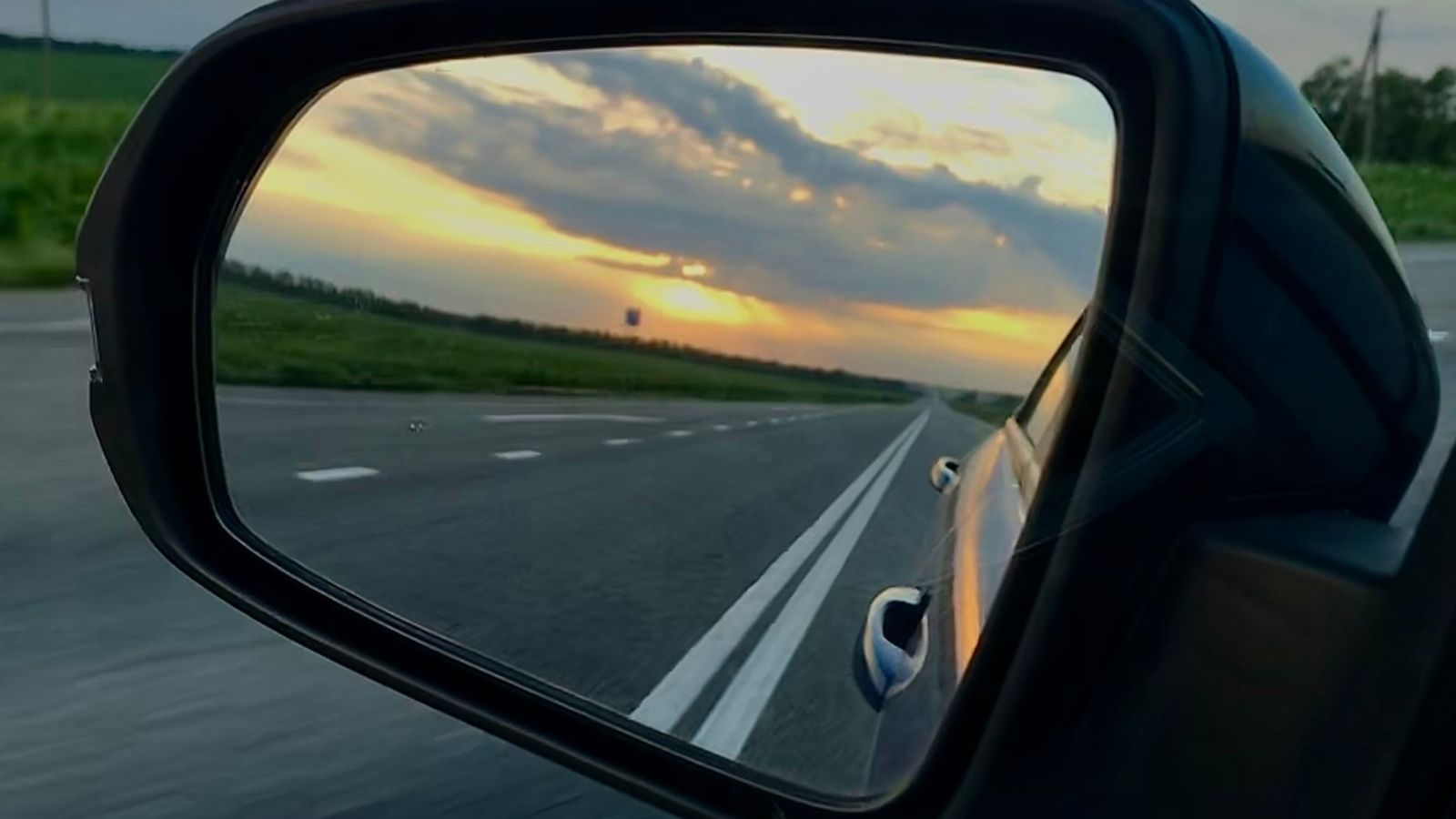
A reliable way to set the driver-side mirror is to lean the head toward the side window and adjust the glass until the left side of the vehicle is only just visible at the inner edge. Returning to the normal seated position then moves the reflected view outward, toward the lane that would otherwise contain the driver-side blind spot. The method can feel strange because the car may nearly disappear from the mirror.
That unfamiliarity is not evidence that the setting is wrong. It reflects a change from using the mirror as a body-position reference to using it as a traffic-detection tool. On a quiet road or while parked near a long curb, the driver can compare the new view with the old one and see how much additional lane becomes visible. The aim is not to point the glass so far outward that approaching traffic from behind disappears; it is to reduce duplicated coverage while preserving a small reference at the mirror’s inner edge.
The Right Mirror Requires a Different Head Position
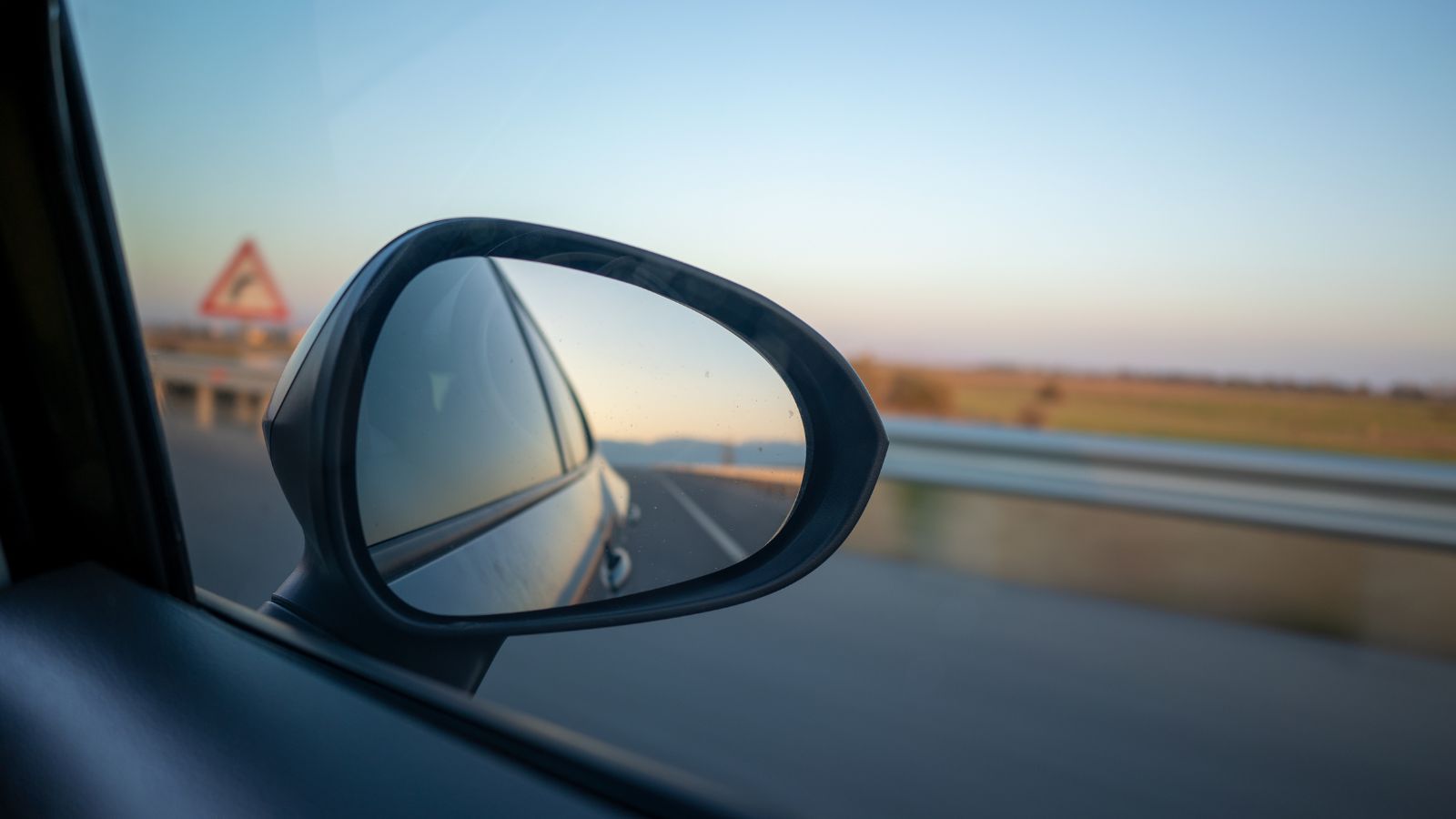
The passenger-side mirror cannot be set accurately by copying the driver-side movement. Safety guidance recommends moving the head toward the middle of the vehicle, then adjusting the right mirror until the passenger side is only just visible at the inner edge. When the driver returns to the normal position, the mirror’s view shifts outward and covers more of the adjacent lane.
This matters because the right side is farther from the driver and is often harder to judge. In urban traffic, a cyclist or scooter can travel beside the passenger doors while remaining outside a narrowly aimed mirror. On a motorway, a smaller car may sit in the right-rear quarter during a merge. Power controls make the adjustment easy, but older vehicles may require assistance to set the far mirror correctly. The goal remains the same on either side: only enough bodywork for orientation, with most of the glass devoted to the roadway and the traffic occupying it.
A Passing Vehicle Can Test the Setup
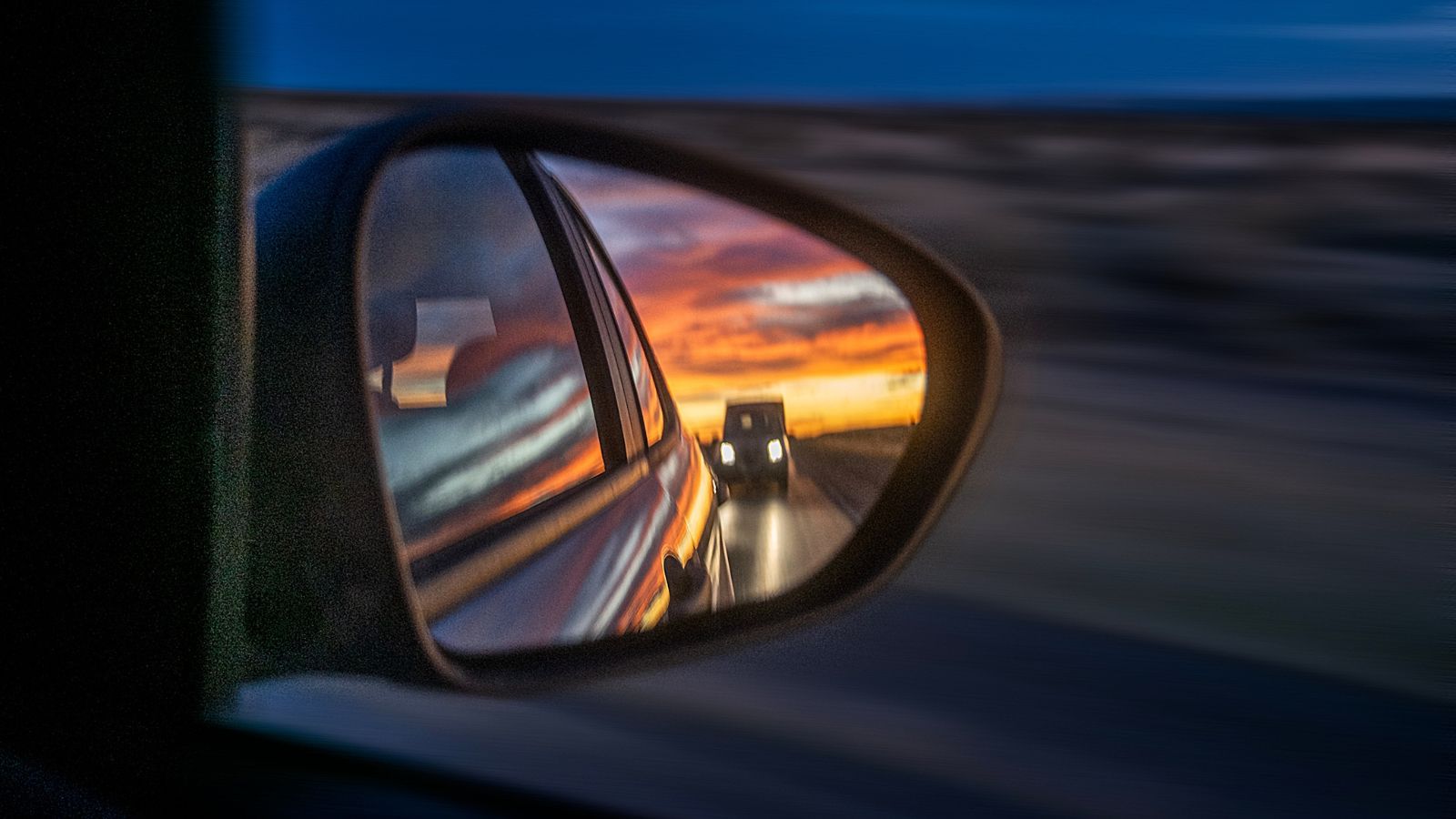
Mirror adjustment should be verified in motion rather than accepted simply because the mirrors look symmetrical while parked. On a safe multi-lane road, the driver can track a vehicle approaching from behind. It should first be visible in the centre mirror, then appear in the appropriate outside mirror before leaving the centre view, and finally become visible beside the car before disappearing from the outside mirror.
That continuous handoff is a practical test for gaps and excessive overlap. If the vehicle vanishes completely between the centre and side mirrors, the outside mirror is probably aimed too far inward. If it appears only in the side mirror and cannot be monitored as it approaches from behind, the glass may be aimed too far outward. The check should be performed without staring at the mirrors or neglecting the road ahead. A passenger can help describe the vehicle’s progression during the first test, allowing the driver to make small parked adjustments afterward rather than experimenting continuously in traffic.
Better Mirrors Do Not Cancel the Shoulder Check
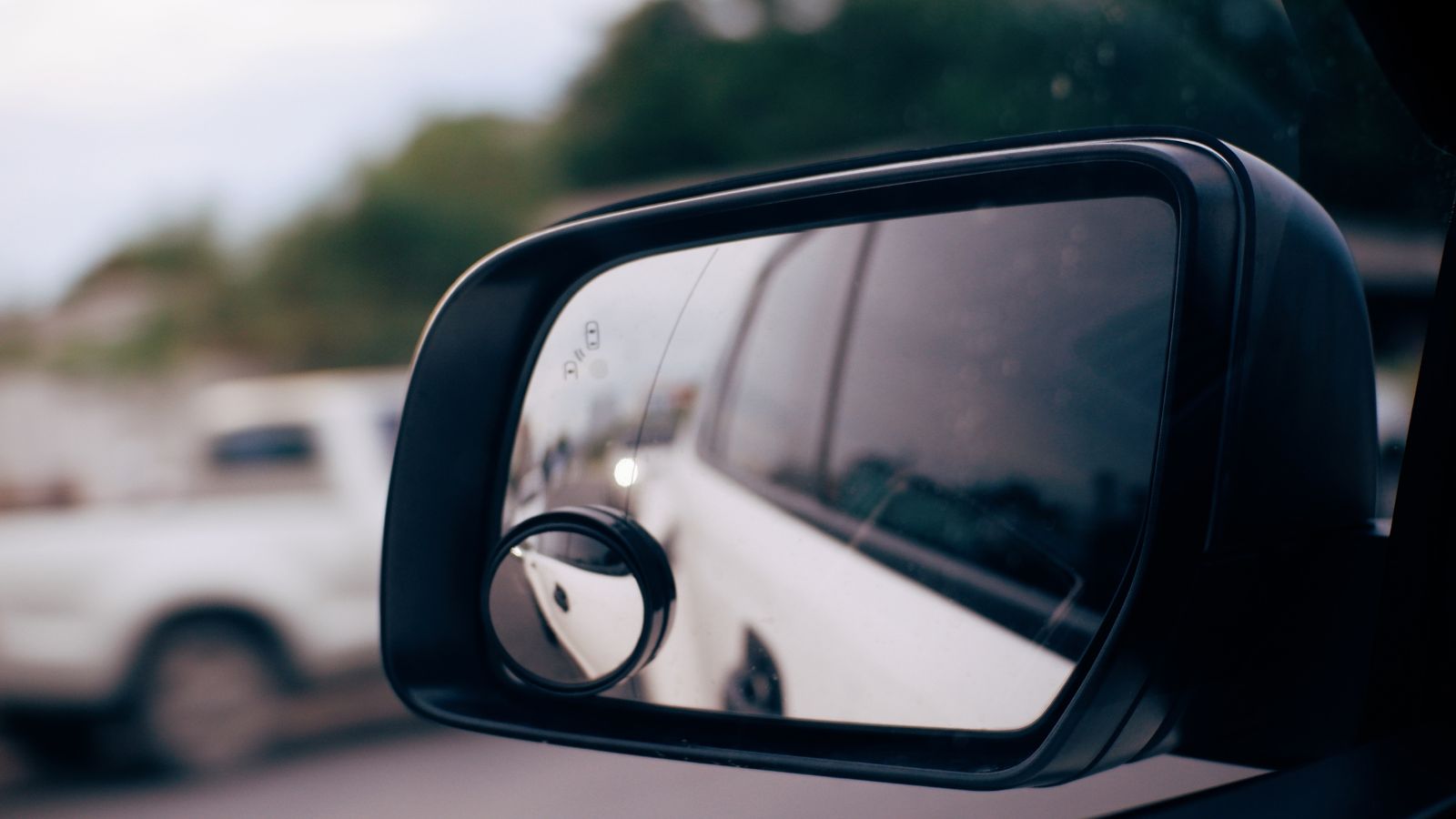
Outward mirror settings can substantially reduce blind areas, but they do not make the sides of a vehicle perfectly visible in every situation. Mirror size, pillars, body shape, driver height, road curvature, and the position of nearby traffic all affect what can be seen. Current road-safety guidance therefore continues to recommend a quick look over the shoulder before changing lanes, merging, pulling from the curb, or moving across a cyclist’s path.
The shoulder check should be brief and controlled. Turning the entire torso can unintentionally move the steering wheel, while a quick head turn preserves better control. A sensible lane-change sequence is to check the road ahead, scan the centre and side mirrors, signal, look into the relevant blind area, and confirm the gap again before moving. The corrected mirror setting makes that process stronger because it provides more information earlier. It is a layer of protection, not permission to stop checking what the mirrors may still miss.
Small Road Users Are Easier to Lose
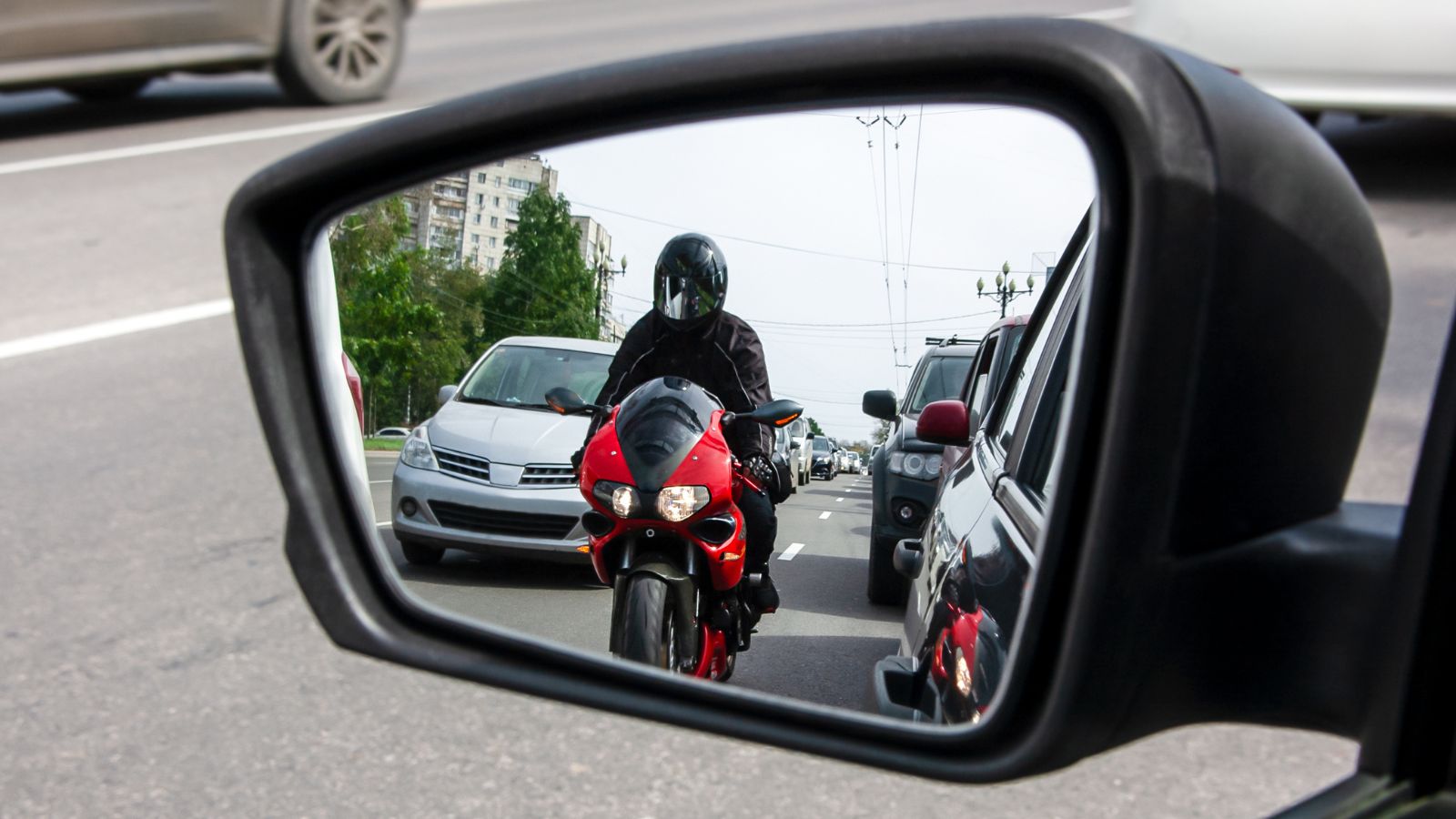
A poorly aimed mirror does not hide every road user equally. Motorcycles, bicycles, scooters, and pedestrians occupy less visual space than cars and can be masked by pillars, head restraints, or the edge of a mirror’s field. Their position can also change quickly in slow traffic, especially when a rider filters beside queued vehicles or a cyclist continues straight while a car prepares to turn.
That is why the inward-mirror habit is particularly risky in cities. A driver may see the same van in both the centre and passenger mirror while a cyclist travels unseen nearer the curb. The danger grows near junctions, roundabouts, bike lanes, and curbside parking, where road users approach from several angles. Wider side coverage improves the chance of detecting them sooner, but mirrors must still be paired with a direct blind-spot check. The key lesson is that an empty-looking mirror does not necessarily mean an empty lane, especially when the missing object is narrow and close.
Convex Glass Can Distort Distance Judgement
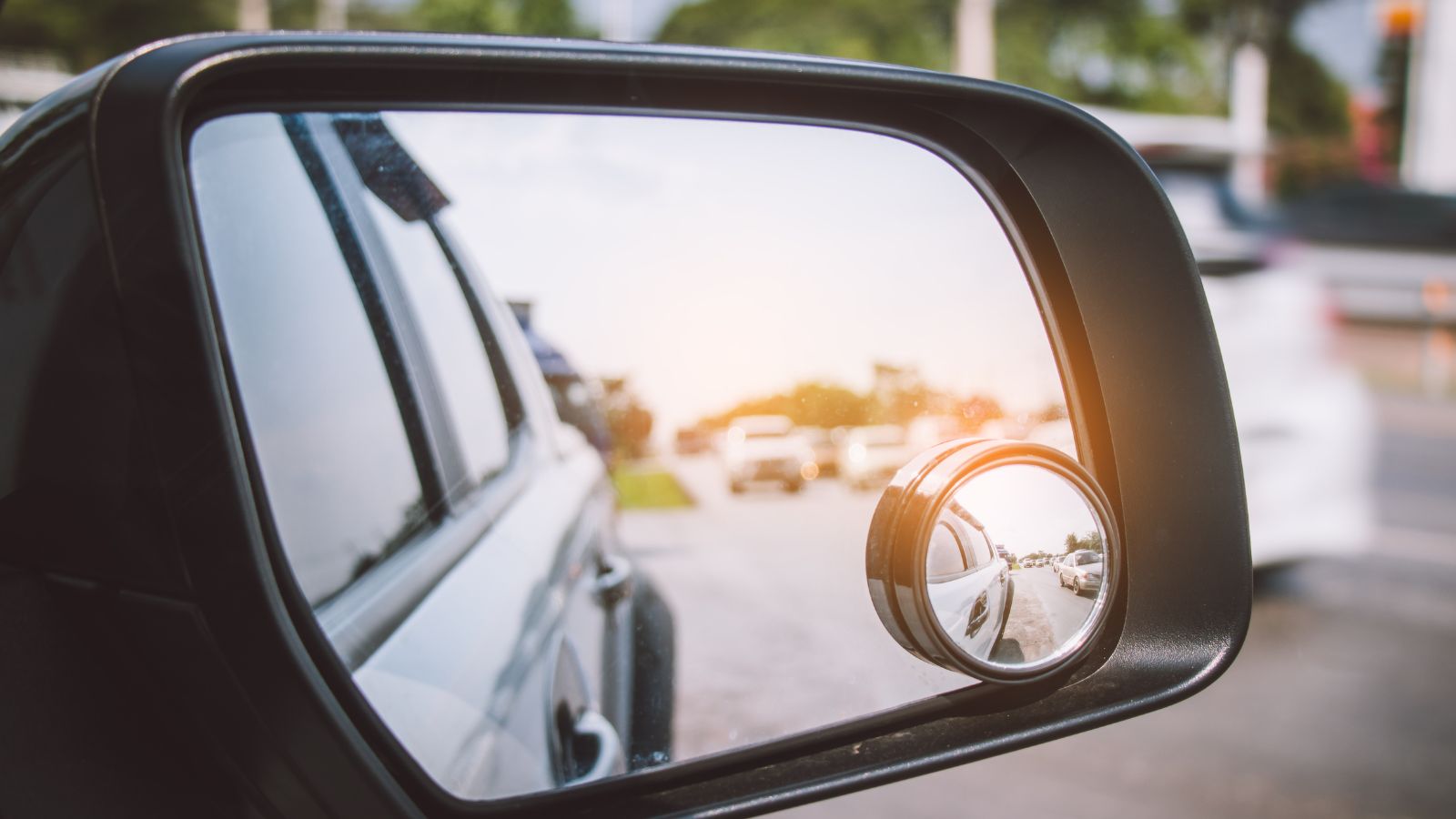
Many passenger-side mirrors are convex, meaning the glass curves outward to show a wider area. That wider field is useful for reducing blind zones, but it makes reflected objects appear smaller and therefore farther away than they are. The familiar warning that objects are closer than they appear is not decorative; it describes a real trade-off between coverage and accurate distance perception.
Drivers who swing a convex mirror outward may initially find speed and spacing harder to judge. A car can look comfortably distant even while it is closing rapidly in the adjacent lane. Practice helps: the driver can compare what appears in the centre mirror, the convex side mirror, and direct vision as vehicles pass. Lane changes should never be based on the apparent size of one reflection alone. The wider mirror is best used to answer whether something occupies the side zone, while the centre mirror, repeated checks, relative motion, and a shoulder glance help determine whether the available gap is genuinely safe.
Inward Mirrors Can Add Unnecessary Night Glare
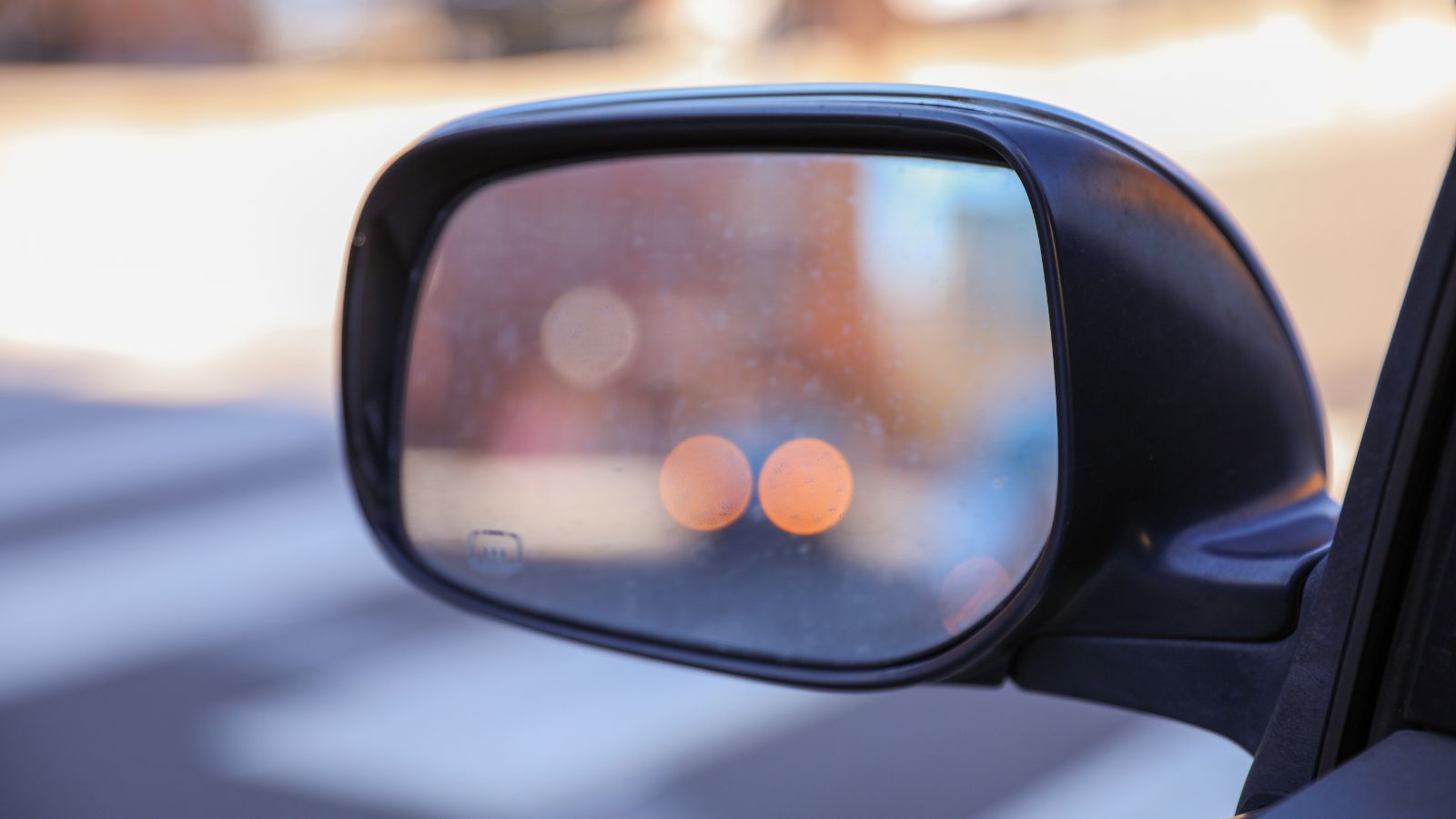
At night, an inward-facing side mirror may catch the strongest portion of headlights from a vehicle travelling directly behind. Because the same vehicle is often already visible in the centre mirror, the driver can receive duplicated glare from several reflective surfaces. Research on nighttime driving has found that glare can slow the detection of pedestrians and other targets, making unnecessary reflections more than a comfort issue.
A modest outward adjustment can reduce direct headlamp reflections in the outside mirrors while extending their view toward the side-rear zones. The centre mirror’s day-night setting or automatic dimming feature should also be used when available, and dirty glass should be cleaned because haze scatters light. The mirror must not be pointed outward solely to escape glare, however; the field of view still needs to connect with the centre mirror and peripheral vision. The safest setting improves coverage first, with reduced duplicate glare as a useful secondary benefit.
Blind-Spot Technology Is a Backup, Not a Substitute
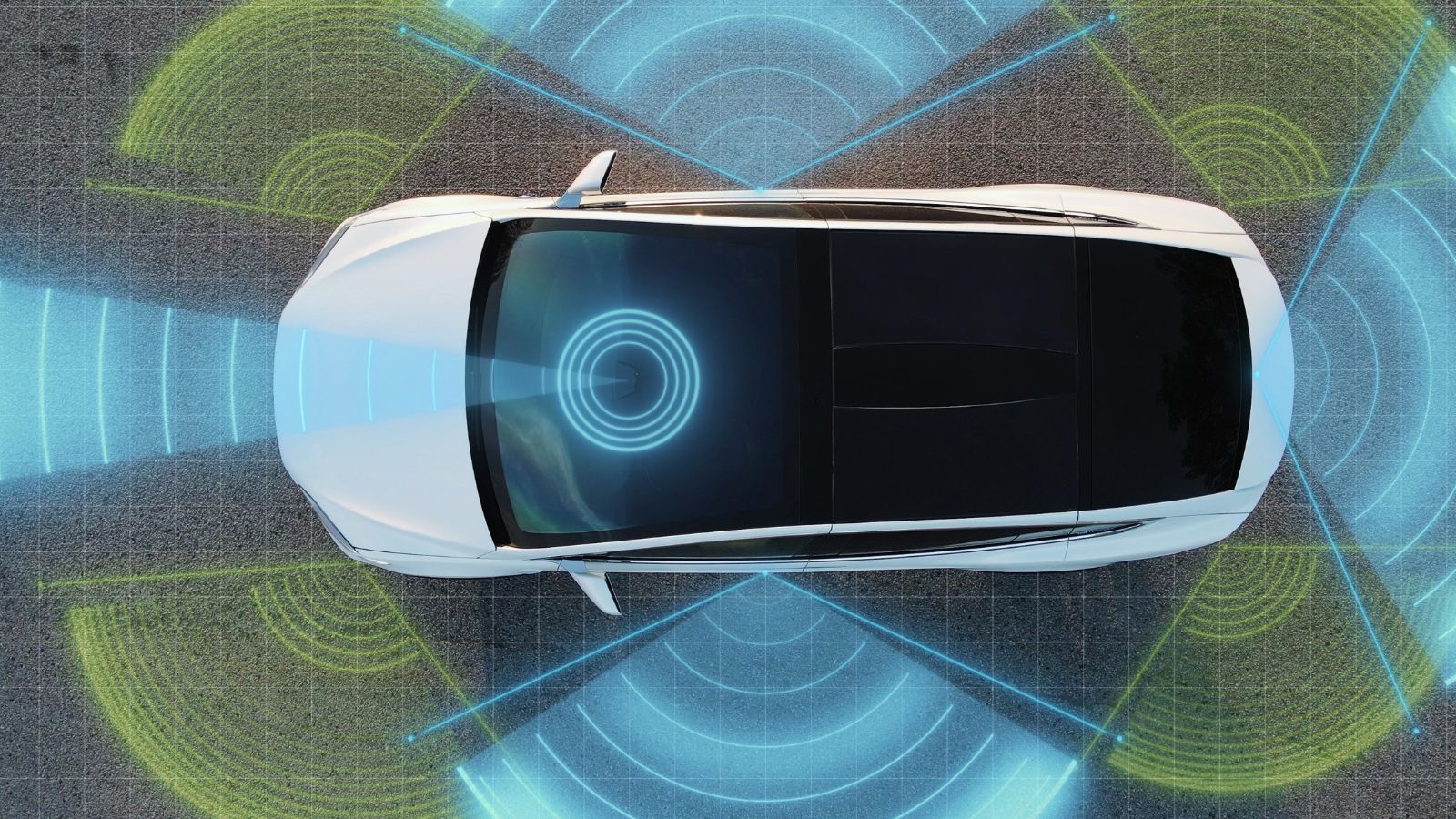
Blind-spot warning systems can add a valuable visual or audible alert when another vehicle occupies an adjacent lane. Research cited by the Insurance Institute for Highway Safety found lower police-reported lane-change crash rates among vehicles equipped with the technology. That benefit is meaningful, but the sensors do not transform poor mirror adjustment into good practice.
Detection zones vary by vehicle and system design, and warnings may be affected by speed, weather, road geometry, sensor blockage, or the size and path of the approaching road user. Drivers should treat the warning light as confirmation, not as the only source of information. A well-set centre mirror, outward-aimed side mirrors, signalling, repeated scanning, and a shoulder check remain the basic sequence. The strongest approach combines human observation with electronic assistance. When mirrors are aimed inward and the driver waits for a dashboard icon to make every decision, two safety layers have effectively been reduced to one.
22 Things Canadians Do to Their Cars in Spring That Mechanics Hate

Spring brings relief to many Canadian drivers after months of snow, freezing temperatures, and icy roads that put serious strain on vehicles. As temperatures rise across the country, drivers begin washing cars, switching tires, and preparing vehicles for warmer weather and upcoming road trips. However, mechanics across Canada notice the same mistakes every spring when drivers attempt to recover from winter damage. Road salt, potholes, and harsh winter driving conditions often leave vehicles with hidden problems that drivers ignore. Some spring habits even create new mechanical issues that could have been avoided with proper maintenance. Here are 22 things Canadians do to their cars in spring that mechanics hate.

Alanna Rosen is an experienced content writer that focuses on many EV and educational content. Her articles are regularly published on Get CyberTrucked and syndicated on large publications.