Battery X Metals is adding new leadership just as its most closely watched battery technology moves beyond controlled testing and deeper into real vehicles and automotive service environments. The Vancouver-based, publicly traded company appointed electric-vehicle entrepreneur William Fan as president effective August 13, 2026, while Massimo Bellini Bressi remains chief executive officer.
The timing is significant. Battery X has spent the past year testing a patent-pending system intended to recover usable EV battery capacity lost through cell imbalance rather than immediately replacing an entire battery pack. Results reported so far include commercial electric trucks, a severely degraded passenger EV and several BYD models. The opportunity could grow as the global electric fleet ages, but the company still faces the difficult transition from promising preliminary results to a standardized, certified and economically scalable automotive service.
William Fan Joins as President, Not as a Replacement CEO
Battery X said Fan became president on August 13, adding an executive whose background spans electric vehicles, lithium-ion batteries, energy storage, battery recycling, corporate development and capital markets. Bellini Bressi remains CEO and a director, meaning the appointment expands the leadership structure rather than replacing the person at the top. Battery X says Fan will work alongside Bellini Bressi on technology development, industry relationships, corporate-development opportunities and investor engagement. That combination hints at what the company needs next: not simply another successful technical demonstration, but relationships capable of getting specialized battery equipment into garages, fleets and other commercial settings.
Fan also arrives with experience around the complicated business of building and financing electric-vehicle companies. Battery X says he was involved with Solo Automotive and in 2023 led a bid for the intellectual property and operating assets of ElectraMeccanica Vehicles Corp. He entered the lithium-ion battery-recycling sector in 2018 and has worked on reverse logistics and battery supply-chain initiatives. Those experiences are particularly relevant because Battery X is trying to operate across more than one part of the battery lifecycle, including rebalancing, recycling technology and critical-mineral exploration.
Rebalancing Targets a Specific Kind of Battery Performance Loss
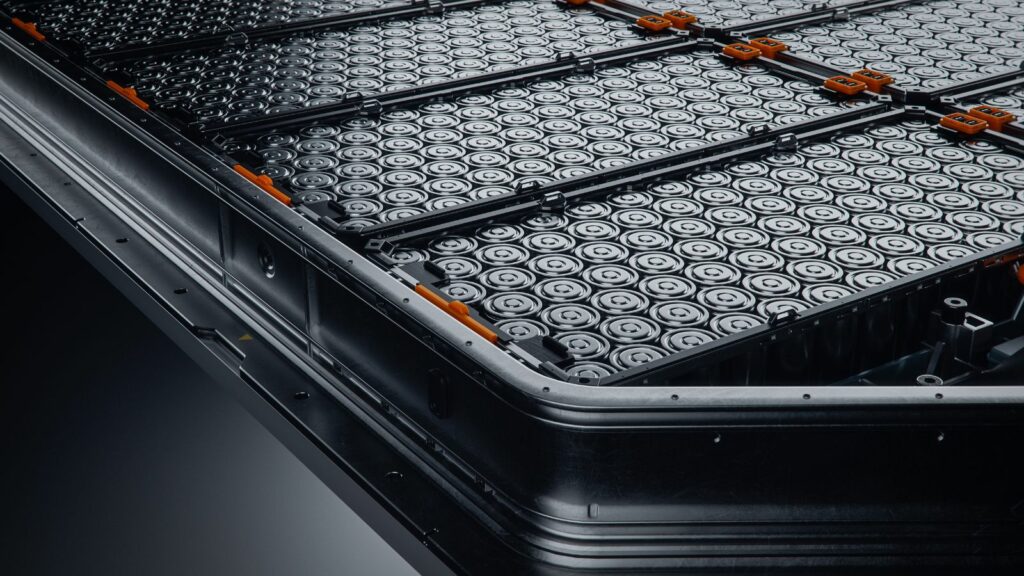
An EV battery pack contains many individual cells, and those cells do not always age or behave identically. Differences in temperature, manufacturing characteristics, internal resistance and use can gradually produce differences in state of charge. Academic research has shown why that matters: in a series-connected pack, a weaker or less-charged cell can constrain how much of the pack’s total stored energy is practically usable. A vehicle can therefore reach a protective charging or discharging limit even though other cells still have energy available. Battery-management systems already perform balancing functions, but substantial imbalance can still become an issue in aging packs.
Battery X’s system is intended to diagnose those differences and rebalance cells so more of the existing battery’s capacity becomes usable again. That distinction is important. Rebalancing cannot reverse every form of battery aging, repair physically damaged chemistry or magically restore material that has permanently degraded. The company’s strongest laboratory result concerned capacity specifically lost through induced cell imbalance. In a controlled test involving 15 lithium iron phosphate cells, the company reports that its process recovered approximately 99% of the capacity that had been lost because three cells were artificially placed at different states of charge. Battery X itself cautions that this laboratory result should not be interpreted as a promise of equivalent real-world range recovery.
The Technology Has Progressed From Modules to Driving Vehicles
The more interesting tests began when Battery X moved from controlled battery modules into complete vehicles. In one 2025 trial involving a severely degraded Class 3 electric truck, the company reported that estimated range increased from about 40 kilometres to approximately 295 kilometres after rebalancing. That result was measured under no-load conditions, an important qualifier because payload, terrain, temperature and driving behaviour can materially change an EV’s actual range. A later trial involving another electric truck combined diagnostics, replacement of a defective cell group and rebalancing, increasing the vehicle’s estimated effective range from roughly 40 kilometres to 265 kilometres.
Battery X then followed that second truck for several months. The company reported that after more than 2,000 kilometres of additional operation, its range performance remained relatively stable. Testing broadened again in January 2026 with a light-duty EV carrying a severely imbalanced 144-cell nickel-manganese-cobalt battery pack. Battery X said the vehicle had become essentially unusable, with an estimated pre-treatment range of roughly 0.1 kilometres. Following rebalancing without cell replacement in that particular trial, it reported an average estimated range of approximately 135.9 kilometres under mixed driving conditions. These remain preliminary company-reported performance results rather than large controlled fleet studies.
BYD Trials Took the Technology Into Several Passenger-EV Platforms
A further step came through tests involving BYD vehicles at multiple arm’s-length international automotive service centres. Battery X reported results in May 2026 from rebalancing procedures involving the BYD Song, Seal and Han. The largest reported improvement came from the Song, where estimated range increased from about 337 kilometres before rebalancing to 421 kilometres afterward, a gain of approximately 84 kilometres. The Seal increased from 597 to 631 kilometres, while the Han moved from 275 to 296 kilometres. The varying results are useful because they demonstrate why a single percentage cannot reasonably describe what rebalancing will do for every aging battery.
The company also acknowledges that the BYD results were obtained under the specific conditions of those evaluations and may vary by vehicle, battery condition and operating environment. That caveat matters. Rebalancing is likely to be most useful when imbalance is a meaningful cause of lost usable capacity. A battery whose principal problem is permanent chemical degradation, damaged cells or another mechanical or electrical fault presents a different problem. Battery X’s commercialization strategy consequently puts growing emphasis on diagnostics: determine what is wrong first, then decide whether rebalancing, targeted repair or another intervention is appropriate.
Tesla Compatibility Is Moving Forward, but It Is Not Yet a Mass-Market Product
Battery X has been systematically building interfaces for different vehicle battery architectures because a machine that works on one pack cannot simply be assumed to connect safely to every other EV. In July, the company said it had completed a first-generation working prototype of a proprietary adaptor for Tesla Model 3 and Model Y batteries. The adaptor is an engineering-validation prototype rather than a finished commercial product, and Battery X acquired a Model 3 battery pack for additional research, engineering validation and prototype testing. That distinction keeps the achievement in perspective: the company has solved part of the physical-interface challenge, but it has not announced a mass rollout of Tesla rebalancing services.
Its broader compatibility roadmap has also included the Nissan Leaf, VMC 1200 electric truck, Hyundai Ioniq and Chevrolet Volt. Battery X reported in July that Nissan Leaf and VMC 1200 adaptor development had been completed, while work was progressing on several additional platforms. Platform compatibility could eventually become one of the technology’s most important commercial advantages because repair shops cannot justify specialized equipment easily if it works on only a tiny group of vehicles. At the same time, supporting multiple batteries means more engineering, software, procedures, training and validation.
A Vancouver Repair Shop Has Already Become an Early Commercial Test Bed
Battery X crossed another boundary in July 2025 when its rebalancing subsidiary signed a commercial revenue-sharing agreement with an independent Vancouver automotive service centre specializing in out-of-warranty Tesla vehicles. Under the disclosed agreement, Battery X receives 20% of gross service revenue generated from each completed rebalancing procedure, while the service centre handles the shop’s labour and overhead. Battery X described the arrangement as the first deployment of its second-generation prototype in a live customer-facing commercial setting. The machine nevertheless remains classified as a working prototype rather than a fully mature production system.
That kind of partnership provides information a laboratory cannot. A garage needs understandable diagnostics, repeatable procedures, safe battery connections, technician training and documentation that can be explained to an owner deciding whether a repair is worth paying for. Battery X has said the commercial arrangement is being used alongside continuing technical validation to gather information about service delivery, pricing, operator requirements and customer adoption. It is a pragmatic route toward commercialization: instead of immediately building a large service network, the company can learn from a smaller operating environment while continuing to modify the hardware and software.
An Aging Global EV Fleet Makes Battery Life Extension More Relevant
Battery X is pursuing the technology at a time when the number of EVs eventually needing post-warranty battery service is becoming much larger. The International Energy Agency says global electric-car sales exceeded 20 million in 2025, rising about 20% from the previous year and representing roughly one-quarter of all new-car sales. Battery-electric vehicles accounted for about 65% of electric-car sales. Those volumes create a simple long-term consequence: even if modern batteries perform well for many years, increasingly large waves of electric vehicles will eventually enter the used-car market and move beyond their original battery coverage.
That changes the economics of EV servicing. Owners of older conventional cars have long been able to choose among engine repairs, rebuilt transmissions, replacement components and independent garages. An aging EV market will similarly need options between doing nothing and installing an entire replacement battery pack. Rebalancing could occupy part of that middle ground if diagnostics confirm that cell imbalance, rather than irreversible degradation, is limiting performance. The opportunity is therefore less about making old batteries “new” again and more about determining whether useful capacity already present in a pack can be recovered economically enough to delay a much larger repair.
Commercialization Still Has More Hurdles Than the Range Numbers Suggest
Battery X’s next challenge is turning unusual individual recoveries into a service that can be delivered consistently. Its July commercialization update outlined work on OBD-II-enabled battery diagnostics, battery-health reporting, cloud data storage, wireless software updates, commercial hardware refinements and potential third-party product certification, including UL certification where appropriate. The company has also filed an international Patent Cooperation Treaty application covering its rebalancing technology. None of those steps by itself proves that broad commercialization will succeed, but together they show the gap between a working prototype and equipment that independent automotive businesses can deploy repeatedly.
Financing is part of that challenge as well. Just before announcing Fan’s appointment, Battery X disclosed that a second tranche of a private placement raised approximately C$113,261, bringing aggregate proceeds from the first two tranches to about C$713,261. The company said proceeds are intended for corporate development, regulatory matters, payables, corporate-awareness activities and general working capital while supporting its broader exploration, rebalancing and recycling strategy. For investors and EV owners alike, the next evidence to watch is therefore different from another spectacular single-vehicle range gain: broader independent testing, certification progress, repeatable customer outcomes, deployment across more service locations and evidence that the economics work at commercial scale.
