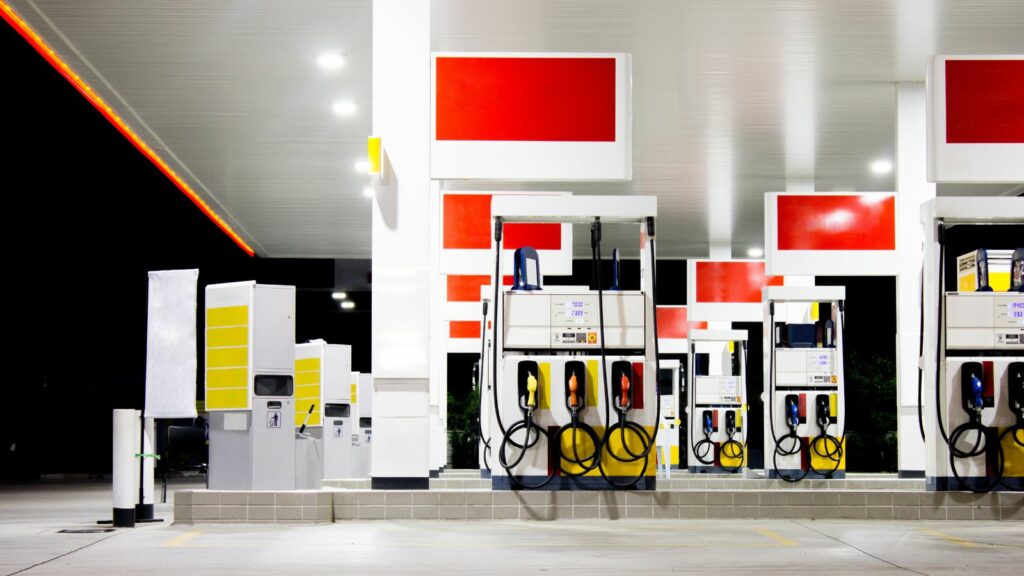
Canada’s temporary break on the federal fuel excise tax is entering its final weeks just as gasoline costs are again putting pressure on household budgets. Since April 20, Ottawa has suspended the tax that normally adds 10 cents per litre to gasoline and four cents per litre to diesel, a measure introduced when global energy disruptions sent fuel costs sharply higher. Unless the federal government changes course, the suspension ends after Labour Day on September 7, with the tax returning September 8.
The approaching deadline is becoming a political affordability fight. Conservative Leader Pierre Poilievre wants the break extended well into 2027, while Ontario Premier Doug Ford has also urged Prime Minister Mark Carney to keep it in place. With gasoline once again driving Canadian inflation higher, the decision is becoming harder for Ottawa to treat as a routine tax expiry.
What Exactly Ends After Labour Day
The measure at the centre of the debate is the federal fuel excise tax, a long-standing fixed tax normally charged at 10 cents per litre on unleaded gasoline and four cents per litre on diesel. Ottawa temporarily reduced those rates to zero beginning April 20, 2026. The suspension runs through September 7, meaning the previous rates are scheduled to return on September 8 without additional government action.
The tax is generally paid earlier in the fuel-distribution chain by manufacturers or wholesalers, rather than appearing as a separate charge that motorists pay directly at the cash register. Its cost, however, is normally embedded in retail prices. The temporary suspension was subsequently implemented through federal legislation, with the Spring Economic Update implementation bill receiving Royal Assent in June. Ottawa originally presented the measure as temporary help intended to bridge a period of unusually high global fuel prices rather than as a permanent restructuring of gasoline taxation.
The Return Could Be Noticeable on a Single Fill-Up
For motorists, 10 cents per litre can look small until it is multiplied across a tank. On a 50-litre gasoline fill-up, the excise-tax component alone represents about $5. Depending on the province and the interaction with sales taxes, analysts say the retail difference associated with restoring the tax could be roughly 10 to 11 cents per litre. That does not mean every station will raise prices by exactly that amount overnight, because crude prices, wholesale markets and retail margins also move constantly.
The timing is particularly sensitive because fuel is already considerably more expensive than it was a year ago. CAA reported a Canadian national average of 166.8 cents per litre on August 17, compared with 133.3 cents a year earlier. A family with two commuting vehicles therefore does not experience the September change in isolation. It arrives on top of a much larger year-over-year increase that has already changed the arithmetic of driving to work, taking children to activities and making longer trips.
Gasoline Is Again Pushing Canadian Inflation Higher
Fresh inflation numbers have strengthened the argument of those calling for an extension. Statistics Canada reported that the Consumer Price Index rose 3.0 per cent year over year in July, putting headline inflation at the top of the Bank of Canada’s one-to-three-per-cent control range. Gasoline was a major reason: pump prices were 25.7 per cent higher than a year earlier, accelerating from a 20.5 per cent annual increase in June.
That matters because gasoline has an unusually visible place in household finances. Prices are displayed on large roadside signs and can change several times within a week, making inflation feel immediate in a way that slower-moving expenses often do not. Statistics Canada’s monthly retail-price data put the Canadian average for regular unleaded gasoline at 164.2 cents per litre in July. Consequently, a September tax restoration would occur when drivers are already dealing with an energy-price rebound, rather than after the market has returned to the cheaper conditions seen during parts of 2025.
Poilievre Wants the Break Extended to Canada Day 2027
Pierre Poilievre intensified the pressure on Ottawa in mid-August, writing to Carney and arguing that the excise-tax suspension should remain in place until at least Canada Day 2027. His case is centred on affordability: gasoline prices remain elevated, while Canadians continue to confront higher costs across other essential household categories. The Conservatives have been pushing fuel-tax reductions since before Carney introduced the temporary excise-tax suspension in April.
Poilievre’s position also goes beyond simply preserving the existing 10-cent gasoline break. Conservatives have previously called for a broader removal of federal costs applied to gasoline and diesel, including suspending GST on fuel and eliminating policies they argue increase pump prices. That broader agenda remains politically contested, but the September deadline gives the opposition a simpler message: allowing the existing break to expire will restore a charge motorists have not paid since April. It turns a scheduled tax restoration into an immediate pocketbook issue heading into the fall.
Doug Ford Has Added Provincial Pressure
Ontario Premier Doug Ford has made the extension campaign more than a federal opposition demand. In an August 7 letter to Carney, Ford urged Ottawa to keep the excise-tax suspension in place until at least January 1, 2027, while also suggesting the federal government consider making the break permanent. Ford argued that households are still facing significant cost-of-living and economic uncertainty and that September is not the right moment to restore the charge.
Ontario gives Ford a policy example to point toward. The province initially reduced its own gasoline tax by 5.7 cents per litre and its diesel tax by 5.3 cents in July 2022. After repeatedly extending those reductions, Ontario eventually made the lower rates permanent, leaving its gasoline tax at nine cents per litre. That history allows Ford to frame permanent fuel-tax relief as something already tested provincially rather than an entirely new federal idea. It also increases political pressure on Ottawa from Canada’s most populous province.
This Is Not the Former Consumer Carbon Tax
The language around fuel taxes can easily become confusing because several different federal policies have affected pump prices. The tax scheduled to return in September is not the former federal consumer carbon fuel charge. Ottawa set that fuel charge to zero effective April 1, 2025, and later moved to remove the consumer-facing framework from federal law. That decision remains separate from the 2026 excise-tax suspension.
The distinction matters when evaluating claims about how much gasoline prices could change. The excise tax is a fixed 10 cents per litre on gasoline, whereas the former consumer carbon charge was tied to carbon pricing. Canada also continues to have industrial carbon-pricing systems, but those are different again and should not be treated as the same charge being restored at the pump in September. For motorists trying to understand the immediate deadline, the simplest point is that the temporary excise-tax rate is currently zero and is scheduled to return to 10 cents per litre.
Diesel Makes This More Than a Passenger-Car Debate
The gasoline rate attracts most of the political attention because millions of drivers see it every time they fill a car or SUV. Yet the temporary policy also eliminated the four-cent-per-litre federal excise tax on diesel. Ottawa explicitly argued when introducing the measure that lower diesel costs would help truckers and companies operating in food, agriculture, housing, construction and delivery—sectors where fuel can be a recurring operating expense rather than an occasional household purchase.
Four cents per litre is smaller than the gasoline reduction, but volume changes its significance. A commercial fleet buying thousands of litres will experience the change differently from a motorist filling a passenger vehicle once every week or two. The Canadian Trucking Alliance has also emphasized the importance of fuel-price stability when transportation costs are under pressure. That gives the September decision a second economic dimension: Ottawa is not simply deciding what motorists will pay at filling stations, but whether to restore a cost embedded in freight and business operations as well.
Keeping the Break Comes With a Multibillion-Dollar Cost
Fuel-tax relief is highly visible, but it is not free for the federal treasury. Finance Canada estimated when introducing the suspension that it would provide more than $2.4 billion in tax relief during 2026. The Parliamentary Budget Officer produced a somewhat lower fiscal estimate of roughly $2.1 billion for 2026-27 and calculated an average tax saving of approximately $124 per Canadian household under the existing temporary measure.
The PBO also estimated that cheaper gasoline resulting from the tax reduction would increase consumption by about 435 million litres compared with a scenario without the relief. That illustrates the policy trade-off facing Ottawa. Extending the break leaves additional money with drivers and businesses during an expensive period, but it also means giving up federal revenue and weakening the price incentive to use less gasoline. The debate is therefore not simply between helping consumers and doing nothing; it is also about whether broad fuel relief is the best use of billions of dollars in federal fiscal capacity.
Winter Gasoline Could Complicate What Drivers See in September
Even if the excise tax returns exactly as scheduled, motorists may not see a clean, permanent 10-cent jump. Canadian gasoline markets normally transition from more expensive summer-grade fuel toward winter formulations as cooler weather approaches. Energy analyst Dan McTeague has estimated that the seasonal change can reduce prices by roughly eight or nine cents per litre in some markets, depending on local conditions.
The timing could create an unusual September pattern. The federal excise tax is scheduled to return September 8, while the transition toward winter-specification gasoline starts around the middle of the month. That could produce a noticeable increase for several days followed by falling wholesale or retail prices as cheaper winter fuel enters the system. None of those movements is guaranteed: crude oil prices, refinery conditions, currency movements and regional competition can overwhelm seasonal patterns. Still, it means drivers should be cautious about attributing every September pump-price move solely to Ottawa’s tax decision.
Ottawa Has Not Yet Committed to an Extension
Despite increasingly public demands, the federal government had not announced an extension as of mid-August. When asked whether the pause could continue, a spokesperson for Finance Minister François-Philippe Champagne pointed to the government’s broader affordability measures but did not confirm that another excise-tax suspension was being considered. That leaves the September 8 restoration as the policy currently written into law and government guidance.
The decision places Ottawa between two defensible arguments. The original suspension was deliberately described as temporary relief for an extraordinary energy-price shock, and extending emergency measures indefinitely carries a growing fiscal cost. Yet the conditions that made fuel affordability politically urgent have hardly disappeared: CAA prices remain well above last year’s levels and July inflation was pushed higher by gasoline. For commuters, tradespeople, rural households and businesses that cannot quickly reduce driving, September is therefore more than a technical tax deadline. It has become a test of how long temporary affordability relief should last when the underlying price pressure refuses to disappear.
