
Trading in a vehicle should be simple: determine what the old car is worth, subtract that value from the new purchase, and settle the difference. In practice, several numbers can move at once, making a disappointing trade-in allowance surprisingly difficult to spot.
One of the moste allowance, vehicle discount, incentives, financing, and monthly payment as one attractive package instead of letting each number stand on its own. Not every bundled negotiation is improper, but it can make an ordinary or poor trade offer appear generous. These 12 pressure points show how the presentation works, where legitimate dealership costs enter the equation, and which numbers reveal whether the trade-in offer is actually competitive.
The Trade-In Number Is Only One Part of the Deal
A salesperson can dramatically increase a trade-in allowance without improving the transaction by the same amount. Imagine a vehicle originally priced at $45,000 with a $15,000 trade offer. If the dealer raises the allowance to $18,000 but simultaneously raises the purchase price to $48,000, the buyer has gained nothing. The numbers look different, but the $30,000 gap remains unchanged before taxes and other applicable charges.
This is the basic logic behind a blended deal. Money can effectively move between the selling price, trade allowance, discounts, financing, and other components while leaving the dealership’s overall economics relatively similar. Canadian regulators have specifically addressed situations in which trade allowances or vehicle prices were inaccurately represented. The safest comparison therefore begins with the entire transaction rather than the most flattering number printed on the worksheet.
A Bigger Allowance Can Be Mostly Cosmetic

Trade-in negotiations are emotional because owners naturally associate a vehicle with the money, maintenance, and years invested in it. Hearing that a dealership has “found another $2,000” for the trade can therefore feel like a meaningful victory. Yet that improvement matters only if nothing else becomes $2,000 worse.
A dealer might reduce a discount on the replacement vehicle, change how an incentive is applied, or alter another negotiable figure while increasing the displayed trade allowance. That does not mean every improved allowance is artificial; trade values genuinely are negotiable and can differ from dealership to dealership. The important question is what happened to the net difference. If a $3,000 improvement in the trade comes with a $3,000 increase elsewhere, the economics have not improved. A strong-looking allowance should always be tested against the complete before-and-after calculation.
The Four-Square Worksheet Can Blur the Comparison

A traditional dealership negotiating worksheet often divides the discussion into several moving numbers: purchase price, trade allowance, down payment, and monthly payment. This format is sometimes called the four-square. None of those numbers is inherently suspicious, but adjusting several of them at once can make it surprisingly difficult to identify where a concession actually occurred.
Suppose a shopper objects to a weak trade offer. Instead of changing only that figure, the conversation may shift toward a larger allowance combined with a different down payment or revised monthly payment. The page suddenly looks more attractive even though comparing the original transaction with the revised one requires several calculations. The practical defence is simple: keep a written record of each version and compare identical categories. When four numbers move simultaneously, the most visually impressive change is not necessarily the one producing real savings.
Monthly Payments Can Hide an Expensive Compromise
A monthly-payment discussion can make almost any vehicle transaction appear more comfortable. Extending a loan term spreads repayment over more months, reducing the payment without necessarily reducing the vehicle price or amount borrowed. That becomes particularly important when a weak trade-in offer leaves more money to finance.
Consumer agencies repeatedly advise shoppers to examine total borrowing costs rather than concentrating only on the monthly payment. Consider a buyer disappointed by a trade offer who says the resulting payment is too high. A longer term may bring that payment back within the desired budget, creating the impression that the dealership solved the problem. In reality, the trade value may not have improved at all, and the customer may remain in debt longer. The crucial figures are the vehicle price, trade allowance, amount financed, APR, loan term, and total cost—not merely the payment highlighted at the negotiating desk.
Dealer Retail Price Is Not the Same as Trade-In Value

One of the most common sources of frustration is seeing similar cars advertised for far more than the dealership offered on a trade. A vehicle receiving a $20,000 appraisal might appear online at another dealer for $25,000 or more. That gap alone does not prove the trade offer is unfair.
Trade-in and dealer-retail values measure different stages of the business. A dealership accepting a vehicle may face inspection, reconditioning, detailing, advertising, inventory carrying costs, sales expenses, warranty exposure, and the risk that the vehicle takes longer than expected to sell. Independent valuation services therefore distinguish between trade-in, private-party, wholesale, and retail values. The real warning sign is not simply that retail exceeds the trade offer; it is that the offer falls materially below realistic trade-market benchmarks without a persuasive vehicle-specific explanation. Comparing like with like prevents an inflated retail listing from becoming the wrong negotiating benchmark.
Condition Deductions Can Be Real—and Still Worth Challenging

Dealers do not appraise every example of the same model at the same value. Mileage, trim level, accident history, tires, brakes, body damage, mechanical condition, options, and local demand can all influence an appraisal. Canadian Black Book and other valuation providers explicitly incorporate several of these variables into vehicle-value estimates.
That makes a condition deduction legitimate in principle, but not automatically correct in amount. A dealer might identify worn tires, cosmetic damage, or required servicing and reduce the appraisal to account for the expected expense. The owner can reasonably ask for the specific deductions behind the number. Documentation can help as well: receipts for recent brakes, tires, scheduled maintenance, or substantial repairs may strengthen the case that less reconditioning will be necessary. The goal is not to insist that every deduction disappear. It is to turn an unexplained low offer into an itemized appraisal that can be compared with competing bids.
Negative Equity Can Vanish From the Conversation Without Vanishing From the Debt

Negative equity occurs when the outstanding loan balance exceeds what the vehicle is worth. It is one of the easiest circumstances in which a confusing trade transaction can develop because three separate numbers are involved: the vehicle’s actual value, the loan payoff, and the amount being carried into the next purchase.
For example, a car worth $20,000 with a $27,000 payoff has $7,000 in negative equity. A dealership may still advertise or discuss an attractive-looking trade allowance, but that old debt must ultimately be dealt with somehow—through cash, another adjustment, or financing connected with the replacement vehicle. The issue is significant enough that regulators specifically warn consumers to understand how negative equity is recorded. Edmunds reported that U.S. buyers trading underwater vehicles in the second quarter of 2026 carried an average of $6,884 in negative equity, illustrating how large these balances can become.
The Loan Payoff Deserves Its Own Verification

Owners sometimes know approximately what remains on their auto loan but not the exact amount required to close it. Those figures can differ because a payoff quotation may reflect accrued interest and other timing considerations. That matters because trade equity is calculated against the actual payoff, not a rough balance remembered from the latest statement.
Ontario’s motor-vehicle regulator advises consumers who owe money on a trade to obtain the payout amount from their lender and verify it even when the dealership handles the process. This provides a clean starting point. If the car is appraised at $22,000 and the verified payout is $17,000, the owner has $5,000 in positive equity before other transaction considerations. If the payout is $25,000, there is $3,000 in negative equity. Keeping those numbers separate prevents a dealer’s promise to “take care of the old loan” from replacing the mathematics that determine what is actually being carried forward.
Multiple Appraisals Turn Opinion Into Market Evidence

A single dealership’s appraisal is not the market value carved in stone. Dealers have different inventory needs, local customer demand, reconditioning expectations, wholesale outlets, and tolerance for particular models. Canadian regulators explicitly note that trade values may vary between dealers, while consumer agencies recommend obtaining several estimates.
That makes competitive appraisals unusually powerful. Before negotiating the replacement vehicle, an owner can obtain independent valuation estimates and, where practical, real purchase offers from other dealerships or vehicle-buying services. A person arriving with a documented $21,500 offer is in a stronger position when another dealer proposes $18,500. The second dealership does not have to match it, but the discussion becomes concrete: either there is a credible reason for the $3,000 difference or there is not. Multiple bids also provide an exit route, allowing the old vehicle to be sold elsewhere if the purchasing dealership will not offer a competitive value.
The Replacement Vehicle Price Should Stand on Its Own

A generous trade offer can lose its meaning when the replacement vehicle is overpriced. For that reason, the cleanest way to evaluate the transaction is to know what the dealership will sell the replacement vehicle for independently of the trade. Only then should the trade allowance be compared.
Consider two offers on the same type of replacement vehicle. Dealer A wants $48,000 and offers $18,000 for the old car, creating a $30,000 difference. Dealer B wants $45,000 but offers just $15,500, creating a $29,500 difference. Dealer A can boast about paying $2,500 more for the trade, yet Dealer B is $500 better before taxes, fees, financing, and jurisdiction-specific treatment are considered. Consumer guidance recommending written total-price comparisons is designed to expose exactly this kind of problem. The highest trade figure does not automatically produce the lowest cost to change vehicles.
A Written Breakdown Makes Moving Money Easier to Spot
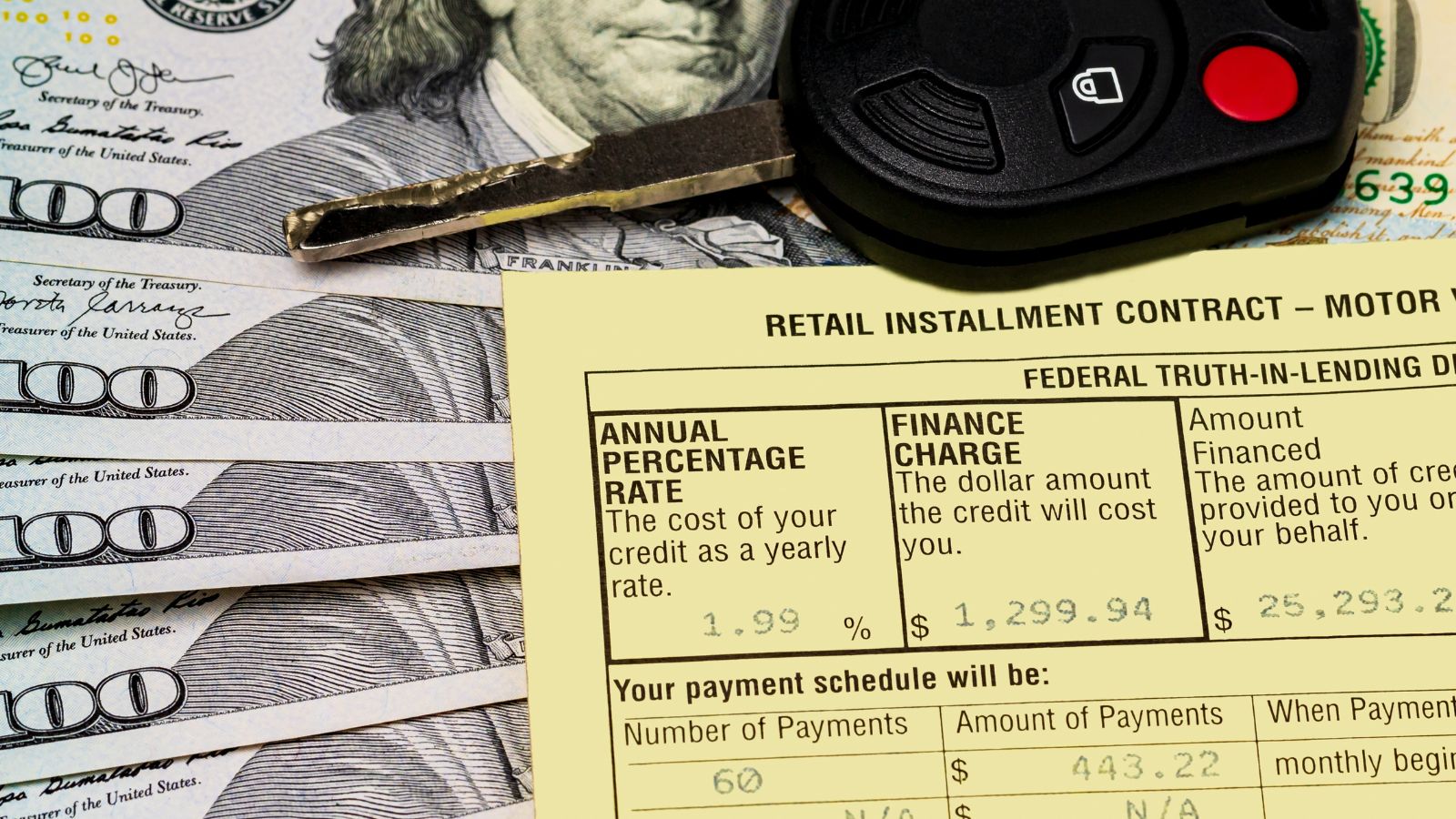
Memory becomes unreliable after an hour of negotiations involving discounts, rebates, loan terms, trade allowances, deposits, fees, and payment calculations. A written worksheet or purchase proposal turns the discussion back into arithmetic. It should clearly show the replacement vehicle’s price, trade allowance, outstanding trade loan where applicable, fees, optional products, financing terms, and the resulting totals.
Consumer-protection authorities in several provinces require important transaction information to be disclosed accurately, and regulators have taken enforcement action when purchase prices or trade figures were manipulated to conceal other amounts. A buyer does not need to accuse anyone of wrongdoing to request clarity. Simply asking, “What changed from the previous offer?” can be remarkably effective. If the trade allowance rose by $2,500, the paperwork should reveal whether the total amount payable actually fell by roughly that amount or whether the same dollars reappeared elsewhere in the transaction.
The Net Difference Is the Number That Cuts Through the Salesmanship

The most effective defence against a dressed-up trade offer is to stop treating the trade allowance as a scorecard. A dealership paying $20,000 for a vehicle is not necessarily offering a better transaction than one paying $18,000. The comparison must include what is being paid for the replacement vehicle and, when financing is involved, what the borrowing terms ultimately cost.
That approach also removes much of the emotional power from phrases such as “top dollar for the trade” or “we added another thousand.” Those statements may be completely accurate while still describing a mediocre overall deal. A disciplined shopper can compare the selling price, trade value, payoff balance, required fees, optional products, amount financed, interest rate, term, and total repayment. If the numbers remain competitive after everything is separated, the trade offer is genuinely useful. If the deal only looks attractive while all the numbers are blended together, the flattering allowance was probably never the most important number in the room.
19 Used Cars Canadians Should Avoid in 2026 (Based on Owner Complaints)

Buying a used car in Canada can feel safe until repair bills start stacking up. Owner complaints tell a different story than glossy listings. Transmission failures, electrical problems, and weak winter reliability show up again and again in consumer reports. Many of these issues appear after warranties expire, when owners least expect them. Some vehicles look affordable upfront, but become expensive to keep on the road. Others struggle in cold weather, urban driving, or long highway commutes. Here are 19 used cars Canadians should avoid in 2026 (based on owner complaints).
19 Used Cars Canadians Should Avoid in 2026 (Based on Owner Complaints)

Alanna Rosen is an experienced content writer that focuses on many EV and educational content. Her articles are regularly published on Get CyberTrucked and syndicated on large publications.