
A car loan can look manageable on paper and still become surprisingly expensive once interest, loan length, fees, trade-in debt, and optional products are added together. The monthly payment usually gets the most attention, yet it reveals only one part of what the vehicle will ultimately cost.
The biggest problems often come from ordinary decisions rather than obvious financial blunders. A slightly longer term, an unchallenged dealer rate, or a few extras rolled into financing can quietly add hundreds or thousands of dollars. These 18 mistakes show where the real cost of a car loan can hide—and why comparing the complete financing package matters far more than simply finding a payment that fits the monthly budget.
Shopping By Monthly Payment Alone
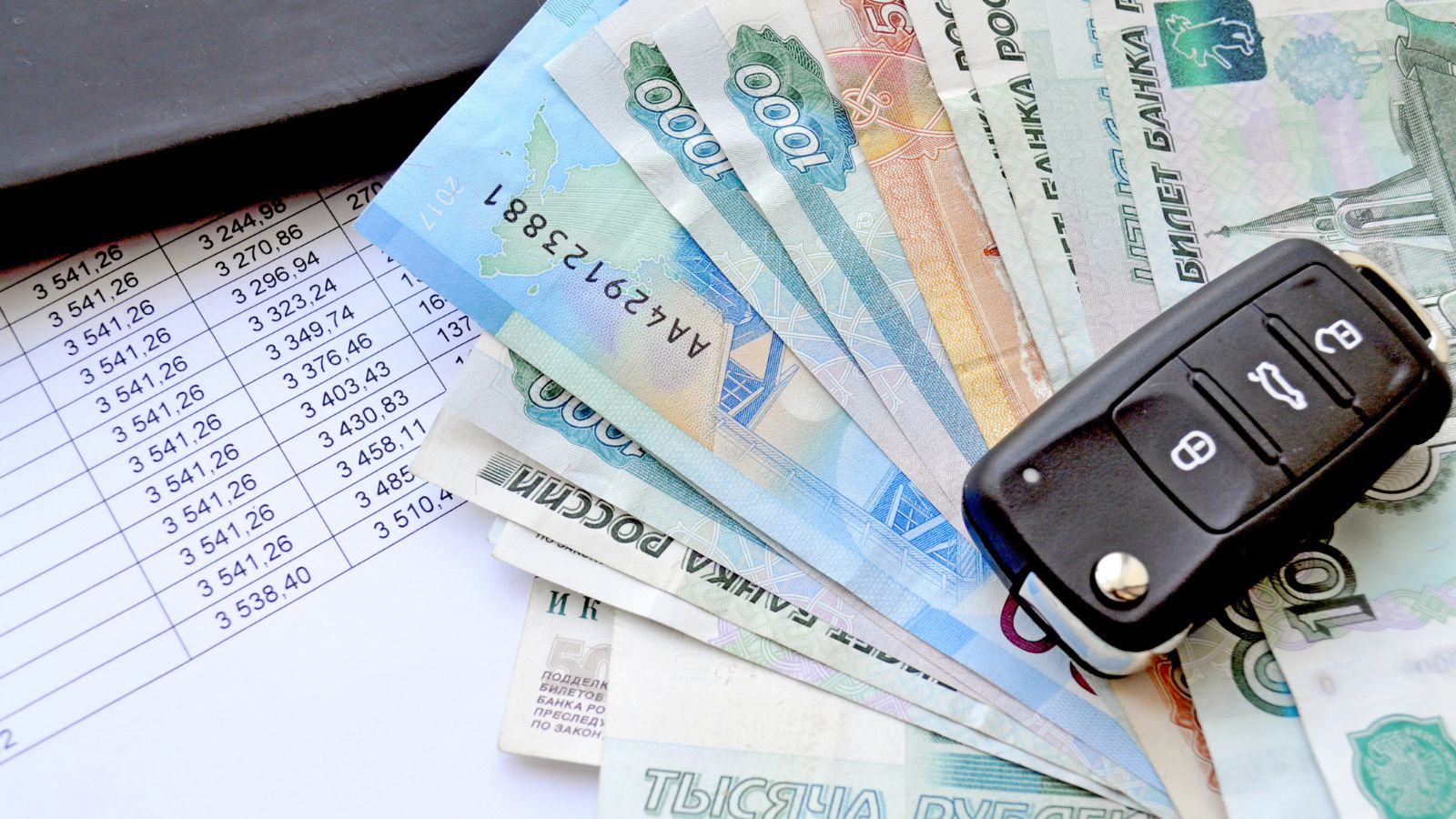
A monthly payment is easy to understand, which is exactly why it can dominate the conversation at a dealership. The problem is that almost any payment can be reduced by stretching the loan over more months. Experian reported that U.S. new-car payments averaged $770 in the first quarter of 2026, while used-car payments averaged $531. Those figures sound significant, but the payment alone says nothing about how much interest is accumulating or how long the borrower will remain in debt.
Consider a hypothetical $35,000 loan at 6% interest. Over 60 months, the payment is roughly $677 and total interest is about $5,599. Stretch the identical balance to 84 months and the payment falls to roughly $511, which looks considerably easier. Yet total interest rises to about $7,949. The lower-looking payment therefore costs around $2,350 more. Comparing total interest, amount financed, loan term, and final repayment amount exposes what the monthly figure hides.
Skipping Loan Shopping Before Visiting the Dealership

Walking into a dealership without another financing offer leaves the buyer with no meaningful benchmark. A dealer-arranged loan may be competitive, but there is no way to know that without checking banks, credit unions, and other lenders. The Financial Consumer Agency of Canada recommends getting quotes from multiple dealers and lenders, while U.S. consumer authorities similarly encourage buyers to obtain financing offers before entering the dealership’s finance office.
Preapproval also changes the negotiation. Instead of asking, “What payment can the dealer offer?” a shopper can ask whether the dealer can beat a specific rate and term already available elsewhere. In the U.S., the CFPB notes that auto-loan inquiries made within the applicable rate-shopping window are generally treated as a single inquiry by scoring models, with that window typically ranging from 14 to 45 days. Spending a little time comparing financing can therefore create real bargaining power without automatically creating the credit damage some borrowers fear.
Accepting the First Dealer Interest Rate

Dealer financing can be convenient, but convenience should not be confused with the lowest possible borrowing cost. The CFPB explains that a lender may provide a dealership with a “buy rate,” after which the rate offered to the customer can be higher. Canadian consumer guidance likewise warns that a dealer does not necessarily have to show the lowest available rate and recommends asking to see multiple financing options when possible.
A seemingly modest rate difference can become expensive over six years. On a hypothetical $35,000 loan for 72 months, an 8% rate produces a payment of roughly $614 and around $9,184 in total interest. At 6.5%, the payment drops to about $588 and total interest falls to approximately $7,361. That is more than $1,800 in interest saved simply by obtaining the lower rate. Negotiating a car’s selling price while treating the financing rate as fixed can therefore leave a substantial amount of money untouched.
Applying Without Checking Credit First
The interest rate offered on an auto loan is strongly influenced by the borrower’s credit profile. Errors, outdated information, or unresolved problems on a credit report can therefore become unusually expensive when a large loan is involved. The CFPB recommends reviewing credit reports before applying and disputing inaccurate information that could prevent a borrower from qualifying for better terms.
The rate differences can be dramatic. Experian’s Q1 2026 U.S. data showed average used-car rates of about 6.30% for super-prime borrowers and 21.77% for deep-subprime borrowers. Those categories represent very different credit profiles, but they illustrate how heavily financing cost can vary. Someone who discovers an incorrect delinquency after signing has lost much of the leverage that existed before the application. Checking reports early also provides time to correct mistakes, reduce outstanding balances where practical, and understand roughly what financing tier may be realistic before a salesperson begins discussing monthly payments.
Looking At the Interest Rate but Ignoring the APR

An advertised interest rate is not always the complete price of borrowing. In U.S. lending disclosures, the annual percentage rate, or APR, incorporates the interest rate plus certain mandatory loan fees. The CFPB therefore describes APR as a broader measure of financing cost. A loan with a slightly lower stated interest rate can potentially be more expensive if obtaining it requires enough additional financing charges.
That distinction becomes especially important when comparing lenders. Suppose one offer advertises an attractive rate but carries mandatory loan-related charges, while another has a slightly higher nominal rate with fewer costs. Simply circling the smaller interest-rate number can produce the wrong conclusion. Borrowers should compare the APR where applicable, finance charge, amount financed, payment schedule, and total of payments disclosed in the contract. Terminology and disclosure rules differ among jurisdictions, but the underlying principle remains straightforward: comparing only the headline rate ignores other costs that may be attached to obtaining the credit.
Stretching the Loan Term Too Far

Longer financing has become a major part of the affordability equation. Experian reported that 35.55% of U.S. new-vehicle loans in Q1 2026 extended beyond six years, up from 30.83% a year earlier. Longer terms can make increasingly expensive vehicles appear affordable because the principal is divided into more payments. The trade-off is additional time for interest to accumulate and a slower decline in the loan balance.
Government of Canada guidance provides a clear illustration. Its example of a $25,000 vehicle financed at 5% shows a total cost of $26,974 with a 36-month loan, compared with $29,681 over 84 months. The same vehicle and interest rate produce thousands of dollars in additional cost simply because repayment takes longer. Extended terms also increase the period during which the outstanding balance may exceed the vehicle’s value. A payment that becomes affordable only when stretched across seven or eight years deserves much more scrutiny than its monthly number suggests.
Making Too Small a Down Payment

A small down payment preserves cash today, but it also means financing a larger share of the purchase. The CFPB notes that a larger down payment reduces the amount that needs to be borrowed and may sometimes help a borrower obtain a better interest rate. Lenders also pay attention to the relationship between the loan amount and the vehicle’s value, commonly described as the loan-to-value ratio.
The arithmetic makes the impact easy to see. Financing an additional $5,000 for 60 months at 6.5% adds roughly $98 to the monthly payment and about $870 in interest over the term. That does not mean every buyer should empty an emergency fund to make the largest possible down payment. Liquidity matters too. The mistake is assuming that a low upfront payment has no later price. When taxes, fees, negative equity, and optional products are also financed, a very small down payment can leave the loan balance substantially higher than the vehicle’s market value almost immediately.
Financing Every Fee Without Checking the Real Total

A vehicle’s sticker price is only the starting point for the amount that may eventually be financed. Sales taxes, administration charges, documentation costs, accessories, protection packages, and other items can increase the balance. Canadian consumer guidance specifically tells borrowers to compare financing fees and the total amount being financed, while the FTC recommends obtaining an out-the-door price that includes charges and fees before arriving at the dealership.
Financing those costs also means potentially paying interest on them. For example, adding $2,000 to a 72-month loan at 7% creates about $34 in additional monthly payment and roughly $455 in interest over the loan. The borrower has therefore paid approximately $2,455 for $2,000 of added cost. Some fees may be unavoidable, while others may be negotiable or optional. The important step is separating them, asking what each one pays for, and seeing how each affects the final financed balance instead of concentrating solely on the vehicle’s advertised price.
Rolling Negative Equity Into the Next Car

Trading a vehicle that is worth less than its outstanding loan balance does not make that debt disappear. The difference is negative equity. When a dealer rolls it into the replacement vehicle’s financing, the borrower begins the new loan paying for both the new car and part of the old one. Both the FTC and CFPB specifically warn that this practice increases the new amount financed and makes the replacement loan more expensive.
Imagine a trade-in worth $18,000 with $22,000 still owed. Rolling that $4,000 shortfall into a 72-month replacement loan at 7% adds about $68 to the monthly payment. Over the term, that $4,000 generates roughly another $910 in interest. The borrower is effectively paying almost $4,910 through the new loan for debt attached to a vehicle that is already gone. Repeating the process every few years can create a cycle in which each replacement begins with debt carried over from the last.
Automatically Saying Yes to Finance-Office Add-Ons

The finance office is often where a negotiated vehicle price starts growing again. Extended service contracts, paint protection, tire-and-wheel coverage, theft products, VIN etching, maintenance plans, and other add-ons may be introduced after the buyer has already spent hours choosing a vehicle and negotiating. The FTC warns that optional add-ons can cost thousands of dollars and have sometimes been included without consumers fully understanding or requesting them.
The problem becomes larger when the products are financed instead of paid separately. A hypothetical $2,500 package added to a 72-month loan at 7% increases the payment by about $43 per month and results in roughly $569 of additional interest. The package effectively costs more than $3,000 by the time the loan ends. Some add-ons can provide legitimate value for particular owners, so rejecting everything automatically is not necessary. The expensive mistake is deciding under pressure without checking price, coverage, exclusions, existing warranty protection, cancellation rights, and whether a comparable product is available elsewhere.
Financing GAP or Credit Insurance Without Comparing Prices

GAP protection and credit insurance are different products, but both can quietly expand a loan when their premiums are financed. GAP generally addresses the potential difference between an outstanding auto balance and an insurer’s payment after a covered total loss. Credit insurance may cover payments or balances under specified circumstances such as disability, unemployment, or death. Consumer agencies emphasize that these products are generally optional in many ordinary financing situations and that buyers should understand their costs and terms.
Price-shopping matters because financing the premium creates interest on top of the product’s stated price. A $1,200 GAP product financed for 72 months at 7%, for example, adds about $20 a month and approximately $273 in interest. Its effective financed cost becomes roughly $1,473. That does not prove the protection is a poor purchase; the value depends on the vehicle, down payment, depreciation, insurance arrangements, exclusions, and price. The mistake is assuming the dealership’s version is automatically required or automatically the most economical option.
Mixing the Trade-In, Car Price, and Financing Into One Conversation

A car transaction can involve three major numbers at once: the price of the replacement vehicle, the value of the trade-in, and the financing terms. When all three move simultaneously, it becomes difficult to tell where a dealer is making a concession and where the cost is being recovered. A larger trade-in allowance can feel generous, for example, while a higher vehicle price or less favorable loan quietly cancels the benefit.
The FTC recommends obtaining the out-the-door price of the vehicle before allowing the trade-in to blur the comparison. That makes it easier to evaluate the new car’s cost independently. The same logic applies to financing. A buyer who knows the vehicle price, trade-in value, payoff amount, rate, term, and amount financed can judge each part on its own merits. Without that separation, a salesperson can keep the monthly payment near a target while changing other variables. The payment stays familiar, yet the underlying transaction may become considerably more expensive.
Assuming Early Payoff Will Always Produce the Expected Savings

Many borrowers plan to take a longer loan for flexibility and then “just pay it off early.” That strategy can work, but only if the contract supports it. The CFPB advises checking whether an auto loan contains a prepayment penalty. It also distinguishes simple-interest loans from precomputed-interest arrangements, which can behave differently when borrowers make additional payments or attempt an early payoff.
Under a typical simple-interest structure, reducing principal sooner generally reduces the interest that can accrue later. With precomputed interest, the interest calculation is established differently, and extra payments may not deliver the same principal-reduction benefit a borrower expects. Contract and local-law provisions matter as well. Someone choosing a 72- or 84-month loan because they expect to eliminate it in three years should therefore confirm how payments are applied, whether extra amounts go directly to principal, whether there is any early-payoff charge, and how the payoff balance is calculated. An assumed escape route is valuable only when it actually exists in writing.
Signing Without Auditing the Amount Financed

The final financing agreement deserves more attention than the conversation that came before it. A borrower may remember agreeing to one vehicle price and one payment, yet the contract can contain taxes, fees, optional products, old-loan balances, or other amounts that materially change the borrowing cost. U.S. Truth in Lending disclosures, for example, identify figures such as APR, finance charge, amount financed, and total of payments specifically to help reveal the cost of credit.
Consumer agencies repeatedly advise checking that the paperwork matches the deal that was actually negotiated. This is where apparently small discrepancies become important. A protection package, administration charge, or product that increases the balance by $1,500 or $2,000 can create additional interest for years. The most useful comparison is not simply “Is the payment what they promised?” but “Why is the amount financed this number?” Reading every line before signing may feel tedious after a long dealership visit, but fatigue is an expensive reason to overlook thousands of dollars in financed charges.
Driving Away Before Conditional Financing Is Truly Final

In some jurisdictions and transactions, a buyer may be allowed to take a vehicle home while dealership-arranged financing remains conditional. That can create a stressful situation if the dealer later says the original financing was not approved and asks the buyer to return for a different contract. The FTC has warned consumers about so-called yo-yo financing scenarios in which replacement financing carries a higher rate, larger payment, or other less favorable terms.
The emotional leverage can be powerful by that point. The vehicle may already be parked at home, shown to family members, insured, and treated as the buyer’s new car. Walking away suddenly feels much harder than it did in the showroom. Before leaving, borrowers should determine whether the financing is final, whether any condition remains outstanding, and what the contract says will happen if financing cannot be assigned or approved. Rules vary by jurisdiction, so the contract and local consumer protections matter. A deal that is not final should never be mentally treated as final.
Treating a 0% Financing Advertisement as a Guaranteed Deal

A large “0%” in an advertisement can make every other financing question seem irrelevant. Yet promotional financing commonly comes with qualification requirements. The FTC warns that very low or zero-rate offers may be restricted to well-qualified borrowers, while advertisements can also contain requirements involving down payments, particular vehicles, loan lengths, or other conditions. The CFPB likewise notes that zero-percent offers are generally aimed at consumers with strong credit profiles.
That means the meaningful question is not whether a 0% promotion exists, but whether the specific buyer and vehicle actually qualify and what the complete written terms require. A shopper should also compare the purchase price and total amount paid under each available offer rather than assuming the promotional headline settles the decision. If the advertised financing applies only to a different model, requires substantially more cash upfront, or disappears after the credit application, the original budget may no longer work. Promotional financing is potentially valuable, but only the final approved contract determines what the car actually costs.
Refinancing Only to Get a Smaller Monthly Payment
Refinancing can be a smart way to reduce an expensive rate, particularly when credit has improved or market conditions have changed. Experian reported that U.S. borrowers refinancing in Q1 2026 reduced their interest rates by an average of 2.2 percentage points and saved an average of $81 per month. The danger comes when the entire refinancing decision is based on payment reduction while the repayment period is restarted or substantially extended.
Consider a hypothetical $25,000 balance with 36 months remaining at 6.5%. Continuing that schedule produces roughly $2,584 in interest over those remaining payments. Refinancing the same $25,000 at a lower 5.5% rate but stretching repayment to 60 months drops the payment from about $766 to $478. It sounds like a major improvement, yet total interest becomes about $3,652—roughly $1,068 more. A refinance should therefore be compared using remaining total cost, fees, new term, payoff date, and interest, not merely the size of next month’s payment.
Treating Payment Extensions as Free Months

A lender-approved payment extension can provide valuable breathing room during job loss, illness, disaster, or another short-term financial disruption. It should not, however, be mistaken for loan forgiveness. The CFPB warns that interest can continue accumulating during auto-loan extensions and that delaying payments can increase total interest and sometimes add payments to the end of the term.
The size of that effect depends on the contract and outstanding balance. As a simple illustration, a $30,000 balance accruing interest at 7% annually would generate roughly $173 of interest over 30 days if interest accrues daily and the principal remains unchanged. An extension early in the loan can be particularly costly because the outstanding balance is normally larger. Borrowers facing genuine hardship may reasonably decide that the added cost is worth the immediate relief. The mistake is accepting extensions casually because the next payment disappears from the calendar. Asking exactly how interest accrues, when deferred amounts become due, and how the payoff date changes prevents temporary relief from becoming an invisible long-term expense.
19 Used Cars Canadians Should Avoid in 2026 (Based on Owner Complaints)

Buying a used car in Canada can feel safe until repair bills start stacking up. Owner complaints tell a different story than glossy listings. Transmission failures, electrical problems, and weak winter reliability show up again and again in consumer reports. Many of these issues appear after warranties expire, when owners least expect them. Some vehicles look affordable upfront, but become expensive to keep on the road. Others struggle in cold weather, urban driving, or long highway commutes. Here are 19 used cars Canadians should avoid in 2026 (based on owner complaints).
19 Used Cars Canadians Should Avoid in 2026 (Based on Owner Complaints)

Alanna Rosen is an experienced content writer that focuses on many EV and educational content. Her articles are regularly published on Get CyberTrucked and syndicated on large publications.