A Northern Ontario refinery that has spent years trying to fill a strategic gap in North America’s battery supply chain has secured a much longer runway for one of its most important raw materials. Electra Battery Materials says it has extended its cobalt hydroxide purchase agreement with Glencore through the end of 2031, covering roughly 10,000 metric tonnes of contained cobalt over the five-year extension.
At current market prices, Electra values that cobalt at more than US$500 million. That figure represents the estimated value of the contained metal rather than guaranteed revenue for the refinery. More immediately, the arrangement is intended to cover 100% of the cobalt feedstock Electra expects to need while commissioning and ramping up its Temiskaming Shores refinery through 2027, removing one significant uncertainty as construction moves toward its next major milestones.
The Glencore Extension Secures a Critical Piece of the Supply Chain
Electra’s August 20 announcement extends its cobalt hydroxide purchase relationship with Glencore AG through December 31, 2031. The companies have worked together commercially since 2021, but the new arrangement stretches that relationship well beyond the Ontario refinery’s expected start-up period. Electra says approximately 10,000 metric tonnes of contained cobalt are covered by the five-year extension. At prevailing market prices, the company estimates that material is worth more than US$500 million. The agreement also gives Electra flexibility to coordinate deliveries with the refinery’s commissioning schedule rather than receiving large volumes before the plant is ready to process them. For a facility still under construction, matching raw-material deliveries with the pace of commissioning can be just as important as securing the material itself.
The most immediate benefit comes in 2027. Electra says the Glencore arrangement covers 100% of the cobalt feedstock it expects to require for commissioning and the initial production ramp-up that year. That does not mean Glencore will necessarily provide every tonne the refinery processes through 2031. Electra specifically says it retains the ability to supplement Glencore volumes with other suppliers as production rises after start-up. Instead, the agreement establishes a substantial long-term base of material while reducing one of the logistical risks surrounding the plant’s launch. Refinery projects require much more than completed buildings and installed equipment. Feedstock has to arrive in the right chemical form, volume and schedule for testing, qualification and eventually continuous operation. Electra now has considerably greater visibility on that part of the equation.
Why US$500 Million of Cobalt Does Not Mean US$500 Million of Revenue
The headline value attached to the agreement requires an important distinction. Electra describes the roughly 10,000 tonnes of contained cobalt as representing more than US$500 million at current market prices. That is a measure of the underlying metal’s value, not a forecast that Electra will earn US$500 million from the agreement. The refinery is purchasing cobalt-containing feedstock and intends to convert it into battery-grade cobalt sulfate, meaning its economics will depend on feedstock costs, refining expenses, product pricing, recoveries, commercial terms and other variables. Commodity markets can also change substantially during a five-year contract. Cobalt has experienced pronounced price cycles as supply from major producing countries has expanded or been restricted.
Recent market pricing nevertheless helps explain the scale of the number. London Metal Exchange data for Fastmarkets cobalt contracts in early August 2026 showed prices around US$55,000 per metric tonne for nearby delivery periods. Multiplying prices in that general range by approximately 10,000 tonnes produces a gross metal value comfortably above US$500 million. That calculation illustrates why a comparatively modest tonnage can carry such a large dollar figure. Cobalt is a high-value specialty metal used in batteries and other strategic applications, and securing several years of supply gives Electra greater certainty over the raw material feeding its business. The commercial value Electra ultimately captures, however, will depend on converting that material efficiently and finding customers willing to pay competitive prices for the refined product.
Construction Has Moved From Plans to Concrete, Steel and Equipment
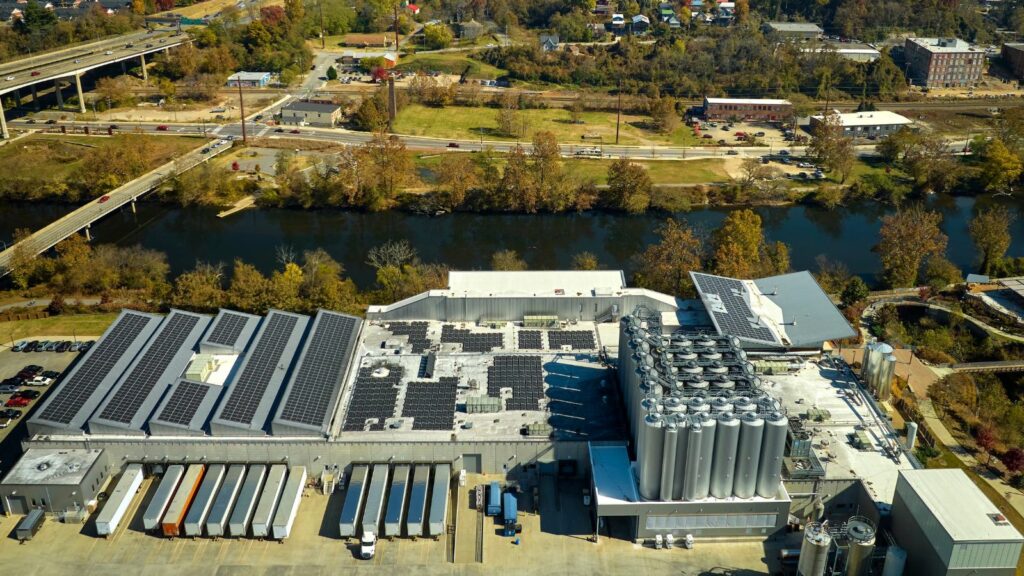
The supply agreement arrives while the physical refinery is advancing through an increasingly visible stage of construction in Temiskaming Shores. Electra reported on August 18 that concrete work, structural steel erection, equipment installation and piping preparation were underway. Work is taking place across major areas including the solvent-extraction and crystallizer circuits. The company has also awarded substantial construction packages, including an approximately C$26-million agreement with WB Melback Corporation and a roughly C$6.8-million agreement with Pro Pipe Construction. Electra says engineering is substantially complete, with remaining design work increasingly centred on construction support, field conditions and site queries. That shift matters because it suggests the project is moving away from primarily designing the refinery and toward physically completing it.
The current schedule remains ambitious. Electra is targeting selected commissioning activities during the fourth quarter of 2026, mechanical completion in the second quarter of 2027 and broader commissioning and production ramp-up in the third quarter. Commercial production is targeted for the fourth quarter of 2027. At its initial design rate, the brownfield facility is expected to produce approximately 5,120 tonnes of contained cobalt annually, while its crystallizer has nameplate capacity supporting as much as 6,500 tonnes a year. Those dates and production targets remain forward-looking rather than guaranteed. Construction schedules can change as equipment, contractors, testing and commissioning interact. Still, having sufficient cobalt available for the 2027 ramp-up means Electra should not have to finish building a refinery and then begin searching for the material required to prove it can operate.
Electra Has Also Locked In a Major Customer for Its Finished Product
Securing raw material would solve only half of the commercial equation. A refinery also needs buyers for what comes out the other end. In March 2026, Electra signed an updated binding term sheet with South Korean battery manufacturer LG Energy Solution covering battery-grade cobalt sulfate from the Ontario facility. Under the updated arrangement, approximately 60% of the refinery’s planned cobalt sulfate production is firmly committed through 2029. The agreement also includes an option that could extend the commercial relationship through 2032. That leaves Electra with about 40% of projected capacity available for additional customers, depending on production levels and how future commercial agreements develop.
The combination gives the refinery a clearer line from upstream supply to downstream demand. Glencore provides a major source of cobalt hydroxide; Electra plans to refine that material in Ontario; and LG Energy Solution is positioned to take a majority of the initial finished output. Electra has described this structure as an integrated commercial pathway between mining and battery manufacturing. It is especially significant for a new refinery because customer qualification can be demanding. Battery manufacturers require tight chemical specifications and consistent product quality, not simply cobalt with a particular headline purity. The LG relationship does not eliminate commissioning or market risk, but having a large customer lined up before commercial production begins reduces the uncertainty associated with trying to place thousands of tonnes of new output after a facility has already been built.
Governments See the Refinery as More Than an EV Project
Public-sector support surrounding Electra helps explain why the refinery has continued to advance despite the difficult economics that have affected many North American battery-material projects. In May 2026, the Government of Canada finalized a C$20-million investment through the Strategic Response Fund toward Electra’s C$99.4-million refinery expansion project. Ottawa said the investment would help establish battery-grade cobalt sulfate production in Temiskaming Shores and strengthen domestic critical-mineral supply. The federal government estimates that the project will create or maintain more than 160 jobs, including about 60 permanent direct positions and work for roughly 100 skilled tradespeople during construction. Electra has separately estimated that construction and ramp-up could involve 150 to 200 workers when contractor opportunities are included.
The United States has also put money behind the Canadian facility. In 2024, the U.S. Department of Defense awarded Electra US$20 million under Title III of the Defense Production Act to help complete the industrial-scale hydrometallurgical plant. The funding illustrates how cobalt supply has moved beyond an EV-only discussion. Battery-grade materials are relevant to energy storage, electronics and defence applications, while governments increasingly view concentrated mineral-processing capacity as an industrial-security vulnerability. Electra completed a US$34.5-million financing and US$40-million debt-equitization transaction in October 2025, when it said more than US$80 million from investors and government commitments had secured the capital required for construction and commissioning. The challenge now is turning that financial support into reliable commercial output.
Cobalt Remains One of the World’s Most Concentrated Mineral Supply Chains
Electra’s Ontario project matters partly because producing more cobalt is not the same thing as diversifying cobalt supply. The International Energy Agency says geographical concentration has increased across many critical-mineral refining industries, with cobalt among the clearest examples. Its 2025 outlook estimated that China accounted for roughly 78% of refined cobalt production in 2024. The IEA expects China to remain the leading cobalt refiner over the coming decade and projects that it could still supply more than 60% of refined cobalt in 2035. At the mining stage, meanwhile, the Democratic Republic of the Congo remains central to global cobalt supply, while Indonesia has rapidly increased production as a by-product of its enormous nickel industry.
That concentration can create vulnerabilities even when there appears to be enough cobalt available globally. The IEA noted that the DRC temporarily suspended cobalt exports in February 2025 as authorities responded to weak prices and oversupply. Such interventions demonstrate how quickly the balance between abundant material and constrained availability can change. Electra’s initial refinery feed is still expected to rely heavily on internationally sourced cobalt hydroxide, so an Ontario processing plant does not make the upstream supply chain entirely domestic. What it changes is the refining step. Instead of sending cobalt through a heavily concentrated Asian processing network before it reaches North American manufacturers, Electra is attempting to establish an alternative processing route inside Canada.
Electra Is Already Looking Beyond Its Current International Feedstock
The Glencore extension provides long-term volume, but Electra is also pursuing a more diversified feedstock strategy for the years after its initial ramp-up. In 2025, the company began metallurgical testing on material from the historic Cobalt Camp in Ontario and its Iron Creek cobalt-copper project in Idaho. The objective is to determine whether North American concentrates with more complicated mineral chemistry can eventually be incorporated into the Temiskaming Shores refinery. Electra has said some of these resources contain arsenic and other impurities that can make conventional processing difficult. Testing is therefore examining potential modifications to the plant’s front-end flowsheet, including technologies that could widen the range of concentrates accepted by the refinery.
Recycling could eventually become another source. Electra has already completed a feasibility-level engineering study for a proposed modular battery-recycling operation adjacent to the cobalt refinery. The concept would recover lithium, nickel, cobalt, manganese and graphite from battery manufacturing scrap and end-of-life lithium-ion batteries. Under that plan, recovered cobalt could feed directly into the neighbouring cobalt sulfate operation. None of those potential sources should be treated as guaranteed future commercial supply: mining projects require development, metallurgical testing has to prove successful, and recycling facilities require their own financing and execution. Still, they show why Electra describes Glencore as a foundation rather than the entire long-term feedstock strategy. A refinery capable of accepting multiple sources would be more resilient than one permanently tied to a single mine, producer or country.
The 2031 Agreement Gives Electra Time, but Execution Is Now the Test
Extending feedstock supply through 2031 changes the nature of the uncertainty facing Electra. The company no longer has to answer the immediate question of whether adequate cobalt will be available when operators begin bringing the refinery online in 2027. It has also secured a major downstream commitment from LG Energy Solution, advanced construction, attracted government funding and reduced a substantial amount of debt. Those pieces make the project more commercially defined than it was during earlier periods when construction stalled and financing remained unresolved. Ontario has simultaneously increased its emphasis on mineral processing, including a C$500-million Critical Minerals Processing Fund intended to encourage more value-added processing within the province rather than simply exporting mineral resources.
None of that makes the refinery a finished success. Mechanical completion, commissioning and commercial production are different milestones, and industrial plants often reveal their most difficult technical problems only when equipment begins running together continuously. Electra must prove it can safely achieve targeted recoveries, meet customers’ battery-grade specifications, control operating costs and ramp production toward its design capacity. Commodity prices will also influence margins, while international supply remains exposed to policy and geopolitical disruptions. The significance of the Glencore extension is therefore less that it guarantees Electra’s future than that it removes a major variable. With raw material largely accounted for through start-up and substantial supply available through 2031, attention can increasingly shift to whether the Ontario facility can deliver what its commercial agreements were built around.
