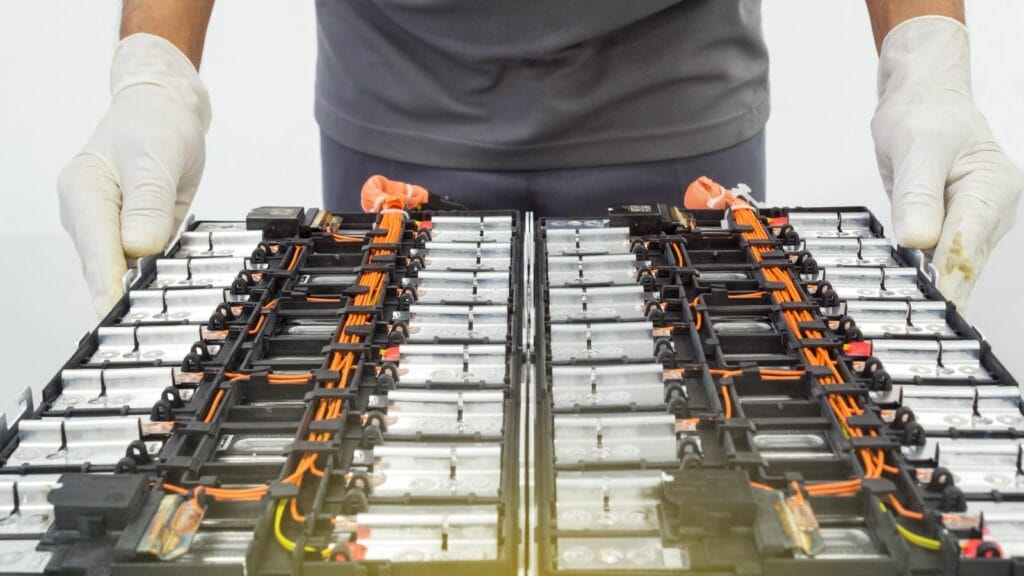
For Electrovaya, the road to producing lithium-ion cells in western New York has reached one of its most consequential checkpoints. The Toronto-area battery company has begun factory-acceptance testing of the automated cell assembly and formation equipment destined for its Jamestown manufacturing operation, moving the project from construction and equipment procurement toward full-process validation.
The testing is designed to make the future production line behave as much like the Jamestown operation as possible before it is dismantled, shipped to New York and commissioned again. That distinction matters. Rather than discovering major process problems after installation, Electrovaya is attempting to identify them while the equipment remains with its supplier. The milestone comes as the company prepares for a substantially larger U.S. manufacturing footprint and an updated target of commercial cell manufacturing in early fiscal 2027.
The Full Production Line Is Being Tested Before Shipment
Electrovaya said on August 24 that factory-acceptance testing had begun for its automated lithium-ion cell assembly and formation equipment. The program goes beyond checking whether individual machines switch on or meet basic specifications. The equipment is being commissioned and validated with production-grade cell-manufacturing materials, including Electrovaya’s proprietary ceramic separator technology. Engineers will examine functionality, process performance, repeatability and whether the complete system is ready for the demands of commercial manufacturing. The company had previously described the exercise as an approximately eight-week program at its equipment supplier in Korea, with the complete cell assembly line connected and operated before shipment to New York.
That makes this phase unusually important for a project approaching installation. A battery-cell factory depends on tightly coordinated processes, where coating, assembly, electrolyte handling, formation and quality controls must operate consistently rather than merely work independently. Electrovaya is effectively trying to find problems in a controlled environment before they become expensive startup problems in Jamestown. The company expects the current testing program to run through roughly early October. Only after the line has cleared that stage is it expected to be transported to New York, where installation, site acceptance and additional commissioning work will still be required before commercial production begins.
Jamestown Is Becoming Electrovaya’s U.S. Manufacturing Centre
The equipment is ultimately headed to a sizeable industrial property in Jamestown, where Electrovaya owns a roughly 52-acre site containing a manufacturing building of about 137,000 square feet. The operation is intended to become the company’s U.S. headquarters and a major manufacturing hub. Electrovaya initially announced the New York project in 2022 as its first U.S. gigafactory, with plans to manufacture lithium-ion cells and battery products at a former industrial facility. New York officials said at the time that the project could create approximately 250 jobs and produce more than one gigawatt-hour of batteries and energy-storage products over its first five years.
Timelines have evolved as the project has moved from announcement to construction. Earlier company forecasts pointed to production beginning sooner, but Electrovaya’s 2026 regulatory disclosures now say the Jamestown buildout will continue through fiscal 2026 with commercial cell manufacturing targeted for early fiscal 2027. That updated schedule is more useful than the company’s older projections because the factory still requires equipment delivery, installation and commissioning. Dry-room construction has been completed, while electrical and HVAC infrastructure upgrades were still underway when Electrovaya reported its latest quarterly results. The project is therefore advanced, but it is not yet a fully commissioned cell factory.
A $50.8 Million U.S. Loan Is Funding Much of the Expansion
The Jamestown project is also notable for the scale of public-backed financing behind it. The Export-Import Bank of the United States approved and later closed a $50.8-million direct loan for Electrovaya’s U.S. expansion under its Make More in America initiative. The financing is intended to cover eligible equipment, engineering, construction and setup expenses associated with the New York manufacturing operation. EXIM has described the transaction as part of an effort to bring more battery-production capacity and strategically important manufacturing into the United States rather than relying heavily on overseas supply chains.
New York has added another layer of support. Electrovaya’s regulatory disclosures say the company has secured $2 million in grants and $4.5 million in refundable state tax credits for the Jamestown project. EXIM estimated that the transaction would support roughly 290 American jobs, while Electrovaya has generally described the facility as capable of creating more than 250 positions. For a company Electrovaya’s size, the financing structure matters because building a cell factory can absorb enormous amounts of capital before meaningful revenue begins flowing from it. Government-backed debt allows the company to pursue the expansion without funding the entire investment through its own cash or repeated equity issuance.
The Factory Could Change Electrovaya’s Economics
Jamestown is not simply about producing more batteries. It is also central to Electrovaya’s effort to become more vertically integrated by manufacturing cells that ultimately feed its own battery modules and systems. Cell production represents one of the most technically demanding and valuable parts of the lithium-ion supply chain. Bringing more of that work in-house could give Electrovaya greater control over manufacturing schedules, product specifications and input costs while reducing dependence on outside cell suppliers. The company has repeatedly identified improved supply-chain security and potential margin benefits as major reasons for developing the New York facility.
The timing is significant because Electrovaya’s underlying business has been expanding while Jamestown consumes investment. The company reported $17.7 million in revenue for its fiscal third quarter of 2026 and $51.3 million for the first nine months, up about 18% from the comparable nine-month period. Quarterly gross margin reached a company record of 34.9%, while adjusted EBITDA was a record $3.7 million. Management currently expects normalized fiscal-2026 revenue of roughly $70 million to $73 million. Those figures do not guarantee that Jamestown will deliver its targeted economics, but they show why management sees domestic cell production as more than a speculative manufacturing project.
New Customers Are Increasing the Importance of Added Capacity
Electrovaya’s traditional strength has been batteries for high-utilization industrial equipment, particularly material-handling vehicles. The potential customer base is now widening. In July, the company announced a commercial relationship with Amazon that is expected to support continued use of Electrovaya batteries in material-handling operations and potentially extend into robotics and stationary energy storage. An associated warrant arrangement allows Amazon to acquire as many as 13.88 million Electrovaya common shares, with full vesting connected to cumulative future purchases of $280 million. Those purchases are not guaranteed, however, and remain subject to Amazon’s ordinary ordering decisions.
Electrovaya says its battery technology has now been used in more than 35,000 systems operating in demanding industrial environments. At the same time, it is moving into energy storage, defense, robotics and higher-voltage transportation applications. Its newly launched ElvaPulse 1500 stationary-storage platform, for example, is designed to deliver about 2.88 megawatt-hours of nominal energy and configurable continuous power of up to roughly seven megawatts. Initial ElvaPulse deliveries are targeted for the second quarter of 2027 from Jamestown. If even part of those newer markets develops at scale, having domestic cell and module production could become increasingly important.
Sending Jamestown Workers to the Supplier Could Reduce Startup Risk
One of the more human elements of the testing program involves the people who will eventually operate the production line. Electrovaya said approximately 10 employees connected with key Jamestown cell-manufacturing operations are participating directly in the factory-acceptance process. Instead of receiving machinery they have only seen in technical manuals or training presentations, those employees will gain hands-on experience while the line is being validated. Management has said the objective is for future Jamestown operators to have already run the equipment at production speeds before it arrives in New York.
That does not eliminate the difficulties of starting a battery-cell factory. Equipment can behave differently after disassembly, shipping and reinstallation, while site utilities, environmental controls and upstream material quality can introduce fresh problems. Still, early operator involvement may shorten the learning curve. Battery manufacturing depends heavily on consistency, particularly when defects can be microscopic and only become apparent after formation or cycling. Training operators alongside the equipment manufacturer gives the company a chance to combine process troubleshooting with workforce preparation. It also creates continuity between the factory-acceptance phase overseas and the site-acceptance and commissioning work that will follow in Jamestown.
Early October Is the Next Major Milestone, Not the Finish Line
The immediate target is completing factory-acceptance testing by approximately early October. From there, Electrovaya plans to ship the manufacturing equipment to Jamestown, install the line and undertake further site acceptance and commissioning. That sequence means the current announcement should be viewed as a major de-risking step rather than the start of commercial cell production. Electrical and HVAC work was still continuing at the site in the company’s latest update, and real-world production will require the new equipment to perform reliably after being rebuilt inside the New York facility.
The distinction is especially important because battery projects frequently encounter delays between equipment delivery and stable commercial output. Electrovaya has already updated its own timetable from earlier projections, with current filings pointing to commercial cell manufacturing in early fiscal 2027. Investors, customers and local workers will therefore be watching several concrete milestones: completion of the Korean testing program, shipment and installation of the line, successful commissioning in Jamestown and the eventual transition from qualification runs to saleable cells. For now, completing full-line testing would move the project considerably closer to that final step.
