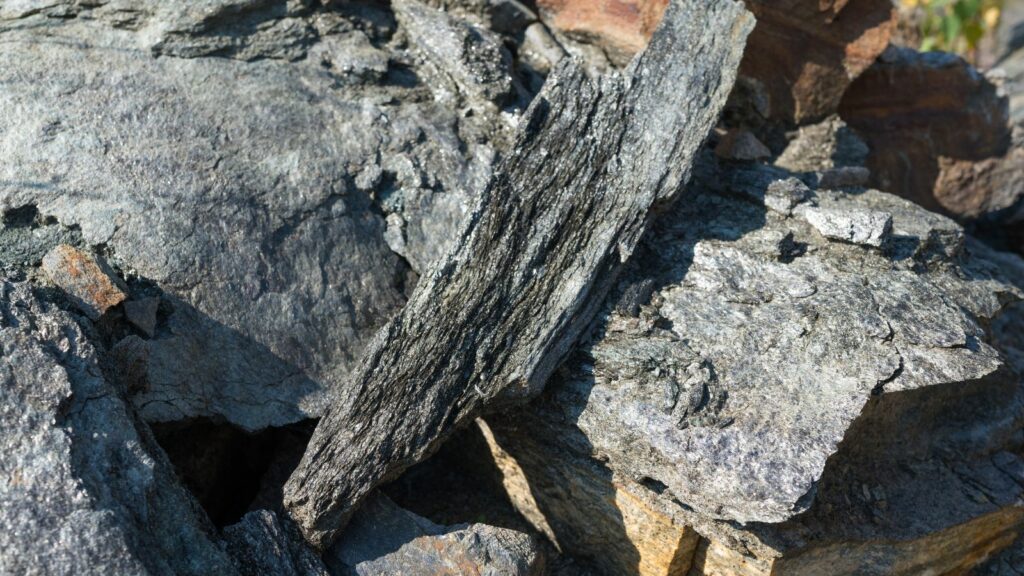
Graphite sits inside nearly every lithium-ion battery, yet North America remains heavily exposed to overseas supply and processing. A new Quebec-U.S. collaboration is trying to close part of that gap. On August 26, Focus Graphite announced a non-binding memorandum of understanding with U.S.-based battery technology company C4V to evaluate graphite from its Lac Knife project in northeastern Quebec for advanced battery-anode production.
The agreement is still an evaluation-stage pact rather than a guaranteed purchase contract. But it connects a proposed Canadian mine with American processing technology at a moment when governments and manufacturers are increasingly focused on where critical battery materials are mined, purified and converted into usable components.
The Pact Connects a Quebec Mine With U.S. Anode Technology
Focus Graphite’s agreement with Charge CCCV LLC, better known as C4V, centers on testing whether graphite concentrate from Lac Knife can work with C4V’s proprietary Green Anode Technology. The proposed route would take natural graphite from the mine and move it further downstream toward coated spherical purified graphite, or cSPG, a higher-value material designed for use in lithium-ion battery anodes. Focus owns 100% of Lac Knife, while C4V provides the processing technology being evaluated.
That distinction matters because the announcement is not a binding supply agreement. There is no guaranteed volume of graphite changing hands and no confirmed commercial anode plant tied to the pact. Instead, the companies are establishing a technical qualification process. If those tests succeed, Focus says the relationship could progress toward technology licensing, downstream manufacturing arrangements, customer qualification, strategic partnerships or eventual offtake agreements. For a mine developer, those later-stage connections can be almost as important as the deposit itself.
Lac Knife Has Already Produced the Kind of Concentrate C4V Wants
The partnership is possible partly because recent processing tests suggest Lac Knife can produce unusually high-purity concentrate without immediately relying on chemical or thermal purification. Focus reported in July that an approximately eight-tonne pilot program completed by SGS Canada used ore averaging 18.9% total carbon. The program produced roughly 850 kilograms of concentrate grading between 95.0% and 98.7% carbon across different size fractions.
Those results are particularly relevant because C4V says its Green Anode process requires natural graphite concentrate around the 98% carbon level. Focus’s earlier pilot work, which helped underpin its 2023 feasibility study, produced an average concentrate grade of 97.8% carbon at 90.7% total graphite recovery. The latest test therefore gives the companies a meaningful quantity of representative material for qualification work rather than relying solely on small laboratory samples. The next challenge is demonstrating that the concentrate performs consistently after being transformed into anode material and incorporated into batteries.
The Deposit Is Large Enough to Support a Long-Life Mine Plan
Lac Knife is located roughly 27 kilometres south of Fermont in Quebec’s Côte-Nord region, on the Nitassinan ancestral lands of the Innu community of Innu Takuaikan Uashat mak Mani-utenam. The project’s 2023 feasibility work estimated 12 million tonnes of indicated mineral resources grading 15.34% graphitic carbon, along with approximately 600,000 tonnes of inferred resources grading 16.90%. Probable mineral reserves were estimated at 9.31 million tonnes grading 14.97%.
The development plan prepared for that study envisioned an open-pit operation lasting approximately 27 years. Its processing plant was designed around annual production of about 47,781 tonnes of saleable graphite concentrate from roughly 365,000 tonnes of mill feed. Initial capital spending was estimated at C$236.5 million in the filed 2023 study. Those numbers remain projections rather than operating results, and mining economics can change significantly as construction costs, graphite prices, financing conditions and project design evolve. Still, they illustrate why downstream customers are examining Lac Knife before construction begins.
North America Is Trying to Reduce a Concentrated Supply Risk
The strategic backdrop is bigger than one Quebec deposit. U.S. Energy Information Administration data show that China accounted for roughly 79% of global natural graphite mine production in 2024. More importantly for batteries, the EIA reported that China processes more than 90% of the world’s graphite. That means supply-chain concentration extends beyond where ore is extracted; it also covers the steps that turn mined material into something battery manufacturers can actually use.
The United States, meanwhile, produced no natural graphite in 2024, according to the same U.S. government analysis. Natural Resources Canada also identifies China as the dominant global producer, while Canada’s share of global mine output remains comparatively small. That combination explains why a Canadian deposit paired with U.S. processing technology attracts attention even before commercial production exists. Replacing overseas supply requires more than discovering graphite. North America needs mines, purification capacity, specialized processing, qualified materials, financing and customers to develop together.
Purification Is One of Canada’s Hardest Graphite Bottlenecks
Mining graphite concentrate is only the beginning of the battery supply chain. Natural Resources Canada’s Getting Green Graphite to Market program notes that Canada has multiple graphite projects under development, but identifies purification as a significant obstacle. Conventional concentrate at roughly 95% purity does not necessarily command enough margin to make every Canadian mine economically attractive, while some lithium-ion anode applications require graphite purified beyond 99.9%.
That is where the Focus-C4V relationship becomes more significant than a simple mineral supply arrangement. C4V’s proposed process is intended to take already high-quality concentrate and transform it closer to a finished anode product. If the technology can perform commercially as intended, more of the economic value associated with graphite could remain in North America rather than having concentrate shipped abroad for key processing steps. The qualification stage will determine whether that idea works with Lac Knife material at the required quality, consistency and cost—not merely whether the mine can produce high-carbon flakes.
Moving Downstream Could Change the Economics of the Project
A tonne of mined graphite and a tonne of battery-ready anode material occupy very different positions in the value chain. Focus has historically presented Lac Knife primarily as a potential producer of high-purity flake concentrate. The C4V agreement offers a possible path deeper into processing, where material specifications, intellectual property and long-term customer relationships become increasingly important.
C4V says its automated technology is designed to convert premium natural graphite concentrate directly into coated spherical purified graphite while reducing process complexity. Successful integration could therefore give Focus access to a product category closer to battery manufacturing rather than leaving it solely exposed to the concentrate market. That does not automatically guarantee better project economics: commercial-scale yields, energy requirements, capital costs and customer qualification still have to be established. But the strategy reflects a broader shift in critical minerals. Governments increasingly want domestic mines, while companies increasingly recognize that much of the strategic and financial value lies in the processing stages between the mine gate and the battery cell.
Quebec Is Already Building a Much Larger Graphite Ecosystem
Lac Knife is not advancing in isolation. Quebec has become one of Canada’s central testing grounds for building an integrated graphite industry. In May 2026, construction began on Nouveau Monde Graphite’s Matawinie project. The federal Major Projects Office says the mine is expected to have capacity of up to 106,000 tonnes annually once completed, potentially making it the largest graphite mine in North America and the G7.
Government support has been substantial. Ottawa arranged a seven-year agreement covering 30,000 tonnes of Matawinie graphite concentrate annually and announced a C$459-million financing package involving Export Development Canada and the Canada Infrastructure Bank. The broader project is expected to attract close to C$2 billion of investment and support more than 1,000 jobs. That does not mean Lac Knife will receive comparable support or follow the same development path. It does show, however, that Canadian policy has moved beyond simply identifying graphite as critical and toward financing mines, securing supply and encouraging downstream processing.
Cleaner Processing Claims Will Have to Survive Commercial Testing
Environmental performance is increasingly part of the competition to build a non-Chinese graphite supply chain. C4V describes Green Anode Technology as a highly automated process intended to reduce water use, energy consumption, chemical requirements and overall processing complexity compared with conventional routes. Focus’s recent pilot work offers another potentially useful feature: concentrate reaching as high as 98.7% carbon was produced using mechanical concentration alone, without chemical or thermal purification at that stage.
Those characteristics could become commercially important if they translate from pilot work into a full industrial system. Natural Resources Canada has separately funded research into lower-impact graphite purification because getting material above 99.9% purity can carry significant environmental and technical challenges. Yet process claims should not be confused with demonstrated mine-to-battery performance. Water consumption, energy intensity, recovery rates, emissions and costs ultimately need to be measured at relevant scale. The new pact gives Focus and C4V a pathway to generate some of the technical evidence needed to determine whether the cleaner-processing argument holds up.
Lac Knife Still Has Permitting and Financing Work Ahead
The battery-anode agreement does not remove the conventional hurdles facing a new mine. Focus announced in June that it had completed the final major technical study needed to support its Environmental and Social Impact Assessment submission. A hydrogeological assessment concluded a multi-year environmental program examining groundwater conditions, hydraulic systems and the proposed tailings infrastructure. Completion of those studies moves the project forward, but it is not the same thing as receiving construction approval.
The ESIA still has to proceed through the applicable Quebec review and permitting process, alongside continued stakeholder and Indigenous engagement. Financing is another major gate. The 2023 feasibility study estimated initial capital expenditure at C$236.5 million, an estimate that will eventually have to be considered against more current engineering, financing and construction conditions. For developers of critical-mineral projects, securing potential customers before committing hundreds of millions of dollars can reduce risk. That helps explain why Focus is pursuing downstream qualification while environmental and development work continues in parallel.
What Happens Next Will Determine Whether the Pact Becomes a Supply Chain
The immediate milestone is technical rather than financial. Lac Knife concentrate must be evaluated through C4V’s process, and the resulting material must demonstrate the properties required for battery-anode applications. According to the companies, a successful program could open discussions around licensing, manufacturing, customer qualification, strategic partnerships and possible offtake. Those steps would represent progressively stronger evidence that the collaboration is moving from laboratory and pilot work toward a commercial supply chain.
For now, the significance lies in the direction of travel. North America has substantial demand for batteries but remains dependent on highly concentrated overseas graphite-processing capacity. Quebec possesses large graphite resources, yet Canada itself acknowledges that purification and downstream conversion remain bottlenecks. Linking a prospective Canadian mine directly with U.S. anode technology addresses both issues at once. Whether Lac Knife becomes part of a meaningful North American alternative will depend on successful qualification, permitting, financing and binding customer commitments. The August 26 pact starts that process; it does not finish it.
