A widening Canada-U.S. trade confrontation is testing how much economic pain Canadians are prepared to tolerate in defence of the country’s negotiating position. New Ipsos polling finds 63% believe Canada was right to stand firm in talks with Washington even if that choice brings higher costs or job losses. Yet the apparent national consensus changes sharply with age: support falls to 48% among Generation Z adults.
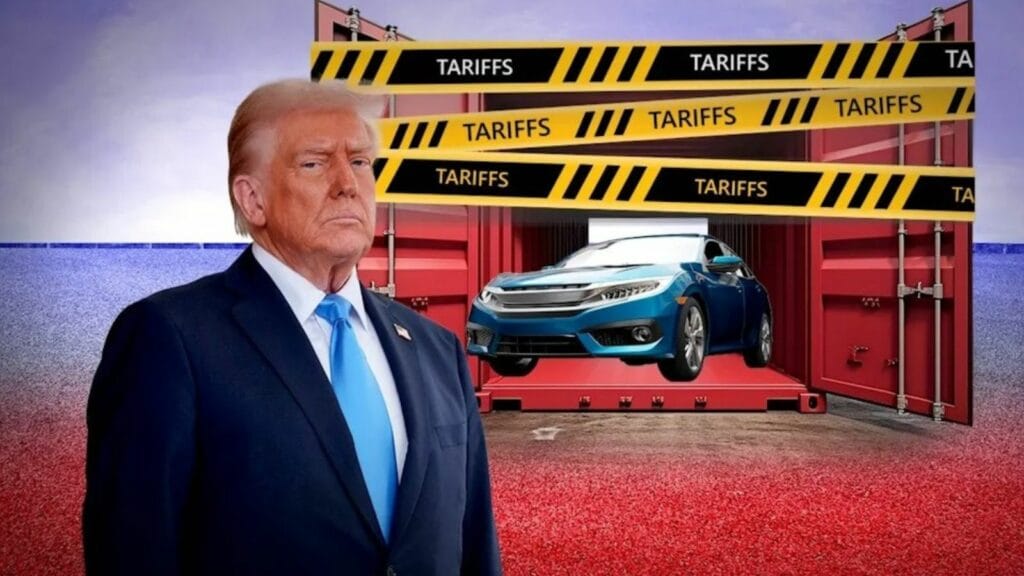
The divide arrives as the automotive dispute grows more serious. U.S. President Donald Trump has threatened 50% tariffs on Canadian cars, trucks and automotive parts beginning January 1, 2027, while Ottawa prepares another round of counter-tariffs. The result is an unusual political moment in which Canadians broadly favour resistance, but younger adults appear considerably less willing to absorb the price.
A Clear Majority Favours Standing Firm
The central finding is striking because respondents were not offered a painless version of confrontation. Ipsos found 63% believed Canada was right to hold its position in negotiations even when the question explicitly raised the possibility of higher costs and lost jobs. Only 18% preferred making additional sacrifices to Washington to secure an agreement. That suggests the public mood is not simply frustration with American tariffs; many Canadians appear prepared, at least in principle, to accept economic consequences rather than endorse a deal they view as too one-sided.
Support becomes even stronger when the question turns to direct retaliation. Seventy-three per cent backed Ottawa’s planned dollar-for-dollar counter-tariffs. Another recent Abacus Data poll produced a similar broad direction, finding 71% supported the federal decision to suspend talks rather than accept the U.S. terms presented. Different questions generate different percentages, but both indicate that resistance currently has substantially more public support than accommodation.
Gen Z Is the Major Exception
The generational gap is one of the most consequential findings. Only 48% of Gen Z adults in the Ipsos research supported standing firm, compared with 57% of Millennials and roughly four-fifths of older boomers. The difference becomes even clearer when respondents are asked about their own tolerance for hardship. Overall, 52% said they were personally willing to endure significant economic pain during the trade fight. Among Gen Z, that figure dropped to 41%, while it reached 67% among boomers.
Ipsos chief executive Darrell Bricker linked the contrast partly to economic security, noting that older Canadians are generally more established financially than younger adults. Broader economic data make that concern understandable. The Bank of Canada reported this summer that high prices and economic uncertainty were continuing to restrain household spending plans, while tariffs and trade tensions remained one of the most frequently cited inflation concerns. Political resolve can look different when household budgets are already tight.
The Auto Threat Makes the Argument More Concrete
The dispute is no longer centred only on abstract trade principles. Trump has threatened to raise tariffs on Canadian automobiles, trucks and automotive parts to 50% beginning January 1, 2027, after the latest negotiations collapsed. Reuters reported that the abandoned negotiating framework would have lowered the headline tariff on Canadian cars and light-duty trucks from 25% to 15%. One unresolved issue involved whether relief would extend to medium- and heavy-duty trucks, illustrating how individual product categories can determine the fate of a much broader agreement.
For Canada, the automotive exposure is substantial. More than 90% of Canadian-made vehicles are exported to the United States, and the federal government says the domestic automotive manufacturing industry supports roughly 125,000 direct jobs. Statistics Canada estimates that U.S. demand accounted for 76.4% of payroll employment in Canadian automobile and light-duty vehicle manufacturing in 2024. For workers in Ontario manufacturing communities, tariff escalation therefore carries an unusually direct employment risk.
Canadians Are Supporting Measures Beyond Auto Tariffs
The appetite for retaliation extends well beyond automobiles. Ipsos found 73% supported tariffs on critical minerals and the same percentage supported tariffs on energy products. Seventy-one per cent backed limiting critical-mineral exports to the United States, while 69% favoured restrictions involving crude oil, natural gas or electricity. Two-thirds supported an aggressive tax on large U.S. technology companies operating in Canada, and 64% supported tighter border inspections that could slow incoming American goods.
Ottawa’s immediate response is more targeted. Canada plans tariffs of 15%, 25% and 50% on $27.6 billion worth of U.S. imports beginning September 8, matching the American measures rate for rate. Products include steel, dairy goods, appliances, agricultural equipment, pulp and paper and electronics. The federal government has also announced $7.5 billion in additional and enhanced support for workers and businesses, on top of nearly $25 billion in previously announced trade-related assistance.
Economic Pain Is Already Part of the Trade Story
Canada enters this confrontation with enormous exposure to its southern neighbour. Statistics Canada reported that 71.7% of Canadian merchandise exports went to the United States in 2025, although that was down from 75.9% a year earlier. Manufacturing is particularly sensitive. Employment across the sector fell by almost 36,000 between December 2024 and December 2025, while motor-vehicle-parts manufacturing employment declined 9.3%. Those changes were not caused by one factor alone, but they show why another prolonged period of trade disruption creates serious concern.
Tariffs can also reach consumers. Bank of Canada researchers studying Canada’s 2025 counter-tariffs found that affected retail products eventually became about 6% more expensive relative to comparable non-tariffed goods. That represented roughly one-quarter of the 25% tariff being passed through to retail prices. The finding helps explain why younger Canadians facing stretched budgets might support national resistance less enthusiastically than retirees or established homeowners with larger financial cushions.
The Trade Fight Is Also Shaping Federal Politics
The confrontation has not produced a dramatic reshuffling of national voting intentions. The Ipsos results placed the Liberals at 44% and the Conservatives at 33%, with the NDP at 10% and the Bloc Québécois at 8% nationally. Yet the age breakdown again tells a more complicated story. Among Millennials, Conservatives led the Liberals 40% to 30%, suggesting the economic and political response to the dispute may resonate differently among Canadians still building careers, paying mortgages or trying to enter the housing market.
Only 37% of respondents overall believed Pierre Poilievre and the Conservatives would have handled the U.S. trade issue better than the Carney government, although 67% of Conservative supporters agreed with that proposition. Meanwhile, 62% wanted Parliament recalled before its scheduled return in late September to debate Canada’s response. Canadians may support a firm executive stance, but a substantial majority also wants elected MPs involved in deciding how far retaliation should go.
Strong Support Does Not Mean Unlimited Patience
The most important qualification may be that public backing remains conditional. Ipsos interviewed 1,001 Canadian adults online on August 26 and 27, using quotas and weighting designed to reflect the population. The overall credibility interval was plus or minus 3.8 percentage points, 19 times out of 20, and uncertainty is greater for smaller demographic groups such as Gen Z. The exact size of the age gap should therefore be interpreted carefully, even though its direction is clear.
Other polling reinforces the broader pattern. Abacus Data found support for suspending U.S. talks rising from 56% among Canadians aged 18 to 29 to 85% among those 60 and older. The political challenge for Ottawa is therefore not simply keeping national support above 50%. It is maintaining solidarity if tariffs begin producing more layoffs, higher prices or weaker investment. For now, Canadians largely favour resistance. The durability of that support may depend on who ultimately pays the bill.
