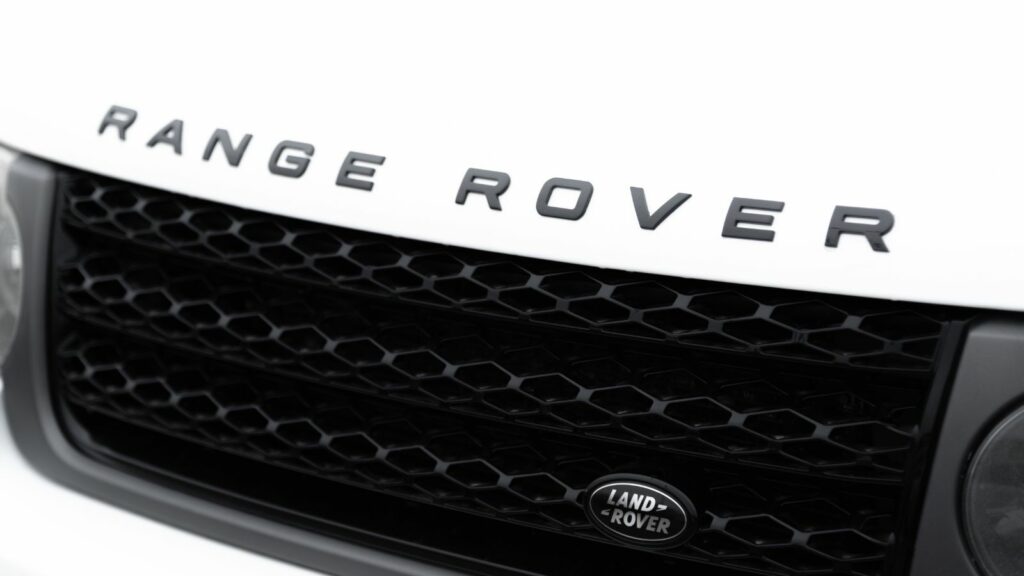
Range Rover has spent more than half a century building its reputation around quiet luxury, imposing road presence and an ability to keep going when the pavement ends. Now its flagship SUV is attempting to deliver those same qualities without an engine.
The first Range Rover Electric arrives with an estimated real-world range of up to 535 kilometres, a large 118.5-kWh battery and enough performance to reach 60 mph in as little as 4.3 seconds. U.S. pricing starts at US$138,000 before applicable charges. Canadian shoppers are in a different position: Range Rover’s Canadian website is promoting the vehicle and accepting waiting-list registrations, but no Canadian MSRP has been published.
Range Rover Finally Makes Its Flagship Fully Electric
The Range Rover Electric represents a significant break from tradition without looking much like one. JLR has deliberately avoided reinventing the SUV’s visual identity simply because the powertrain has changed. The electric model remains recognizably related to the current Range Rover, with the upright proportions, minimalist bodywork and luxury-focused cabin that have become central to the nameplate. Underneath, however, the mechanical package is entirely different. Two permanent-magnet electric motors replace the conventional combustion engine and transmission, while a massive battery is integrated into an architecture designed from the beginning to support multiple types of propulsion.
That decision matters because Range Rover is not abandoning gasoline or plug-in hybrid buyers. JLR describes its strategy as flexible: electric, plug-in hybrid, mild-hybrid and combustion versions can coexist instead of forcing every customer into one technology immediately. For a luxury manufacturer whose customers may own several vehicles and have very different driving patterns, that approach reduces the risk of making electrification an all-or-nothing proposition.
The 535-Kilometre Figure Is a Real-World Estimate, Not a Guarantee
The headline number is 535 kilometres, or roughly 333 miles, which Range Rover describes as an estimated real-world driving range. Globally, JLR also cites a laboratory-tested WLTP figure of as much as 372 miles, or about 598 kilometres. The difference is important. Standardized laboratory figures are useful for comparing vehicles under consistent conditions, while actual driving range changes with temperature, speed, terrain, payload, climate-control use, driving style and battery condition. Range Rover itself cautions that the 535-kilometre estimate should not be treated as a promise that every driver will travel precisely that distance.
For Canadians, those variables are particularly relevant. A highway trip through Ontario in mild weather is very different from a winter drive across Alberta with cabin heating running continuously. Towing or travelling off pavement also consumes more energy. Still, a claimed 535 kilometres gives the Range Rover Electric enough theoretical endurance to move beyond the idea that a large luxury EV is useful mainly for short urban trips. Its challenge will be reproducing respectable numbers when Canadian temperatures fall well below freezing.
An 118.5-kWh Battery Supports Serious Fast Charging
Providing that range requires an unusually large battery. Range Rover says the usable capacity is 118.5 kWh, packaged as a double-stacked lithium-ion unit containing 344 prismatic cells. The electrical system operates at 800 volts, an architecture increasingly associated with high-performance EVs because it can support substantial charging power while managing electrical current efficiently. On a compatible 350-kW DC fast charger, JLR says the battery can move from 10% to 80% in about 22 minutes under suitable conditions.
A shorter charging stop can also make a meaningful difference. Range Rover’s Canadian site says up to approximately 201 kilometres of estimated driving range can be added in 10 minutes when charging conditions allow it, while global WLTP-based materials quote up to 220 kilometres. Those are peak scenarios rather than something every charging station will reproduce. Battery temperature, charger output and starting state of charge all matter. Even so, the figures show why the 800-volt system is central to making a 118.5-kWh battery practical on long journeys rather than simply giving the SUV a bigger energy reserve.
Electric Power Brings V8-Level Performance Without the Drama
The powertrain consists of one 260-kW motor at each axle, producing a combined output of up to 550 PS, or approximately 542 horsepower, and 850 Nm of torque. Range Rover says the Electric can accelerate from zero to 60 mph in as little as 4.3 seconds. More revealing for everyday driving is the immediate torque delivery that comes with electric propulsion. There is no need for a transmission to select a lower gear before the vehicle responds, which should suit a model traditionally marketed around effortless rather than theatrical performance.
JLR has also concentrated heavily on how that power reaches the ground. Its Integrated Traction Management system can control motor speed within 50 milliseconds, while Intelligent Driveline Dynamics varies rear-axle torque distribution as conditions change. That means the electric version is not simply a powerful road-going luxury SUV with a Range Rover badge attached. Engineers have tried to make the electric motors part of the vehicle’s traction system in ways a combustion engine cannot easily duplicate. For owners, the practical result should be smooth acceleration on pavement and more precise torque delivery when grip becomes limited.
Off-Road Ability Was Treated as a Requirement, Not an Extra
Electrifying a Range Rover creates an unusual engineering problem: customers expect it to remain capable in situations where most six-figure luxury vehicles rarely venture. JLR says the Electric retains a maximum wading depth of 900 millimetres. The Canadian specification also lists maximum towing capacity at 2,500 kilograms. Its single-pedal system works alongside Terrain Response and is designed to provide controlled progress over difficult ground, including starting on slopes approaching 33 degrees and tackling rolling climbs of up to 45 degrees under appropriate conditions.
Those specifications help explain why this EV needed more than a large battery and powerful motors. Instant electric torque can be advantageous off road, but too much delivered abruptly can break traction. Precise electronic management becomes essential on snow, mud, rocks or steep grades. Range Rover says its new traction controls can react substantially faster than comparable combustion-based systems. Few owners are likely to test a US$138,000 SUV on a 45-degree climb, but maintaining those capabilities is central to the brand. Without them, the Electric would risk becoming a luxury EV that merely resembles a Range Rover.
The Design Changes Are Deliberately Difficult to Spot
Anyone expecting the Range Rover Electric to advertise its powertrain with radical styling may be disappointed. JLR has pursued what it calls a “Range Rover first, Electric second” philosophy. Aerodynamic changes include a revised grille, optimized wheel designs and a tailored underbody, but the overall shape remains closely tied to other current Range Rover models. There is no exaggerated EV nose, dramatically different cabin layout or futuristic silhouette created simply to distinguish it from a gasoline version. Even the absence of exhaust outlets may be one of the clearest exterior clues.
The model range itself remains broad. Global order books include short- and long-wheelbase configurations and versions such as SE, HSE, Autobiography, SV, SV Black and SV Ultra, although exact market availability can vary. A First Edition adds a curated specification with colours including Belgravia Green, Santorini Black and Varesine Blue, along with a Light Cloud interior combining Ultrafabrics material and Kvadrat textile. Buyers who want something more individual can also access Range Rover’s Bespoke program. Electrification, in other words, has not simplified the brand’s traditional emphasis on personalization.
The U.S. Gets a US$138,000 Starting Price, While Canada Waits
Range Rover’s North American announcement puts the U.S. starting MSRP at US$138,000. That is the base manufacturer price, rather than a final drive-away figure with destination charges, taxes, options and other costs included. At that level, the Electric enters a rarefied part of the EV market where traditional value calculations become less important than refinement, image, capability and customization. Higher specifications can push the price substantially further, particularly when the SV range and Bespoke personalization are involved.
Canadian pricing remains unresolved as of September 2. Range Rover Canada now displays the 535-kilometre range estimate, charging information and capability figures, but its Electric page directs interested customers to join a waiting list rather than displaying a Canadian MSRP or an online reservation price. That distinction is worth preserving because simply converting US$138,000 into Canadian dollars would not predict the eventual local sticker price. Vehicle pricing reflects market positioning, equipment differences, freight, currency strategy and other factors. Canadian buyers therefore have considerably more technical information than they have financial certainty.
Cold-Weather Testing Could Be Especially Important in Canada
JLR says development included testing at temperatures down to -40 C in Arjeplog, Sweden, as well as hot-weather work in Dubai. The company also developed a thermal-management system called ThermAssist, which it says can reduce energy required for heating by as much as 40% in extreme conditions and potentially preserve up to 25 miles of driving range. Those are manufacturer claims, but they address one of the most important issues facing an electric luxury vehicle in Canada: heating a large cabin while simultaneously keeping the battery within an efficient temperature range.
North American versions also receive built-in NACS compatibility for access to Tesla’s Supercharger network, expanding the number of locations potentially available during longer trips. Behind the scenes, JLR says more than 300 patent applications were filed around the Electric and that testing exceeded 1.5 million kilometres when physical development work was combined. Production takes place at Solihull in Britain, where 9,000 manufacturing employees have received electrification training. The remaining question is commercial rather than technical: whether enough luxury buyers are ready to make their flagship Range Rover an EV.
