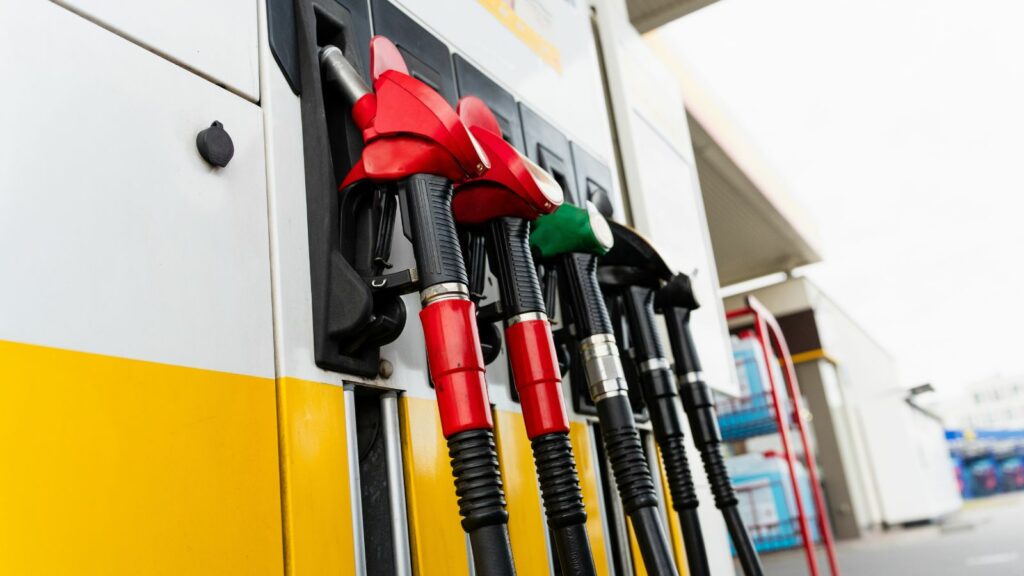
At more than $2.05 a litre again, Vancouver’s gas market is delivering another reminder that relief at the pump can disappear almost as quickly as it arrives. Regular gasoline was listed at 206.9 cents per litre for September 15, after a volatile stretch that had prices near 214.9 cents only days earlier. The result is a familiar kind of whiplash for Metro Vancouver drivers: a few cents of relief, followed by another jolt as crude-oil markets, regional supply conditions and wholesale prices shift.
The pressure is not coming from one source. Global oil prices are back above US$100 a barrel, local fuel taxes keep Vancouver’s baseline elevated, and the Lower Mainland remains sensitive to refinery and pipeline conditions. Even forecasts for a modest drop next are arriving with a large caveat: volatility is now the defining feature of the market.
Vancouver Is Back Above the $2.05 Mark
Regular gasoline in Vancouver was pegged at 206.9 cents per litre for September 15, putting the city back above the $2.05 threshold that has become a painful psychological line for many drivers. A separate city-level price tracker had Vancouver at 205.9 cents on September 14, showing that the move higher was not dramatic in isolation. The bigger story is how little stability there has been from one day to the next across the regional market.
Only a few days earlier, Gas Wizard listed Vancouver at 214.9 cents per litre for September 13, after an eight-cent jump. That means a 50-litre fill at the recent high would have cost about $107.45, compared with roughly $103.45 at 206.9 cents. Four dollars on one tank may not sound transformational, but for households filling multiple vehicles or commuting long distances, repeated swings quickly become noticeable in a monthly transportation budget. The unpredictability is now part of the burden itself.
The Whiplash Matters as Much as the Price
The recent pattern shows why drivers can feel squeezed even when prices technically fall from a short-term peak. Vancouver moved from roughly 214.9 cents per litre to the mid-205-cent range and then back to 206.9 cents within days. That kind of movement makes it difficult for households to know whether waiting a day will save money or simply expose them to another abrupt increase.
Gasoline prices are built from several moving parts: crude oil, refinery costs, wholesale rack prices, transportation, taxes and retail margins. Natural Resources Canada identifies world crude prices, supply availability, inventories, local competition and seasonal demand among the forces that can move pump prices. When several are shifting simultaneously, short-term changes can look chaotic. Vancouver’s current market is a good example of that overlap rather than evidence that one factor explains every increase. For consumers, that uncertainty can matter almost as much as the average price.
Crude Oil Above US$100 Is Rebuilding Upward Pressure
The global oil market is again creating a difficult backdrop for Canadian gasoline prices. On September 15, Brent crude traded around US$107.55 a barrel while West Texas Intermediate was near US$103.27. Those levels are far above the range associated with cheap gasoline and reflect renewed concerns about major supply disruptions in the Middle East.
The latest jolt came after attacks on Saudi energy infrastructure left the kingdom’s East-West pipeline offline. That route had been carrying roughly four million barrels a day, equivalent to about four per cent of global supply, toward the Red Sea. At the same time, traffic through the Strait of Hormuz has fallen sharply. Vancouver does not buy gasoline from a single Middle Eastern source, but crude is globally priced. When traders suddenly assign a larger risk premium to oil, Canadian wholesale fuel markets can feel the effect. The transmission is indirect, but it can still be fast.
Vancouver’s Supply System Leaves It Sensitive to Disruptions
Metro Vancouver’s pump prices are also shaped by a relatively tight regional supply system. The Canada Energy Regulator says British Columbia has only two refineries. The larger Burnaby refinery has capacity of about 55,000 barrels per day and largely relies on light crude delivered through the Trans Mountain system. The smaller Prince George refinery has capacity of roughly 12,000 barrels per day.
Trans Mountain also moves refined petroleum products into British Columbia, so the pipeline plays more than one role in the market. Its expanded system can move approximately 890,000 barrels per day in total, much of it crude destined for export or refineries. For local motorists, the key point is that Vancouver is not beside a giant cluster of refineries producing large volumes of excess gasoline. When refinery economics, pipeline scheduling or broader West Coast supply conditions tighten, wholesale prices can react quickly. That sensitivity has long distinguished the Lower Mainland from larger refining hubs.
Taxes Keep Vancouver’s Baseline High, but the Carbon Tax Is Gone
Taxes remain part of Vancouver’s high pump-price baseline, but the current mix is different from what some drivers may remember. British Columbia eliminated its consumer carbon tax effective April 1, 2025. In Metro Vancouver, the motor-fuel tax on gasoline remains 27 cents per litre, including an 18.5-cent TransLink levy, 6.75 cents for the B.C. Transportation Financing Authority and 1.75 cents for general revenue.
The federal picture has changed too. Ottawa temporarily suspended the federal gasoline excise tax and extended that suspension through January 31, 2027, meaning the usual 10-cent-per-litre charge is currently set to zero. The five-per-cent GST still applies. As a result, today’s $2-plus gasoline cannot simply be blamed on a carbon tax or the regular federal excise tax. Commodity, refining and supply costs are doing much more of the current lifting. The tax story, in other words, requires more nuance than it once did.
The Price on One Corner May Not Match the Next
Even when Vancouver’s citywide benchmark is above $2.05, individual stations can be several cents apart. A recent station-level snapshot tracking 72 Vancouver locations showed an average of 206.5 cents per litre, while the cheapest listed station was at 202 cents. The same tracker noted that price gaps inside the city can widen as individual retailers respond to nearby competitors, inventory turnover and local traffic patterns.
That creates one of the few areas where motorists still have some control. A five-cent difference saves $2.50 on a 50-litre fill, while a 10-cent gap saves $5. The savings can disappear quickly if finding cheaper fuel requires a long detour, but the arithmetic matters for drivers who already pass several stations during a commute. The Competition Bureau says similar prices among nearby stations are often the result of normal competitive matching, not proof of illegal price-fixing. In a volatile week, checking nearby prices can therefore produce modest savings.
A Routine Fill Is Back Above $100
At 206.9 cents per litre, a 50-litre fill costs about $103.45 before any loyalty discounts or credit-card rewards. A 60-litre fill comes to roughly $124.14. Those totals help explain why a move of only a few cents per litre still gets attention in Vancouver: the base price is already high enough that routine fuel stops regularly cross the three-digit mark for many households.
For a household with two gasoline vehicles, the effect compounds. The issue is not only the cost of one tank, but the uncertainty around the next one. Someone who filled at 214.9 cents a few days ago paid about $4 more on 50 litres than someone buying at 206.9 cents. That gap is manageable once, but repeated weekly changes make fuel budgeting less predictable, especially for workers with fixed commutes, tradespeople carrying equipment or families with limited transit alternatives. That makes timing feel unusually important, even for ordinary weekly errands.
Diesel Is Sending an Even Louder Warning
Gasoline is expensive, but Vancouver’s diesel market is under even greater strain. The September 15 price forecast listed diesel at 294.9 cents per litre, with premium gasoline at 236.9 cents. Diesel’s near-$3-per-litre level matters beyond drivers of personal pickup trucks because the fuel remains central to trucking, construction, agriculture and many commercial fleets across British Columbia.
The global diesel market has been hit by more than expensive crude. Reuters reported that refinery damage and disruptions tied to conflicts in the Middle East and Russia have tightened supplies of finished diesel itself. That distinction is important: even if crude prices stopped rising tomorrow, constrained refining capacity could keep diesel elevated. For Metro Vancouver, expensive diesel can work its way through delivery, contracting and freight costs, creating a broader economic effect than the number posted on a station sign might suggest to a commuter filling a gasoline car. Businesses with fuel-intensive operations have even less room to avoid that pressure.
A Small Price Drop May Be Coming, but It Is Not a Guarantee
There is at least some near-term relief in the latest forecast. Canadians for Affordable Energy projected Vancouver regular gasoline at 203.9 cents per litre for September 16, three cents below the September 15 level. Diesel and premium were also forecast to decline by three cents. If that forecast holds, Vancouver would slip back below $2.05 almost as quickly as it moved above it again.
That is precisely why the current period is better described as volatile than simply expensive. Day-ahead gasoline forecasts reflect wholesale market information available at the time, but new crude-price moves, refinery problems or supply disruptions can change the next adjustment. With Brent still above US$100 and Middle East infrastructure under pressure, a three-cent decline should not be mistaken for the beginning of a sustained downward trend. It is relief, but still fragile relief. Markets can turn again quickly before motorists have time to adjust their routines.
Vancouver Has Seen Worse, but $2-Plus Fuel Still Stings
Current prices remain below Vancouver’s most dramatic records. In September 2022, regular gasoline reached roughly $2.399 per litre at some Metro Vancouver stations, surpassing the previous record set that summer. At the time, refinery outages in the U.S. Pacific Northwest and California were among the factors blamed for the spike, underscoring how exposed the West Coast market can be to regional disruptions.
That historical comparison provides useful context, but it does not make 206.9 cents feel inexpensive. Motorists do not experience gasoline primarily as a comparison with an old record; they experience it as the amount disappearing from a bank account during each fill. Once regular gasoline crosses $2 per litre, even an ordinary 50-litre purchase becomes a three-digit transaction. Vancouver may remain well below $2.399, yet it is still operating in a range where every five- or 10-cent change is easily visible on the receipt. For many households, that is enough to influence driving and spending decisions.
The Next Move Depends on Oil, Wholesale Fuel and Local Supply
The biggest variables now sit outside the control of individual drivers. Global crude prices remain elevated, the Saudi East-West pipeline outage has added fresh risk, and shipping through key Middle Eastern routes remains disrupted. At the same time, Vancouver’s pump price will keep reacting to refinery margins, wholesale rack prices, pipeline deliveries, inventories and competition between stations.
That combination argues against treating any single daily forecast as a lasting turning point. A drop toward 203.9 cents would be welcome, but the market has already shown how quickly eight-cent or larger moves can appear. For Vancouver drivers, the practical takeaway is less about guessing the exact bottom and more about recognizing the range. When regular gasoline is moving between roughly $2.04 and $2.15 within a matter of days, volatility itself becomes a cost because it complicates household and business budgets. The next meaningful move could therefore arrive with very little warning.
