A small TSX Venture-listed fire-safety company is heading into the heart of the U.S. auto industry with a much bigger audience in mind. FCL-X Fire & Safety, recently renamed from Full Circle Lithium, will bring its lithium-ion battery fire technology to The Battery Show North America in Detroit from October 13 through 15.
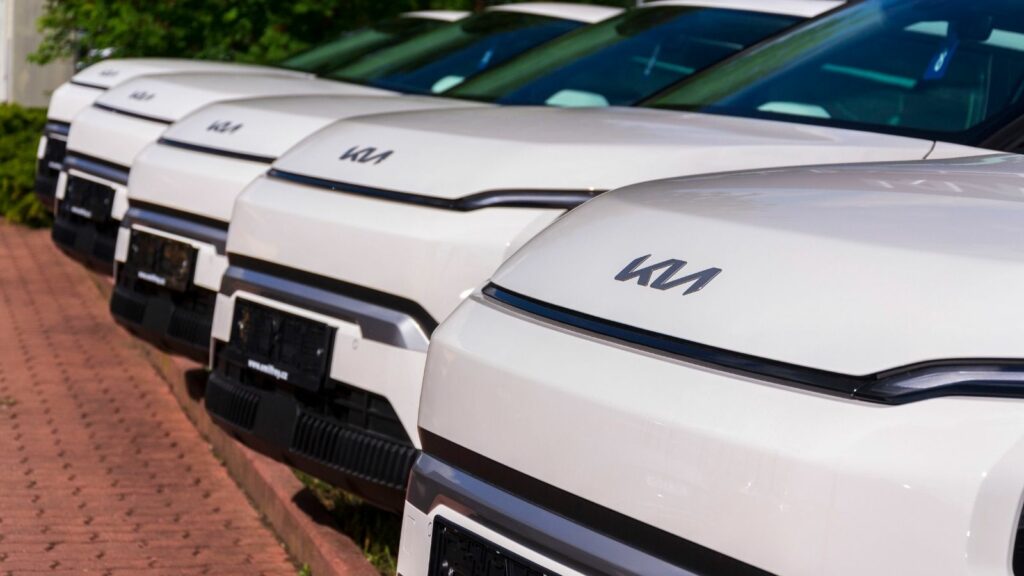
The timing gives the appearance of momentum. Less than two weeks earlier, FCL-X announced an integrated safety purchase order with Kia Georgia for work at the automaker’s West Point manufacturing complex. The agreement puts the company inside a major vehicle-production environment, but with an important qualification: Kia has hired FCL-X for construction support and health, safety and environmental services. The automaker has not endorsed FCL-X’s fire-extinguishing products.
Detroit Puts FCL-X in Front of the Industry It Wants to Sell To
FCL-X plans to exhibit at Booth 1629 at The Battery Show North America, where it says it will showcase its proprietary fire-extinguishing technology alongside risk assessment, fire-protection engineering and other battery-safety services. The expo portion runs from October 13 through October 15 at Huntington Place, with workshops beginning a day earlier. The show’s organizer expects more than 16,000 engineers, executives and other industry professionals, making it a considerably larger stage than a private fire demonstration.
The audience matters as much as the attendance figure. The Battery Show is built around battery cells, manufacturing equipment, electric drivetrains, energy storage, thermal management, testing and safety—precisely the environments FCL-X is targeting. Organizers market the event as a place for suppliers to meet decision-makers from automakers including Ford, General Motors and Tesla. For an emerging company, a few days in Detroit can compress months of sales meetings into one building. The challenge is converting conversations around a trade-show booth into trials, purchase orders and recurring commercial relationships.
The Kia Agreement Is Significant—but It Is Easy to Overstate
FCL-X announced its Kia Georgia purchase order on September 29. Under the agreement, the company will support work at Kia’s West Point, Georgia facility through construction assistance and health, safety and environmental services. Its mandate includes risk assessments, fire-protection engineering and safety protocols for environments involving batteries. FCL-X management described the order as a milestone in its effort to become a broader safety partner rather than simply a seller of extinguishing products.
What the deal does not establish is equally important. FCL-X explicitly stated that its role does not constitute Kia Georgia’s endorsement of FCL-X products, nor does it create an affiliation involving Kia’s branding, manufacturing or commercial operations. The company also did not disclose the purchase order’s dollar value or duration. In other words, the Kia relationship is commercially meaningful because a major automaker has hired the company for specialized safety work, but it should not be described as Kia adopting the FCL-X extinguishing agent across its factories or vehicles unless a separate agreement eventually establishes that.
Kia’s Georgia Plant Is Becoming Increasingly Electrified
The location makes the safety assignment noteworthy. Kia Georgia’s West Point campus was originally built around conventional vehicle production, but it has steadily expanded into electrified manufacturing. Kia began assembling the EV9 electric three-row SUV there in 2024, making it the first saleable EV assembled in Georgia. EV6 production was subsequently added, while the facility has continued building high-volume combustion-powered models including the Telluride, Sorento and Sportage.
The plant reached another milestone in February 2026 when Kia celebrated its five-millionth vehicle and the start of production of the new Telluride, including the first hybrid-electric vehicle assembled in the state. That means safety teams at West Point now work around conventional vehicles, hybrids and high-voltage battery-electric models under the same manufacturing umbrella. For FCL-X, that is valuable experience to point to when approaching other manufacturers in Detroit. Modern factories increasingly need safety systems capable of addressing traditional industrial hazards alongside risks associated with high-voltage batteries, battery handling, charging, storage and damaged components.
The Company Recently Rebuilt Its Identity Around Fire Safety
Anyone who followed the stock a few months ago may remember a different name. Full Circle Lithium officially became FCL-X Fire & Safety Inc. in September after shareholders approved the change in May. Trading on the TSX Venture Exchange moved from ticker FCLI to FCLX on September 4. There was no share consolidation associated with the switch. The company remains traded in the United States under FCLIF and in Frankfurt under K0Q.
The rebranding reflects a substantial narrowing of the story the company is presenting to customers and investors. Its latest financial statements identify the manufacture and sale of the FCL-X lithium-ion battery fire-extinguishing agent as its single reportable business segment. Rather than positioning itself primarily through the lithium-materials theme suggested by its former name, management now puts fire suppression, engineering, training and safety services at the centre of the business. Detroit is therefore more than another exhibition appearance. It is one of the first major industry showcases since the company formally rebuilt its corporate identity around battery-fire protection.
FCL-X Is Designed to Attack Thermal Runaway Differently
The company describes FCL-X as a predominantly water-based extinguishing agent formulated specifically for lithium-ion battery fires. Its stated purpose is not simply to knock down visible flames but to cool cells, limit thermal runaway and reduce the possibility that heated battery cells reignite. The formulation is also marketed as PFAS-free. Those attributes matter because a damaged battery can continue producing heat internally after the surrounding vehicle fire appears to be controlled.
There is third-party testing behind portions of the product’s claims. A FCL-X portable extinguisher passed testing conducted by Kiwa under the Dutch NTA 8133 standard, which evaluates portable extinguishers intended for lithium-ion batteries up to the standard’s specified energy level. FCL-X has also received UL recognition as a Class A water-based extinguishing agent. That UL designation needs careful interpretation: the company itself acknowledges that the recognition concerns ordinary Class A combustible fires. It is not a UL certification specifically establishing performance against electric-vehicle lithium-ion battery fires.
Full-Size EV Burns Have Been Part of the Development Program
FCL-X has also taken the technology beyond small battery packs. In November 2024, the company reported controlled burns involving a Nissan Leaf and a Kia EV9 organized with U.S. distributor AEST Fire & Safety and observed by firefighters and fire-safety professionals. According to the company, the Leaf fire was brought under control in less than five minutes. The larger EV9 test involved a high-state-of-charge battery deliberately driven into thermal runaway, with the company reporting that the fire was controlled in under six minutes.
Those demonstrations are useful evidence that the agent can be deployed against full vehicles, but they should not be treated as the equivalent of a broad independent certification program. They were controlled burns, and much of the detailed performance information comes from FCL-X itself. That distinction is particularly relevant when the company pitches automakers in Detroit. Vehicle manufacturers, insurers and safety authorities typically need repeatable test data covering different battery chemistries, pack architectures, fire scenarios and application methods before changing emergency procedures on a large scale.
Battery Fires Present Problems Long After the Visible Flames
There is a genuine safety challenge behind the sales pitch. The U.S. National Transportation Safety Board has documented how damaged high-voltage lithium-ion cells can enter thermal runaway, causing rapidly increasing temperature and pressure. Even after a vehicle fire appears extinguished, energy can remain trapped inside undamaged portions of a battery. The NTSB calls this “stranded energy” and identifies it as a source of both electric-shock risk and possible reignition.
The scale of the broader problem is difficult to measure precisely. A 2026 National Institute of Standards and Technology analysis estimated roughly 5,718 electric-vehicle and plug-in-hybrid fires in the United States since 2011, with a wide statistical confidence interval. The same research estimated approximately 198,000 lithium-ion-battery-related structure fires over that period. NIST cautioned that available fire data are fragmented and that identifying battery involvement in major incident databases is often difficult. Those limitations make the estimates more useful for understanding the emerging safety challenge than for calculating a precise EV fire rate.
Water Remains Important, Which Raises the Bar for Alternatives
Specialized suppressants are not entering a market with no existing response. The NTSB’s guidance and investigations emphasize large quantities of water as a central tool for cooling high-voltage battery packs and slowing the spread of thermal runaway between cells. In some severe incidents studied by the agency, damaged batteries reignited repeatedly even after firefighters controlled the initial vehicle fire. One historical Tesla response guide examined by investigators called for roughly 3,000 gallons of water to cool the battery.
That is the benchmark technologies such as FCL-X are trying to improve upon: not proving that water does nothing, but showing that a purpose-built agent can control certain events faster, with less liquid, less reignition risk or easier post-fire handling. FCL-X says its testing has shown substantially lower agent use and faster suppression in some scenarios. The meaningful question for potential automotive customers is whether those results remain consistent across full-scale real-world incidents. Detroit provides an opportunity to make that case directly to engineers rather than relying on marketing claims alone.
FCL-X Is Expanding Beyond Fire Extinguishers
The company’s commercial strategy has broadened noticeably during 2026. It has introduced portable extinguishers for household and commercial battery risks, larger units for industrial users and a developing gel-based product aimed at battery energy-storage systems. In May, it announced an online launch through an unnamed major U.S. home-improvement retailer, offering sizes ranging from a 20-ounce canister through three-litre extinguishers. Earlier in the year, it reported its first U.S. commercial sale to a waste-management operator.
FCL-X has also pursued first responders, schools, aviation and logistics companies, industrial operators and international distributors. Patent applications covering its technology have been filed in dozens of markets. The Kia assignment takes the strategy another step by selling expertise rather than only extinguishing agent. Fire engineering, hazard assessments and HSE work can put the company into customer operations before an extinguisher order is ever placed. If that model works, an engineering engagement could become an entry point for training, equipment and longer-term safety contracts. Whether that happens at Kia has not been disclosed.
The Financial Numbers Still Show an Early-Stage Company
The automotive names surrounding FCL-X can make the business appear larger than its financial statements suggest. For the three months ended July 31, 2026, the company reported revenue of US$156,539, up from US$43,030 in the same period a year earlier. Its quarterly net loss was roughly US$802,000. For the first nine months of the fiscal year, revenue was approximately US$310,000, down from about US$633,000 in the comparable 2025 period, while the net loss widened to about US$2.67 million.
Management has been raising capital to support expansion. Full Circle Lithium, before the September rebrand, completed a private placement in August that generated approximately C$5.14 million in gross proceeds. The company said the money would support production, inventory, sales, marketing and working capital. Those figures put the Detroit trip in perspective. FCL-X has technology, testing and increasingly recognizable commercial relationships, but it remains an emerging business. Larger recurring orders—not the prestige of individual customer names—will determine whether those relationships translate into meaningful revenue.
Detroit Is the Next Test of Whether Safety Technology Can Scale
The Battery Show gives FCL-X access to precisely the organizations capable of changing its trajectory. The event advertises more than 16,000 attendees and a vast supplier base spanning vehicle manufacturers, battery companies, production-equipment makers and energy-storage businesses. A fire-safety solution that gains acceptance in one manufacturing environment can potentially be adapted across factories, storage sites, logistics operations and emergency-response teams, although each application comes with different risks and standards.
The Kia purchase order gives FCL-X a useful reference point as it enters those conversations, but it does not settle the commercial question. The next milestones will be easier to measure: additional OEM contracts, repeat safety-service work, disclosed product orders, broader independent validation and revenue that begins reflecting the scale of the markets being targeted. Lithium-ion batteries are becoming deeply embedded in transportation and industry, while thermal runaway remains a difficult emergency-response problem. FCL-X has reached the stage where major companies are willing to evaluate its expertise. Detroit will show whether that attention can become a larger business.
