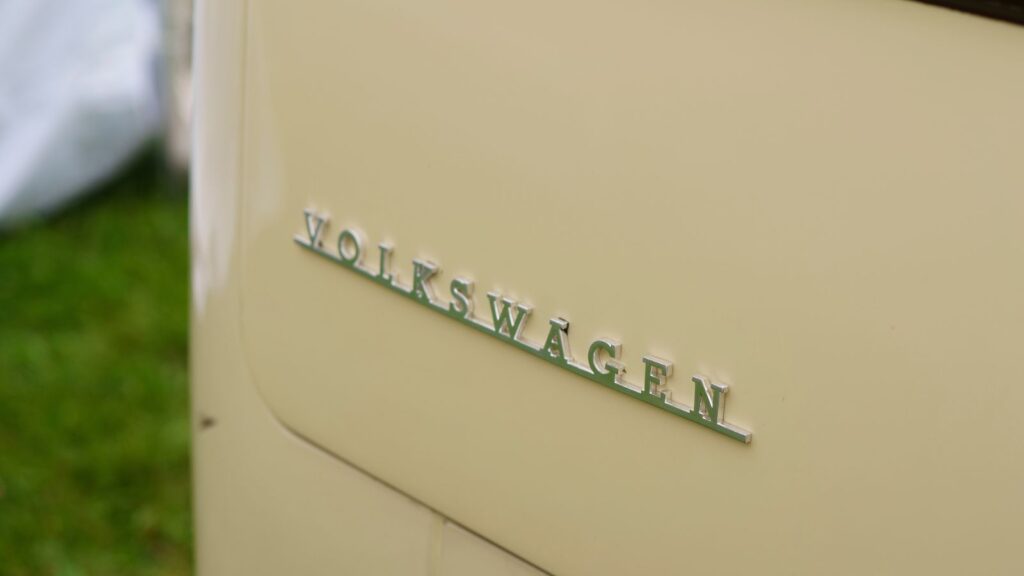
Volkswagen’s next electric family SUV looks surprisingly familiar—not because it resembles the outgoing ID.4, but because of the name on its tailgate. The new ID. Tiguan will replace the ID.4 and ID.5 in Europe, combining one of Volkswagen’s best-known nameplates with a substantially redesigned electric vehicle.
The changes go well beyond branding. Volkswagen is promising as much as 600 kilometres of WLTP range, three powertrain configurations and significantly revised cabin technology. Perhaps more tellingly, physical climate controls, steering-wheel buttons, conventional window switches and a volume controller are back. After years of automakers moving basic functions onto touch-sensitive surfaces, Volkswagen is making tactility part of its next-generation EV pitch.
The ID.4 Name Is Giving Way to Something Far More Familiar
Volkswagen describes the ID. Tiguan as the successor to both the ID.4 and ID.5, with the new electric SUV scheduled to begin reaching European markets in early 2027. That is significant because the outgoing electric models were hardly obscure experiments. Volkswagen says more than 950,000 ID.4 and ID.5 vehicles have been delivered since 2021, making the pair among the company’s most successful battery-electric model families.
The change is instead part of a broader rethink of Volkswagen’s electric naming strategy. ID. Polo and ID. Cross have already brought established model names into the electric lineup, and Tiguan now follows. The logic is straightforward: buyers already understand what a Tiguan is supposed to represent. More than 8.3 million Tiguans have been produced, and Volkswagen says Tiguan is currently the best-selling model across both its namesake brand and the wider Volkswagen Group. Rather than asking customers to learn another number, Volkswagen is attaching its electric future to a name with decades of recognition.
The 600-Kilometre Range Comes With an Important Qualification
Volkswagen’s headline range figure is up to 600 kilometres, equivalent to roughly 373 miles. That number is based on Europe’s WLTP testing procedure, however, and should not be interpreted as a confirmed EPA or Natural Resources Canada rating. North American testing frequently produces different figures, and Volkswagen has not yet published an official Canadian range for the ID. Tiguan. For buyers comparing EVs locally, that distinction is important.
Three power levels have been announced for Europe. The entry model combines rear-wheel drive, a 58-kWh battery and 140 kW of output, equivalent to 190 metric horsepower. A 77-kWh version raises output to 210 kW, or 286 PS, while the 4MOTION model combines the larger battery with all-wheel drive and 220 kW, or 299 PS. Volkswagen specifically links the maximum 600-kilometre figure to the new MEB+ architecture and says actual WLTP range will vary according to battery and powertrain configuration.
Volkswagen Is Making Physical Buttons a Feature Again
The cabin may contain multiple large displays, but Volkswagen has reversed course on how several everyday functions are operated. Basic climate controls now sit on a physical button bar in the centre console. Audio volume and track or station selection can be handled through a controller, while the multifunction steering wheel uses conventional buttons rather than the touch-sensitive controls seen on earlier Volkswagen products. The driver’s door also receives redesigned controls for all four power windows.
There is research behind the broader industry debate over this approach. A 2026 peer-reviewed simulator study involving 32 participants compared touchscreens with physical controls for tasks involving lighting, wipers, indicators, hazards and climate settings. Researchers reported greater visual distraction with touchscreen operation, while multi-step touchscreen tasks also produced worse task and driving performance. Euro NCAP’s 2026 assessment framework similarly considers the availability and accessibility of physical controls when evaluating vehicle human-machine interfaces. Volkswagen says customer requests directly influenced the ID. Tiguan’s development.
More Buttons Do Not Mean Volkswagen Is Abandoning Screens
Volkswagen’s response to touchscreen criticism is not to remove screens. In fact, the ID. Tiguan has more display area than ever. A 10-inch Digital Cockpit sits in front of the driver, while a 15-inch central infotainment display dominates the dashboard. An optional 12-inch passenger display is particularly notable because Volkswagen says it is the first dedicated co-driver screen offered in one of its European models.
The passenger display uses a privacy function designed to prevent the driver from seeing its content, allowing the passenger to access entertainment or information while travelling. Audio can be routed through paired Bluetooth headphones. Volkswagen has also added a playful element to the digital instruments. A “Retro” mode can reproduce the distinctive blue-and-red appearance of the fourth-generation Golf’s gauges. The centre display can additionally show six Volkswagen-themed virtual environments inspired by vehicles including the original Golf, Golf II Country, first-generation Tiguan, Race Touareg and Beetle. It is old-school nostalgia delivered through very modern hardware.
Cargo Space and Towing Make This More Than a Commuter EV
Volkswagen is also emphasizing conventional SUV usefulness. The ID. Tiguan seats five and introduces a 32-litre front trunk, providing a separate compartment beneath the hood for smaller items. The main luggage compartment offers up to 534 litres of storage in the configuration Volkswagen has announced. That combination could make the small front compartment useful for charging accessories or items that owners may prefer to keep separate from groceries and luggage.
Towing capability is equally notable. Volkswagen says versions using the 58-kWh battery can tow as much as 1,800 kilograms, while models equipped with the 77-kWh pack can reach 2,000 kilograms, or roughly 4,409 pounds. Those are maximum figures and will depend on configuration and market specifications, but they move the vehicle well beyond the idea of an EV intended exclusively for urban commuting. Volkswagen will offer four European equipment levels—Trend, Life, Style and R-Line—giving the vehicle a range stretching from more functional configurations to sportier and better-equipped versions.
One-Pedal Driving and Vehicle-to-Load Add Everyday EV Functions
One-pedal driving will be standard, according to Volkswagen. In that mode, lifting off the accelerator produces stronger deceleration, allowing regenerative braking to handle more routine slowing without requiring the brake pedal as frequently. The company is also introducing a new version of Connected Travel Assist, which can provide assisted motorway lane changes and, where supported, recognize traffic lights and bring the ID. Tiguan to a stop at a red signal.
Other technology is aimed less at driving and more at making the vehicle useful when parked. A Digital Key can allow a compatible smartphone to unlock, lock and start the vehicle, with access sharable through Volkswagen’s app. An available Vehicle-to-Load PowerSocket goes a step further by allowing equipment to draw electricity from the vehicle’s battery through an adapter connected to the charging port. Volkswagen gives electric grills and e-bikes as examples. Optional equipment will also include ventilated and massaging front seats, a panoramic roof and a 480-watt Harman Kardon audio system.
Even the Door Handles Mark a Change in Direction
The return to familiar controls extends beyond the dashboard. Volkswagen has replaced the ID.4’s flush-style exterior door handles with conventional pull handles on the ID. Tiguan. It may seem like a small design decision, yet it fits a recurring theme throughout the new vehicle: advanced technology is being paired with controls and interactions that require less explanation. Someone approaching the vehicle does not need to learn a new way of opening the door simply because the propulsion system is electric.
Styling has changed considerably as well. Volkswagen describes the new approach as its “Pure Positive” design language, with the softer crossover proportions of the previous electric SUVs giving way to a stronger SUV appearance. Lighting remains a prominent element, while the body adopts cleaner, more sculpted surfaces. The ID. Tiguan will be produced in Emden, Germany, while the combustion-engine and hybrid Tiguan continues separately. The two vehicles therefore share a familiar product identity without becoming the same mechanical vehicle underneath.
Europe Gets the ID. Tiguan First, With North American Details Still Developing
European buyers will get the clearest picture first. Volkswagen says pre-sales begin in Germany and numerous other European countries on October 13, 2026, with pricing starting at €42,695. The market launch is planned for early 2027. Those figures apply to Europe and should not be converted into an assumed Canadian or U.S. sticker price because local equipment, taxes, tariffs, incentives and specifications can differ substantially.
Volkswagen’s American arm has confirmed to automotive media that the ID. Tiguan is intended for the United States, although the company has not yet announced which powertrains will be offered there or a specific arrival date. The October 9 global announcement likewise does not provide Canadian pricing, trims or an NRCan-rated range. For Canadians, the 600-kilometre figure is therefore best viewed as an indication of the vehicle’s technical potential rather than a finalized local specification. A Canadian-market version could differ in battery choices, equipment or range certification when Volkswagen releases regional details.
The ID.4 Already Had a Complicated Ending in the United States
The ID. Tiguan arrives after Volkswagen made a major change to its American EV strategy earlier in 2026. Production of the ID.4 at the Chattanooga, Tennessee, factory ended in mid-April as the company redirected the plant toward higher-volume vehicles such as the Atlas. Volkswagen’s first-quarter financial reporting said the decision generated approximately €500 million in impairment charges and related expenses, illustrating that ending local ID.4 production was more than a simple model-year change.
Volkswagen nevertheless indicated that existing U.S. ID.4 inventory would continue supplying customers, and the company maintained that another electric SUV would eventually follow. The newly revealed ID. Tiguan now provides a much clearer picture of that successor. The North American challenge is different from the European one, however. Local pricing, production strategy and regulatory range ratings will determine whether its improved technology translates into a compelling product. A 600-kilometre European range number and better cabin ergonomics create interest, but they cannot by themselves determine the vehicle’s competitiveness once it reaches individual markets.
Volkswagen Is Betting the Tiguan Name Can Make EVs Feel Less Foreign
Perhaps the most important feature of the ID. Tiguan is not its battery or any of its screens. It is the decision to call it a Tiguan. Volkswagen spent the first phase of its modern EV push creating a separate ID. identity. The next phase increasingly links electric vehicles with names customers already recognize. The ID. Polo, ID. Cross and now ID. Tiguan illustrate that strategy, while combustion and hybrid versions of familiar models can continue alongside them.
There is substantial brand equity available to borrow. More than 8.3 million Tiguans have been produced, while Volkswagen says the Tiguan and related Tayron together generated more than one million deliveries in the previous year alone. Yet the new model still has to succeed on its own merits. Its 600-kilometre maximum WLTP range, usable towing capacity, five-seat packaging and new technology address the practical side. The return of ordinary buttons and door handles addresses something less measurable but equally important: making an electric Volkswagen feel immediately understandable.
