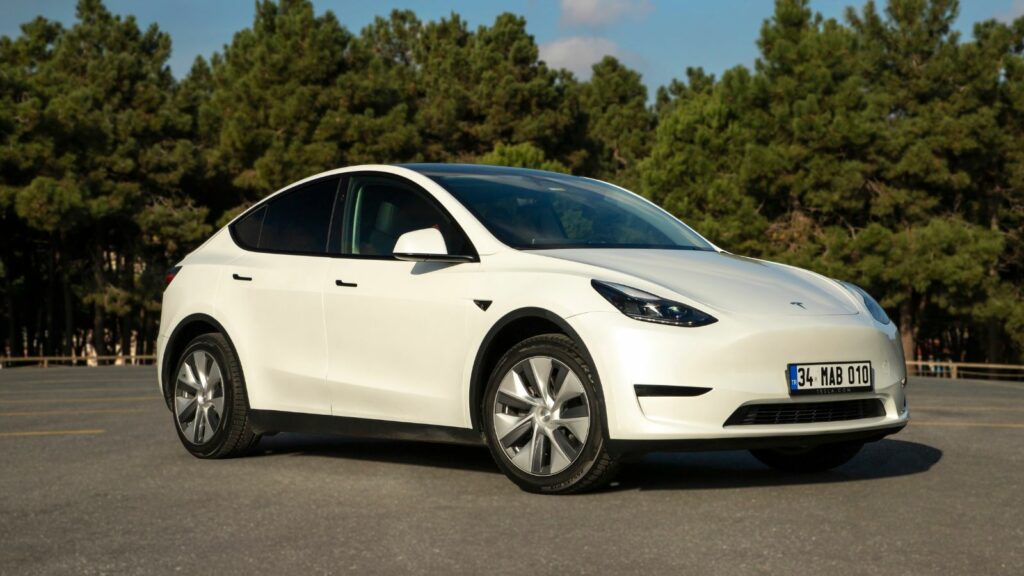
Tesla’s German factory has reached a milestone that matters far beyond Europe. On October 23, Tesla said Gigafactory Berlin-Brandenburg built 7,000 Model Ys in a single week, moving the plant close to a previously announced target of 7,500 vehicles a week. The timing is especially important for Canada, where Tesla has increasingly relied on German-built Model Ys after Canadian auto tariffs made U.S.-sourced vehicles more expensive.
The shift has turned Grünheide, outside Berlin, into an unexpectedly important link in Tesla’s Canadian supply chain. It has also connected factory output in Germany with Canadian pricing, delivery times and product availability in a way that did not exist a little more than a year ago. For buyers waiting on a Model Y, a production record in Brandenburg can now have practical consequences thousands of kilometres away.
Berlin’s 7,000-Unit Week Is a Record, Not Yet a Permanent Run Rate
Berlin’s 7,000-vehicle week is a milestone, not yet a permanent production rate. Tesla announced the figure through its manufacturing account on October 23, saying the factory had built 7,000 Model Ys during one week as its ramp continued. If that pace were maintained for 52 weeks, it would equal roughly 364,000 vehicles annually. That is close to the more than 375,000 units of installed annual Model Y capacity Tesla lists for Berlin in its latest quarterly update, although real factories do not run at an identical rate every week because of maintenance, parts availability, model changes and other disruptions.
The milestone also fits a broader pattern. Tesla’s third-quarter update, filed with the U.S. Securities and Exchange Commission on October 21, said Berlin achieved record production during the quarter. The company had already set a goal of lifting output to about 7,500 vehicles per week beginning in October. That makes the 7,000 figure meaningful because it shows the plant has moved substantially closer to the target, while still leaving room for further ramping. It is also worth separating a one-week record from a sustained average, especially when production headlines can make temporary peaks look like a new normal.
Canada Became a Strategic Market for Berlin After the Tariff Fight
Canada became a much more important destination for Berlin-built Model Ys after the trade environment changed in 2025. Canada imposed 25% countertariffs on non-CUSMA-compliant vehicles imported from the United States and on the non-Canadian and non-Mexican content of qualifying U.S.-made vehicles beginning April 9, 2025. Tesla does not manufacture vehicles in Canada, so the policy altered the economics of sending Model Ys north from American factories. By September 2025, the first reported shipment of German-built Model Ys had reached Halifax, marking a major sourcing shift for Canadian customers.
The broader tariff picture has continued to evolve. When Tesla first pivoted toward Berlin, Canada also had a 100% surtax on Chinese-made EVs, narrowing Tesla’s alternatives because the company had previously used Shanghai-built vehicles for Canada. That Chinese policy changed in March 2026, when Canada replaced the blanket surtax with an annual quota of Chinese EVs eligible for the 6.1% most-favoured-nation tariff. U.S.-origin auto countertariffs, however, remain in place. Germany therefore still offers an important advantage for Model Y sourcing: vehicles built there are outside the U.S. countertariff, while qualifying EU-origin goods can also benefit from Canada-EU trade preferences under CETA.
The Factory Shift Has Changed What Canadians Pay for a Model Y
The supply-chain change has been visible in Canadian pricing. In July 2025, Tesla cut the Canadian price of the Model Y Long Range All-Wheel Drive by C$20,000, from C$84,990 to C$64,990, coinciding with reports that future Canadian Model Y supply would shift toward Berlin rather than U.S. production. The current Canadian lineup is broader. Tesla’s Canadian site lists the rear-wheel-drive Model Y at C$49,990 and the Model Y Premium All-Wheel Drive at C$64,990, with the lower-priced version rated at 463 kilometres of EPA-estimated range and the Premium AWD at 542 kilometres.
That C$49,990 starting point has another consequence. Transport Canada’s Electric Vehicle Affordability Program offers up to C$5,000 in 2026 for eligible battery-electric vehicles with a final transaction value of C$50,000 or less, and the federal eligibility list includes the Tesla Model Y RWD-B. The threshold makes Tesla’s pricing unusually sensitive to small changes in configuration or transaction value. For a Canadian household comparing monthly payments, the factory location may feel distant, but it helped create the trade and cost structure behind today’s price. Berlin’s output therefore affects more than inventory; it supports Tesla’s ability to keep a Model Y positioned near a politically important affordability cutoff.
Halifax Has Become Part of Tesla’s Model Y Supply Chain
Moving Canadian Model Y supply across the Atlantic solved one problem while creating another. The first reported German-built shipment arrived at the Dartmouth Autoport in Halifax in September 2025, with several hundred vehicles being unloaded for Canadian customers. A second batch followed in October. From there, vehicles destined for Ontario and Quebec had a relatively short onward journey, while cars headed to Alberta or British Columbia still had to cross much of the country. By November, German-built Model Ys were being reported at delivery centres in Western Canada.
That logistics chain is fundamentally different from moving vehicles north from a U.S. plant. Ocean shipping introduces vessel schedules, port handling and longer inland transportation into a delivery process that was once much more continental. That helps explain why higher Berlin production can matter to Canadian wait times without automatically fixing them. Tesla itself tells Canadian customers that the app is the “source of truth” for delivery timing because estimates can change, and it points buyers seeking faster handovers toward existing inventory. For someone watching an estimated delivery window move on a phone, the supply chain can feel abstract. In practice, that date may depend on production in Brandenburg, a ship crossing the Atlantic and rail or truck capacity after the vehicle reaches Halifax.
Canadian Demand Makes Extra Berlin Capacity More Important
The extra capacity is arriving while Tesla says Canadian demand has been unusually strong. In its third-quarter update, the company said it achieved record quarterly deliveries in Canada, although it did not publish a Canada-specific unit total. Globally, Tesla delivered 486,532 vehicles in the quarter, including 478,237 Model 3 and Model Y vehicles. The Canadian market itself also showed a broader rebound in electrified-vehicle registrations: Statistics Canada counted 58,811 new zero-emission vehicle registrations in the second quarter of 2026, up 26.7% from a year earlier and equal to 10.7% of all new motor-vehicle registrations.
Canadian Model Y buyers have nevertheless faced long and shifting waits. Reports during the summer and fall showed estimated delivery windows for some new Model Y orders stretching toward December 2026 or January 2027. Those estimates are not guarantees and can change by configuration, postal code and inventory, but they illustrate the pressure on a supply system that now depends heavily on overseas production. A 7,000-unit week in Germany therefore has a straightforward Canadian significance: more factory output increases Tesla’s room to allocate vehicles to Canada, even though it does not mean every extra Model Y is headed there.
Tesla Spent Months Preparing the Factory for This Ramp
Reaching 7,000 Model Ys in a week did not happen through a single production-line adjustment. Tesla spent much of 2026 preparing Berlin for a larger run rate. In June, the company said it intended to lift production by roughly 20% to 7,500 vehicles per week from October and add another 1,000 employees. By early September, Handelsblatt reported that the factory was still producing fewer than 6,500 vehicles per week and that Tesla had scheduled three mandatory special shifts as it worked toward the higher target.
The manufacturing changes were also about speed inside the plant. Reporting based on internal information said Tesla aimed to reduce cycle time across much of vehicle production from roughly 80 seconds to about 45 seconds, while the plant was producing around 450 vehicles per shift during the ramp. That context makes the new record more tangible. The difference between 6,500 and 7,000 vehicles is only 500 units on paper, but repeating that gain across weeks requires thousands of workers, supplier deliveries, batteries, stamping operations, paint capacity and final assembly to stay synchronized. The October milestone suggests those pieces are coming together more consistently, even if the plant has not yet demonstrated that 7,000-plus weeks will be routine.
Berlin Is Becoming More Than an Assembly Plant
Berlin’s expansion is also becoming less about vehicle assembly alone. In May, Tesla said it would increase investment in battery-cell production at Grünheide by nearly US$250 million, raising the planned annual capacity of the project from 8 gigawatt-hours to 18 gigawatt-hours. Reuters reported that the company expected battery-cell operations to require more than 1,500 employees. Tesla’s current job materials describe the site as having more than 12,000 employees from 130 countries and say the company plans to produce everything from battery cells to electric vehicles there beginning in 2027.
That matters because Tesla identified battery availability as a limiting factor on the pace of its global vehicle-production ramp in its third-quarter update. Localizing more battery production in Germany does not mean Berlin will immediately become self-sufficient, and the company has not said the new cell project caused the 7,000-vehicle week. But the strategy is clear: Tesla wants a more vertically integrated European factory with fewer critical steps dependent on distant supply chains. For Canada, that could make Berlin a more resilient export hub over time. The factory would still face shipping and allocation constraints, but a site with deeper in-house battery capability is better positioned to support higher Model Y volumes than an assembly operation that relies more heavily on imported components.
More Berlin Production Does Not Mean Every Extra Model Y Is Coming to Canada
The biggest caution is that 7,000 Model Ys built in Germany does not translate into 7,000 vehicles available for Canada. Berlin serves more than 30 markets, according to plant management, and Tesla’s own outlook says deliveries depend on aggregate demand, supply-chain readiness and allocation decisions. Canada is now an important destination, but it competes with European and other export markets for the same factory output. A production record gives Tesla more flexibility; it does not reveal how that flexibility will be used.
Nor does the Canadian shift mean Tesla’s U.S. factories have become unimportant. Tesla lists more than 550,000 units of annual Model 3 and Model Y capacity in California and more than 375,000 Model Y capacity in Texas, alongside other products. The Canadian sourcing decision is better understood as trade-route optimization than as a verdict on American manufacturing. For Canadian buyers, the practical takeaway is narrower but meaningful: Berlin has become central to the Model Y pipeline, and its move toward 7,500 vehicles per week could support better availability if Tesla assigns enough of that production to Canada. Until then, the new record is a strong indicator of capacity—not a promise of shorter delivery times.
