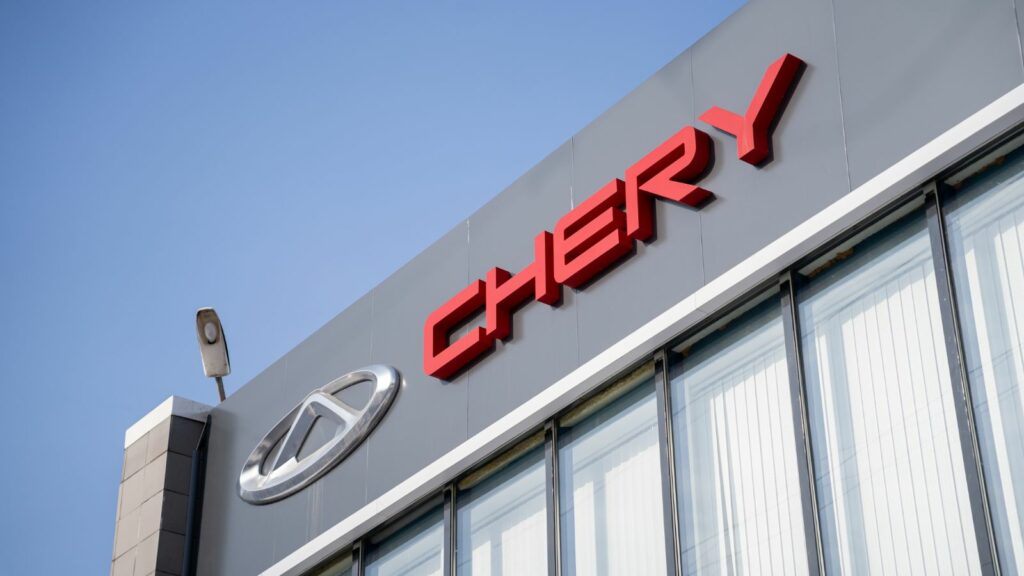
China’s automotive expansion is reaching another milestone, and Canada is increasingly becoming part of the story. Chery Group exported 200,618 vehicles in October 2026, recording a nearly 59% increase from a year earlier as the company strengthened its position in international markets.
The results arrive as Chery prepares to introduce its Omoda and Jaecoo brands to Canadian consumers in 2027. With Ottawa having reduced tariffs on a limited number of Chinese-built electric vehicles, the automaker sees an opportunity to establish a foothold in North America.
Beyond its impressive export figures, Chery is exploring potential Canadian manufacturing investments and dealership partnerships. Its expansion could bring new competition to Canada’s electric vehicle market while raising important questions about affordability, domestic manufacturing, and the future of the country’s automotive industry.
Chery’s October Export Figures Highlight Rapid International Growth
Chery Group reported total vehicle sales of 295,934 units in October 2026, representing a 5.3% increase compared with the same month a year earlier. Of those vehicles, 200,618 were exported, an increase of approximately 58.7% from October 2025. International shipments accounted for nearly 68% of the company’s monthly sales, demonstrating how important overseas markets have become to its operations. October also marked the third time in 2026 that Chery surpassed 200,000 exports in a single month, reinforcing its position among China’s leading automotive exporters.
Although October’s exports were slightly below September’s 207,814 vehicles, the annual growth was substantial. Chery exported 126,434 vehicles in October 2025, meaning its monthly international shipments increased by more than 74,000 units within a year. The expansion reflects the company’s efforts to build a broader international customer base rather than depend entirely on China’s competitive domestic market. For Canada, the figures illustrate the scale of the manufacturer preparing to enter the country, although strong global sales alone cannot guarantee success with Canadian consumers.
Overseas Markets Now Account for Most of Chery’s Annual Sales
The company’s international growth extends well beyond October. During the first ten months of 2026, Chery Group exported 1,751,766 vehicles, representing a 64.8% increase compared with the corresponding period in 2025. Total worldwide sales reached 2,502,723 vehicles, up approximately 9.3%, meaning exports represented roughly 70% of the group’s overall sales. The figures highlight a significant transformation in its business model, with international demand playing an increasingly central role in supporting production volumes and long-term expansion.
Europe has become an important part of that strategy. During the first three quarters of 2026, Chery reported approximately 292,000 vehicle sales across 24 European countries, an increase of 182% year over year. More than 146,000 of those vehicles were classified as new-energy models, reflecting strong interest in electrified transportation. There is also an important distinction in Chery’s financial reporting: its Hong Kong-listed automotive company separately reported 194,674 October exports, compared with the broader group’s 200,618. The different figures reflect different reporting scopes rather than conflicting export results.
Electric Vehicle Sales Reach Another Record as Chery Expands Its Technology Portfolio
Chery’s international expansion is being accompanied by growing demand for its electrified vehicles. The automaker reported sales of 140,893 new-energy vehicles in October, an increase of 27.7% compared with the same month in 2025. It was the company’s seventh consecutive month selling more than 100,000 vehicles in this category, establishing another monthly record. In China’s automotive industry, the new-energy designation generally includes fully battery-electric vehicles, plug-in hybrids, and fuel-cell vehicles. Consequently, Chery’s latest figures should not be interpreted as sales of exclusively battery-powered cars.
Across the first ten months of 2026, Chery’s new-energy vehicle sales reached 999,417 units, representing a 43.2% increase and already exceeding the company’s full-year 2025 total. That growth matters because electrification is central to its Canadian expansion plans. However, global sales momentum does not automatically establish which technologies will be offered domestically. The Canadian launch is expected to emphasize fully electric SUVs, while the manufacturer’s broader international portfolio also includes plug-in hybrid vehicles. Establishing a successful presence will require products suited to Canadian driving conditions, charging infrastructure, and consumer expectations.
Canada’s New Trade Agreement Opens the Door to Chinese Electric Vehicles
Chery’s planned Canadian expansion follows a major change in Ottawa’s approach to Chinese automotive imports. In January 2026, Prime Minister Mark Carney’s government announced an agreement allowing an initial annual quota of 49,000 Chinese-built electric vehicles to enter Canada at a most-favoured-nation tariff rate of 6.1%. The arrangement took effect on March 1, replacing the previous 100% additional tariff with a controlled import system. The quota is scheduled to increase by 6.5% annually, creating opportunities for manufacturers seeking access to Canada’s automotive market.
However, the agreement does not provide unlimited access for Chinese automakers. Importers must obtain shipment-specific permits, with the quota currently administered on a first-come, first-served basis. The allocation applies to eligible vehicles manufactured in China, regardless of whether their brand is Chinese, and is shared across participating manufacturers. Consequently, Chery will compete with other companies for available import capacity. Ottawa has also linked the arrangement to expectations of future investment in Canadian manufacturing and more affordable electric vehicles. Whether those objectives materialize will depend on how manufacturers respond.
Omoda and Jaecoo Will Lead Chery’s Canadian Market Entry
Rather than introducing its entire product portfolio under the Chery name, the automaker intends to establish its initial Canadian presence through Omoda and Jaecoo. Both brands belong to Chery and already operate in international markets, including Europe. Their Canadian operation has launched a website promoting upcoming electric SUVs and began developing a national retail network. The strategy provides Chery with an opportunity to introduce vehicles tailored to Canadian buyers without immediately bringing every brand in its larger automotive portfolio into the country.
The launch schedule has also become clearer. Earlier promotional material pointed toward a late-2026 arrival, but Chery vice-president Charlie Zhang told Reuters on October 21 that the company was preparing for a Canadian launch in early 2027. Subsequent Canadian automotive reporting indicated that the first fully electric SUV was being targeted for spring 2027, with another expected approximately three months later. Those remain planned milestones rather than completed launches. As of November 2, Canadian pricing, final vehicle specifications, and the identities of the initial models have not been publicly confirmed.
Canadian Safety Testing and Dealership Preparations Are Already Underway
Before the first vehicles reach showrooms, Chery must complete important regulatory and commercial preparations. Canadian automotive reporting indicates that Omoda and Jaecoo vehicles have been undergoing testing at the Motor Vehicle Test Centre in Blainville, Quebec, a federal facility operated by PMG Technologies. The centre conducts vehicle safety testing and research, including work associated with compliance standards. Imported vehicles must meet applicable Canadian Motor Vehicle Safety Standards before they can be offered for sale. Successful certification is therefore a necessary step toward Chery’s planned spring 2027 introduction.
Building an effective dealership network presents another challenge. Recent reporting suggests an initial target of approximately twelve dealerships, concentrated in Quebec, Ontario, and British Columbia. However, the company’s public Canadian retailer page has not yet provided a completed list of locations. For prospective owners, a showroom represents only one part of the experience. Reliable access to replacement parts, warranty repairs, battery diagnostics, and routine maintenance will be equally important. Chery’s ability to establish those services could influence whether Canadians become comfortable purchasing vehicles from brands they have never owned before.
Chery Is Exploring Vehicle Manufacturing Opportunities in Canada
Chery’s ambitions may eventually extend beyond importing and selling vehicles. In October, executive vice-president Guibing Zhang revealed that the company was considering establishing manufacturing operations in Canada. Options reportedly include using available capacity at existing automotive factories or developing production facilities with local partners. The possibility is particularly significant for communities affected by uncertainty in Canada’s automotive manufacturing sector. A new investor could potentially create employment opportunities, support parts suppliers, and help preserve manufacturing expertise in regions where automotive production has historically supported thousands of jobs.
However, these discussions remain exploratory. Chery has not announced a confirmed Canadian factory location, investment amount, production schedule, or employment commitment. Industry Minister Mélanie Joly has met representatives from Chery, BYD, and Geely as Ottawa seeks to encourage automotive investment through its revised trade relationship with China. The federal government has emphasized the importance of meaningful Canadian production and local supply chains rather than limited assembly operations. For Chery, investing locally could provide a longer-term manufacturing presence, but the business case must account for production costs, market demand, and significant trade restrictions affecting access to the United States.
U.S. Trade Restrictions Could Complicate Chery’s North American Ambitions
Canada’s more welcoming trade arrangement contrasts sharply with the regulatory environment facing Chinese automakers in the United States. American restrictions include tariffs exceeding 100% on Chinese vehicles, alongside national-security regulations targeting certain connected-vehicle technologies. The U.S. Department of Commerce has established restrictions affecting Chinese-linked automotive manufacturers and specified vehicle software beginning with the 2027 model year, with additional hardware restrictions scheduled for later implementation. These rules mean manufacturing vehicles in Canada would not automatically allow Chery to sell them across the American border.
Despite those obstacles, Chery has expressed interest in developing relationships with American automotive manufacturers. In an October 21 interview with Reuters, vice-president Charlie Zhang discussed possible technology partnerships and suggested that the company could develop vehicles using hardware and software not sourced from China. No specific American partnership was announced. The comments illustrate how Chery is considering several approaches to North American expansion while recognizing that Canadian and American market access are fundamentally different. For Canadian policymakers, the challenge involves attracting investment and increasing consumer choice without unnecessarily intensifying an already complicated cross-border automotive trade relationship.
Canadian Buyers Could See More Competition, but Pricing Will Be Crucial
For Canadian consumers, one of the biggest unanswered questions is how much Chery’s new electric SUVs will cost. Competitive pricing could make Omoda and Jaecoo attractive alternatives to established manufacturers, particularly for households considering their first electric vehicle. However, vehicles manufactured in China are not eligible for Canada’s federal Electric Vehicle Affordability Program. Under the program, qualifying battery-electric vehicles can receive incentives of up to $4,000 in 2027, subject to manufacturing-origin and other eligibility requirements. That could give eligible competitors a financial advantage unless Chery offers sufficiently attractive prices.
Competition is also intensifying among Chinese manufacturers preparing to enter Canada. Geely officially announced its Canadian expansion in October, with the first vehicles expected in 2027, while BYD has been developing its own entry strategy. These manufacturers will face similar challenges involving safety certification, dealership development, pricing, and consumer confidence. Chery’s October export performance demonstrates its growing international capabilities, but Canadian success will ultimately depend on delivering competitive products backed by dependable service. The next important milestones will be confirmed Canadian models, official prices, dealership openings, and any binding manufacturing investment decisions.
