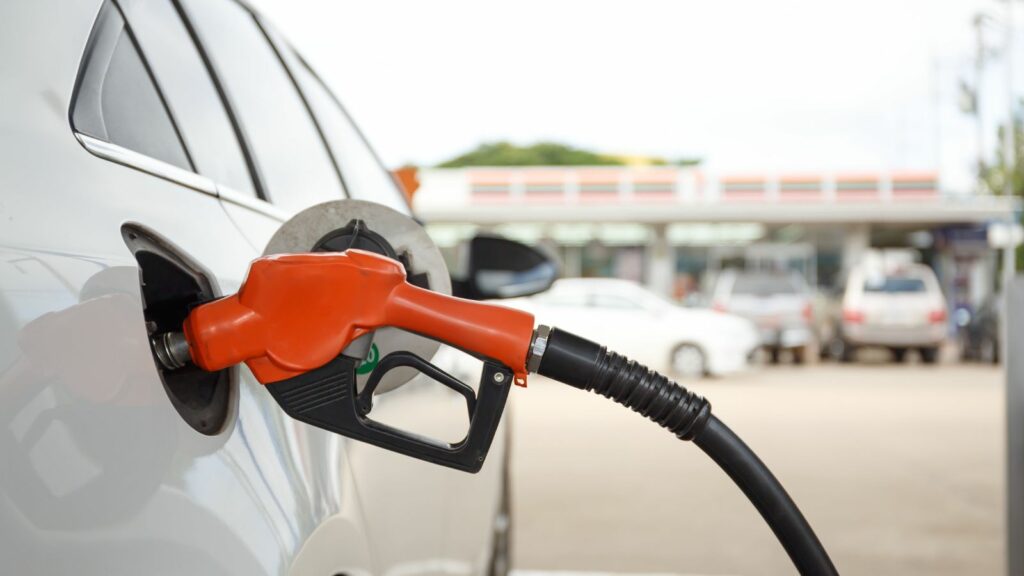
An ordinary trip to the gas station continues to carry a significant price tag for Prince Edward Island motorists. Under new petroleum prices effective November 3, 2026, regular self-serve gasoline remains above $1.87 per litre, while diesel continues to cost more than $2.50 despite a recent reduction.
The latest figures from the Island Regulatory and Appeals Commission highlight the financial pressure facing households, commuters, farmers, and transportation businesses across the province. Although provincial and federal fuel tax suspensions are providing temporary relief, elevated wholesale fuel costs continue to influence what Islanders pay.
With gasoline prices holding steady and diesel becoming slightly less expensive, the latest adjustment offers a mixed picture of affordability heading into November.
Gasoline Prices Remain Above $1.87 Under the Latest Limits
Regular gasoline prices on Prince Edward Island remain unchanged under the November 3 adjustment, with self-serve motorists paying between 187.3 and 188.5 cents per litre. The figures represent the minimum and maximum prices permitted by the Island Regulatory and Appeals Commission. While the lower end is commonly described as approximately $1.87 per litre, the maximum permitted self-serve price is closer to $1.89. Retailers can charge anywhere within that regulated range, meaning drivers may encounter slightly different prices depending on where they purchase fuel. The stability provides some short-term predictability after earlier adjustments, but it does little to reduce the amount households must dedicate to transportation. For Islanders who rely on personal vehicles for commuting, groceries, appointments, and family responsibilities, gasoline remains a substantial recurring expense.
Other gasoline grades are also subject to regulated price ranges. Mid-grade gasoline is priced between 194.6 and 195.7 cents per litre at self-serve pumps, while premium gasoline ranges from 201.7 to 202.9 cents. Drivers using full-service stations can face higher maximum prices, with regular gasoline permitted to reach 191.4 cents per litre. These differences matter because not every vehicle uses the same grade of fuel, and the price displayed for regular gasoline does not necessarily represent what every motorist pays. The latest schedule also illustrates an important distinction in P.E.I.’s regulatory system: the commission establishes both a price floor and a ceiling for gasoline. Although the restrictions limit how much retailers can charge, they do not guarantee that fuel will become cheaper when household budgets are under pressure.
Diesel Remains Above $2.50 Despite a Price Reduction
Diesel motorists received some relief under the November 3 adjustment, although prices remain considerably higher than gasoline. The new self-serve diesel range is 250.4 to 251.5 cents per litre, compared with 258.4 to 259.6 cents under the October 30 schedule. That represents a reduction of approximately eight cents per litre at the pump, including the effect of sales tax. The underlying dealer base price declined by seven cents per litre. While the adjustment is welcome for anyone purchasing large quantities of diesel, the remaining cost is substantial. Even at the minimum regulated price, diesel costs 63.1 cents more per litre than regular gasoline at its corresponding minimum. Full-service diesel prices can reach 254.4 cents per litre, further increasing the cost for customers using that service.
The unusually large difference between gasoline and diesel creates particular challenges for businesses and motorists operating diesel-powered vehicles. Delivery operators, construction contractors, agricultural businesses, and commercial transportation companies often consume much greater quantities of fuel than the average household vehicle. For example, purchasing 100 litres of diesel at the minimum regulated self-serve price costs $250.40, compared with $187.30 for the same quantity of regular gasoline. That difference illustrates the financial exposure faced by operators whose equipment requires diesel. Actual fuel costs vary according to equipment, purchasing arrangements, and consumption, but the broader concern remains unchanged. A modest reduction does not necessarily make operating expenses manageable when the starting price remains above $2.50 per litre. Sustained diesel costs can also influence transportation and distribution decisions throughout the provincial economy.
How P.E.I.’s Regulated Fuel Pricing System Works
Prince Edward Island differs from provinces where gasoline retailers have greater freedom to determine pump prices. The Island Regulatory and Appeals Commission regulates petroleum prices under the Petroleum Products Act, which requires prices to remain just and reasonable for both consumers and industry participants. The commission establishes minimum and maximum retail prices for gasoline and diesel, alongside maximum prices for certain heating fuels. Its calculations consider wholesale petroleum costs, allowable distribution margins, retailer margins, and applicable taxes. This regulatory structure creates a relatively narrow range within which competing retailers operate. However, regulation should not be confused with permanent price protection. When the underlying cost of petroleum products rises, the commission can still approve higher prices. Its role is to apply the established pricing framework rather than insulate consumers from every change in energy markets.
The November 3 figures provide a useful example of how the calculations work. The commission lists a period-average wholesale rack price of 153.0 cents per litre for regular gasoline, compared with 204.9 cents for diesel. A five-cent wholesale margin and product-specific forward-averaging adjustments contribute to dealer base prices of 155.9 cents for regular gasoline and 210.7 cents for diesel. Retail margins and the applicable 15% harmonized sales tax are then incorporated into the final pump-price ranges. These figures help explain why gasoline and diesel can move differently during the same adjustment period. The products have distinct wholesale benchmarks and market conditions, even though both are refined from crude oil. Consequently, a decline in gasoline prices does not automatically mean diesel will fall by the same amount.
Fuel Tax Suspensions Are Already Providing Temporary Relief
The latest pump prices would be higher without the temporary fuel tax measures introduced by the provincial and federal governments. On September 26, 2026, Prince Edward Island suspended its provincial gasoline and diesel taxes as part of an affordability initiative. Before the suspension, the provincial tax was 8.47 cents per litre on gasoline and 14.15 cents on diesel. The measure is scheduled to remain in effect through January 31, 2027. Premier Rob Lantz’s government introduced the suspension to reduce costs for households and businesses facing elevated fuel expenses. The province estimated that a motorist with a mid-sized vehicle filling up once a week could save approximately $115 over the six-month relief period. For commercial users purchasing larger quantities of diesel, the tax suspension can represent a more substantial reduction in operating costs.
Federal relief is also reflected in the current prices. Ottawa temporarily suspended the federal fuel excise tax beginning April 20, 2026, removing the usual 10-cent-per-litre charge on regular gasoline and four-cent charge on diesel. On October 29, legislation extending that suspension received royal assent, keeping the federal excise tax at zero through January 31, 2027. The November 3 P.E.I. pricing schedule therefore lists zero federal excise tax and zero provincial fuel tax for gasoline and diesel. The federal fuel charge is also listed at zero. However, the 15% harmonized sales tax continues to apply at the pump. These distinctions are important because high fuel prices cannot simply be attributed to the suspended taxes. Even with significant government intervention, wholesale prices, retail margins, and remaining sales taxes are producing substantial costs for consumers.
What the Latest Prices Mean for Household Transportation Budgets
For an Island household, the impact becomes clearer when the per-litre figures are converted into actual fill-up costs. A motorist purchasing 50 litres of regular gasoline under the November 3 self-serve price range would spend between $93.65 and $94.25. A larger 60-litre purchase would cost between $112.38 and $113.10. These examples assume the stated quantities and regulated prices, rather than the precise fuel needs of any particular vehicle. Nevertheless, they demonstrate why gasoline remains a major budget concern. A household purchasing 50 litres twice in a month would spend approximately $187 to $189 on those purchases alone. Additional driving, a second vehicle, or unexpected travel could push expenses higher. Even relatively small changes matter when multiplied across repeated fill-ups over several weeks.
Prince Edward Island’s dependence on personal transportation makes these costs particularly significant. Statistics Canada reported that 92.7% of P.E.I. commuters primarily travelled to work by car, truck, or van in 2023, compared with 82.6% nationally. The same agency’s household spending data showed that transportation represented 16.8% of average spending on goods and services in the province that year. That category includes more than gasoline, but it demonstrates the financial importance of getting around. For households outside Charlottetown and other larger communities, driving can be necessary for employment, healthcare, shopping, and family activities. Fuel expenses are therefore not always easy to reduce simply by travelling less. When gasoline remains close to $1.90 per litre, ordinary transportation needs can require difficult decisions about where household money is allocated.
High Diesel Costs Affect Farmers, Truckers, and Local Businesses
The consequences of expensive diesel extend well beyond motorists who own diesel-powered pickup trucks. Prince Edward Island’s economy relies heavily on agriculture, fisheries, food production, construction, and transportation, all sectors in which fuel can represent an important operating expense. Provincial economic figures show that farm cash receipts totalled approximately $835 million in 2025, while the value of fish landings reached an estimated $460.8 million. These industries depend on machinery, commercial vehicles, and transportation networks to move products between farms, ports, processing facilities, and customers. Diesel-powered equipment is particularly common in agricultural and freight operations. When fuel costs remain elevated, businesses must account for those expenses when planning production, scheduling deliveries, and assessing profitability. The latest reduction provides some relief, but the overall price remains high enough to create financial pressure.
Consider a commercial operator purchasing 200 litres of diesel at a public self-serve pump. Under the November 3 limits, that purchase would cost between $500.80 and $503.00. Not every business pays public retail prices, since bulk purchasing arrangements, fuel contracts, and qualifying exemptions can affect actual costs. The example nevertheless illustrates how quickly expenses accumulate when large volumes are involved. For a small delivery company, repeated fuel purchases can consume money that might otherwise support equipment maintenance, staffing, or business investment. Farmers face similar pressures when operating machinery during planting and harvesting periods. Although businesses may eventually adjust their prices to reflect higher operating expenses, the relationship is not automatic. Competition, contracts, profit margins, and customer demand all influence whether higher diesel costs are passed along. Persistent fuel expenses can therefore squeeze businesses before their effects become visible elsewhere in the economy.
Furnace Oil Prices Add Another Concern Heading Into Winter
Fuel affordability is not limited to transportation. The November 3 adjustment also establishes a maximum furnace oil price of 208.5 cents per litre, including the applicable five-per-cent goods and services tax. That is down from the previous maximum of 213.8 cents per litre on October 30. The decrease provides some relief for households using oil-fired heating systems, although furnace oil remains a substantial expense. For illustration, purchasing 500 litres at the current maximum price would cost $1,042.50, compared with $1,069 under the previous limit. Actual purchase quantities and costs vary, but the calculation highlights why heating bills can become difficult to manage as colder weather approaches. Unlike gasoline purchases, heating oil deliveries may involve larger quantities that create significant individual bills rather than smaller, more frequent expenses.
The distinction between transportation fuel and heating oil is also important when considering government relief. P.E.I.’s suspended provincial gasoline tax applies to gasoline and diesel, while home heating oil is not subject to that particular provincial tax. Heating oil is also exempt from the federal fuel excise tax. The commission’s furnace oil calculation instead includes the applicable five-per-cent GST, rather than the 15% HST shown for gasoline and diesel. As a result, the temporary motor-fuel tax suspensions do not provide an equivalent new tax reduction for home heating oil. This creates a broader affordability challenge for households trying to manage transportation and heating costs simultaneously. A reduction in one fuel category may help, but it does not necessarily offset higher expenses elsewhere. For families facing mortgage payments, groceries, utilities, and other recurring bills, energy remains one of several unavoidable budget pressures.
What Islanders Can Expect From Upcoming Price Adjustments
Prince Edward Island’s petroleum pricing schedule now provides more frequent opportunities for adjustments. The Island Regulatory and Appeals Commission has moved to scheduled price reviews twice a week, with changes taking effect at 12:01 a.m. on Tuesdays and Fridays until further notice. Based on that schedule, the next regular adjustment after November 3 is Friday, November 6, 2026. The commission can also consider unscheduled changes when petroleum market movements are significant enough to warrant additional review. These procedures mean motorists do not necessarily have to wait an entire week for lower wholesale costs to influence regulated pump prices. However, the same system can respond to rising costs. More frequent adjustments improve the timing of price changes without guaranteeing that the changes will benefit consumers.
The direction of future prices will depend on developments in wholesale fuel markets, refined petroleum supply and demand, currency movements, and other factors incorporated into the commission’s methodology. The November 3 adjustment demonstrates how those influences can produce different outcomes for gasoline, diesel, and heating oil. Another consideration is the scheduled return of fuel taxes in 2027. Provincial and federal tax relief is set to be reduced beginning February 1, with the regular rates scheduled to return April 1. Those changes could affect pump prices even if underlying wholesale markets become more stable. For now, the immediate picture remains mixed. Gasoline has stopped moving under the latest adjustment, diesel has become somewhat cheaper, and heating oil has also declined. Yet fuel costs remain a significant financial concern for Islanders whose everyday lives and livelihoods depend on reliable, affordable energy.
