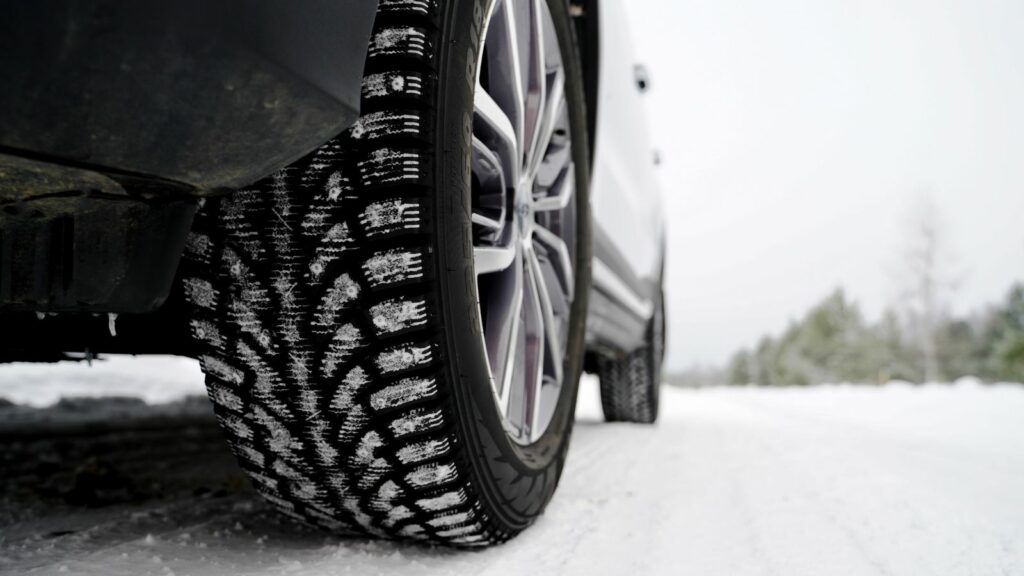
The first icy morning of winter can turn an ordinary commute into a difficult decision. Across Canada, many motorists know that dedicated winter tires provide better grip, but the cost of buying them competes with groceries, housing and other unavoidable bills.
Findings released November 9 by the Tire and Rubber Association of Canada show that 38 per cent of drivers cite rising living costs as a reason not to purchase winter tires. At the same time, 86 per cent consider them an important investment, and 80 per cent report equipping their vehicles with them this season.
That tension is becoming a defining feature of winter driving: safety remains a priority, but the money needed to prepare for it is not always available. The consequences matter on snowy highways, suburban streets and the daily trips families cannot easily postpone.
Rising Living Costs Are Making Winter Tires Harder to Afford
For many households, buying winter tires is no longer a straightforward seasonal purchase. In findings published on November 9, 2026, the Tire and Rubber Association of Canada reported that 38 per cent of Canadian drivers cited higher living costs as a reason for not buying them. Abacus Data collected responses from 1,232 drivers between October 16 and 21. The result puts a number on a familiar dilemma: paying for something that improves road safety while managing expenses that cannot wait.
The figure requires care: it identifies cost as an influence, not proof that 38 per cent of Canadian drivers are without winter tires. A motorist may own a usable set but hesitate to replace it; another may postpone a first purchase. Either way, the financial squeeze is felt at home. A bill for tires competes with insurance renewals, repairs and the costs of keeping a family moving in colder months.
Everyday Expenses Are Squeezing Household Budgets
The pressure behind the tire decision is visible in national price data. Statistics Canada reported consumer prices were 3.1 per cent higher in September 2026 than a year earlier, while transportation costs rose 8.4 per cent. Grocery inflation had slowed, but store-bought food still cost 33 per cent more than in September 2020. Slower increases offer little comfort to families whose regular bills already absorb most of their pay.
The Bank of Canada’s third-quarter consumer research found high prices remained the leading barrier to spending, even as respondents reported some improvement in financial confidence. Many described looking for deals, choosing cheaper alternatives and cutting discretionary purchases. Tires are not equivalent to dining out, yet a replacement set can be deferred when money is scarce. That matters particularly when a vehicle is needed for work, school pickups or essential appointments. A postponed purchase may seem manageable until cold weather suddenly arrives.
More Drivers Are Questioning Whether All-Season Tires Are Enough
Drivers are increasingly questioning the idea that ordinary all-season tires are sufficient for a Canadian winter. Among people who do not use winter tires, 64 per cent now say all-season tires are good enough, according to the 2026 research. That is an 11-percentage-point drop from 2025. The change suggests a shift in attitudes, not necessarily a rush to the tire shop. Recognizing a problem and having the money to address it remain separate decisions.
Some motorists adjust by driving less instead. Among nonusers, 35 per cent say they are reducing winter driving, an increase of 11 percentage points from last year. Avoiding unnecessary trips during storms can lower exposure to hazardous conditions, but many essential journeys cannot be cancelled. A parent still needs to collect a child; an employee may have an early shift before roads are cleared. The responses suggest adaptation, though the reasons behind individual choices remain unclear.
Winter Tire Adoption Remains High Across Canada
Despite the affordability concerns, winter-tire adoption remains widespread. The Tire and Rubber Association of Canada reports that 80 per cent of drivers are equipping their vehicles with winter tires this season. Regional figures, however, show that the national average hides significant differences. Atlantic Canada leads the regions listed in the release at 86 per cent. Ontario stands at 77 per cent, Alberta at 75 per cent, Manitoba and Saskatchewan together at 74 per cent, and British Columbia at 65 per cent.
Regional differences do not automatically measure driver responsibility. British Columbia combines mild coastal communities with demanding mountain highways. Provincial rules further shape equipment choices and travel. The November release does not provide a separate Quebec percentage, although winter tires are legally required there for most Quebec-registered vehicles during the designated season. National affordability pressures meet different climates, roads and legal expectations. That makes one-size-fits-all explanations of consumer behaviour difficult.
Winter Tires Provide Better Grip Even Before Snow Falls
Winter tires offer benefits even on days when pavement looks clear. Transport Canada explains that below 7°C, ordinary all-season and summer tire rubber starts losing flexibility, reducing traction. Winter tires use compounds meant to retain grip at lower temperatures. That matters during a frost-covered morning drive or on a cold, wet highway, when ice may be patchy rather than obvious. Snowfall is only one part of the decision.
The federal agency recommends looking for the three-peaked mountain and snowflake symbol, identifying tires meeting specific snow traction requirements. The symbol does not mean a vehicle becomes immune to skids, nor does it guarantee identical performance on every road surface. Tires still need sufficient tread and proper inflation. Transport Canada also advises fitting four matching winter tires rather than only the driven wheels, because mismatched grip can undermine stability. Choosing winter tires is a safety decision rather than buying particularly aggressive-looking tread.
Drivers Believe Winter Tires Have Helped Them Avoid Collisions
The survey captures why drivers who have used winter tires often remain loyal to them. Among current users, 83 per cent believe the tires helped them avoid a collision or loss of control. Separately, 67 per cent identify protecting their families through better stopping, turning and traction as a leading purchase reason. The value becomes tangible during an unexpectedly slippery stop or sudden difficult turn.
But personal recollections are not the same as measured collision prevention. The Traffic Injury Research Foundation reviewed winter-tire studies and found consistent advantages in braking, traction and cornering compared with all-season or summer tires under winter conditions. It also cautioned that the available research had limitations, particularly when linking improved performance to actual injury and collision outcomes. The distinction makes the survey more credible, not less: drivers are reporting what they experienced or believe, while technical tests explain why tire choice can make a difference.
Provincial Winter Tire Rules Create Different Obligations
The law also affects what drivers can postpone. In Quebec, vehicles registered in the province generally must use approved winter tires from December 1 through March 15. A driver who ignores the rule risks a fine between $200 and $300. Because the deadline falls before much of the winter, Quebec motorists cannot simply wait for snowfall to decide whether changing tires fits the budget.
British Columbia takes a different approach. On many designated provincial highways, winter-equipment rules apply from October 1 through March 31 or April 30, depending on the posted route. A qualifying passenger tire must have at least 3.5 millimetres of tread and either an M+S marking or the mountain-and-snowflake symbol. An M+S tire can meet the legal minimum without delivering the same severe-snow grip as a dedicated winter tire. The distinction is especially important on journeys that move from mild coastal roads to steep interior mountain passes.
Insurance Discounts and Financing Can Help Some Drivers
Financial incentives offer some relief, although they rarely erase the expense. In the 2026 tire research, 26 per cent of winter-tire users cited lower insurance premiums as a reason for purchasing them. Ontario requires auto insurers to offer a discount to customers who install winter tires. Drivers still need to ask their insurer what qualifies, and the savings may not cover the purchase or seasonal installation costs.
Manitoba offers a more direct way to spread payments. Through Manitoba Public Insurance, eligible vehicle owners can finance up to $2,000 per vehicle at prime plus two percentage points, repaid over one to four years. Since October 1, 2026, the program has required eligible tires to be designed and marketed solely for winter use; all-weather tires no longer qualify even when they display the snowflake symbol. Financing can ease the immediate burden, but it also creates a continuing obligation in future monthly budgets.
The True Cost of Winter Tires Goes Beyond the Purchase Price
The sticker price of four tires does not capture the full financial calculation. Drivers may pay for mounting, balancing, seasonal changeovers, storage and possibly an extra set of wheels. For an apartment renter without storage space, the inconvenience can become a recurring bill. For a commuter who owns a vehicle for years, switching between summer and winter tires means the summer set accumulates fewer kilometres, potentially extending its useful life.
The Tire and Rubber Association of Canada provides a winter-tire cost calculator designed to compare using one tire set against purchasing a second dedicated winter set, with or without extra wheels. It accounts for mileage, tire life and related service expenses, letting households compare their own circumstances. A household facing a large bill this month still needs cash now, even if a longer-term calculation looks favourable. That gap between lifetime value and immediate affordability is the heart of the problem.
Practical Savings Should Not Mean Compromising Tire Safety
For motorists on a budget, good maintenance offers savings without sacrificing safety. Transport Canada advises against using tires worn close to four millimetres of tread on snow-covered roads. It also recommends checking air pressure when tires are cold because pressure falls with temperature. A set that looks acceptable in a warm garage may be underinflated the next morning. Checks cannot restore worn rubber, but support proper performance.
Careful shopping matters alongside maintenance. The three-peaked mountain and snowflake mark confirms a minimum level of snow traction, while four matching tires support stable handling. Drivers comparing lower-priced or second-hand sets should confirm size, condition, remaining tread and visible damage instead of judging by appearance alone. Ignoring damage or fitting only two winter tires is never a safe way to save. When road conditions are severe, reducing speed, allowing greater following distance and postponing nonessential travel remain sensible protections, whatever tires are fitted.
The Findings Highlight a Growing Gap Between Safety and Affordability
The headline requires precision. The latest winter-tire findings came from an online panel of 1,232 Canadian drivers interviewed by Abacus Data from October 16 to 21, 2026. The 38 per cent figure measures respondents naming higher living costs as a reason not to buy tires. It does not count actual purchases, establish whether tires were already owned or prove which individual households are driving on unsuitable equipment. TRAC commissioned the research and promotes winter-tire use.
Yearly comparisons need care. In 2025, a TRAC study conducted by Probe Research reported that 32 per cent were less likely to buy winter tires because of affordability concerns. The newer release describes cost as a reason for not buying them, a different formulation, so they do not establish a six-point increase. Even with those limits, the central issue is clear: knowing that safer equipment matters does not mean every household can pay for it.
