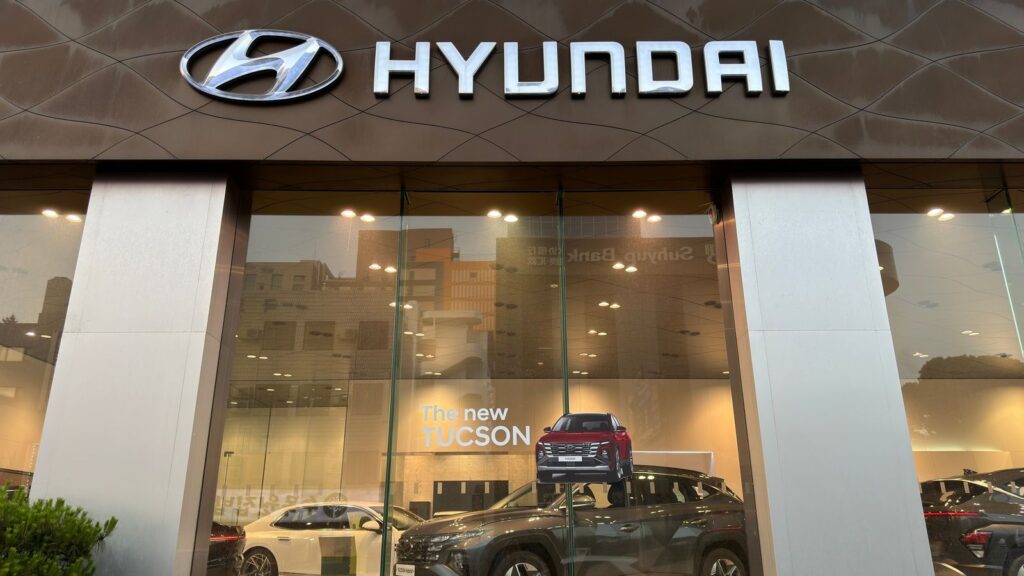
Hyundai is preparing significant changes for the 2027 model year, with a completely redesigned Tucson SUV and the high-performance Ioniq 6 N leading its latest North American product plans.
In a U.S. lineup announcement released November 11, 2026, Hyundai confirmed both vehicles as all-new models while outlining smaller updates for several familiar SUVs, sedans, and electric vehicles.
However, one omission has attracted attention. The gasoline-powered Kona appears in the announcement, but the Kona Electric is missing, raising questions about the smaller electric SUV’s future in the American market.
For Canadian drivers, the situation is more encouraging. Hyundai Canada is already promoting the next-generation Tucson and lists a 2027 Kona Electric, demonstrating that the company’s product strategies do not necessarily follow identical paths on both sides of the border.
Hyundai’s 2027 Lineup Introduces Two Major New Models
Hyundai Motor America officially released its 2027 model-year changes on November 11, identifying the Tucson and Ioniq 6 N as the two all-new vehicles in its initial lineup summary. The announcement represents an important transition for the South Korean automaker, which is balancing growing interest in hybrid SUVs with its ambition to develop more sophisticated electric performance vehicles. While several existing nameplates will return with relatively modest changes, these two models represent a more substantial shift in Hyundai’s product offering.
The redesigned Tucson will compete in the increasingly competitive compact SUV market, where practicality, fuel efficiency, and technology remain important purchasing considerations. Meanwhile, the Ioniq 6 N targets a different audience: enthusiasts interested in high-performance electric driving. Hyundai also confirmed updates to the Ioniq 5, Ioniq 9, Santa Fe, and Palisade, among other vehicles. However, the announcement does not provide complete pricing, equipment, and delivery information for every model, leaving several details to be finalized closer to individual launches.
The 2027 Tucson Represents a Complete Generational Redesign
The Tucson is undergoing one of its most substantial transformations in years. Hyundai unveiled the fifth-generation SUV in New York on October 1, 2026, introducing a redesigned exterior, expanded dimensions, new technology, and updated powertrain options. Rather than relying on another minor refresh, Hyundai is repositioning one of its most important vehicles with a more distinctive appearance and a stronger emphasis on efficiency. Its new Art of Steel design language incorporates muscular fenders, sharper body lines, and a wider stance intended to give the compact SUV a more commanding presence.
The redesign carries considerable importance because the Tucson has become one of Hyundai’s most successful vehicles worldwide. According to the automaker, cumulative global Tucson sales have exceeded 11.1 million units since the nameplate debuted in 2004. The United States accounts for approximately 20% of those sales, highlighting the model’s importance in North America. For Canadian families who depend on compact SUVs for commuting, grocery shopping, and winter travel, the redesigned Tucson offers a significant evolution of an established nameplate.
A Larger Cabin and New Technology Aim to Improve Everyday Comfort
Hyundai has increased the Tucson’s dimensions to provide additional passenger space and improve everyday practicality. The new long-wheelbase version measures approximately 4,700 millimetres long, 1,905 millimetres wide, and 1,685 millimetres tall, making it longer, wider, and taller than its predecessor. Its wheelbase has also increased to 2,785 millimetres. Even the rear doors have received attention, with their opening angle expanding from 73 to 83 degrees. That seemingly modest improvement could make a meaningful difference when loading children into car seats or helping passengers enter the back row.
Inside, Hyundai introduces its Pleos Connect infotainment system, which supports an available 17-inch central display and Gleo AI voice assistance. The interior features a redesigned dashboard, additional storage areas, and physical controls for frequently used functions. Available comfort features include wireless device charging and upgraded seating options. However, Canadian specifications may differ from those shown during the international unveiling. Hyundai has emphasized that equipment, technologies, and trim availability will depend on individual markets, making final Canadian configuration details particularly important.
Hybrid Efficiency Becomes a Major Part of the Tucson’s Appeal
Hyundai is placing greater emphasis on electrification with the new Tucson, particularly through its next-generation hybrid system. The company is targeting fuel economy of up to 42 miles per U.S. gallon for a front-wheel-drive hybrid equipped with 17-inch wheels, equivalent to approximately 5.6 litres per 100 kilometres. That figure remains a manufacturer target rather than a final Canadian government fuel-consumption rating. Hyundai has also outlined a U.S.-specification hybrid output of 233 horsepower, alongside a gasoline-powered version rated at 184 horsepower.
The redesigned Tucson also introduces HEV Stay Mode, which can operate selected functions such as climate control, audio, and device charging while the gasoline engine remains switched off. For families spending time at roadside stops or waiting in parked vehicles, that feature could improve comfort and reduce unnecessary engine operation. Hyundai has additionally detailed a plug-in hybrid version with a 17.1-kWh battery and an estimated electric range of up to 81 kilometres under its stated testing assumptions. However, availability and final specifications will vary by region, and Canadian buyers should not treat international performance estimates as confirmed domestic ratings.
A New Tucson XRT PRO Adds a More Rugged Alternative
Hyundai is also expanding the Tucson’s adventurous character with the introduction of the XRT PRO, a more capable version designed for drivers who occasionally venture beyond paved roads. The new variant features all-wheel drive, all-terrain tires, front recovery hooks, and additional protective exterior cladding. Ground clearance increases to 210 millimetres, approximately 30 millimetres more than the standard Tucson. The improvements are intended to provide greater confidence when navigating uneven surfaces, gravel roads, and challenging recreational routes.
One of the XRT PRO’s more interesting technologies is Hyundai’s Smart Terrain Assist system, which evaluates traction conditions and provides guidance about potentially difficult terrain. Hyundai has also announced that certain North American Tucson hybrid configurations will offer towing capacity of up to 3,000 pounds, equivalent to approximately 1,361 kilograms. That represents a 1,000-pound improvement over the previous model, according to the manufacturer. However, the quoted towing figure applies to specified hybrid configurations and should not automatically be attributed to every XRT PRO. Canadian trim availability and final capability ratings will require confirmation.
The Ioniq 6 N Introduces Up to 641 Horsepower of Electric Performance
While the Tucson focuses on mainstream SUV buyers, Hyundai’s new Ioniq 6 N demonstrates how far the brand intends to push electric performance. The sedan becomes Hyundai’s second fully electric N model, building on the approach introduced with the Ioniq 5 N. Its dual-motor electric powertrain produces up to 601 horsepower in standard operation, increasing to 641 horsepower when the N Grin Boost function is activated. That temporary boost delivers additional power for a 10-second interval, creating a substantial performance increase without requiring a larger gasoline engine or conventional transmission.
The Ioniq 6 N also features an 84-kWh high-voltage battery and a manufacturer-quoted acceleration time of just 3.2 seconds from zero to 100 kilometres per hour when N Launch Control and N Grin Boost are engaged. Its maximum speed is rated at 257 kilometres per hour. Hyundai’s American website identifies spring 2027 as the expected launch period, with extremely limited availability through select dealerships. Canadian buyers will also have an opportunity to purchase the model, although Hyundai Canada has not announced a firm delivery date or final pricing.
Hyundai Is Giving Its Performance EVs a More Traditional Driving Feel
Hyundai’s electric performance strategy involves more than producing impressive acceleration figures. The Ioniq 6 N introduces technologies designed to recreate some of the sensations associated with traditional performance cars. Its N e-Shift system simulates gear changes, while N Active Sound+ generates selectable driving sounds. These features aim to create a more interactive driving experience despite the absence of a conventional gearbox. Drivers can also adjust the distribution of power between the front and rear motors, allowing the vehicle’s behaviour to be tailored to different driving conditions.
Additional performance equipment includes specialized suspension tuning, large brakes, and systems intended to manage battery temperatures during demanding driving. Hyundai also offers an N Drift Optimizer feature specifically designed for controlled use on closed courses, rather than public roads. Under ideal conditions with a suitable 350-kW DC charger, Hyundai quotes a battery charging time of approximately 18 minutes from 10% to 80%. The combination of advanced charging and specialized performance technology illustrates Hyundai’s attempt to make high-powered electric cars usable beyond occasional track events, although actual range and charging results will vary considerably.
The Kona Electric Is Missing, but Hyundai Has Not Confirmed Its Cancellation
The most intriguing omission in Hyundai’s November 11 announcement concerns the Kona Electric. The company’s 2027 U.S. lineup summary includes the gasoline-powered Kona, describing it as a returning model with minor changes. However, the electric version does not appear among the vehicles identified in the same announcement. That distinction is particularly important because Hyundai had already interrupted the Kona Electric’s normal American model-year schedule. Earlier in 2026, the automaker confirmed that the electric SUV would skip the 2026 model year in the United States.
At the time, Hyundai explained that existing 2025-model inventory was sufficient to meet consumer demand. A company spokesperson also indicated that production was scheduled to resume in June 2026 for the 2027 model year. The latest omission therefore creates uncertainty about the timing and details of the electric model’s American return, but it does not establish that the vehicle has been permanently discontinued. According to estimates reported by Cox Automotive, approximately 3,011 Kona Electric vehicles were sold in the United States during 2025, representing a decline of about 41% from the previous year. Those figures help explain the commercial pressures facing smaller electric vehicles.
Most of Hyundai’s Remaining 2027 Vehicles Will Receive Smaller Updates
Beyond the Tucson and Ioniq 6 N, Hyundai’s 2027 lineup announcement suggests a year of relatively modest changes for several established models. The Ioniq 5 electric crossover and larger Ioniq 9 are both classified as carryover vehicles receiving minor revisions. The performance-focused Ioniq 5 N returns without changes, while the Palisade and Santa Fe continue with relatively small updates across their gasoline and hybrid offerings. Hyundai’s Santa Cruz pickup, gasoline-powered Kona, and Venue SUV are also scheduled to return with minor changes.
The Sonata receives an unchanged designation across its gasoline, hybrid, and N Line versions, while Hyundai says further details about the 2027 Elantra will be announced separately. This approach allows Hyundai to concentrate its most significant product development efforts on selected new vehicles while maintaining a broad portfolio of established nameplates. For drivers considering a purchase, the distinction matters: a newer model year does not necessarily mean an entirely redesigned vehicle. Comparing equipment, pricing, financing offers, and available inventory will remain important, particularly when an outgoing model offers many of the same features as its successor.
Canadian Buyers Have a Different 2027 Hyundai Lineup to Consider
For Canadians, Hyundai’s American announcement should be viewed alongside the company’s separate Canadian product information. Hyundai Canada confirms that the all-new Tucson is expected to arrive in early 2027, with gasoline and next-generation hybrid powertrain options. The company’s Canadian website also includes the 2027 Kona Electric in its vehicle selection tools and specifications pages, despite the electric SUV being absent from the November 11 U.S. lineup summary. This is a particularly important distinction for consumers concerned that the American omission might signal the end of the Kona Electric across North America.
Hyundai Canada has additionally confirmed that the Ioniq 6 N will be offered in limited quantities, although its exact Canadian launch date and pricing remain unannounced. In an earlier statement, the company also said the refreshed, non-performance Ioniq 6 would return to Canada for the 2027 model year, contrasting with Hyundai’s decision to discontinue the standard sedan in the United States. Ultimately, the 2027 changes demonstrate how the automaker is adapting its offerings to different markets. Canadian consumers can expect important new choices, but final domestic specifications, availability, and pricing will determine how attractive those vehicles become.
