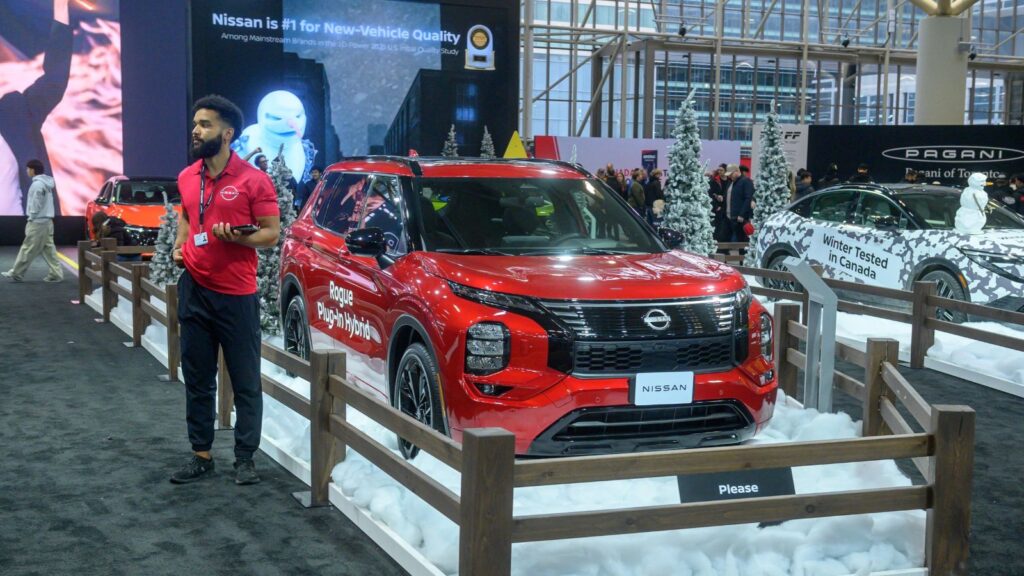
Nissan’s long-awaited answer to Canada’s growing hybrid SUV market is finally reaching dealerships. The all-new 2027 Nissan Rogue Hybrid began arriving in limited quantities on November 12, 2026, bringing a combined fuel-economy estimate of 6.2 L/100 km for its SR all-wheel-drive model.
Unlike conventional hybrids, the Rogue Hybrid uses electric motors exclusively to drive its wheels, while a gasoline engine generates electricity. The technology promises electric-style acceleration without requiring drivers to plug in.
However, the Canadian launch comes with an important distinction. The first vehicles arriving are higher-priced SR models, while more affordable versions are scheduled for early 2027. With competition intensifying among hybrid SUVs, Nissan is betting that its combination of efficiency, technology, and everyday practicality will convince Canadians to consider something different.
A Limited Canadian Rollout Begins in November
The first 2027 Nissan Rogue Hybrid vehicles have started reaching Canadian dealerships, marking a significant milestone for the automaker’s electrification strategy. Nissan confirmed on November 12 that limited quantities of the Rogue Hybrid SR were beginning to arrive across the country. Rather than releasing every configuration simultaneously, the company is introducing a highly equipped all-wheel-drive version first. Customers interested in the new model are being encouraged to contact local Nissan dealerships for information about inventory and availability.
The broader rollout will take place in early 2027, when the SV, SV Premium, and Platinum versions are expected to become available. This staggered approach creates an important distinction for potential buyers. Canadians who want the latest hybrid technology immediately will initially have to consider the more expensive SR, while those looking for a lower purchase price may benefit from waiting. For Nissan, the phased introduction provides an opportunity to establish the Rogue Hybrid’s presence before expanding the lineup to reach a wider range of customers.
Fuel Economy of 6.2 L/100 KM Could Deliver Meaningful Savings
Fuel efficiency is one of the Rogue Hybrid’s biggest selling points. Nissan’s published estimates for the 2027 SR AWD are 5.9 L/100 km in city driving, 6.6 L/100 km on the highway, and 6.2 L/100 km combined. Those figures compare favourably with the gasoline-powered 2026 Rogue AWD, which is rated at 7.6 L/100 km combined in standard configurations. The difference illustrates how much Nissan expects its new hybrid system to improve everyday fuel consumption, particularly for drivers who spend considerable time commuting through congested urban areas.
For someone driving 15,000 kilometres annually, the difference between 7.6 and 6.2 L/100 km translates into approximately 210 litres of gasoline saved each year. At an illustrative fuel price of $1.60 per litre, that represents about $336 in annual savings. Actual savings will depend on driving habits, local fuel prices, and weather conditions. Natural Resources Canada uses standardized testing procedures that account for factors such as cold temperatures and air-conditioning use, but real-world consumption can still differ. Importantly, Nissan’s published 6.2 L/100 km figure applies specifically to the SR AWD, and fuel-economy figures for other trims should be confirmed separately.
Nissan’s e-POWER System Changes How the Rogue Drives
The biggest difference between the Rogue Hybrid and many competing hybrids is hidden beneath its bodywork. Nissan’s third-generation e-POWER system uses a turbocharged 1.5-litre three-cylinder gasoline engine exclusively to generate electricity. That energy feeds a small lithium-ion battery and two electric motors that propel the vehicle. The combustion engine is not mechanically connected to the wheels, allowing the Rogue to accelerate using electric power alone while retaining the convenience of conventional gasoline refuelling.
This series-hybrid configuration also eliminates the need for a traditional multi-speed transmission. Electric motors deliver torque directly, while the gasoline engine can operate independently of wheel speed, starting and stopping as electricity is required. Nissan reports that nearly two million vehicles equipped with earlier generations of e-POWER have been sold internationally across 68 countries since the technology debuted in 2016. The 2027 Rogue introduces the technology to North America, with engineering adjustments intended to accommodate longer highway journeys and local driving conditions. For Canadian households without access to home charging, the appeal is straightforward: an electric-motor driving experience without depending on charging infrastructure.
Standard All-Wheel Drive Comes With 225 Horsepower
Efficiency is only part of Nissan’s strategy. The 2027 Rogue Hybrid produces a combined 225 horsepower through its dual-motor electric drivetrain. The front motor is rated at 202 horsepower, while the rear delivers up to 134 horsepower, although their individual ratings should not be added together to determine total system output. Unlike some competing SUVs that reserve all-wheel drive for higher trims, Nissan includes its dual-motor all-wheel-drive system throughout the Rogue Hybrid lineup. The system can continuously adjust torque distribution between the front and rear wheels depending on driving conditions.
That capability could prove especially attractive in Canada, where changing weather often creates challenging road conditions. The Rogue Hybrid includes selectable driving modes, including Snow, Off-Road, Eco, and Sport, allowing drivers to tailor the vehicle’s responses to different situations. Nissan says the drivetrain can also apply selective braking to help improve stability during cornering. However, all-wheel drive cannot overcome poor tire traction or eliminate the risks associated with icy roads. For families travelling through winter conditions or navigating steep driveways, the combination of immediate electric torque and all-wheel-drive control offers an important practical advantage.
Canadian Pricing Starts at $39,998, but Early Buyers Will Pay More
Nissan has confirmed four pricing configurations for the Canadian Rogue Hybrid lineup. The entry-level SV carries a manufacturer’s suggested retail price of $39,998, while the SV Premium starts at $42,998. The sportier SR is priced at $47,998, and the range-topping Platinum begins at $50,998. However, these advertised MSRPs do not include all applicable charges. Nissan’s published selling prices, which incorporate freight, preparation, and specified fees, range from $42,845 for the SV to $53,845 for the Platinum, before applicable taxes, registration, and other charges.
The important consideration for Canadians shopping immediately is that the first available SR model has a published selling price of $50,845. That is $8,000 more than the SV’s announced selling price, although the SR includes additional equipment. Buyers waiting until early 2027 will have access to less expensive configurations, including the SV Premium at $45,845. The difference could influence purchasing decisions, particularly for households primarily interested in reducing fuel expenses. While hybrid efficiency can lower long-term operating costs, those savings must be weighed against the initial purchase price, financing costs, insurance, and expected ownership period.
A Redesigned Cabin Brings Larger Screens and More Technology
Nissan has redesigned the Rogue Hybrid’s interior with a stronger emphasis on digital technology, comfort, and everyday usability. The standard equipment includes a 12.3-inch central touchscreen, a digital instrument display, and wireless Apple CarPlay and Android Auto compatibility. Higher trims receive larger 14.3-inch displays, with the SR and Platinum incorporating Google built-in functionality, including Google Maps and other connected services. Nissan also includes Qi2 magnetic wireless phone charging, reflecting the growing importance of smartphone integration in modern vehicles.
Beyond the screens, Nissan has retained physical climate controls rather than moving every function into touchscreen menus. That decision may appeal to drivers who prefer adjusting cabin temperatures without navigating software menus. The interior also features upgraded materials, additional storage space, and Nissan’s Zero Gravity seating design. The Platinum introduces more premium equipment, including a 10-speaker Bose audio system, available customizable ambient lighting, and heated and ventilated front seats. Some connected services require activation or subscriptions, so buyers should review the included trial periods and ongoing costs. The overall approach combines modern features with practical controls intended to make daily driving less distracting.
Family-Friendly Design Remains an Important Priority
Although the Rogue Hybrid introduces an entirely different powertrain, Nissan has maintained the practical features that made the Rogue popular with Canadian families. The new model accommodates five passengers and features rear doors that open to nearly 90 degrees, making it easier to load children, install child seats, and reach the back seat. Nissan has also equipped the second row with five LATCH anchors, providing additional flexibility for certain child-seat configurations, including installation in the centre seating position where compatible.
Cargo space remains substantial, with Nissan quoting up to 880.7 litres behind the second row when the seats are positioned forward and 1,866.1 litres with the rear seats folded. The vehicle can also tow up to 1,500 pounds when properly equipped. However, maximum cargo capacity is lower than the approximately 2,064 litres available in some versions of the outgoing gasoline Rogue. That difference may matter to families regularly carrying large strollers, sports equipment, or camping supplies. The redesigned cargo area and wide-opening doors should make everyday loading convenient, but buyers with specific storage needs would benefit from checking how their belongings fit before purchasing.
Upgraded Driver-Assistance Features Target Safer, Easier Commutes
The Rogue Hybrid introduces improvements to Nissan’s ProPILOT Assist system, which combines steering assistance with adaptive cruise control to help drivers manage certain highway conditions. Nissan says the updated technology includes a new front camera with a 20% wider field of view, improved radar sensing, and revised software. The company also reports improvements in low-speed acceleration and the system’s ability to recognize slowing or stopped traffic ahead. Standard safety technologies include automatic emergency braking, blind-spot warning and intervention, lane-departure warning, and lane intervention assistance.
The SR and Platinum trims receive additional capabilities, including Auto Lane Change and Hands-off Traffic Jam Support. Auto Lane Change can assist with steering into an adjacent lane when the driver signals and conditions are suitable, operating on divided highways between 60 and 137 km/h. Hands-off Traffic Jam Support permits temporary hands-off steering in certain low-speed traffic situations when ProPILOT Assist is active. These features are intended to reduce the workload associated with commuting, not replace an attentive driver. All such systems have operational limitations, particularly when road markings, visibility, or weather conditions deteriorate. Canadian drivers should understand those limitations before relying on the technology.
Early Road Tests Suggest a Quieter, More Responsive Rogue
Independent driving impressions indicate that Nissan’s new hybrid system offers meaningful improvements beyond fuel efficiency. In testing published November 5, MotorTrend recorded a 0-to-60-mph acceleration time of 6.2 seconds for the 2027 Rogue Hybrid SR AWD, making it the quickest Rogue the publication had tested. Reviewers praised the immediate power delivery, composed ride, and improved cabin refinement. Canadian automotive publication The Car Guide also reported a notably quieter driving experience, particularly during hard acceleration, when conventional gasoline engines can become more intrusive.
However, the Rogue Hybrid is not necessarily the most economical vehicle in its category. During an independent driving event in California, The Car Guide recorded fuel consumption of 6.2 L/100 km in the Rogue Hybrid, compared with 5.3 L/100 km in the Toyota RAV4 tested during the same program. Those results represent a particular driving experience rather than a standardized long-term comparison. Reviewers also identified some limitations, including reduced maximum cargo space and body movement during more aggressive cornering. Early impressions are encouraging, but extended Canadian testing will provide a clearer picture of winter efficiency, everyday comfort, and long-term dependability.
Nissan Faces Strong Competition as Hybrid Choices Expand
The arrival of the 2027 Rogue Hybrid gives Nissan another option in a Canadian market already served by established competitors, including the Toyota RAV4 Hybrid, Honda CR-V Hybrid, Hyundai Tucson Hybrid, and Kia Sportage Hybrid. It also introduces an important distinction within Nissan’s own lineup. The 2027 Rogue Hybrid is a five-passenger vehicle that never needs external charging, while the previously introduced 2026 Rogue Plug-in Hybrid offers three-row seating for seven and an estimated 61 kilometres of electric driving range when fully charged. The plug-in model starts at a considerably higher $58,698 MSRP.
Nissan’s approach has already attracted industry recognition. The Rogue Hybrid’s e-POWER system earned a place on WardsAuto’s 2026 list of the 10 Best Engines and Propulsion Systems, highlighting its engineering and electric-drive characteristics. Nevertheless, recognition alone cannot guarantee commercial success. Canadian buyers will ultimately compare the Rogue against rivals on fuel consumption, purchase price, reliability, comfort, and overall ownership costs. With the more affordable Rogue Hybrid trims scheduled for early 2027, Nissan’s biggest opportunity may come when customers can evaluate the entire lineup rather than only the premium-priced launch model.
