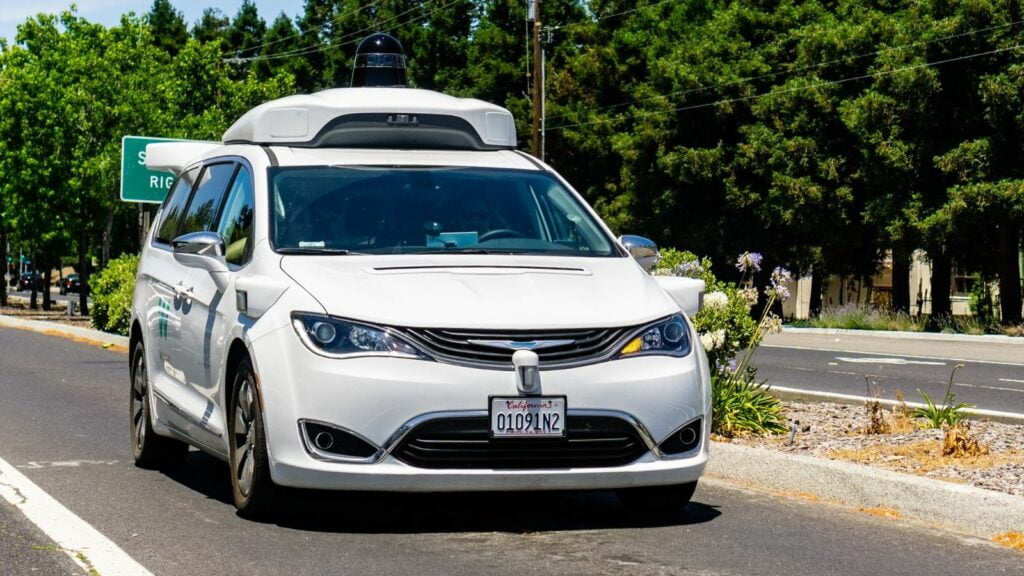
In Toronto, a $5 saving may buy a cheaper ride, but it does not necessarily buy trust. New findings from Liaison Strategies show that 59% of Toronto residents would choose a human-driven car even when a hypothetical Waymo trip cost $15 instead of $20. Only 27% chose the driverless option.
The results, released November 17, arrive as Waymo prepares to bring autonomous ride-hailing to Canada’s largest city, with its first commercial trips targeted for 2028. Residents appear more comfortable with the technology being tested than with riding in it themselves. The divide raises questions about what it will take to make driverless vehicles feel like an ordinary part of Toronto transportation.
A $5 Saving Still Leaves Human Drivers Far Ahead
The headline finding comes from a straightforward choice: two rides arrive at the same time, but one costs less. With the human-driven car priced at $20 and Waymo at $15, 59% of respondents chose the person behind the wheel. Waymo attracted 27%, while 9% picked neither option and 5% were unsure. That leaves a 32-percentage-point advantage for the traditional ride despite a 25% reduction in the autonomous fare.
The scenario matters because it isolates two everyday considerations: price and waiting time. In real life, someone leaving work late or carrying shopping bags might weigh several factors at once, but neither option was faster in this question. The discount was hypothetical, not a promotion offered by Waymo in Toronto. What respondents expressed was a preference under stated conditions, not a record of actual bookings. The results suggest that cheaper fares can attract interest without necessarily overcoming reservations about riding in an empty-front-seat vehicle.
At the Same Price, the Preference Is Even Stronger
When both cars were priced at $20 and had the same arrival time, 71% chose the human-driven option and just 15% selected Waymo. Another 9% chose neither and 5% were unsure. The gap between the two services was 56 percentage points, illustrating how strongly familiarity favoured the conventional ride when there was no financial incentive to experiment. It was not a comparison involving better pickup times or different routes; those factors were held equal in the question.
Lowering the Waymo fare to $15 increased its share from 15% to 27%, a rise of 12 percentage points. The human-driven option fell by the same amount, from 71% to 59%. Those changes show that price could influence interest, but the topline results do not establish precisely which individual respondents reconsidered their choices. More importantly, Waymo remained the minority choice under both conditions. For a company hoping to enter a mature ride-hailing market, the challenge may be demonstrating value beyond the price displayed on an app.
Supervised Testing Gets a Much Warmer Reception
Toronto residents were more accepting when asked about Waymo vehicles testing on city streets with a human driver at the wheel. In that scenario, 64% supported testing, 29% opposed it and 7% were unsure. That represents a very different response from the resistance to paid rides without a driver. It also suggests that many residents distinguish between giving a technology room to develop and immediately treating it as a finished public service.
Waymo’s current Toronto preparations follow that more cautious model. The company announced in October that its early work would include manual driving, detailed street mapping and testing with trained autonomous specialists behind the wheel. It says it has provincial approval to begin that phase under Ontario’s Automated Vehicle Pilot Program. The province introduced its pilot in 2016 to permit automated-vehicle testing under specified conditions. A trained person in the car offers a visible safeguard during early evaluation, even though support for supervised trials should not be mistaken for endorsement of eventual unrestricted operation.
Paid Driverless Rides Face Majority Opposition
Support changes sharply when the question becomes whether Toronto should allow people to pay for rides with nobody driving the vehicle. A majority, 51%, opposed that proposition, compared with 36% who supported it and 13% who were unsure. Opposition was also more intense: 30% strongly opposed paid driverless rides, more than twice the 13% who strongly supported them. That difference matters because it signals not only uncertainty, but a substantial group with firmly negative views.
For passengers accustomed to a taxi or ride-hailing driver, the absence of a person in front changes the experience before the vehicle even moves. A rider might wonder who will explain an unexpected stop, handle a confusing pickup location or respond to a problem during the trip. Those are reasonable questions to examine, although the poll did not ask respondents to rank those exact situations. The findings show that permission to test automated systems and permission to sell fully driverless trips are separate decisions in the public mind.
Most Respondents Are Not Ready to Book a Ride
Reluctance extends beyond the policy debate to personal willingness to use the service. Separate reporting on the Liaison findings indicates that 62% of respondents said they would be unlikely to use Waymo if it operated in Toronto, while 32% said they would be likely to try it. That is a significant obstacle for a proposed transport option, but it is still a measure of stated intentions rather than future demand. No commercial Waymo rides are currently being sold in the city.
Experience could eventually change some views, although the evidence does not guarantee that outcome. A 2026 study of 811 people in the San Francisco Bay Area, including robotaxi passengers and other road users, found far higher trust in autonomous-vehicle safety among passengers than among non-passengers. The researchers cautioned that their cross-sectional findings could not establish a simple cause-and-effect relationship. Toronto may follow a different path, particularly because weather, streets and public expectations differ. For now, the poll captures attitudes before most residents have an opportunity to judge a local driverless trip firsthand.
Snow and Ice Lead the List of Worries
Toronto’s winter conditions were the single most frequently named concern when respondents were asked what worried them most about driverless vehicles. Snow and ice were cited by 24%, followed by pedestrian and cyclist safety at 22%. The figures make sense as questions for a city where a trip can involve slush, obscured lane markings and changing visibility. Those examples describe the kind of challenges an automated system would need to handle, rather than proof that Waymo cannot handle them.
Waymo says it is developing an all-weather version of its driving system and plans to validate its technology against Toronto’s local road conditions. Its initial work includes mapping and supervised testing rather than immediate commercial operations. That distinction is particularly important in the winter debate: safety claims based on service elsewhere do not automatically establish performance in a Canadian snowstorm. Residents will be looking for confidence that vehicles can make sound decisions when ideal driving conditions disappear, not merely when roads are clear and traffic is predictable.
Pedestrian and Cyclist Safety Looms Large
Asked how driverless vehicles would affect people outside the car, 45% of respondents said Toronto streets would become more dangerous for pedestrians and cyclists. Only 19% expected safer streets, while 24% anticipated little difference. The concern broadens the issue beyond whether an individual passenger feels comfortable buying a ride. At a busy crossing or alongside a bike lane, people who never choose a robotaxi would still share the road with one.
There is also evidence worth weighing against the fears. A peer-reviewed 2025 analysis by researchers affiliated with Waymo examined 56.7 million miles of the company’s driverless operations and found statistically lower rates for several injury-related crash outcomes than comparable human-driving benchmarks in its operating areas. That is relevant safety evidence, but it has limits: it was based on existing markets, used comparative benchmarks and was authored by company researchers. It does not by itself establish how the vehicles will perform on Toronto streets or in winter weather. Public confidence will depend on transparent local evidence, not simply reassurance.
Younger Adults Are More Receptive, but Still Divided
Age makes a noticeable difference in attitudes toward allowing paid driverless rides. Among respondents aged 18 to 34, 47% supported the idea. The share declined to 40% among those aged 35 to 49, 31% among those aged 50 to 64 and 22% among residents aged 65 and older. The youngest group was more than twice as supportive as the oldest, yet even there, support did not reach a majority.
That pattern points to a possible early audience for Waymo without showing that younger Torontonians are ready to abandon conventional rides. Supporting permission for a service is different from promising to pay for it, just as being curious about new technology is different from trusting it during a difficult journey. The poll also carries greater uncertainty for age subgroups than for the full sample. Still, the generational gap suggests that reactions may vary substantially across the city. Any public rollout would have to speak to cautious residents as well as those willing to experiment.
Residents Prefer a Gradual Trial Over a Full Launch
When asked what should happen next, 35% favoured continued testing with a human driver and no public driverless rides. Another 30% preferred a temporary driverless trial in selected areas. Only 11% chose an ongoing paid driverless service, while 18% wanted testing stopped altogether and 6% were unsure. Taken together, the two incremental options drew 65% support. The dominant preference was neither immediate prohibition nor an unrestricted commercial rollout, but a measured approach.
Ontario’s rules offer a framework for that sort of progression. Its automated-vehicle pilot permits driverless testing under additional conditions, including requirements concerning safe operation, monitoring, emergency stops and notification of affected municipalities. Waymo says it has approval for its initial manual-driving and testing work and will seek appropriate permission at each later phase. The important distinction is between being allowed to map roads today and being cleared to operate a paid, driverless ride service tomorrow. The public’s preferred next steps closely track that distinction.
The Road to 2028 Will Test More Than Technology
Waymo announced its Toronto plans in October 2026, targeting its first riders in 2028. The company has named Toronto-based Element Fleet Management as a partner and describes a staged process beginning with local driving and mapping. Its Toronto information page says commercial rides are not yet available. Ontario’s current Automated Vehicle Pilot Program is scheduled to run until October 13, 2027, making continued regulatory arrangements one of the issues to resolve ahead of a possible 2028 service.
The Liaison findings should also be read with their methodology in view. The firm surveyed 1,000 Toronto residents on November 14 and 15, using random-digit dialling of landlines and mobile phones, then weighted responses by age, gender and region against census targets. It reported a full-sample margin of error of plus or minus 3.1 percentage points, 19 times out of 20. These figures describe what residents said about hypothetical choices before a local commercial launch; they cannot predict exactly how many would book a ride later. For Waymo, the next milestone is not simply getting vehicles onto Toronto streets. It is demonstrating that passengers and everyone sharing those streets have good reason to trust them.
