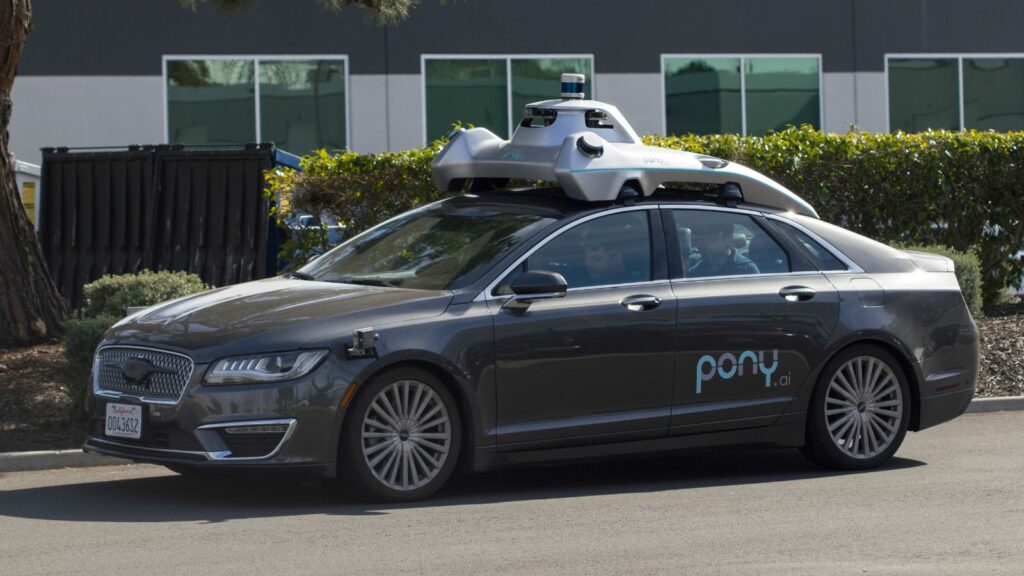
China’s autonomous driving industry is entering a new phase, where driverless taxis are moving beyond demonstrations and becoming increasingly visible commercial services. However, rapid expansion does not necessarily translate into immediate profitability.
Chinese autonomous driving company Pony.ai reported a remarkable 165.4% increase in robotaxi services revenue during the third quarter of 2026, reflecting growing commercial operations and an expanding vehicle fleet. Yet the company simultaneously recorded a consolidated net loss of US$136.3 million, highlighting the financial challenges of bringing autonomous transportation to a broader market.
Behind these contrasting figures is a more complicated financial picture involving rising passenger revenue, substantial research spending, international expansion, and an unusually large securities-valuation loss. The results reveal both the commercial potential of robotaxis and the significant investment still required to make autonomous mobility financially sustainable.
Robotaxi Revenue Surges as Pony.ai Expands Commercial Operations
Pony.ai generated US$44.6 million in total revenue during the third quarter ending September 30, 2026, representing a 75.2% increase from US$25.4 million in the comparable period of 2025. Its robotaxi services business delivered particularly impressive growth, generating US$17.8 million compared with US$6.7 million a year earlier. The 165.4% increase made robotaxi services the largest contributor to the company’s year-over-year revenue improvement, demonstrating how rapidly its autonomous transportation operations are expanding.
Robotaxis accounted for approximately 40% of Pony.ai’s quarterly revenue, up from about 26% during the same period last year. This shift reflects the company’s growing dependence on autonomous passenger transportation as a commercial business rather than simply a technology development initiative. Still, the revenue remains relatively modest compared with the investment required to develop and deploy autonomous vehicles. The company’s results suggest that commercialization is accelerating, although substantial growth will be needed before the expanding robotaxi business can support overall profitability.
Passenger Fare Revenue Grows Nearly 400% as the Business Model Evolves
One of the most revealing figures in Pony.ai’s earnings announcement was the performance of its fare-charging business. Revenue generated from passenger fares increased by nearly 400% year-over-year, significantly outpacing the broader 165.4% increase in robotaxi services revenue. The company attributed this improvement to expanded commercial operations, including additional passenger routes and services in major Chinese cities. Growing fare revenue provides evidence that the business is increasingly generating income from transportation rather than relying exclusively on technology-related transactions.
However, Pony.ai’s reported robotaxi services revenue includes more than money collected from passengers. The company operates its own vehicles in China while also working with external partners through a joint deployment model. International arrangements can generate revenue through vehicle sales and licensing of autonomous driving technology. This distinction matters because selling a robotaxi to a partner and earning money from passenger trips represent different economic activities. Both contribute to commercialization, but recurring fare revenue is particularly important for understanding long-term transportation demand.
US$136 Million Quarterly Loss Reveals a More Complicated Financial Picture
Despite its impressive revenue growth, Pony.ai reported a consolidated net loss of US$136.3 million in the third quarter of 2026, compared with US$61.6 million a year earlier. A significant portion of that deterioration came from a US$77 million noncash loss associated with changes in the fair value of trading securities. This accounting charge affected reported earnings without representing an equivalent amount of cash spent operating robotaxis during the quarter.
Other financial measures present a less dramatic picture. Pony.ai’s operating loss narrowed slightly to US$68.7 million from US$69.7 million, while its adjusted non-GAAP net loss decreased to US$48.9 million from US$56.8 million. The net loss attributable specifically to Pony.ai shareholders was US$105.6 million, with the difference from the consolidated figure reflecting losses attributable to non-controlling interests. These distinctions are important when evaluating performance. The company remains deeply unprofitable under standard accounting measures, even though certain underlying operating indicators improved as revenue expanded.
Research Spending Remains a Major Obstacle to Profitability
Pony.ai’s financial statements illustrate why strong sales growth has not eliminated its operating losses. Gross profit reached US$7.9 million in the third quarter, increasing from US$4.7 million a year earlier. However, the company’s gross margin slipped slightly to 17.8%, compared with 18.4% in 2025. Meanwhile, the cost of generating revenue climbed 76.5% to US$36.7 million. These figures show that expanding commercial operations still involves considerable expenses, even as more vehicles begin generating revenue.
Research and development represented the company’s largest operating expense, reaching US$60.1 million during the quarter, slightly below the US$60.4 million recorded a year earlier. Selling, general and administrative expenses rose to US$16.6 million, bringing total operating expenses to US$76.6 million. Developing autonomous driving technology requires sustained investment in software, vehicle systems, testing and engineering expertise. Pony.ai must eventually spread those expenses across substantially greater commercial activity. Although its operating loss margin improved, research and operational spending continue to significantly outweigh the gross profit generated by its businesses.
Pony.ai’s Robotaxi Fleet Reaches 2,768 Vehicles as Expansion Accelerates
Pony.ai reported a worldwide robotaxi fleet of 2,768 vehicles as of September 30, 2026, representing another important milestone in its commercialization strategy. The company is targeting 3,500 vehicles operating across 20 cities worldwide by the end of 2026. Reaching that goal would require adding another 732 vehicles after September, emphasizing the ambitious pace of its expansion plans. Its seventh-generation robotaxi platform has become central to this effort, with three vehicle models developed alongside Chinese automakers BAIC and GAC, as well as Toyota.
The Toyota partnership delivered another milestone in November when a driverless version of the electric bZ4X entered commercial service in Guangzhou. The companies are working toward deploying approximately 1,000 bZ4X robotaxis across major Chinese cities, although that figure remains a future objective. Vehicle manufacturing partnerships could help Pony.ai increase production without developing every component independently. However, fleet expansion alone does not guarantee financial success. Each additional robotaxi must generate sufficient revenue to offset depreciation, charging, maintenance, insurance and operational support costs over its working life.
Guangzhou Becomes a Major Testing Ground for Large-Scale Driverless Transportation
Guangzhou is emerging as one of Pony.ai’s most important commercial markets. The company announced that its previously separate operating zones in the city’s central districts and Nansha had been connected into a single service area exceeding 1,000 square kilometres as of November 17, 2026. That is nearly nine times the area of San Francisco. The expansion builds on a citywide commercial permit obtained in April and allows passengers to arrange longer cross-district journeys through Pony.ai’s PonyPilot application.
Elsewhere in China, the company has expanded fully driverless commercial operations at Shenzhen Bao’an International Airport, creating an important transportation connection for arriving and departing travellers. In Shanghai, newly permitted driverless vehicles have joined existing operations in the Pudong New Area. Pony.ai has also begun deploying vehicles in Hangzhou, Chongqing and Hengqin in Zhuhai. These developments demonstrate widening geographical reach, although initial deployment in a new city should not be confused with extensive commercial availability. Building dependable local demand remains essential to making these larger operating areas economically productive.
Lower Insurance Costs Offer Encouraging Signs for Robotaxi Economics
One potentially important development involves the cost of insuring autonomous vehicles. Pony.ai reported that insurance premiums for its seventh-generation robotaxis declined 19% year-over-year following policy renewals. According to management, annual premiums per vehicle now represent approximately 40% of the cost associated with conventional human-driven taxis, compared with roughly 50% in 2025. The company attributes the improvement to its operating safety record, although lower insurance costs alone do not establish the broader safety performance of autonomous vehicles.
During its November earnings call, Pony.ai’s chief financial officer said its robotaxi fleets in Guangzhou and Shenzhen had achieved positive unit-economics margins. The company’s calculation accounts for vehicle depreciation, electricity, remote assistance, maintenance, insurance, parking and communications. Management indicated that depreciation represents approximately half of those vehicle-level costs. This distinction is important because positive economics for an individual fleet do not automatically mean the entire company is profitable. Nevertheless, reducing recurring expenses could become increasingly valuable as thousands of additional vehicles enter service.
Robotruck Business Generates US$18 Million as Autonomous Freight Expands
While robotaxis dominate Pony.ai’s public identity, its autonomous trucking division is making a substantial financial contribution. Robotruck services generated US$18 million during the third quarter, representing a 76.3% increase from US$10.2 million a year earlier. That figure slightly exceeded robotaxi services revenue during the same period. The company attributed the improvement primarily to growing freight transportation activity, supported by its collaboration with Chinese logistics company Sinotrans. The results demonstrate that autonomous passenger transportation is not Pony.ai’s only expanding commercial opportunity.
Pony.ai has also advanced its fourth-generation robotruck platform into mass production and introduced a heavy-duty electric model developed with GAC Commercial Vehicle. Its commercial expansion includes deployments at Jiangmen Port and Shenzhen’s Mawan Port, where additional regular operations are planned. Meanwhile, fully driverless light-duty trucks have entered production, with initial deployments involving logistics customers in major Chinese cities. These developments provide another potential source of revenue from autonomous driving technology, although the economics and operational requirements of freight transportation differ considerably from passenger ride-hailing.
European Expansion Creates Opportunities but Regulatory Challenges Remain
Pony.ai’s international strategy is gaining momentum, particularly in Europe. In Zagreb, Croatia, the company launched autonomous ride-hailing operations with local partner Verne in April 2026. The partnership subsequently introduced fully driverless test rides with invited passengers in September, following an earlier commercial phase that used onboard safety operators. Its driverless testing included a 22-kilometre route connecting a business district with Zagreb’s airport. By October 31, the broader Zagreb operation had accumulated more than 200,000 kilometres of driving and completed several thousand passenger journeys.
The company is also advancing plans in London and Manchester, with road testing already underway in Manchester. Management has described an international deployment pipeline exceeding 4,000 robotaxis, although the associated agreements remain under negotiation and should not be treated as confirmed vehicle deliveries. Working with local fleet operators and transportation platforms allows Pony.ai to expand without necessarily owning every vehicle. However, regulatory approvals, passenger acceptance and commercial performance will ultimately determine how quickly these international partnerships become substantial sources of recurring revenue.
Strong Financial Reserves Provide Time to Pursue Profitability
Despite its substantial quarterly losses, Pony.ai retains considerable financial resources to support continued expansion. As of September 30, 2026, the company reported approximately US$1.154 billion in combined cash and cash equivalents, restricted cash, and short- and long-term debt instruments held for wealth management. That figure declined from US$1.206 billion at the end of June. Meanwhile, operating activities consumed US$60.5 million in cash during the quarter, compared with US$56.8 million a year earlier. Capital expenditures reached US$17.7 million, reflecting continued investment in vehicle production and deployment.
Pony.ai also reported a free-cash-flow outflow of US$78.2 million, slightly below the US$79.6 million recorded a year earlier. Management nevertheless reaffirmed its ambition to operate 3,500 robotaxis across 20 cities by year-end, while increasing full-year robotaxi services revenue to 3.5 times its 2025 level. Those goals remain projections rather than achieved results. Ultimately, the company’s financial future will depend on turning expanding fleets, rising passenger demand and improving vehicle economics into sustained profitability. Its latest earnings demonstrate meaningful commercialization progress, but also show that significant financial challenges remain.
