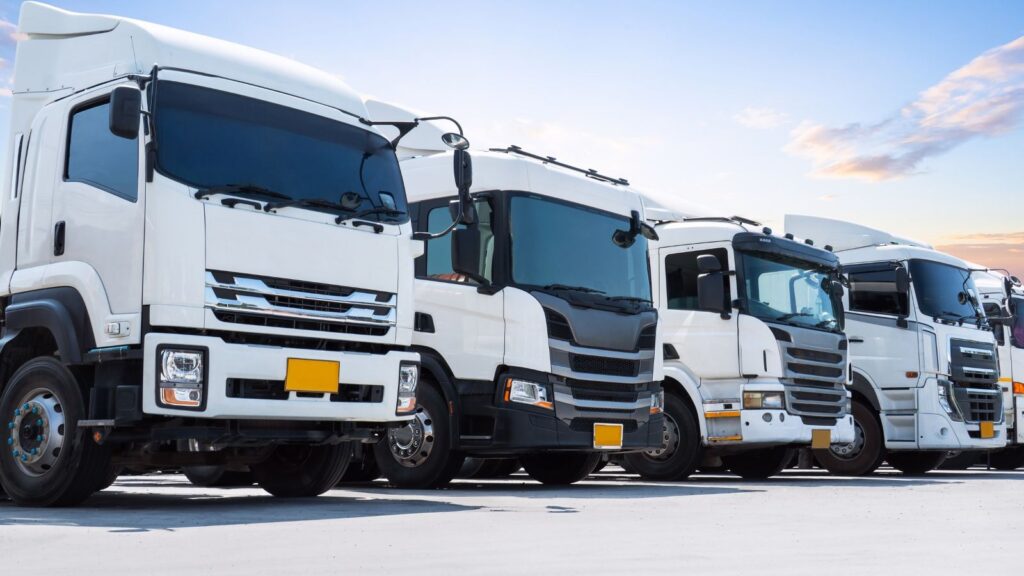
Diesel remains essential to Canada’s trucking industry, but its cost and environmental impact are creating opportunities for alternatives. A new $4-million Canadian demonstration project aims to determine whether heavy-duty trucks can deliver the performance operators expect while reducing fuel expenses and emissions.
On November 19, 2026, Vancouver-based Aetherion Technologies announced that it had secured up to $2 million in funding from the Fuel Innovation Fund to test compressed natural gas technology in Volvo trucks.
The project will put at least five heavy-duty trucks into commercial operations, using advanced fuel injection technology developed through a partnership involving Volvo Group.
The goal is straightforward but ambitious: demonstrate that natural gas can compete with diesel in demanding freight operations without sacrificing the power, efficiency or reliability that trucking companies depend on.
A $4-Million Investment Puts Alternative Truck Fuels to the Test
The demonstration carries a total budget of $4 million, with the Fuel Innovation Fund providing up to $2 million. Aetherion Technologies, its original equipment manufacturer partner and the participating trucking fleet will share the remaining project costs. The fund will reimburse 50% of eligible expenditures as approved milestones are completed, rather than distributing the entire award upfront. This structure is designed to connect financial support with measurable progress as the technology moves into commercial operating conditions.
The funding arrangement also has an important distinction. The Fuel Innovation Fund is administered through Emissions Reduction Alberta and receives industry compliance contributions under Canada’s federal Clean Fuel Regulations. It is not simply a direct $4-million federal government grant. The fund was established to support projects that reduce the carbon intensity of transportation fuels. For Aetherion, the investment provides an opportunity to move beyond engineering demonstrations and test whether its technology can deliver measurable economic and environmental benefits on Canadian highways.
Five Volvo Trucks Will Enter Real-World Canadian Fleet Operations
Aetherion plans to build and commission at least five Volvo Class 8 trucks equipped with its compressed natural gas technology. Three vehicles are initially expected to operate in Ontario, while two will be assigned to Western Canada. The trucks will enter active commercial service for up to 12 months, allowing engineers and fleet managers to evaluate performance under normal freight conditions rather than relying entirely on laboratory measurements or controlled testing.
The participating operator is expected to be one of North America’s largest private trucking fleets, although Aetherion has not publicly identified the company. The fleet will provide drivers, fuel and normal operating support. Specific routes remain subject to final discussions. That uncertainty matters because regional geography, winter temperatures, payloads and highway conditions can influence vehicle efficiency. A truck travelling a relatively flat Ontario route may face different operating demands from one crossing Western Canada’s mountainous highways. The demonstration is intended to establish how the technology handles those everyday variables before broader commercialization decisions are made.
Volvo’s High-Pressure Fuel Injection Technology Is Central to the Project
At the centre of the demonstration is High Pressure Direct Injection, or HPDI, a fuel delivery system developed through Cespira, the joint venture between Aetherion Technologies and Volvo Group. Aetherion holds a 55% ownership stake in Cespira, while Volvo owns the remaining 45%. Unlike conventional natural gas engines that typically rely on spark ignition, HPDI uses a small amount of pilot fuel to initiate combustion before injecting the primary gaseous fuel at high pressure. This approach preserves the compression-ignition characteristics associated with powerful diesel engines.
For trucking companies, those technical differences could become commercially significant. Heavy-duty engines must deliver consistent torque while carrying substantial loads, climbing steep grades and operating for extended periods. Cespira’s technology is designed to retain the power, efficiency and engine-braking performance that drivers expect from diesel trucks. The Canadian demonstration will combine that injection system with Aetherion’s specialized CNG storage technology, testing whether the integrated system can maintain those advantages while replacing most of the diesel consumed during normal operations.
A 500-Horsepower Volvo Prototype Already Demonstrated the Technology
The new project builds on work completed earlier in 2026, when Aetherion successfully demonstrated its compressed natural gas system on a latest-generation Volvo VNL 300 truck producing 500 horsepower. That engineering vehicle provided an initial opportunity to evaluate the technology under road conditions. The company’s next challenge is determining whether results from one demonstration truck can translate into dependable performance across multiple vehicles operating on commercial schedules.
The underlying injection technology has a longer international history. Volvo introduced gas-powered heavy trucks using HPDI in Europe in 2018, and Aetherion reported more than 12,000 LNG-powered trucks using the technology worldwide by November 2026. European commercial interest has continued to grow. In September, Volvo announced an order for 500 gas-powered FH Aero trucks from German operator Reinert Logistics, following its experience with an initial fleet of 50 vehicles. Those developments provide evidence of demand for HPDI technology, although they do not establish that the new Canadian CNG configuration will perform identically.
Compressed Natural Gas Could Offer Canada a Different Fuel Strategy
One of the project’s distinguishing features is its focus on compressed natural gas rather than liquefied natural gas. In Europe, Volvo’s existing HPDI trucks have primarily used LNG, which is cooled into liquid form to increase the amount of energy stored onboard. The Canadian demonstration instead relies on CNG, which is stored as a high-pressure gas. Aetherion believes this approach is better aligned with North America’s natural gas resources and extensive pipeline distribution systems.
The distinction introduces both opportunities and engineering challenges. CNG can avoid the energy-intensive liquefaction process, but its lower volumetric energy density can require additional storage capacity to achieve a practical driving range. Larger storage systems can affect vehicle weight, packaging and available cargo space. These considerations become particularly important for long-distance trucking, where every kilometre between refuelling stops and every kilogram of payload capacity can influence profitability. Aetherion’s specialized storage system is intended to address the technical requirements of HPDI, but commercial fleet testing will help determine how effectively the complete configuration works.
Lower Diesel Costs Are a Major Selling Point, but Savings Remain Unproven
Aetherion says the new system should produce a lower total cost of ownership than both conventional diesel trucks and natural gas trucks using spark-ignition engines. The company points to the economics of natural gas in Canada as an opportunity for fleets operating large numbers of vehicles over long distances. That is a business case worth testing, not a saving already established by the new trial. No verified Canadian fleet-wide fuel-cost reduction, payback period or percentage improvement was announced with the November funding award.
A trucking company’s calculations extend well beyond the number displayed on a fuel pump. Operators must compare the cost of travelling each kilometre, the additional equipment needed to store high-pressure gas, servicing requirements, vehicle availability and the value of any payload space lost. The engine also continues to require a small quantity of ignition fuel. A lower gas price can be attractive, but delays at stations or unexpected maintenance can erode the advantage. The demonstration should show whether savings survive all those practical expenses.
Canada’s Natural Gas Fuelling Network Presents Another Challenge
Fuel infrastructure is an essential part of the demonstration, not an afterthought. Aetherion plans to upgrade selected compressed natural gas stations so the trucks can operate in their assigned service areas. The need is understandable: a December 2025 industry report, drawing on The Transport Project’s database, counted 107 natural gas stations across Canada, including both CNG and LNG facilities. Only 37 were publicly accessible, and not every location could accommodate a large commercial truck. That remains a very different refuelling environment from the familiar diesel network.
Station design can also determine whether a truck meets its delivery schedule. The U.S. Department of Energy distinguishes between fast-fill sites, suited to vehicles requiring quick stops, and time-fill installations, commonly used by fleets returning to depots overnight. Gas pressure, compressor capacity and available storage all influence how much fuel can be delivered and how quickly. For a dispatcher coordinating tightly timed shipments, a reliable refuelling stop may be as important as the vehicle’s engine efficiency. The trial will have to account for both.
Natural Gas Offers Emissions Benefits, but Methane Remains a Concern
Replacing diesel with natural gas can reduce some emissions, but the climate outcome depends on the entire fuel supply chain. The U.S. Department of Energy, drawing on Argonne National Laboratory’s lifecycle modelling, says heavy-duty natural gas vehicles can offer small to moderate greenhouse gas reductions compared with diesel. Aetherion also intends to evaluate the potential of biogas, which can be upgraded into renewable natural gas. Such fuel can have a substantially different emissions profile from fossil-derived gas, depending on how it is produced and supplied.
Methane makes careful measurement particularly important. It is a powerful greenhouse gas, and leaks can occur during extraction, processing, distribution, compression and vehicle operation. Canada’s September 2026 fuel lifecycle methodology explicitly accounts for methane losses when CNG is compressed and dispensed at stations. The International Energy Agency likewise identifies methane leakage as a major concern across natural gas supply chains. The new trucks therefore cannot be judged solely by what comes out of the exhaust pipe. The decisive measure will be verified emissions across the full fuel lifecycle, compared with an appropriate diesel baseline.
Heavy-Duty Trucks Are a Major Part of Canada’s Transportation Emissions Problem
Canada has a clear reason to investigate cleaner freight technology. Environment and Climate Change Canada’s latest published national greenhouse gas indicators show that transportation produced approximately 151 million tonnes of carbon dioxide equivalent in 2024, accounting for 22% of the country’s emissions. Freight heavy-duty trucks have been an especially difficult category: their emissions rose 87% between 1990 and 2024. Improvements in individual engines have not erased the impact of the goods moving over longer distances and the demand for road transport.
Those figures put a five-truck trial in perspective. Five vehicles cannot materially alter Canada’s national emissions total, and no serious assessment should suggest otherwise. Their value lies in showing whether a technical improvement can work in a business that must move groceries, building supplies and other necessities regardless of the weather. A solution that requires repeated unscheduled stops or cannot carry normal loads will struggle to gain acceptance. A system that reliably lowers costs and emissions could, by contrast, provide evidence that larger fleet operators can use when planning future purchases.
The Next 12 Months Could Determine Whether the Technology Reaches Canadian Fleets
The project is designed to produce more than a demonstration-day photograph. Aetherion plans to operate the vehicles in regular fleet duty cycles for up to 12 months, gather detailed performance and reliability information, and produce a final report with recommendations. That evidence is intended to help its manufacturing partners decide whether the CNG HPDI system is ready for commercial introduction. The Fuel Innovation Fund says its broader project accounting uses standardized, independently verified emissions methods, giving the climate claims an additional test.
Key questions remain unanswered. The identity of the operator, final routes, exact operating schedule and size of any fuel savings have not been disclosed. HPDI-powered CNG trucks are not currently offered commercially in North America, and this announcement does not change that status. For fleet managers, drivers and equipment buyers, the meaningful milestones will be completed trucks, dependable refuelling, measured cost per kilometre and credible emissions results. The $4-million budget creates an opportunity to gather those answers; it does not establish the outcome in advance.
