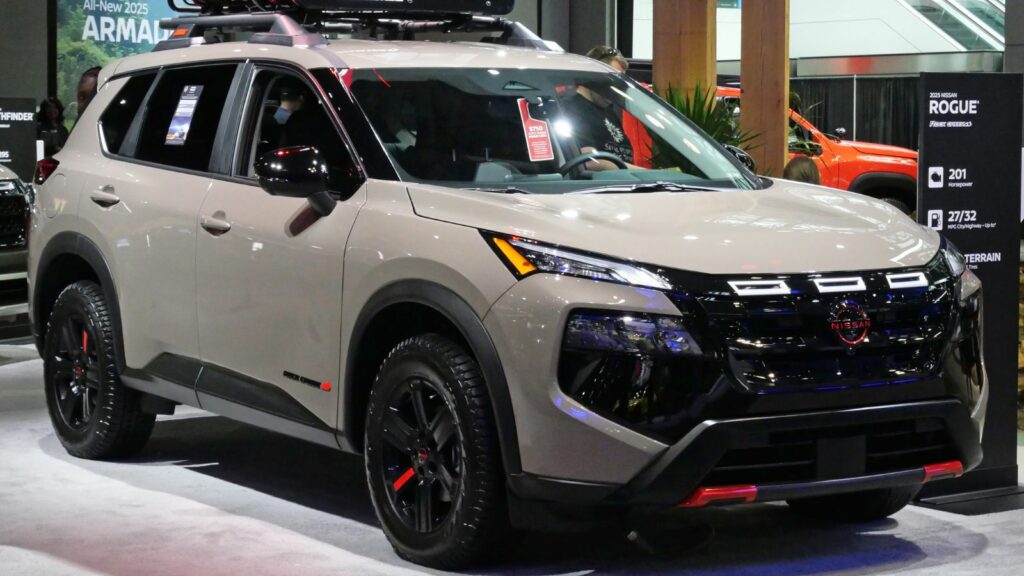
North America’s automotive industry is heading toward a major showdown, with three very different SUVs competing for one of the continent’s most prestigious awards. The 2027 Nissan Rogue Hybrid e-POWER has been named a finalist for North American Utility Vehicle of the Year, putting it directly against the all-electric Kia EV3 and Rivian R2.
Announced at the Los Angeles Auto Show on November 19, 2026, the finalists represent competing visions of the industry’s electrified future. Nissan is betting on electric driving without plugging in, while Kia and Rivian are pursuing fully electric transportation.
With independent automotive journalists from Canada, the United States and Mexico selecting the winner, the competition could influence how consumers view the next generation of SUVs. The winner will be announced in Detroit on January 14, 2027.
Three Finalists Represent Three Different Approaches to Electrification
The 2027 North American Utility Vehicle of the Year competition has narrowed to three finalists, with each manufacturer offering a different answer to the same question: what should the next generation of SUVs deliver? The Nissan Rogue Hybrid emphasizes efficiency without charging requirements, the Kia EV3 targets buyers seeking an accessible all-electric vehicle, and the Rivian R2 combines electric performance with adventure-oriented capabilities. All three use electric propulsion, but their engineering philosophies and intended customers differ considerably.
The finalists emerged from a competitive selection process conducted by independent automotive journalists across North America. The broader September shortlist included 16 utility vehicles, ranging from established SUVs to new electric models. Advancing to the final three gives each manufacturer a significant opportunity for industry recognition, particularly as electrification becomes increasingly important in vehicle development. For Nissan, the nomination places its new hybrid technology alongside two dedicated electric vehicles. The result is a competition that extends beyond traditional comparisons of horsepower, cabin space and styling.
Nissan’s e-POWER Technology Brings Electric Driving Without Charging
The Nissan Rogue Hybrid’s most distinctive feature is its third-generation e-POWER hybrid system, which operates differently from many conventional gasoline-electric hybrids. Rather than having the gasoline engine directly drive the wheels, Nissan uses it to generate electricity. That electricity powers a battery and two electric motors, which provide the actual driving force. The arrangement delivers the immediate torque associated with electric vehicles while retaining the convenience of conventional refuelling. Drivers do not need access to charging stations or specialized home equipment.
This approach gives Nissan an advantage among consumers who appreciate electric driving characteristics but remain reluctant to switch to a fully electric vehicle. For example, a household without a private driveway could operate the Rogue Hybrid without installing a charger or depending on public charging facilities. Nissan has also equipped every Canadian trim with dual-motor all-wheel drive, providing additional traction when conditions become challenging. The company says its latest e-POWER system has been refined for North American driving conditions, including higher highway speeds and everyday family transportation.
Rogue Hybrid Offers 6.2 L/100 km Fuel Economy and Canadian Pricing Under $40,000
Fuel efficiency is a central part of Nissan’s argument for the Rogue Hybrid. According to Natural Resources Canada estimates published by Nissan, the 2027 Rogue Hybrid SR achieves 5.9 litres per 100 kilometres in city driving, 6.6 litres on the highway and 6.2 litres combined. These figures make the vehicle an attractive option for commuters seeking lower gasoline consumption without adopting an entirely new refuelling routine. Nissan has also emphasized the system’s smooth acceleration and reduced drivetrain noise, two characteristics intended to distinguish e-POWER from conventional gasoline SUVs.
Canadian pricing starts at $39,998 MSRP for the SV all-wheel-drive trim, although that version is scheduled to arrive in early 2027. The initial SR AWD model, which began reaching Canadian dealerships in limited quantities in November 2026, carries a higher MSRP of $47,998. Nissan’s announced Canadian selling prices, which include specified additional charges, are $42,845 and $50,845, respectively, before applicable taxes. This distinction matters because the lowest advertised price does not represent the launch configuration available to consumers. For buyers evaluating monthly payments and overall ownership expenses, the relationship between purchase price, equipment and fuel savings could prove decisive.
Kia EV3 Challenges Nissan With Lower Pricing and Long Electric Range
The Kia EV3 represents a considerably different approach to electrification. Rather than combining gasoline and electric power, Kia has developed a dedicated battery-electric SUV intended to make fully electric transportation more accessible. In Canada, the 2027 EV3 starts at $36,995 MSRP for the entry-level Light front-wheel-drive model, with Kia advertising an all-in price of $39,744 before taxes. That gives the EV3 a lower starting MSRP than the Rogue Hybrid, although Nissan includes standard all-wheel drive while Kia’s least expensive version does not.
Kia offers two battery capacities: 58.3 kWh and 81.4 kWh. According to the company’s Canadian estimates, the smaller battery provides up to 356 kilometres of range, while the larger version delivers up to 517 kilometres with front-wheel drive or 451 kilometres with all-wheel drive under ideal conditions. These remain manufacturer estimates rather than official government-certified range ratings. The EV3 also features a North American Charging Standard port and supports DC fast charging from 10% to 80% in approximately 31 minutes under specified conditions. Its combination of pricing, range and technology could make it particularly appealing to households ready to move away from gasoline entirely.
Rivian R2 Brings American Electric Performance Into the Competition
The Rivian R2 approaches the competition from a performance and adventure perspective, offering an alternative to conventional family-focused crossovers. Built in Normal, Illinois, the electric SUV represents Rivian’s effort to reach a broader market beyond its larger R1T pickup and R1S SUV. Its Performance configuration delivers 656 horsepower and 609 lb-ft of torque through a dual-motor all-wheel-drive system. Rivian advertises acceleration from zero to 60 mph in approximately 3.6 seconds, along with up to 330 miles of EPA-estimated range.
The R2 Performance began reaching American customers in 2026, with U.S. pricing starting at US$57,990. More affordable configurations are planned, including a Standard version scheduled for summer 2027 with a starting U.S. price of US$44,990. Canadian buyers face a different timeline, as Rivian’s Canadian website lists the R2 as coming in 2027. The vehicle already carries an important distinction: MotorTrend named it the 2027 SUV of the Year on November 11, 2026, selecting it from a field of 32 competitors. That recognition gives Rivian momentum heading into the separate North American Utility Vehicle of the Year competition, although it does not guarantee another victory.
Charging Convenience Could Become a Deciding Factor
One of the biggest differences between the three finalists involves something most drivers encounter every week: replenishing their vehicle’s energy supply. Nissan’s Rogue Hybrid uses gasoline to generate its electricity, while the Kia EV3 and Rivian R2 depend on external charging. For drivers with private parking and reliable home charging, owning an electric vehicle can be remarkably convenient. Natural Resources Canada notes that home charging typically offers significantly lower energy costs than gasoline. However, households without dedicated parking may face greater challenges finding convenient and affordable charging options.
Both electric contenders are designed to make longer journeys manageable. Kia estimates that the EV3 can recharge from 10% to 80% in approximately 31 minutes under ideal conditions, while Rivian advertises under 30 minutes for the R2. Both use NACS charging connections, expanding compatibility with North American charging infrastructure. Nevertheless, charging speeds depend on battery temperature, charger capabilities and other conditions. Canadian winters introduce another complication: Natural Resources Canada reports that electric vehicles can experience an average range reduction of approximately 29% at -18°C. Gasoline vehicles also become less efficient in cold weather, but the differences in refuelling time and trip planning remain important considerations.
Family Practicality and Safety Features May Matter More Than Horsepower
Performance figures attract attention, but everyday usability often determines whether an SUV becomes a successful family vehicle. Nissan has designed the Rogue Hybrid around practical details, including rear doors that open nearly 90 degrees to simplify access. The vehicle also offers flexible child-seat installation arrangements and standard safety technologies such as automatic emergency braking, blind-spot monitoring and lane-departure warning. These features address ordinary family concerns, from securing children in the back seat to navigating crowded urban roads and parking areas.
Kia and Rivian bring their own advantages. The EV3 offers eight standard airbags, available all-wheel drive and vehicle-to-load functionality that can power compatible external equipment using its battery. Rivian emphasizes versatility, with a folding rear-seat arrangement, front storage space and an available towing capacity of approximately 2,000 kilograms when properly equipped. The R2 also offers 245 millimetres of ground clearance, reinforcing its outdoor-oriented design. Those specifications demonstrate why the competition cannot be judged entirely through acceleration figures or advertised driving range. A family transporting sports equipment, a commuter navigating city traffic and a driver regularly visiting remote destinations may prioritize entirely different attributes.
Canadian Vehicle Sales Show Why Both Hybrids and EVs Are Competing
The competition arrives as Canada’s automotive market undergoes a significant change in buyer preferences. According to Statistics Canada, 28,490 new zero-emission vehicles were sold nationwide in September 2026, representing 15.8% of all new motor vehicle sales. That compares with 10.1% in September 2025, with zero-emission vehicle sales increasing 66.6% year over year. These figures demonstrate that electrified transportation is gaining momentum, although Statistics Canada’s zero-emission category includes battery-electric and plug-in hybrid vehicles, not conventional hybrids such as Nissan’s e-POWER Rogue.
A separate Statistics Canada registration report reinforces the importance of multiple powertrain technologies. During the second quarter of 2026, registrations of conventional hybrid electric vehicles increased 39.5% compared with the same period in 2025, while battery-electric registrations rose 37.4%. Both categories experienced substantial growth, suggesting that Canadian consumers are not moving toward one technology exclusively. This creates a significant opportunity for Nissan, Kia and Rivian. Each manufacturer can appeal to a different segment of the expanding electrified market, making the award particularly relevant to the direction of future vehicle development.
North America’s Automotive Journalists Will Decide the Winner
Unlike awards determined through public voting or sales figures, the North American Car, Truck and Utility Vehicle of the Year honours are selected by an independent jury of professional automotive journalists. The organization traces its history to 1994 and evaluates vehicles using criteria that include innovation, design, safety, performance, technology, driver satisfaction and overall value. For the 2027 competition, 46 jurors originally evaluated 56 eligible vehicles before advancing 25 contenders to the September shortlist. The selection process subsequently narrowed the utility category to its three finalists.
The award’s recent history demonstrates that different technologies can succeed. The Hyundai Palisade captured the 2026 Utility Vehicle of the Year title, following the Volkswagen ID. Buzz in 2025 and Kia EV9 in 2024. This year’s program also introduces a separate Automotive Technology of the Year award, recognizing innovations beyond entire vehicles. Rivian’s Adaptive Drive Beam technology is among the three finalists in that new category, alongside safety systems from Volkswagen and Volvo. The expanded program places additional emphasis on meaningful technological improvements while preserving the broader assessment of design, usability and value that determines the main SUV award.
January’s Award Could Shape How Automakers Approach the Next Generation of SUVs
The final decision will be announced on January 14, 2027, during the Detroit Auto Show, following additional evaluations and voting by the North American Car, Truck and Utility Vehicle of the Year jury. For Nissan, a victory would provide important recognition for the company’s decision to introduce e-POWER technology into one of North America’s most competitive vehicle segments. It would also demonstrate that a hybrid can compete successfully against dedicated electric vehicles when judges consider overall performance, innovation, convenience and value rather than focusing on powertrain technology alone.
The Kia EV3 and Rivian R2 present compelling alternatives. Kia is making a strong case for affordable electric mobility, while Rivian offers impressive performance, versatility and a growing collection of industry accolades. The Rogue Hybrid’s greatest strength may be its ability to deliver an electric-motor driving experience without requiring changes to established refuelling habits. Ultimately, the winner will depend on how the journalists balance these competing strengths. Whatever the outcome, the three finalists demonstrate that North America’s SUV market is evolving through multiple approaches to electrification, rather than following a single path toward the future.
