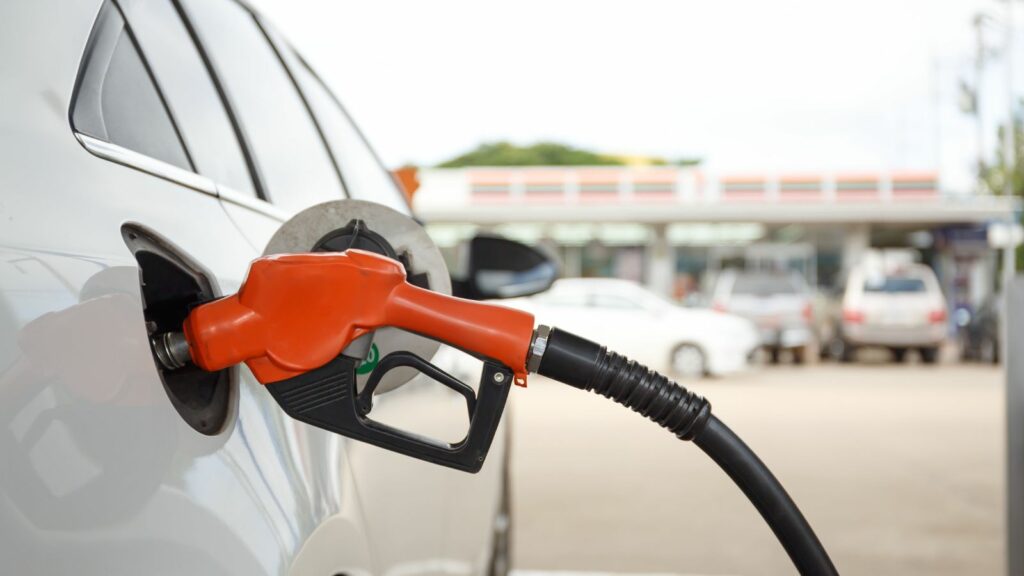
A visit to the pump is producing two very different bills across Montreal. Late-November station data place diesel at roughly $2.54 to $2.56 per litre, while regular gasoline remains substantially cheaper. The frequently quoted $1.55 gasoline figure needs context: Quebec’s province-wide average is near that level, but Montreal’s latest broad-based readings are closer to $1.62.
For diesel owners, that distinction hardly makes the receipt easier to absorb. A contractor filling a work truck, a courier running city deliveries and a carrier dispatching a long-haul vehicle all face costs that accumulate with every kilometre. The split reflects more than a single station’s pricing decision. It points to a global shortage of refined diesel, unusually high processing margins and pressure that can work its way into the wider economy.
The Gap Between Diesel and Gasoline Is Hard to Ignore
On November 27, a Montreal-area fuel tracker drawing on Quebec regulatory price records listed diesel at an average of 256.3 cents per litre and regular gasoline at 161.1 cents. That is a difference of 95.2 cents for every litre purchased. Applied to a hypothetical 60-litre fill-up, the totals are $153.78 for diesel and $96.66 for gasoline—a gap of $57.12 before accounting for how efficiently different vehicles use their fuel. This is not a comparison of interchangeable tanks, but it shows why the contrast has become so noticeable.
Another station-data compilation covering Montreal showed somewhat lower diesel prices, around $2.54 a litre, and regular gasoline close to $1.62. Differences in geographic boundaries, station coverage and update times can shift the published average. Yet the central finding is remarkably consistent: diesel commands a premium approaching a dollar per litre. For a diesel-powered pickup used in construction or a delivery van that must be refuelled repeatedly, the important figure is not simply the price on the roadside sign. It is how often that premium appears on the business’s receipts.
The $1.55 Gasoline Figure Needs Geographic Context
Gasoline near $1.55 is not imaginary, but it should not automatically be described as Montreal’s current citywide average. A November 27 compilation of fuel prices sourced from the Régie de l’énergie du Québec put the province-wide average for regular gasoline at 155.9 cents per litre. The same dataset placed the Montreal regional average at about 161.8 cents. The Régie’s own dynamic Montreal listing recorded 162.0 cents on November 26, its most recent completed daily figure when the November 27 data were checked. These are different measurements, not evidence that every pump charges the same price.
Individual Montreal stations can still sell gasoline for less. A separate station survey listed regular fuel as low as 144.9 cents on November 27, while its local median was 162.9 cents. A low advertised price, a median and an average answer different questions. Treating them as equivalent would exaggerate the diesel gap by several cents per litre. The essential story does not depend on that exaggeration: whether motorists compare the broader provincial benchmark or Montreal’s more representative local gasoline price, diesel remains significantly more expensive.
Diesel Has Come Down, but the Relief Is Relative
The latest price is painful, yet it is not the highest Montreal drivers have seen this autumn. A history of daily figures based on provincial fuel-price records shows diesel reaching 298.7 cents per litre on September 18. The same series recorded 289.2 cents on October 30 and 254.1 cents on November 27. That is a decline of more than 35 cents per litre since late October. Diesel has been moving downward in that series, even though another Montreal-area sample still places its average above $2.56. Both observations can be true when providers measure different groups of stations.
Those declines matter to people buying large volumes. A 35-cent reduction saves approximately $28 on an 80-litre fill-up compared with the earlier price, assuming consumption remains the same. But a lower price after an extraordinary peak is not the same as an affordable price. Drivers who remember diesel being a cheaper alternative to gasoline may find today’s premium especially jarring. For fleet managers, the more useful question is whether costs have fallen enough to restore previously planned operating margins, rather than whether the latest reading is below September’s worst days.
Global Refinery Disruptions Are Keeping Diesel Expensive
Crude oil is only the beginning of the pump-price calculation. Refineries must turn it into usable fuels, and the relative price of each product depends on available processing capacity, inventories and demand. In its October monetary policy analysis, the Bank of Canada explained that refinery damage, export disruptions and limited spare capacity had pushed fuel prices higher than movements in crude alone would suggest. Diesel was especially exposed because of reduced supply from Russia and the Middle East and already-low inventories. High refinery margins, rather than a simple local shortage at Montreal stations, help explain the wider pattern.
The International Energy Agency’s November report offered an important comparison. As crude markets began to rebalance, European diesel prices also declined, but remained well above their pre-conflict levels. The agency continued to describe global diesel supplies as severely constrained. That is why a falling oil benchmark does not guarantee an equal decline on a station sign the next morning. Montreal retailers operate within regional distribution systems connected to international refined-product markets. The global context explains pressure on wholesale costs, though it cannot establish the exact margin charged by an individual local retailer.
Winter Demand Adds Pressure to an Already Tight Market
Diesel shares its broader family of middle-distillate fuels with heating oil, making the colder months especially important for supply and demand. The U.S. Energy Information Administration explains that greater demand for heating oil in autumn and winter can place upward pressure on distillate markets. Agricultural activity and freight movements also influence consumption. These seasonal forces do not mean every Montreal price change can be blamed on the weather; they mean diesel enters winter facing sources of demand that regular gasoline does not experience in quite the same way.
The starting position in 2026 is particularly uncomfortable. In October, the International Energy Agency reported that prolonged disruptions had depleted diesel stocks ahead of peak winter demand. Its November update still described diesel supply as the central problem, even as some crude exports recovered. For buyers, this creates uncertainty rather than a reliable prediction of another price surge. A milder season, better refinery output or restored shipments could relieve pressure; fresh disruptions or unexpected demand could delay that relief. The current premium is therefore a reminder that fuel prices respond to supply chains well beyond Quebec’s borders.
Truckers, Contractors and Small Fleets Feel Every Cent
A diesel price above $2.50 carries a different meaning for a business whose vehicle is a workplace. At $2.56 per litre, an 80-litre purchase costs $204.80. For a contractor who regularly sends a pickup between jobsites, that expense is repeated alongside wages, maintenance and materials. A delivery operator faces a similar problem across multiple vans or trucks. Even a ten-cent change in fuel prices means $8 on that same 80-litre fill-up, a small-looking difference that becomes substantial when multiplied by regular refuelling and an entire fleet.
Official economic data show why the pressure matters beyond one industry. Statistics Canada reported that prices charged for truck transportation were 9.5% higher in the second quarter of 2026 than a year earlier, amid a sharp rise in global energy costs. In a third-quarter business survey, 68.1% of transportation and warehousing businesses identifying input costs as an obstacle cited energy costs. That does not prove every carrier is losing money or that today’s Montreal price created those earlier increases. It does show that expensive fuel lands in a sector already dealing with unusually difficult operating economics.
The Effects Can Reach Grocery Aisles and Building Sites
Most households never purchase diesel, but they routinely buy goods transported or produced with diesel-powered equipment. Food moves between farms, processors, distribution centres and stores. Construction sites rely on heavy vehicles and equipment; agricultural and mining operations also use substantial fuel. The Bank of Canada has warned that higher diesel costs raise expenses in fuel-intensive industries and can eventually be passed on to customers. The risk is most pronounced when elevated costs persist long enough for businesses to adjust prices or renegotiate contracts.
The process is neither immediate nor automatic. A store may absorb some additional freight cost, a carrier may apply a fuel surcharge, or competitive pressure may limit price increases. Statistics Canada’s third-quarter 2026 survey found that 22.4% of transportation and warehousing businesses expected to raise their service prices over the next three months. That finding points to a transmission channel, not a promise that groceries will become a specific amount more expensive. For Montreal families, the practical concern is that a fuel premium paid by truck operators can quietly influence the cost of ordinary purchases long after the truck has left the loading dock.
Taxes Matter, but They Do Not Explain a Dollar Premium
Pump prices include multiple layers of taxation, yet Quebec’s basic fuel-tax rates are not separated by anything close to the current diesel-gasoline price gap. Revenu Québec lists the regular provincial rate at 19.2 cents per litre for gasoline and 20.2 cents for non-coloured fuel oil or blended diesel, with regional variations possible. The federal goods and services tax and Quebec sales tax also apply, while Quebec’s cap-and-trade system affects fuel costs through its carbon market. Those charges belong in the calculation, but so do crude prices, refining margins and distribution expenses.
There is also a timely federal detail. Ottawa suspended federal excise taxes on gasoline and diesel in April 2026 and later extended the full suspension through January 31, 2027. Under the announced schedule, half rates return for February and March before normal rates resume in April. The usual federal excise rates, therefore, should not be presented as charges currently collected on these November purchases. The provincial base-rate difference of just one cent cannot plausibly account for a diesel premium near 95 cents. Global refined-fuel conditions are central to understanding why the two products are so far apart.
The Price Can Change Dramatically Between Stations
High averages do not mean every diesel pump posts an identical number. A Montreal station comparison covering 115 outlets recorded prices ranging from 243.9 cents to 284.9 cents per litre in its late-November snapshot. The spread is 41 cents per litre. On a hypothetical 70-litre purchase, paying the lowest rather than the highest listed price would save $28.70. That is a meaningful difference for an owner who fills a work vehicle repeatedly, though driving far out of the way can use up some of the savings and defeat the exercise.
The data also show the limits of quoting one striking station price as though it represents the whole city. Some outlets sell little diesel, and not all trackers cover the same locations or refresh each price simultaneously. A station at the low end of the range might have changed its sign by the time a driver arrives. Comparing recently updated listings, confirming fuel availability and choosing a convenient stop along an existing route are more useful habits than assuming a single published average will match every neighbourhood. For businesses with repeat routes, even small, consistently available discounts can improve fuel budgeting.
Fuel Economy and the Next Price Moves Will Decide the Real Cost
Diesel vehicles generally use less fuel than comparable gasoline vehicles, but efficiency does not automatically erase a price premium of this size. Natural Resources Canada says diesel’s higher energy content and engine efficiency typically reduce consumption by about 15% to 30%. Consider two hypothetical vehicles: one uses seven litres of diesel per 100 kilometres, while the other uses nine litres of gasoline. At $2.56 and $1.62 per litre respectively, their fuel costs would be $17.92 and $14.58 per 100 kilometres. The diesel vehicle uses less fuel yet costs $3.34 more to run over that distance, before maintenance or purchase costs.
At those pump prices, diesel would need to use roughly 37% fewer litres to match the gasoline vehicle’s fuel cost over the same distance. Actual results depend on each model, load and route. As for relief, the Bank of Canada has projected that elevated refinery margins should ease gradually, while the International Energy Agency warns that diesel supplies remain tight. The indicators worth watching are inventories, refinery repairs, international shipments and Montreal’s own daily pump-price reports. Until those pressures meaningfully improve, diesel drivers have reason to budget cautiously even when crude oil headlines sound reassuring.
