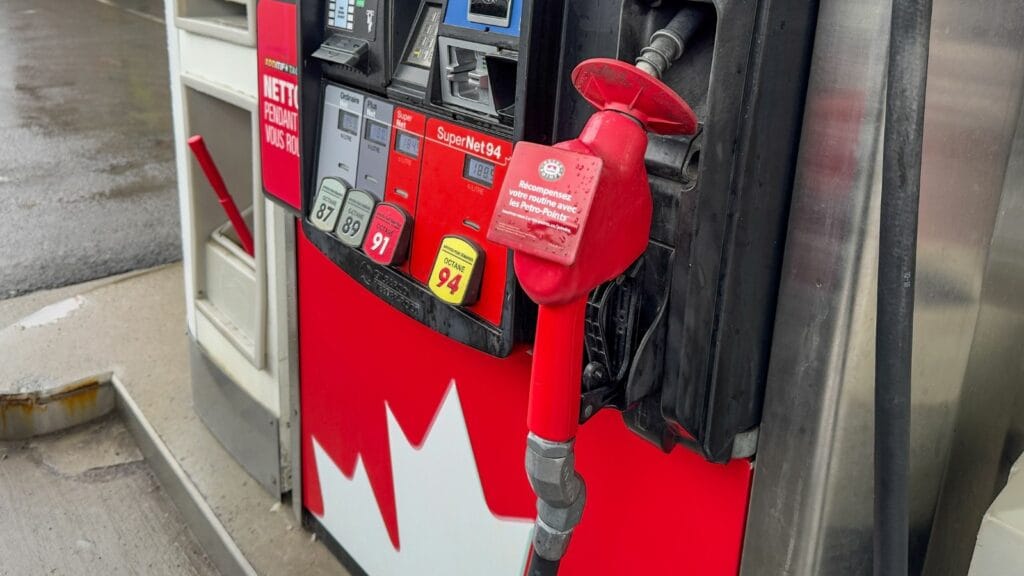
The gap between diesel and gasoline prices has reached a striking level in Halifax, raising fresh concerns about the cost of transporting goods, operating businesses and keeping Atlantic Canada’s economy moving. Petro-Canada’s October 14, 2026, wholesale price posting lists ultra-low-sulfur diesel at 217.30 cents per litre, compared with 136.30 cents for regular E10 gasoline—a difference of exactly 81 cents.
The figures represent wholesale terminal prices before taxes and distribution costs, not what motorists pay at service stations. Nevertheless, they reveal the extraordinary pressure affecting diesel markets at a time when transportation operators, fishing businesses and households are already dealing with expensive energy.
With global diesel supplies tightening and winter approaching, the price difference highlights an increasingly important question: how long can Canadian businesses absorb fuel costs that are rising much faster than those of regular gasoline?
Petro-Canada’s Halifax Price Sheet Reveals an 81-Cent Difference
Petro-Canada’s latest terminal pricing schedule, effective at midnight on October 14, lists regular gasoline containing 10% ethanol at 136.30 cents per litre in Halifax. Ultra-low-sulfur diesel is posted at 217.30 cents per litre. That places diesel approximately 59.4% above the regular gasoline price at the same terminal. Even premium gasoline, listed at 153.50 cents per litre, costs substantially less than diesel. The figures come directly from Suncor Energy’s publicly available wholesale pricing information for commercial customers and resellers.
The difference becomes more significant when applied to commercial fuel volumes. At the posted terminal rates, 500 litres of diesel would cost C$1,086.50 before taxes, compared with C$681.50 for an equal volume of regular gasoline. That represents a C$405 difference for the same quantity of fuel, although gasoline and diesel vehicles are not interchangeable and have different operating characteristics. Petro-Canada also cautions that these prices can change without notice and that final invoices take precedence over posted figures. Still, the 81-cent spread provides a clear snapshot of how unusually expensive diesel has become.
Wholesale Prices Are Different From What Drivers Pay at the Pump
The numbers on Petro-Canada’s price sheet are not retail fuel prices. They represent the cost of purchasing fuel at designated terminals, generally before transportation, applicable taxes and retail expenses are added. That distinction matters because consumers may otherwise interpret the 81-cent difference as the precise premium paid at every Halifax gas station. Retail prices are influenced by additional charges, government regulations and the timing of price adjustments, meaning the difference between gasoline and diesel at a particular station can be considerably smaller or larger than the wholesale spread.
Nova Scotia’s Energy Board provides a useful comparison. Its October 9 pricing schedule lists minimum self-service prices of 192.9 cents per litre for regular gasoline and 260.5 cents for diesel in Zone 1, which includes Halifax. Those figures show a retail difference of 67.6 cents per litre, rather than the 81 cents identified in Petro-Canada’s October 14 posting. The two sets of prices also reflect different dates and pricing methods. Therefore, the newer wholesale figures should not be treated as confirmation of an immediate retail increase. They show commercial market conditions that may influence future regulated prices.
Nova Scotia’s Fuel Regulations Could Delay Changes at Stations
Unlike provinces where individual retailers have greater freedom to change pump prices throughout the day, Nova Scotia operates a regulated gasoline and diesel pricing system. The Nova Scotia Energy Board normally establishes prices every Friday, using benchmark values based on refined fuel trading in New York, converted into Canadian dollars. The calculation also incorporates wholesale and retail margins, transportation allowances, applicable taxes and other regulatory components. This arrangement is intended to reduce frequent price changes while preserving fuel availability across urban and rural communities.
However, the province can intervene between regular weekly adjustments when international markets experience major fluctuations. Its interrupter mechanism generally becomes relevant when refined gasoline or diesel benchmark prices move by at least six cents per litre for more than one day. Importantly, the Board does not simply copy Petro-Canada’s wholesale posting when determining retail prices. It follows its own benchmark calculation. That means an unusually wide rack-price difference does not automatically trigger an immediate increase. For Halifax motorists, the next regulated adjustment will depend on the broader market averages and regulatory decisions rather than one supplier’s daily price sheet.
Global Diesel Shortages Explain Why the Gap Is So Large
The unusually high diesel premium is part of a much wider international supply problem. In its October 14 Oil Market Report, the International Energy Agency warned that diesel shortages could persist well into 2027. Prolonged disruptions to refinery operations and petroleum exports in the Middle East and Russia have reduced the availability of diesel and related fuels. The agency estimated that combined diesel exports from those regions fell by approximately 1.3 million barrels per day in September compared with a year earlier, with other exporters unable to replace all the lost supply.
Diesel and gasoline come from crude oil, but their market prices do not necessarily rise together. Refiners produce different combinations of transportation fuels, and their ability to increase diesel output quickly is limited by equipment, crude quality and operating conditions. The U.S. Energy Information Administration reported in September that high diesel refining margins were being driven by tight global inventories and strong demand. In practical terms, refiners may have enough crude available while still struggling to produce the particular fuel customers need. That imbalance helps explain why Halifax diesel can carry such a large premium over regular gasoline.
Halifax’s Dependence on Imported Fuel Adds Another Vulnerability
Nova Scotia faces a structural challenge that is easy to overlook in discussions about Canada’s status as a major oil-producing country: the province has no operating petroleum refinery. The Canada Energy Regulator confirms that Imperial Oil’s Dartmouth refinery closed in 2013 and was converted into a petroleum products terminal. Nova Scotia now depends on shipments of finished fuels from outside the province, including products supplied through New Brunswick’s Irving refinery and international markets such as the United States and Europe.
That dependence makes reliable transportation and distribution particularly important. When global shipping becomes more expensive, refinery output is disrupted or available cargoes are redirected toward higher-paying markets, imported fuel supplies can become more costly. The Halifax rack price does not identify which cargoes were purchased or prove that the city is experiencing a physical shortage. It does, however, reflect pricing within a system exposed to international energy markets. The Canada Energy Regulator’s provincial profile also shows how important petroleum products remain to Nova Scotia, accounting for 59% of the province’s total end-use energy demand in 2020.
Trucking Companies Face an Increasingly Expensive Operating Environment
Diesel is essential to the trucks moving groceries, building materials, manufactured goods and other products throughout Atlantic Canada. For a freight carrier, fuel expenses accumulate across every trip rather than appearing as an occasional household purchase. A company operating several long-distance trucks can consume thousands of litres over a relatively short period, making even modest price fluctuations financially important. A sustained increase in wholesale or retail diesel costs can force operators to adjust freight rates, apply fuel surcharges or absorb lower profit margins to remain competitive.
The Canadian Trucking Alliance warned on October 9 that rapidly escalating diesel prices were putting considerable pressure on carriers’ cash flow. Its president, Stephen Laskowski, argued that the financial strain could also undermine safety when struggling operators cut corners on maintenance or compliance. Statistics Canada has documented the broader problem: in its second-quarter 2026 business survey, 33.7% of transportation and warehousing companies expected input costs to be an obstacle, and energy was the most commonly identified pressure among those businesses. The Halifax price sheet adds another measurable example of the challenge facing transportation companies, although individual carriers may purchase diesel under different contractual arrangements.
Fishing Communities and Agricultural Businesses Are Also Exposed
Nova Scotia’s fishing industry is another sector where expensive diesel can have consequences far beyond the cost of a single tank. Fishing vessels need fuel to reach harvesting areas and return with their catch, while refrigerated trucks and processing facilities depend on transportation and energy to move seafood into domestic and international markets. The provincial government reported that seafood exports were worth approximately C$2.2 billion in 2025, making the industry an important contributor to employment and commercial activity in coastal communities.
For a fishing operator, higher fuel costs can squeeze the difference between operating expenses and the revenue received for a catch. Farmers face similar pressures when operating tractors, harvesting equipment and delivery vehicles, particularly during periods of intensive fieldwork. A hypothetical business using 2,000 litres of diesel would spend C$200 more for every 10-cent-per-litre increase in its purchase price. That calculation illustrates the sensitivity of fuel-intensive operations, not an estimate of actual losses in Nova Scotia. Businesses may respond through efficiency improvements, adjusted schedules or pricing negotiations, but their ability to pass higher costs along depends on competition and customer demand.
Heating Oil Prices Create Another Concern as Winter Approaches
Diesel is not the only petroleum product attracting attention as temperatures begin to fall. Petro-Canada’s October 14 Halifax posting also lists furnace oil at 182.40 cents per litre and stove oil at 208.00 cents per litre, before taxes. These are separate fuel products with their own specifications and prices, so the 217.30-cent diesel figure should not be mistaken for the cost of home heating oil. Nevertheless, diesel and heating fuels belong to closely related petroleum markets and can face overlapping pressures from refinery capacity, seasonal demand and international supply disruptions.
Households relying on delivered heating oil have already experienced substantial increases. Nova Scotia’s Department of Finance reported that fuel oil prices were 46.6% higher in August 2026 than in August 2025, based on consumer price statistics. Unlike gasoline and ultra-low-sulfur diesel, heating oil prices are not regulated under Nova Scotia’s current petroleum pricing framework. Suppliers establish their own prices and delivery charges. The approaching heating season therefore raises a separate concern for families planning winter expenses. A high diesel premium does not establish the next heating oil bill, but both markets are responding to difficult global supply conditions.
Higher Diesel Costs Could Eventually Reach Grocery Store Shelves
Most consumers never purchase diesel in large commercial quantities, yet they depend on businesses that do. Food products typically move through several stages before reaching a supermarket, including farms, processing facilities, distribution warehouses and delivery trucks. Fuel is only one component of those expenses, but sustained increases can put pressure on the cost of transportation at several points in the supply chain. Companies may initially absorb additional expenses through reduced margins before gradually increasing shipping charges or adjusting customer contracts.
Statistics Canada’s July 2026 analysis found evidence that transportation costs were already feeding into business expenses. Prices charged for long-distance general freight trucking increased 4.5% between February and March 2026, while nearly one-quarter of transportation and warehousing businesses expected to raise service prices during the subsequent three-month period. Nova Scotia’s inflation figures also show that consumers entered the autumn with limited financial breathing room. Provincial consumer prices increased 5.1% year over year in August, compared with 3.0% nationally. These statistics do not establish that the October 14 wholesale diesel price has already pushed grocery prices higher. They show why continued fuel pressure deserves attention beyond the trucking industry.
Halifax’s Diesel Premium Reflects a Broader Canadian Pattern
The unusual price difference is not confined to Halifax. Petro-Canada’s October 14 wholesale schedule lists diesel at 216.80 cents per litre in Saint John, New Brunswick, compared with 140.90 cents for regular E10 gasoline. That represents a 75.9-cent difference. Toronto’s posted prices show diesel at 216.20 cents and regular gasoline at 137.30 cents, producing a 78.9-cent gap. Although regional markets and fuel specifications differ, these figures illustrate that the diesel premium extends well beyond Nova Scotia.
The Halifax posting is especially significant because the diesel price exceeds regular gasoline by nearly three-fifths, even before taxes and retail costs. Regional differences can reflect refinery access, transportation arrangements, supply contracts and the particular gasoline blends being compared. The Canada Energy Regulator has documented that Canadian provinces differ greatly in their refining capacity and reliance on petroleum-product imports. As a result, it would be misleading to assume that one national oil price automatically produces identical diesel prices everywhere. Halifax’s 81-cent spread is a local measurement of a market problem affecting businesses across Canada.
The Next Few Weeks Could Determine Whether Relief Arrives
The immediate outlook remains uncertain. The International Energy Agency’s October 14 assessment warned that additional refinery production later in 2026 may not be enough to rebuild diesel inventories depleted by months of supply disruptions. Although the agency expects the global diesel market to return to a surplus during the first quarter of 2027, it cautioned that shortages accumulated during 2026 could keep overall conditions tight well into next year. The outlook depends heavily on improved fuel exports from the Middle East and recovery in damaged refining operations.
For Nova Scotians, several developments will be worth watching: the next provincial fuel-price adjustment, international diesel trading prices, the Canadian dollar and any announcements about additional emergency fuel supplies. The IEA’s governing board is scheduled to review global diesel-market conditions on October 15. None of those developments guarantees immediate relief at Halifax terminals or service stations. What the new Petro-Canada posting establishes is that diesel remains exceptionally expensive compared with regular gasoline. For transportation companies, coastal businesses and households already facing elevated living costs, a sustained reduction in that gap would be a welcome sign of improving conditions.
