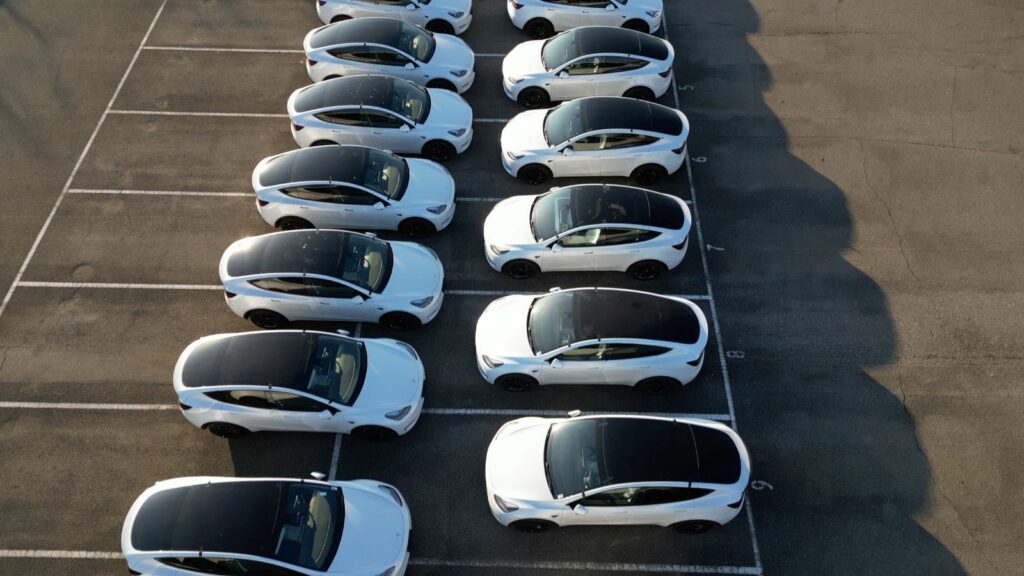
Toyota’s electrification strategy is gaining remarkable momentum in Canada, with hybrid and electric vehicles now accounting for more than two-thirds of the automaker’s monthly sales. New figures released on November 3, 2026, show that Toyota Canada sold a record 17,735 electrified vehicles in October, representing 67.6% of all Toyota and Lexus vehicles sold nationwide.
The Canadian-built RAV4 Hybrid emerged as a standout performer, recording its strongest sales month ever with 6,195 units sold. Both Toyota and Lexus also established October sales records, reinforcing the growing importance of electrified powertrains across mainstream and luxury vehicles. The results highlight a significant change in Canadian automotive purchasing patterns, with conventional hybrids playing an increasingly important role alongside fully electric and plug-in hybrid models.
Electrified Vehicles Now Dominate Toyota Canada’s Monthly Sales
Toyota Canada’s October results reveal how dramatically electrified vehicles have reshaped the company’s Canadian business. The automaker reported 17,735 electrified vehicle sales during the month, an impressive 70.2% increase compared with October 2025. Those vehicles represented 67.6% of the company’s combined Toyota and Lexus sales, meaning approximately two out of every three vehicles sold carried some form of electric propulsion technology. The strong performance helped Toyota Canada achieve record overall October sales of 26,219 vehicles, representing a 15.6% year-over-year increase. Electrified vehicles were therefore central to the company’s expanding sales volume rather than simply contributing to growth in a smaller market segment.
The significance extends beyond a particularly successful month. Toyota has spent years expanding its selection of conventional hybrids, plug-in hybrids, and battery-electric vehicles, allowing customers to choose different levels of electrification. That approach is increasingly visible in Canadian dealerships, where practical family vehicles now incorporate electric motors without necessarily requiring drivers to change their refuelling habits. For households considering their next vehicle purchase, electrification is becoming a standard part of the available choices rather than a specialized alternative. However, the 67.6% figure describes Toyota Canada’s October sales specifically, not the proportion of all Canadian vehicle purchases or the country’s entire vehicle fleet.
Canadian-Built RAV4 Hybrid Sets an All-Time Monthly Sales Record
The Toyota RAV4 Hybrid has become one of the strongest examples of Canada’s growing appetite for electrified vehicles. During October 2026, Toyota Canada sold 6,195 RAV4 Hybrid vehicles, establishing a new all-time monthly record for the model. Toyota also described the result as its seventh consecutive record-breaking month for the redesigned Canadian-assembled hybrid. The performance is particularly significant because the RAV4 Hybrid alone accounted for approximately 35% of Toyota Canada’s total electrified vehicle sales during October. That concentration illustrates the importance of a familiar, practical compact SUV in helping the manufacturer expand its electrified business rather than relying exclusively on newer battery-electric models.
The RAV4’s success also reflects how electrification has become closely connected with everyday vehicle needs. Canadian drivers shopping for a compact SUV often consider passenger space, fuel efficiency, winter performance, and long-distance practicality. The RAV4 Hybrid addresses those priorities while combining a gasoline engine with electric motors, eliminating the need for external charging. Its popularity demonstrates how an established vehicle can help introduce electrified technology to households that might not otherwise consider making the transition. For Toyota, the record also provides encouraging evidence that redesigning a popular vehicle around hybrid technology can support substantial sales. The October performance does not establish how much of the demand came from new customers rather than existing RAV4 owners, but it confirms the model’s considerable contribution to Toyota’s Canadian sales.
Toyota’s Redesigned 2026 RAV4 Makes Hybrid Technology Standard
One of the most important changes behind the RAV4’s performance is Toyota’s decision to eliminate the conventional gasoline-only powertrain from the redesigned 2026 Canadian lineup. The sixth-generation model is offered exclusively with hybrid or plug-in hybrid technology, making electrification standard across the RAV4 family. Every 2026 RAV4 sold in Canada also includes all-wheel drive, an important feature for drivers navigating snowy roads and changing winter conditions. Toyota’s fifth-generation hybrid system combines a 2.5-litre four-cylinder gasoline engine with electric motors, producing 236 horsepower compared with 219 horsepower in the outgoing hybrid model. The revised powertrain provides increased output while maintaining an emphasis on fuel efficiency.
Toyota’s manufacturer-estimated combined fuel consumption for the entry-level RAV4 LE AWD Hybrid is 5.5 litres per 100 kilometres, although actual consumption varies with driving conditions and habits. The model launched with a Canadian starting manufacturer’s suggested retail price of $37,500, before freight, applicable fees, and taxes. That positioning gives customers access to an electrified SUV without the additional expense of purchasing a dedicated battery-electric vehicle or installing home charging equipment. For a commuter travelling between suburban neighbourhoods and a major city, the combination of lower fuel consumption, standard all-wheel drive, and familiar gasoline refuelling can be appealing. The redesigned RAV4 illustrates Toyota’s strategy of making hybrid technology a normal feature of mainstream transportation rather than an optional upgrade reserved for selected buyers.
Electrified Sales Include More Than Fully Electric Vehicles
Toyota Canada’s 67.6% electrified sales figure requires an important distinction: electrified vehicles are not necessarily fully electric vehicles. Toyota includes conventional hybrids, plug-in hybrids, and battery-electric vehicles within its electrified vehicle reporting. Conventional hybrids use both gasoline engines and electric motors, with batteries that recharge through the vehicle’s operation and regenerative braking. They cannot be plugged into an external charging station and continue to consume gasoline during normal driving. Plug-in hybrids have larger rechargeable batteries that allow them to travel a meaningful distance using electricity alone before relying on their gasoline engines. Fully battery-electric vehicles operate without a gasoline engine and require external charging.
These differences help explain why Toyota can achieve such a high electrified sales share even while conventional gasoline-powered vehicles remain common throughout Canada. A household without a driveway or convenient charging access may find a conventional hybrid more practical than a battery-electric vehicle. Someone with predictable daily commuting distances and home charging might prefer a plug-in hybrid, while a driver seeking to eliminate gasoline purchases could consider a fully electric model. Toyota offers alternatives across these categories, including the RAV4 Plug-in Hybrid, which launched for 2026 with a starting MSRP of $48,750. Importantly, conventional hybrids are not classified as zero-emission vehicles under Canada’s standard ZEV definition. Toyota’s electrified sales figure therefore measures something broader than the market share of vehicles capable of operating without tailpipe emissions.
Toyota and Lexus Both Report Record October Sales
The electrification trend extends across both brands operated by Toyota Canada, although their October results reveal different levels of adoption. The Toyota division reported record October sales of 23,088 vehicles, an increase of 13.8% compared with the same month in 2025. Electrified vehicles accounted for 68.7% of those sales, demonstrating how deeply hybrid and electric powertrains have entered the brand’s mainstream lineup. Demand was not limited to the RAV4. Grand Highlander Hybrid sales increased 148.8% year over year, while the hybrid-powered Sienna minivan recorded a 16.7% increase and established an October sales record. Toyota’s fully electric bZ also achieved an October record, with sales rising 224.2% from a year earlier.
Lexus experienced similarly strong overall momentum, reporting 3,131 vehicles sold during October, a 30.2% year-over-year increase and a new October record. Electrified models represented 53.3% of Lexus sales, a smaller proportion than Toyota’s but still more than half of the luxury division’s monthly volume. Several electrified Lexus models posted particularly strong growth, including the RX Hybrid, which increased 57.4%, and the NX 450h+ plug-in hybrid, which rose 108.2%. The RX 450h+ plug-in hybrid also gained 106.8% compared with October 2025. These results show that electrification is gaining traction across different vehicle categories and price points. Families purchasing Toyota SUVs and luxury buyers considering Lexus crossovers are increasingly encountering hybrid and plug-in technology as established parts of the available product range.
Ontario Manufacturing Plays a Major Role in Toyota’s Electrification Success
Toyota’s electrified sales growth carries particular significance for Canada’s automotive manufacturing industry because several of the company’s most important hybrid vehicles are assembled domestically. Toyota Motor Manufacturing Canada operates production facilities in Cambridge and Woodstock, Ontario, employing more than 8,500 people. Its Canadian operations manufacture the RAV4 Hybrid alongside Lexus NX and RX models, including their hybrid versions. Toyota began producing the sixth-generation RAV4 in Canada in January 2026, continuing a manufacturing relationship that dates back to the first Canadian-built RAV4 in 2009. Since that original production launch, Toyota has assembled more than four million RAV4 vehicles at its Canadian facilities, making the model an important part of Ontario’s automotive manufacturing history.
The company has also made substantial investments to support the latest generation of the RAV4. Toyota stated in January that more than $1.1 billion had been invested in the redesigned model, bringing its total investment in Canadian manufacturing operations to more than $12 billion. The scale of those operations extends beyond domestic vehicle sales. Toyota reported manufacturing more than 535,000 vehicles in Canada during 2025, with Canadian-built vehicles supplying markets throughout North America. For workers in Cambridge and Woodstock, sustained demand for hybrid vehicles is particularly relevant because electrification is increasingly integrated into established Canadian assembly operations. Although strong retail sales do not automatically translate into additional manufacturing jobs, Toyota’s continued investment demonstrates that hybrid technology has become an important component of its Canadian production strategy.
Canada’s Broader Auto Market Is Also Shifting Toward Hybrids and Electric Vehicles
Toyota’s October performance fits within a broader transformation of Canada’s automotive market. Statistics Canada reported that registrations of conventional hybrid electric vehicles increased 39.5% during the second quarter of 2026 compared with the same period in 2025, the largest percentage increase among major fuel categories. Battery-electric vehicle registrations rose 37.4%, while plug-in hybrid registrations increased 8.0%. Meanwhile, registrations of gasoline-powered vehicles declined 7.3% year over year. These figures suggest that interest in electrified powertrains extends well beyond Toyota’s dealership network, although the growth rates differ considerably between vehicle categories. For manufacturers, the results underline the importance of offering options that reflect different budgets, driving patterns, and charging requirements.
The distinction between conventional hybrids and zero-emission vehicles remains essential when assessing the market’s direction. Statistics Canada recorded 58,811 new zero-emission vehicle registrations in the second quarter of 2026, representing 10.7% of all new vehicle registrations. That category includes battery-electric and plug-in hybrid vehicles but excludes conventional hybrids. Toyota’s much higher October electrified sales share therefore should not be interpreted as evidence that nearly seven in ten Canadians are purchasing zero-emission vehicles. Nevertheless, the company’s results demonstrate the strength of a strategy that combines established hybrid technology with an expanding selection of plug-in and fully electric models. With the Canadian-built RAV4 Hybrid setting records and electrified vehicles accounting for most Toyota and Lexus sales, the company is entering the final months of 2026 with substantial momentum. Whether that performance continues will depend on vehicle availability, pricing, competition, and the purchasing decisions of Canadian households.
