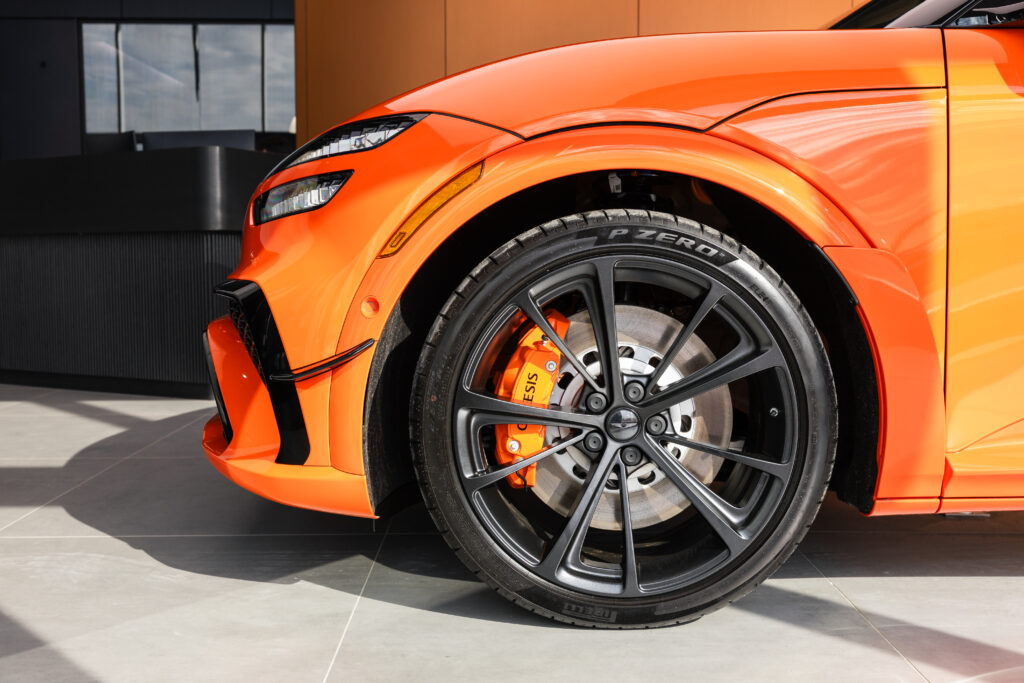
Genesis has spent much of its first decade establishing itself as a credible luxury brand through design, premium quality, and a unique and exclusive ownership experience. With the GV60 Magma, it is now making a more direct move into the performance space.
The vehicle matters beyond its headline output. As the first production model from the Magma program, it gives a clearer sense of where Genesis wants to go next: toward a lineup that blends luxury, design discipline, and higher-performance engineering without abandoning the brand’s more refined identity.
A launch with broader meaning

Genesis is not presenting the GV60 Magma as a one-off experiment. It is the first production vehicle from the Magma performance program, which the brand says is intended to extend across the lineup over time. That gives this launch which was held at Genesis Yorkdale significance beyond one crossover. As Eric Marshall, director of Genesis Motors Canada, put it: “It speaks to progression. We’ve successfully positioned ourselves with great-looking products and a strong ownership experience. Now this is the next evolution: high performance.” The message is clear: Genesis sees Magma as a brand-building move, not just a higher-horsepower trim.
The performance numbers change the conversation

Genesis Canada lists the GV60 Magma at 641 horsepower and 790 lb-ft of torque in Boost Mode, with a claimed 0-100 km/h time of 3.4 seconds. Global Genesis material also points to a 264 km/h top speed and a 0-200 km/h run in 10.9 seconds. Those figures push the GV60 well beyond its role as a luxury EV and into more serious performance territory. Marshall drew a distinction between this vehicle and the Hyundai Ioniq 5 N, saying, “The GV60 Magma is its own product,” and describing Genesis’ approach as “about performance, yes, but also luxury, additional technology, and rewarding the driver.”
More than raw EV power
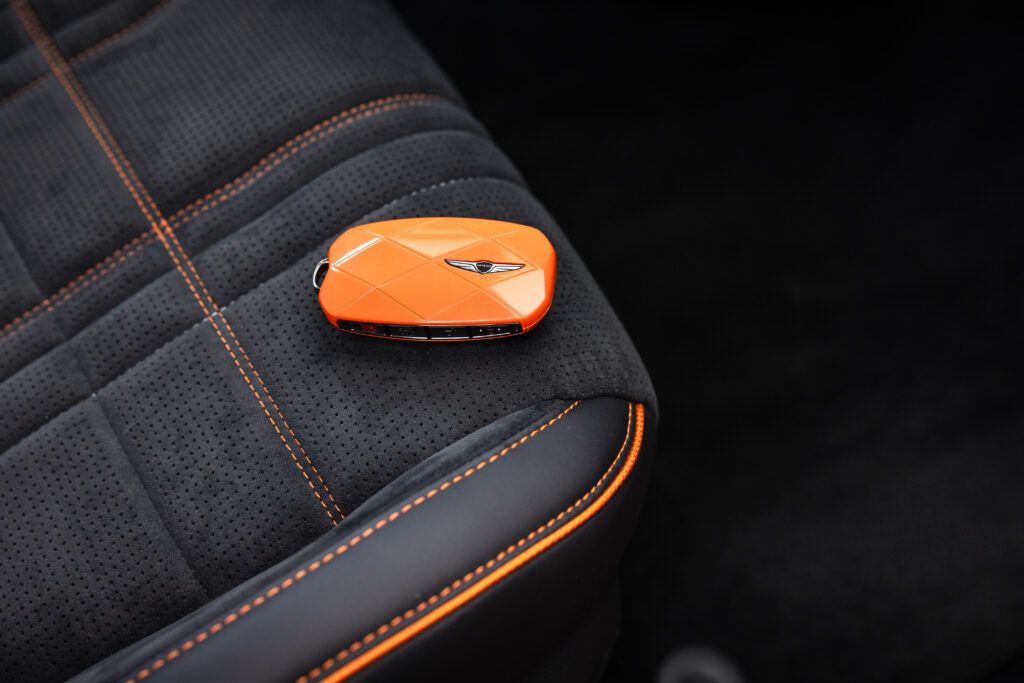
Genesis says the Magma’s performance is not just about peak output, but how that output is sustained and managed. The brand points to upgraded motors, refined rotor-speed development, and next-generation two-stage motor control intended to reduce high-speed fade. Boost Mode is said to deliver peak power for roughly 15 seconds, helping the vehicle remain forceful beyond an initial launch. Marshall said Genesis “kept the winning formula — the design, the luxury, the materials — but now added real performance on top,” a comment that reflects the company’s effort to position the Magma as a fully engineered performance model rather than a spec-sheet exercise.
Chassis development is central to its credibility
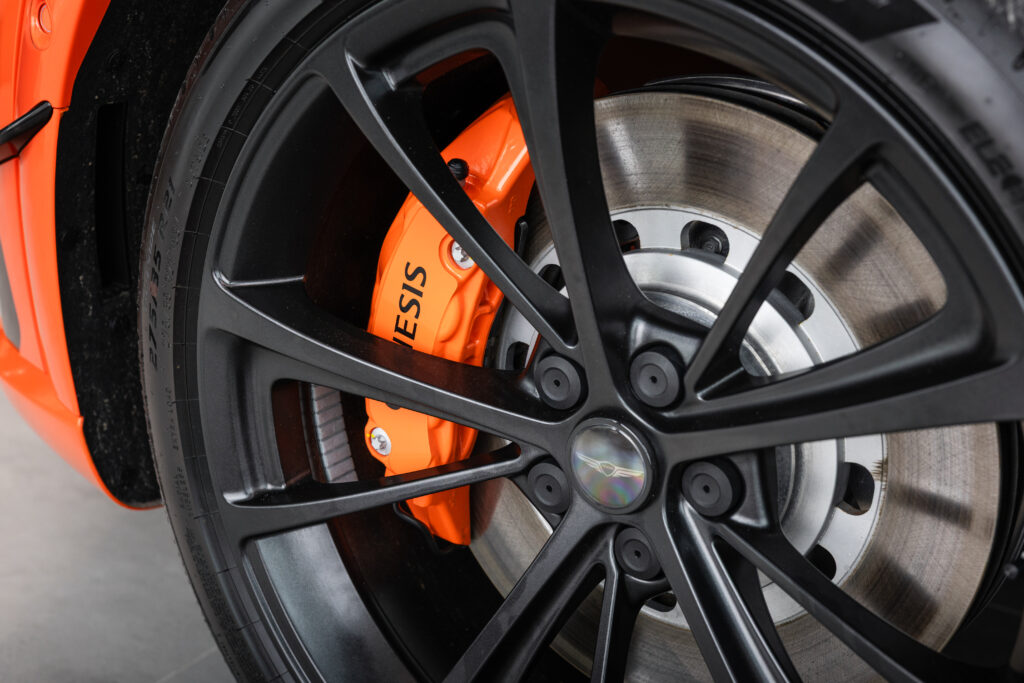
The deeper story may be in the chassis work. Genesis says the GV60 Magma adds torque vectoring and Drift Mode, while recalibrated suspension geometry and roll-center adjustments are intended to improve body control. Electronic Control Suspension and End-of-Travel control are designed to balance cornering precision with daily usability. Genesis also highlights front monoblock calipers, large-diameter brake discs, and rear high-friction brake materials matched to the 21-inch wheel package. Marshall described Magma as “our high-performance halo. Our superhero,” but the technical changes suggest Genesis is trying to support that claim with substance.
A more aggressive design, but still restrained
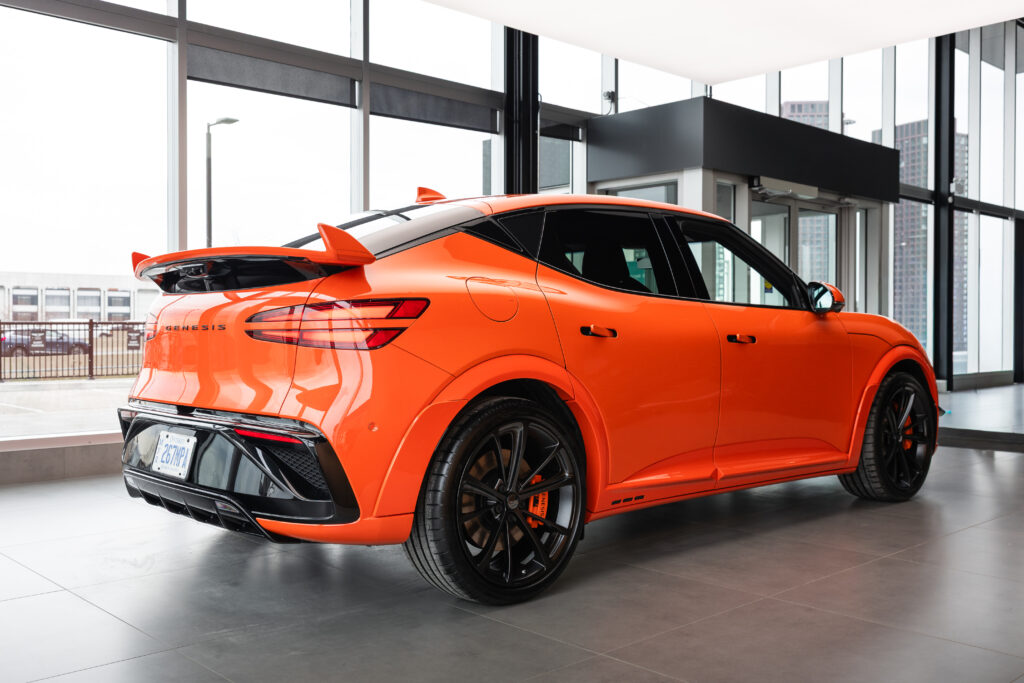
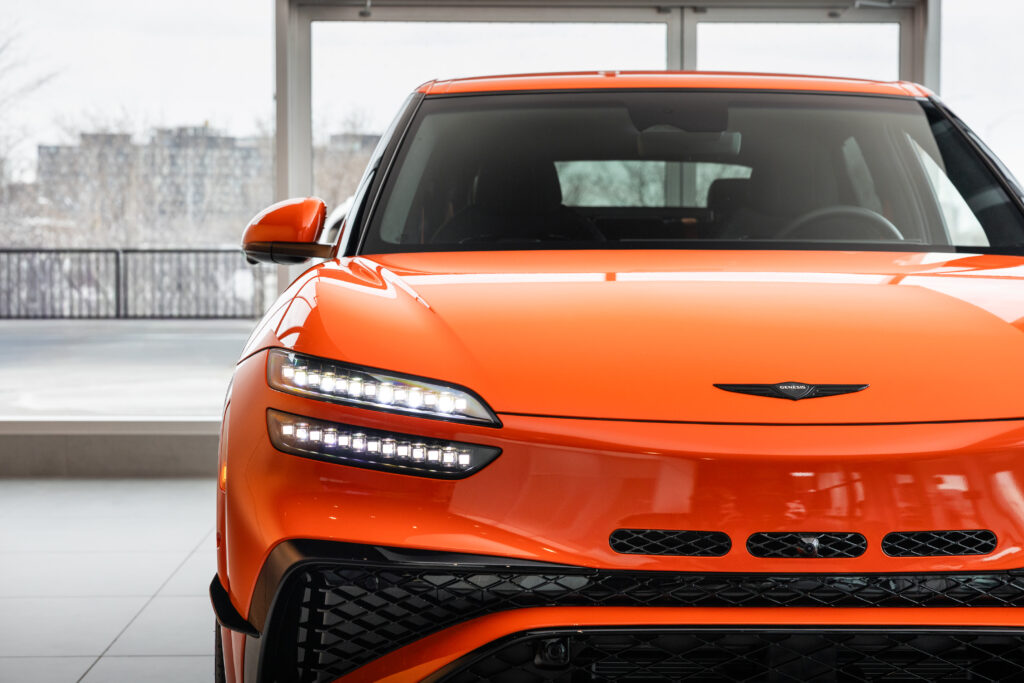
Genesis says the GV60 Magma is lower and wider than the standard model, with overall height reduced by 20 mm. Wider fenders, Magma-specific 21-inch forged wheels, 275 mm tires, canards, and a functional rear spoiler all suggest genuine aerodynamic and cooling work. Even so, the design appears consistent with Genesis’ existing approach rather than dramatically over-styled. Marshall said the company made design “the cornerstone” of the brand before reinforcing it with “strong material quality, fit and finish, and a lot of attention to detail.” The Magma appears to follow that formula, adding edge without losing visual restraint.
The cabin remains recognizably Genesis
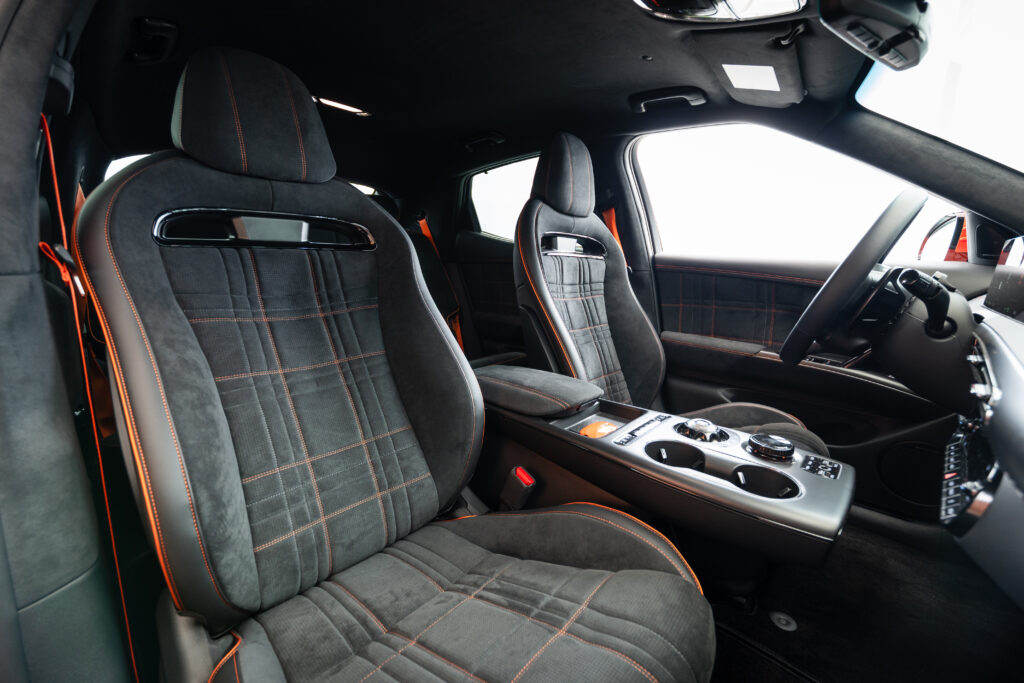
Unlike some performance models that emphasize intensity at the expense of comfort, the GV60 Magma appears intended to preserve the brand’s everyday luxury character. It gets deeper seats with more lateral support, suede-finished bolsters, and 10-way power adjustment with cushion extension. Genesis also says engineers worked to keep the cabin quiet even above 200 km/h using laminated acoustic glass, reinforced sealing, sound-absorbing materials, and Active Noise Control-Road. Marshall said, “I don’t think people fully realize yet that Genesis is really a lifestyle brand,” and described the product as being shaped “around the guest,” language that helps explain why comfort remains part of the performance brief.
Software plays a major role in the experience
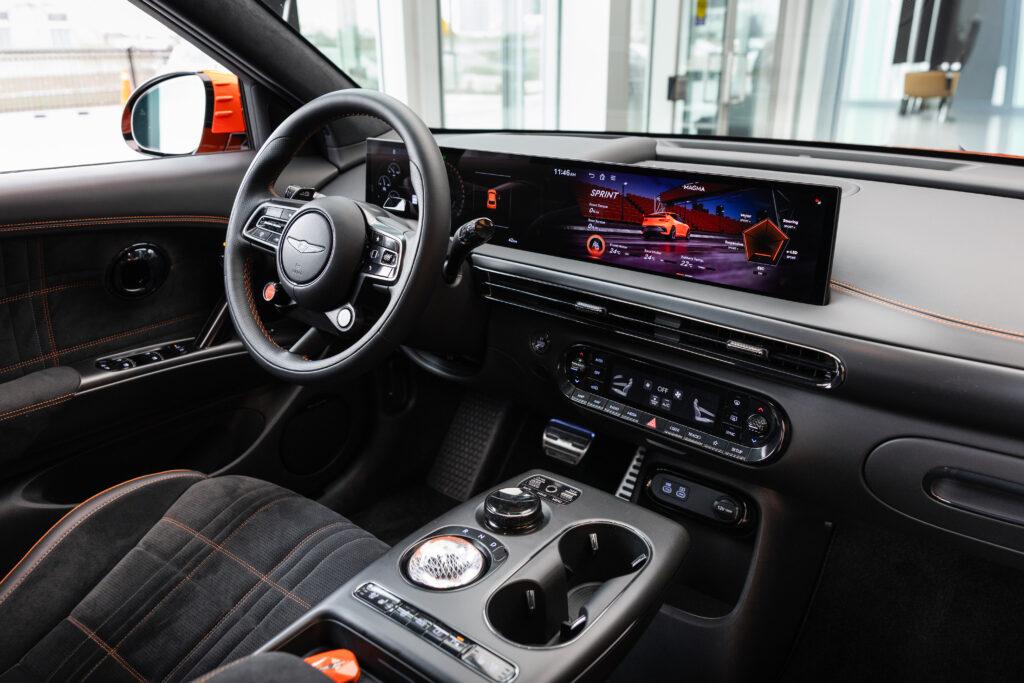
Genesis appears to recognize that modern performance vehicles are increasingly defined by calibration as much as hardware. The GV60 Magma offers Sprint, GT, and MY modes, with the custom setting allowing drivers to tailor features including the electronic limited-slip differential and stability-control behavior. It also adds a Virtual Gear Shift system meant to mimic the feel of a V6 with an 8-speed dual-clutch transmission, along with e-Active Sound Design Plus and extra exterior speakers. Marshall said the vehicle is meant to be “rewarding the driver rather than fighting with them,” suggesting the software is intended to make the EV experience feel more engaging rather than simply more theatrical.
Motorsport is part of the strategy
Genesis is also giving Magma a stronger performance foundation through racing. The company has launched Genesis Magma Racing with Hyundai Motorsport backing and says it plans to field a two-car entry in the FIA World Endurance Championship in 2026 and IMSA in 2027. Marshall said, “Genesis is entering endurance racing in Europe, and Magma will become a real laboratory for learning. Those learnings — under stress, under competition — will eventually make their way into the production vehicles.” Whether that transfer is substantial will take time to judge, but the program does give Magma greater credibility than a styling-led sub-brand alone would.
It also points to Genesis Canada’s next phase
The GV60 Magma fits into a broader growth plan for Genesis in Canada. Marshall said the brand wants to keep expanding its retail footprint and ownership model while growing to “12,000 to 15,000 units a year” and still preserving “the feel of a boutique, experience-led brand.” He also said, “I want Genesis to become that same kind of brand — where people understand that it stands on its own,” referencing the way Tesla once occupied a category of its own. In that sense, the GV60 Magma is not just a fast electric crossover; it is an early test of whether Genesis can expand into performance while strengthening its identity in the Canadian market.

Harvi Sadhra is the CEO/Founder of Revir Media Group. He is a prominent leader within the digital media landscape and has expertise in writing finance, technology, and automotive content.