
A freshly cleaned vehicle can hide years of rushed repairs, postponed servicing, and bargain fixes. The real story often appears in smaller details: mismatched hardware, neglected fluids, uneven tire wear, or records that never quite add up. None of these clues proves mistreatment on its own, since age, climate, and ordinary use also leave marks. Several appearing together, however, can suggest that an owner focused on keeping the vehicle moving rather than maintaining it properly.
These 22 signs can help distinguish normal wear from a pattern of corner-cutting. They also show why a vehicle history report should never replace a careful inspection, a diagnostic scan, and an independent mechanic’s opinion.
Gaps and Contradictions in the Service History

A missing receipt does not automatically mean maintenance was skipped. Some owners change their own oil, use small independent garages, or lose paperwork during a move. Concern grows when the seller claims meticulous care but cannot provide invoices, digital records, dated parts receipts, or even a basic timeline of major services. An unexplained three-year gap is especially important when it covers mileage at which brakes, tires, fluids, belts, or other scheduled items would normally have needed attention.
Look for contradictions as well as absences. A windshield sticker might show an oil change at a higher odometer reading than an older invoice, or the seller may describe a “recent” brake job that does not appear in any record. Vehicle history reports can contain repair information, but reporting is incomplete and do-it-yourself work may never appear. Records should therefore be treated as supporting evidence, not a complete biography. Consistent dates, mileage, parts descriptions, and shop names usually inspire more confidence than a folder containing only a few carefully selected receipts.
Thick Sludge Beneath the Oil Cap
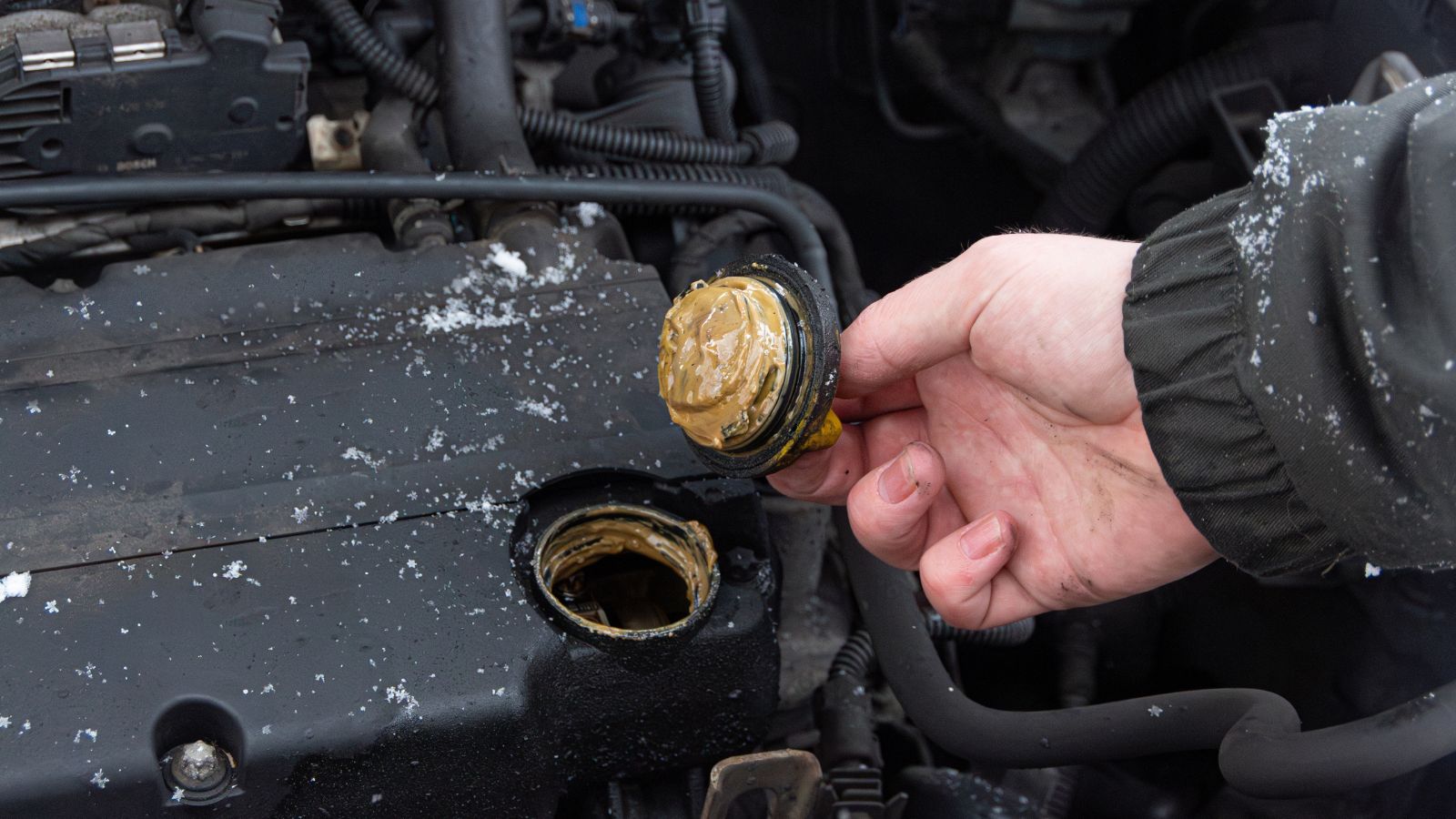
Dark engine oil alone does not prove neglect. Oil often darkens as it circulates and holds contaminants in suspension. Thick, tar-like deposits or heavy sludge beneath the filler cap are more concerning, particularly when similar buildup is visible inside the valvetrain. Sludge can form when oil breaks down, drain intervals are stretched excessively, the wrong product is used, or operating conditions allow moisture and contaminants to accumulate.
A small amount of pale residue under the cap can sometimes be condensation, especially on vehicles used for repeated short trips in cold weather. That is why the clue needs context. Heavy deposits, restricted oil-return passages, a noisy cold start, and no dependable oil-change history create a more serious pattern. Modern oil standards include requirements for sludge, varnish, wear, and deposit control, but even high-quality oil cannot protect an engine indefinitely when servicing is ignored. A mechanic may need to inspect through the filler opening, check oil pressure, or remove a cover before judging how far the contamination extends.
The Oil Level Is Suspiciously Wrong
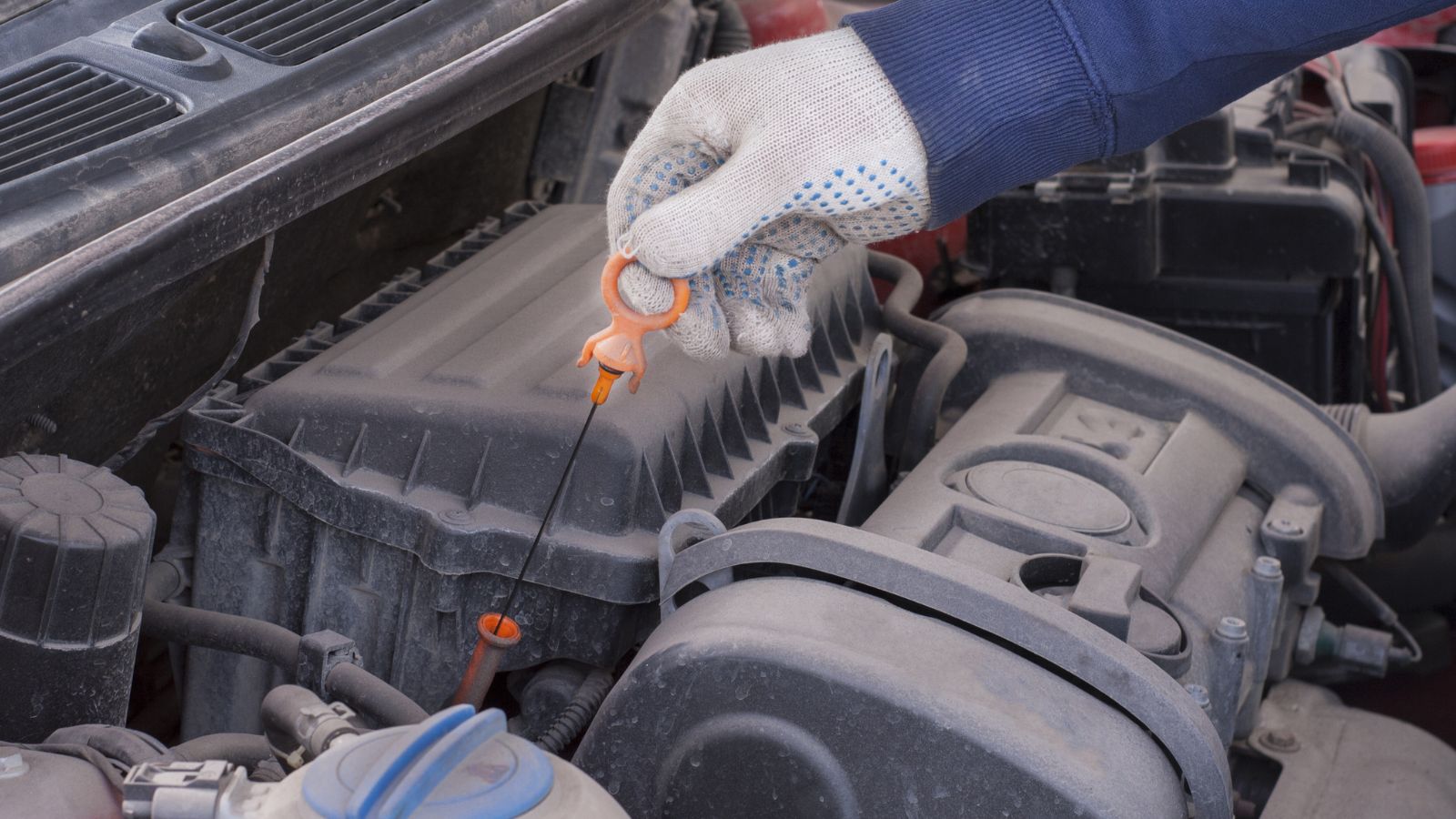
A dipstick showing almost no oil suggests the owner may have ignored routine checks, a leak, or abnormal consumption. An overfilled crankcase can be equally revealing. Some people add oil whenever a warning appears without confirming the actual level, creating a new problem while masking the original one. Too much oil can become aerated or reach areas where it should not, while too little reduces the supply available for lubrication and cooling.
The condition around the filter and drain plug also tells a story. Fresh oil sprayed across an otherwise dusty engine may indicate a recent spill, but a damaged drain plug, rounded fastener, crushed filter canister, double-stacked sealing gasket, or persistent seepage can point to hurried servicing. Check whether the filter appears appropriate for the engine and whether the oil meets the viscosity and performance specification listed by the manufacturer. A bargain product is not necessarily defective, yet repeated use of incorrect fluids or poorly fitted filters shows that price and speed may have mattered more than doing the job correctly.
Muddy, Contaminated, or Chronically Low Coolant

Healthy coolant varies in colour by formula and manufacturer, so colour alone cannot identify the correct product. The more meaningful clues are mud-like fluid, oily contamination, floating debris, heavy sediment, corrosion inside the reservoir, or a level that remains below the minimum mark. These conditions may indicate neglected changes, incompatible products, internal contamination, a persistent leak, or repeated topping-up with water rather than a proper coolant mixture.
Cooling-system problems are sometimes managed with temporary measures because the underlying repair can be expensive. A leaking radiator, water pump, heater core, hose, or gasket may be ignored while the owner repeatedly refills the reservoir. Stop-leak products can also leave residue, although their presence does not identify the original fault. Inspectors should look for crusty deposits around hose connections, dried streaks near the radiator, stained plastic, swollen hoses, and a sweet odour after the engine warms. Dirty coolant can encourage corrosion and restrict flow, making an apparently minor maintenance shortcut a potential overheating risk.
Brake Fluid That Is Very Dark or Below Minimum
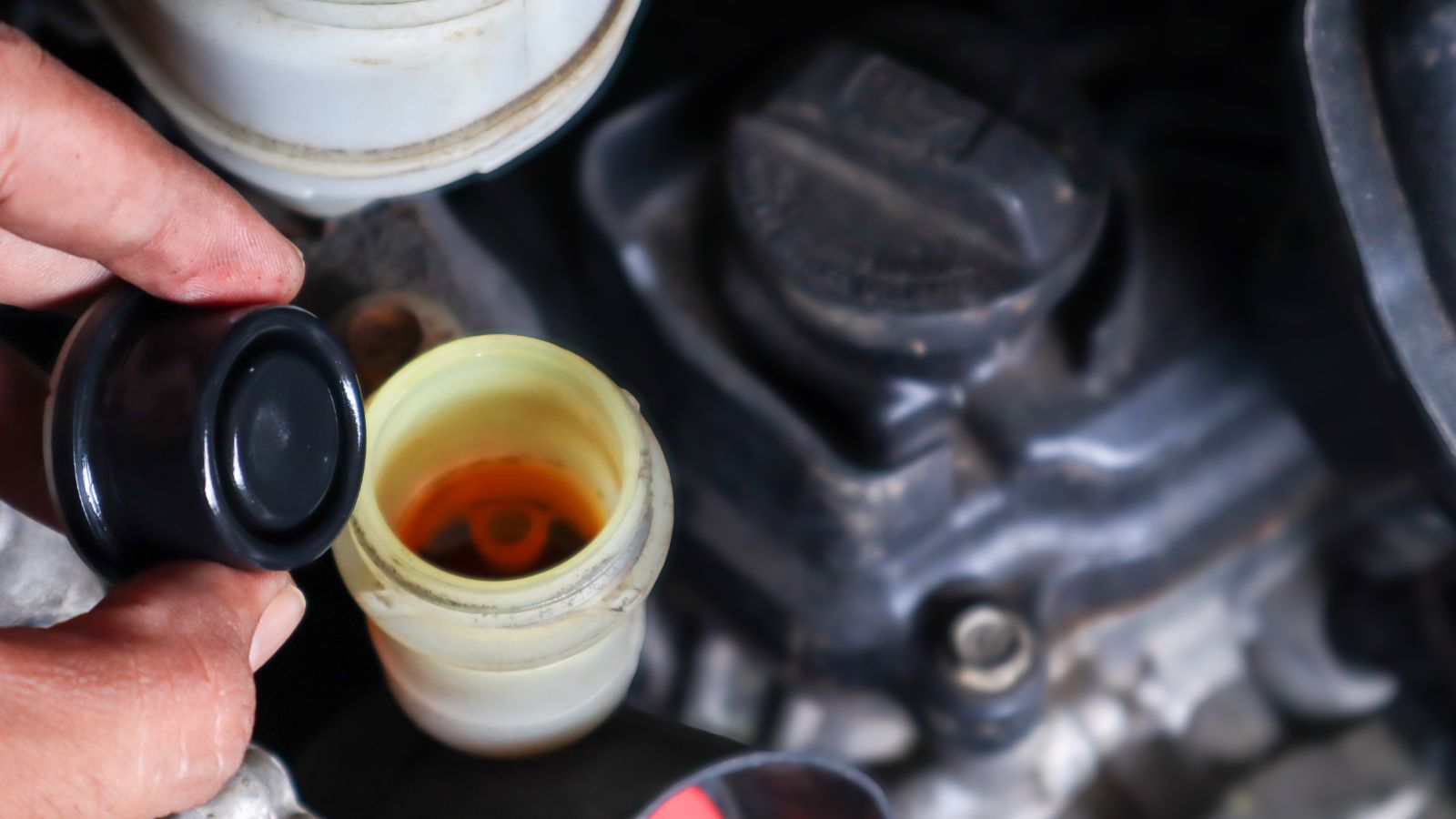
Brake fluid should not normally disappear through ordinary operation. Its level can fall gradually as brake pads wear and caliper pistons extend, but a reservoir at or below the minimum line can also indicate leakage. Simply adding fluid without inspecting the pads, hydraulic lines, hoses, calipers, wheel cylinders, and master cylinder treats the visible symptom while leaving the reason unresolved.
Fluid condition matters too. Common DOT 3 and DOT 4 fluids are generally clear to amber when fresh and can darken as they absorb moisture and collect contaminants. Very dark brown or black fluid suggests that servicing may have been postponed. Brake fluid is hygroscopic, meaning it absorbs moisture from the surrounding air over time. That can lower its boiling point and contribute to corrosion inside hydraulic components. A visual check cannot measure every important property, so professional testing may still be needed. When dark fluid appears alongside old pads, rusty bleeders, uneven braking, or missing service records, it becomes a stronger sign of maintenance performed only when absolutely necessary.
Burnt-Smelling or Neglected Transmission Fluid
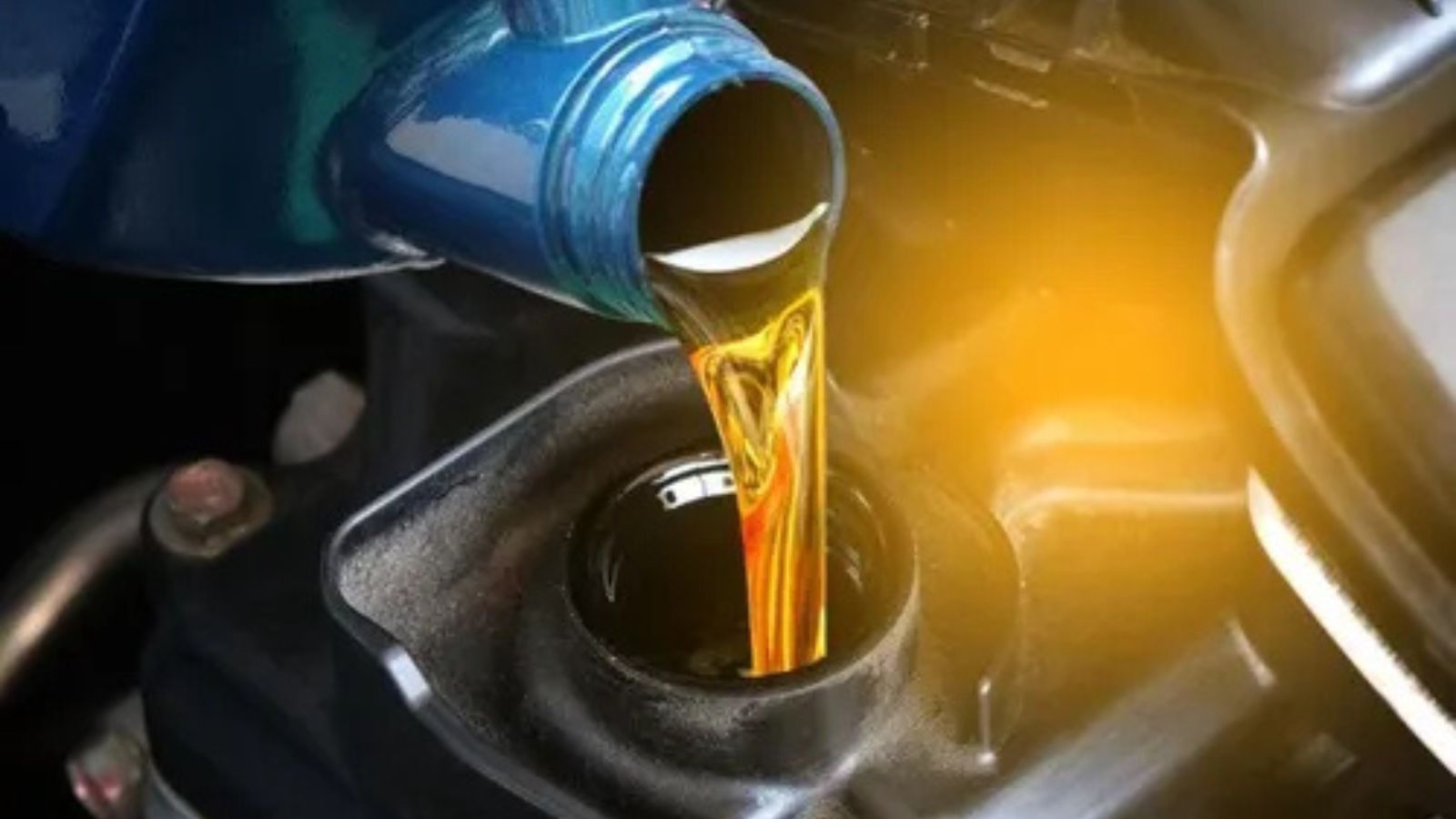
Transmission fluid condition must be judged according to the vehicle because some newer transmissions lack a conventional dipstick and require specific temperature-based procedures. On vehicles that permit inspection, fluid that is extremely dark, smells burnt, contains visible particles, or sits far below the specified level deserves attention. Automatic transmission fluid lubricates components, transfers hydraulic pressure, helps manage heat, and supports seal operation, making the correct formulation essential.
Corner-cutting can take several forms. An owner may top up a leaking transmission without repairing the seal, install a universal fluid despite a manufacturer-specific requirement, or request a quick drain when a filter or pan inspection is also due. Some may avoid service entirely because they fear disturbing a high-mileage unit that is already shifting poorly. A recent fluid change is not automatically reassuring either; bright new fluid can sometimes be added shortly before sale. The test drive remains important. Delayed engagement, harsh shifts, slipping, shuddering, or inconsistent behaviour after the vehicle warms may reveal a history that fresh fluid cannot erase.
Leaks That Were Cleaned Instead of Repaired
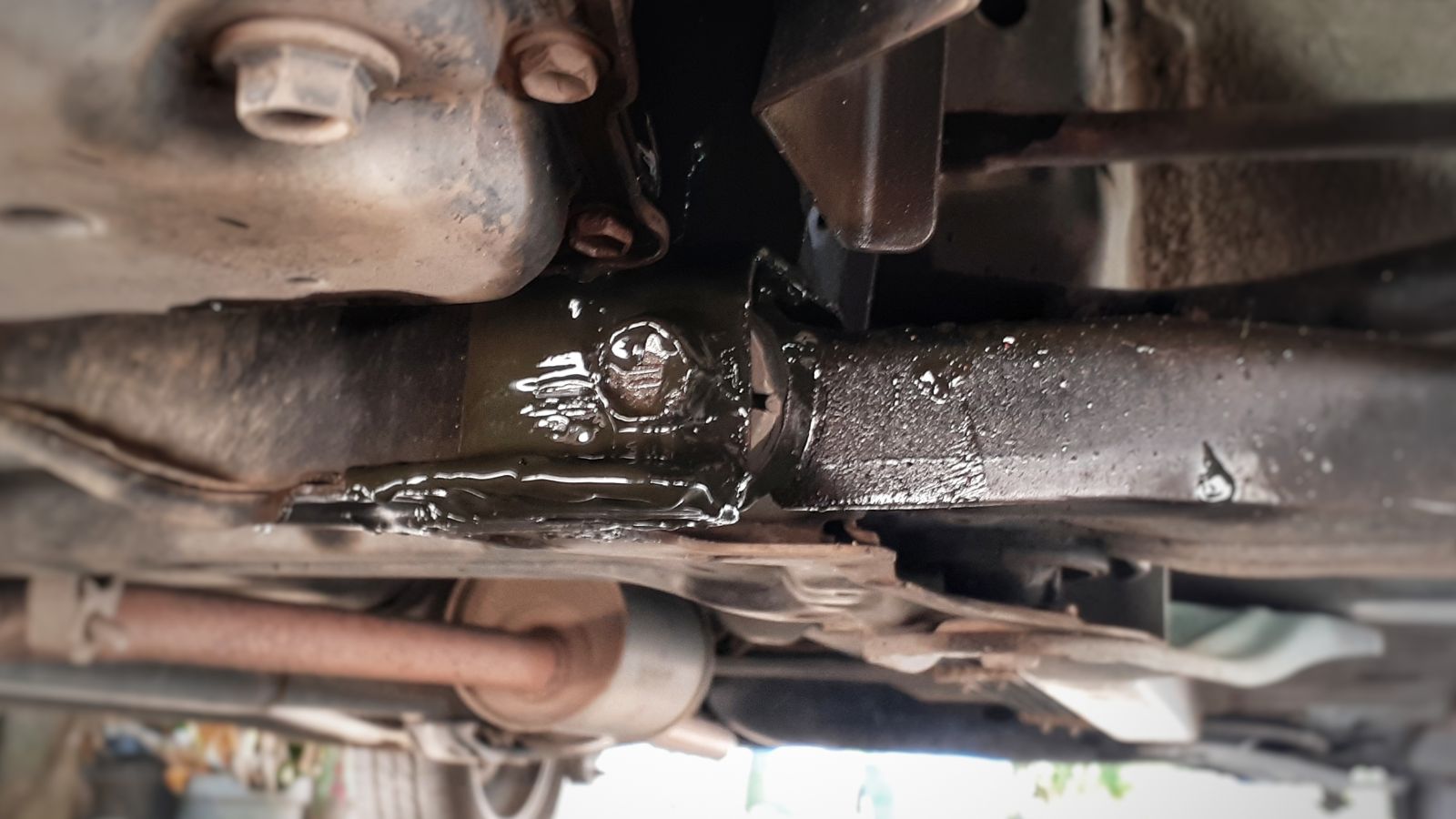
A spotless engine compartment can be appealing, but it can also remove evidence needed to evaluate leaks. Freshly washed components surrounded by old grime deserve a closer look, particularly when oily residue begins returning after a test drive. Common automotive fluids differ in colour, smell, texture, and location, allowing a technician to distinguish engine oil from coolant, transmission fluid, brake fluid, power-steering fluid, or ordinary air-conditioning condensation.
Temporary leak management often leaves clues. These include layers of sealant around a gasket, excessive silicone squeezed from a joint, absorbent material tucked below a component, repeated top-up bottles in the cargo area, or a protective shield recently cleaned on only one side. Stop-leak additives may have legitimate emergency uses, but relying on them indefinitely can conceal deteriorated seals, hoses, radiators, or gaskets. Place clean cardboard beneath the vehicle after it has been driven and inspect again after it sits. A leak that returns quickly suggests the cleaning improved presentation without correcting the underlying fault.
Mismatched Tires or Incorrect Sizes

Four different brands are not automatically unsafe, especially when their size, type, construction, load rating, speed rating, and remaining tread are compatible. Nevertheless, a collection of unrelated tires with dramatically different wear levels often suggests replacements were purchased individually whenever one became unusable. That approach may save money immediately but can produce inconsistent wet grip, braking response, noise, and handling.
Size differences deserve even more attention. The information placard in the door opening and the owner’s manual identify the manufacturer’s intended specifications. Incorrect diameter, load capacity, or inflation requirements can affect clearance, speedometer readings, stability systems, and load-carrying ability. All-wheel-drive vehicles may also be sensitive to substantial differences in tire circumference, depending on their driveline design. Check all four sidewalls rather than assuming the visible pair matches. A nearly new budget tire on one corner, an old premium tire on another, and two different sizes at the rear form a stronger pattern of corner-cutting than brand variation alone.
Uneven Tread Wear Across the Vehicle

Tires preserve a record of how the vehicle has been aligned, inflated, rotated, and controlled by its suspension. Wear on both shoulders can suggest prolonged underinflation, centre wear may appear after overinflation, and one-sided wear can accompany alignment problems. Cupping or scalloped patches may be associated with worn suspension components, imbalance, or an unresolved alignment condition.
Rotating tires at the recommended interval helps even out wear because front and rear positions experience different loads and forces. NHTSA notes that manufacturers commonly recommend rotation within roughly 5,000 to 8,000 miles, although the owner’s manual remains the controlling source. A vehicle showing one bald inner shoulder while the outer tread looks healthy may have passed casual inspections for months. Ask whether an alignment was performed and request the printout if the seller claims recent work. Installing two inexpensive tires without fixing worn joints, damaged bushings, bent components, or incorrect alignment is a classic example of addressing the consumable part while leaving the cause untouched.
Improper Plugs or Repairs Near a Tire’s Sidewall

An external string plug can be useful as an emergency measure, but industry guidance does not consider a plug by itself a complete permanent repair. A proper puncture repair generally requires removing the tire, inspecting it internally, filling the injury with a stem and sealing the inner liner with a patch or combination unit. The repairable area is limited to the tread, and injuries extending into the shoulder or sidewall should not receive an ordinary puncture repair.
Visible plugs near a sidewall, multiple overlapping repairs, sealant leaking from the valve, or several punctures clustered together suggest that replacement was postponed. Damage exceeding approximately 6 millimetres in passenger or light-truck tires also falls outside standard repair guidance. The buyer may not see internal damage caused by driving while underinflated, which is another reason the tire must be removed for a complete assessment. A seller describing every visible plug as “professionally repaired” should be able to produce a receipt or allow a tire shop to inspect the casing.
A Brake Job That Looks Only Half Finished

Brake components do not always wear at identical rates, and replacing pads without replacing rotors can be completely appropriate when the rotors remain within specification. The concern is a visibly inconsistent repair: one new caliper beside a heavily corroded partner, pads with sharply different thicknesses, missing hardware, seized slide pins, deeply scored rotors, or friction material worn almost to the backing plate.
Partial repairs often happen when a vehicle needs to stop making noise long enough to remain usable or be sold. New pads may temporarily quiet the system even though a damaged rotor, sticking caliper, contaminated surface, or deteriorated hose remains. Worn pads can eventually damage rotors and reduce braking effectiveness, while vibration during braking can indicate rotor or hub problems requiring inspection. Look through the wheel openings, but remember that an accurate evaluation may require wheel removal and measurement. A professional should compare pad thickness, rotor condition, caliper movement, fluid condition, hose integrity, and braking performance across the axle rather than judging one shiny component.
A Loose, Corroded, or Incorrectly Fitted Battery

Battery corrosion is common enough that its presence alone does not prove neglect. A heavy blue-green or white buildup, oil and dirt covering the case, damaged terminal clamps, or cables that can be moved by hand show that routine checks may have been missed. Corrosion can reduce electrical performance and affect the connection between the battery, starter, charging system, and vehicle electronics.
The battery should also be firmly secured. Missing hold-down hardware allows a heavy battery to move under acceleration, braking, or rough-road impacts. Movement can strain terminals, damage the case, or create intermittent electrical faults. An incorrect battery may physically fit while having the wrong terminal arrangement, capacity, venting provision, or battery-management requirements. Improvised blocks of wood, wire, bungee cords, or zip ties are particularly revealing. Check the installation date, but avoid assuming age alone determines condition; climate, driving patterns, charging health, and battery type also matter. A proper load and charging-system test is more useful than a quick voltage reading taken immediately after the engine has run.
Cracked Belts and Swollen or Brittle Hoses

Belts and hoses often remain out of sight until one fails. A careful owner normally has them inspected for cracking, fraying, glazing, leaks, soft spots, bulges, hardening, and damaged connections. A vehicle with a recently replaced belt but multiple brittle hoses may have received only the repair needed to recover from a breakdown rather than broader preventive attention.
Look for coolant staining around hose ends, clamps that have cut into the rubber, and sections that feel unusually soft or hard compared with the rest of the hose. A mismatched collection of worm-drive clamps can indicate repeated emergency repairs, although some replacement parts legitimately use different hardware from the factory. Belt condition should be evaluated on both sides because modern multi-rib belts may lose material without displaying the large cracks associated with older designs. Since belts can operate the alternator, water pump, air-conditioning compressor, or power steering system depending on the vehicle, one neglected component can affect several systems at once.
An Engine Air Filter That Is Severely Neglected
A lightly dusty air filter is normal. A filter packed with leaves, insects, oil, mud, rodent material, or deeply embedded dirt suggests the air box has not been opened for a long time. The engine depends on the filter to limit abrasive contamination while still allowing adequate airflow. Manufacturers set replacement intervals according to vehicle design and operating conditions, with dusty environments often requiring more frequent inspection.
Corner-cutting may also appear as a damaged filter forced back into place, the wrong size leaving gaps around its edge, or an air-box cover held down with missing screws. Some owners attempt to extend service life by aggressively blowing out disposable filters, which can damage media that is not designed for repeated cleaning. Check downstream of the filter for dust tracks, because dirt beyond the sealing edge can indicate poor installation. A clogged filter does not affect every modern fuel-injected engine in exactly the same way, but it remains a clear sign that a basic, inexpensive inspection was repeatedly postponed.
A Missing or Completely Packed Cabin Filter

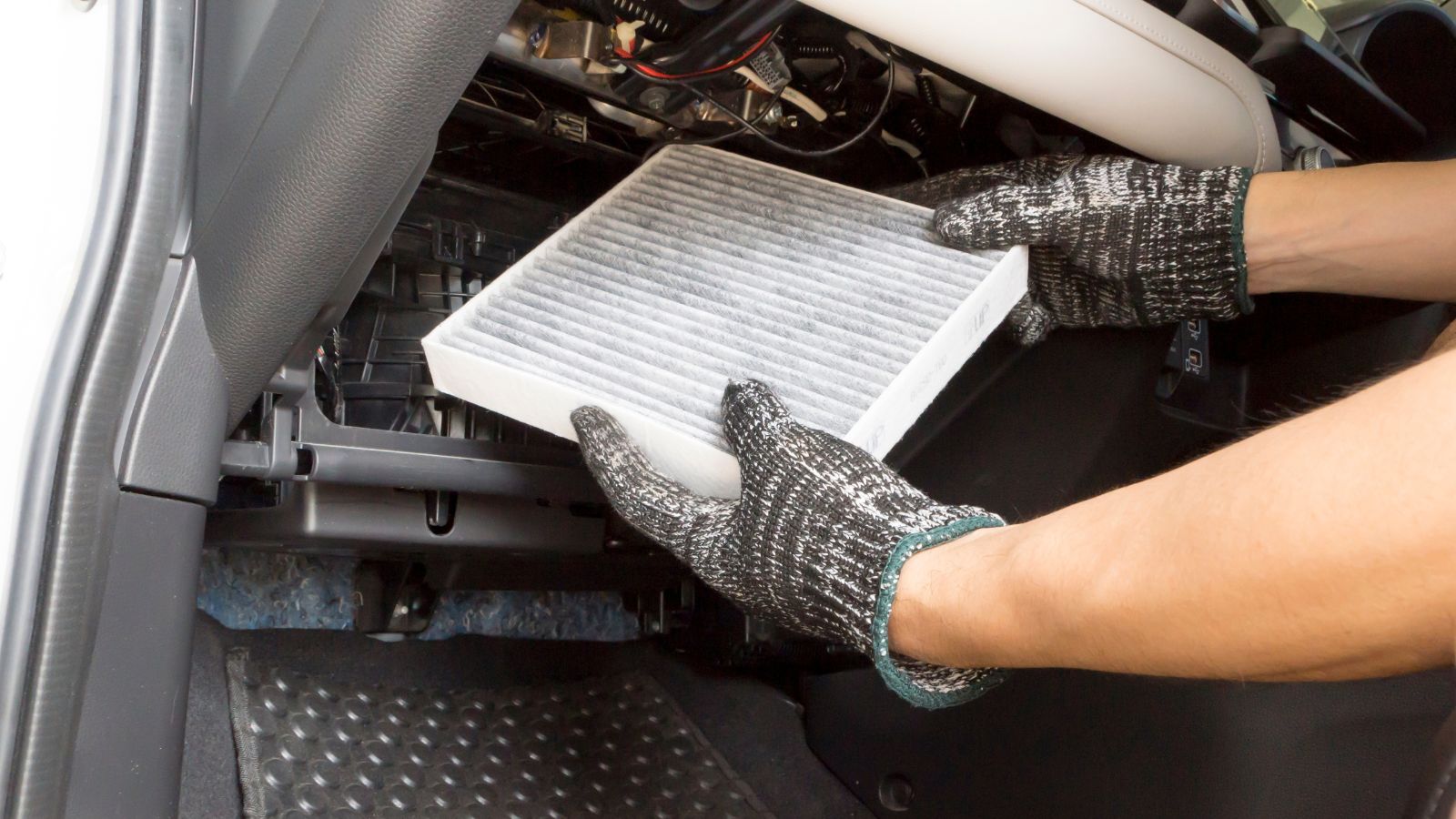
The cabin filter does not determine whether the engine survives, so it is an easy item for cost-conscious owners to ignore. A musty smell, weak airflow, excessive debris from the vents, or a filter compartment filled with leaves and dirt can reveal years of postponement. Some vehicles do not have a replaceable cabin filter, so the model’s equipment must be confirmed before treating its absence as suspicious.
More revealing is a vehicle designed for a filter that has an empty housing or a mangled filter shoved into place. Removing a clogged filter may temporarily improve airflow without paying for a replacement, but it allows dust, pollen, and debris to reach the heating and air-conditioning system. Water intrusion, rodent nesting, and blocked drains may also be discovered in the same area. This clue rarely justifies rejecting a vehicle by itself. It does, however, show how the owner approached inexpensive services that offered little immediate visual reward. When paired with a dirty engine filter and missing records, it strengthens the impression of reactive rather than preventive care.
Warning Lamps That Fail Their Start-Up Check

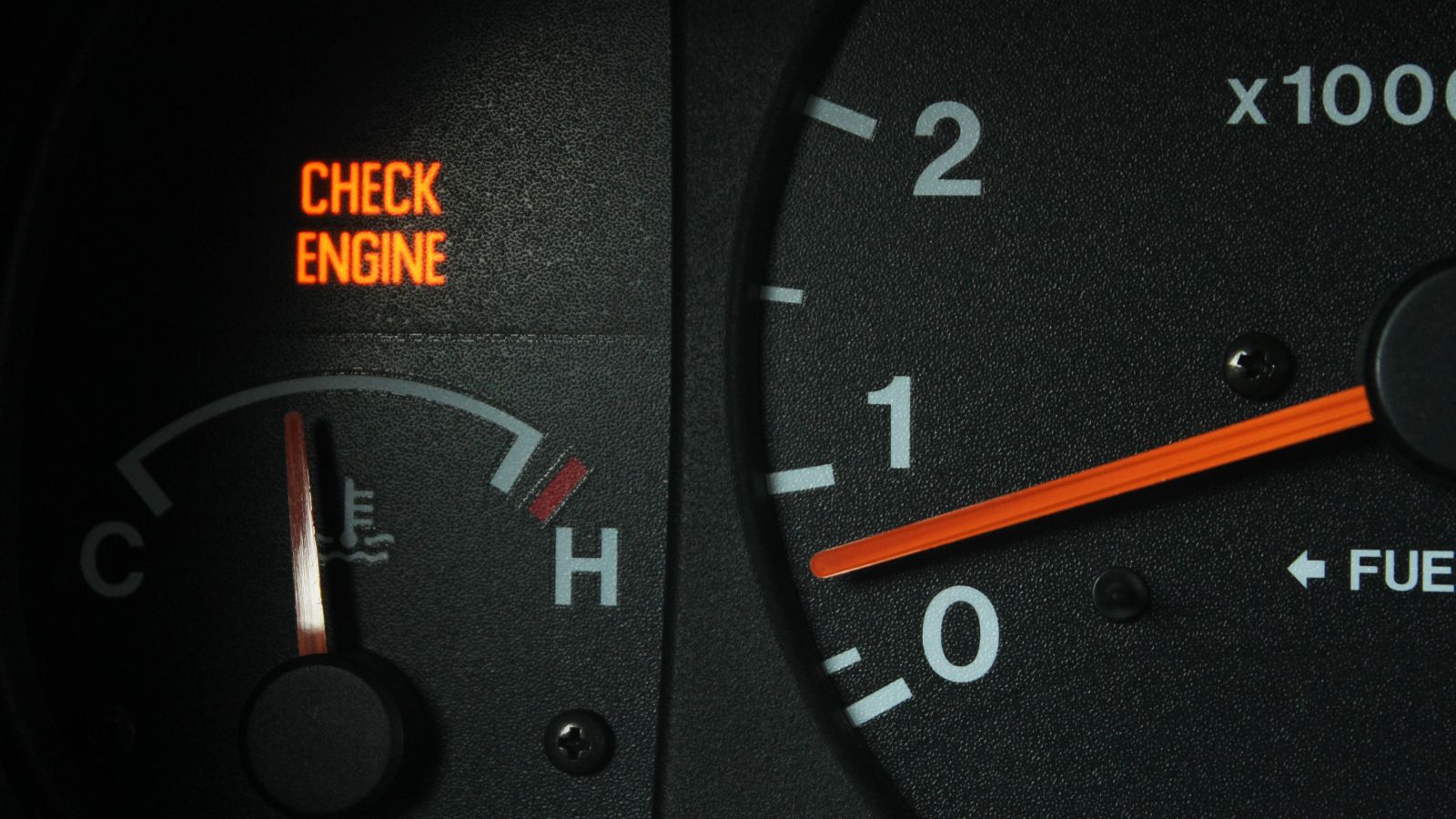
When the ignition is switched on before the engine starts, several warning lamps normally illuminate briefly as part of a bulb and system check. The exact sequence varies, but a check-engine lamp, airbag indicator, anti-lock brake warning, or oil-pressure light that never appears deserves investigation. A failed bulb or display fault is possible, but deliberately blocking, disconnecting, or altering a warning indicator is another possibility.
Compare the cluster with the owner’s manual and, where possible, a known example of the same model. Watch for tape, dark material, scratches, mismatched brightness, or a replacement cluster that does not match the vehicle’s mileage documentation. A diagnostic scan can determine whether control modules report faults even though no warning is visible. It can also reveal communication problems and stored or pending codes. Warning-light tampering is more serious than an overdue filter because it may have been intended to hide a safety, emissions, or mechanical problem from the driver and prospective buyers.
Diagnostic Monitors Show a Recent Reset
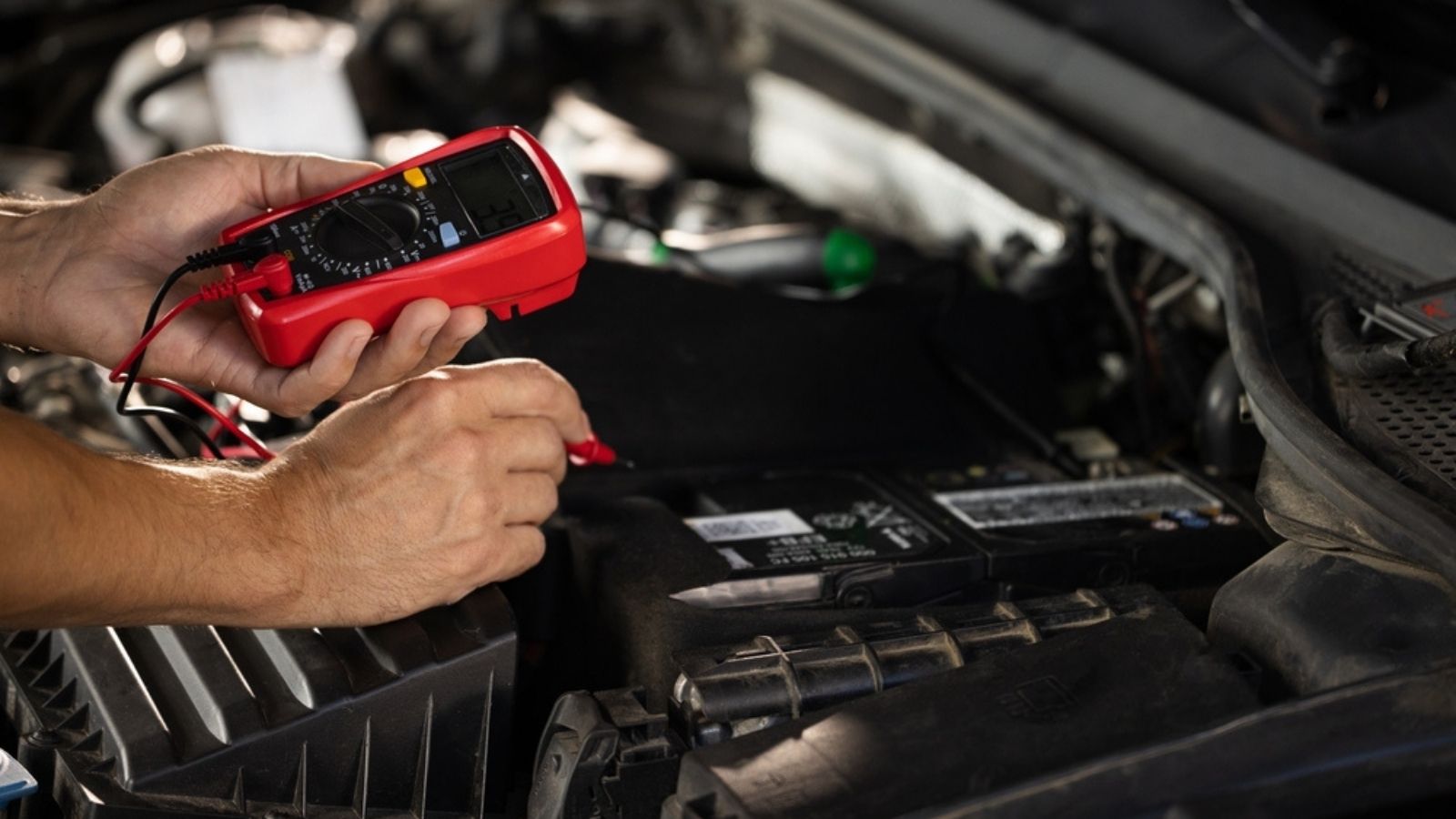
A scan showing no trouble codes can look reassuring, but the readiness-monitor status matters. On-board diagnostic systems run self-checks on emissions-related components during particular operating conditions. Clearing codes with a scan tool or disconnecting the battery can reset these monitors to “not ready.” The vehicle may then need several trips and specific driving conditions before the tests complete.
Incomplete monitors are not proof of deception. A battery may have been replaced, a legitimate repair may have just been completed, or the vehicle may not have experienced the conditions required to run a particular test. Suspicion increases when several monitors are incomplete immediately before sale, the seller cannot explain recent work, and the check-engine lamp has mysteriously disappeared. Ask to scan the vehicle after a longer test drive or arrange a second inspection after normal use. Pending codes and permanent codes may also provide useful context. A seller who repeatedly clears a fault can temporarily turn off the warning lamp, but the readiness status may reveal that the computer’s diagnostic memory was recently disturbed.
Missing Clips, Random Bolts, and Improvised Fasteners
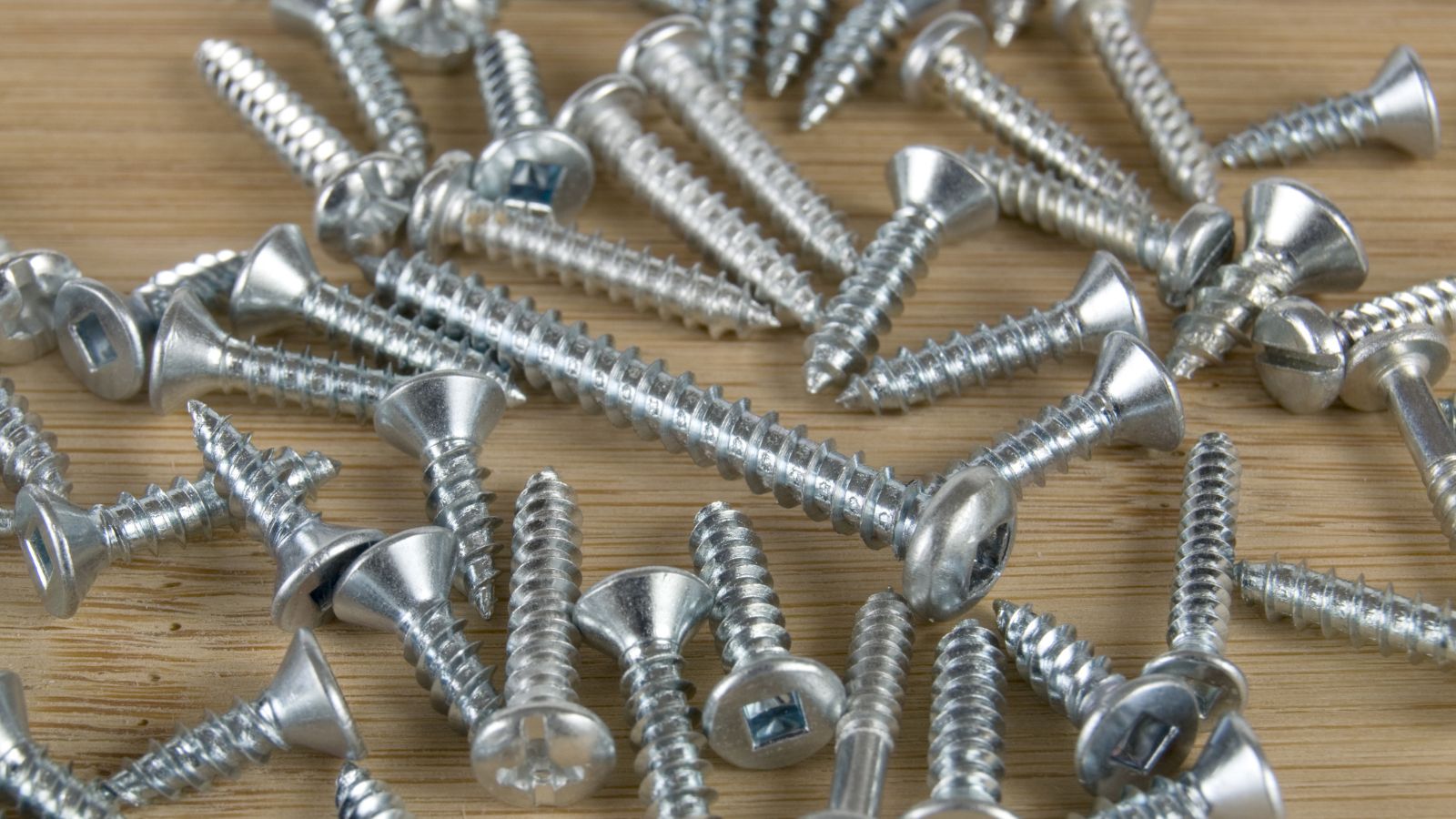
Factory assembly is usually consistent. Underbody shields, air boxes, wheel-well liners, wiring retainers, and trim panels are normally secured by matching clips or specified fasteners. A few missing clips are common on older vehicles, especially after routine repairs. A broad pattern of drywall screws, mismatched bolts, wire, zip ties, adhesive, and broken mounting tabs is more informative.
Improvised hardware suggests components were repeatedly removed without replacing damaged retainers or that repairs were completed using whatever was available. The consequences range from harmless rattles to wiring chafing, water entry, loose shields, or parts contacting belts and hot exhaust components. Examine frequently serviced areas such as the battery tray, air-filter housing, engine cover, splash shield, bumper edges, and fuse-box lid. One emergency zip tie does not condemn a vehicle, but dozens of improvised attachment points show a working philosophy: restore basic function quickly and leave cosmetic, protective, or secondary details for someone else.
Untidy Wiring and Incorrect Fuse Repairs
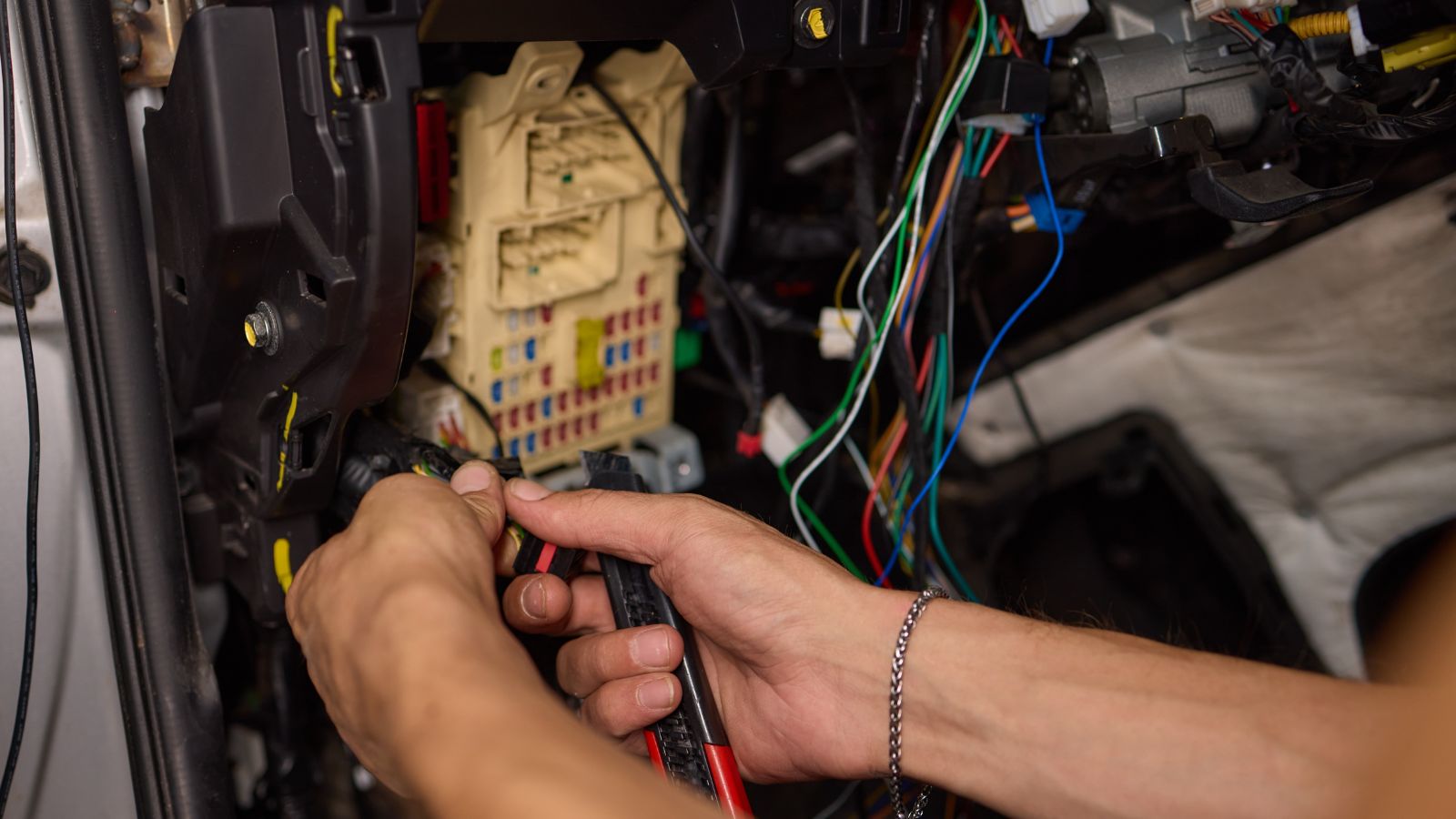
Aftermarket accessories can be installed safely when they use proper wire sizes, fusing, connectors, routing, insulation, and grounding. Problems arise when wires are twisted together, wrapped only in household tape, run across sharp metal, or connected directly to the battery without appropriate protection. Loose wires near pedals, steering components, fans, belts, or hot exhaust parts are especially concerning.
Check the fuse boxes against the owner’s manual or lid diagram. A higher-rated fuse inserted to stop repeated blowing is not a repair; it can allow more current through the circuit than intended. Foil, wire, coins, or other objects used in place of a fuse are major warning signs. Look for scorched plastic, melted insulation, abandoned alarm wiring, multiple add-a-fuse adapters, and connectors cut from the factory harness. Electrical faults can be time-consuming to trace because one poor modification may affect several modules. A professional inspection should identify both the accessory and the reason its wiring was altered before the installation is accepted as harmless.
Rust Hidden Beneath Fresh Paint or Coating
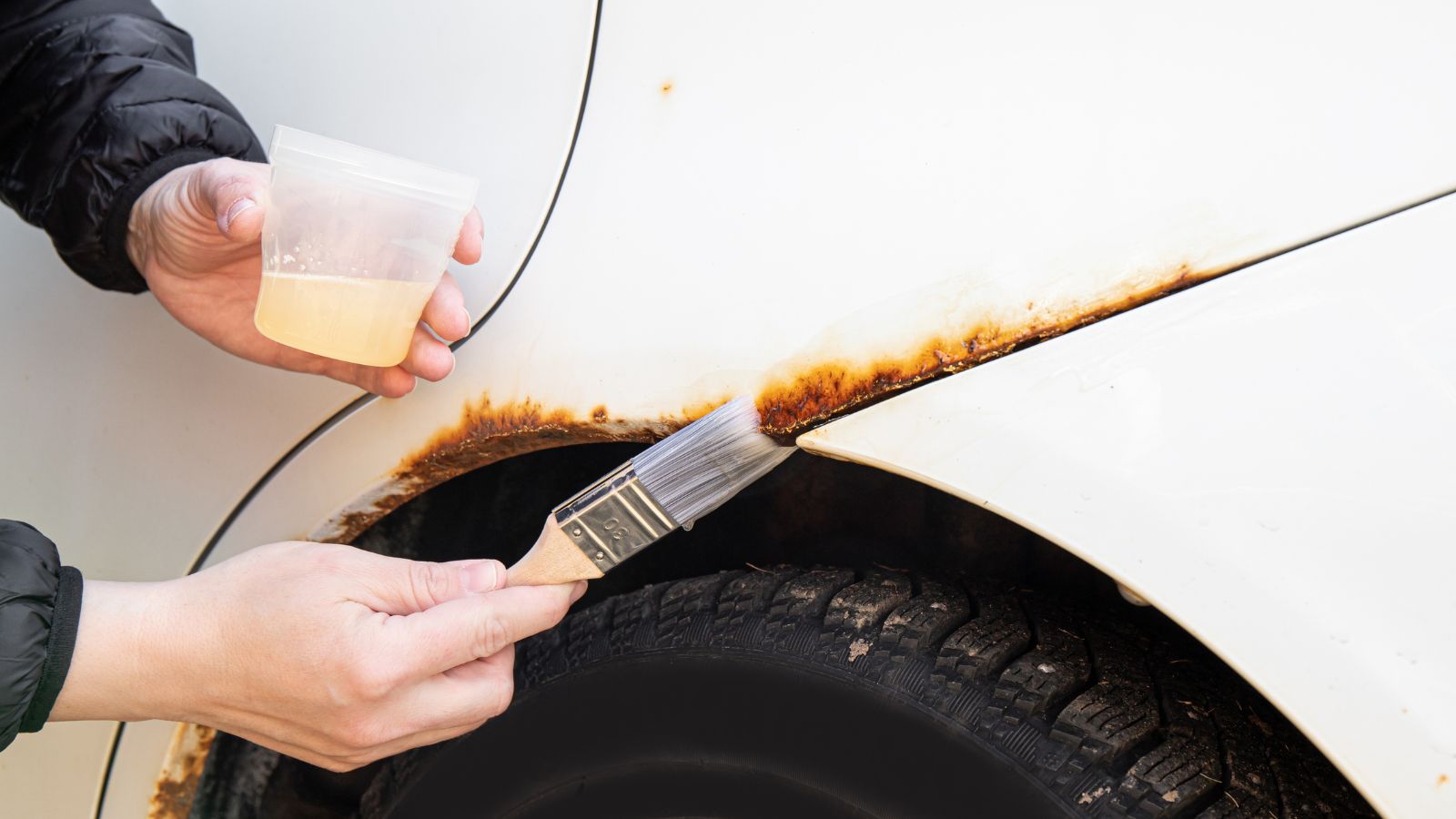
Surface corrosion on exposed suspension or exhaust components can be normal in wet, coastal, or winter climates. The concern is advanced scaling, perforation, swollen seams, weakened mounting points, or a fresh coating applied unevenly over existing rust. New black undercoating may be legitimate protection, but it can also make structural metal harder to evaluate when applied immediately before sale.
Inspect drain holes, brake and fuel lines, subframes, rocker panels, suspension mounts, wheel arches, and areas where plastic covers trap dirt. Flaking layers that can be lifted with a tool indicate more than cosmetic discolouration. Road salt can accelerate underbody corrosion, which is why regular washing and early treatment of exposed metal are recommended in winter regions. Fresh paint over bubbling metal, overspray on rubber parts, or thick coating covering fasteners may suggest presentation took priority over proper rust removal. A lift inspection is valuable because severe corrosion often develops where it cannot be seen from a driveway.
Open Recalls That Were Never Addressed

An unrepaired recall does not prove that every other maintenance item was neglected. Notices can go to an old address, parts may initially be unavailable, or a vehicle may change owners before the work is completed. Nevertheless, multiple longstanding open recalls can show that safety-related communications and free manufacturer repairs were not treated as priorities.
Recall status should be checked using the vehicle identification number rather than only its year and model. VIN-based tools can identify whether a particular vehicle has an unrepaired safety campaign, although coverage limitations may apply to imported vehicles, very old campaigns, or newly announced recalls. Ask the seller why the work remains open and contact the manufacturer or an authorized dealer to confirm availability. A history containing completed recall entries demonstrates at least some follow-through. Ignored campaigns involving airbags, brakes, fuel systems, steering, electrical components, or fire risks deserve particular attention because the original owner may have postponed repairs that required no ordinary out-of-pocket payment.
Resistance to a Cold Start or Independent Inspection
The owner’s behaviour can become the final clue. A seller who warms the engine before every viewing may be hiding hard starting, chain noise, smoke, rough idle, weak battery performance, or warning lights that appear only after a cold start. There may be an innocent explanation, but the buyer should request that the vehicle remain untouched for several hours before inspection.
Greater concern arises when the seller refuses an independent pre-purchase inspection, restricts the test drive, discourages diagnostic scanning, or insists that another buyer is waiting. Consumer agencies routinely recommend an independent inspection because a history report cannot describe current brake wear, fluid condition, leaks, tire damage, or repair quality. A trustworthy seller may set reasonable limits, such as requiring identification or choosing a nearby licensed shop, but should not need to control every part of the evaluation. When resistance accompanies incomplete records, recently cleared diagnostic monitors, fresh undercoating, or hurried cosmetic work, the combined pattern often matters more than any single mechanical defect.
22 Things Canadians Do to Their Cars in Spring That Mechanics Hate

Spring brings relief to many Canadian drivers after months of snow, freezing temperatures, and icy roads that put serious strain on vehicles. As temperatures rise across the country, drivers begin washing cars, switching tires, and preparing vehicles for warmer weather and upcoming road trips. However, mechanics across Canada notice the same mistakes every spring when drivers attempt to recover from winter damage. Road salt, potholes, and harsh winter driving conditions often leave vehicles with hidden problems that drivers ignore. Some spring habits even create new mechanical issues that could have been avoided with proper maintenance. Here are 22 things Canadians do to their cars in spring that mechanics hate.

Alanna Rosen is an experienced content writer that focuses on many EV and educational content. Her articles are regularly published on Get CyberTrucked and syndicated on large publications.