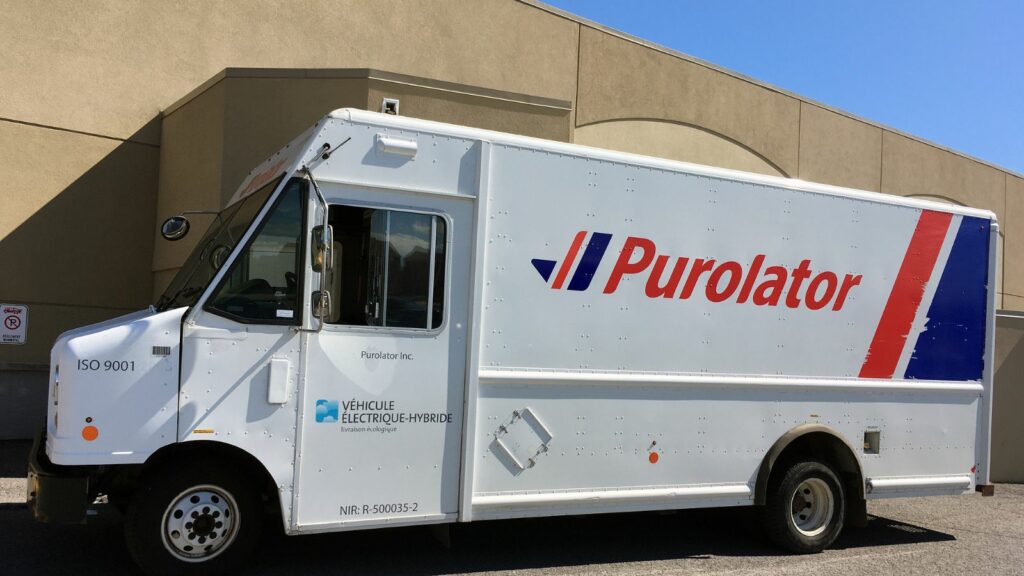
Purolator’s electric-delivery push has moved from pilot projects to a much larger presence on Canadian roads. The logistics company says it added 274 all-electric delivery trucks during 2025, taking its nationwide electric-vehicle fleet to more than 550 vehicles while expanding the charging network needed to keep them moving.
The numbers, released August 18 as part of Purolator’s 2025 sustainability results, show how quickly fleet electrification is becoming part of everyday parcel delivery. More than seven million packages were handled through all-electric last-mile operations during the year. Yet the expansion is only one stage of a much larger plan: Purolator ultimately wants 60 per cent of its last-mile delivery vehicles electrified by 2030, making the latest deployment both a milestone and a measure of how much work remains.
A 274-Truck Expansion Changes the Scale of the Fleet
Adding 274 electric delivery trucks in a single year represents a significant step up from Purolator’s earlier deployments. The company finished 2025 with more than 550 all-electric vehicles operating across Canada, meaning electric vehicles are increasingly becoming working assets rather than demonstration equipment. Purolator’s own environmental reporting says its electric fleet includes conventional last-mile trucks as well as smaller options such as e-bikes and low-speed electric vehicles suited to dense urban routes.
The change is particularly striking when compared with the previous year. Purolator reported procuring 150 all-electric last-mile delivery trucks during 2024. Earlier in its electrification program, vehicle deployments were counted in dozens rather than hundreds. For employees loading trucks at an electrified terminal, that transition is increasingly visible at the start of an ordinary shift: more routes can now leave the depot without burning gasoline or diesel during the final leg to homes and businesses.
The Charging Network Is Growing Alongside the Trucks
Electric delivery trucks are useful only when depots can reliably recharge them before the next morning’s routes. Purolator says it ended 2025 with more than 825 chargers installed at 17 sites across its network. Eight additional terminals received charging infrastructure during the year, illustrating how fleet electrification increasingly depends on construction, electrical upgrades and energy management as much as vehicle purchases.
That represents a large expansion from 2024, when Purolator reported installing more than 260 EV chargers. The operational challenge becomes particularly clear when dozens of trucks return to a depot within the same evening window. A case study involving Purolator’s charging-management provider found that coordinated charging at the Richmond, B.C., location reduced peak power demand from 355 kilowatts to 140 kilowatts across 60 chargers. The example shows why simply plugging every vehicle in immediately is not always the most economical way to run a large electric fleet.
Seven Million Packages Put the EVs to Work
Perhaps the most important number in Purolator’s update is not the size of the fleet but what those vehicles actually accomplished. The company says more than seven million packages were delivered through all-electric last-mile operations in 2025. That moves the conversation beyond how many electric trucks are parked at terminals and toward how deeply the technology is being integrated into normal courier work.
The growth has been rapid. In February 2025, Purolator celebrated passing two million packages delivered using electric vehicles and said it had deployed more than 200 all-electric delivery vehicles at 12 Canadian sites. By the end of the year, the cumulative operational footprint had expanded considerably. Last-mile delivery can be particularly well suited to electrification because many vehicles follow repeatable daily routes and return to a central depot, where charging can be planned overnight. For customers receiving a parcel, however, the transition may be almost invisible: the delivery still arrives at the door, only with no tailpipe exhaust from the vehicle making the stop.
Purolator Is Still Working Toward a Much Bigger 2030 Goal
The 550-plus EV fleet remains only one part of a far larger commitment announced in 2023. Purolator said it expected to invest approximately $1 billion over seven years to electrify its Canadian network, including the purchase of more than 3,500 fully electric last-mile vehicles and the electrification of more than 60 terminals. At the time, the company described the plan as the largest network investment in its history.
Its target is to electrify 60 per cent of last-mile delivery vehicles by 2030. Purolator’s updated environmental information places the 2025 electrification level at about 12 per cent, meaning substantial deployment remains ahead even after the latest additions. The company previously estimated that electrifying 60 per cent of the fleet could help cut approximately 80,000 tonnes of carbon-dioxide-equivalent emissions in 2030. That longer timeline matters because fleet replacement happens gradually: vehicles, charging equipment, electrical capacity and maintenance systems all have to advance together rather than through a single bulk purchase.
Electric Trucks Are Only Part of the Fuel Strategy
Purolator is not relying exclusively on battery-electric vehicles to reduce fuel-related emissions. Its 2025 results show that the company replaced more than five million litres of petroleum diesel with renewable diesel during the year. Its environmental reporting says renewable alternatives accounted for about 27 per cent of total diesel use, illustrating how lower-carbon fuels remain important while large portions of the fleet continue to use combustion engines.
Route planning is another piece of the strategy. Purolator says millions of kilometres have been removed from its network since its route-optimization program began, reducing unnecessary travel before considering which fuel powers the vehicle. That combination is important for a national logistics operator because not every route has identical requirements. A compact urban delivery route can be very different from long-distance freight movement or service in remote regions. The practical approach is therefore broader than simply replacing one diesel truck with one battery-powered truck; it also involves reducing kilometres, selecting appropriate vehicles and changing the energy used by equipment that has not yet been electrified.
New Vehicle Orders Suggest the Expansion Is Continuing
Purolator’s electric fleet is also evolving in terms of the vehicles themselves. Earlier phases included Ford E-Transit vans, BrightDrop Zevo 600 models and electric trucks using Motiv Power Systems technology. That mix allowed the company to test different body sizes and configurations against the wide range of routes required in Canadian parcel delivery, from dense urban neighbourhoods to larger commercial stops.
The next phase is already taking shape. Workhorse Group reported in 2026 that Purolator placed an order for 100 fully electric step vans, describing it as Purolator’s fourth order with the manufacturer over a multi-year period. Workhorse said deliveries were expected to be completed by the end of 2026 and that the order would double the number of Workhorse vehicles in Purolator’s fleet. The relationship also reflects consolidation in the commercial-EV sector: Workhorse completed its merger with Motiv Electric Trucks in December 2025. For Purolator, repeat orders suggest the electrification program is increasingly moving toward standardized fleet procurement rather than isolated experiments.
The Climate Case Is Particularly Relevant to Freight
Purolator’s expansion comes against a Canadian emissions profile in which transportation remains one of the country’s largest sources of greenhouse gases. Environment and Climate Change Canada reported that transportation produced 151 megatonnes of carbon-dioxide-equivalent emissions in 2024, representing 22 per cent of Canada’s national total. Freight transportation has been an especially persistent challenge as economic activity and goods movement have expanded.
Federal data show freight-related greenhouse-gas emissions increased 55 per cent between 1990 and 2024, while emissions from freight heavy-duty trucks rose 87 per cent. Separate Transport Canada information has noted that medium- and heavy-duty vehicles represented only about 9 per cent of on-road vehicles but accounted for roughly 26 per cent of transportation emissions in 2023. Purolator’s delivery vans and step trucks do not represent the entire freight sector, but replacing combustion vehicles on routes that operate almost every working day addresses a part of transportation where fuel consumption accumulates steadily over the life of a vehicle.
The Hard Part Is Turning a Milestone Into Routine Operations
The significance of 550 electric vehicles will ultimately depend less on the headline fleet count than on whether Purolator can operate them reliably through Canadian summers, winters and peak shipping periods. Large depot-based fleets create logistical questions involving charging schedules, electrical demand, maintenance training and matching battery range with daily workloads. Research into electric fleet management similarly emphasizes that charging infrastructure and scheduling must be planned together with vehicle deployment.
Purolator’s latest numbers suggest that this operational transition is becoming increasingly mature. The company says its 2025 Scope 1 and Scope 2 greenhouse-gas emissions were about 10 per cent below its 2020 baseline, while its current science-based target calls for an approximately 42 per cent reduction by 2030 and net-zero greenhouse-gas emissions across its value chain by 2050. The distance between those figures shows why the newest trucks should be viewed as progress rather than completion. The real test comes during thousands of ordinary mornings when charged vehicles have to leave their terminals on time and deliver millions more packages without disrupting the service customers already expect.
