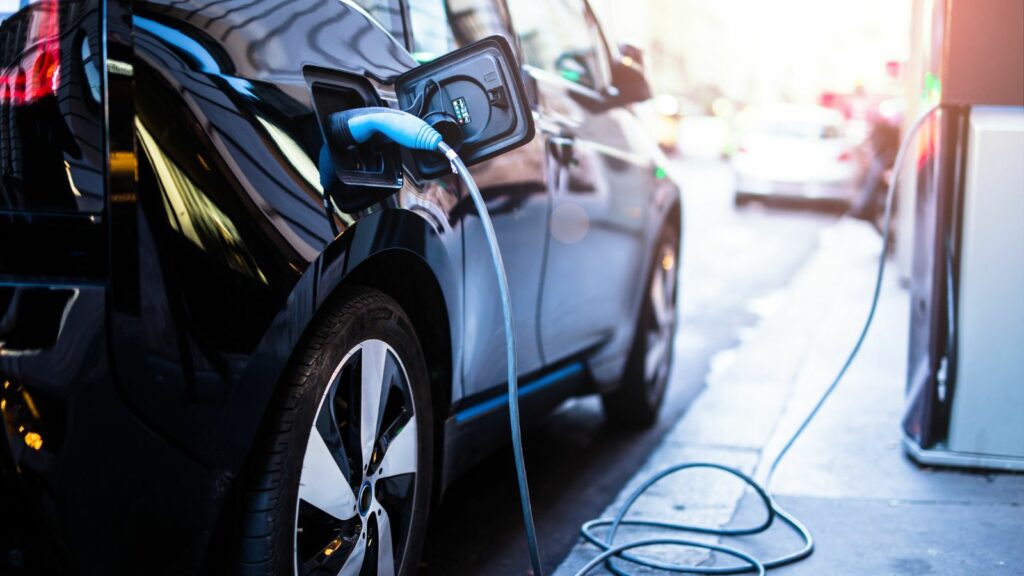
For many Toronto renters, the cost of keeping a car has become a second housing bill. A new partnership between Kite Mobility and Tricon Living is testing a different model: put shared electric vehicles and e-bikes directly inside apartment communities, where residents can book them when needed instead of owning one full time. The program launched August 18 at Maple House and Birch House in Canary Landing and is scheduled to expand to six more Tricon communities by October. Across the eight locations, the companies plan to deploy 15 electric vehicles and 32 e-bikes. The idea arrives as insurance, maintenance and other vehicle expenses remain elevated, giving the rollout a practical affordability angle as well as a climate one. In a dense city where parking, charging and ownership can all be costly, transportation is increasingly becoming part of the rental amenity package.
A Two-Building Launch Is Set to Grow Across Toronto
The first phase is deliberately concentrated. Maple House and Birch House, both in the Canary District near downtown Toronto, are the first Tricon Living communities to receive Kite Mobility hubs. Maple House residents are being offered shared EVs and e-bikes, while Birch House begins with shared EV access. The companies say six additional Tricon communities will join between August and October 2026.
When the expansion is complete, the network is expected to include 15 EVs and 32 e-bikes across eight apartment communities. That is a relatively small fleet compared with a citywide car-share operator, but the location strategy is the point: vehicles are stationed where people live. For a renter who needs a car for groceries, a family visit or a weekend outside the city, walking downstairs to a reservable vehicle can remove the extra trip to a rental counter or an off-site car-share zone. That convenience is the experiment.
Rising Ownership Costs Give the Program Its Financial Relevance
The timing matters because vehicle ownership is absorbing a large share of household budgets. Ratehub’s 2026 estimate puts the average cash cost of owning a car in Canada at about $1,373 a month, including financing, fuel, maintenance, parking, insurance and administrative costs. Its calculation is only an estimate and individual costs vary sharply, but the direction is clear: insurance and maintenance costs rose enough to offset savings elsewhere.
Statistics Canada provides a broader confirmation of that pressure. In the latest available CPI data, passenger-vehicle insurance premiums were 6% higher than a year earlier. That makes a shared vehicle attractive for a specific group: urban households that need occasional car access but do not drive enough to justify a payment, insurance policy, maintenance schedule and dedicated parking space. The financial comparison will differ by trip frequency, but avoiding fixed ownership costs changes the arithmetic before the first kilometre is driven. Overall.
The Car Is Becoming Another Apartment Amenity
Kite’s model turns transportation into something closer to a fitness room or co-working lounge: an amenity attached to the building rather than a privately owned asset. Its service is managed through an app that handles reservations, unlocking, trip extensions and payments. Kite says vehicles are available around the clock, with insurance included, while the Tricon partnership also includes charging and maintenance in the shared-vehicle model.
That arrangement shifts several chores away from the resident. There is no annual insurance renewal, tire-change appointment or search for a permanent parking stall tied to personal ownership. The resident pays when access is needed. Maple House already advertises resident parking, EV charging and car sharing among its transportation features, while Birch House sits near TTC service, dedicated bike lanes, the Distillery District and Corktown. In that setting, a shared EV can function as a backup mobility option rather than the default for every trip.
Birch House Shows What Shared EV Access Costs in Practice
Birch House offers the clearest picture of what shared EV access looks like in practice. At launch, Kite lists a Lexus RZ 450e electric SUV on the building’s P1 level, available through its app to drivers aged 23 or older with a valid licence. The vehicle is self-serve, can be reserved in advance or taken when available, and must be returned to the same Kite space and plugged back in.
Kite’s summer launch pricing at Birch House is promotional and can change, but it gives renters a useful benchmark. The posted pay-as-you-go rate is $0.24 a minute, or $14.40 for an hour, compared with a stated regular rate of $0.40 a minute. A promotional 24-hour reservation is listed at $77.99 before taxes and applicable fees. Insurance and charging at the home hub are included; charging at public stations during a trip is the user’s responsibility at the time of launch.
Apartment-Based Sharing Tackles a Major EV Charging Barrier
Putting shared EVs inside apartment buildings also sidesteps one of electrification’s persistent urban problems: not every resident controls a private driveway or charging outlet. Toronto’s EV planning recognizes multi-unit residential buildings as a critical part of the charging challenge, and the city has been expanding public and residential charging strategies as it works toward having 30% of registered vehicles electric by 2030.
A shared fleet changes the infrastructure equation. Instead of every household needing its own charger and parking space, multiple residents can use fewer professionally managed vehicles connected to dedicated hubs. That will not suit households that need a car every day. But for occasional drivers, it bundles vehicle access and home-base charging into one service. The model is particularly relevant in a city where 48.1% of private households were renters in the 2021 Census, making apartment-oriented transportation a sizeable market rather than a niche experiment in Toronto today.
Thirty-Two E-Bikes Make This More Than an EV Program
The 32 planned e-bikes matter because the program is not simply replacing gasoline cars with electric cars. Toronto’s climate strategy calls for 75% of school and work trips under five kilometres to be made by walking, cycling or transit by 2030. The city says transportation accounts for 33% of local greenhouse-gas emissions, with personal vehicles producing 70% of transportation emissions.
That mix of modes is significant. An e-bike can handle a short commute, appointment or errand without occupying a car, while a shared EV remains available for longer trips, heavy loads or passengers. At Maple House, that combination is being placed in a neighbourhood connected to TTC streetcar service, bike routes and pedestrian links. The test is whether residents choose the smallest mode that fits the trip. If they do, the mobility hub could reduce ownership pressure and unnecessary car use rather than simply shifting drivers into a different powertrain.
Car-Sharing Research Supports the Idea, With Important Limits
Research on car sharing gives the Toronto experiment support, but it also argues for caution. A Vancouver study of 3,405 car-share users found that households using one-way and two-way services reported lower vehicle ownership after joining. Users of the two-way Modo service showed the larger change, with average household vehicle holdings falling from 0.68 to 0.36 in the study sample. That matters because building-based systems resemble scheduled, return-to-base access more than free-floating car sharing.
Environmental results are less automatic. A life-cycle assessment covering car-sharing users in the Netherlands, San Francisco and Calgary estimated annual mobility-related greenhouse-gas reductions of 3% to 18%, below some earlier estimates once rebound effects were included. Sharing works best when it prevents a vehicle purchase or reduces driving. If a shared EV mainly replaces transit, cycling or walking trips, the climate benefit can shrink even though the vehicle itself produces no tailpipe emissions in urban neighbourhoods.
Toronto’s Planning Direction Makes the Eight-Community Test Worth Watching
Toronto’s policy direction makes this kind of building-level mobility service worth watching. City Council removed most minimum automobile-parking requirements for new development in 2021, with the automobile rules taking effect in February 2022. TransformTO also calls for less dependence on private vehicles, more short trips by active transportation and transit, and a much larger share of electric vehicles. Shared fleets preserve occasional car access without requiring every household to own one.
The next test is scale and utilization. Kite and Tricon have disclosed the fleet total and an August-to-October rollout window, but the initial announcement does not name the six additional communities or provide system-wide usage targets. Pricing can vary by hub and promotional period. Those details will help determine whether the service becomes a meaningful ownership substitute or remains a premium convenience. The key measure may be simple: whether reliable access downstairs makes one fewer privately owned car practical.
