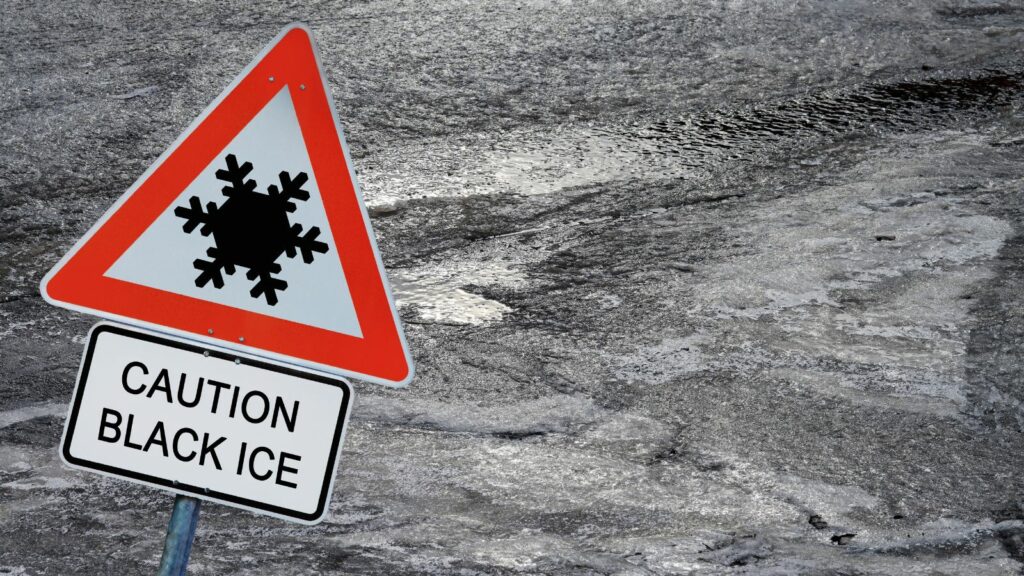
Winter parking often looks harmless compared with driving on a snow-covered highway. Speeds are lower, distances are shorter, and most vehicles are already close to stopping. Yet those same conditions can create a false sense of security. Parking lots combine slick pavement, pedestrians, reversing vehicles, hidden obstacles, snow-removal equipment and restricted sight lines in a relatively small space.
Cold weather adds problems that are easy to overlook, from falling tire pressure to blocked cameras and exhaust pipes. Snow can erase markings, build blind corners and conceal surfaces that were clear only hours earlier. These 18 winter parking hazards show why the last few metres of a trip can demand just as much attention as the road that came before them.
Black Ice Can Hide in Plain Sight
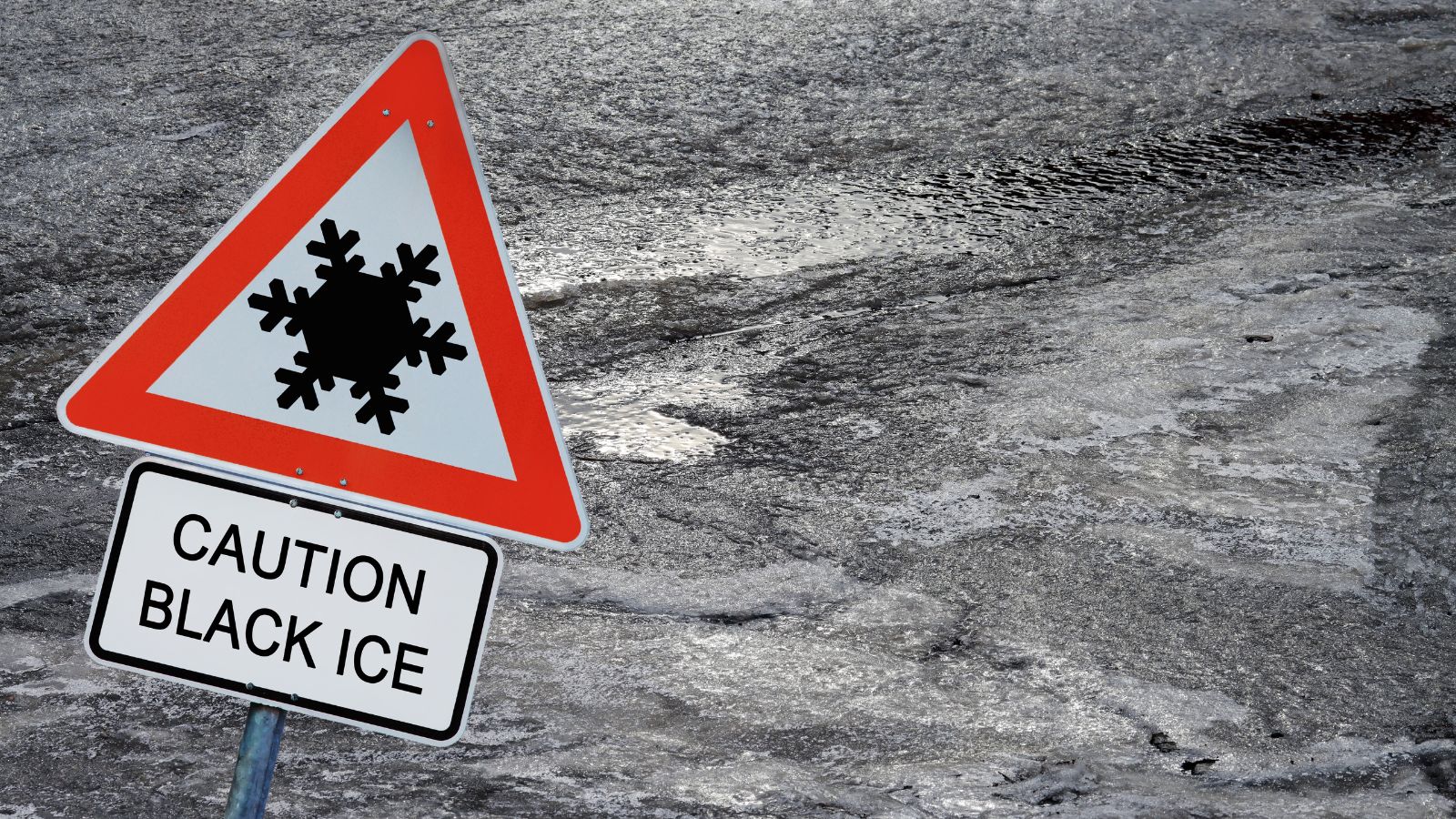
Black ice is particularly troublesome in parking areas because it does not necessarily look dangerous. Instead of appearing white or frosted, the thin layer can remain nearly transparent, allowing dark asphalt to show through. A driver entering a parking lot may therefore see what appears to be ordinary wet pavement and brake, accelerate or turn normally. The surprise comes when the tires suddenly have far less grip than expected. Government winter-safety guidance warns that black ice can be difficult to see even when general visibility is otherwise good.
Parking lots can make the problem feel more deceptive because speeds are low. A driver may assume there is plenty of room to stop before a pedestrian, shopping-cart corral or parked vehicle. Once traction disappears, however, even a modest amount of momentum matters. Early mornings are particularly worth treating cautiously because melted snow can refreeze overnight as temperatures fall. Shaded areas can also remain icy after nearby pavement has improved, leaving a patchwork of grip levels across the same lot.
Packed Snow Can Become Almost as Slippery as Ice
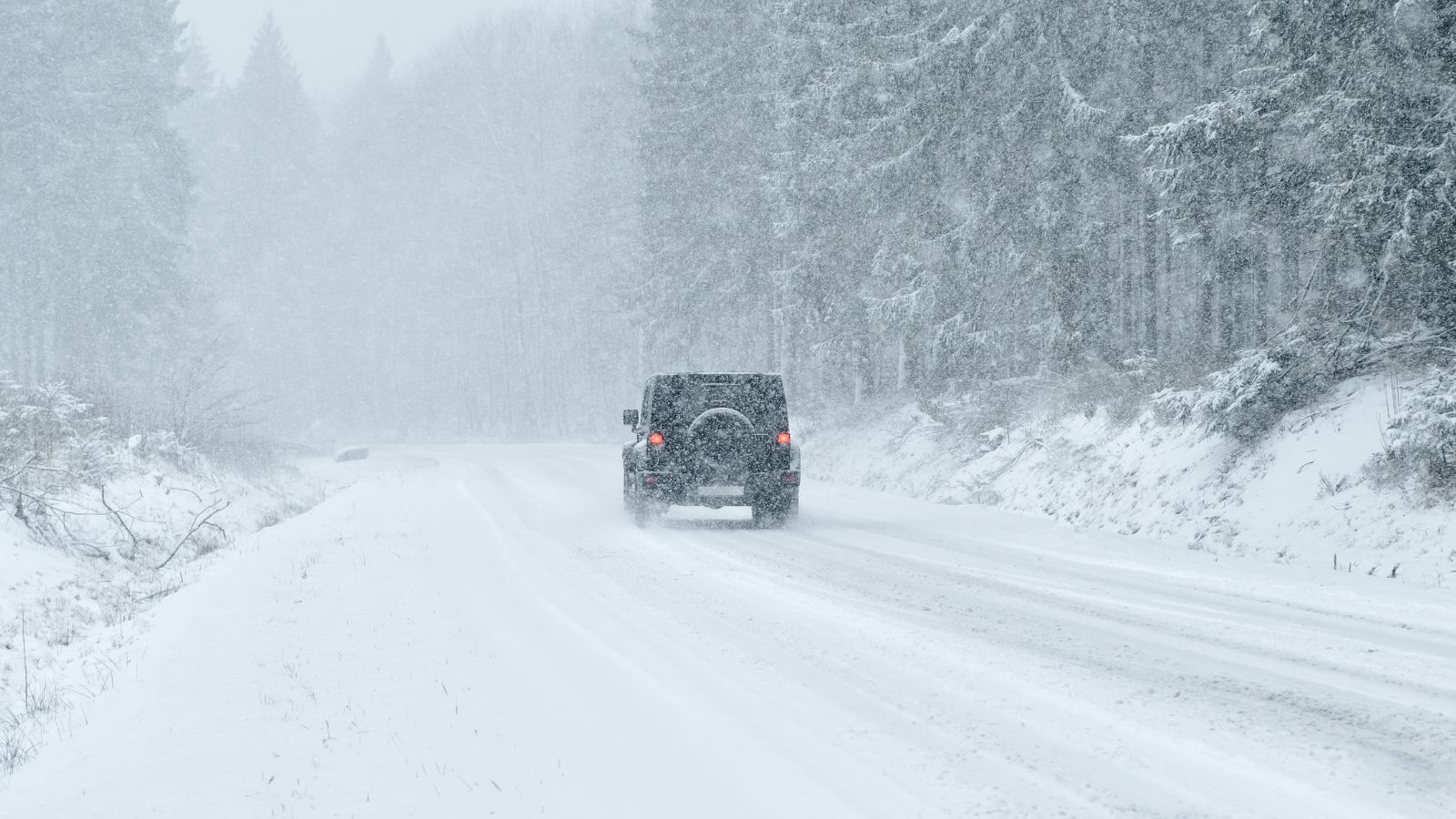
Fresh, loose snow looks like the obvious winter hazard, but repeated vehicle traffic can transform it. Tires compress snow into a dense, polished layer, particularly near entrances, stop signs, payment gates and heavily used parking rows. Ontario’s driver guidance notes that hard-packed snow can be slippery like ice. That distinction matters because a lot that has technically been plowed may still provide far less traction than its mostly white surface suggests.
The effects become noticeable during ordinary parking manoeuvres. A vehicle may understeer while turning sharply into a stall, spin its wheels while climbing a slight ramp or continue sliding after the brakes are applied. Ruts can complicate matters further by pulling tires away from the path the driver intended. In a busy supermarket or workplace lot, those small deviations can put a bumper unexpectedly close to another car or push a vehicle into a pedestrian route. Clearing loose snowfall is therefore only part of the winter-parking problem; the condition of the remaining surface matters just as much.
Snowbanks Can Turn Ordinary Corners Into Blind Intersections
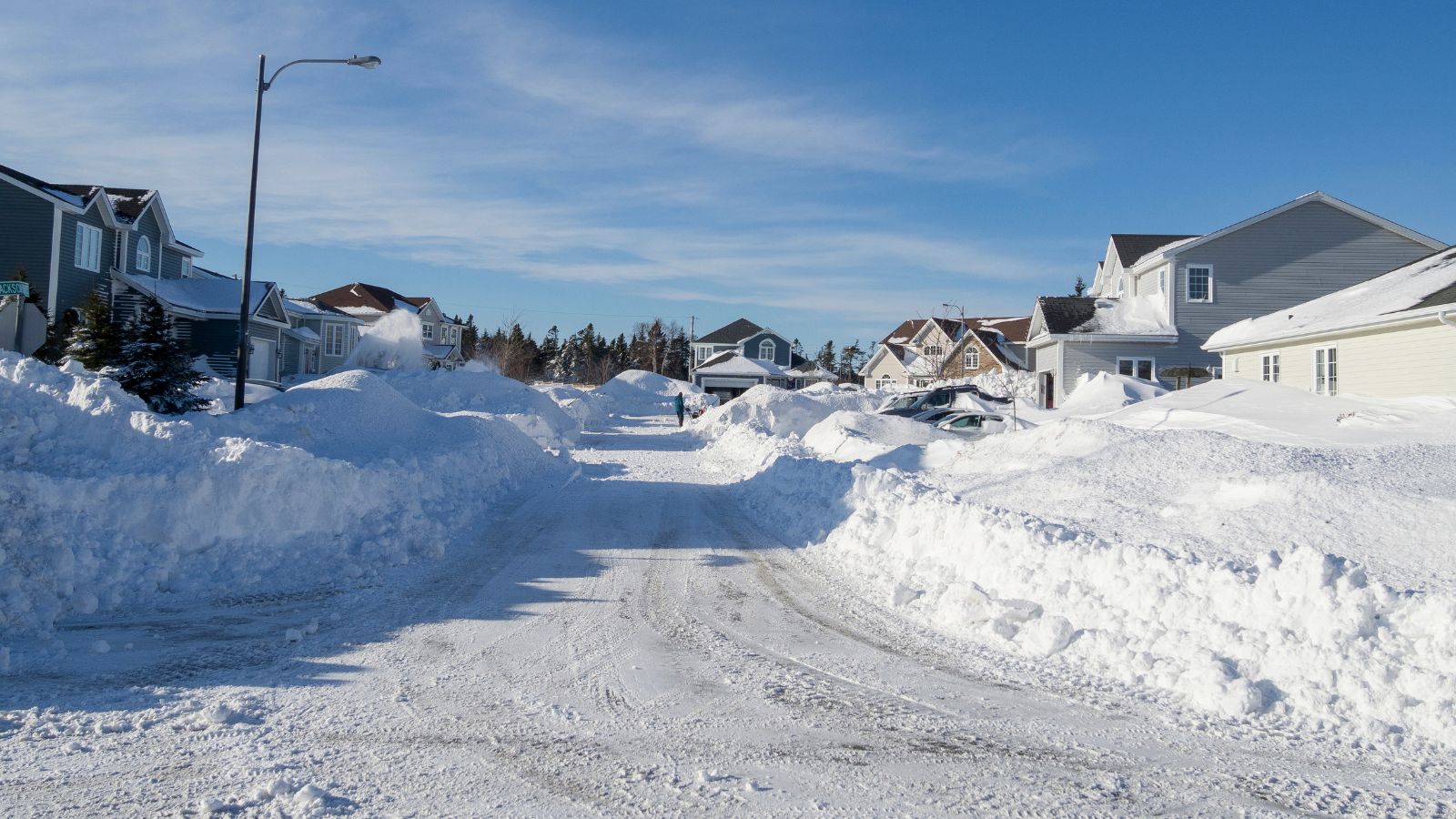
A large snow pile may seem like an unavoidable consequence of clearing a parking lot, but its location can fundamentally change how traffic moves. Snowbanks beside exits, internal intersections and pedestrian routes can block the view between drivers and people approaching from the other side. Transportation agencies have specifically warned about high snowbanks creating blind spots at intersections, while Canadian facility guidance stresses keeping snow from becoming a visual obstruction.
The danger is particularly easy to underestimate when a familiar lot has been used hundreds of times before. A driver may approach the same exit at the same speed, only to discover that a pile created by the latest storm now hides cross-traffic. Pedestrians can disappear behind it as well, especially children and anyone using a mobility device. Drivers sometimes inch farther into an aisle simply to obtain a view, which can place the front of the vehicle directly in the path of someone else. After major snowfall, familiar parking layouts effectively need to be treated as changed environments until sight lines are clear again.
Snow Can Erase the Visual Rules of a Parking Lot
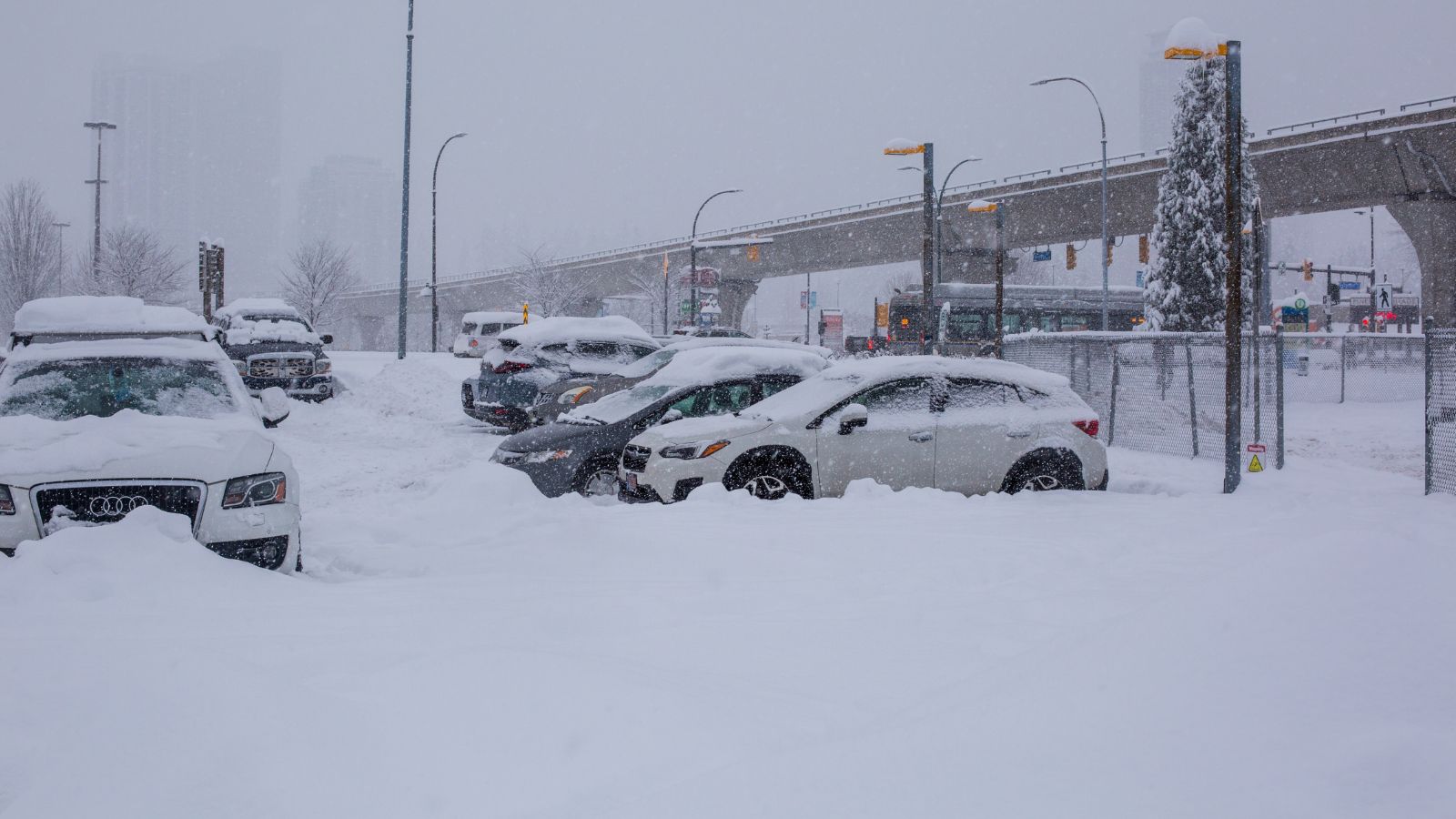
Painted lines quietly organize nearly everything that happens in a parking area. They define stalls, travel aisles, pedestrian crossings, accessible spaces and no-parking zones. Snow and ice can obscure those markings, removing many of the visual cues drivers normally use to position a vehicle. Federal transportation guidance in the United States explicitly recognizes snow as a condition capable of obscuring pavement markings, while parking-safety guidance identifies wheel stops and other raised features as potential trip hazards.
Once the markings disappear, small errors can spread throughout a lot. One vehicle parked at an unusual angle may influence several others, narrowing an aisle or forcing cars closer together. Snow can also conceal curbs, islands and concrete wheel stops until a tire or bumper makes contact. What appears to be an open patch of white pavement may actually contain a raised edge. This is one reason reflective stakes and other winter markers are commonly used around fixed obstacles: snow changes not only traction but also the driver’s ability to understand the shape of the space.
Backing Out Is Already Risky Before Winter Makes It Worse
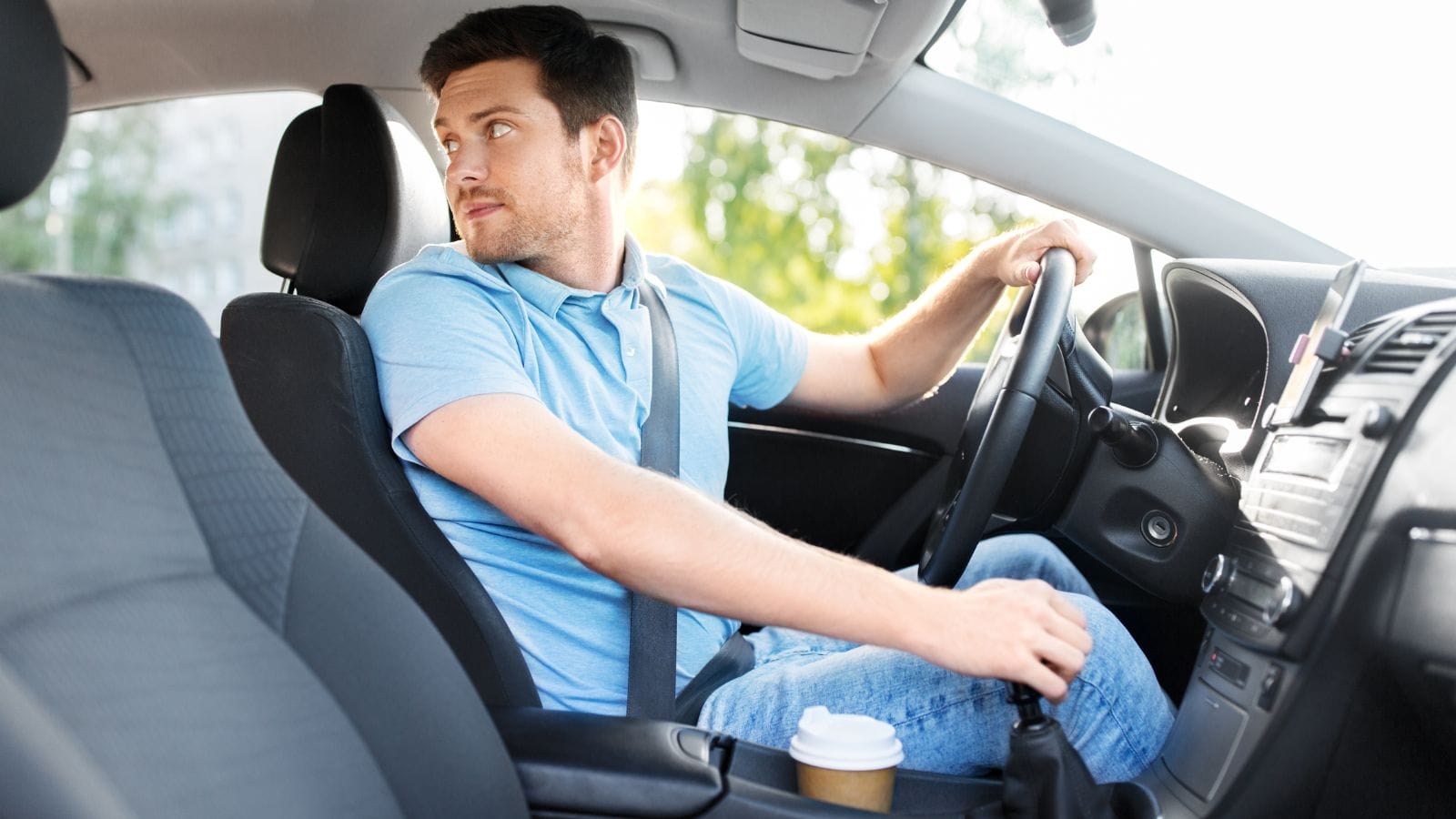
Reversing from a parking stall requires a driver to monitor several directions almost simultaneously. Cross-traffic may be approaching from either side while pedestrians move behind the vehicle and neighbouring parked cars restrict the view. Insurance Institute for Highway Safety research illustrates the scale of the problem: based on U.S. data, backover crashes cause hundreds of deaths and thousands of injuries annually, and parking areas account for a substantial share of those injuries.
Winter adds more uncertainty. A vehicle may be parked between snow-covered SUVs, sight lines may be reduced by piled snow, and stopping grip can be worse than when the vehicle entered the space. A pedestrian can also take an unexpected route around an icy patch instead of walking in a straight line. Rearview technology helps—IIHS research has found measurable reductions in backing crashes among vehicles equipped with camera and braking technologies—but it does not eliminate the need to reverse slowly and check mirrors, surroundings and the camera display together.
Snow and Ice Can Undermine Parking Cameras and Sensors
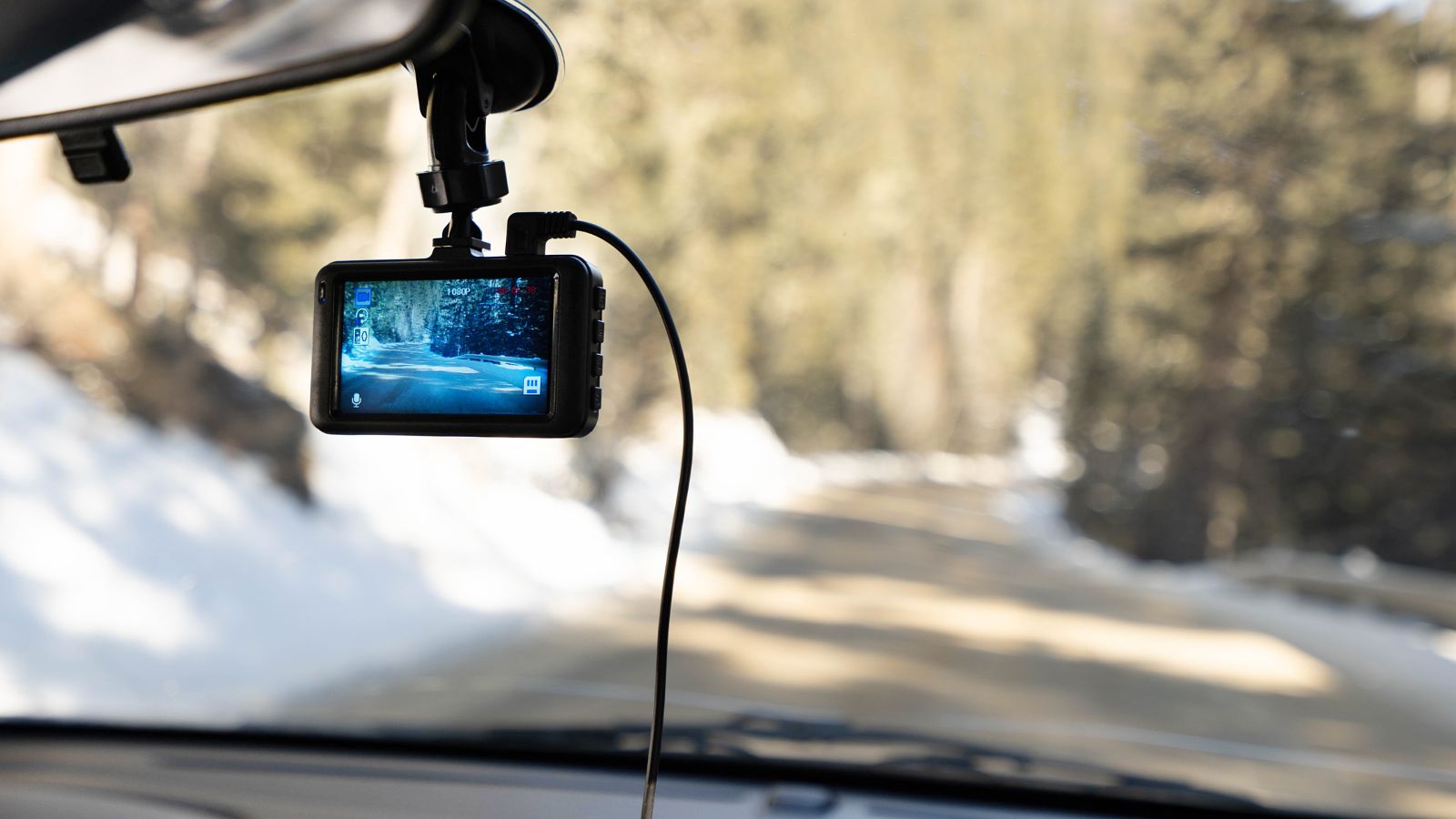
Modern vehicles can create the impression that parking has become almost automated. Rear cameras, 360-degree displays, ultrasonic parking sensors and automatic braking systems can provide valuable assistance. Those systems still depend on hardware exposed to the weather, however. Transport Canada warns that dirt, darkness, glare and other environmental conditions can make camera images harder to use. Manufacturer technical information filed with U.S. safety regulators also documents cases in which ice or snow covering rear sensors can interfere with reverse automatic-braking operation.
The limitation is easy to miss because the equipment may work perfectly on the drive to a destination and become obstructed while the vehicle is parked. Road spray can freeze onto a camera lens, while snow accumulating on a bumper can cover sensors. The driver returns, selects reverse and sees a cloudy image or receives confusing warnings. The safest response is not to assume the electronics will compensate. A quick check that cameras, mirrors, lights and sensor areas are clear can restore information that winter weather quietly removed while the car was sitting still.
Cold Weather Can Lower Tire Pressure While the Car Sits
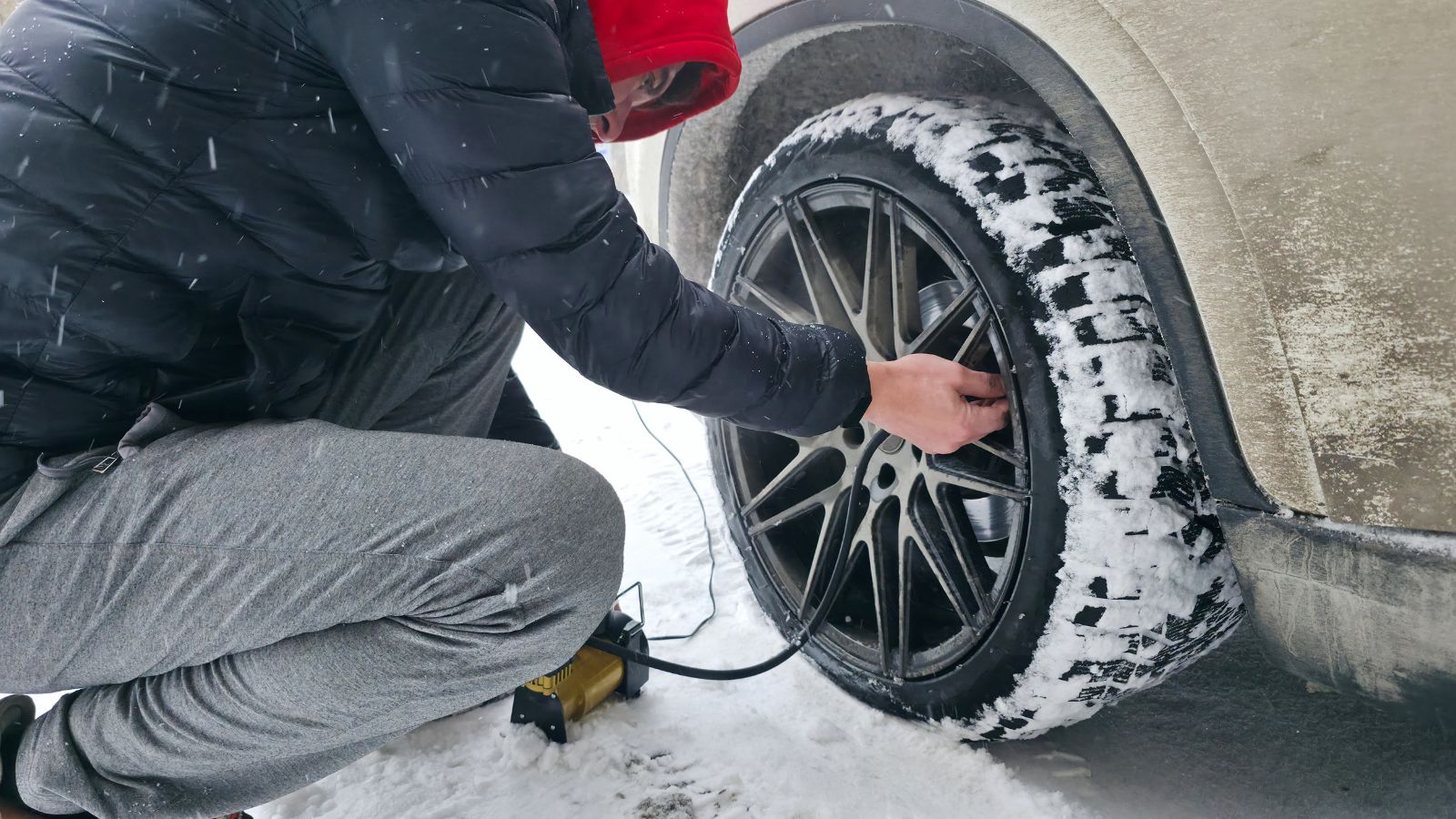
A parked vehicle can change even though it has not moved. Tire pressure falls as temperature drops, which is why both Transport Canada and the U.S. National Highway Traffic Safety Administration advise checking inflation during cold weather. The recommended pressure should be taken from the vehicle’s placard or owner’s information rather than the maximum figure printed on the tire sidewall.
That matters in winter because tires already have a difficult job. They must generate traction on cold pavement, packed snow, slush and ice while also steering and braking through tight parking manoeuvres. A driver who leaves work after a major temperature drop may therefore be operating on lower pressures than those measured during milder weather. The dashboard tire-pressure warning can be the first clue. Correct inflation cannot make an icy parking lot safe, but it helps the tire perform as designed. Ignoring winter pressure changes adds another variable at precisely the time when predictable tire behaviour is most valuable.
The Wrong Tires Become More Noticeable at Parking-Lot Speeds
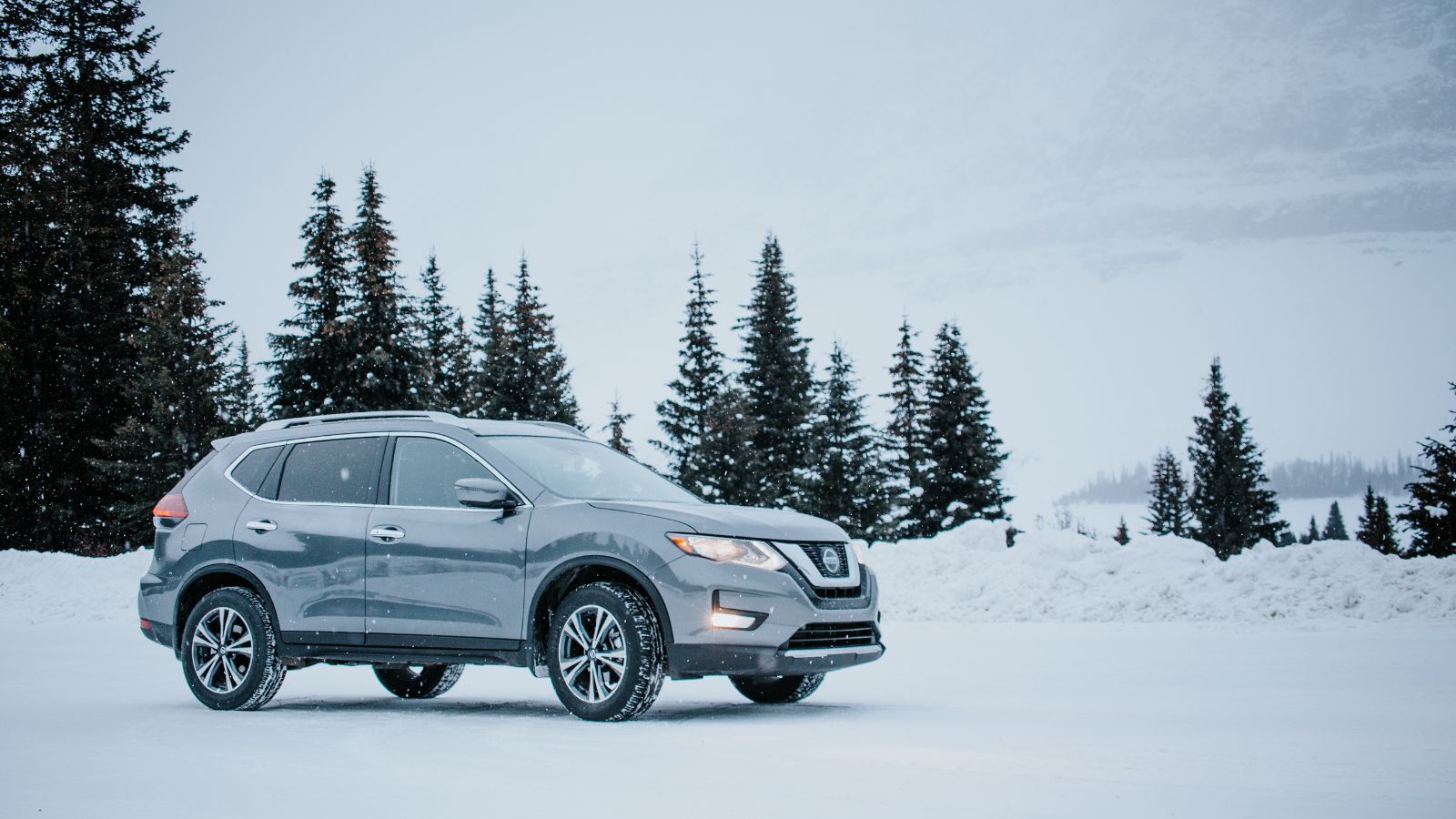
Winter-tire discussions often focus on highway travel, but traction differences also matter during the low-speed turns and stops required for parking. Transport Canada advises that below about 7°C, all-season and summer tire compounds begin losing elasticity, while winter tires remain flexible at much lower temperatures. Winter tires carrying the three-peak mountain snowflake symbol also meet specified performance requirements for severe snow conditions.
A parking lot can expose those differences quickly. Pulling away from a stop may produce wheelspin, while turning into a tight stall on packed snow can ask more of the front tires than expected. A slight slope leading out of an underground garage can become another test of available grip. Winter tires do not repeal the physics of ice, and drivers can still slide with them fitted. Their advantage is that they are designed specifically for the temperatures and surfaces encountered during winter. Using appropriate tires on all four wheels also helps preserve balanced handling rather than giving one axle substantially different grip from the other.
“Only 10 km/h” Can Still Be Too Fast for the Available Grip
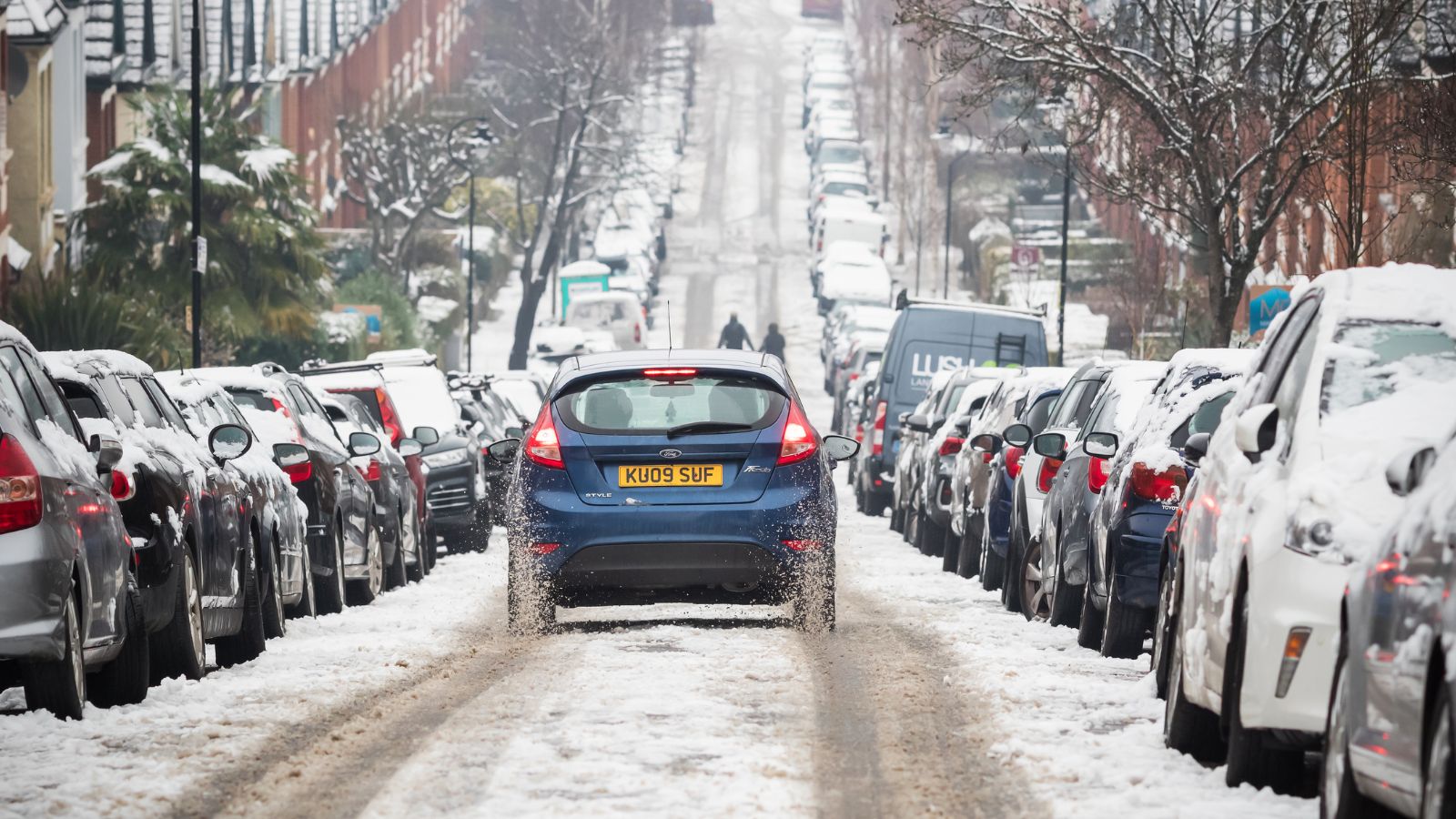
Parking lots encourage low speeds, but low speed should not be confused with unlimited stopping ability. Transport Canada emphasizes that stopping takes longer on slippery surfaces and advises leaving more room than usual. Snow and ice reduce the friction available between the tire and pavement, meaning the vehicle may continue moving even after the driver has reacted and applied the brakes.
That becomes important because parking-lot gaps are often tiny. A driver may have only a few metres between the vehicle and a pedestrian crossing the aisle, a car reversing from another stall or a concrete barrier ahead. Sudden braking can also contribute to a skid when grip is limited. The practical winter adjustment is therefore larger than simply obeying a posted parking-lot speed. Drivers need to enter turns more gently, leave bigger margins and avoid sharp accelerator, brake and steering inputs. A pace that feels excessively cautious on dry July pavement can be entirely appropriate when polished snow is covering the same asphalt in January.
Pedestrians Become More Vulnerable in the Winter Lot
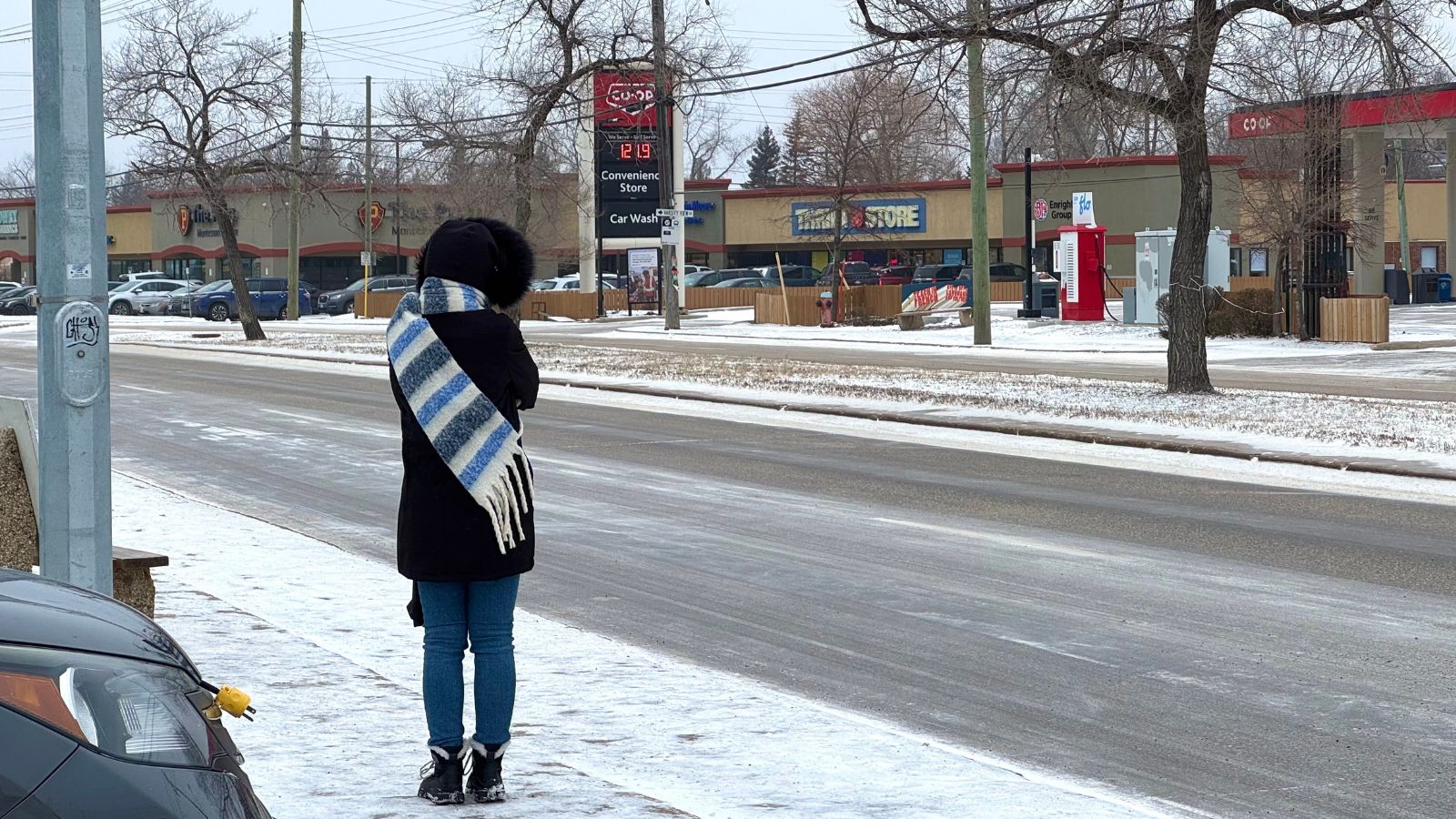
Parking lots already mix pedestrians and vehicles in ways that produce frequent conflicts. British Columbia’s road-safety guidance describes parking lots as environments with complex interactions among road users and emphasizes unobstructed sight lines and separation between pedestrians and vehicles. Winter can weaken both protections. Snowbanks block views, snow can cover crosswalk markings, and people may change direction unexpectedly to avoid ice, puddles or unshovelled areas.
Low light makes the challenge more serious. IIHS research has found that pedestrian crash-prevention technology performs differently in darkness, particularly on roads without street lighting, illustrating how difficult nighttime detection can be even for modern systems. Human drivers face the same visibility environment. Dark coats, falling snow and glare can make a person harder to distinguish from the background. Meanwhile, pedestrians may be concentrating on where they place each foot rather than watching traffic. A driver crossing a winter lot should therefore expect people to appear from behind parked vehicles or snow piles and allow considerably more space around walking routes.
Snowplows and Loaders Need Far More Space Than Cars
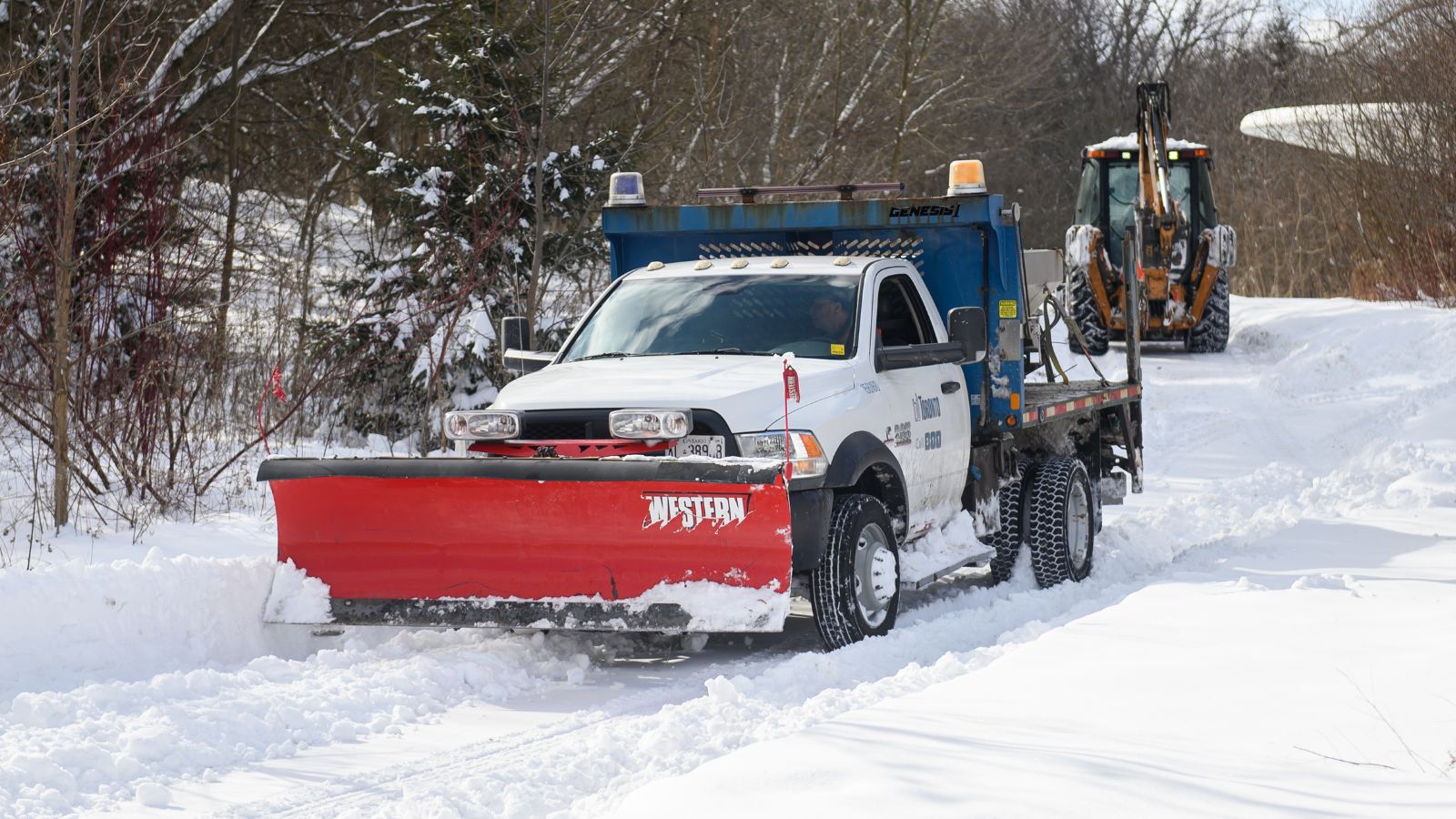
A parking lot being cleared can briefly become a work site filled with heavy machinery. Plow trucks, front-end loaders and other snow-removal vehicles may stop frequently, reverse, swing wide and move piles from one part of the property to another. Government winter-driving guidance warns drivers to remain well back from working snowplows because visibility can be reduced and the vehicles make wide movements. Municipal safety guidance similarly notes that snow-removal equipment has substantial blind spots.
The situation becomes especially awkward when customers or employees continue using the lot while clearing is underway. A driver may try to squeeze past a plow that appears stationary without realizing the operator is preparing to reverse or reposition a blade. Pedestrians can be even more difficult for equipment operators to see near large piles. Giving crews extra space is therefore more than courtesy. It acknowledges that these machines operate differently from passenger vehicles and that their operators are simultaneously managing traction, snow placement, surrounding traffic and equipment extending beyond the width drivers may expect.
Snow Left on the Car Can Create a New Hazard
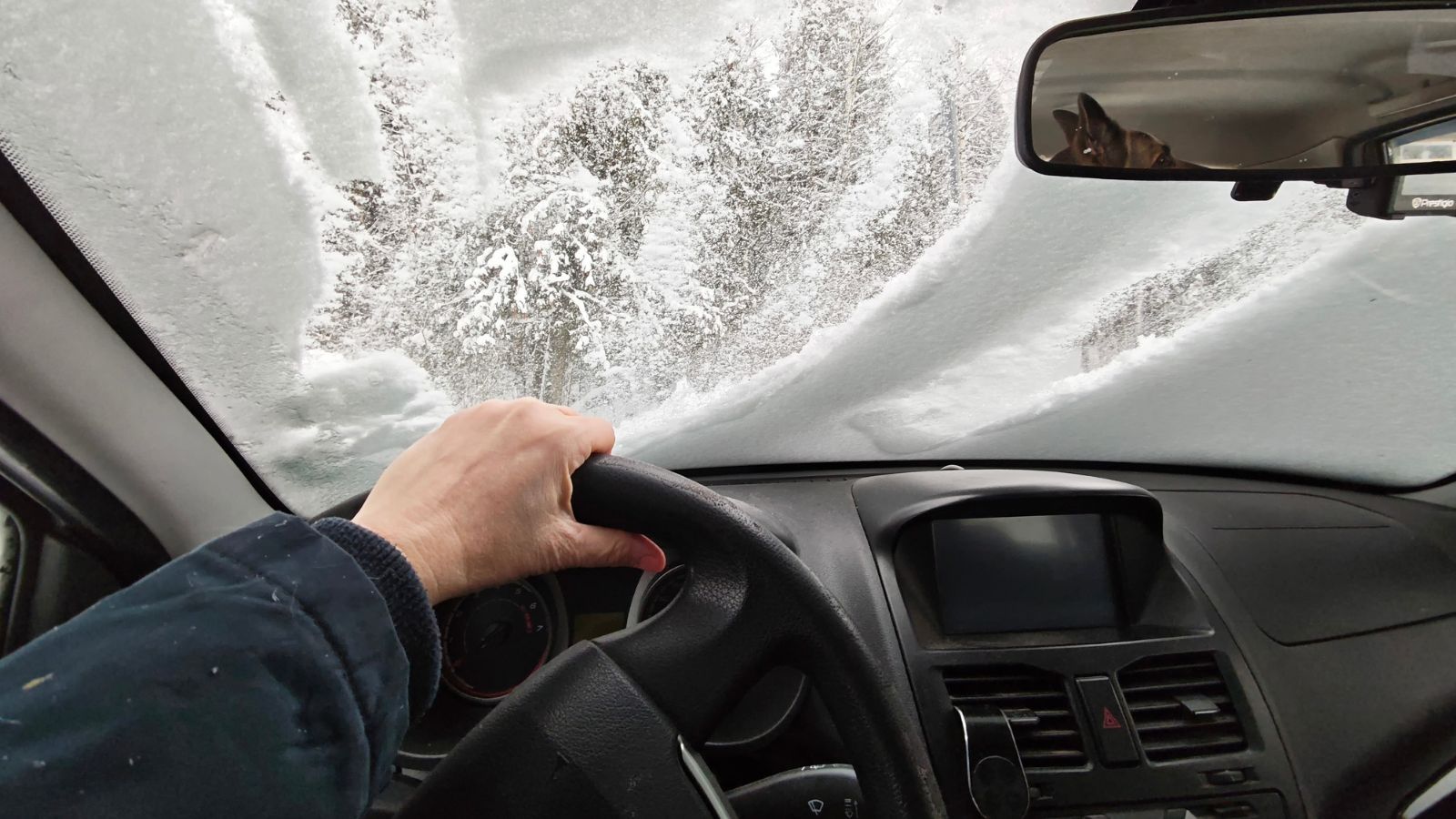
Clearing only a small opening in the windshield may save several minutes, but it removes much of the driver’s field of view before the vehicle even moves. Transport Canada recommends removing snow from the hood, roof, windows and lights and clearing windows of frost and fog. Snow left on the roof can slide forward onto the windshield during braking or come off toward another vehicle once speed increases.
Parking areas are where incomplete clearing can become immediately noticeable. Side windows may still be frosted when the driver needs to look for cross-traffic while reversing. Snow covering headlamps, tail lamps or indicators can make the vehicle less conspicuous to other drivers and pedestrians. A mound on the hood can further reduce the view of low objects directly ahead. The vehicle may technically be capable of moving, but that does not mean it is ready to be manoeuvred safely. A thorough clearing restores the visibility that vehicle designers assumed would be available to the driver.
Frosted Mirrors and Windows Create Dangerous Little Blind Zones
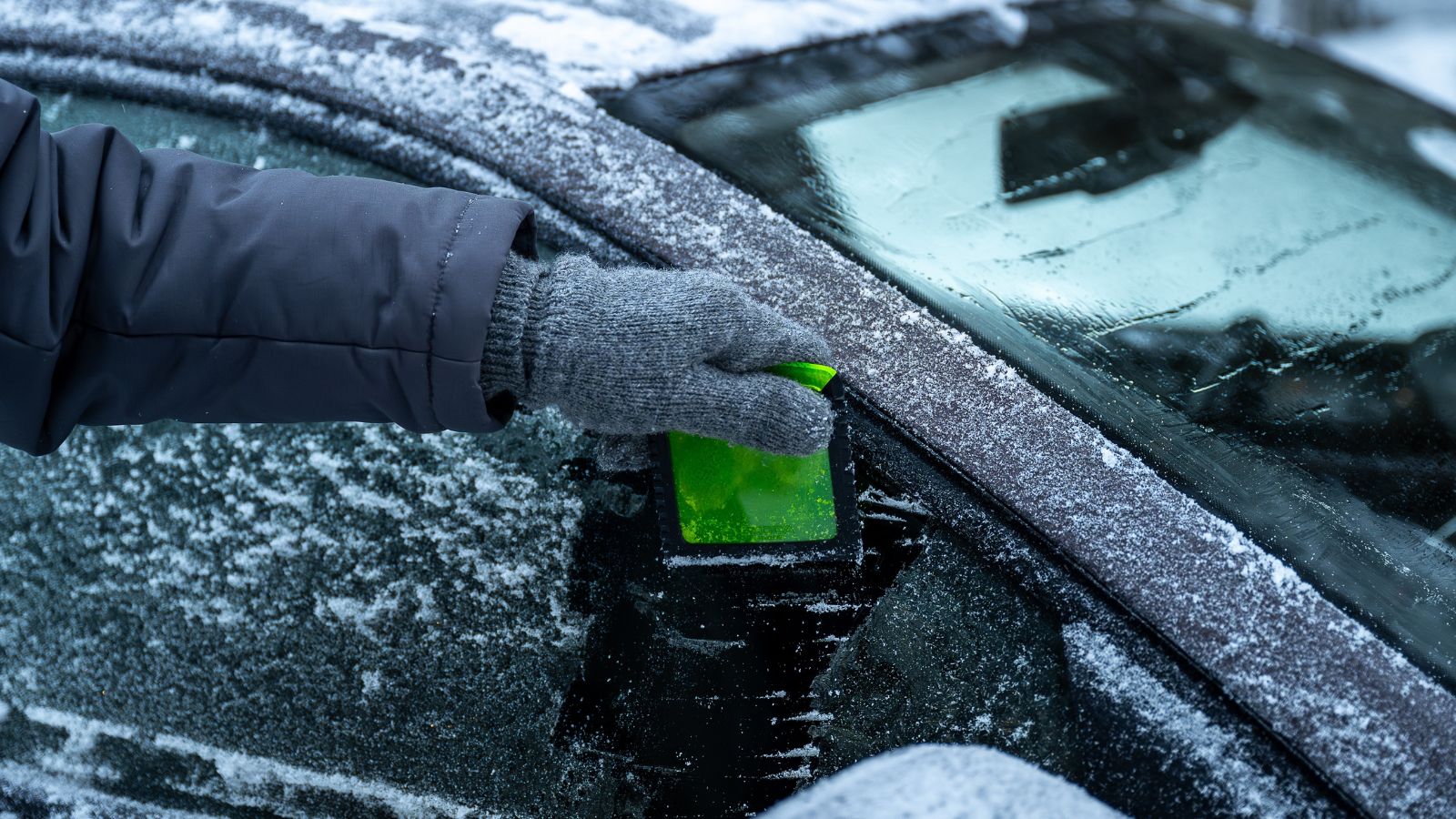
Winter visibility problems do not always involve a completely iced-over windshield. A thin layer of frost on a side window, fog along its lower edge or snow clinging to a mirror can remove precisely the small patch of vision needed during parking. NHTSA recommends ensuring that defrosters, windshield wipers and winter washer systems are functioning, while Canadian guidance stresses clearing windows, mirrors and lights before setting off.
The inconvenience of waiting for glass to clear can tempt drivers to begin moving early, especially during a rushed morning. Parking manoeuvres, however, demand unusually frequent checks to the sides and rear. A partially obscured driver’s window can make it harder to judge clearance beside a pillar or parked vehicle. A frosted passenger-side mirror can hide a pedestrian approaching from behind. Rear-window fogging can push the driver into relying almost entirely on the backup camera. Each problem may seem minor on its own, but together they can strip away several independent ways of detecting the same hazard.
A Snow-Blocked Tailpipe Can Make Idling Dangerous
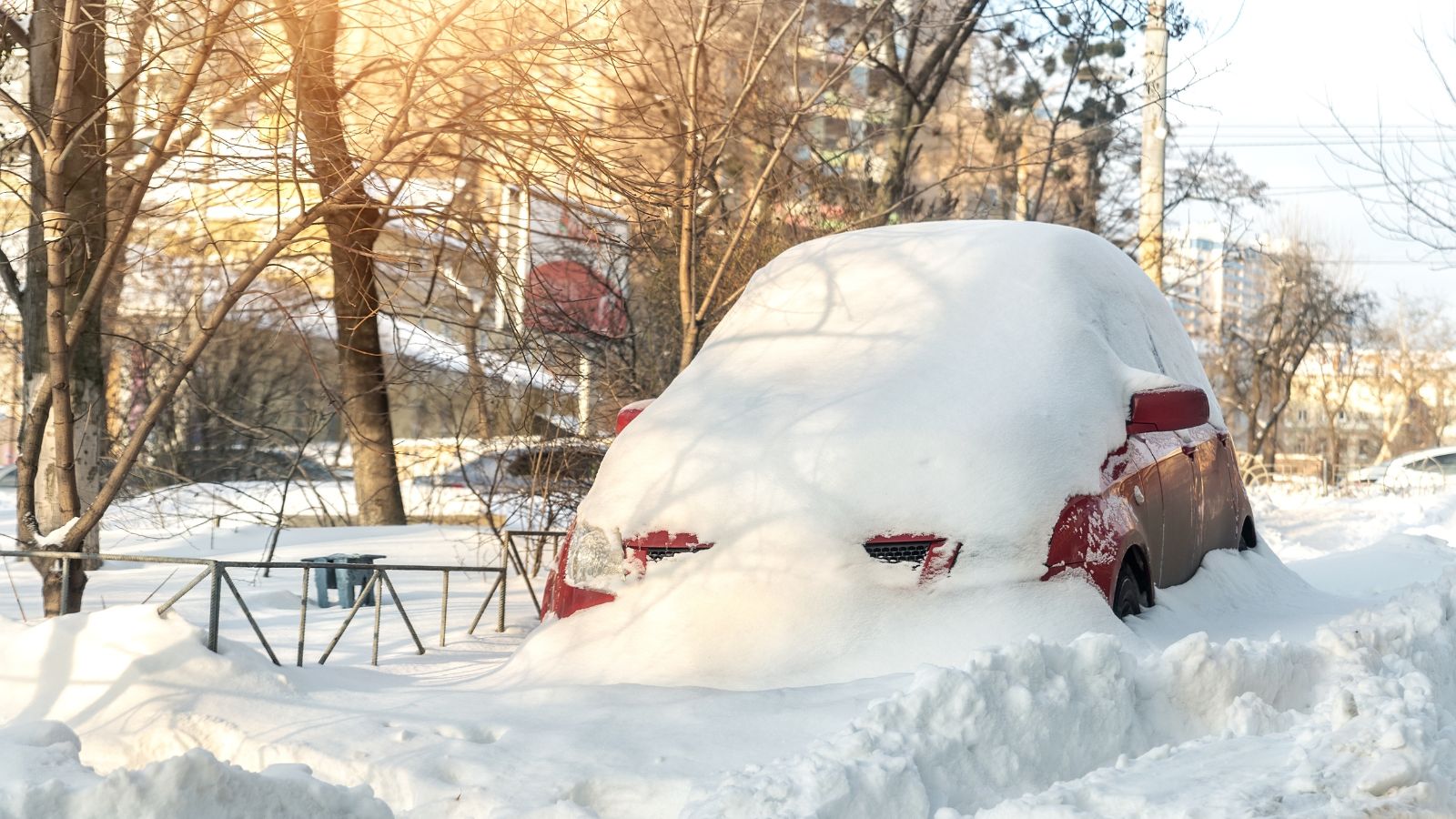
Deep snow around a parked vehicle creates a risk that has nothing to do with traction. If snow blocks the exhaust outlet while an engine is running, exhaust gases may accumulate around or enter the vehicle. Transport Canada specifically instructs motorists who become trapped in snow to keep the tailpipe clear as a protection against carbon monoxide exposure and to limit engine use.
The same principle matters when a parked car has been buried by a plow or surrounded by drifting snow. Someone may start the engine to warm the cabin and begin brushing off the vehicle without noticing that the tailpipe is packed in. Carbon monoxide is particularly dangerous because it cannot be reliably detected by human senses. Before prolonged idling in deep snow, checking the exhaust area is therefore an important precaution. The risk is uncommon compared with slipping or minor parking collisions, but its potential consequences are far more serious, making it one of winter parking’s most easily overlooked hazards.
Warming a Car Inside a Garage Can Create a Carbon Monoxide Hazard
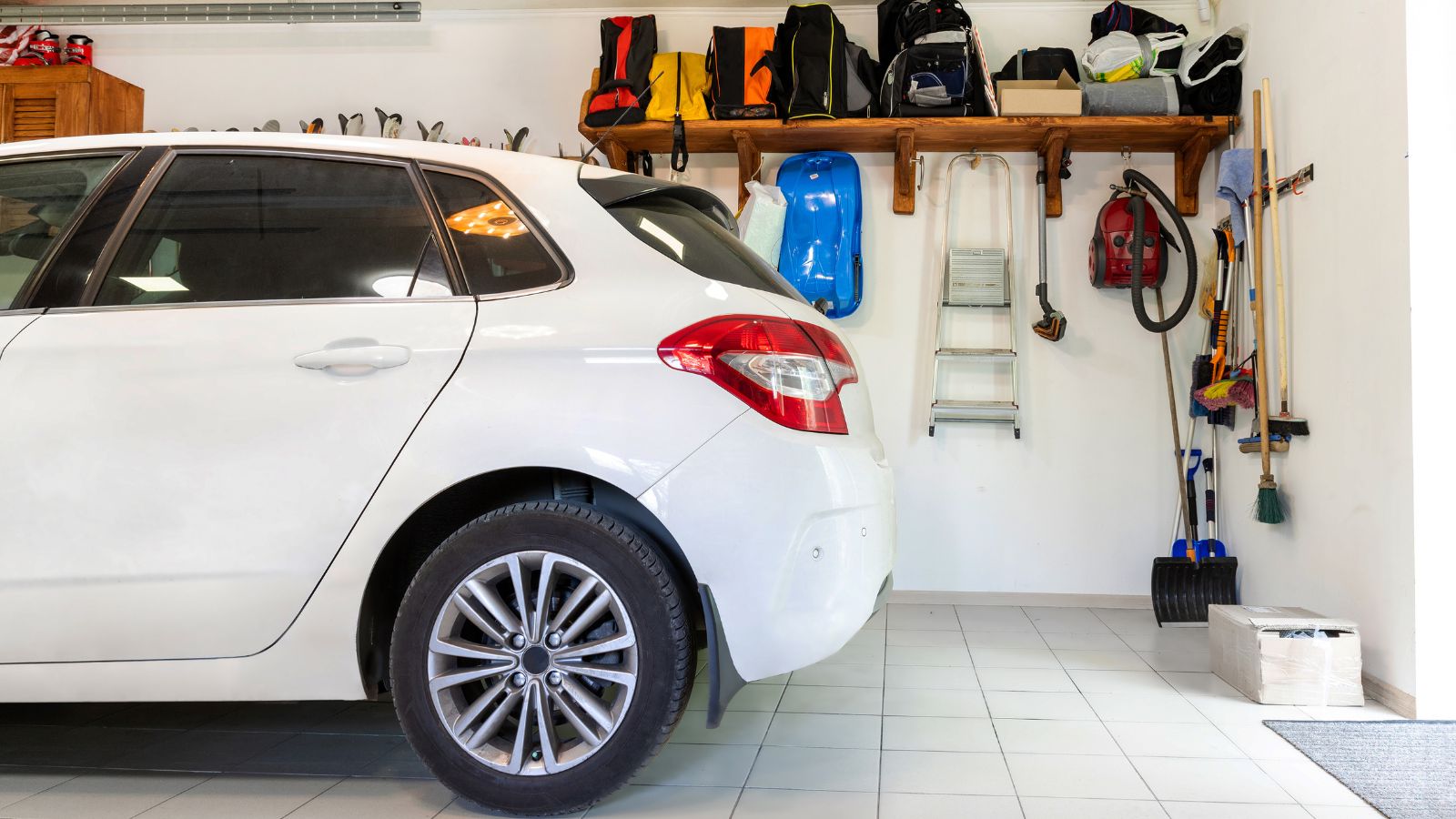
Cold mornings can make warming a vehicle seem reasonable, but the location matters enormously. Health Canada advises people not to idle vehicles in a garage even when the garage door is open. The U.S. Centers for Disease Control and Prevention gives similar guidance, warning against running a vehicle inside an attached garage and explaining that carbon monoxide from combustion can build up in enclosed or partially enclosed spaces.
The risk extends beyond the person sitting in the car. Exhaust from an attached garage can migrate toward living areas, particularly through doors and other openings. That makes the familiar routine of starting a car, turning on the heater and returning indoors potentially hazardous. Electric vehicles do not produce tailpipe carbon monoxide, but gasoline and diesel engines do, and conventional hybrids may start their engines automatically under some conditions. Winter comfort is not worth turning the parking area into an exhaust chamber. Outdoor operation with a clear tailpipe and adequate ventilation is fundamentally different from letting an engine run inside a garage.
Sometimes the Most Dangerous Part Comes After the Car Stops
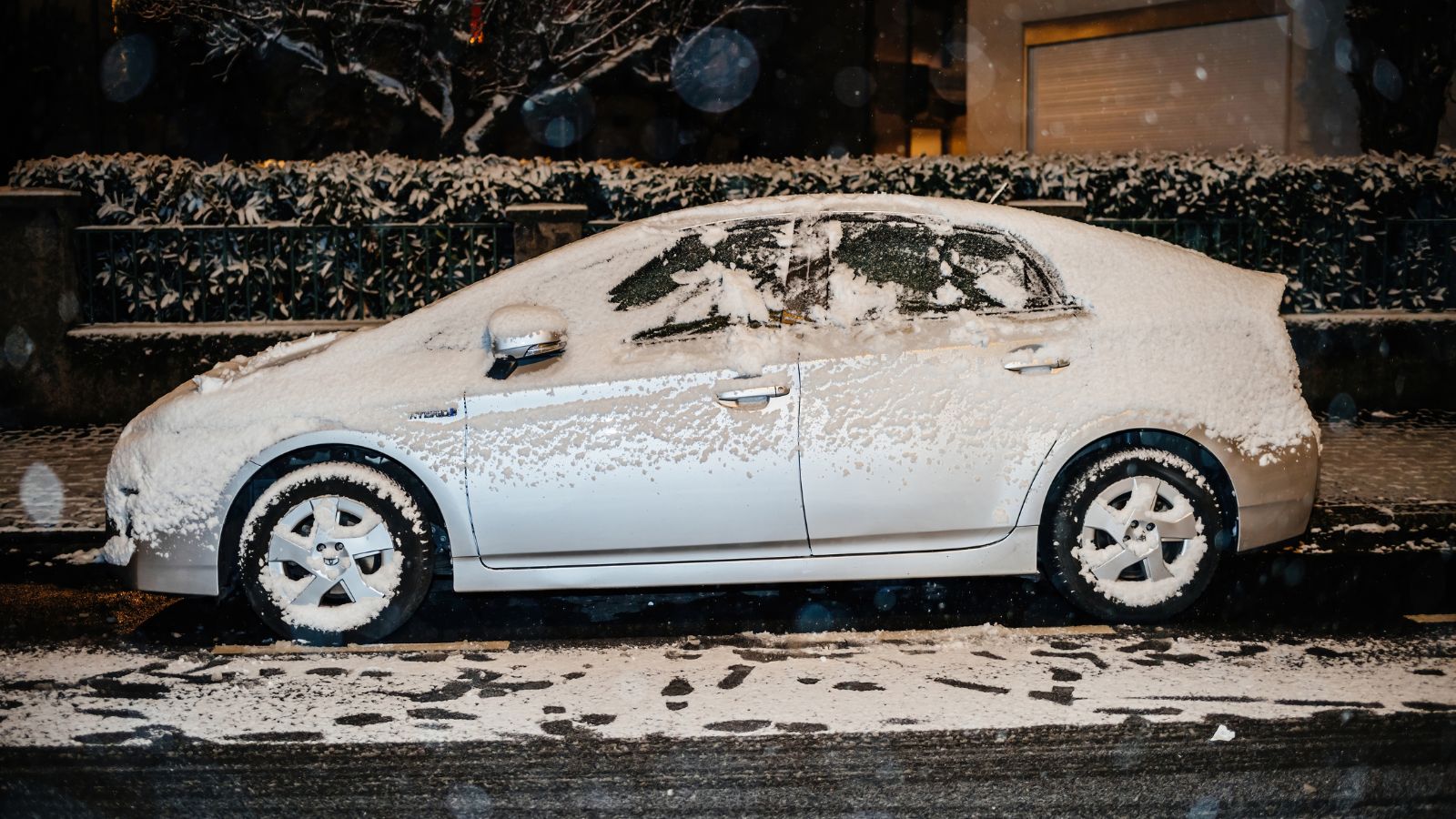
Parking successfully does not end the winter hazard. The moment an occupant steps onto an icy surface, the risk changes from a vehicle-control problem to a fall problem. The Canadian Centre for Occupational Health and Safety identifies slips and trips as major hazards in parking lots and notes that severe weather can aggravate surface defects. U.S. workplace-safety guidance similarly recommends prompt snow and ice removal and footwear with good traction.
Getting out of a vehicle can make a slippery surface particularly awkward. One foot lands on the pavement while the other remains inside, leaving the body in an uneven position. Snow may also conceal a pothole, curb or wheel stop beside the door. Carrying bags or trying to avoid touching a dirty vehicle reduces the ability to recover balance. Real-world safety investigations have documented serious injuries from falls on snow and ice in parking lots. Choosing a cleared walking route and checking the ground before stepping out can therefore be as important as choosing the parking stall itself.
A Cleared Parking Lot Can Freeze Again Hours Later
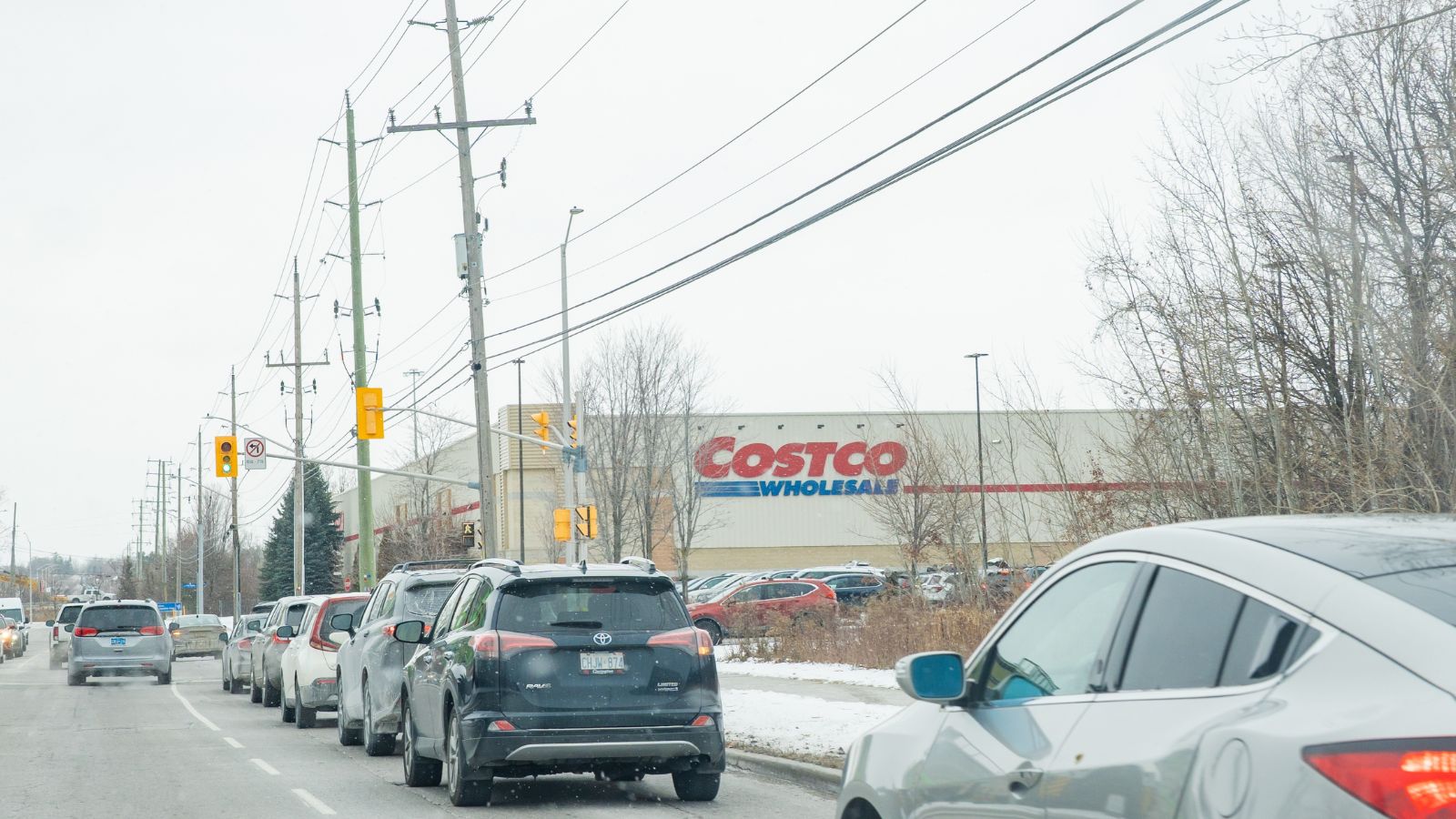
A lot that looks safe in the afternoon may not remain that way after sunset. Snow piled around its edges can melt when temperatures rise or sunlight reaches it, sending water across pavement and into low spots. If the temperature later falls below freezing, that moisture can form a new layer of ice. The U.S. National Weather Service specifically identifies overnight refreezing of melted snow as a common way black ice develops.
This melt-and-refreeze process explains why winter parking conditions can deteriorate without any new snowfall. A driver may arrive on wet but manageable pavement and return several hours later to find slick patches near drains, snow piles or shaded sections of the lot. Repeated cycles can also produce uneven ice that is difficult for pedestrians to recognize. Maintenance crews use drainage, de-icing and anti-icing strategies partly because plowing alone cannot control every stage of the process. For motorists, the practical lesson is simple: the condition encountered on arrival says very little about what the same parking space will feel like later.
Darkness, Glare and Blowing Snow Can Combine at the Worst Moment
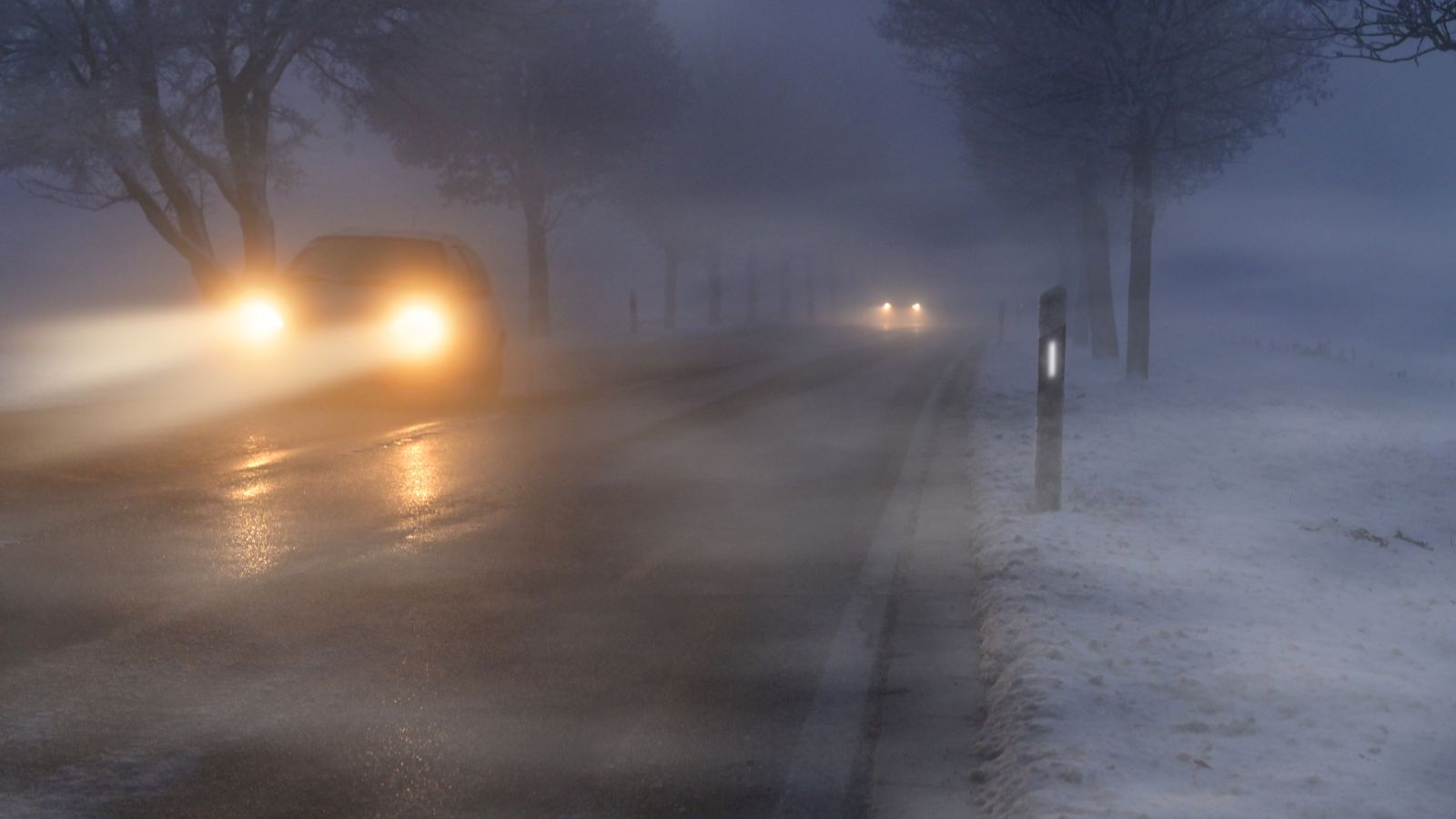
Winter parking often happens under compromised lighting. Shorter daylight hours mean morning commutes may begin before sunrise and evening errands can end in darkness. Falling or blowing snow adds another layer of visual clutter. Ontario’s driver handbook warns that snow and poor weather reduce how far ahead motorists can see, while Transport Canada notes that high beams can reflect from snow and make obstacles harder to distinguish.
Glare can come from several directions at once. Headlights reflect from wet pavement and snow, low winter sun can sit close to the horizon, and bright lighting around stores or garages can contrast sharply with dark corners of the lot. A windshield carrying salt residue or condensation can scatter that light even further. Parking requires judging small distances and noticing subtle movement, so reduced contrast matters. Clean glass, functioning exterior lights, slower movement and extra scanning time help compensate. Winter does not need a blizzard to make parking difficult; several modest visibility problems arriving together can be enough.
19 Used Cars Canadians Should Avoid in 2026 (Based on Owner Complaints)

Buying a used car in Canada can feel safe until repair bills start stacking up. Owner complaints tell a different story than glossy listings. Transmission failures, electrical problems, and weak winter reliability show up again and again in consumer reports. Many of these issues appear after warranties expire, when owners least expect them. Some vehicles look affordable upfront, but become expensive to keep on the road. Others struggle in cold weather, urban driving, or long highway commutes. Here are 19 used cars Canadians should avoid in 2026 (based on owner complaints).
19 Used Cars Canadians Should Avoid in 2026 (Based on Owner Complaints)

Alanna Rosen is an experienced content writer that focuses on many EV and educational content. Her articles are regularly published on Get CyberTrucked and syndicated on large publications.