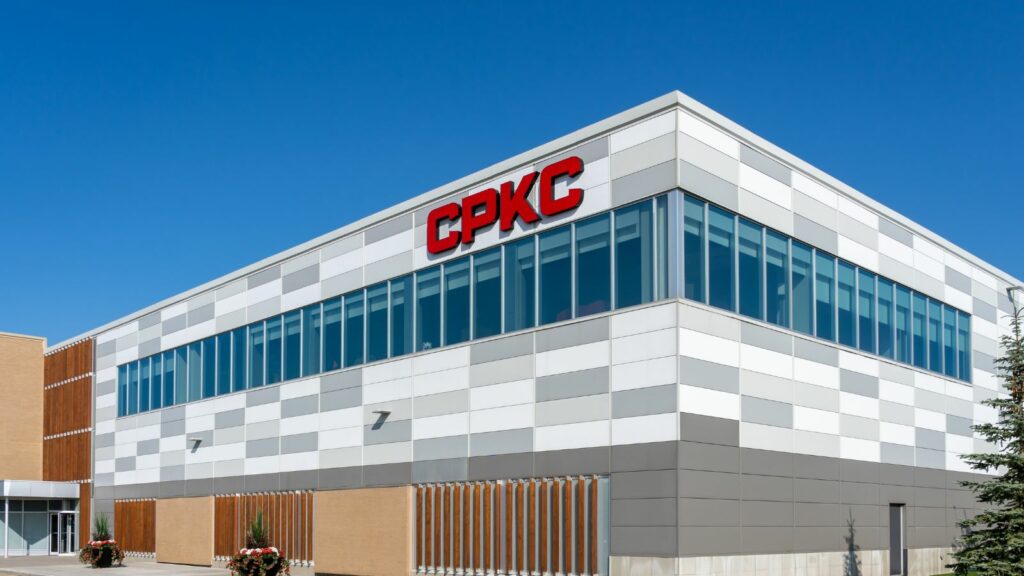
A labour dispute that had lingered over one of North America’s most important freight corridors is coming to an end. Canadian Pacific Kansas City and the union representing roughly 300 Canadian signals and communications workers agreed on August 21 to resolve their outstanding contract dispute through binding arbitration, ending a strike that began May 31. Employees are expected back at work on Monday, August 24. The railway continued operating during the job action through contingency measures, so this was not a restart from a systemwide shutdown. For Canadian automakers, however, the settlement removes a persistent source of operational uncertainty at a difficult moment. CPKC sits inside a tightly connected continental automotive network, while manufacturers are simultaneously confronting U.S. tariffs, shifting production strategies and pressure to make their supply chains more resilient.
Binding Arbitration Ends a Strike That Lasted Nearly Three Months
CPKC announced late on August 21 that the International Brotherhood of Electrical Workers’ Canadian Signals and Communications System Council No. 11 had agreed to binding arbitration, bringing the strike to an end after nearly three months. The union represents about 300 CPKC signals and communications employees across Canada, with workers operating from Vancouver to Montreal. The strike had started at 8 a.m. Mountain time on May 31 after a 72-hour notice expired without a negotiated settlement. According to subsequent reporting by The Canadian Press, the employees’ previous contract had expired in May 2025, and federally mandated conciliation and mediation had failed to produce a replacement agreement. Workers are scheduled to begin returning on the morning of August 24.
Binding arbitration changes the immediate dynamics considerably. Rather than continuing a strike while bargaining remains unresolved, the outstanding terms can now be put before an arbitrator for a final determination. The Canada Labour Code explicitly allows employers and bargaining agents to agree to refer matters concerning the renewal or revision of a collective agreement for final and binding determination; such an agreement suspends the right to strike or lock out and commits the parties to implementing the result. That means the contractual disagreement itself is not magically erased, but the avenue for resolving it changes. For customers relying on CPKC, including manufacturers moving components and completed vehicles, the practical benefit is greater certainty that this particular dispute will no longer remain an open-ended labour risk.
The Workers Behind the Dispute Perform Safety-Sensitive Jobs
A workforce of roughly 300 people can sound small beside a railway employing around 20,000 people across North America, but the jobs involved are unusually specialized. IBEW says its CPKC members install, maintain, test and repair railway signalling and communications systems from Vancouver to Montreal. These are systems that help control movements, communicate operating information and keep rail infrastructure functioning safely. The union described the work as highly skilled and safety-sensitive, while its broader statements emphasized the need to maintain signalling and communications infrastructure around the clock. In practice, a problem with critical railway technology can require a technician to respond outside ordinary office hours, which helps explain why scheduling and on-call obligations became prominent bargaining issues.
The strike was backed by a 96 per cent mandate from participating union members. IBEW identified wages, expenses employees incur while performing their jobs, recruitment and retention, and work-life balance associated with extensive on-call obligations and demanding schedules as core concerns. The union also said experienced employees had been leaving for other railway employers offering stronger compensation or quality of life. CPKC took a different view of its compensation proposals, saying it had offered wage and benefit increases consistent with agreements covering its other Canadian unions. Those disagreements ultimately survived months of bargaining and federal conciliation. Arbitration does not decide which side’s earlier characterization was correct; it provides a mechanism for settling the unresolved terms without extending the strike.
CPKC Kept Trains Moving, but That Did Not Eliminate the Risk
The distinction between this dispute and a full railway shutdown matters. CPKC said from the outset that it had implemented contingency plans capable of maintaining Canadian railway operations and repeatedly stated that safe and efficient rail service continued after the May 31 walkout. There is no evidence that the signals strike produced the kind of nationwide freight stoppage experienced during the much broader CPKC labour disruption in August 2024. That makes it inaccurate to portray the August 2026 agreement as the reopening of a railway that had been closed for months. Freight customers continued to receive service while the strike was underway, even as the regular signals workforce remained off the job.
The concern was instead what a prolonged labour dispute could mean for resilience, staffing and the possibility of further complications. Manufacturers generally value predictability almost as much as speed because transportation plans are built around known arrival windows, available railcars and coordinated handoffs. Canada has already seen what happens when a major railway actually stops. In August 2024, CPKC’s Canadian network was halted during a separate Teamsters dispute. After service resumed, the company warned that its rail network could take several weeks to recover and that broader supply chains could require even longer to stabilize. The 2026 dispute never reached that scale, but ending it removes one pathway through which additional disruption could have developed.
CPKC Sits Directly Inside North America’s Automotive Network
CPKC’s importance to automakers extends far beyond simply hauling freight between two Canadian cities. The company describes itself as the only single-line railway connecting Canada, the United States and Mexico, with approximately 20,000 route miles and connections to major ports and inland markets. Its automotive network is especially significant. CPKC says it has access to 25 automotive production plants across North America and can reach a market of about 200 million consumers in Canada, Mexico and the U.S. Midwest. In Mexico, the railway says it serves more than 90 per cent of automotive assembly plants, either directly or through its automotive distribution infrastructure and railway connections.
That geography has become more valuable as vehicle production has been reorganized across the continent. A vehicle assembled in Ontario can contain parts manufactured in the United States or Mexico, while Mexican plants may feed vehicles into Canadian distribution yards. CPKC’s network links production areas with markets including Chicago, Houston, Kansas City and major Canadian centres, as well as ports providing connections beyond North America. For an automaker, the transportation chain therefore does not end at the factory gate. Finished vehicles must reach distribution compounds and dealerships, while engines, transmissions, metals and other inputs have to arrive in sequence. Stability on the railway is one part of keeping that sprawling manufacturing system synchronized.
Rail Remains a Significant Part of Canada’s Automotive Supply Chain
Official transportation statistics underline how much automotive freight still moves on steel wheels. Transport Canada recorded approximately 4.95 million tonnes of automotive vehicles and equipment in Canadian rail traffic in 2024 when domestic, import and export movements are combined. That included roughly 1.63 million tonnes categorized as exports, about 1.92 million tonnes of imports and approximately 1.40 million tonnes moving domestically. The numbers represent far more than finished cars parked on multilevel railcars. The broader automotive freight category reflects the physical flow surrounding an industry whose factories and suppliers are concentrated in a handful of manufacturing corridors where transportation reliability affects inventories, production scheduling and ultimately deliveries to customers.
Canada’s exposure is magnified by the auto sector’s extraordinary dependence on the U.S. market. The federal government said in February 2026 that more than 90 per cent of Canadian-made vehicles and about 60 per cent of Canadian-made auto parts were being exported to the United States. Canada produced more than 1.2 million passenger vehicles in 2025, while Statistics Canada has calculated that U.S. demand accounted for 76.4 per cent of output and payroll jobs in automobile and light-duty motor vehicle manufacturing in 2024. Against that backdrop, a reliable cross-border transportation network is not merely convenient. Every avoided logistical interruption reduces the chance that a labour problem in transportation compounds trade barriers or production disruptions elsewhere in the system.
One Operational Threat Recedes as Trade Risks Grow
The arbitration agreement therefore arrives at an unusually useful time for Canadian manufacturing. On August 21, only hours around the CPKC announcement, Prime Minister Mark Carney said Canada was suspending negotiations with Washington after the latest attempt at a broader trade settlement failed. The United States proceeded with new 50 per cent tariffs covering roughly C$28 billion in Canadian goods, according to the Prime Minister’s Office, and Ottawa pledged a dollar-for-dollar response. Separate U.S. sectoral tariffs have already placed significant pressure on industries including steel, aluminum and autos. Canadian-made vehicles have faced a 25 per cent U.S. tariff on their non-U.S. content since April 2025, even when qualifying vehicles receive an exemption for their U.S.-origin content.
That broader backdrop explains why the CPKC settlement matters without overstating it. Binding arbitration does not lower auto tariffs, restore lost manufacturing shifts or guarantee that every freight movement will run on schedule. It does, however, close one unresolved labour front at a railway woven into the continental automotive system. Canadian manufacturers now have one fewer variable to incorporate into contingency plans at a time when plenty of others remain. The experience of the 2024 rail shutdown demonstrated how quickly a genuine network stoppage can create weeks of recovery work. In 2026, CPKC and its signals employees have reached a different endpoint before the dispute turned into that kind of supply-chain event.
