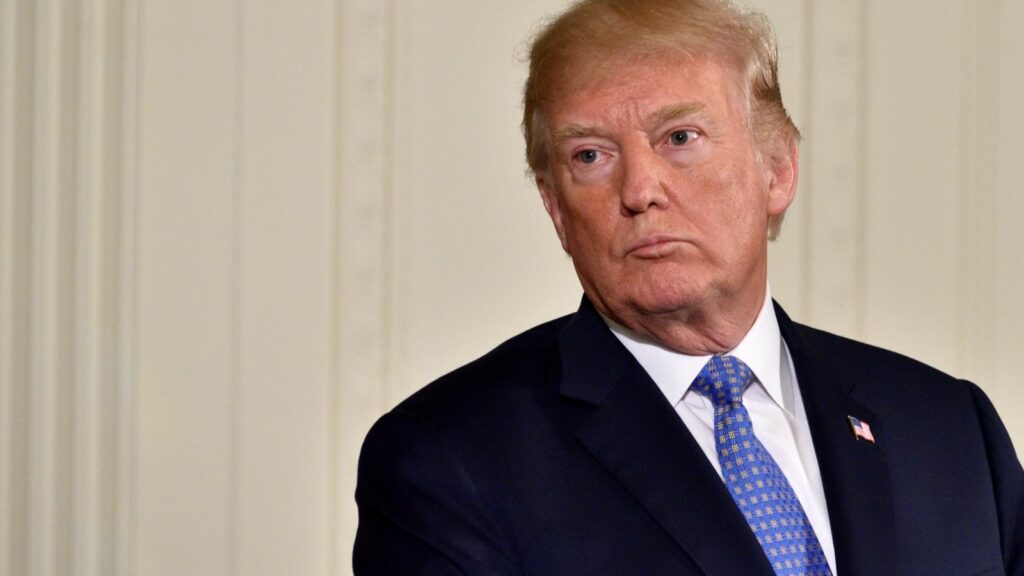
The language coming from Washington turned sharply personal just as one of North America’s most consequential trade negotiations fell apart. Early Sunday, U.S. President Donald Trump accused Canada of wanting the “benefits of being a State” without becoming one, reviving rhetoric that has repeatedly angered Canadians and raised sovereignty concerns.
The remark landed after Prime Minister Mark Carney suspended negotiations late Friday, rejecting proposed U.S. terms he described as unfair and uneconomic. By Saturday, new 50% American tariffs were taking effect on billions of dollars in Canadian goods, while Ottawa prepared a dollar-for-dollar response. Behind the political confrontation was a practical dispute over cars, trucks, steel, trade sovereignty and the future rules governing an extraordinarily integrated continental economy.
The Deal Went From Close to Collapsed in Days
Only days before the breakdown, Washington had postponed the scheduled introduction of its latest 50% tariffs for three days. Trump said at the time that Canada and the United States had the basis of a deal, while the White House said Ottawa had expressed commitments related to American complaints over automobiles, dairy products and alcoholic beverages. Canadian officials also publicly acknowledged that substantial progress had been made, although important issues remained unresolved.
That optimism disappeared late Friday. Carney ordered Canadian negotiators back to Ottawa and formally suspended the talks, saying last-minute changes to the American proposal had undermined the economic value and reliability of an agreement. The rupture came after three days of intensive negotiations and just hours before the tariff deadline. What had appeared to be a final-stage negotiation therefore became another escalation in a trade confrontation that has already disrupted investment decisions, factory schedules and long-established cross-border supply chains.
Trump Quickly Returned to His Statehood Rhetoric
Trump’s first major public response to the failed negotiations was not a detailed explanation of the disputed tariff terms. Instead, he returned to a theme that has repeatedly irritated Canadian political leaders. In an early Sunday social-media post, he wrote that Canada wanted the “benefits of being a State, without being one,” while again attacking Canadian agricultural trade practices.
The remark revived the broader “51st state” theme Trump has used during his second presidency while criticizing Canada’s trade relationship with the United States. The timing made the message especially significant. Canada had just rejected an American proposal partly because Ottawa said some demands intruded on Canadian sovereignty. The dispute was therefore no longer being framed only around percentages on automobiles or steel. Political independence, national identity and the reliability of agreements with Washington were becoming part of the economic argument itself.
Auto Tariffs Were at the Centre of the Bargaining
Automobiles were among the biggest potential prizes in the negotiations. Canadian-made vehicles have faced a 25% U.S. tariff on their non-American content since April 2025. Before negotiations broke down, sources familiar with the discussions said Washington was considering reducing the automotive tariff to about 15%, while Canadian negotiators were pushing for a rate closer to 10%. Further reductions could potentially have depended on the amount of American content incorporated into vehicles.
Those percentages carry unusually large consequences because Canadian auto manufacturing is overwhelmingly oriented toward the U.S. market. More than 90% of Canadian-made vehicles are exported to the United States, according to federal figures, while the industry supports roughly 125,000 direct manufacturing jobs. Statistics Canada estimated that U.S. demand accounted for 76.4% of payroll employment in Canadian automobile and light-duty vehicle manufacturing in 2024. A seemingly small difference in tariff rates can therefore affect production decisions involving entire communities.
Trucks Became a Major Sticking Point
The disagreement was not simply over whether Washington would reduce its 25% automotive tariff. Canada also wanted favourable treatment to extend beyond passenger cars and light-duty vehicles. Carney said the U.S. proposal failed to provide acceptable terms for medium- and heavy-duty vehicles, leaving important Canadian production exposed even if a compromise covering other automobiles had been signed.
That distinction matters enormously in Ontario. Canadian plants produce vehicles such as Ford Super Duty trucks and General Motors pickups that feed directly into the North American commercial vehicle market. Reuters reported that Canada wanted the better proposed tariff treatment for light vehicles extended to larger trucks, while the United States resisted. Carney argued that leaving those products outside the arrangement could make Canadian factories less competitive. For workers in automotive communities, that meant an agreement advertised as tariff relief could still have preserved a serious structural disadvantage.
Canada Says the Dispute Went Beyond Economics
Ottawa’s objections ultimately extended well beyond cars. Carney said the United States introduced proposed conditions that would have limited Canada’s freedom to negotiate trade agreements with other countries. His government has made international diversification a central part of its response to U.S. protectionism, making restrictions on future trade relationships particularly difficult for Ottawa to accept.
The prime minister also said Washington raised demands touching Canadian culture and the French language. He did not disclose all of the proposed wording, so the precise scope remains unclear, but he explicitly said those matters were not open for negotiation. Carney framed the combined demands as a sovereignty issue, saying Canada would not accept terms that compromised its independence or undermined strategically important industries. That helps explain why a negotiation that appeared capable of producing meaningful tariff reductions could still fail despite the enormous financial incentive on both sides to reach an agreement.
The New 50% Tariffs Are Now a Real Economic Cost
The failure to strike a deal allowed the latest American tariff package to take effect Saturday. Ottawa described the targeted Canadian exports as worth roughly C$28 billion, while Reuters placed the value at about US$20 billion. The measures cover approximately 5% of Canadian exports to the United States and include goods across several consumer and industrial categories.
The legal mechanism is also unusual. Washington invoked Section 338 of the Tariff Act of 1930, which allows the president to impose duties of up to 50% in response to what the administration determines is discriminatory treatment of American commerce. Separate U.S. actions have targeted Canadian policies concerning motor vehicles, dairy products and alcohol. The new tariffs are layered onto an already complicated landscape of duties affecting steel, aluminum, automobiles, lumber and other products, making the cost of moving goods across the border increasingly dependent on industry and product classification.
Carney Is Preparing a Dollar-for-Dollar Response
Canada’s response is scheduled to begin September 8, the Tuesday after Labour Day. Carney said Ottawa would match the latest American measures dollar for dollar, with Canadian counter-tariffs concentrated in areas including steel, dairy products, appliances, agricultural equipment, pulp and paper, and electronics. Details of the final tariff list are expected separately.
The prime minister acknowledged that retaliation carries its own costs. Tariffs on American products can make goods more expensive or reduce choices for Canadian consumers and businesses that depend on U.S. inputs. Ottawa nevertheless argues that failing to respond would leave Canadian producers competing against American companies under increasingly unequal conditions. Carney also convened provincial and territorial premiers after the breakdown, promising additional assistance for workers and businesses. Ontario Premier Doug Ford, whose province bears much of the automotive exposure, publicly supported walking away rather than accepting what he considered a bad agreement.
Economic Integration Makes a Long Trade War Painful
Despite increasingly hostile political language, Canada and the United States remain deeply tied economically. Statistics Canada reported that 71.7% of Canadian merchandise exports went to the United States in 2025, even after that share fell significantly from the previous year. Canada and the U.S. exchanged nearly C$3.5 billion in goods and services every day during 2025, according to Global Affairs Canada.
The integration extends deep inside individual products. Canadian manufacturers shipped $324 billion in goods to American customers in 2024, and more than one-quarter of that value reflected imported U.S. content embedded in Canadian exports. That is why tariffs can travel through supply chains in unexpected ways. A duty nominally aimed at a Canadian factory can also raise costs for American component suppliers, distributors or consumers. The same interconnectedness that made continental free trade attractive makes dismantling it economically complicated for both countries.
Auto Communities Have Already Been Feeling the Pressure
The current dispute did not begin this weekend. Statistics Canada found that employment in Canadian motor vehicle parts manufacturing fell 9.3% between December 2024 and December 2025, while motor vehicle manufacturing employment declined 1.3%. More broadly, manufacturing employment fell by tens of thousands as companies confronted weaker demand, uncertainty and tariff-related disruption.
The exposure is especially visible in southern Ontario. Federal regional-development data put Ontario auto manufacturing employment above 95,000 workers and reported that the province exported about $60 billion in vehicles and parts to the United States in 2025. Approximately 96% of Ontario’s automotive exports went south of the border. Those figures help explain why politicians are focusing so intensely on the fine print of any auto arrangement. In Windsor, Oshawa, Oakville and other manufacturing centres, tariff negotiations can translate into questions about overtime, shifts, supplier contracts and whether the next vehicle program is assigned to Canada.
CUSMA Now Faces an Even More Difficult Test
The immediate negotiations may be suspended, but the larger continental trade relationship cannot simply be ignored. Canada, the United States and Mexico are already dealing with the 2026 joint review of CUSMA. The agreement technically remains in force until 2036, but the review gives all three countries an opportunity to decide whether to extend its term and to debate possible modifications.
The latest breakdown makes that process considerably more politically charged. Ottawa wants predictable access to the American market while retaining sovereignty over Canadian trade, culture and industrial policy. Washington is seeking stronger concessions in sectors it considers unfairly managed or insufficiently beneficial to U.S. producers. Trump’s renewed statehood rhetoric adds another layer of distrust precisely when negotiators need credibility and long-term commitments. The two countries still have enormous incentives to negotiate again. What disappeared this weekend was the assumption that economic integration alone would guarantee an agreement.
