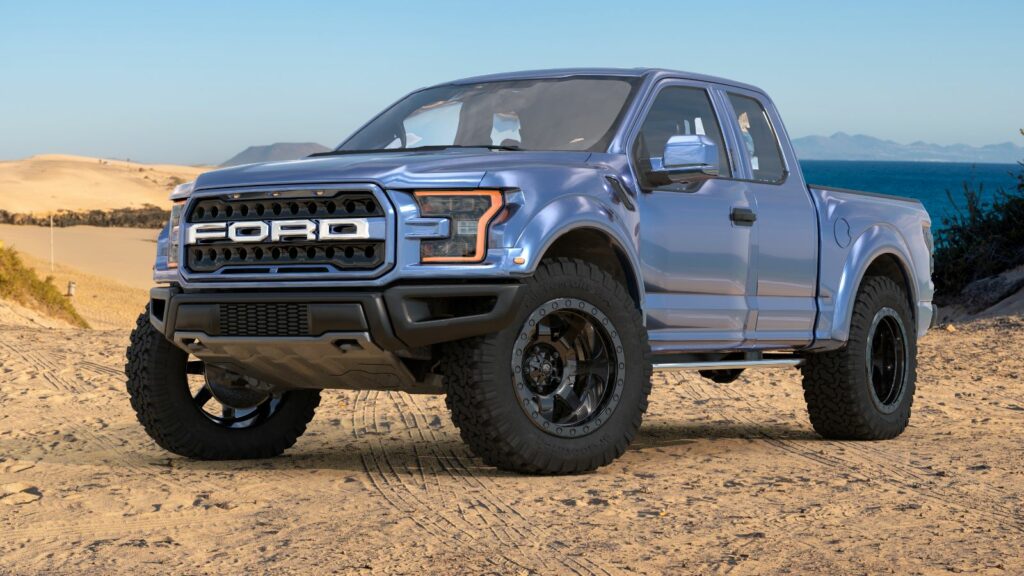
Full-size pickups remain enormously popular, and there is little evidence that drivers have abandoned them as a category. Yet admiration for giant trucks increasingly comes with a longer list of reservations. A machine that feels commanding on an open highway can become cumbersome in a parking garage, expensive during a routine commute, and surprisingly awkward when its huge towing capacity is rarely needed.
For some motorists, the trade-off is beginning to look less attractive as smaller pickups become more capable and efficient. These 12 reasons explain why a growing number of drivers are questioning whether the biggest truck available is really the best truck for everyday life.
They Barely Fit the Places People Actually Go
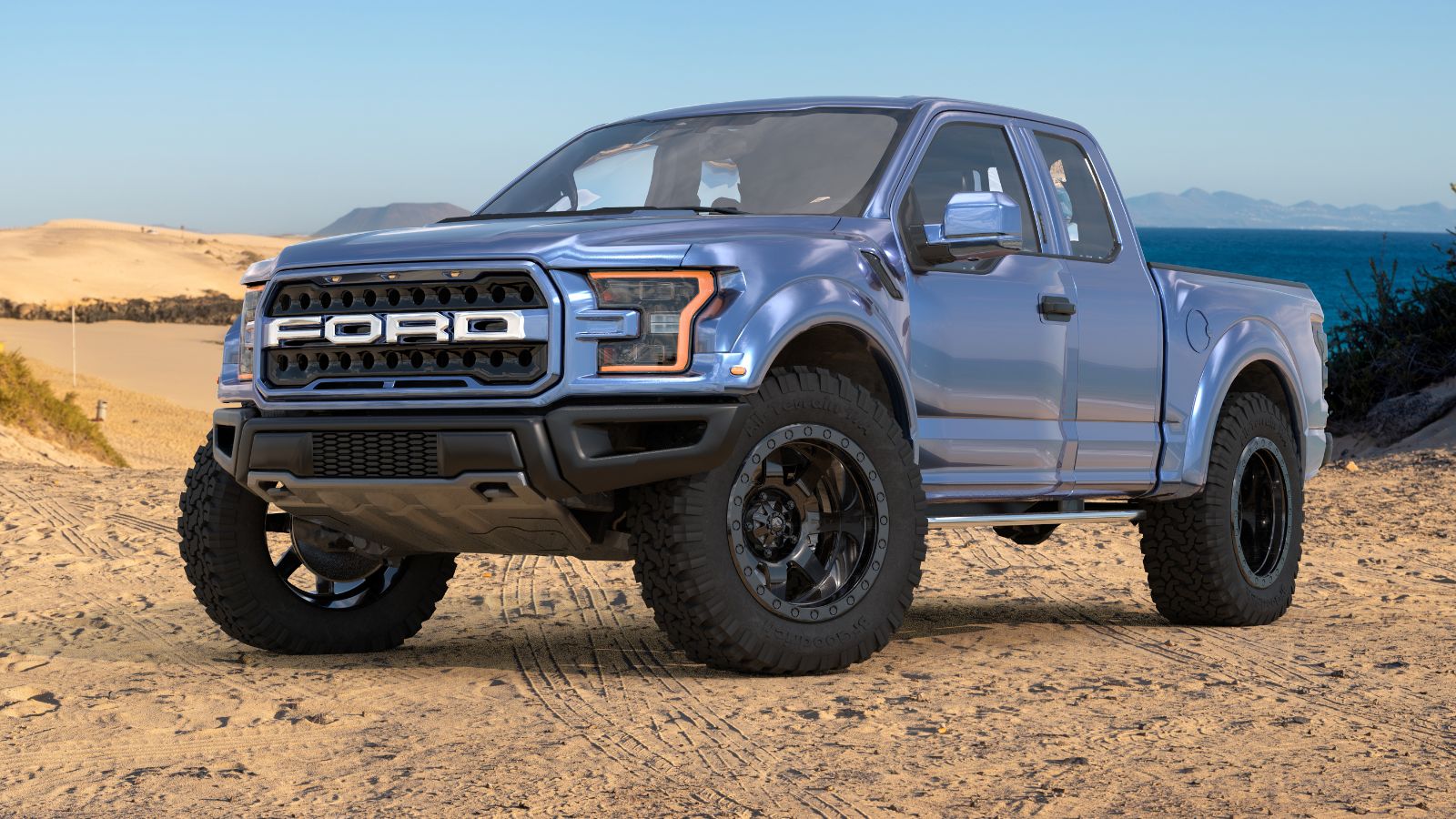
Modern full-size pickups can be enormous even before buyers move into heavy-duty territory. A 2025 Ford F-150 crew-cab configuration stretches about 232 inches from bumper to bumper and roughly 80 inches across without counting the mirrors. Certain versions need about 48 feet to complete a curb-to-curb turning circle. Longer configurations can extend beyond 20 feet. Those dimensions are useful when stability, passenger room and cargo capacity matter, but they become much less charming while circling a cramped parking structure.
A driver may love the commanding feel of a large truck on an interstate and then spend five minutes negotiating a downtown parking spot. Narrow drive-through lanes, older garages and tightly packed shopping-centre lots can turn ordinary errands into precision exercises. Cameras, parking sensors and 360-degree views help considerably, but they do not make the physical truck smaller. For drivers who spend most of their week commuting rather than crossing ranchland, sheer size can start feeling like something being managed rather than enjoyed.
The View Over the Hood Can Hide Too Much
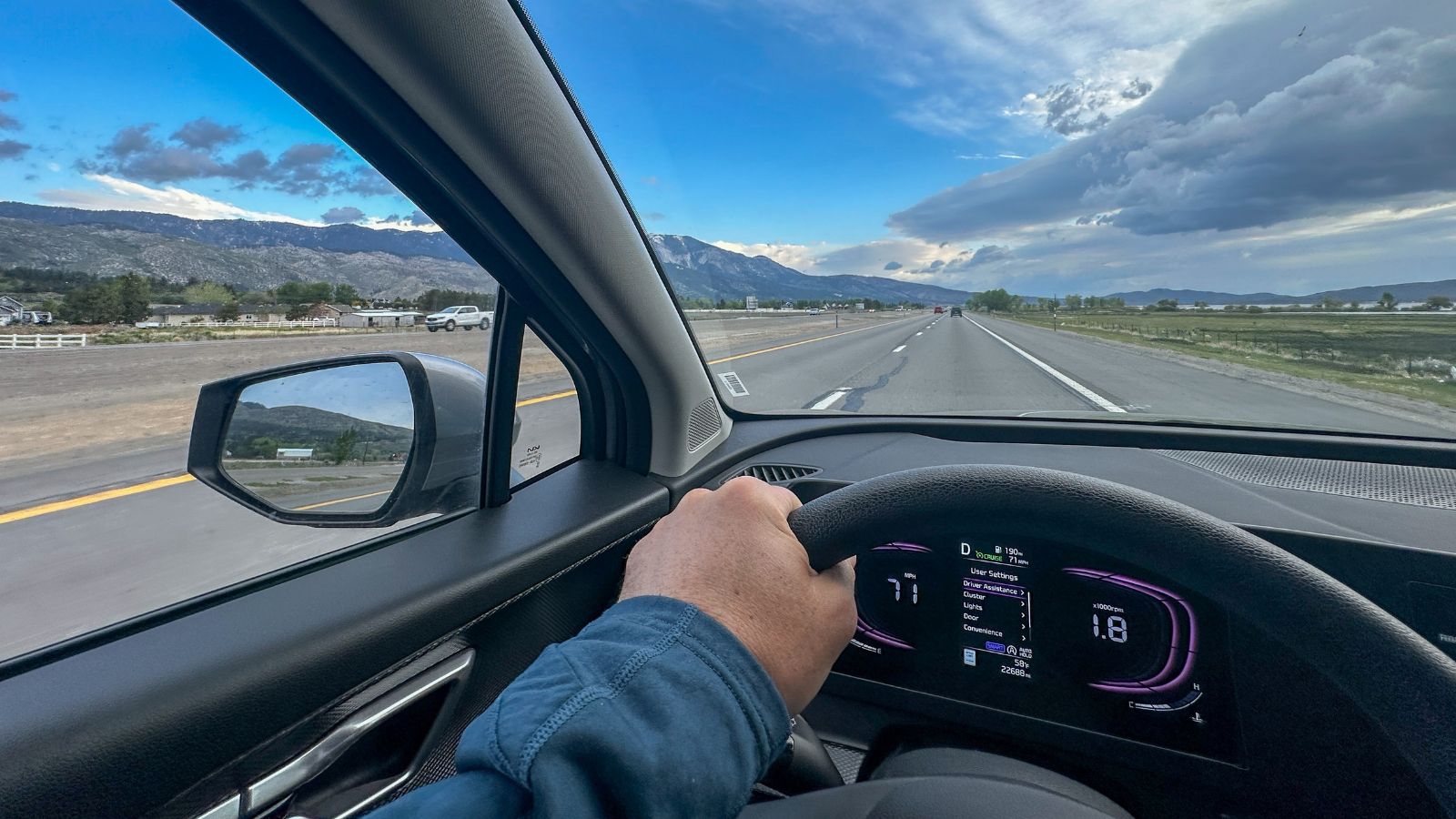
Sitting high once represented one of the strongest arguments for owning a pickup. The elevated driving position still gives an impressive view down the road, but what happens immediately in front of the truck is another matter. Consumer Reports measured forward visibility in a group of vehicles and found that the front blind zones of some full-size and heavy-duty pickups extended 11 feet farther than those of some sedans and seven feet farther than those of many popular SUVs.
That distinction becomes important in places where trucks move slowly around people rather than quickly along highways. A child, pet, bicycle or low object can disappear below the hood line at exactly the moment a driver begins pulling forward in a driveway or parking space. Front cameras and automated emergency braking can reduce the problem on suitably equipped vehicles, but drivers may reasonably wonder why so much technology is needed to compensate for a shape that makes direct visibility difficult in the first place. For some, a lower vehicle simply feels less stressful in crowded surroundings.
Tall Front Ends Raise Pedestrian-Safety Concerns
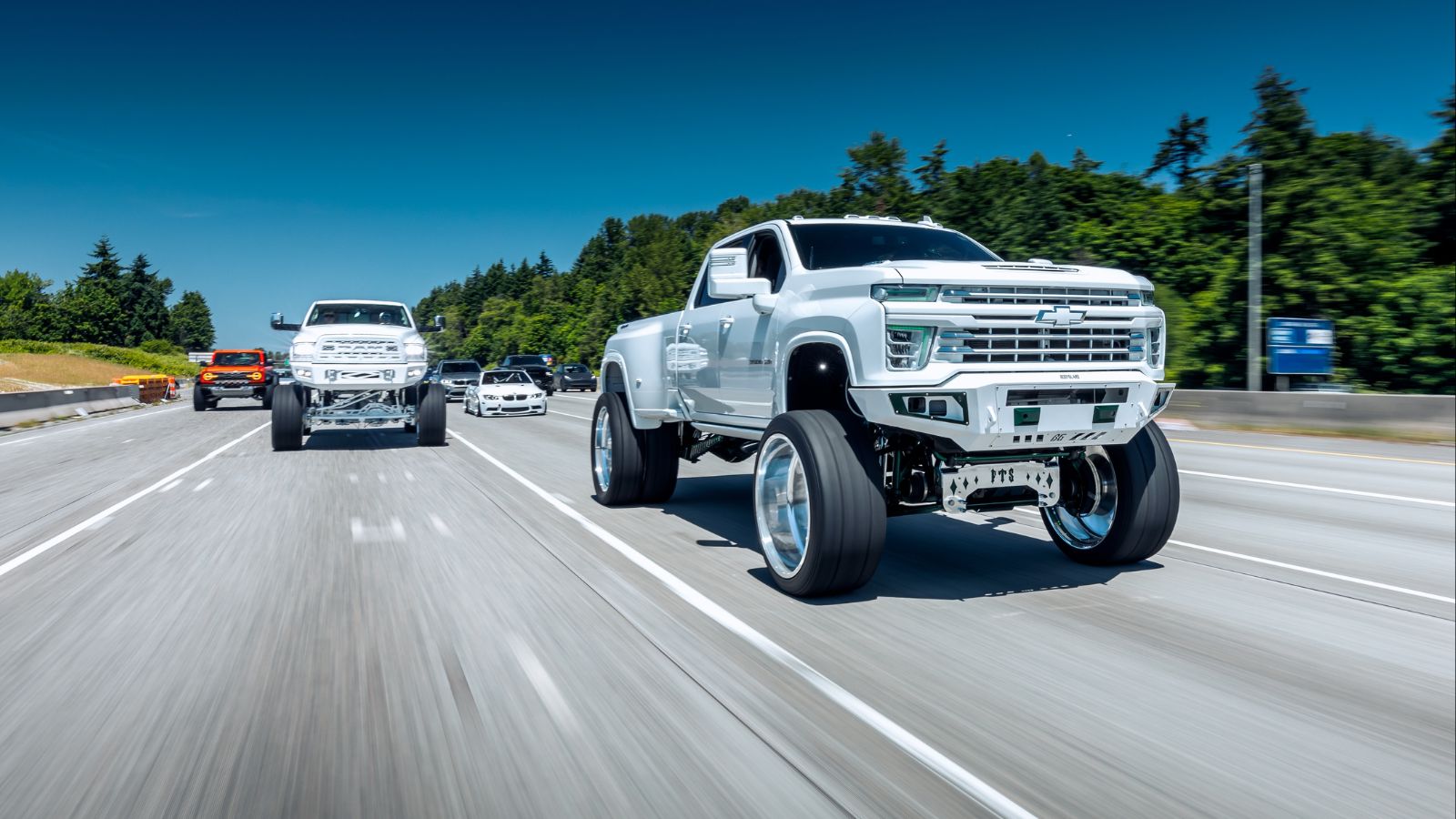
The imposing grille has become one of the defining design features of the modern pickup. Unfortunately, researchers have found that the height and shape of a vehicle’s front end can influence what happens when a pedestrian is struck. Insurance Institute for Highway Safety research involving nearly 18,000 pedestrian crashes found that vehicles with hood leading edges above 40 inches were about 45% more likely to cause a pedestrian fatality than vehicles with hoods 30 inches or lower and a sloping front profile.
The issue is not simply that a larger vehicle is heavier. A tall, blunt nose tends to contact an adult pedestrian higher on the body, where the torso and other vulnerable areas can absorb the impact. Researchers have also found a greater tendency for pedestrians struck by tall vehicles to be thrown forward rather than onto the hood. Those findings have changed the conversation around truck design. Some owners who once regarded an enormous grille as merely aggressive styling now see outward visibility and pedestrian protection as legitimate reasons to prefer something lower and less imposing.
Extra Weight Can Shift Risk Onto Everyone Else
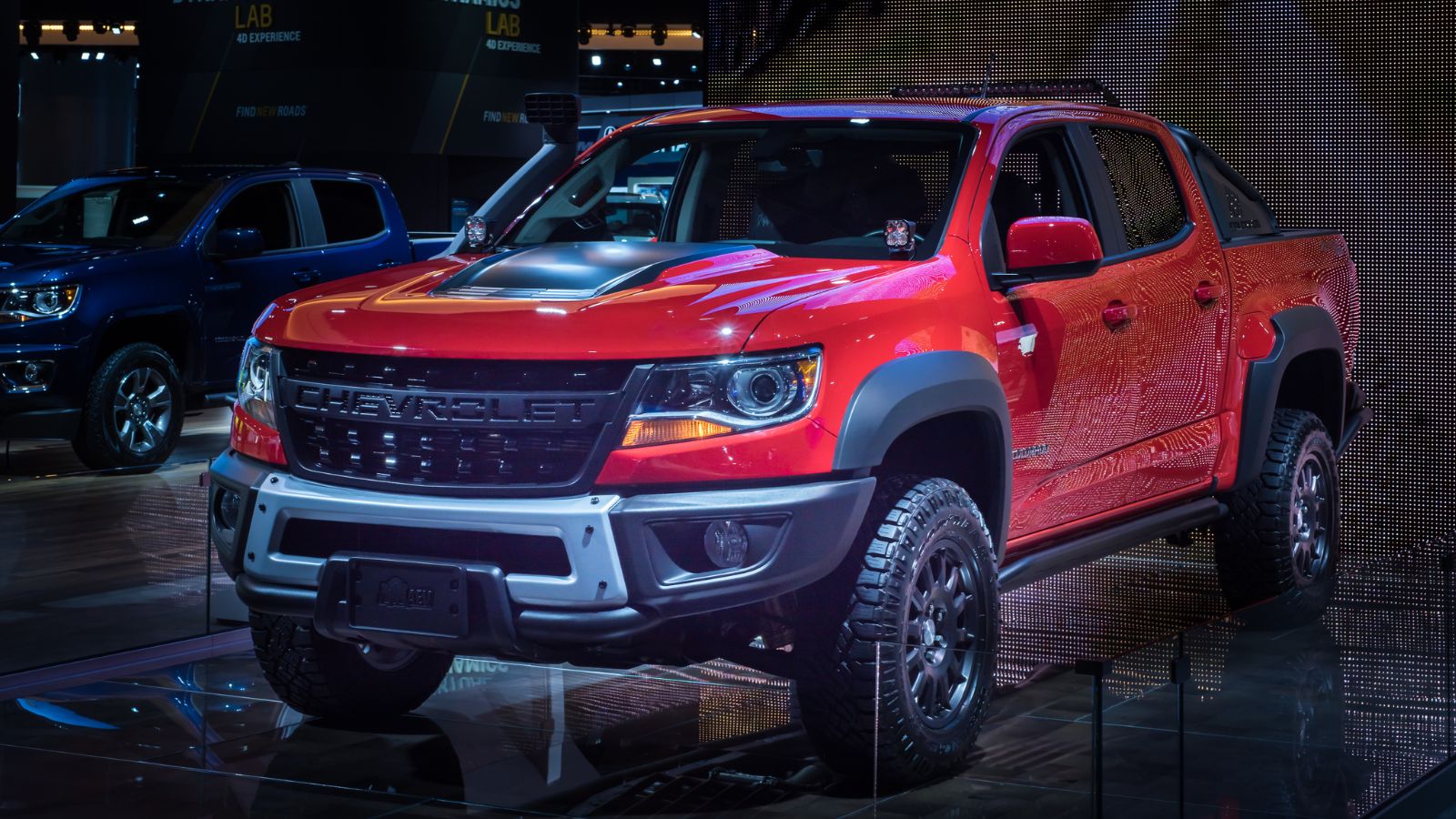
Bigger vehicles can provide meaningful protection to their occupants, particularly when compared with very small cars. But recent research suggests that the benefit does not keep increasing indefinitely. An IIHS analysis published in 2025 found that safety gains diminished once vehicles were already heavier than the roughly 4,000-pound fleet average used in the study. For pickups above that level, another 500 pounds was associated with almost no additional reduction in the driver’s death rate.
The effect on people in the other vehicle was different. IIHS found that adding 500 pounds to an already heavier-than-average pickup was associated with seven additional crash-partner driver deaths per million registered vehicle years. Modern pickups have become substantially more compatible with cars than older trucks were, thanks partly to redesigned crash structures, so the situation has improved. Still, the findings challenge the assumption that maximum mass automatically means maximum safety. Some drivers increasingly prefer a vehicle that offers strong occupant protection without contributing quite as much mass to every collision it might enter.
Fuel Costs Become Hard to Ignore

A full-size pickup can make perfect economic sense when its capability earns money or replaces another piece of equipment. The calculation looks different when most miles involve commuting, grocery runs and school drop-offs. AAA’s 2025 ownership-cost study estimated fuel expense for a half-ton crew-cab pickup at 17.84 cents per mile under its standardized methodology. Its hybrid-vehicle category averaged just 8.55 cents, while electric vehicles averaged 5.07 cents per mile for energy.
No individual owner will match those figures exactly because fuel prices, powertrains and driving conditions vary enormously. Modern diesel, hybrid and turbocharged pickups have also become far more efficient than trucks from earlier generations. Even so, moving a large, heavy vehicle through stop-and-go traffic requires energy. The difference can feel minor during one trip and substantial after thousands of miles. When a household realizes that most journeys require seats and groceries rather than 10,000 pounds of towing capacity, paying the fuel penalty for unused capability can become increasingly difficult to justify.
The Purchase Price Has Moved Deep Into Luxury Territory
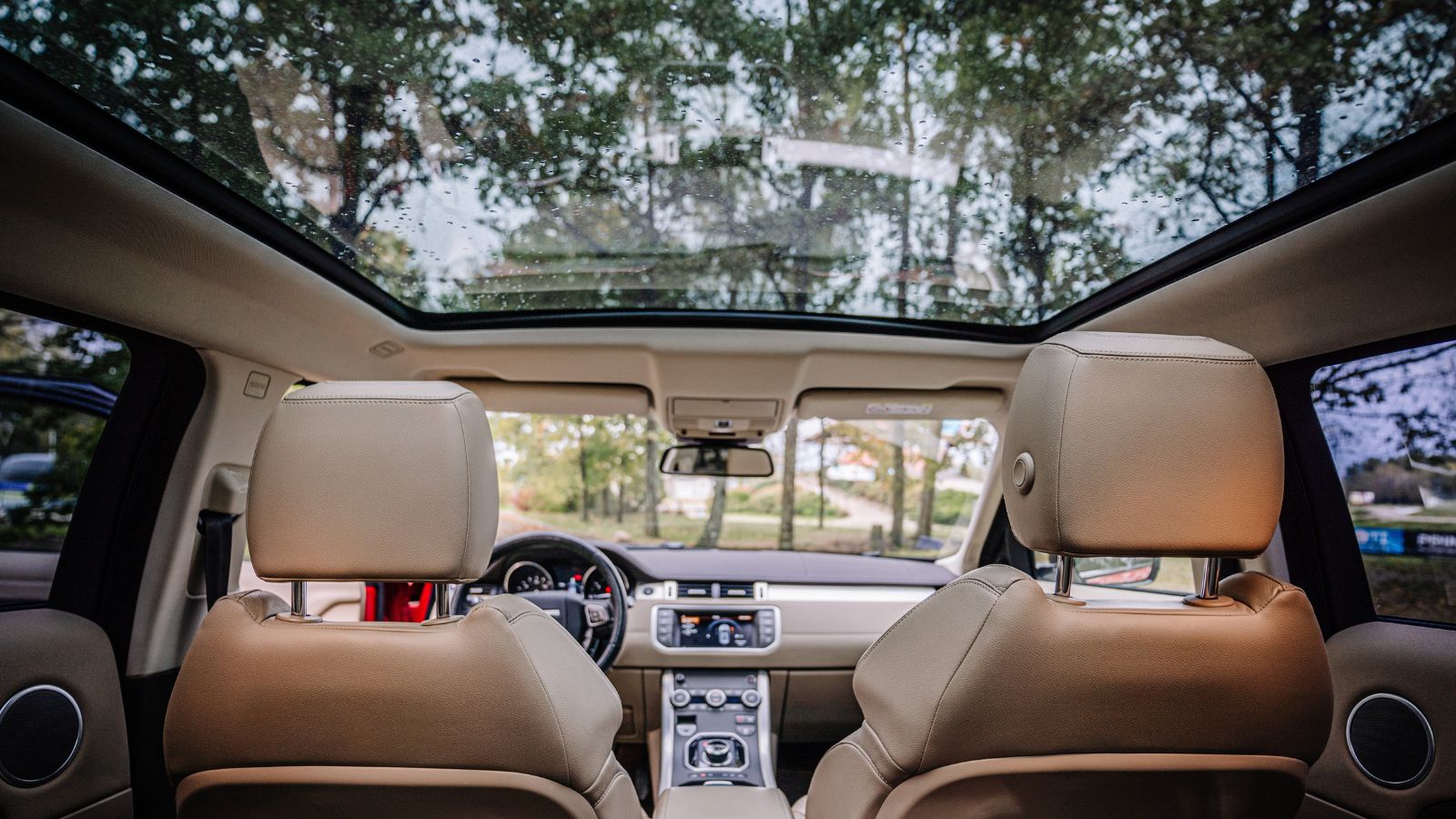
Pickup trucks once had a strong reputation as relatively straightforward working machines. That description still fits basic fleet-oriented versions, but much of the retail market has moved far beyond vinyl seats and manual conveniences. Kelley Blue Book data from Cox Automotive put the average U.S. transaction price for a full-size pickup at $66,386 in December 2025, compared with an industrywide new-vehicle average of $50,326. High-end versions can move well beyond that figure.
The transformation is easy to see inside today’s trucks. Premium models can include enormous displays, panoramic roofs, elaborate audio systems, leather upholstery, massaging seats and sophisticated driver-assistance equipment. None of those features are inherently undesirable; for buyers spending hours in a truck, they may be genuinely valuable. The problem comes when capability and luxury become bundled into a vehicle whose price rivals that of premium automobiles. A household that occasionally hauls landscaping supplies may eventually question whether it needs a luxury-priced, full-size machine merely to preserve the possibility of doing much heavier work someday.
Total Ownership Costs Add Up Fast
Sticker price is only the first part of the financial equation. Depreciation, financing, insurance, registration, maintenance, tires and fuel continue long after a truck leaves the dealership. AAA’s 2025 analysis estimated that a new half-ton pickup driven 15,000 miles annually cost about $14,781 per year to own and operate under its standardized assumptions. The weighted average across all vehicle categories in the study was $11,577.
That gap can reshape the way an owner views capability that rarely gets exercised. An extra few thousand dollars a year might be worthwhile for someone towing equipment every weekend or using the bed for a business. It can feel very different to someone whose truck spends most mornings carrying one occupant and a laptop. Larger tires, greater depreciation and higher financing costs can make the expense less obvious than a single large repair bill, because the money disappears gradually. Drivers trying to reduce household transportation spending therefore have a powerful reason to consider whether a smaller pickup, crossover or hybrid could perform nearly all of their real-world tasks for less.
Much of the Capability Goes Unused
Truck advertising understandably emphasizes what pickups can accomplish: enormous trailers, difficult terrain, heavy payloads and remote campsites. Real-world ownership is often less dramatic. Recent data reported from automotive research firm Strategic Vision found that about 32% of full-size pickup owners said they never tow. Roughly 61% reported hauling something in the bed at least monthly, meaning a substantial minority use that defining feature less frequently than that.
This does not make buying a large truck irrational. People purchase vehicles partly for occasional needs, and a truck may earn its keep during the few weekends each year when nothing else in the household could do the job. The question is whether those occasional moments justify living with the compromises every other day. Consumer Reports similarly advises buyers to assess towing and payload requirements realistically because lighter-duty, midsize or compact pickups may be sufficient when extremely heavy trailers are not involved. For some drivers, acknowledging how rarely the maximum capability is used becomes the moment downsizing starts making sense.
An Empty Bed Can Make the Ride Feel Needlessly Harsh
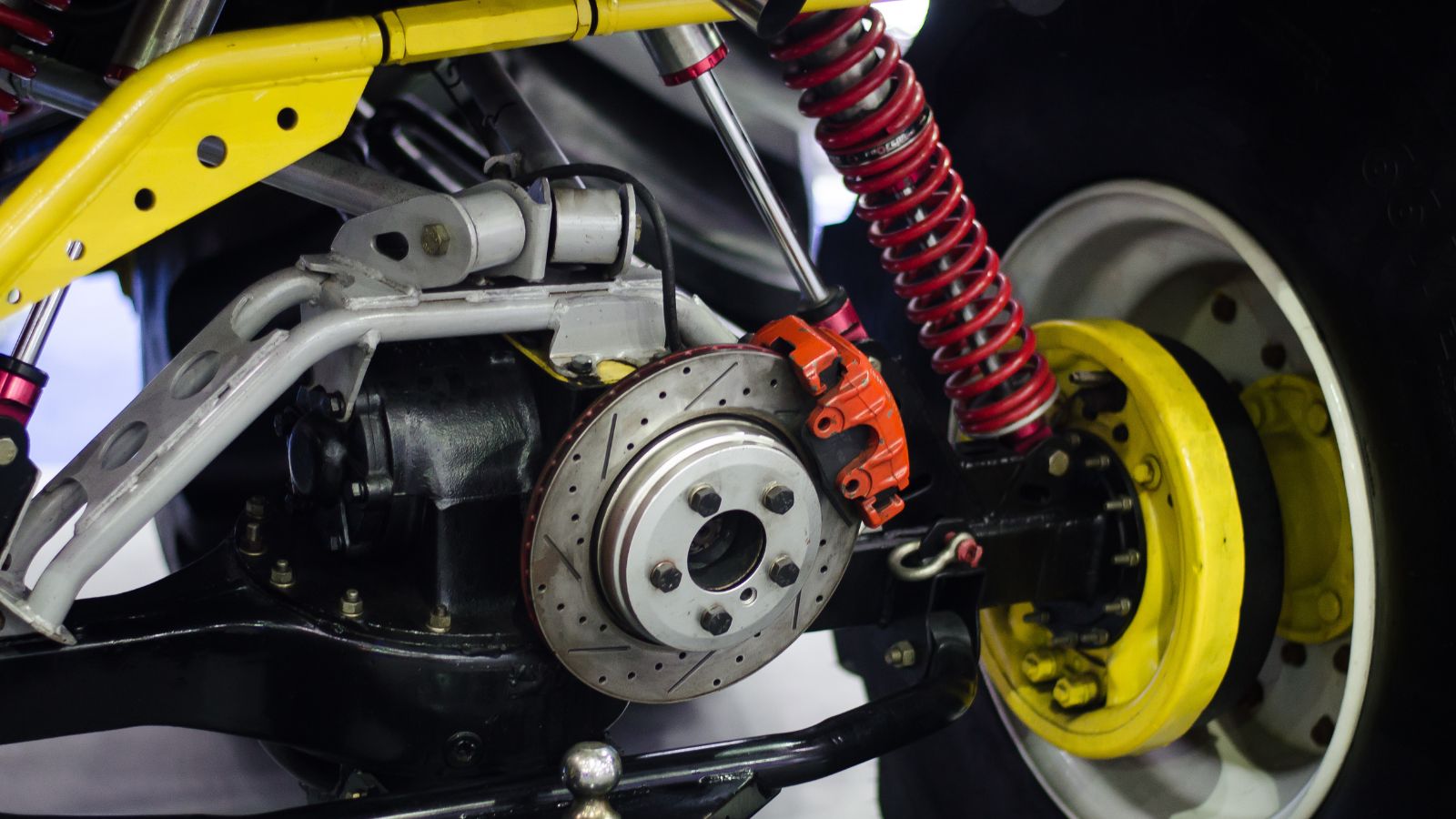
Pickup suspensions are expected to do things ordinary passenger vehicles rarely attempt. They must remain stable while supporting substantial payloads, and heavy-duty models are engineered for even more demanding loads. That design requirement can affect ride quality when nothing is in the bed. Consumer Reports notes that many trucks deliver a stiff ride while unloaded and describes some heavy-duty models as particularly harsh, although certain designs such as the Ram 1500 have made notable improvements.
That can create an odd mismatch for owners whose trucks function mainly as family vehicles. The suspension is prepared for a payload that may not arrive for weeks, while passengers experience every expansion joint and broken patch of pavement on Monday morning. Modern cabins can be remarkably quiet and luxurious, so the contrast between plush seats and truck-oriented suspension tuning can become more noticeable rather than less. Drivers accustomed to crossovers, unibody pickups or well-sorted sedans may eventually decide that occasional maximum payload capability is not worth a consistently busier ride during the thousands of miles spent completely unloaded.
Getting Into the Cab and Bed Can Become a Chore
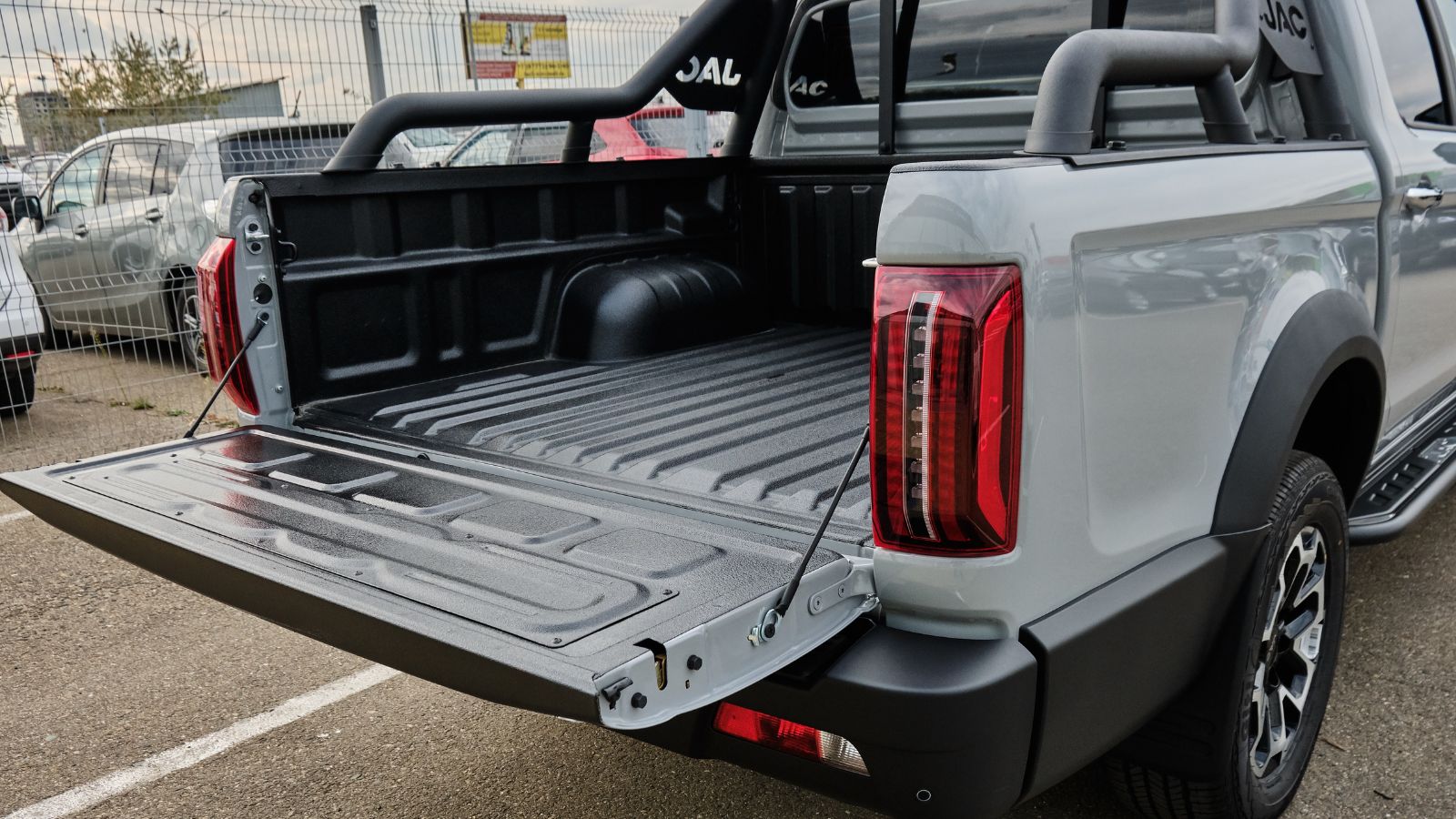
Height is helpful when clearance is required, but it also puts the useful parts of a truck farther from the ground. Specifications for common 2025 Ford F-150 configurations place the top of the cargo load floor roughly 33 to 37 inches above the pavement, depending on configuration. The bed sides add more height beyond that. Consumer Reports also notes that climbing into many modern pickup cabs can be steep even when running boards are fitted.
Manufacturers clearly recognize the accessibility problem. Modern pickups increasingly offer bumper steps, folding bed steps, grab handles, multi-function tailgates and power-operated running boards. Those are clever solutions, especially for working owners who repeatedly enter the bed. They are also evidence that the basic geometry has become challenging enough to require solutions. Lifting a suitcase, bag of soil or heavy toolbox into a high bed is very different from sliding it into the cargo area of a crossover. For shorter drivers, older owners or anyone dealing with heavy objects regularly, a few inches less height can matter more than intimidating styling.
Efficiency Still Trails Other Vehicle Types
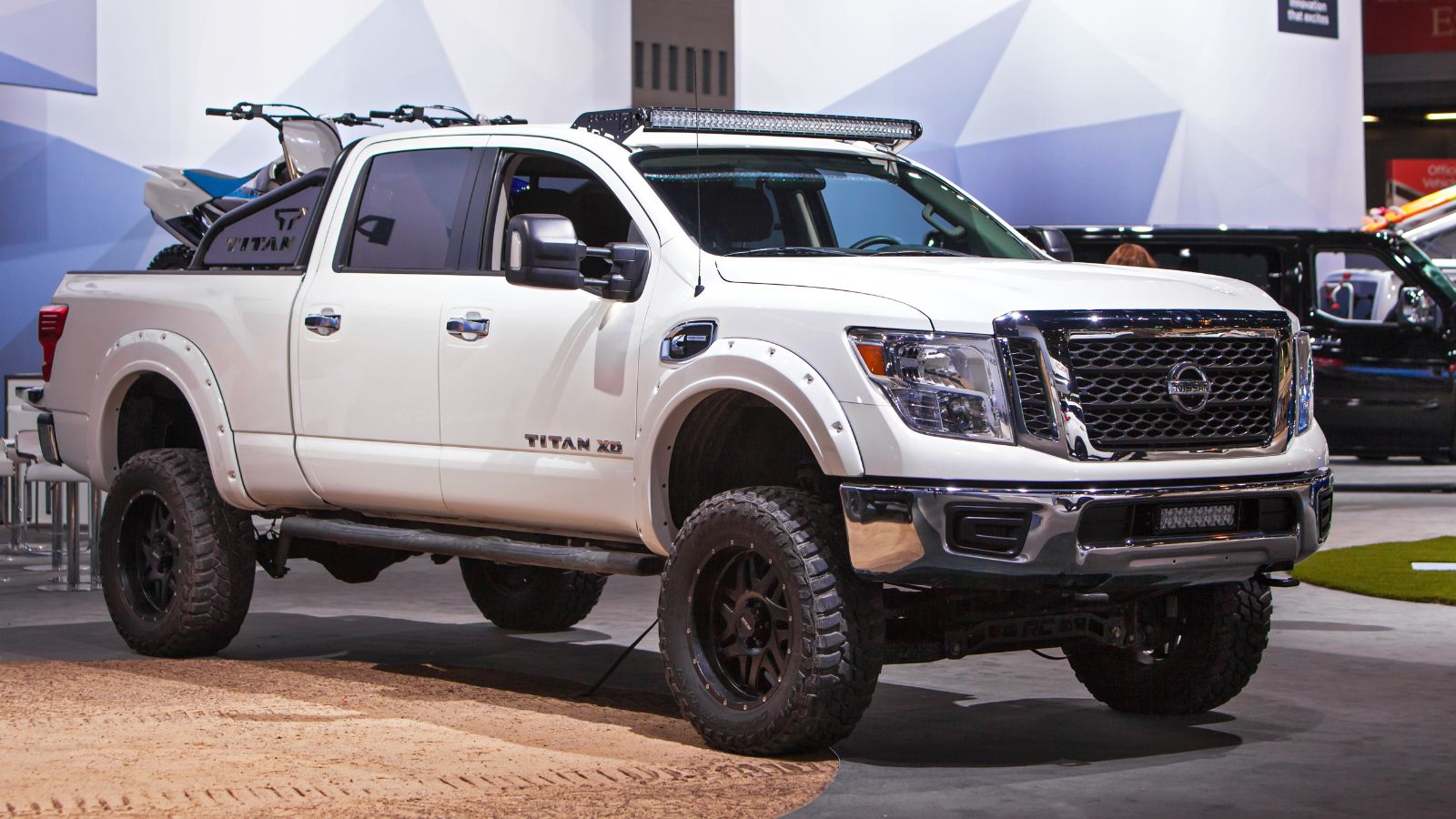
Pickup efficiency has improved dramatically through turbocharging, cylinder deactivation, diesels, hybrids and electric powertrains. Even so, the category remains difficult to optimize because size, weight, aerodynamic drag and capability all work against efficiency. The EPA’s 2025 Automotive Trends Report put estimated real-world fuel economy for model-year 2024 pickups at 20.5 mpg. Truck-based SUVs averaged 25.7 mpg, while sedans and wagons averaged 33.5 mpg.
The EPA also noted that pickups were the only one of its five vehicle categories that had not more than doubled fuel economy since 1975. That does not mean every truck is inefficient: individual powertrains can significantly outperform the category average, and electric pickups move the discussion away from gasoline altogether. But efficiency-minded buyers are comparing vehicles by the job they actually need performed. If a giant truck regularly transports one or two people and little cargo, its extra footprint can look increasingly difficult to defend. For some owners, downsizing is less about rejecting trucks than matching vehicle size more closely to everyday demand.
Smaller Pickups Now Cover More Everyday Needs
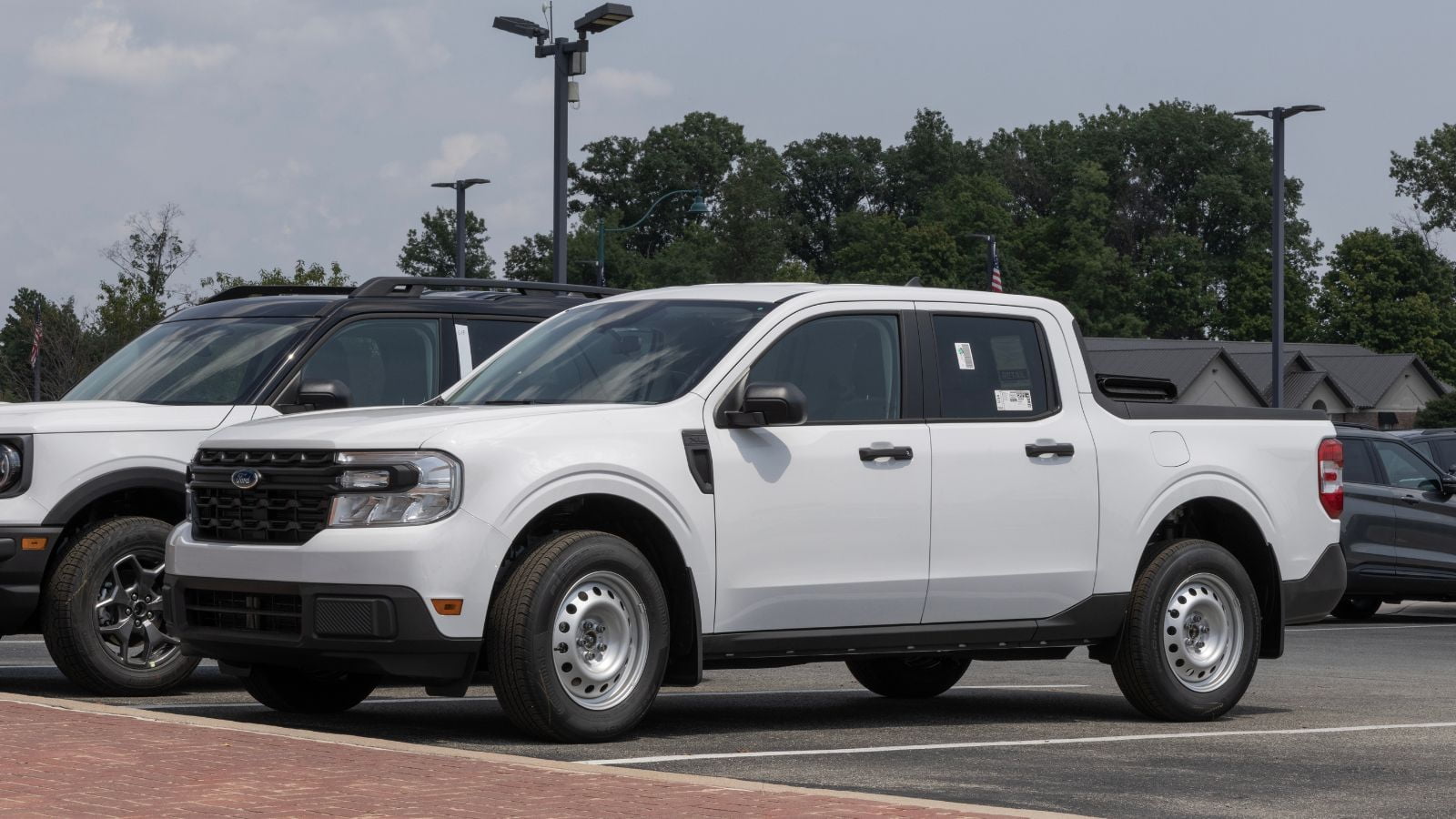
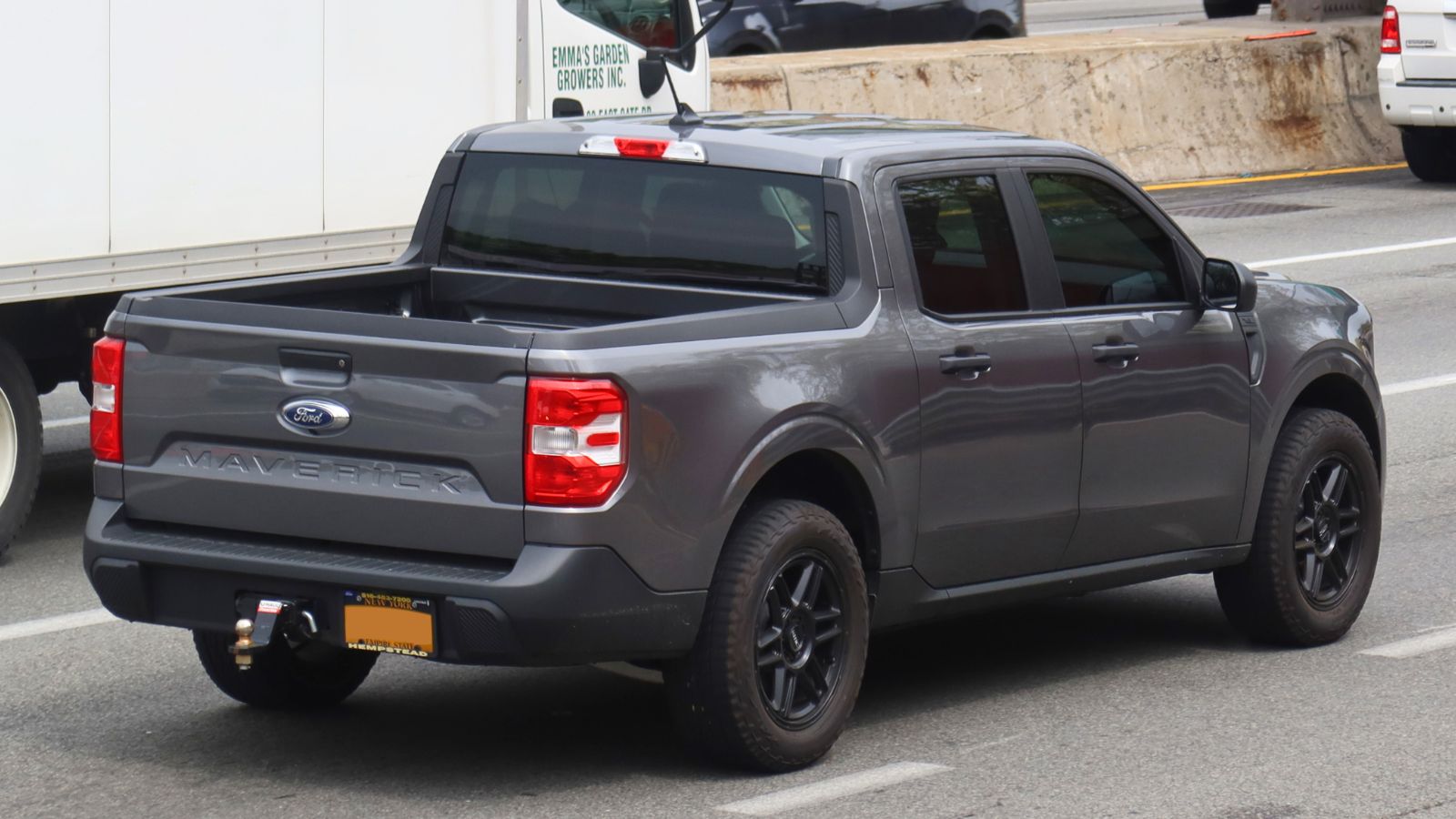
Perhaps the strongest challenge to the giant pickup is not a sedan or electric crossover. It is another pickup. Compact and midsize trucks have become far more credible for people who need an open bed without full-size dimensions. Ford’s Maverick illustrates the shift. The 2025 model offered up to 4,000 pounds of towing capacity with the appropriate package and as much as 1,500 pounds of payload, while Ford advertised an EPA-estimated 42 mpg city rating for one hybrid configuration.
Buyers appear interested. Ford reported 155,051 U.S. Maverick sales in 2025, while Ranger sales climbed sharply as well. Full-size trucks remain far more popular—the F-Series itself sold more than 828,000 units that year—so this is not a simple migration from large trucks to small ones. Instead, buyers now have more realistic choices. Someone who hauls bicycles, building supplies, garden equipment or a modest trailer no longer has to accept giant-truck dimensions to obtain a useful bed. That broader choice is making the compromises of oversized pickups easier to question.
16 Costco Canada Habits That Could Be Costing Shoppers More Than They Save
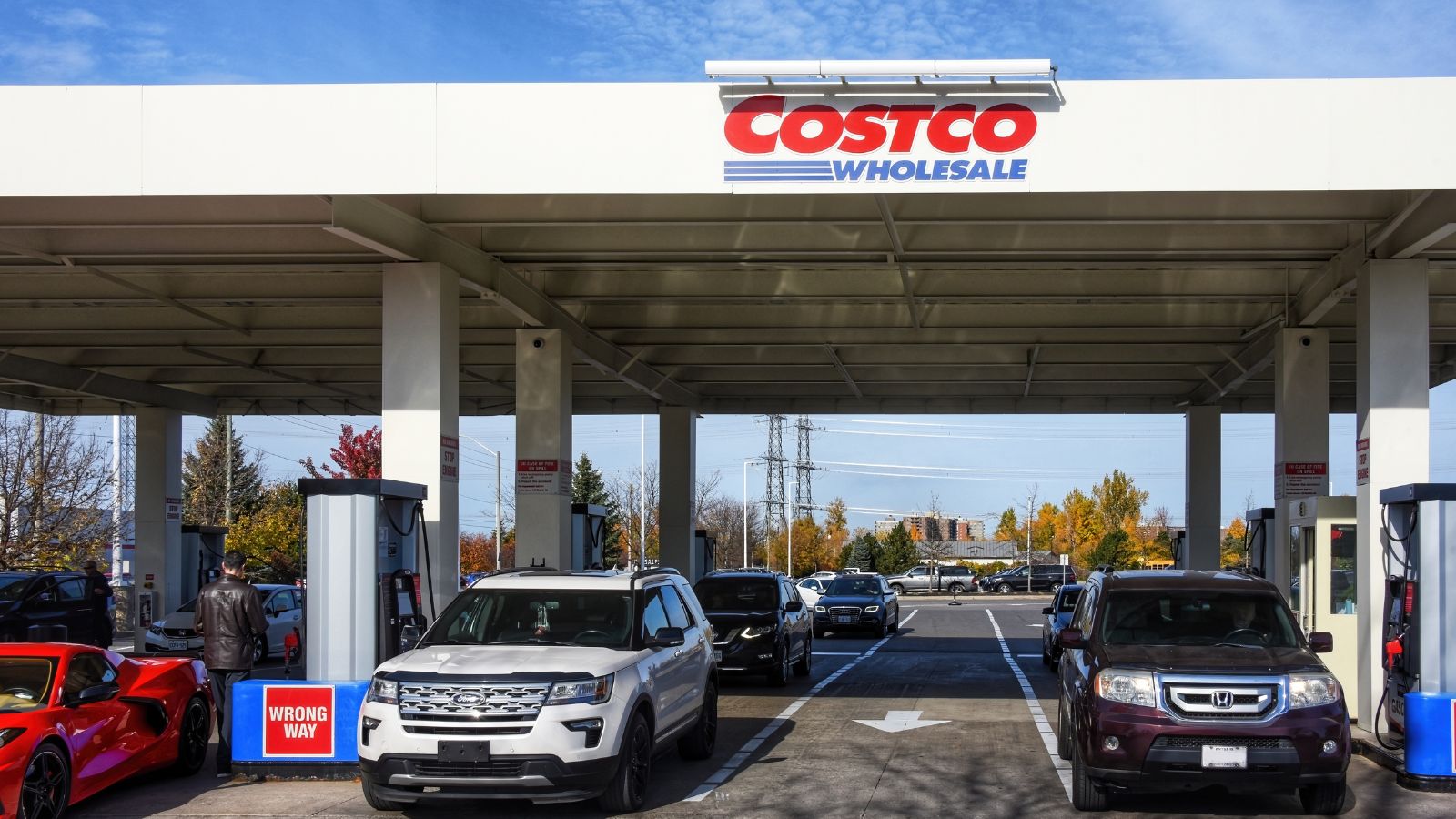
The Executive Membership can feel like an obvious upgrade because the 2% annual reward sounds straightforward. For households that spend heavily at Costco Canada, the extra fee may be easy to justify. But the habit becomes costly when shoppers upgrade first and calculate later. A Gold Star Membership costs less, while Executive costs more and only pays off if eligible annual spending is high enough to offset the difference.
16 Costco Canada Habits That Could Be Costing Shoppers More Than They Save

Alanna Rosen is an experienced content writer that focuses on many EV and educational content. Her articles are regularly published on Get CyberTrucked and syndicated on large publications.