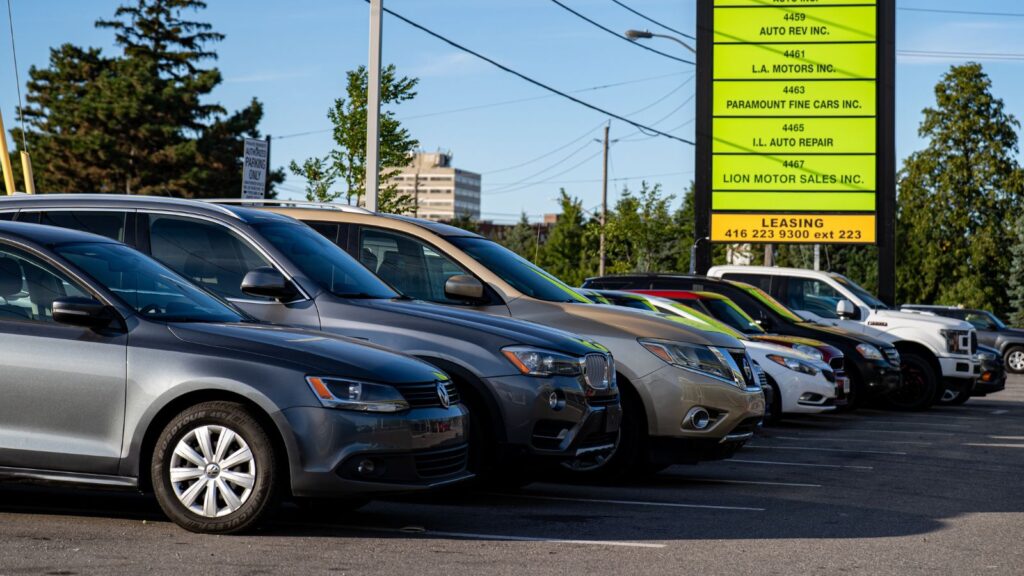
Canadian used-car prices may no longer be climbing at the pace seen during the pandemic-era shortage, but affordability remains a challenge. A new nationwide inventory snapshot puts the median asking price for a used vehicle at $31,990, leaving the typical advertised price remarkably close to the $32,000 mark.
The figure comes from a Canadian dealer-listing dataset containing more than 311,000 active records, including nearly 118,000 used vehicles. More strikingly, the latest median is almost identical to the level recorded in an archived August snapshot. That stability suggests the market is settling into a new phase: supply and individual vehicle prices are moving, but the middle of the used market is proving surprisingly resistant to a dramatic decline.
The Latest Snapshot Keeps the Used-Car Midpoint at $31,990
AutoDeal Canada’s October 24 market snapshot contained 311,534 active listing records associated with 2,808 dealers. Of those records, 117,808 were classified as used, and the median calculation was based on 117,716 used listings with qualifying prices. The resulting median used asking price was $31,990. By comparison, the average asking price among used listings was substantially higher at $37,307. That gap matters because the median identifies the midpoint of the sample rather than allowing a smaller number of expensive trucks, luxury vehicles and nearly new models to pull the figure upward.
There is also an important limitation behind the headline number. These are advertised asking prices, not prices recorded when vehicles actually change hands. AutoDeal’s methodology also notes that geographic coverage is incomplete and that a physical vehicle can appear in more than one listing record. The snapshot is therefore best viewed as a large window into Canadian dealer inventory rather than a complete census of every used vehicle for sale. Even with those qualifications, a dataset containing well over 100,000 priced used listings provides useful evidence of where advertised prices currently sit.
August-to-October Data Shows Remarkable Price Stability
The near-$32,000 figure becomes more interesting when compared with AutoDeal’s archived August 21 snapshot. That earlier dataset contained 278,376 listing records, including 125,289 used records, and reported a median used asking price of $31,998. Roughly two months later, the corresponding median was $31,990. The difference is only eight dollars. In practical terms, the midpoint of the two samples is virtually unchanged despite substantial movement elsewhere in the inventory.
The comparison does require caution. The August snapshot represented 2,509 active dealers, while the October 24 report included 2,808, an increase of almost 12%. Total listing records also rose by roughly 12%, from about 278,000 to more than 311,000. At the same time, the number classified as used actually declined from about 125,000 to roughly 118,000. Changes in dealer coverage and inventory composition mean those counts should not be interpreted as proof that Canadian vehicle supply itself expanded by exactly the same percentage. What is more defensible is the price conclusion: despite a significantly different and larger overall listing sample, the used-vehicle median landed almost exactly where it had been in August.
A $32,000 Median Does Not Mean Most Vehicles Cost $32,000
A national median can make a highly diverse vehicle market look deceptively simple. Half of the qualifying used listings in AutoDeal’s dataset were priced below the median and half above it, but the $31,990 figure does not describe a single “typical” Canadian vehicle. The $37,307 average used asking price provides one clue about the range. Because that average is more than $5,000 above the median, relatively expensive inventory has a meaningful effect on the overall price picture.
The broader inventory mix helps explain why shoppers can have very different experiences from the national headline. Across AutoDeal’s entire new-and-used sample, SUVs accounted for more than 142,000 records and carried an average asking price above $46,000, while one large truck category averaged nearly $69,000. Those figures should not be treated as used-only averages, but they illustrate how heavily the Canadian dealer market is populated by expensive utility vehicles and pickups. A shopper looking for an older compact sedan can therefore encounter prices far below the national median, while someone searching for a late-model pickup or three-row SUV may rarely see a vehicle anywhere near $32,000. The median is most useful as a market benchmark, not as a quote for a particular driveway.
Vehicle Age Shows Where $32,000 Sits on the Used-Car Curve
A separate Canadian dealership tracker provides an especially useful way to put the $32,000 benchmark into context. DealerProxy’s October data showed a median asking price of $31,995 for used 2022-model-year vehicles, almost perfectly matching the national AutoDeal median. Those 2022 vehicles had a median odometer reading of about 79,455 kilometres. Moving one model year newer raised the median considerably: 2023 vehicles were advertised at $34,995 with roughly 62,600 kilometres, while 2024 models stood at $36,981 with about 45,000 kilometres.
Move in the other direction and the price curve falls quickly. Used 2021 vehicles carried a median of $27,790, while 2020 models were at $23,995. By 2019, the median had fallen to about $21,500. These figures do not represent the depreciation history of one specific vehicle; every model year contains a different mixture of brands, trucks, SUVs, cars and equipment levels. They nevertheless offer a practical picture of the inventory ladder. In today’s listings, a roughly four-year-old vehicle sits remarkably close to the national $32,000 midpoint, while moving back only one or two additional model years can shift the median asking price downward by several thousand dollars.
Provincial Differences Can Move the Median by Thousands
The national figure also hides a substantial geographic divide. DealerProxy’s dealership inventory showed a median used asking price of $36,598 in Ontario and $37,990 in Alberta. British Columbia was at $36,250, while Manitoba and Saskatchewan were both close to $38,000. Quebec looked markedly different, with a median of $28,572. Nova Scotia was also below the national headline at $29,799, while New Brunswick, Newfoundland and Labrador, and Prince Edward Island clustered around the low-$31,000 range.
Those gaps should not automatically be interpreted as evidence that an identical used vehicle is thousands of dollars cheaper simply because it crosses a provincial border. The composition of inventory differs considerably. Ontario’s used listings, for example, had a median odometer reading of roughly 49,400 kilometres in the DealerProxy data, compared with almost 62,800 kilometres in Alberta and about 59,500 in Quebec. Brand preferences, vehicle age, trucks versus cars, local supply and dealership representation can all change the median. Still, the magnitude of the differences reinforces an important point: a Canadian national benchmark is only the starting point. Local market conditions can materially change what shoppers encounter when they begin searching.
Price Cuts Suggest Dealers Are Still Adjusting Their Inventories
Sticker prices may be holding up nationally, but individual listings are far from static. DealerProxy recorded more than 209,000 price cuts during the previous 30 days across the inventory it tracks. Alberta had price reductions attached to roughly 26% of tracked listings, while British Columbia was at about 25%, Quebec at 22% and Ontario at 20%. Median reductions generally amounted to a few percentage points, although both the frequency and size of discounts varied by location and vehicle.
That gives a more nuanced picture than simply saying prices are “flat.” A median can remain around $32,000 while thousands of individual dealers revise asking prices, remove vehicles and introduce fresh inventory. DealerProxy estimated roughly 88 days of supply based on the rate at which vehicles had been disappearing from dealership websites. Even that figure comes with an important caveat: a vehicle leaving a website is usually associated with a sale, but it can also represent a transfer, withdrawal or relisting. For buyers, the practical message is that the national midpoint does not eliminate negotiating opportunities. A vehicle that has been sitting while comparable inventory accumulates may be treated very differently by a dealer than a freshly listed, high-demand model.
Wholesale Values Are Softening Faster Than Retail Asking Prices
Another clue about the direction of the market comes from Canadian Black Book. For the week ending October 17, used wholesale values declined 0.27%, including a 0.26% decline for car segments and a 0.28% decline for trucks and SUVs. Those changes matter because wholesale markets capture the prices dealers and other industry participants encounter before many vehicles ultimately return to the retail market. Canadian Black Book characterized the overall market as remaining on a downward trajectory, although the latest decline had moderated from the previous week.
Retail asking prices have been moving more slowly. In the same October 20 report, Canadian Black Book put its 14-day moving average used-vehicle listing price at approximately $37,900, based on roughly 165,000 vehicles advertised on Canadian dealer lots. That average is higher than AutoDeal’s $31,990 median because the two organizations use different samples and, crucially, one figure is an average while the other is a median. Canadian Black Book’s September Used Vehicle Retention Index also remained unchanged from August at 127.5. Together, the measures describe a market that is softening underneath the surface without yet producing a dramatic collapse in retail asking prices.
A Flat Median Does Not Mean the Affordability Pressure Has Disappeared
The stability of the $32,000 median should not be confused with used vehicles suddenly becoming inexpensive. September consumer-price data showed that the cost of purchasing used passenger vehicles remained higher than a year earlier, even as individual inventory measures moved sideways. A recent breakdown of Statistics Canada data put used passenger-vehicle prices 2.7% above September 2025 levels. Passenger-vehicle insurance premiums were about 5% higher nationally, while vehicle maintenance and repair services were up 3.7%.
Those measurements answer a different question than an inventory median. Statistics Canada’s Consumer Price Index is designed to measure changes in consumer prices over time and incorporates used vehicles as a specific component. An online listing median, by contrast, simply finds the midpoint of whatever vehicles meet the dataset’s criteria at that moment. That distinction explains how the median asking price can remain almost unchanged between August and October while a quality-adjusted price index still records year-over-year inflation. For households, both perspectives matter. The sticker price determines the size of the purchase, but insurance, repairs and other ownership costs ultimately determine how affordable that vehicle feels once it is parked at home.
The newest data therefore points to stability rather than a return to cheap used cars. Canadian shoppers still have a large range of vehicles, prices and regional markets to choose from, and softer wholesale values plus frequent dealer price reductions could gradually create more room for buyers. For now, however, the national midpoint remains stubbornly close to $32,000.
