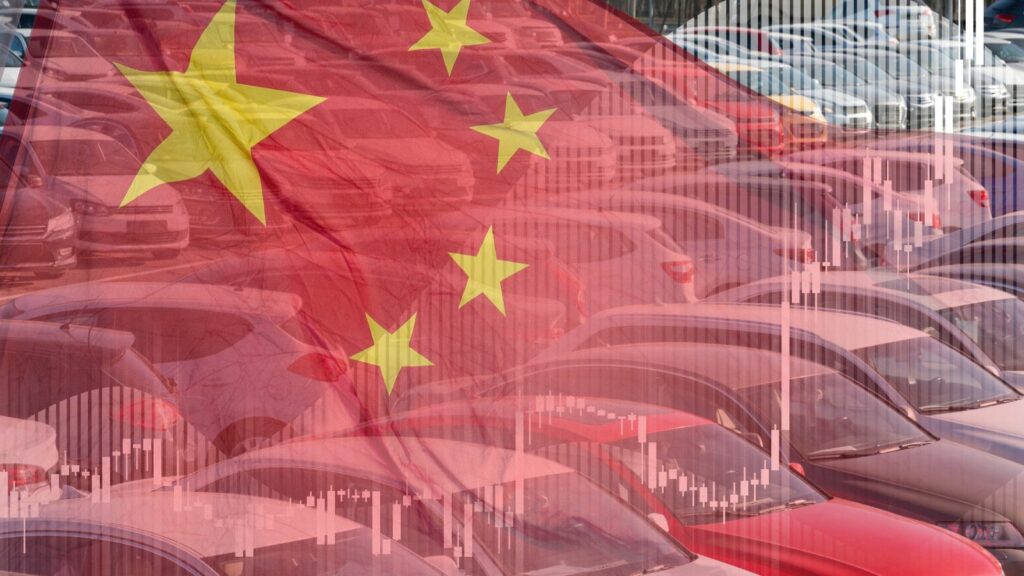
For years, Chinese automakers have largely been treated as a threat to be kept outside North America. That line is suddenly becoming less straightforward. President Donald Trump says he would accept Chinese automakers building vehicles inside the United States if their factories employ American workers, even as powerful regulatory barriers continue to restrict Chinese-connected cars. Canada, meanwhile, has already made a more concrete move by replacing its 100% surtax on Chinese electric vehicles with a controlled import quota.
The two countries are not pursuing identical strategies, and neither has embraced unrestricted Chinese competition. But both are confronting the same uncomfortable reality: China has become too important in electric vehicles, batteries and low-cost manufacturing to ignore. The emerging debate is increasingly shifting from whether Chinese automakers should enter North America to what they would have to build, invest and employ once they arrive.
Trump Draws a Line Between Chinese Imports and Chinese Factories
Trump’s latest comments mark an important distinction in how his administration may view Chinese automakers. In a September 11 interview, he said he would be comfortable with a Chinese company opening a vehicle plant in the United States, emphasizing that the critical issue would be employing Americans. He compared that model with Japanese manufacturers, which spent decades expanding U.S. assembly operations and eventually built substantial domestic supply networks. That is different from welcoming large volumes of finished Chinese vehicles at American ports. Trump’s argument effectively says foreign ownership may be acceptable when the factory, payroll and much of the economic activity are located on American soil.
At the same time, Trump specifically rejected a scenario in which Chinese automakers manufacture vehicles in Mexico and use that country as an export platform into the United States. That distinction reflects his wider push to bring manufacturing directly into America rather than merely reshuffle imports through North American trade partners. He also dismissed reports suggesting Washington was preparing a broad agreement to admit Chinese vehicles. As a result, the comments are better understood as an invitation with conditions rather than a declaration that Chinese brands are suddenly free to enter the American market.
A Major U.S. Regulatory Barrier Is Still Standing
Trump’s comments do not automatically change existing U.S. law or regulation. A Commerce Department rule finalized in January 2025 restricts vehicles, software and connectivity hardware linked to China and Russia. For model year 2027, the rule prohibits certain connected vehicles made by manufacturers controlled by or subject to the jurisdiction of those countries. Significantly, the restriction can apply even when the finished vehicle is assembled inside the United States. Restrictions involving covered vehicle-connectivity hardware phase in later, including model year 2030 requirements.
Tariffs create another obstacle. The United States increased its Section 301 tariff on Chinese electric vehicles to 100% in 2024, on top of other applicable duties. Those barriers helped prevent the wave of inexpensive Chinese EVs seen in several other markets from reaching American showrooms. The political resistance remains strong as well. In September 2026, the Alliance for Automotive Innovation urged Congress to turn existing restrictions into a permanent statutory ban covering Chinese connected vehicles, hardware and software. Trump therefore may be signalling a new direction, but significant policy changes would be required before a BYD or another Chinese manufacturer could simply announce a conventional U.S. passenger-car factory and begin selling vehicles.
Canada Has Already Moved From a Wall to a Controlled Gate
Canada’s shift is much more tangible. Beginning March 1, 2026, Ottawa repealed the 100% surtax it had imposed on Chinese EVs and replaced it with a country-specific quota. Up to 49,000 eligible Chinese-made electric vehicles can enter during the first quota year at Canada’s 6.1% most-favoured-nation tariff rate. The quota is scheduled to grow by 6.5% annually, meaning Ottawa has created a predictable path for Chinese-built EVs without allowing unlimited imports.
The system remains tightly administered. Every covered shipment needs a permit from Global Affairs Canada, and imports are prohibited once the available quota is exhausted. For the second period of the first quota year, running from September 1, 2026 through February 28, 2027, the government made 24,500 vehicles available plus unused capacity carried over from the first six months. Permits continue to be issued largely on a first-come, first-served basis, although Ottawa has reserved the ability to manage access to ensure opportunities for original equipment manufacturers and new entrants. Canada has opened its market, but the gate still has a counter on it.
Canada’s Decision Was Part of a Much Bigger Trade Bargain
Ottawa did not lower the Chinese EV barrier in isolation. The change emerged from a broader Canada-China economic arrangement reached after Prime Minister Mark Carney’s January 2026 visit to China. Canada sought improved access for major agricultural exports while trying to reduce its dependence on the United States. In return for the EV quota and other measures, China agreed to substantially reduce barriers affecting products including Canadian canola seed and provided relief for several other agricultural and seafood exports.
The Canadian government has said China would lower the combined tariff rate on Canadian canola seed to roughly 15%, far below the approximately 85% level officials had previously cited. Other measures covered products such as canola meal, peas, lobster and crab. Ottawa has also set a broader goal of expanding Canadian exports to China by 50% by 2030. Seen through that lens, Chinese EV access is partly industrial policy and partly trade diplomacy. Canada calculated that a limited vehicle opening could help secure access for exporters elsewhere while encouraging Chinese manufacturers to consider Canadian investment instead of treating the country solely as a destination for imported cars.
Affordability Is One of Ottawa’s Biggest Arguments
Canada is also using the quota to address one of the EV market’s persistent problems: price. Starting in the second quota year, a portion of the Chinese allocation must be reserved for vehicles with a free-on-board import value of C$35,000 or less. That share is designed to increase over time, reaching 50% in the fifth year. Ottawa argues that greater access to lower-cost EVs could give households more choice while putting competitive pressure on a market in which affordable electric models remain relatively limited.
The affordability argument arrives as Canada’s EV market tries to regain momentum. Statistics Canada reported that zero-emission vehicles accounted for 9.5% of new registrations in 2025, down from 14.6% in 2024. Momentum improved in 2026: 43,113 new ZEVs were registered in the first quarter, representing 10.8% of registrations, while June sales were 56.1% higher than a year earlier. There is an important caveat, however. Ottawa’s C$35,000 threshold refers to the import value, not necessarily the retail sticker price after transportation, dealer costs, taxes and other expenses. Cheap imports do not automatically guarantee C$35,000 cars on dealership lots.
China’s Auto Industry Is Becoming Harder for Western Markets to Ignore
The pressure behind these policy shifts comes from the extraordinary scale of China’s EV industry. The International Energy Agency estimates that China accounted for nearly three-quarters of global electric-car production in 2025. Chinese factories produced roughly 16 million electric cars that year, and exports of Chinese electric cars doubled to more than 2.5 million as domestic production increasingly exceeded local demand. China also remained dominant in battery manufacturing, giving its automakers advantages stretching beyond final vehicle assembly.
That export push has accelerated in 2026. Chinese passenger-vehicle exports reached about 894,000 units in August alone, according to industry data reported by Reuters, an increase of more than 77% from a year earlier. Electric and plug-in hybrid exports grew even faster. Those vehicles are increasingly appearing across Europe, Latin America, Southeast Asia and other markets where Chinese manufacturers compete aggressively on technology and price. North America has been the major exception. The question facing Canada and the United States is therefore not whether Chinese automakers possess the capacity to expand abroad. It is whether North American policymakers can structure that expansion in a way that creates local economic value rather than simply replacing domestic production with imports.
Canadian Auto Workers See a Much Bigger Risk
For Canada’s auto workforce, the debate looks very different from the consumer affordability discussion. Canada’s automotive industry directly employs more than 125,000 people and supports hundreds of thousands of additional jobs through suppliers, dealerships and related services. More than 90% of Canadian-made vehicles are exported to the United States, making communities across southern Ontario particularly vulnerable when trade policies disrupt production. A change in where even one high-volume vehicle is assembled can affect factories, tooling companies, parts suppliers and trucking operations well beyond the assembly line itself.
That explains Unifor’s strong opposition to Ottawa’s Chinese EV opening. The union has argued that companies seeking meaningful access to Canadian consumers should manufacture in Canada rather than relying primarily on imports. Workers at Unifor Local 222 in Oshawa backed a motion opposing Chinese-owned EV imports shortly after the Canada-China agreement was announced. Their concern is not merely that consumers might choose one brand over another. An imported vehicle contains little Canadian manufacturing labour. A locally assembled vehicle, by contrast, can support stamping, seats, electronics, glass, logistics and dozens of other supplier operations. For labour, the decisive question is therefore simple: will Chinese investment actually follow Chinese market access?
Connected Cars Turn the Debate Into a Security Question
Modern cars complicate the issue because they are increasingly computers on wheels. Connected vehicles can include cellular links, Bluetooth, Wi-Fi, cameras, microphones, navigation systems and advanced driver-assistance software. The U.S. Commerce Department cited those capabilities when it concluded that vehicle technology linked to China or Russia could create risks involving sensitive data and potential remote manipulation. Its 2025 rule consequently reaches far beyond tariffs, focusing on the origin and control of software, connectivity systems and manufacturers themselves.
Canada has also acknowledged similar concerns. Before imposing its original Chinese EV surtax, Ottawa’s consultations explicitly asked stakeholders about cyber security, data security and whether restrictions on Chinese investment or technology in Canada’s EV supply chain might be necessary. The new quota does not eliminate Canada’s other regulatory obligations: imported vehicles still require permits and must comply with Canadian safety, environmental and other applicable rules. Yet Canada currently has a meaningfully different policy architecture from the United States. Washington’s approach treats connected-vehicle technology as an explicit national-security problem, while Ottawa’s current Chinese EV regime is built principally around managed trade, vehicle certification and industrial opportunity.
Canada and the U.S. Could Be Heading Down Different Auto Paths
The divergence matters because Canadian and American auto manufacturing has been integrated for generations. CUSMA’s automotive rules generally require high levels of North American content to qualify for preferential treatment, including a 75% regional value-content threshold for key vehicle categories. Canadian factories also depend heavily on U.S. customers: Ottawa says more than 90% of Canadian-made vehicles and around 60% of Canadian-made parts are exported to the United States. Policies that sharply separate the two markets can therefore create consequences on both sides of the border.
Chinese investment adds another layer. U.S. negotiators have repeatedly emphasized preventing third countries from obtaining unintended benefits from North American trade rules, while Canada is openly trying to attract Chinese joint ventures as part of its auto strategy. A Chinese-backed Canadian factory would consequently raise complicated questions about ownership, software, battery technology, component sourcing and eventual U.S. market access. The outcome could determine whether Canada develops a distinct EV ecosystem serving Canada and overseas markets, or whether North American rules force Ottawa and Washington back toward a more coordinated position on Chinese automotive investment.
The Real Competition May Be Over Where China Builds
The most important signal from both countries may ultimately have less to do with imported vehicles than with factories. Canada’s government says its Chinese EV arrangement is intended to catalyze joint-venture investment with trusted partners and create Canadian manufacturing jobs. Carney has suggested that meaningful investment could emerge within several years. Trump is now making a comparable employment argument from the American side: Chinese capital may be welcome if production happens in the United States and American workers receive the jobs.
Neither outcome is guaranteed. Canada’s import quota does not require a Chinese manufacturer to build a factory, while Trump’s comments do not override the American connected-vehicle regulations that currently stand in the way. Domestic automakers, unions and lawmakers are also likely to fight over the terms of any future investment. Still, the language has changed dramatically. The debate is no longer simply about keeping Chinese cars out. Increasingly, Ottawa and Washington are wrestling with a more difficult proposition: if Chinese automakers are becoming unavoidable global competitors, North America may have to decide whether to exclude them entirely or force them to become local manufacturers.
