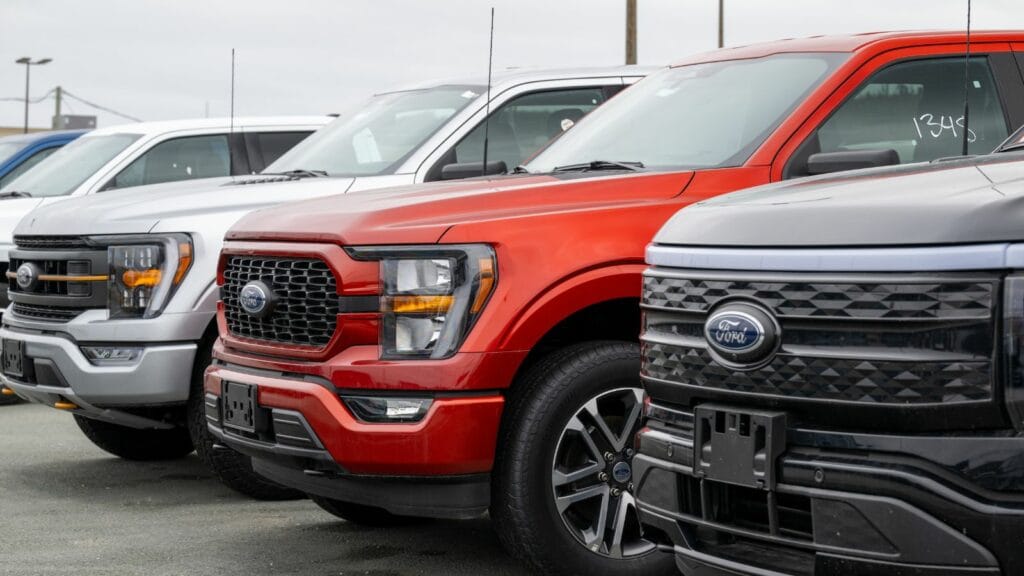
At first glance, 0.3% looks like evidence that electric vehicles have almost vanished from Canadian dealer lots. The underlying data is more nuanced. A September 21 AutoDeal Canada snapshot counted 282,094 active public listing records tied to 2,511 dealer identifiers, with 758 records classified as electric in their engine or fuel fields.
That makes the figure useful as a real-time window into one dealer-listing ecosystem, but not as a national EV sales share. Fresh Statistics Canada registration data points to a much larger zero-emission presence in the new-vehicle market. The contrast helps explain why inventory snapshots, sales data and registration data can tell very different stories at the same moment.
The Snapshot Really Does Put EVs at 0.3%
The headline number comes from a report generated September 21, 2026, using source observations from that day. AutoDeal Canada counted 282,094 active listing records, including 758 classified as electric, equal to 0.3% of the sample. The same report showed 2,511 dealer identifiers, an average asking price of $44,540 across its price sample and a median used asking price of $33,745.
Electric listings were much pricier on average. The report put their average asking price at $60,862, roughly 37% above the overall average asking price. That gap does not mean every EV costs more than a comparable gasoline vehicle, because averages are heavily influenced by the mix of models and trims in the sample. Still, it is a meaningful clue: the EV inventory captured here is not dominated by entry-level models. For shoppers browsing this particular pool, electric choices may feel both scarce and relatively expensive in many local online searches.
Why 0.3% Should Not Be Read as National Market Share
The biggest mistake would be to read 0.3% as the share of vehicles Canadians are buying. AutoDeal Canada explicitly says its unit is an active vehicle-listing record, not a completed sale, registration or title transfer. Records were observed during the 30 days before the report was generated, and a single physical vehicle can appear in more than one source record.
Coverage is incomplete. Of the 282,094 records in the September 21 snapshot, 245,967 could be mapped to a province or territory, while 36,127 were excluded from geographic tables. The methodology warns that missing, delayed or incorrect source fields can affect aggregates and that the inventory does not include every vehicle offered for sale in Canada. Those caveats matter especially for a small category like EVs, where classification or source-coverage differences can move the percentage. The 0.3% figure is therefore best treated as a platform snapshot, not a national market-share estimate.
Registration Data Tells a Very Different EV Story
Statistics Canada’s latest registration data shows why the distinction matters. In the second quarter of 2026, Canadians registered 547,673 new motor vehicles. Of those, 58,811 were zero-emission vehicles, giving ZEVs a 10.7% share of new registrations. That was up from 8.6% in the second quarter of 2025 and represented a 26.7% year-over-year increase in ZEV registrations.
Battery-electric registrations rose 37.4% from a year earlier, while plug-in hybrid registrations increased 8.0%. The broader recovery came after a difficult 2025, when ZEVs represented 9.5% of new registrations, down from 14.6% in 2024. These figures are not directly comparable with AutoDeal’s 0.3% because the definitions and populations differ: Statistics Canada measures newly registered vehicles, while AutoDeal measures active listing records and classifies “electric” through listing fuel or engine fields. The gap is a reminder that inventory visibility and actual market activity are entirely separate measurements, captured over different periods and through different systems.
The Price Gap Helps Put the Inventory Mix in Context
Price may help explain why the snapshot looks thin at the electric end. AutoDeal Canada reported an average EV asking price of $60,862, compared with $44,540 across the broader priced inventory. The five most common EV models also covered a wide range, from a $33,598 average asking price for the Fiat 500e to $74,389 for the Kia EV9.
That spread matters because Ottawa’s Electric Vehicle Affordability Program targets lower-priced purchases. In 2026, eligible battery-electric and fuel-cell vehicles can receive up to $5,000, while eligible plug-in hybrids can receive up to $2,500. For most vehicles, the final transaction value must be $50,000 or less; Canadian-made EVs are exempt from that cap. The incentive therefore does not automatically make every model in a listing pool eligible. A high average asking price can coexist with strong EV demand if the vehicles attracting buyers sit in different price bands than the inventory accumulating online.
A Handful of Models Make Up a Large Share of the EV Listings
The EV side of the snapshot is concentrated in a small group of nameplates. AutoDeal Canada listed the Kia EV9 as the most common electric model with 71 records, followed by the Volkswagen ID.4 with 54, Hyundai IONIQ 5 with 51, Ford Mustang Mach-E with 36 and Fiat 500e with 30.
Together, those five models account for 242 of the 758 electric listings, or about 32% of the EV category captured by the report. That concentration makes the headline percentage more sensitive to changes at a handful of brands and dealer networks. If one manufacturer clears inventory, pauses deliveries or changes how listings are syndicated, the EV count can shift without signaling a comparable change in national consumer demand. It also shows how different “EV availability” can look depending on where a shopper starts searching. A platform with strong representation from certain dealer groups may present a different electric mix from another marketplace.
Provincial Markets Are Moving at Different Speeds
Geography adds another layer of caution. In the September 21 AutoDeal snapshot, Quebec accounted for 101,564 mapped listings of all fuel types, followed by Ontario with 61,347, British Columbia with 27,428 and Alberta with 22,903. Those figures describe the platform’s geographic coverage, not provincial sales, and the report does not provide a province-by-province breakdown of its 758 electric records.
Official registration data shows that EV momentum is not uniform across the country. In the second quarter of 2026, new ZEV registrations rose 46.6% year over year in Ontario, 46.0% in Nova Scotia, 39.6% in Saskatchewan, 39.2% in Manitoba, 31.5% in British Columbia and 12.5% in Quebec. New Brunswick moved the other way, falling 16.6%. That variation means a Canada-wide listing percentage can obscure very different local realities. A buyer in one province may encounter healthy EV choice while another sees a far thinner selection, even when the national registration trend is improving.
Federal Incentives Returned as Registrations Rebounded
Federal incentives are back in the market, and the timing overlaps with a rebound in new ZEV registrations. The Electric Vehicle Affordability Program applies to eligible purchases or leases initiated on or after February 16, 2026. It offers up to $5,000 for qualifying battery-electric and fuel-cell vehicles and up to $2,500 for plug-in hybrids in 2026, with incentive amounts scheduled to decline over the five-year program.
Statistics Canada recorded 43,113 new ZEV registrations in the first quarter, equal to 10.8% of all new registrations and up 15.8% from a year earlier. It was the first year-over-year ZEV increase since the fourth quarter of 2024. The second quarter then rose to 58,811 registrations, up 26.7% from a year earlier. The timing does not prove the federal program caused the rebound, because pricing, model supply, provincial incentives and broader economic conditions also matter. It does show why dealer inventory and consumer demand could shift quickly as affordability measures change.
Canada Is Also Reworking Its EV Policy Framework
Canada’s EV policy backdrop is changing at the same time. In February 2026, the federal government said it would repeal the Electric Vehicle Availability Standard and replace that approach with stronger greenhouse-gas emission standards for light-duty vehicles. The government said standards for model years 2027 through 2032 are intended to put Canada on a path toward a 75% EV adoption rate by 2035, with an aspirational goal of 90% by 2040.
The regulatory process is still moving. A federal registry entry published in August set out proposed amendments that would repeal the zero-emission vehicle requirements in the existing passenger automobile and light truck regulations. Dealer planning is therefore taking place during a policy transition rather than under the straightforward 2026-to-2035 sales-target path originally announced several years ago. For manufacturers and dealers, changing rules can affect allocation, pricing and model strategy. For consumers, it means today’s inventory mix should not automatically be assumed to represent the market Canada will see one or two years from now.
One Snapshot Is Not Enough to Establish an Inventory Trend
The most useful way to read the 0.3% figure is as a baseline worth watching, not a verdict on Canada’s EV transition. AutoDeal’s August archive contained 278,376 active listing records, while the September 21 snapshot contained 282,094. But the company’s own methodology cautions that meaningful month-to-month conclusions require comparable historical observations, because listings can be added, removed, corrected or reclassified and source coverage can change.
Future snapshots will become more informative if the same definitions and coverage remain stable. A sustained rise in the electric share, accompanied by lower asking prices and a broader mix of models, would say something different from a temporary jump caused by one source or dealer group. For now, the strongest conclusion is narrower: this particular dealer-listing dataset shows EVs occupying a very small visible slice of active inventory, while official registration data shows zero-emission vehicles accounting for more than one in ten new registrations. Both facts can be true at the same time.
Active Listings and Registrations Measure Different Things
Active listings and registrations measure different parts of the market. A listing snapshot is essentially a stock measure: it captures vehicles visible for sale at a particular point in time. Registration data is closer to a flow measure, counting vehicles that actually entered the road fleet during a period. Those two measures do not have to move together, even when both are accurately reported.
A fast-selling category can leave relatively little visible inventory because vehicles turn over quickly, while a slower-selling category can occupy more listing space because units remain available longer. Platform coverage and classification can widen the gap further. That is why the 0.3% figure should not be used to argue that EV demand itself is only 0.3% of the Canadian market. The more precise reading is that within this dealer-listing dataset, records classified as electric were rare on September 21. For demand, the stronger companion measure remains registration data, where ZEVs held a 10.7% share in the latest quarter.
