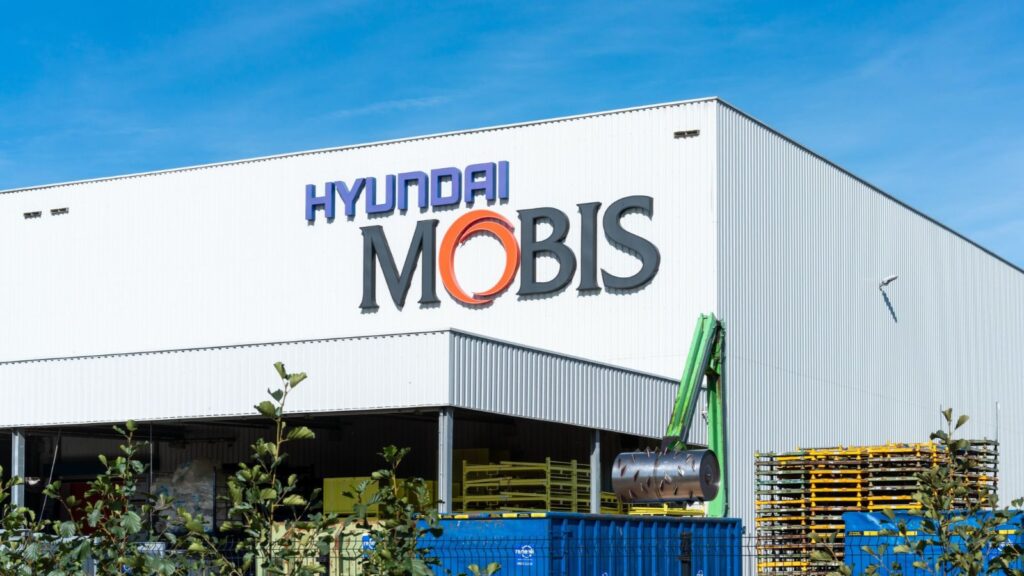
Hyundai Mobis has agreed to sell its global automotive lighting business to French supplier OPmobility in a deal carrying an enterprise value of 600 billion won, or roughly US$443 million. The transaction gives OPmobility a profitable operation with five manufacturing plants spanning South Korea, China, Mexico and the Czech Republic, while allowing Hyundai Mobis to concentrate more resources on technologies it considers central to the next generation of vehicles. The timing is particularly significant for OPmobility. The French supplier has been trying to reduce its reliance on Europe while expanding in North America and Asia, and the Hyundai Mobis business adds scale, customers and manufacturing capacity to that strategy. The agreement is definitive, but the transaction still requires a corporate separation and regulatory approvals before an expected closing in the second half of 2027.
The Deal Is Signed, but the Sale Has Not Closed
The headline number is substantial, but the structure of the transaction matters. OPmobility signed a final agreement on September 30 to acquire 100% of Hyundai Mobis’ lighting activity at an enterprise value of 600 billion Korean won, which Reuters converted to approximately US$443 million. That moves the companies well beyond the memorandum of understanding they signed in January, when OPmobility was still evaluating a potential controlling stake. Instead of taking only part of the operation, the French company is now positioned to own the entire lighting business once the required steps are completed.
Those steps mean the transaction should not be treated as an already completed handover. Hyundai Mobis plans to physically separate the lighting division into a new entity, with the split scheduled for April 1, 2027. OPmobility is targeting completion during the second half of 2027, subject to the necessary regulatory and competition approvals. For automakers and employees connected to the operation, that creates a lengthy transition period in which Hyundai Mobis continues preparing the business for independent ownership while OPmobility works toward eventually incorporating it into a much larger global lighting network.
A Profitable Global Lighting Operation Is Changing Hands
This is considerably more than the sale of a small product line. According to OPmobility, the Hyundai Mobis lighting activity generated 2.5 trillion won in revenue during 2025 and produced a positive operating margin. Its industrial footprint includes five plants spread across South Korea, China, Mexico and the Czech Republic. Those locations give the operation access to three of the world’s most important automotive manufacturing regions and make the purchase strategically useful even before potential technology or procurement savings are considered.
The Mexican operation is particularly relevant to OPmobility’s North American ambitions. Automotive suppliers increasingly need production close to assembly plants because components must arrive according to tightly controlled schedules, while trade rules and transportation costs can make long-distance sourcing more complicated. South Korea and China, meanwhile, significantly strengthen OPmobility’s Asian footprint, while the Czech operation adds capacity inside Europe’s large vehicle-manufacturing base. OPmobility had already told investors that the proposed combination would expand its front-lighting portfolio and geographic reach. With the definitive deal covering the entire business, the company is acquiring factories, existing programs, technical expertise and customer relationships at the same time.
Hyundai Mobis Is Narrowing Its Focus
For Hyundai Mobis, selling a profitable operation may initially seem counterintuitive. The move makes more sense when viewed alongside the supplier’s broader restructuring. At its 2025 CEO Investor Day, Hyundai Mobis said it was evaluating the competitiveness of roughly 60 products and reallocating resources toward future core technologies. Its priorities include electrification, electronics, software-defined vehicle systems, automotive semiconductors and robotics. Management has framed the strategy around improving profitability rather than simply expanding the number of businesses under the Hyundai Mobis umbrella.
The company has put measurable targets around that transformation. Hyundai Mobis has said it wants annual sales growth above 8% and an operating margin of 5% to 6% by 2027, while increasing the share of global customers in its core-parts business to 40% by 2033. There are already signs that its non-Hyundai Motor Group business is expanding. Hyundai Mobis said it secured US$9.17 billion in orders from global automakers other than Hyundai and Kia in 2025, exceeding its original target, and set a roughly US$11.84 billion global order target for 2026. Selling lighting therefore fits a larger effort to direct capital and engineering resources toward higher-priority technologies.
OPmobility Is Buying Scale, Customers and Geography
OPmobility’s motivation goes well beyond adding another source of revenue. When the companies first disclosed their discussions in January, OPmobility highlighted three major advantages: a stronger product portfolio, a larger customer base and a broader geographic presence. Its investor materials specifically pointed to front-lighting solutions, closer relationships with Hyundai and Kia, and additional operations in South Korea, China, Mexico and the Czech Republic. Management also identified potential cost efficiencies from operating the businesses together.
Customer diversification may prove especially valuable. Supplying a major automaker is rarely about winning a single component contract and moving on. Successful suppliers can remain involved across multiple vehicle generations, platforms and regions, creating opportunities to sell additional systems. OPmobility Chief Executive Félicie Burelle said the Hyundai Mobis combination would deepen the company’s relationship with Hyundai and Kia. At the same time, greater lighting scale could complement OPmobility’s existing exterior systems, modules and software capabilities. The result is a supplier increasingly able to pitch complete sections of a vehicle rather than competing only for an individual bumper, lamp or tailgate.
North America Sits at the Centre of the Growth Plan
The acquisition arrives while OPmobility is deliberately shifting more attention toward North America. The region generated €3.204 billion of economic revenue for the company in 2025, representing 28% of its worldwide total. North American revenue declined 1.5% on a like-for-like basis that year, but the United States itself grew 1.2%. Momentum strengthened in early 2026: OPmobility reported 4.9% like-for-like growth in North America during the first quarter while regional light-vehicle production, using S&P Global Mobility data cited by the company, fell 1.4%.
OPmobility is backing that ambition with physical capacity. In June, it announced plans for a new manufacturing plant in the greater Toledo, Ohio, area, its first Midwest factory dedicated to exterior solutions. Production is expected to begin in the second half of 2027, putting the facility close to a dense concentration of U.S. vehicle assembly operations. The acquired Hyundai Mobis lighting plant in Mexico adds another North American piece to that network. Together, those moves illustrate why the acquisition is more than a lighting transaction: it fits a broader strategy of producing closer to automakers and reducing dependence on OPmobility’s historically dominant European business.
The U.S. Push Goes Far Beyond Headlamps
Lighting is only one part of OPmobility’s North American expansion. In February 2026, the company announced a major U.S. contract to provide 350-volt battery packs for future hybrid vehicles from an unnamed global automaker. OPmobility expects to supply more than one million packs over the life of the program, with production planned in the United States through an expansion of its existing Anderson facility. The contract also pushes its battery operation deeper into passenger vehicles after much of its earlier electrification work focused on heavy-duty transportation such as buses, trucks and trains.
The company has been building other pieces of its U.S. network as well. OPmobility opened a module-assembly facility in Austin, Texas, in 2024 to serve a major American electric-mobility customer, and its 2025 integrated report listed 11 U.S. plants, six research and development centres and approximately 3,300 employees. A new North American headquarters in Troy, Michigan, opened in 2025 to bring its different business groups closer together. OPmobility has stated an ambition to double its U.S. turnover between 2024 and 2030. Against that backdrop, adding Hyundai Mobis’ lighting assets becomes another building block in a much larger regional expansion.
Automotive Lighting Has Become a Technology Platform
Modern automotive lighting is no longer limited to placing bulbs at the front and back of a vehicle. Headlamps, illuminated body panels, signature lighting and electronically controlled beam systems increasingly combine styling, electronics and safety functionality. The regulatory environment has also evolved. In 2022, the U.S. National Highway Traffic Safety Administration amended federal standards to permit adaptive driving beam headlights, which can automatically reduce illumination around other road users while maintaining greater light in unoccupied portions of the road.
OPmobility has already been working to integrate lighting with other vehicle components. In May 2026, it announced a Stellantis contract for a complete rear module combining a bumper, thermoplastic tailgate and built-in lighting for a future electric SUV. The company said its broader One4you integrated-solutions program secured about 10 awards during 2025. That approach helps explain the appeal of Hyundai Mobis’ lighting capabilities. More scale in headlamps and related technologies can strengthen OPmobility’s ability to package exterior parts, lighting, modules and software into larger systems, potentially increasing how much content it supplies on each vehicle platform.
The Financial Numbers Put the Acquisition in Perspective
Hyundai Mobis’ lighting business generated 2.5 trillion won of revenue in 2025 against an agreed enterprise value of 600 billion won. A simple comparison places the enterprise value at roughly 24% of one year’s reported revenue, although that calculation is not a substitute for an earnings-based valuation because the business’s detailed profit, cash-flow and balance-sheet figures have not been publicly broken out. OPmobility has disclosed only that the acquired operation generated a positive operating margin in 2025.
The buyer enters the transaction from a sizeable financial base. OPmobility reported €11.537 billion in economic revenue for 2025, an operating margin of €490 million and €297 million in free cash flow. Net debt ended the year at €1.409 billion, down €167 million from the prior year, while net debt stood at 1.4 times EBITDA. The company has emphasized debt reduction while pursuing expansion, making financing discipline an important part of the transaction. OPmobility has said the Hyundai Mobis acquisition is not expected, on a pro forma basis, to have a significant effect on its deleveraging strategy.
Regulatory Reviews and Worker Concerns Still Matter
The long gap between signing and expected completion gives both companies substantial work to do. Hyundai Mobis must complete the planned separation of its lighting division, while shareholder and competition-related procedures remain ahead. OPmobility, for its part, expects the acquisition to close during the second half of 2027 once required regulatory and antitrust approvals have been obtained. Until those conditions are met, the businesses remain separate despite having a definitive agreement in place.
Employees add another dimension to the transition. Korean reporting indicates that approximately 400 Hyundai Mobis workers are expected to fall within the transfer, with their employment-related rights and obligations moving to the newly created lighting company. Hyundai Mobis’ office and research workers’ union has opposed the transaction and raised concerns about employees being transferred, with representatives considering legal action after reviewing the agreement. Hyundai Mobis has said it will continue discussions while preparing the new organization. That makes execution just as important as the headline valuation: OPmobility is buying an established industrial business, and successfully integrating its plants, technology, customers and people will ultimately determine how much strategic value the US$443 million deal creates.
