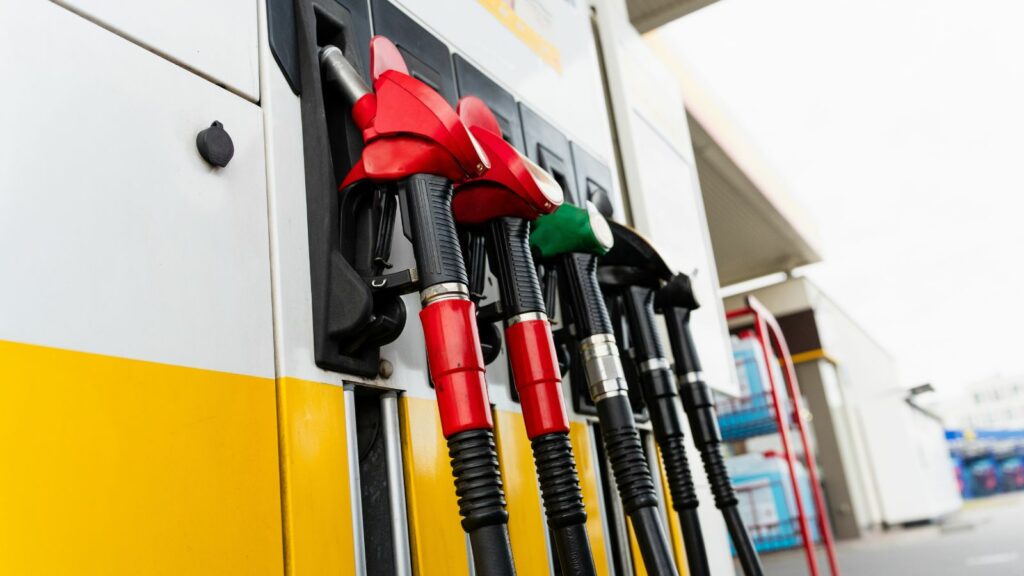
Toronto drivers heading out over the Thanksgiving weekend are facing two very different fuel markets. Regular gasoline is forecast to settle around $1.81 to $1.82 a litre on Sunday, Oct. 11, while diesel is expected to remain close to $2.60 after an extraordinary jump heading into the weekend.
The difference is more than an inconvenience for diesel pickup owners. It reaches delivery fleets, tradespeople and trucking companies whose fuel bills ultimately feed into the cost of moving goods. The divergence also illustrates something easily missed when fuel prices rise: gasoline and diesel may come from the same barrel of crude, but their wholesale markets can behave very differently. This Thanksgiving, Toronto is seeing that split in unusually stark numbers.
Sunday’s Forecast Puts Diesel Around $2.60
Fuel-price forecasts available heading into Sunday are not identical, but they tell essentially the same story. Canadians for Affordable Energy forecasts Toronto regular gasoline at 181.9 cents per litre for Oct. 11 and diesel at 257.9 cents. Gas Wizard’s Toronto data puts regular slightly lower at 180.9 cents and diesel slightly higher at 261.9 cents. CityNews, using En-Pro International data, also forecasts regular gasoline at about 181.9 cents. That makes “near $2.60” for diesel and “near $1.81” for regular the most defensible way to describe Sunday’s expected prices.
The small disagreement is a useful reminder that these are forecasts rather than regulated prices. Individual Toronto stations can move differently because of inventory turnover, nearby competition and when new wholesale fuel reaches a location. Thanksgiving itself falls on Monday, Oct. 12 this year, making Sunday the middle of the long weekend and a particularly noticeable time for such a wide split at the pump.
Diesel Just Went Through a Sharp Weekend Spike
The Sunday number looks even more striking when viewed against what happened Friday and Saturday. Canadians for Affordable Energy showed Toronto diesel at 249.9 cents per litre Friday before forecasting a 14-cent jump to 263.9 cents Saturday. Its Sunday forecast then calls for a six-cent retreat to 257.9 cents. Gas Wizard recorded a similarly elevated weekend level, showing diesel at 261.9 cents for both Saturday and Sunday after 246.9 cents on Friday.
Regular gasoline moved in the opposite direction. The same forecasts show gasoline sliding from roughly 185.9 cents Friday toward the low 180s by Sunday. CityNews reported an expected one-cent Sunday decline following earlier drops during the week. That creates an unusual experience at stations selling both fuels: the gasoline side of the sign is moving gently downward while the diesel number remains dramatically elevated. For a household with one gasoline car and one diesel pickup, Thanksgiving refuelling could therefore feel like two completely different energy markets despite both vehicles stopping at the same station.
The Biggest Clue Is in Toronto’s Wholesale Prices
Wholesale fuel data helps explain why the spread is so large. Petro-Canada’s Toronto terminal posting effective Oct. 10 listed regular gasoline at 139.5 cents per litre and ultra-low-sulphur diesel at 209.5 cents per litre in its intraday rack-price table. Those figures exclude taxes and represent terminal-level fuel pricing rather than what motorists ultimately pay. Even before retail costs and taxes are added, diesel was therefore carrying a roughly 70-cent-per-litre premium over regular gasoline.
That distinction is important because it shows the gap is not simply a Toronto gas-station operator deciding to charge substantially more for diesel. Retail stations generally purchase product at prices influenced by wholesale rack markets and then add transportation, operating costs and retail margins. When the underlying diesel rack price rises far above gasoline, the difference eventually becomes visible on roadside price boards. A 70-cent wholesale gap is large enough that even aggressive competition between stations cannot realistically erase it. Retailers can compete over margins; they cannot remove the price of the fuel they must first buy.
A Global Diesel Squeeze Is Driving the Divide
Diesel has been caught in an unusually tight international market. The U.S. Energy Information Administration raised its oil-price outlook in early October while pointing specifically to tight diesel markets and falling global petroleum inventories. The continuing conflict involving Iran has disrupted energy infrastructure and flows through the Middle East, while Russian refining and export uncertainty has added further pressure to global supplies of refined fuels. Diesel and other middle distillates have been particularly sensitive because inventories were already constrained.
Another pressure point appeared in Asia when Chinese refiners suspended most October fuel exports outside Hong Kong and Macau as Beijing prioritized domestic energy security. Reuters reported the decision was expected to tighten supplies of diesel, jet fuel and gasoline internationally. Meanwhile, governments have been debating emergency-stock releases to calm markets. The significance for Toronto is indirect but real: refined petroleum products trade in international markets. When diesel becomes scarce globally, wholesale prices in Eastern Canada can rise even if the local gasoline market is moving in the opposite direction.
Gasoline Is Getting Help From Seasonal Market Changes
Regular gasoline has another factor working in its favour: the annual switch away from more expensive summer-grade fuel. In September, En-Pro chief petroleum analyst Roger McKnight attributed an eight-cent GTA gasoline decline to the transition from summer to winter gasoline. Winter formulations are generally less costly to produce because refiners do not face the same summertime volatility requirements. That seasonal shift does not guarantee cheap gasoline, but it can create downward pressure at the same time diesel markets are tightening.
Toronto motorists have already seen how volatile 2026 has been. CityNews historical figures show GTA regular gasoline reached 190.9 cents in early October before retreating. Gas Wizard places its current 30-day Toronto regular-gasoline average at about 183.8 cents per litre and its year-to-date average around 165.7 cents. Even Sunday’s roughly $1.81 price is therefore expensive by longer-term standards. Gas Wizard shows the comparable price a year earlier near $1.34. Regular gasoline may be offering relative relief beside diesel, but it is hardly inexpensive.
Taxes Are Not What Created the Huge Diesel Premium
Ontario currently taxes both regular gasoline and clear diesel at nine cents per litre. The province permanently reduced its gasoline and diesel tax rates to that level in July 2025. Ottawa has also extended its temporary suspension of the federal fuel excise tax through Jan. 31, 2027. Under normal circumstances, the federal levy is 10 cents per litre on gasoline and four cents on diesel, but both are currently suspended under the federal relief program.
Ontario’s 13% HST still applies to motor fuels, which means a more expensive base product generates more sales tax in dollar terms. Even so, the current diesel premium cannot primarily be blamed on a special diesel tax. The wholesale figures demonstrate that most of the difference exists before the pump price is assembled. This is an important distinction for drivers looking at a diesel price near $2.60 beside gasoline around $1.81. Provincial fuel-tax rates are the same for the two products, while the federal excise tax is temporarily zero. The extraordinary gap is fundamentally a product-market and supply issue.
Truckers and Delivery Fleets Feel the Increase First
Diesel prices matter far beyond motorists who happen to own diesel vehicles. Statistics Canada reported that prices for truck transportation services in the second quarter of 2026 were 9.5% higher than a year earlier, coinciding with the sharp increase in global energy costs that followed the escalation of conflict in the Middle East. The agency also said producer prices for diesel rose between 40.3% and 58.8% across different Canadian regions from July 2025 to July 2026.
Those increases can work their way through ordinary purchases. Grocery shipments, construction materials, furniture, parcels and restaurant supplies spend part of their journey in diesel-powered trucks. Businesses do not necessarily pass every extra fuel dollar immediately to customers, and contractual fuel surcharges can differ considerably, but persistent diesel inflation puts pressure on operating budgets. Statistics Canada found that 22.4% of transportation and warehousing businesses surveyed in the third quarter expected to increase their prices over the next three months. For those companies, a few cents per litre matters; a diesel market approaching $2.60 is much harder to absorb.
The Difference Adds Up Quickly at the Pump
The gap becomes easier to understand when translated from cents per litre into a fill-up. Using the Canadians for Affordable Energy Sunday forecasts of 181.9 cents for regular and 257.9 cents for diesel, the difference is 76 cents per litre. Across a 60-litre purchase, that works out to $45.60 more for the same volume of diesel. A 60-litre gasoline purchase at the forecast price would cost about $109 before any loyalty discounts, while 60 litres of diesel would approach $155.
Commercial vehicles can take far more fuel, which magnifies the impact. That does not mean every trucking company is paying the posted retail price—larger fleets may have commercial contracts, bulk arrangements or fuel discounts—but the underlying wholesale increase still matters. For an individual contractor filling a diesel pickup before travelling to a Thanksgiving gathering or heading back to work after the holiday, the retail price is immediate. A difference that looks abstract on a market chart can become tens of dollars in a single stop.
Sunday’s Price Is a Forecast, Not a Guarantee
Drivers should also avoid treating 257.9, 261.9 or 181.9 cents as prices that every Toronto station must display. Ontario does not impose a single daily retail fuel price in Toronto. Analysts forecast regional averages using wholesale movements and market conditions, while stations can adjust locally. Canadians for Affordable Energy and Gas Wizard themselves show slightly different Sunday estimates, and CityNews warns that rapidly changing market conditions can lead to forecast revisions during the day.
The next direction for diesel will depend heavily on the wholesale market. Governments and energy agencies are discussing emergency petroleum releases, Russia has announced plans for additional diesel supplies, and global crude flows have shown signs of adaptation to Middle East disruptions. Those developments could eventually ease pressure. They could also be overwhelmed by fresh refinery or geopolitical disruptions. For Thanksgiving Sunday, however, the basic picture is unusually clear: Toronto regular gasoline is hovering around the low $1.80s, while diesel remains close to $2.60—a gap created largely before either fuel reaches the station.
