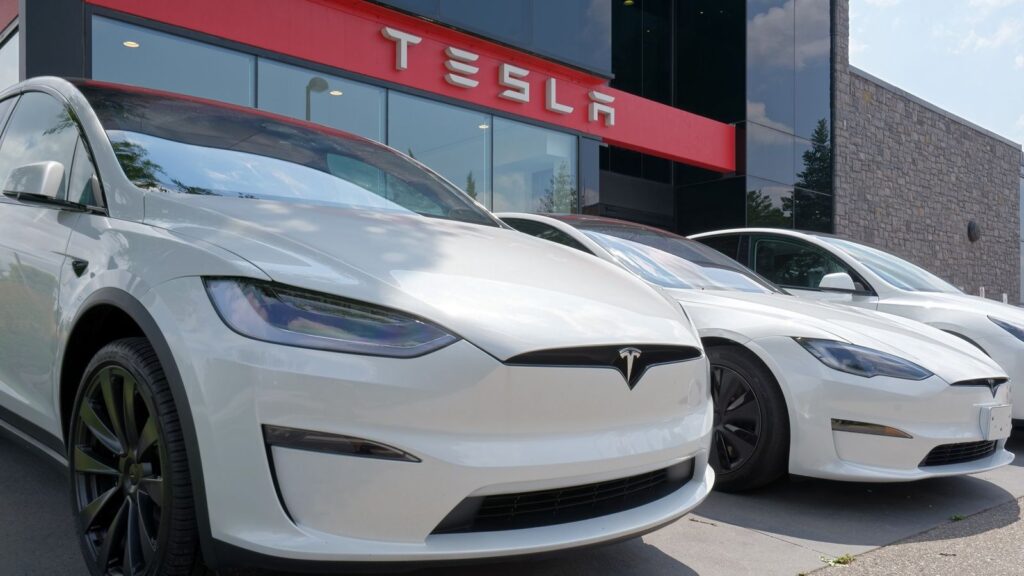
Renting a Tesla with Full Self-Driving has been possible before. What changes this week is the promise of verification. Turo and Tesla are launching a U.S. rental experience that can confirm through Tesla’s own systems whether Full Self-Driving (Supervised), or FSD, is actually active on a listed vehicle before a guest books it. The feature is scheduled to launch October 28, giving travelers a new way to search for and reserve FSD-enabled Teslas while giving hosts a new selling point for their cars.
The rollout is notable for Canada because the technology itself is already available north of the border and Turo already operates there. Yet the companies’ announcement is explicitly U.S.-focused, and no Canadian launch date has been provided as of October 26, 2026.
The U.S. Launch Starts October 28
Turo says guests in the United States will be able to search for, discover and book Teslas with FSD (Supervised) activated beginning October 28. The key piece is a direct application programming interface, or API, connection with Tesla. Once a host links a Tesla account to Turo, the platform can confirm the vehicle’s FSD status and display that information on an eligible listing. Turo says thousands of FSD-enabled Teslas are already available on its marketplace, so the launch does not depend on building a new fleet from scratch.
The companies are also using the rollout to make the software easier to experience without buying a Tesla. Eligible U.S. hosts can receive a free one-month FSD (Supervised) trial, while renters will be encouraged to review Tesla’s FSD documentation and safety guidance before pickup. Tesla-created educational material will also be available to renters. For a traveler choosing between otherwise similar Model 3 or Model Y listings, confirmed software access could become a meaningful differentiator.
Verification Is the Bigger Change Than Availability
The word “verified” is doing most of the work in this launch. Turo hosts have been able to advertise Teslas with FSD before, including listings where the feature is included or offered as a paid extra. Until now, however, a prospective renter could largely be relying on what the host wrote in the listing. The new integration gives Turo a direct technical path to confirm that FSD (Supervised) is active rather than simply accepting a description entered by the vehicle owner.
That distinction matters because FSD access can depend on the vehicle, software version, hardware and subscription status. Tesla’s own support material tells owners how to check whether a vehicle has the software and whether FSD is active. Turo’s API connection effectively moves part of that verification into the booking experience. It does not guarantee how the system will perform on a particular trip, but it can reduce one basic source of uncertainty: whether the advertised feature is actually enabled when the listing is presented to a renter.
These Are Not Driverless Rental Cars
Despite the phrase “self-driving” appearing in the announcement, the vehicles are not being offered as driverless cars. Tesla consistently labels the product Full Self-Driving (Supervised) and says the currently enabled features require active driver supervision. The system can steer, accelerate, brake, change lanes, follow a navigation route and negotiate intersections, but the person in the driver’s seat remains responsible for the vehicle and must be prepared to intervene.
That distinction is also consistent with how transportation regulators describe Level 2 driver-assistance technology. The U.S. National Highway Traffic Safety Administration says Level 2 systems can provide steering and acceleration or braking at the same time, while the driver remains fully engaged and attentive. Transport Canada similarly says Level 2 partial automation still requires the human driver to monitor and respond to the driving environment. A renter can therefore let the system handle many routine driving inputs, but cannot use the trip like a chauffeur service, look away from the road or assume the car will resolve every unusual situation on its own. For someone experiencing FSD for the first time on vacation, that may be the most important lesson: the software can substantially change the driving workload without transferring responsibility away from the driver.
Turo Is Turning Curiosity Into a Test-Drive Channel
Turo has a strong reason to make FSD easier to find. The company says the Tesla Model 3 and Model Y are already its third- and fourth-most-popular vehicle models year-to-date. That means the platform is not introducing an unfamiliar brand to renters; it is layering a technology filter onto cars that already attract significant demand. For hosts, verified FSD can become another way to distinguish one Tesla from dozens of similar vehicles in the same city.
Turo’s own 2026 U.S. Road Report also points to a large pool of technology-curious travelers. In a survey of 2,005 Americans, 55% said they were interested in using autonomous vehicles for long-distance travel, while 71% of Gen Z respondents said they would take a road trip in a fully autonomous vehicle. Among respondents interested in autonomous vehicles, 22% said they would be comfortable spending seven or more hours in a driverless car. FSD (Supervised) is not fully autonomous, but those numbers help explain why a rental platform sees value in giving people a lower-commitment way to experience advanced driving assistance.
Tesla Has a Business Reason to Put FSD in More Hands
The Turo partnership arrives just after Tesla reported a sharp increase in FSD adoption. In its third-quarter 2026 update, Tesla listed 1.74 million active FSD subscriptions, up from 1.04 million a year earlier. Tesla notes that this metric includes both upfront purchases and monthly subscriptions while excluding free trials. The company also said the FSD attach rate exceeded 75% of new vehicle deliveries in North America during the quarter, nearly 20 percentage points higher sequentially.
Those figures make rentals strategically interesting. A conventional showroom demo is short and controlled; a Turo booking can put the software into a renter’s normal routine for a day, a weekend or a longer road trip. Tesla’s third-quarter filing also showed its cumulative vehicle-delivery metric reaching 10.2 million, putting the 1.74 million active-FSD figure into the context of a much larger installed vehicle base, although not every historical vehicle is necessarily eligible for the current software. A rental can therefore expose FSD to people who do not own a Tesla at all, not just existing owners considering a subscription. Turo benefits from a new feature category, hosts gain another selling point, and Tesla gets more people interacting with a product that has become increasingly important to its vehicle proposition. The arrangement is as much a software-distribution experiment as it is a rental feature.
Canada Already Has FSD, Just Not This Verified Turo Rollout
Canada is not waiting for FSD itself. Tesla’s Canadian support pages say FSD (Supervised) is available to eligible vehicles as a monthly subscription, currently listed at $99 per month, and Tesla includes Canada among the markets where the software is available. The company also reported record quarterly vehicle deliveries in Canada in the third quarter of 2026, underscoring that the country is an active market for Tesla rather than a peripheral one.
Turo is established in Canada as well. Its Canadian marketplace lists Tesla vehicles across major cities, and the company’s October 26 announcement describes Turo as operating across the United States, Canada, the United Kingdom, France and Australia. Tesla also already gives Canadians other ways to experience FSD: its support page points to store demo drives and self-serve demo drives, while eligible new-vehicle owners can receive a 30-day trial. Even so, the new Turo verification program is described specifically as a U.S. launch. The free one-month FSD trial is also limited in the announcement to eligible U.S. hosts. No Canadian date, pilot city or staged rollout plan was disclosed. That makes the present gap a platform rollout issue, not evidence that FSD technology is unavailable in Canada.
Canadian Hosts Are Already Advertising FSD Today
The absence of an official Canadian verification program does not mean Canadians cannot rent a Tesla with FSD. Turo’s Canadian pages already contain host-created listings that advertise Full Self-Driving in places such as Toronto, Vancouver, Montreal and Richmond, British Columbia. Some listings include FSD among the vehicle’s features, while others offer it as an optional extra. Reviews on some listings even mention renters using the feature during their trips.
What is missing is the new standardized confirmation layer. A Canadian guest may currently see “Full Self-Driving” in a description or extras menu, but the October 28 U.S. system is designed to connect the listing directly to Tesla account data and automatically display verified FSD status. A current Toronto listing, for example, advertises FSD (Supervised) as a trip extra, while a Vancouver Model 3 listing says FSD is installed and includes renter comments about using it. Those pages demonstrate availability, but they are still host-facing descriptions rather than the new Tesla-backed status display. Existing Canadian rentals show that there is already supply and at least some consumer interest. If Turo expands the system north, it would be formalizing and authenticating an activity that already exists rather than creating the Canadian FSD rental market from zero.
The Next Canadian Signal Will Be Product Integration, Not Just More Listings
For Canadians watching the rollout, the clearest sign of expansion will not simply be more Tesla listings mentioning FSD. Those already exist. A meaningful Canadian launch would likely be visible through the same elements Turo is introducing in the United States: Tesla-account linking, automatic FSD-status verification, dedicated search or discovery treatment, renter education and an official host incentive. None of those Canadian rollout details were included in the October 26 announcement.
The announcement does not explain why Canada is excluded from the first phase, so attributing the delay to regulation, insurance or technical limitations would go beyond the evidence available today. The safer conclusion is simply that the commercial integration is launching in one market first. That is especially important because Transport Canada already treats current driver-assistance systems as technologies that can be used when the driver remains responsible, and Tesla already markets FSD (Supervised) in the country. Until Turo or Tesla says more, the most accurate description is straightforward: the companies have announced what Turo calls the first verified FSD (Supervised) rental experience for U.S. travelers, launching October 28, while Canada has no announced launch date. Calling the cars “self-driving rentals” captures the language used to market the program, but the technology remains supervised driver assistance. For Canadian renters, the real question is whether Turo will bring the same verification, search tools and standardized experience to a market where the technology and rental listings are already present.
