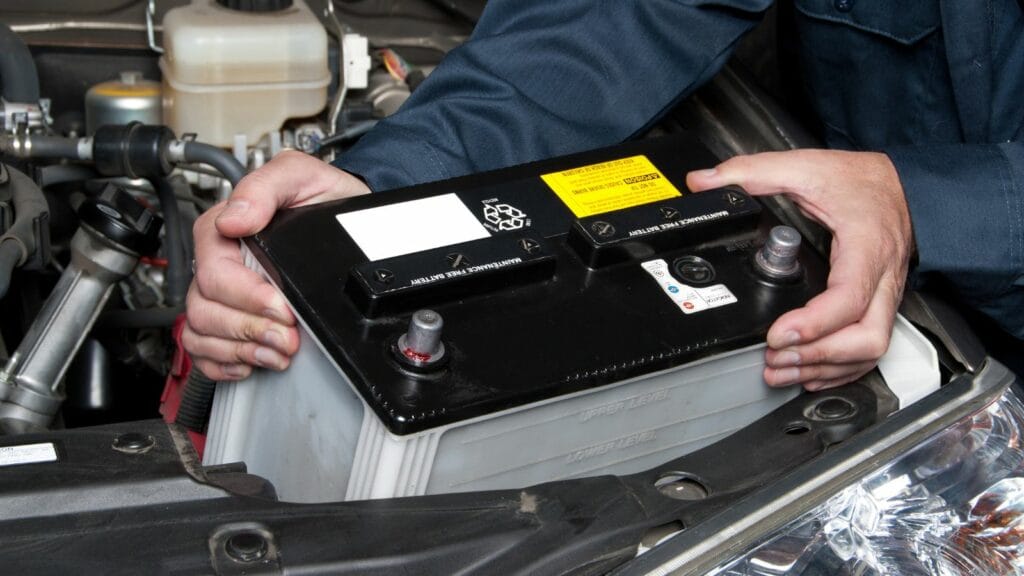
A car can quietly become a rolling storage locker by the end of summer. Coffee cups collect in door pockets, beach gear lingers in the trunk, half-used cleaning products get forgotten beside the spare tire, and receipts disappear into the centre console. Once temperatures begin falling, some of that clutter becomes more than an inconvenience.
Cold can freeze liquids, reduce battery performance, damage temperature-sensitive products and turn forgotten moisture into an ongoing problem. Other items create fire, theft or crash hazards regardless of temperature but become particularly worth addressing during a seasonal cleanout. These 22 things drivers should remove, replace or reorganize before cold weather arrives can help create a cleaner cabin, a safer trunk and enough room for the equipment that actually matters when winter driving becomes unpredictable.
Food Wrappers and Crumbs
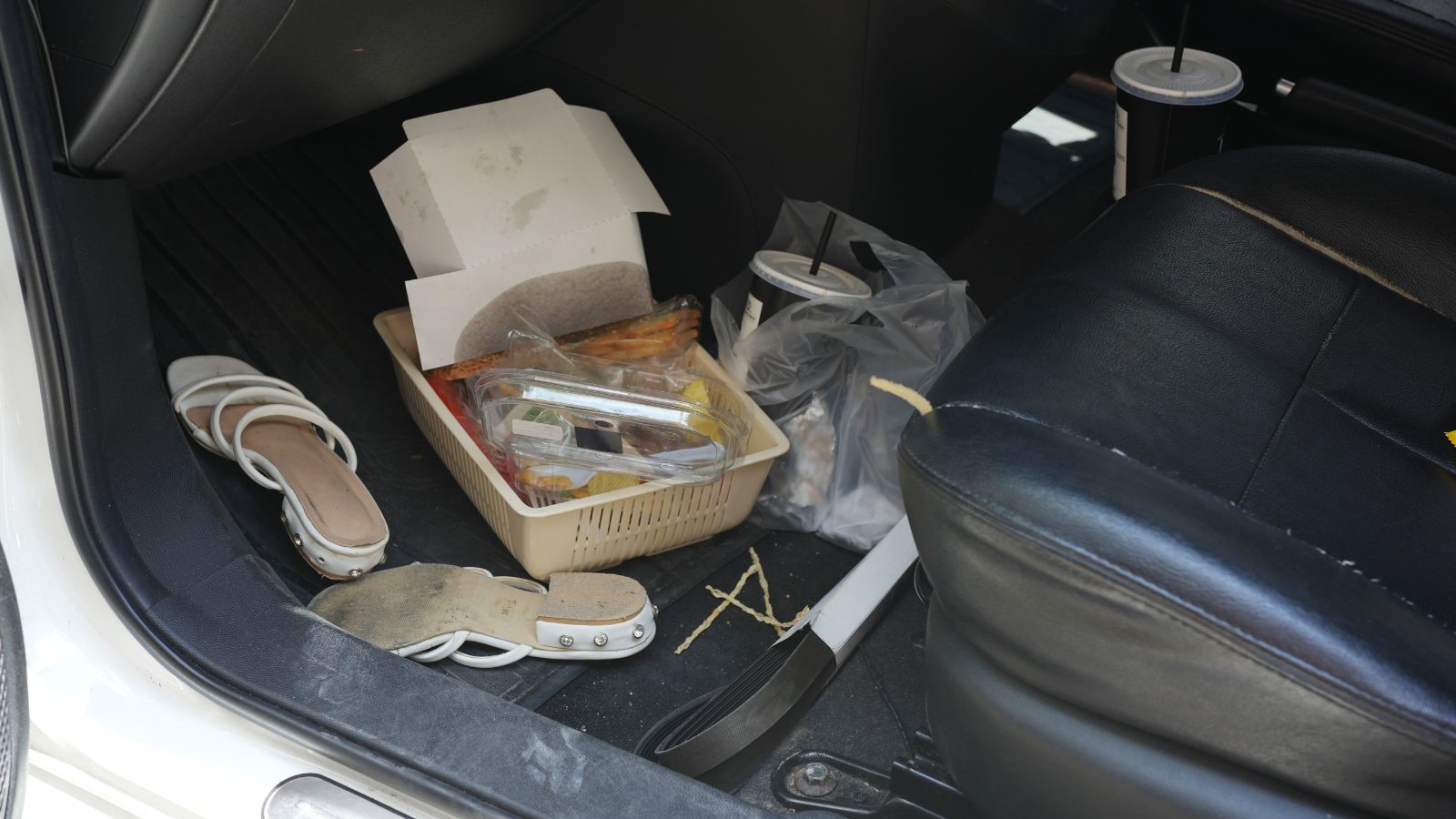
Fast-food bags, empty snack packages and crumbs hiding beneath seats may seem like nothing more than an untidy reminder of summer road trips. As temperatures drop, however, parked vehicles can become attractive shelter for mice, squirrels and other rodents. Food smells only make that invitation more appealing. Automotive experts recommend removing food waste and vacuuming crumbs, particularly from vehicles that may sit unused for extended periods during colder weather.
The damage can become surprisingly expensive. Rodents may chew electrical wiring, insulation, hoses and other components after finding shelter under the hood or inside the cabin. Consumer Reports has documented cases involving damaged wiring harnesses, plugged air ducts and nests built inside vehicles. A fall interior cleaning therefore needs to involve more than grabbing the visible garbage. Moving seats, checking storage pockets and vacuuming the carpet can remove the small traces of food that are easiest to overlook.
Forgotten Takeout and Other Perishables

An overnight temperature near freezing does not turn a parked car into a dependable refrigerator. Leftover takeout, deli items, dairy products and other perishable foods should be removed instead of being left in the cabin because outdoor temperatures can swing dramatically between night and day. Sunlight can warm a parked vehicle even when the surrounding air feels chilly, creating conditions that are unpredictable for food storage.
Food-safety guidance generally calls for perishable foods to be refrigerated within two hours, with even shorter limits during very warm conditions. Cold weather does not erase that rule. A sandwich forgotten after an evening commute may freeze overnight, partially thaw the next afternoon and then cool again after sunset. That repeated temperature cycling is nothing like controlled refrigeration. Removing forgotten food also eliminates smells, stains and another potential attraction for pests, making this one of the simplest seasonal cleaning jobs with several practical benefits.
Canned Food and Sealed Drinks

A few unopened cans rolling around the trunk may survive summer without much attention, but freezing weather changes the equation. USDA food-safety guidance notes that canned food accidentally exposed to sub-zero temperatures can swell as its contents expand. If seams rust, split or burst, the food should be discarded. Even an intact frozen can has to be handled carefully rather than simply being opened immediately after it warms.
Sealed beverages create an additional mess risk because liquids expand as they freeze. A forgotten drink can leak or rupture inside a cup holder, door pocket or trunk, leaving sticky residue that is particularly unpleasant to discover on a frigid morning. Drivers preparing an emergency food supply should distinguish carefully between random beverages left in the car and supplies intentionally chosen for winter use. Transport Canada recommends carrying emergency water and food, but those supplies should be appropriately packaged, maintained and periodically replaced rather than forgotten indefinitely.
Glass Bottles and Jars

Glass containers filled with liquid deserve special attention before the first hard freeze. Water and many water-rich products expand during freezing. The National Center for Home Food Preservation specifically warns that ordinary glass jars can break at freezer temperatures and notes that liquids need adequate headspace because expansion can crack containers. A vehicle parked outside overnight can expose forgotten bottles to very similar temperatures.
The risk is not limited to a shattered beverage bottle sitting in plain sight. Small glass jars can disappear beneath cargo, inside grocery totes or behind trunk organizers where a break may go unnoticed until liquid reaches carpet or trim. Purpose-built freezer containers are designed differently from ordinary household glassware, so assuming every bottle will tolerate a freeze is unnecessary gambling. Removing glass containers during the autumn cleanout prevents broken glass, stains and a cleanup job that becomes considerably harder when liquid freezes into trunk carpeting.
Summer Windshield Washer Fluid
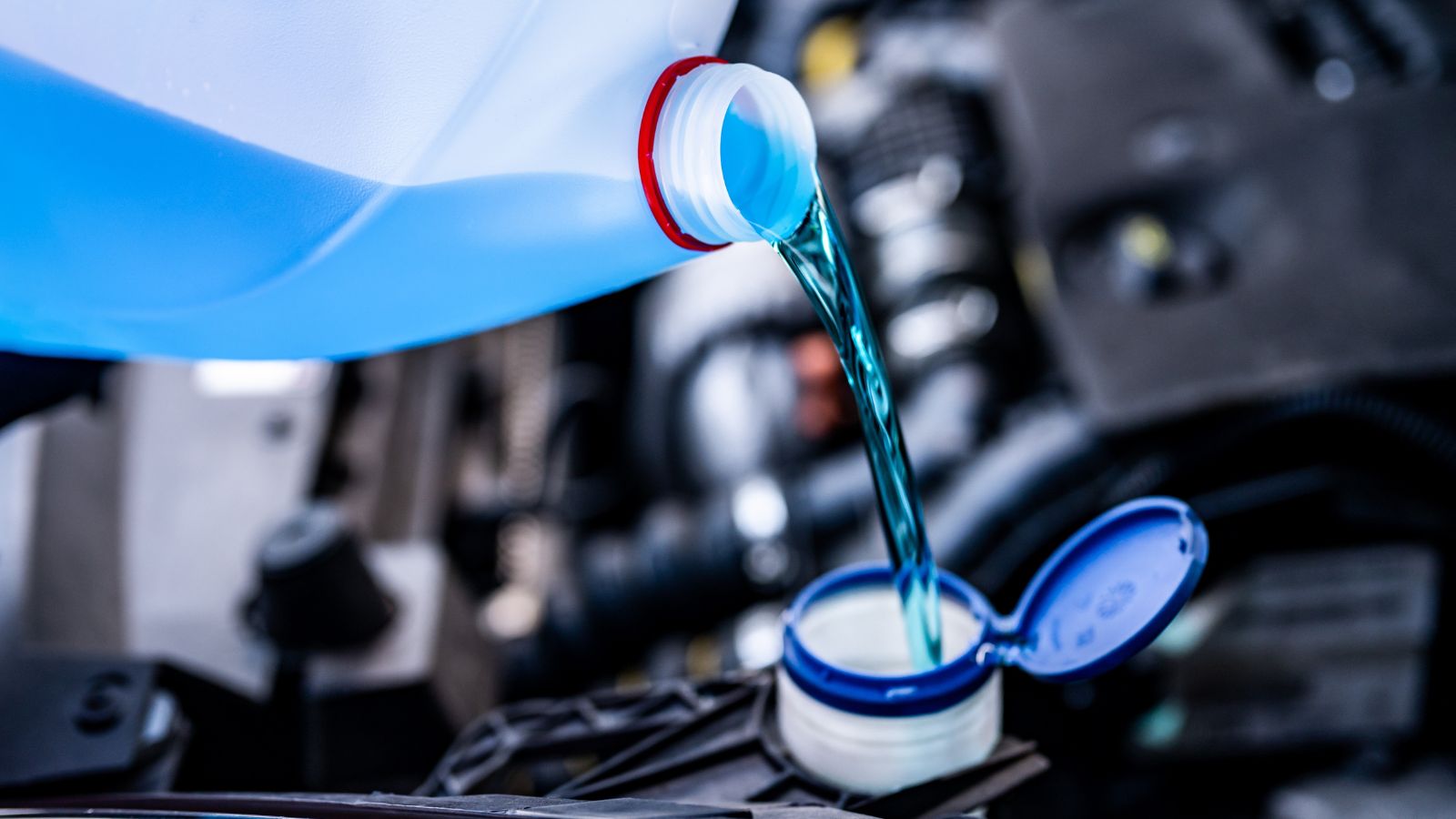
One of the most important liquids to clear out before winter may already be inside the vehicle rather than sitting in the trunk. Summer windshield washer products can have dramatically different freeze protection from winter formulas. Some warm-weather washer fluids have a stated freezing point around 0°C or 32°F, while winter products are formulated to continue working well below freezing.
That difference matters because winter driving can consume washer fluid quickly. Salt spray, slush and dirty road water frequently coat the windshield, especially on heavily travelled highways. A frozen reservoir or frozen washer lines can leave the driver without a convenient way to clear that film. Rather than simply topping a nearly full reservoir of summer fluid with a small quantity of winter formula, drivers should check product instructions and the vehicle manual. Some manufacturers recommend switching seasonal formulas rather than relying on an uncertain mixture whose final freezing protection is difficult to determine.
Detailing Sprays That Say “Protect From Freezing”
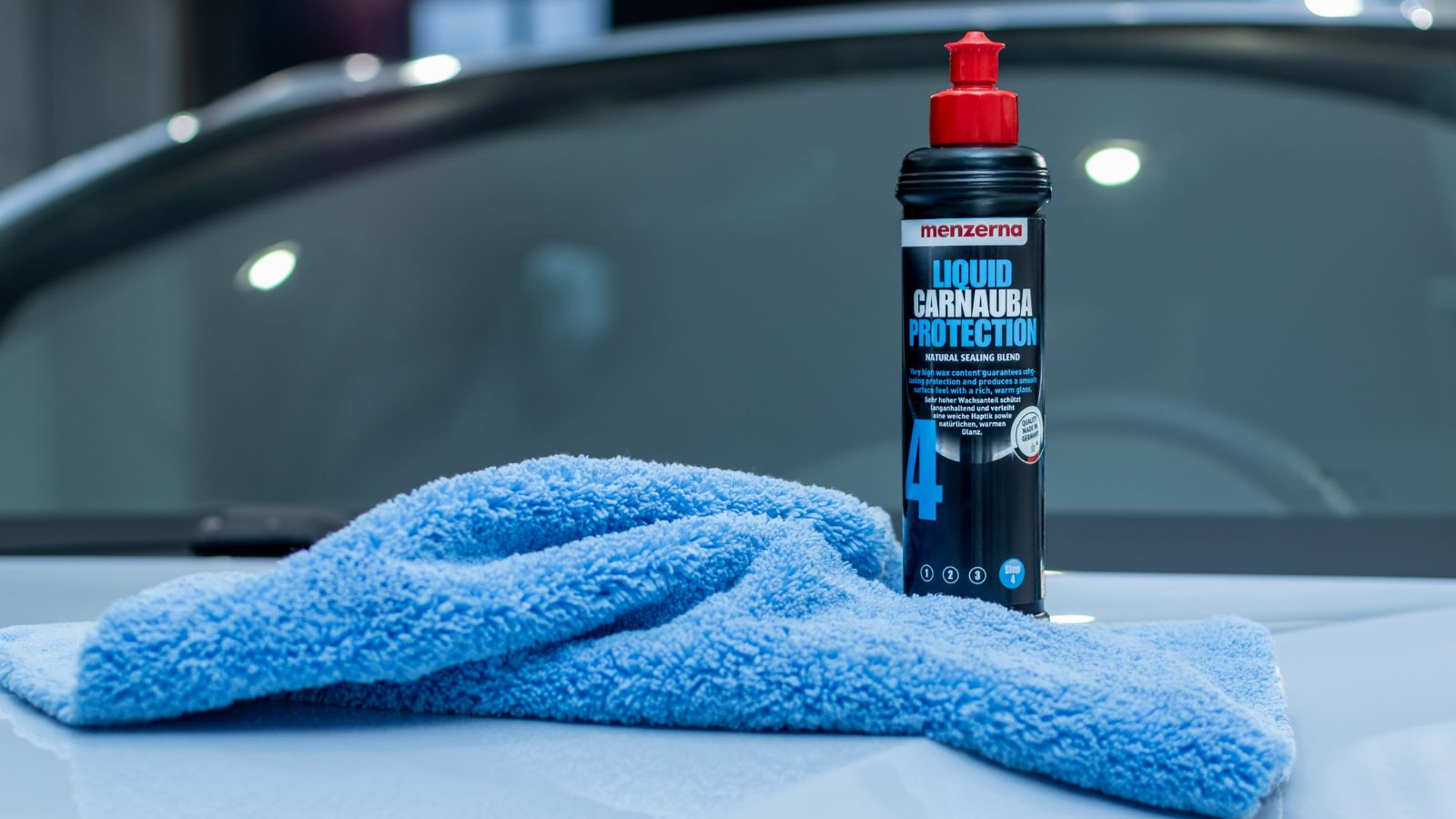
Trunks often accumulate bottles of quick detailer, wheel cleaner, wash concentrate and spray wax after summer car-care sessions. Many of these products are water-based emulsions or cleaning solutions, and product specifications sometimes explicitly state that they should be protected from freezing. Once temperatures start dropping below zero, the trunk is no longer an ideal long-term storage cabinet for them.
Freezing does not affect every automotive chemical in exactly the same way, which is why the individual label matters. Some products can be thawed and reused while others may separate, change consistency or perform differently after a freeze-thaw cycle. The safest seasonal habit is straightforward: take the car-care collection indoors and store each product according to the manufacturer’s instructions. The added benefit is less clutter around the spare tire, jack and emergency equipment. Only winter products specifically intended to remain in the vehicle need to occupy valuable cold-weather cargo space.
Leftover Latex Paint and Water-Based DIY Supplies

A trunk can become temporary storage after a home-improvement run, and “temporary” sometimes turns into several months. Leftover latex paint is particularly worth removing before freezing temperatures arrive. Sherwin-Williams advises against storing paint where freezing is possible and notes that freeze-thaw cycles can damage latex coatings. Frozen paint may develop lumps, thickening or other changes that make it unsuitable for later touch-ups.
Drivers should extend that label-checking habit to water-based adhesives, coatings and similar DIY products carried home from the hardware store. Their storage requirements vary, so they should not automatically be treated like automotive antifreeze simply because they arrived home in a vehicle. There is also little benefit to carrying heavy cans through an entire winter. Moving them to an appropriate indoor storage area protects the products, reduces cargo weight and prevents the memorable experience of discovering that a poorly sealed container has leaked across the trunk carpet.
Propane Cylinders
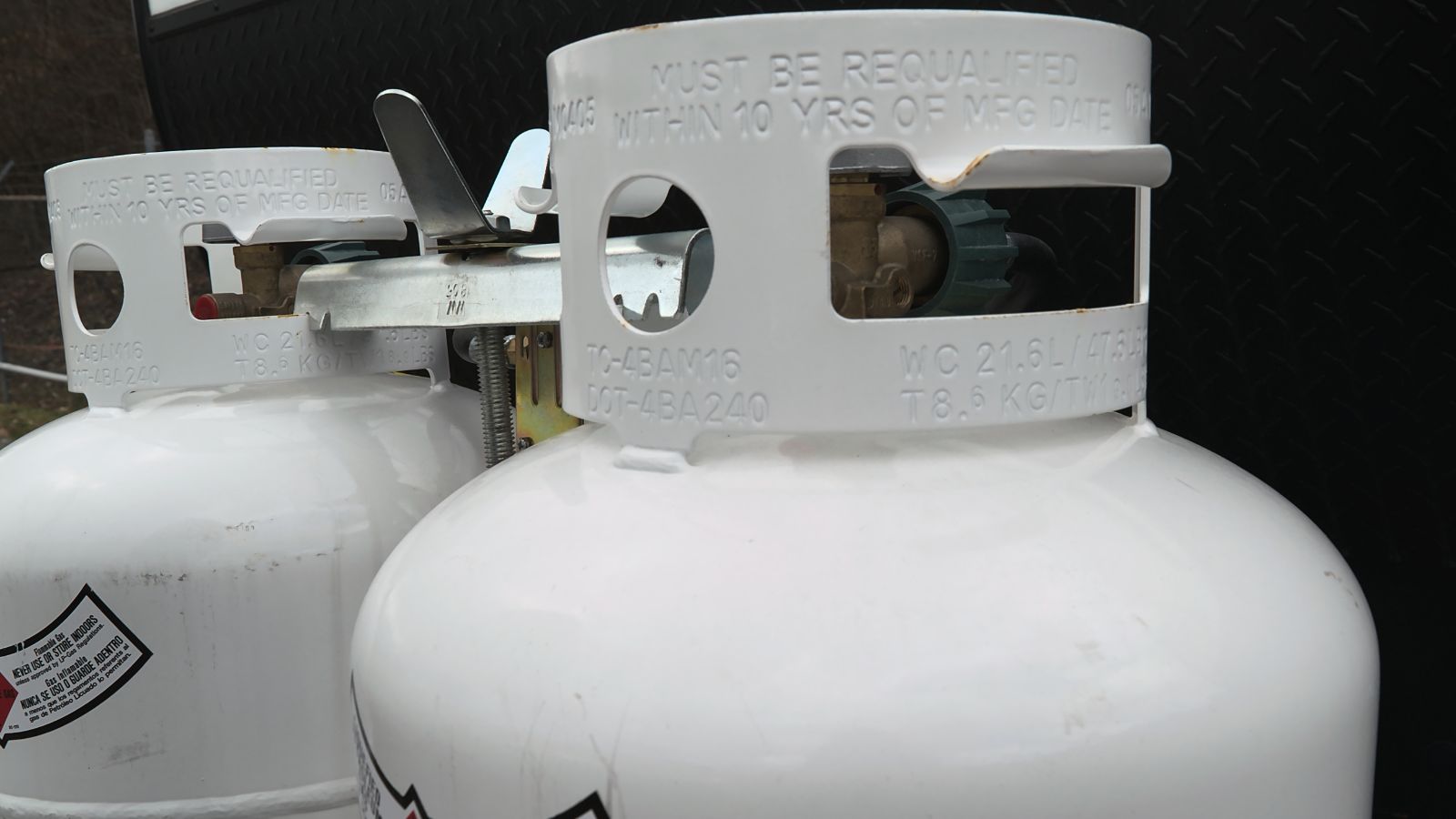
The end of barbecue or camping season occasionally leaves a propane cylinder riding around much longer than intended. It should not become permanent trunk cargo. Canadian Propane Association guidance says cylinders should be stored outside in a secure, well-ventilated location and transported upright. The association also warns against leaving a cylinder inside a closed parked vehicle.
Propane transportation is meant to be temporary. Cylinders should have their outlets properly capped or plugged, remain upright and be secured so they cannot tip during the trip. Once the destination is reached, the cylinder belongs in an appropriate storage location rather than beside groceries, winter boots and roadside supplies. Cold weather itself is not the only issue here; the broader concern is treating a vehicle as storage for a pressurized fuel container. A seasonal trunk cleanout provides an obvious opportunity to correct that habit before winter equipment begins competing for the same space.
Portable Gasoline or Fuel Cans
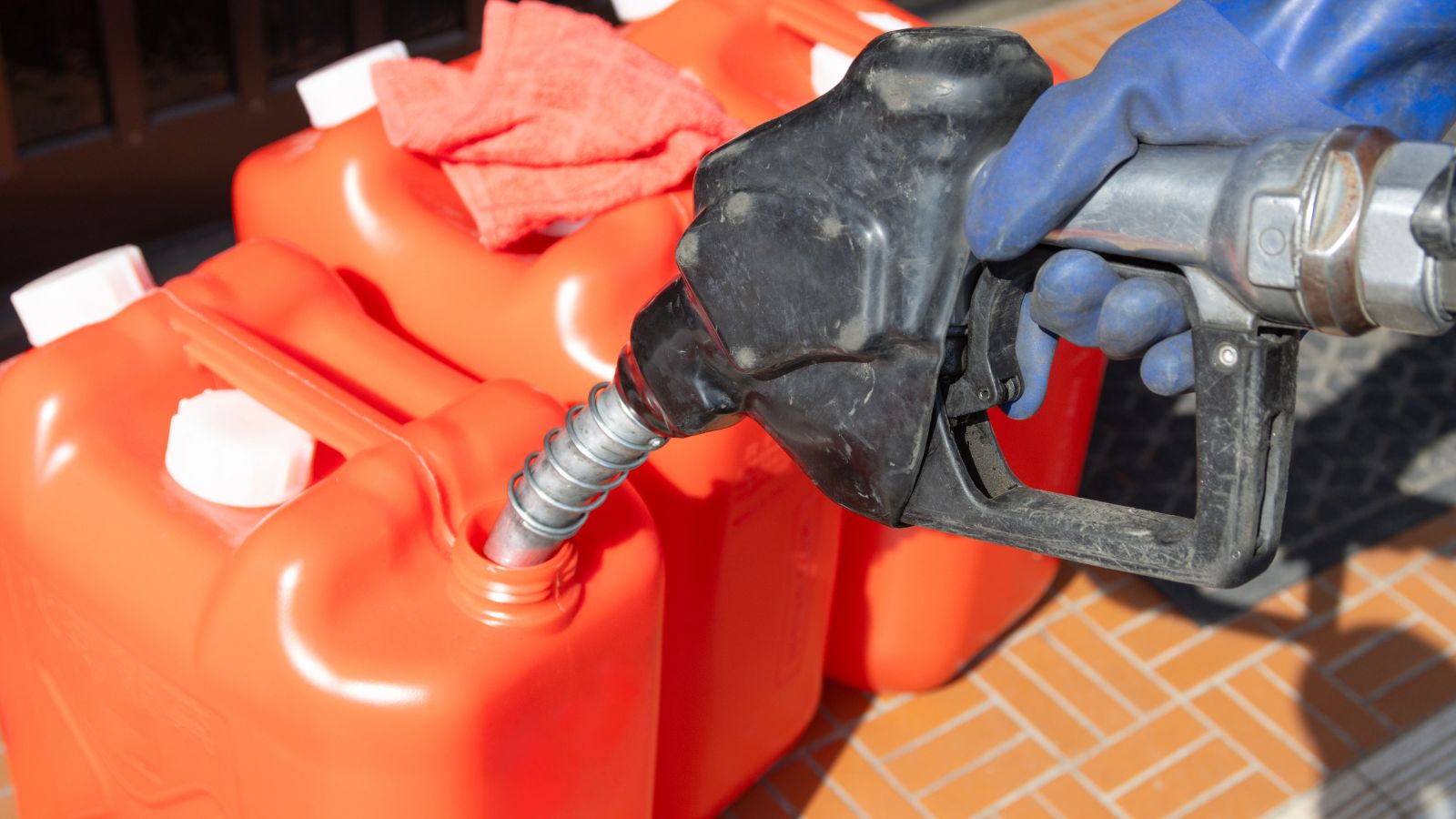
Snowblower season can mean more trips to the fuel station with a portable gasoline container, but transporting fuel and storing it are two different things. The U.S. Consumer Product Safety Commission recommends securing containers properly during transport and removing them from the vehicle immediately after arriving home. Gasoline should then be stored in an appropriate cool, well-ventilated location away from ignition sources.
Canadian fire departments offer similar warnings. Amherstburg Fire, for example, specifically advises against storing gasoline in a vehicle. Gasoline vapours are highly flammable, which makes an enclosed trunk a poor substitute for proper fuel storage. Containers also need to be approved for the fuel they carry and kept tightly closed. Drivers preparing snowblowers or generators for winter may legitimately transport gasoline, but the container should leave the vehicle when the transportation job ends. It should not spend the season rolling around behind the rear seats.
Medications

Glove compartments, consoles and handbags left in vehicles can contain everything from pain relievers to prescription medicines. The FDA advises consumers to protect medicines from extreme temperatures and specifically says medications should not be left in a car during either summer or winter. Individual drugs can have different storage requirements, including some that must never be frozen.
Temperature exposure can affect a medicine’s quality or effectiveness even before its printed expiration date. That makes the fall cleanout a useful time to gather forgotten bottles, inhalers, liquid medicines and other health products and return them to appropriate storage. Necessary emergency medication is a different matter and should be handled according to the product’s storage instructions and medical guidance. The important distinction is between deliberately carrying medication that may be needed and allowing temperature-sensitive products to spend weeks in a freezing glove compartment simply because they were forgotten there.
Phones, Tablets, and Laptops
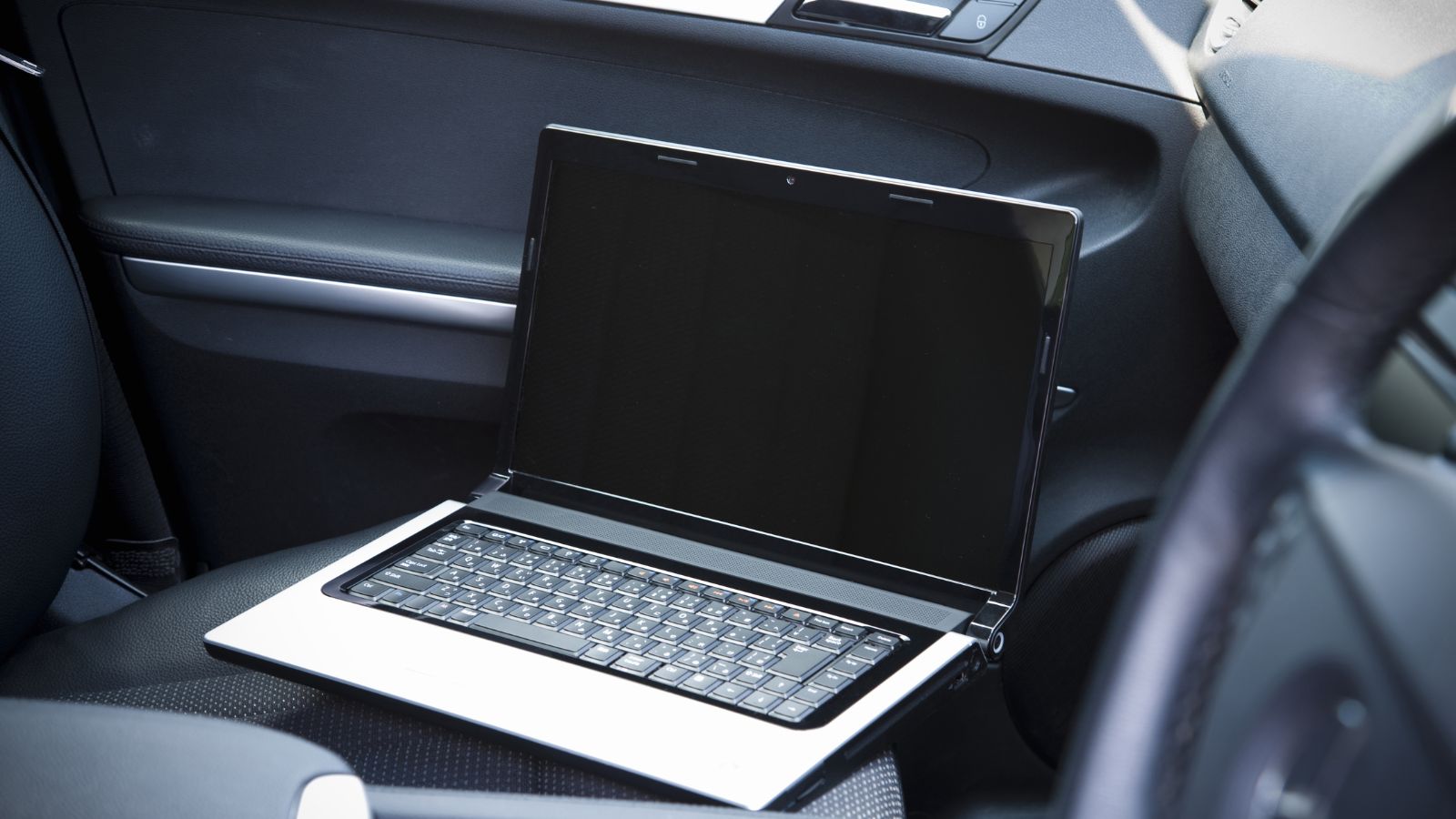
Leaving an old tablet, work laptop or spare phone permanently in the car becomes less practical as temperatures fall. Electronics manufacturers publish defined operating and storage temperature ranges because batteries and other components behave differently in extreme conditions. Apple, for example, says iPhones and iPads are designed for use between 0°C and 35°C and warns that very cold conditions can temporarily shorten battery life or cause charging to stop.
Most drivers will occasionally carry electronics in winter without a problem. The concern is long-term storage in a vehicle where overnight temperatures can fall far below normal indoor conditions. Bringing a frozen device straight indoors also introduces rapid temperature and humidity changes, another reason to avoid unnecessary exposure. Removing unused electronics protects the equipment and provides another benefit: expensive devices left in a parked vehicle can attract thieves. If the device is not needed for the trip, home is usually the better storage location.
Power Banks and Portable Chargers
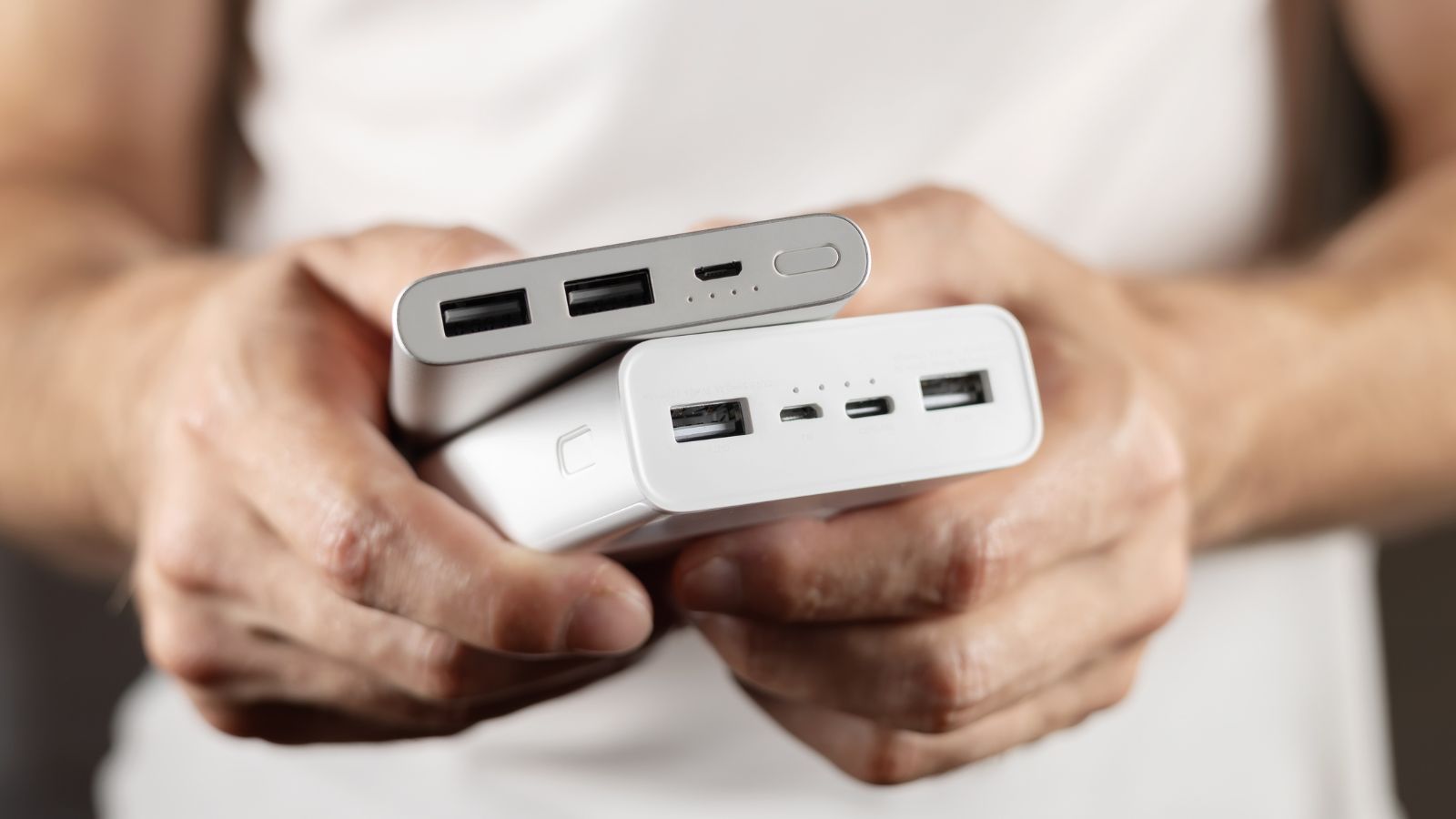
Portable chargers are easy to forget because they often disappear into the bottom of a console or emergency bag. Lithium-ion power banks, however, have their own temperature limits. Anker’s current safety guidance, for example, lists an operating and storage range of 0°C to 35°C for certain products and notes that some models may enter low-temperature protection when their internal temperature falls too far.
That does not mean every portable charger must disappear from a winter emergency kit. A charged backup power source can be extremely useful during a breakdown. The better approach is to check the manufacturer’s specifications instead of treating the device as something that can live permanently in the trunk. Drivers who want a power bank available for emergencies can rotate it indoors for charging and inspection. Bulging, damaged or malfunctioning battery packs should not remain buried beneath other cargo. Winter preparation should improve emergency readiness, not rely on equipment whose battery has not been checked in months.
Loose Batteries and Dead Battery-Powered Gear
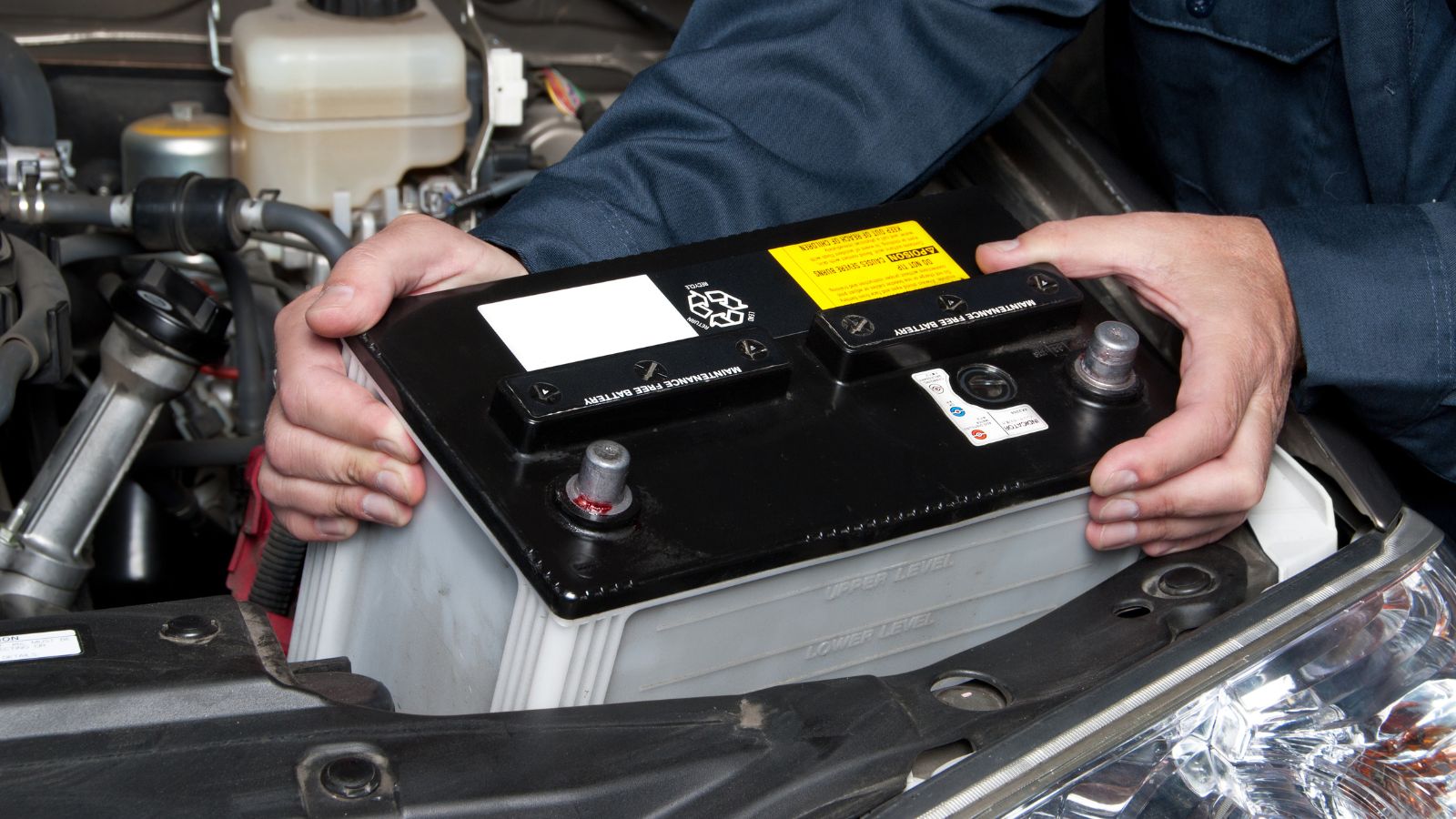
Cold weather is a good time to empty consoles and storage bins of forgotten AA, AAA and other loose batteries. Duracell advises storing batteries at room temperature in a dry environment and notes that extreme heat or cold can reduce performance. More importantly, loose batteries should not be stored where their terminals can contact coins, keys or other metal objects because a short circuit can generate heat and cause leakage or rupture.
Battery-powered winter equipment deserves attention at the same time. A flashlight that has spent all summer in the trunk is useful only if its batteries still work. Manufacturers recommend removing depleted batteries promptly because exhausted cells left inside devices can leak. Rather than throwing every battery-powered item out of the car, drivers can use the seasonal cleanout to test flashlights, replace weak cells and store spares properly. A smaller collection of working equipment is far more useful than a glove box full of mystery batteries.
Expired Emergency-Kit Supplies

Emergency kits should stay in the vehicle, but their expired contents should not. Food, water, medication, batteries and first-aid items can sit untouched for years unless someone deliberately checks them. The American Red Cross recommends replacing expired food, water and medications and making sure batteries are charged and equipment still works. That inspection is especially valuable before winter, when a breakdown may involve longer waits and colder conditions.
Government of Canada guidance also recommends maintaining a dedicated vehicle emergency kit. Its checklist includes non-spoiling food, water, blankets, extra clothing, a first-aid kit, a shovel, scraper, flashlight, jumper cables and other equipment. It even advises changing stored emergency water every six months. The autumn cleanout therefore should not simply create an empty trunk. It should remove outdated supplies and replace them with usable ones, leaving the car better prepared for the season rather than merely tidier.
Unnecessary Heavy Cargo
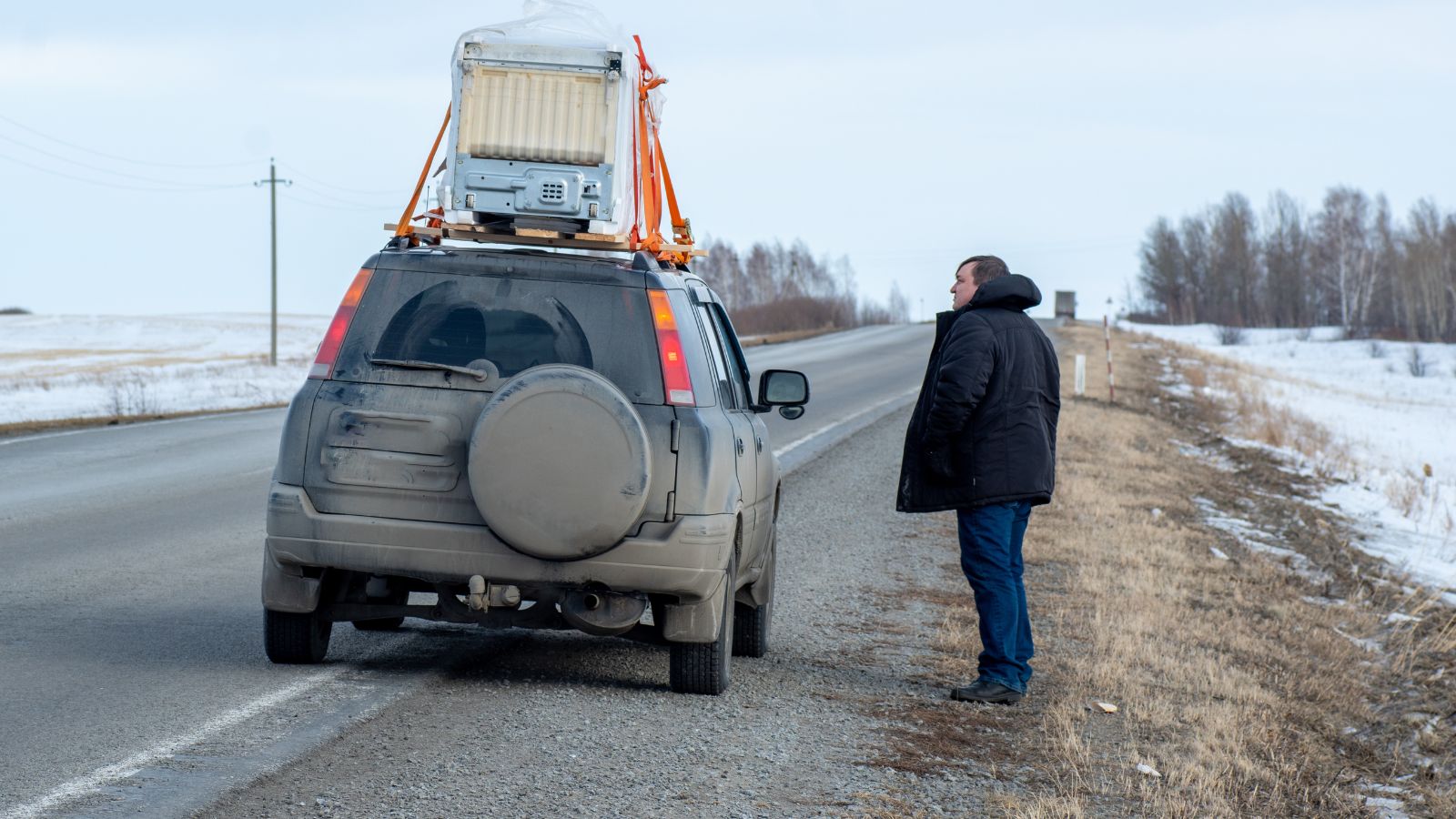
Golf clubs, unused tools, camping equipment and boxes that have not moved since spring can add considerable weight without providing any winter benefit. The U.S. Department of Energy’s fuel-economy guidance estimates that an extra 100 pounds, or about 45 kilograms, can reduce fuel economy by roughly 1 percent, with the effect generally greater in smaller vehicles than larger ones.
That figure will not turn one forgotten suitcase into a major fuel bill, but seasonal clutter accumulates. Several toolboxes, sports equipment and leftover renovation supplies can easily create a meaningful load. Winter already tends to bring heavier demands on vehicles through cold starts, winter tires, heating and difficult road conditions, so carrying unnecessary cargo adds no advantage. Essential winter equipment should remain, of course. The goal is not to strip the trunk bare but to distinguish between useful emergency weight and objects that have simply been travelling hundreds of kilometres for no reason.
Loose Tools and Hard Objects
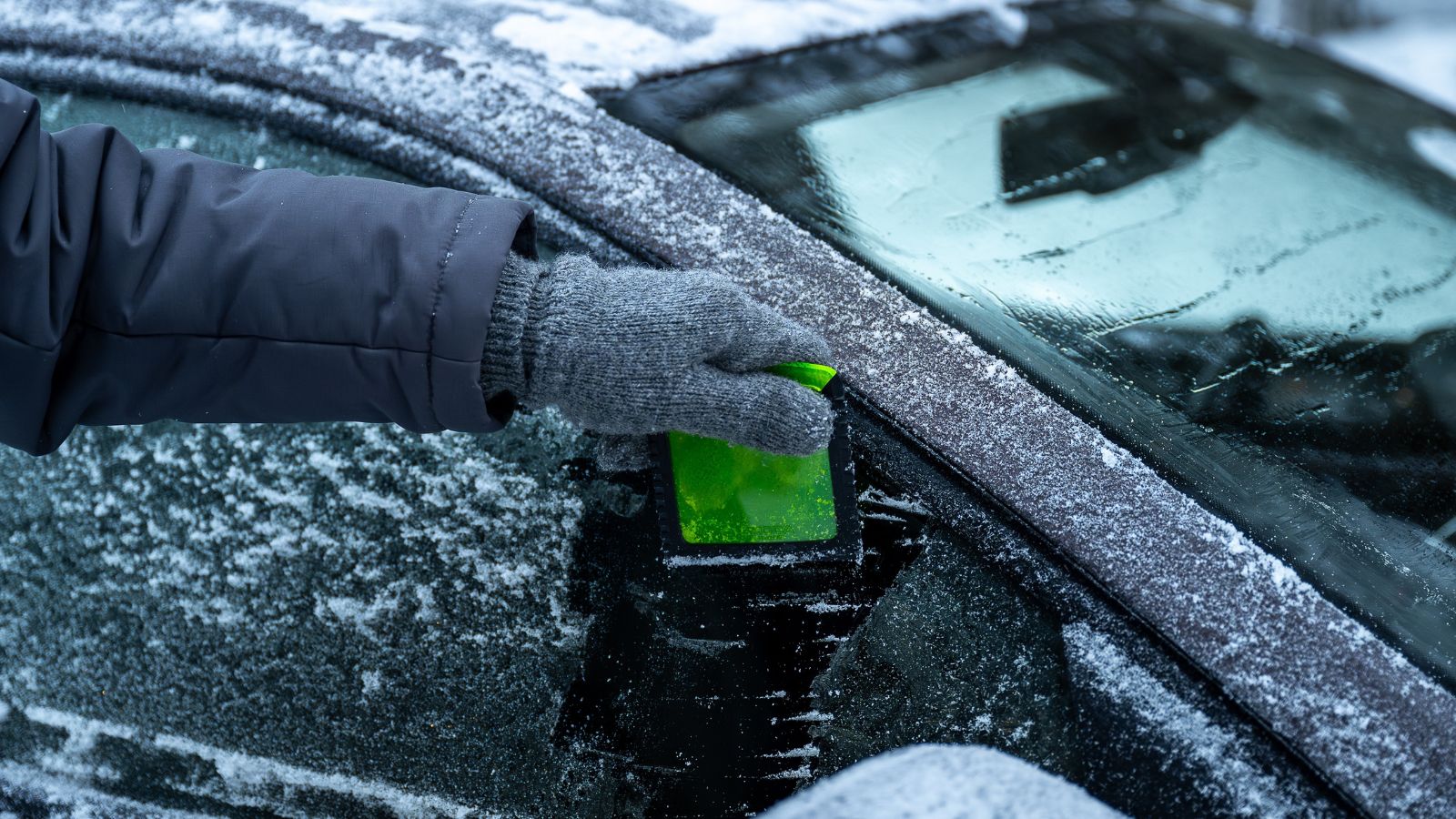
Ice scrapers and snow brushes belong in a winter car. Loose hammers, metal water bottles, toolboxes and other hard objects do not belong scattered across the cabin. During an abrupt stop or collision, unsecured objects can move violently. Consumer Reports advises securing cargo because loose objects can become projectiles and recommends placing heavy items low and forward in the cargo area.
This is particularly relevant when seasonal equipment begins accumulating. A snow brush tossed onto the back seat, a portable shovel on the floor and a heavy roadside kit sliding around the cargo area may all be useful items stored badly. Drivers can use the autumn cleanout to remove what is unnecessary and secure what remains with cargo nets, bins or factory tie-down points. The difference between clutter and preparedness is often organization. Winter supplies should be accessible after a breakdown without becoming hazards during the drive that precedes it.
Stacked or Unsecured Floor Mats
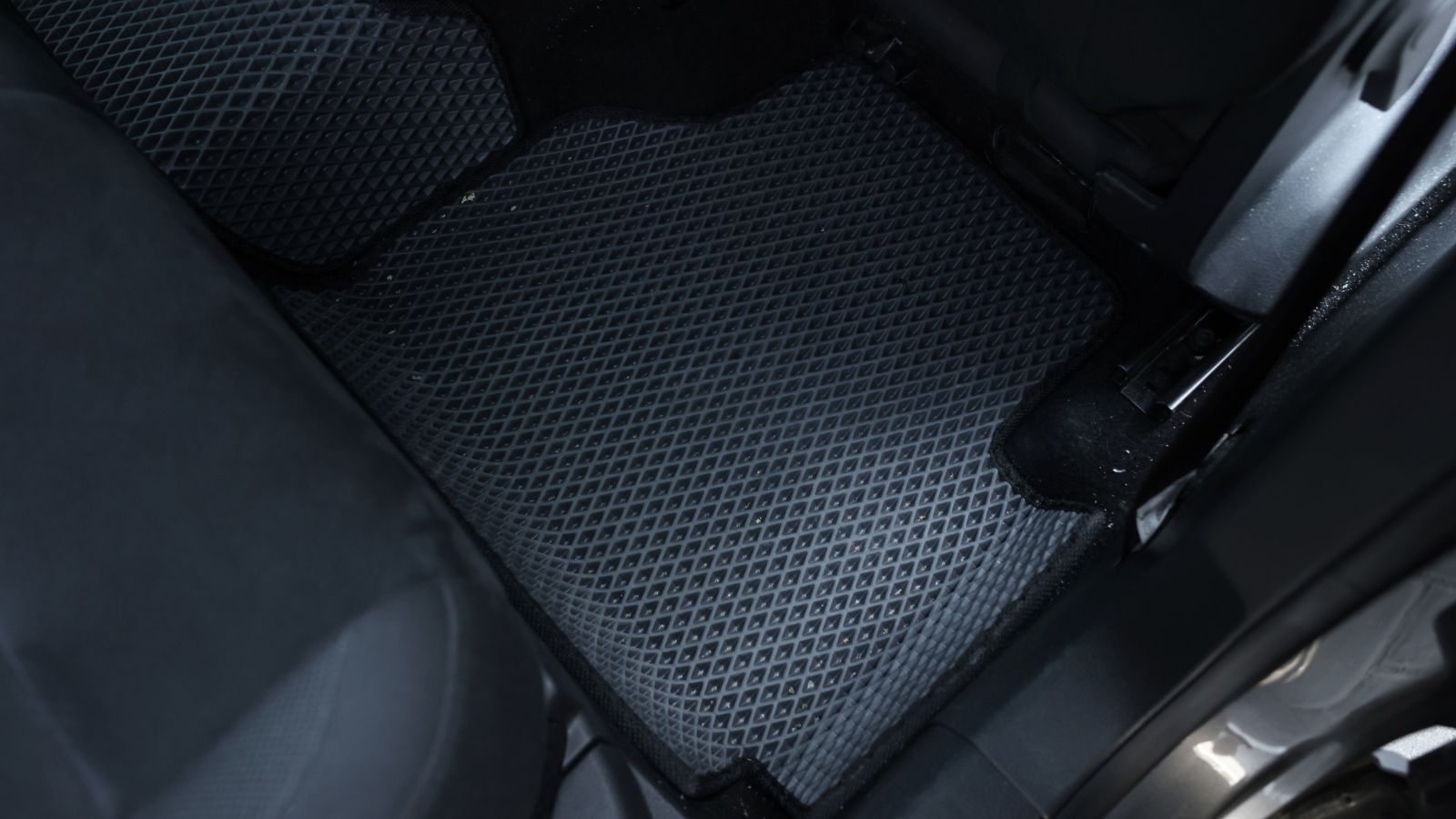
Replacing carpet mats with rubber winter mats is common in snowy regions, but leaving the summer mats underneath is not a harmless shortcut. Transport Canada has warned that floor mats can interfere with accelerator or brake pedals when they move out of position. Its guidance specifically advises drivers installing winter rubber mats to remove the original set rather than stacking one set over another.
The risk comes from reduced pedal clearance and from mats that can slide forward when they are not properly retained. Transport Canada recommends using only one set and securing the mats with the vehicle’s retaining pins or clips where provided. The fall interior cleanout is therefore the right time to remove summer mats completely, vacuum the footwells and install the winter set properly. It takes only a few minutes, yet it eliminates one piece of clutter that can create a genuine driving hazard if handled incorrectly.
Wet Towels, Umbrellas, and Sports Gear

A damp towel left after a rainy soccer game is easy to ignore in mild weather. During colder months, however, repeatedly leaving wet fabric inside a closed vehicle adds moisture to an environment full of cold surfaces. Moist air contacting cold glass can contribute to condensation, while persistently damp materials provide the moisture mold needs to grow.
The U.S. Environmental Protection Agency emphasizes that moisture control is central to preventing mold and recommends drying wet materials quickly, generally within 24 to 48 hours. Although its guidance is written for indoor environments, the basic moisture principle applies to fabrics and carpeting inside vehicles as well. Wet umbrellas, gym bags, towels and soaked floor liners should therefore be removed and dried instead of becoming permanent cargo. Keeping the cabin dry also reduces musty odours and makes the morning defrosting routine less unpleasant when windshield condensation is already a seasonal nuisance.
Newspapers, Cardboard, and Rags

Paper grocery bags, newspapers, cardboard boxes and old rags often migrate into trunks because they seem harmless and weigh almost nothing. They can nevertheless make a vehicle more inviting to rodents looking for nesting material. Consumer Reports specifically recommends keeping vehicles away from accessible materials such as newspapers, cardboard, straw, rags and insulation when trying to discourage rodents from settling in.
The colder the weather becomes, the more attractive sheltered spaces can be to animals. A stack of cardboard beside a food wrapper provides both hiding material and a food scent in the same location. Paper and fabric can also retain moisture when they become damp, adding another reason not to treat the trunk as long-term storage. Necessary cargo can be placed in secure plastic bins instead. Removing loose paper products makes it easier to spot water leaks, rodent droppings or other warning signs before they turn into larger winter problems.
Old Receipts and Sensitive Paperwork

Centre consoles have a remarkable ability to collect fuel receipts, bank slips, invoices, expired insurance paperwork and other documents. Cold weather will not physically damage most of that paper, but a seasonal cleanout is a sensible time to remove information that should never have become permanent vehicle storage. Some documents contain addresses, account information or other personal details that can be useful to an identity thief.
The Federal Trade Commission recommends securely storing documents containing personal or financial information and shredding records that are no longer needed. That means the cleanout should not end with tossing everything into a parking-lot garbage bin. Sensitive papers should go home for proper filing or destruction. Drivers should also distinguish between documents legally required in the vehicle and unnecessary originals containing more information than needed. A cleaner console makes everyday items easier to find while reducing the amount of personal information left unattended in the car.
Valuables, Spare Keys, and Garage-Door Openers

Electronics, wallets and bags should not live in a parked vehicle simply because they are hidden under winter coats. Canadian police regularly advise motorists to remove valuables from vehicles, and recent RCMP theft-prevention guidance has specifically warned against leaving keys, garage-door openers or identification inside. These items can create risks beyond the value of whatever is stolen from the car itself.
A garage remote, spare house key and paperwork containing a home address can be an especially poor combination. Even charging cables or accessory mounts may suggest that a more valuable device is hidden nearby. Before coats, gloves and blankets begin filling the cabin, drivers can use the autumn cleanout to remove anything that would be painful to lose. Necessary items should be stored out of sight and securely. Everything else—from an unused laptop to the forgotten spare key—belongs somewhere safer than an unattended vehicle.
Bulky Summer Gear That Crowds Out Winter Supplies
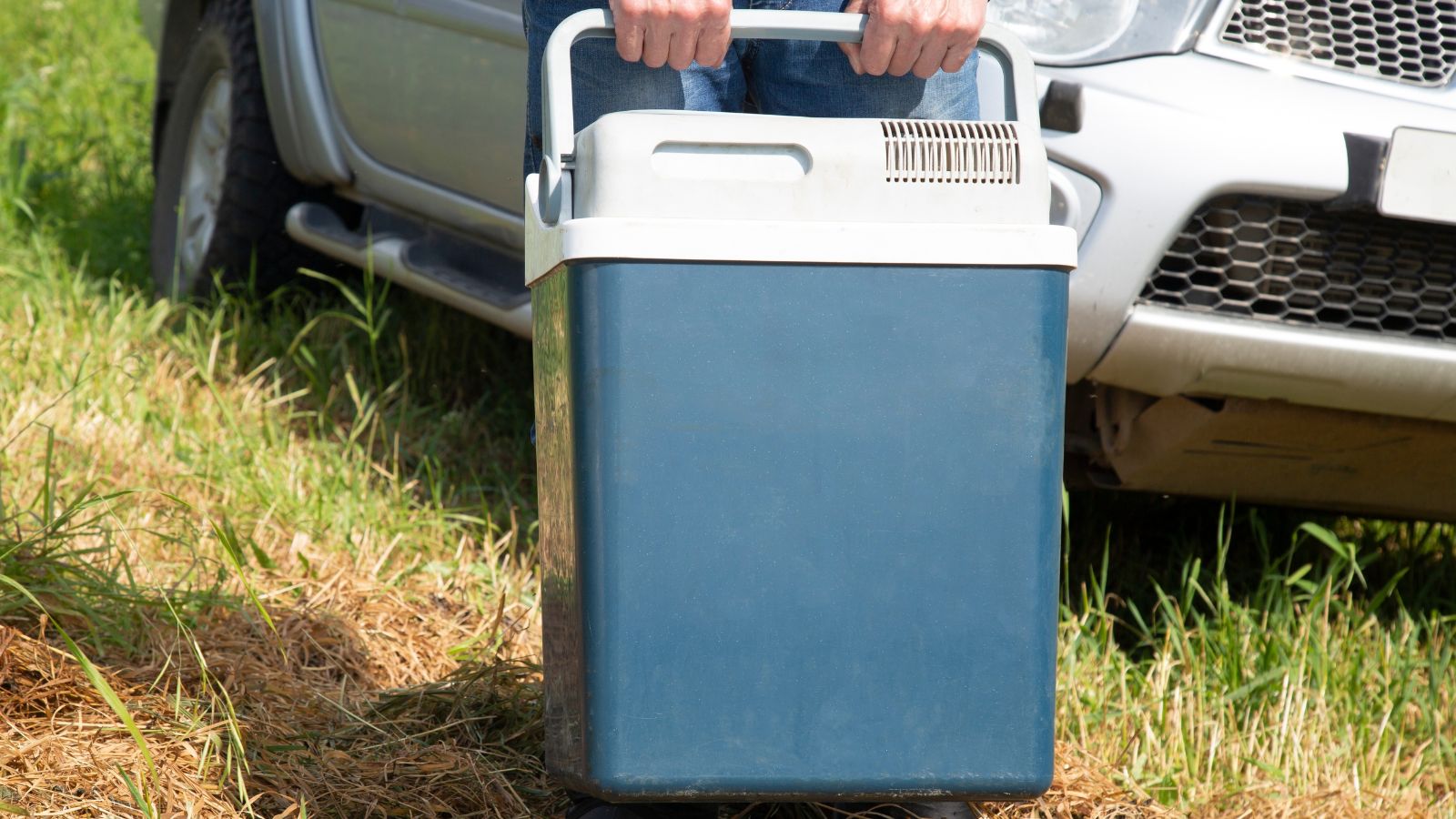
The final cleanout target is not inherently dangerous: beach chairs, picnic coolers, sports equipment and other summer cargo simply occupy space that becomes more valuable in winter. Transport Canada recommends carrying a surprisingly comprehensive collection of cold-weather equipment, including a shovel, traction material, booster cables, extra clothing, food, water, warning devices, washer fluid and basic tools.
Those supplies are most useful when they can actually be reached. A roadside kit trapped beneath folding chairs and three boxes of summer gear is poorly positioned during a snowy breakdown. Seasonal organization therefore means deciding what the car needs for the months ahead rather than carrying four seasons of equipment simultaneously. Clearing bulky summer items creates room for a proper emergency kit, snow brush and other necessities while keeping the cargo area orderly enough that equipment can be found quickly. The goal is not an empty trunk. It is a trunk prepared for the weather that is actually coming.
19 Used Cars Canadians Should Avoid in 2026 (Based on Owner Complaints)

Buying a used car in Canada can feel safe until repair bills start stacking up. Owner complaints tell a different story than glossy listings. Transmission failures, electrical problems, and weak winter reliability show up again and again in consumer reports. Many of these issues appear after warranties expire, when owners least expect them. Some vehicles look affordable upfront, but become expensive to keep on the road. Others struggle in cold weather, urban driving, or long highway commutes. Here are 19 used cars Canadians should avoid in 2026 (based on owner complaints).
19 Used Cars Canadians Should Avoid in 2026 (Based on Owner Complaints)

Alanna Rosen is an experienced content writer that focuses on many EV and educational content. Her articles are regularly published on Get CyberTrucked and syndicated on large publications.