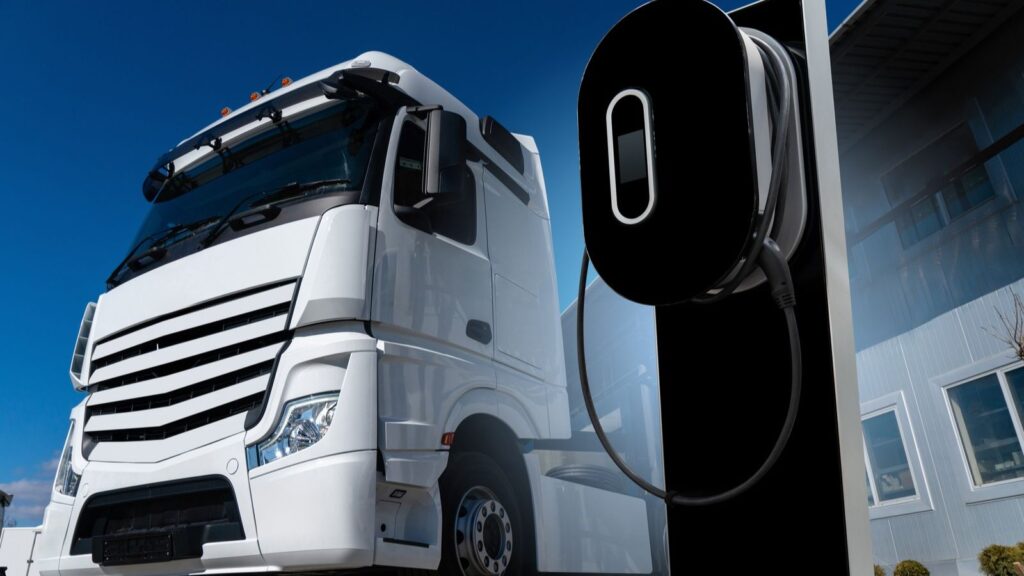
Europe’s transition to electric trucks is becoming a major economic and industrial question, with more than 50 companies urging European Union leaders to accelerate the shift away from diesel-powered freight transportation. The coalition, which includes major truck manufacturers, logistics operators, and charging infrastructure providers, argues that stronger government policies could unlock billions in economic value while protecting European manufacturing competitiveness.
According to research from consultancy WSP Research, faster electrification could generate approximately €9 billion in additional annual economic value for the European Union by 2035 compared with a slower, more import-dependent transition.
The November 17, 2026, appeal comes ahead of an important review of European emissions regulations, as businesses confront rising investment requirements, infrastructure challenges, and growing international competition.
More Than 50 Companies Unite Behind Electric-Truck Expansion
A coalition representing more than 50 companies across Europe’s transportation, manufacturing, and energy industries is calling on the European Union to strengthen policies supporting electric trucks. Participants include German commercial-vehicle manufacturer TRATON, global retailer Amazon, and Milence, a company developing public charging infrastructure for heavy-duty vehicles. The coalition also includes businesses involved in battery production, electricity supply, and fleet operations. Together, these industries represent different parts of the commercial transportation market, from manufacturing vehicles to delivering goods and providing the energy needed to keep trucks moving.
The November 17 appeal reflects growing concern that Europe’s regulatory ambitions are advancing faster than the practical conditions needed to achieve them. Manufacturers need confidence that customers will purchase electric trucks, while transportation companies need reliable charging infrastructure and competitive operating costs before committing to expensive fleet replacements. The campaign builds on broader industry cooperation, including an electric-truck initiative launched by E-Mobility Europe in October 2025 involving Amazon, TRATON, Milence, Iberdrola, and other participants. The message is increasingly consistent: businesses want predictable policies that allow long-term investments to move forward.
Faster Electrification Could Generate €9 Billion Annually by 2035
The economic argument behind the coalition’s appeal centres on a projection from consultancy WSP Research. Its analysis suggests that accelerating electric-truck adoption could generate approximately €9 billion in additional annual economic value for the European Union by 2035 compared with a slower transition that leaves Europe more dependent on imported products and technology. The estimate represents the potential difference between two development pathways, rather than guaranteed revenue or money already flowing into European businesses. It positions truck electrification as an industrial opportunity with implications extending beyond transportation emissions.
The projected benefits are particularly significant because commercial trucking connects manufacturing, energy, logistics, and infrastructure investment. Increased demand for electric trucks can support domestic vehicle production, battery manufacturing, charging equipment, and associated services. However, those opportunities depend on where companies establish production facilities and how much of the supply chain remains within Europe. A faster transition that relies heavily on imported vehicles and components would not necessarily produce the same domestic economic benefits. The €9-billion estimate therefore highlights a central policy challenge: expanding the electric-truck market while ensuring European industries capture a meaningful share of its growth.
European Manufacturing Could Gain Another €2.5 Billion in Annual Value
The economic benefits identified by WSP Research extend across several industries. Its analysis divides the potential €9.1-billion increase in annual gross value added into three major categories: approximately €2.5 billion from truck manufacturing and suppliers, €3.1 billion from maintenance, electricity supply, charging, and grid services, and €3.4 billion from freight transportation operations. The manufacturing component alone represents approximately 24% more annual value added than under the slower transition scenario. These figures illustrate how vehicle electrification could generate economic activity throughout the European industrial system rather than benefiting automakers exclusively.
However, the transformation also presents difficult adjustments for companies whose businesses depend on diesel engines, traditional drivetrains, and related components. WSP’s analysis indicates that faster electrification could create enough new activity to more than offset declining diesel-related manufacturing, while a slower transition would largely replace existing losses. The International Energy Agency reports that European Union production of electric trucks exceeded 13,000 vehicles in 2025, more than doubling from the previous year. Established manufacturers, including Daimler Truck, Volvo Trucks, Iveco, and TRATON, already hold a substantial position in the market. Maintaining that advantage will require continued investment in production technology, batteries, and specialized manufacturing capabilities.
China’s Electric-Truck Market Is Already Far Ahead of Europe
European manufacturers face a substantial competitive challenge from China, where electric-truck adoption has advanced much more rapidly. According to the International Energy Agency’s Global EV Outlook 2026, worldwide electric-truck sales more than doubled during 2025, exceeding 400,000 vehicles. China accounted for more than 90% of global sales, with electric models representing approximately one in four trucks purchased domestically. Europe experienced growth as well, but its market remained considerably smaller. Electric medium- and heavy-duty truck sales across Europe increased approximately 40% in 2025, reaching nearly 17,000 vehicles and representing about 3% of the region’s new truck sales.
China’s expansion has been supported by declining battery costs, government replacement incentives, and commercial applications involving predictable transportation routes. Industrial operations around ports, mines, and steel facilities have been particularly suitable for electric-truck deployment. In Europe, adoption remains uneven. Germany recorded approximately 4,400 electric-truck sales in 2025, while the United Kingdom exceeded 3,000 and France approached 1,900. These differences demonstrate how government support, charging access, and operating conditions influence purchasing decisions. For European manufacturers, the challenge is not simply developing competitive vehicles. It is establishing sufficient demand to achieve production scale and compete against increasingly capable international rivals.
Electric Trucks Still Face a Major Upfront Cost Disadvantage
One of the biggest obstacles to electric-truck adoption remains the difference between purchasing an electric vehicle and buying a comparable diesel model. The International Energy Agency reports that electric trucks can still cost two to three times as much upfront, creating financing challenges for smaller transportation businesses. However, fleet operators generally evaluate vehicles based on total cost of ownership, which includes energy, maintenance, financing, insurance, road tolls, and resale value. A September 2026 analysis from Transport & Environment found that electric trucks already offered lower ownership costs in six of nine major European Union markets examined. Those countries collectively represented approximately 46% of new heavy-truck sales in the bloc.
The financial advantages are not consistent across every route or country. Research from the International Council on Clean Transportation indicates that electric trucks operating in Germany can already achieve lower ownership costs than diesel alternatives, partly because of road-toll exemptions and carbon-related charges. Elsewhere, expensive public charging and limited infrastructure can undermine potential savings. Public charging prices have been estimated at approximately twice those of private depot charging in Europe. For smaller operators, the ability to charge vehicles overnight at their own facilities can therefore make a substantial difference. The coalition wants policymakers to address these economic barriers so that electric trucks become commercially practical for more businesses.
Charging Infrastructure and Electricity Grids Are Critical Bottlenecks
Electric trucks require more than access to ordinary passenger-vehicle charging stations. Heavy-duty freight operations need high-power equipment capable of replenishing large batteries without creating excessive delays, along with sufficient electrical capacity at depots and major transportation corridors. The European Union’s Alternative Fuels Infrastructure Regulation establishes targets for expanding this network. By the end of 2027, dedicated heavy-duty charging infrastructure must cover at least half of the trans-European transport road network. By 2030, the regulation calls for charging facilities no more than 60 kilometres apart along the core network, with substantial power requirements at each location.
Despite these commitments, infrastructure development remains uneven. The International Council on Clean Transportation estimated that the EU had approximately 2,450 dedicated heavy-duty charging points by June 2026, with such infrastructure covering about 16% of the trans-European transport network. Charging companies also need timely grid connections, suitable highway locations, and enough capacity to serve multiple commercial vehicles. For transportation operators, unreliable charging access can translate directly into scheduling problems and lost productivity. The coalition is consequently urging European policymakers to accelerate electricity-grid connections and encourage investment in high-power charging facilities. The objective is to ensure charging availability expands alongside vehicle sales rather than becoming a constraint on further adoption.
Battery Supply Chains Could Determine Who Captures the Gains
Building electric trucks in Europe does not necessarily mean that the most valuable components are produced there. WSP Research estimates that only around 8% of battery cells used in electric trucks sold in Europe currently come from EU-based manufacturers. Under its accelerated transition scenario, that share would rise to 35% by 2035. The International Energy Agency identifies a related dependency: approximately 70% of electric trucks sold in the European Union in 2025 used battery cells supplied by companies headquartered in China, Japan, or South Korea. These figures measure different aspects of the supply chain, but both highlight Europe’s reliance on international battery producers.
Expanding European battery production could generate manufacturing employment, strengthen supply security, and allow domestic companies to retain more of the value created by electric trucking. Achieving that goal will not be straightforward. A September 2026 study commissioned by the European Automobile Manufacturers’ Association found that approximately half of the medium- and heavy-duty trucks produced in Europe would fail proposed EU battery-localization requirements if they took effect immediately. The challenge is therefore twofold: develop competitive European battery capacity while avoiding requirements that manufacturers cannot realistically meet. The outcome could determine whether Europe becomes a major supplier of electric-truck technology or remains heavily dependent on imported components.
Reducing Diesel Imports Could Strengthen Europe’s Energy Security
The potential benefits of electric trucking extend beyond manufacturing and freight operations. WSP Research estimates that its accelerated electrification scenario would displace approximately 20.7 billion litres of diesel annually by 2035, compared with 11.2 billion litres under a slower transition. The stronger pathway could also avoid roughly €12 billion in annual oil imports, reducing Europe’s exposure to international fuel prices and supply disruptions. For transportation companies operating on narrow margins, the ability to rely less heavily on diesel could provide greater predictability when energy markets become volatile.
Electric drivetrains also use energy more efficiently. According to WSP, the electric trucks in its accelerated scenario would require approximately 60% less energy than the diesel vehicles they replace. Environmental benefits could be substantial as well. The International Council on Clean Transportation estimates that battery-electric long-haul trucks can produce approximately 86% fewer life-cycle greenhouse gas emissions than comparable diesel trucks under its European assessment. However, these projections do not mean Europe’s overall diesel consumption will disappear. WSP cautions that growing freight demand could leave total diesel use only about 5% below today’s level even under accelerated electrification. The energy-security opportunity is considerable, but its full benefits depend on sustained deployment and a cleaner electricity supply.
The 2027 Regulatory Review Could Shape the Next Decade of Trucking
The European Union’s upcoming review of heavy-duty vehicle emissions standards will be a significant test of its commitment to electric transportation. Existing regulations require substantial reductions in emissions from new heavy-duty vehicles, culminating in a 90% reduction target for 2040. However, European policymakers have already acknowledged the difficulties facing manufacturers. In March 2026, the Council of the European Union adopted temporary changes allowing truckmakers greater flexibility in calculating emissions credits between 2025 and 2029. The adjustment was intended to ease the transition without changing the longer-term targets, particularly while public charging infrastructure continues to develop.
The debate remains far from settled. In September 2026, executives representing seven major European truck and bus manufacturers requested a three-year delay to compliance with the 2030 emissions targets, citing inadequate charging networks and high operating costs. The latest coalition’s appeal highlights another side of the same challenge: businesses need stronger practical support if electrification is to succeed at scale. Faster grid connections, affordable charging, predictable regulations, and financing assistance could help turn policy requirements into commercial opportunities. With approximately €9 billion in additional annual economic value potentially available by 2035, the decisions made during the 2027 review could influence not only Europe’s transportation emissions but also the competitiveness of its manufacturing and logistics industries.
