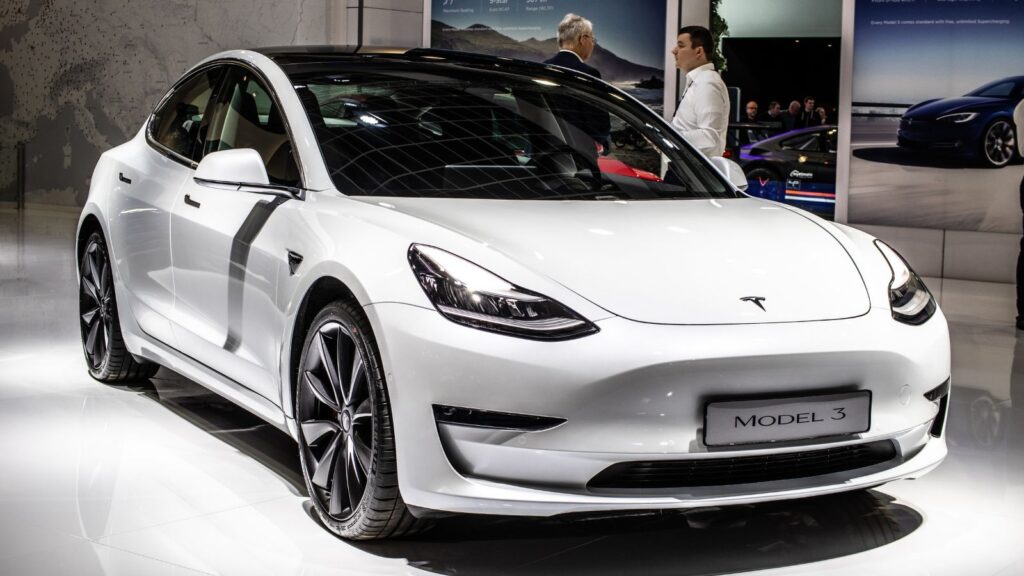
Tesla has quietly reopened part of its Canadian Model 3 shopping experience, but the change comes with a frustrating catch. As of October 30, 2026, Canadian customers can once again select the Model 3 Premium trims through Tesla’s online configurator, although neither version can actually be ordered. Instead, prospective buyers are directed to sign up for availability updates.
The development follows Tesla’s October 12 decision to suspend orders for its Chinese-built Model 3 Premium vehicles, citing restrictions on its import allocation. With Canada’s broader Chinese electric vehicle quota still showing substantial unused capacity, the situation raises questions about how import rules are affecting vehicle availability. For Canadians hoping to purchase an affordable electric sedan, the restored selection offers renewed interest but little certainty about when deliveries can resume.
The Premium Trims Have Reappeared, Not Returned to Sale
On Friday, October 30, Tesla’s Canadian vehicle configurator began allowing visitors to select the Model 3 Premium Rear-Wheel Drive and All-Wheel Drive variants again. Earlier in October, both choices had been greyed out, preventing customers from selecting them. The updated interface restores the familiar experience of browsing configurations and examining vehicle details, potentially creating the impression that sales have resumed. However, the final step remains different: instead of proceeding with an order, visitors encounter a “Get updates” option.
That distinction matters because selecting a vehicle online does not guarantee an allocation, a purchase agreement, or a delivery date. A commuter replacing an ageing car might be able to compare the Premium model with a more expensive configuration, but there is still no confirmed way to complete the purchase. Tesla has not announced that Premium orders have restarted. What changed is the shopping interface, not the underlying availability of the two vehicles.
October 12 Suspension Continues to Affect Both Premium Versions
Tesla’s ordering restrictions began on October 12, when the company stopped accepting new Canadian orders for its Chinese-built Model 3 Premium vehicles. The suspension covered both the Rear-Wheel Drive and All-Wheel Drive variants, rather than a single configuration. Tesla attributed the decision to strong demand exhausting its import allocation and indicated that orders might resume in March 2027 if the Canadian government made additional quota available.
The interruption followed an already challenging period for customers waiting on deliveries. By August 31, reported Canadian delivery estimates for all three Model 3 variants had stretched into December 2026 or January 2027. However, an order suspension is different from a long delivery wait. A customer with an accepted order has at least entered the purchasing process, while someone shopping during the suspension cannot secure a new Premium vehicle through the normal online checkout. The restored configurator has not resolved that uncertainty, and Tesla has not publicly clarified every implication for existing orders.
Tesla’s $39,490 Entry-Level Model Remains Out of Reach
One of the biggest consequences of the suspension is the loss of Tesla’s most affordable Canadian Model 3 option. Before orders were paused, the Premium Rear-Wheel Drive carried a listed manufacturer’s suggested retail price of $39,490, while the Premium All-Wheel Drive was priced at $49,990. These figures exclude certain delivery charges, fees, and applicable taxes, meaning the final cost would be higher. For households calculating monthly payments or deciding whether to replace an older gasoline vehicle, those additional expenses matter.
The lower-priced Model 3 had given shoppers an entry point into Tesla ownership without requiring the budget of a luxury performance vehicle. However, its advertised price is currently of limited practical use because the purchase process remains unavailable. Buyers also should not assume that the vehicle automatically qualifies for federal financial assistance. Tesla’s Canadian incentives information states that Model 3 vehicles are not currently eligible for the federal Electric Vehicle Affordability Program. An attractive starting price, therefore, does not necessarily translate into an available or subsidized purchase.
The Only Orderable Model 3 Comes With a Much Higher Price
With both Premium variants unavailable, the Model 3 Performance All-Wheel Drive remains the only version Canadian customers can order through Tesla’s regular online purchasing process, according to recent automotive reporting. Tesla lists the Performance at $74,990, compared with $39,490 for the entry-level Premium. That represents a $35,500 difference before additional charges and taxes. Even the $49,990 Premium All-Wheel Drive costs $25,000 less than the Performance model at their listed starting prices.
The Performance is designed for a different audience, emphasizing stronger acceleration and sportier driving characteristics rather than simply affordable electric transportation. For a parent replacing an older family sedan or a commuter hoping to reduce gasoline expenses, that significant price increase may place the available option outside the household budget. Tesla’s Canadian lineup has consequently entered an unusual situation: shoppers can see relatively affordable Model 3 configurations, but the version they can actually order requires a substantially larger financial commitment.
Canada’s Chinese EV Import Rules Are Central to the Dispute
The restrictions sit within a trade arrangement that took effect on March 1, 2026. Canada replaced its previous 100% surtax on Chinese-origin electric vehicles with an annual import quota initially covering 49,000 vehicles at a most-favoured-nation tariff rate of 6.1%. Importantly, the program concerns where vehicles originate, not the nationality of the manufacturer. A Tesla assembled in Shanghai therefore falls under the same national import framework as other qualifying Chinese-built vehicles.
Global Affairs Canada’s rules divide the first quota year into two periods. The first ran from March through August 2026, initially providing access for 24,500 vehicles. The second runs from September 2026 through February 28, 2027, with another 24,500 spaces plus unused allocations carried forward. The regulations also require shipment-specific import permits. For automakers, this makes importing vehicles more complicated than simply arranging factory production and transportation. A change in Tesla’s online configurator cannot, by itself, resolve the regulatory requirements governing additional Canadian shipments.
Federal Figures Show More Than 32,000 Import Spaces Remain Unused
Perhaps the most striking part of Tesla’s explanation is the gap between its reported import limitation and the government’s published figures. Global Affairs Canada’s utilization report, updated October 30 at 3 p.m. Eastern, recorded 16,206 vehicles against the annual quota of 49,000. That left 32,794 unused spaces. The first six-month period accounted for 15,603 vehicles, while another 603 had been recorded in the second period. Those numbers indicate that the national quota was far from exhausted.
However, the figures do not reveal how many vehicles individual manufacturers have been authorized to import or what shipment commitments might already exist. An overall utilization figure is not necessarily a complete record of outstanding permits and future deliveries. That distinction is essential when evaluating Tesla’s explanation. The company says its own import allocation has been exhausted, while government statistics show considerable national capacity remaining. Both statements could be accurate, but the publicly available figures do not fully explain why new Tesla Premium orders remain suspended.
Ottawa Has Not Publicly Explained Tesla’s Individual Import Limit
Canada’s published rules say import permits are generally issued to eligible manufacturers on a first-come, first-served basis. However, Global Affairs Canada also retains authority to reserve portions of the quota to ensure equitable access, including for new manufacturers entering the market. The regulations do not provide a public company-by-company breakdown. Consequently, it remains unclear whether Tesla has reached a specific individual limit, exhausted permits available for upcoming shipments, or encountered another administrative constraint.
In an October 14 response to Drive Tesla, Global Affairs Canada spokesperson Rachael Dolan confirmed that officials were consulting companies about distributing the remaining quota. The department declined to disclose company names and shipment details, citing commercial confidentiality, and did not confirm a Tesla-specific cap. Tesla Canada public policy executive Iain Myrans has also explained that automakers receive advance guidance on expected import quantities. Without more detailed disclosure, consumers cannot determine how the remaining national quota translates into actual Model 3 availability.
Factory Location Has Become a Major Pricing Decision
Tesla’s Canadian Model 3 supply chain has shifted between factories as trade policies have changed. Before Canada’s 2024 surtax on Chinese electric vehicles, Shanghai-built Model 3 sedans served the Canadian market. The subsequent 100% surtax encouraged Tesla to source vehicles from its Fremont, California, factory instead. When Canada’s new import arrangement took effect in 2026, Tesla returned to Shanghai-built Premium models, introducing the $39,490 Rear-Wheel Drive variant in May.
Returning to American production would not necessarily be a simple or inexpensive solution. Canada continues to impose a 25% counter-tariff on non-CUSMA-compliant U.S.-built vehicles and on the non-Canadian and non-Mexican content of compliant vehicles. Those rules create different costs for cars manufactured in California. Before the lower-priced Shanghai version arrived, an American-sourced Model 3 Rear-Wheel Drive had been priced at $55,990 in Canada. Another factory switch might reduce dependence on Chinese import permits, but it could also undermine the affordability that made the Premium lineup attractive.
A Brief Range Update Raised Hopes of an American-Built Replacement
On October 26, Tesla’s Canadian website briefly displayed substantially different specifications for the Model 3 Premium Rear-Wheel Drive. Its estimated range increased from 463 kilometres to 584 kilometres, while its advertised acceleration time from zero to 100 km/h improved from 6.2 seconds to 5.2 seconds. Because those figures matched specifications associated with an American-built Model 3, the unexpected change prompted speculation that Tesla could be preparing to return to Fremont production for Canadian customers.
However, the apparent update did not last. By October 27, Tesla had restored the previous 463-kilometre range and 6.2-second acceleration figures. The company did not accompany the temporary change with a confirmed announcement about manufacturing locations or new delivery arrangements. An additional 121 kilometres of advertised driving range would be significant for drivers considering longer journeys, but a short-lived website revision is not reliable evidence of a new product. For now, the possibility of an American-built replacement remains speculation rather than a confirmed solution to Canada’s order restrictions.
March 2027 Remains a Possibility, Not a Confirmed Restart Date
Tesla’s original suspension notice indicated that Premium orders could resume if Ottawa provided additional import quota, with March 2027 identified as the expected timing. That month coincides with the beginning of Canada’s next annual Chinese EV quota period on March 1. However, the conditional wording is important. Neither a restored vehicle selector nor a projected date represents a firm commitment to restart sales. Additional import access could potentially change the timeline, but Tesla has not confirmed an earlier reopening.
For prospective customers, the most meaningful sign of progress will be the return of a functioning ordering process accompanied by clear pricing and delivery information. The current “Get updates” option allows buyers to register their interest, but it does not secure a vehicle or establish a purchase agreement. Anyone comparing electric vehicles should therefore avoid treating the previous $39,490 starting price or the projected March 2027 reopening as guaranteed. Until Tesla restores checkout access, the Premium Model 3 remains a vehicle Canadians can explore online but cannot reliably purchase.
