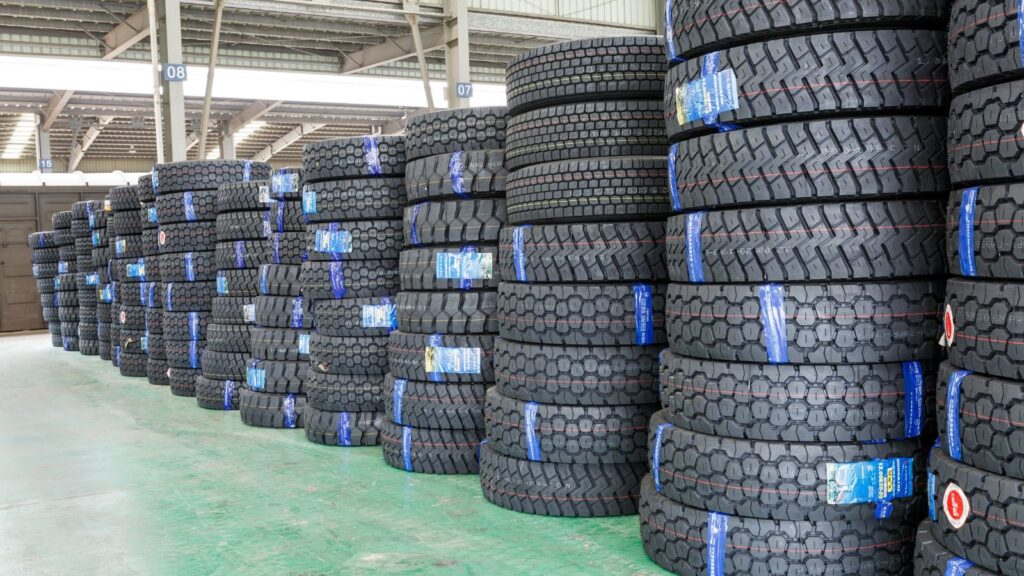
Canada’s commercial tire industry is facing a growing trade dispute after federal authorities found preliminary evidence that Chinese imports are harming domestic manufacturers. On October 30, 2026, the Canadian International Trade Tribunal determined that there is a reasonable indication that dumped and subsidized truck and bus tires from China have caused injury to Canadian producers.
The decision follows complaints from Michelin North America (Canada) and the Canadian Retread Manufacturers Association, which argue that unfairly priced imports are undermining domestic production, employment, and profitability.
With Canada’s commercial truck and bus tire market estimated at approximately $1.2 billion annually, the dispute carries significant implications for manufacturers, tire retreaders, trucking companies, and importers. However, the ruling is preliminary, and further investigations will determine whether trade duties are justified.
A Preliminary Ruling That Keeps the Investigation Alive
The Canadian International Trade Tribunal’s October 30 determination represents an important development, but it is not a final verdict. Under preliminary injury inquiry PI-2026-005, the tribunal examined whether sufficient evidence existed to indicate that Chinese truck and bus tire imports were causing harm to Canadian producers. Its conclusion was affirmative, allowing the trade investigation to continue. However, the decision does not establish that every Chinese exporter engaged in unfair practices, nor does it automatically impose additional tariffs on imported tires.
Canada’s trade investigation system divides responsibility between two federal bodies. The tribunal evaluates injury to domestic industries, while the Canada Border Services Agency (CBSA) investigates dumping and subsidization. The CBSA formally launched its investigations on August 31, 2026, under the Special Import Measures Act. Its next preliminary determinations are scheduled for November 30. This distinction matters because evidence suggesting injury and proof of unfair trading practices are separate legal questions that must be resolved before lasting trade remedies can be introduced.
Canadian Tire Manufacturers and Retreaders Are Leading the Complaint
The investigation began with a complaint received on July 10, 2026, from Michelin North America (Canada) and the Canadian Retread Manufacturers Association. Michelin operates its Canadian commercial tire manufacturing business from Nova Scotia, while the association represents businesses involved in restoring used commercial tires for further service. Supporting companies identified by the CBSA include Kal Tire, Fountain Tire, Pneus Metro, Pneus Robert Bernard, and J.D. McArthur Tire Services. Two additional Canadian retreaders, RTS Ringtread Systems and Tiremaster, also supported the complaint.
The coalition represents a substantial portion of domestic production. According to the CBSA’s investigation documents, Michelin is the only manufacturer of new truck and bus tires in Canada, based on information supplied by the complainants. Other Canadian producers mainly manufacture retreaded commercial tires. The agency contacted 31 potential domestic producers during its initial review and concluded that the complainants accounted for the majority of Canadian production in 2025 and early 2026. Their central concern is that low-priced imports are reducing domestic sales and weakening the economic foundations of facilities that depend on a steady flow of commercial tire orders.
The Dispute Includes More Than Brand-New Truck Tires
Although the investigation concerns truck and bus tires, its scope is broader than tires installed on highway transport trucks. Covered products include new and retreaded pneumatic rubber tires designed for trucks, buses, commercial trailers, and other medium- and heavy-duty vehicles. Specifically, the investigation addresses tires with nominal rim diameters of 17.5, 19.5, 22.5, or 24.5 inches, including their metric equivalents. Passenger-car tires, ordinary light-truck tires, and tires already installed on imported vehicles are excluded.
Retreading is particularly important to the Canadian industry because it extends the working life of suitable tire casings. Instead of discarding a tire once its tread wears down, a retreading facility inspects the casing, removes worn material, applies replacement tread rubber, and cures the product under controlled conditions. This process can provide commercial fleets with another usable tire while reducing waste. According to the CBSA, new and retreaded commercial tires compete for many of the same customers. Consequently, cheap imported new tires can affect Canadian retreaders even when those businesses do not manufacture new tires themselves.
Chinese Imports Account for Nearly Half of Canada’s Imported Truck Tires
China’s position in the Canadian commercial tire market helps explain why domestic producers are seeking government intervention. According to CBSA estimates, Chinese products represented 51.3% of Canada’s truck and bus tire imports in 2022. That share fell to 39.6% in 2024 before recovering to 44.6% in 2025. During the first quarter of 2026, Chinese tires accounted for approximately 48.9% of imports. These figures represent shares of imported tires, not the entire Canadian market, which also includes domestic production.
Import volumes reveal a more complicated picture. Based on Statistics Canada figures presented by the complainants, Chinese tire imports increased by 19.7% between 2024 and 2025, followed by a 7.2% increase in the first quarter of 2026 compared with the same period in 2025. However, imports remained approximately 2.4% below their 2022 level. Canadian investigators nevertheless found evidence that Chinese imports were recovering while domestic producers continued losing sales. That divergence, rather than a continuous rise in Chinese shipments, is an important element of the industry’s complaint.
Falling Import Prices Are at the Centre of the Dispute
One of the most revealing details concerns the relationship between tire import prices and production costs. Figures submitted by the complainants and reproduced in the CBSA’s investigation documents show that the average unit value of Chinese truck and bus tire imports declined from approximately $181 in 2022 to $154 in 2025. That represents a decrease of about 15%. During the same period, the reported price of natural rubber in Northeast Asia increased from $2.48 to $3.05 per kilogram, an increase of approximately 23%.
Canadian manufacturers argue that this combination makes it increasingly difficult to compete without sacrificing profitability. When raw materials, labour, and overhead costs increase, businesses ordinarily need sufficient pricing power to recover those expenses. However, an imported tire available at a substantially lower price can influence purchasing decisions across an entire commercial fleet. The CBSA also acknowledged that average import values are imperfect comparisons because tire quality and product categories differ. Nevertheless, it found the complainants’ evidence of price undercutting and suppression sufficiently supported to justify continuing the investigation.
Investigators Are Examining Both Dumping and Government Subsidies
The investigation focuses on two distinct trade practices. Dumping generally occurs when products are exported at prices below their legally determined normal value. Subsidization involves financial support or other benefits provided by a foreign government that may give certain producers an unfair competitive advantage. In its September 15 statement of reasons, the CBSA estimated a dumping margin of 29.1% for the Chinese truck and bus tires examined. It also estimated a subsidy amount equivalent to 23.9% of the export price, using information covering April 2025 through March 2026.
Those percentages are preliminary estimates used to support the opening of the investigations, not finalized duty rates. The CBSA also identified 50 potentially actionable subsidy programs for examination, including grants, preferential financing, tax reductions, and government-provided inputs or services. Investigators are reviewing whether Chinese government measures substantially influence tire-sector prices. The results could affect how normal values are calculated and whether trade remedies become necessary. For now, the allegations remain subject to further examination, including information supplied by exporters, importers, and Chinese authorities.
Lost Sales Are Putting Pressure on Factories and Workers
For Canadian manufacturers, the alleged damage extends beyond individual sales transactions. The CBSA’s investigation documents describe declining production, reduced factory utilization, weaker profitability, and employment pressures. Kal Tire submitted records of sales lost to competing imports dating back to 2023, while Pneus Metro reported similar experiences during 2024 and 2025. Michelin also identified customers that had shifted purchasing toward imported tires. Kal Tire attributed some retreading plant closures to growing competition from Chinese products, although the publicly available findings do not provide comprehensive figures for related job losses.
The financial consequences can accumulate quickly. Retreading facilities depend on specialized equipment, trained workers, and enough production volume to distribute fixed operating costs across their output. When fewer tires move through a facility, maintaining profitability becomes more difficult. Michelin reported shifting toward higher-value commercial tires to help offset declining revenues, but those products also carry higher material costs. Importantly, the CBSA acknowledged that changes in China’s overall market share did not fully explain every decline experienced by Canadian manufacturers. Further investigation will be necessary to establish the extent of the relationship between import competition and the industry’s financial difficulties.
Trucking Companies Could Face a Different Set of Challenges
The dispute presents a difficult balancing act for trucking companies and commercial fleet operators. Tire purchases represent a recurring operating expense, and lower-priced imported products can help transportation businesses control costs. A 2021 Kal Tire market study, referenced in the CBSA’s investigation, identified rising expenses and pressure on profit margins as major concerns among commercial fleet operators. Price was also identified as an important factor in supplier selection. Consequently, restrictions that increase the cost of certain imported tires could place additional financial pressure on businesses already managing tight operating budgets.
However, the lowest purchase price does not necessarily represent the lowest lifetime cost. Commercial tire buyers also consider durability, expected mileage, maintenance, warranty coverage, and whether a casing can be safely retreaded. These factors influence the long-term economics of fleet operations. If Canada eventually introduces anti-dumping or countervailing duties, some imported tire prices could rise, potentially affecting purchasing decisions and transportation expenses. The size of any increase remains uncertain. The investigation concerns allegedly unfair trade practices rather than a finding that Chinese tires fail Canadian safety requirements.
The United States and Europe Have Already Taken Similar Action
Canada’s investigation is unfolding against a broader international backdrop. In August 2024, the United States International Trade Commission determined that removing existing anti-dumping and countervailing duty orders on Chinese truck and bus tires would likely lead to renewed injury to American manufacturers. Those trade protections remained in place. The European Union has also maintained anti-dumping and countervailing duties on certain Chinese bus and truck tires. In January 2025, European authorities renewed measures addressing unfairly priced and subsidized imports following reviews of their impact on European producers.
These developments are relevant because trade restrictions in major markets can influence where exporters seek customers. Canadian complainants argue that barriers in the United States and Europe could make Canada an increasingly attractive destination for Chinese tire shipments. However, that possibility does not establish that trade diversion has already occurred. Canadian authorities must examine the specific circumstances of imports entering Canada rather than relying on conclusions reached elsewhere. The challenge is determining whether international competition is operating fairly while preserving reasonable access to competitively priced commercial tires.
November 30 Could Determine Whether New Duties Begin
The next major milestone is November 30, 2026, when the CBSA is scheduled to issue preliminary dumping and subsidy determinations or terminate the investigations. If investigators make affirmative preliminary findings, provisional duties could begin applying to covered Chinese truck and bus tires. Such measures would be intended to address potential injury while the remaining investigations continue. The agency has identified 68 potential exporters or producers and 192 potential importers, illustrating the number of businesses potentially affected by the proceedings.
If the investigations advance, the CBSA’s current schedule calls for final dumping and subsidy determinations by March 1, 2027. The Canadian International Trade Tribunal would also conduct a separate final injury inquiry, including public hearings, before determining whether lasting trade remedies are warranted. The tribunal’s detailed reasons for its October 30 preliminary ruling are scheduled for release on November 16. Until those processes conclude, the ultimate findings and any applicable duty rates remain uncertain. For Canada’s tire manufacturers, the investigation offers a potential route to relief. For transportation companies and importers, it introduces uncertainty about future costs and supplier relationships in an industry that depends on reliable, competitively priced equipment.
