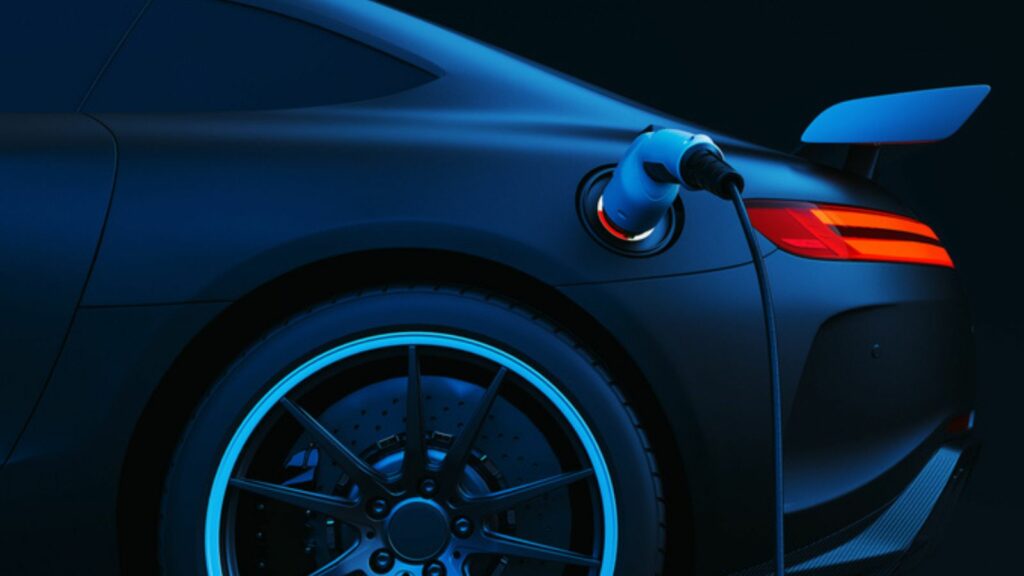
Canada has introduced a significant change to its electric vehicle regulations, potentially benefiting automakers producing larger battery-electric vehicles. Rather than announcing a new consumer incentive or launching a major policy campaign, Ottawa has adjusted technical definitions that determine which vehicles qualify under federal greenhouse gas emissions rules. The change allows manufacturers to earn emissions credits for certain larger electric passenger vehicles that previously would have been classified under heavy-duty vehicle regulations.
The adjustment, published in the Canada Gazette on October 31, 2026, increases a key vehicle weight threshold and brings Canada’s regulatory definitions closer to those used in the United States. While the change may appear administrative, it could influence how manufacturers manage emissions compliance, develop electric vehicles, and approach the Canadian market during a period of considerable uncertainty for the automotive industry.
A Technical Federal Order Opens the Door to Bigger EVs
The changes were introduced through an interim order issued under the Canadian Environmental Protection Act, 1999. Environment Minister Julie Dabrusin signed the measure on October 13, 2026, and the Governor General in Council approved it on October 23. The details were subsequently published in the Canada Gazette on October 31. Unlike a traditional government announcement focused on consumer rebates, this measure addresses several technical areas of vehicle regulation, including emissions standards, vehicle classifications, and compliance procedures.
The adjustment concerning larger electric vehicles represents only one component of the broader order. However, its implications could be important for manufacturers expanding their electric SUV and passenger-vehicle offerings. Environment and Climate Change Canada specifically explains that revised vehicle definitions will allow manufacturers of qualifying large battery-electric passenger vehicles to earn credits under the Passenger Automobile and Light Truck Greenhouse Gas Emission Regulations. The order is already approved and operational as an interim measure, rather than simply being a proposal awaiting public consultation. Its temporary nature nevertheless creates an important distinction: manufacturers gain regulatory flexibility now, while the government works toward permanent changes.
The Vehicle Weight Limit Increases From 10,000 to 14,000 Pounds
One of the most consequential adjustments involves gross vehicle weight rating, commonly called GVWR. This figure represents the maximum loaded weight specified by a manufacturer, including the vehicle itself, passengers, and cargo. Under the previous regulatory wording, an automobile generally had to have a GVWR below 4,536 kilograms, or 10,000 pounds. The interim order raises that threshold to 6,350 kilograms, equivalent to 14,000 pounds. That represents an additional 1,814 kilograms of regulatory headroom, a meaningful expansion for manufacturers of particularly large passenger vehicles.
The order also updates the weight reference in the definition of a work truck, but it does not automatically classify every vehicle under 14,000 pounds as a passenger automobile. Existing distinctions between passenger vehicles, work trucks, and other commercial vehicles still matter. For example, the work-truck definition applies to certain vehicles weighing more than 3,856 kilograms, or 8,500 pounds, that are not classified as medium-duty passenger vehicles. This means a large electric SUV intended primarily to transport people may be treated differently from a commercial vehicle designed to carry equipment. The revised threshold creates additional eligibility for qualifying vehicles, not unrestricted access for every electric truck.
Larger Batteries Help Explain Why the Change Matters
Vehicle weight has become an increasingly important consideration as automakers introduce larger electric SUVs, pickups, and family-oriented vehicles. Unlike conventional gasoline vehicles, battery-electric models must carry substantial energy storage systems to provide their driving range. Larger battery packs can add considerable weight, particularly when manufacturers are attempting to combine long-distance capability with spacious interiors, substantial towing capacity, and the equipment expected in premium vehicles. The U.S. Environmental Protection Agency’s 2025 Automotive Trends Report identifies battery weight as an important reason electric vehicles are often heavier than comparable gasoline-powered models.
Consider the difference between a compact electric commuter and a large, three-row electric family vehicle. Both operate without tailpipe emissions, but the larger model may require substantially more battery capacity and a heavier structure to deliver its intended capabilities. Under the old Canadian threshold, a sufficiently heavy passenger-oriented EV could fall outside the light-duty greenhouse gas compliance system. The revised classification reduces that regulatory obstacle for qualifying vehicles. Importantly, the government has not identified a specific list of newly eligible models in the interim order, so the change should not be interpreted as confirmation that every large electric SUV or pickup automatically qualifies.
Emissions Credits Can Have Significant Value for Automakers
The credit system is one of the most important reasons this regulatory adjustment matters. Canada’s passenger-vehicle greenhouse gas regulations evaluate manufacturers based on the average emissions performance of their fleets. Companies performing better than their applicable standards can generate emissions credits, while those falling short may need to use previously accumulated credits or obtain them from other manufacturers. These credits are calculated in units representing tonnes of carbon dioxide equivalent, rather than functioning as a fixed cash payment for every electric vehicle sold. Including additional qualifying EVs in a manufacturer’s regulated fleet can therefore influence its compliance calculations.
The scale of this system is considerable. Environment and Climate Change Canada’s report covering the 2024 model year shows that approximately 124.9 million emissions credits had been generated since the regulations began, with roughly 31.9 million remaining available for future use. Another 42.4 million had been used to offset emissions deficits, while approximately 50.6 million had expired. For a manufacturer selling both gasoline-powered vehicles and EVs, additional compliance flexibility can be financially and strategically valuable. However, the October adjustment does not establish a guaranteed dollar value or fixed number of credits for each large electric vehicle. Actual credit generation depends on the manufacturer’s fleet performance and applicable regulatory calculations.
Electric Vehicles Also Receive an Updated Emissions Classification
Beyond the weight adjustment, Ottawa has modified another technical detail involving electric vehicle emissions certification. Previously, the Canadian regulations referred to an American emissions certification category identified as bin 1. The interim order updates that reference to bin 0, reflecting changes made to the corresponding United States Environmental Protection Agency requirements. These emission bins classify vehicles according to specific exhaust pollution standards, with bin 0 representing a zero-emissions category for the relevant pollutants. Although the terminology sounds obscure, matching the correct certification category is important for manufacturers demonstrating regulatory compliance.
The adjustment is especially relevant because Canada has historically relied heavily on American vehicle testing and certification standards. A battery-electric vehicle does not produce conventional tailpipe exhaust while operating, but manufacturers must still demonstrate that it meets applicable certification requirements. The updated reference helps avoid inconsistencies between Canadian definitions and the American standards used in the integrated North American automotive market. It does not mean large EVs have suddenly become more environmentally efficient, nor does it address emissions associated with manufacturing batteries or generating electricity. Instead, the revision ensures that regulatory definitions more accurately reflect the certification system currently being applied to electric vehicles.
Regulatory Alignment With the United States Remains a Major Priority
The Canadian and American automotive industries are deeply interconnected, making regulatory consistency particularly important. In February 2026, the federal government reported that more than 90% of Canadian-made vehicles and 60% of Canadian-made automotive parts were exported to the United States. Manufacturers frequently develop vehicles for both markets, meaning differences in emissions classifications can create additional administrative work. Even when two vehicles use identical technology, different regulatory definitions can complicate certification, reporting, and compliance planning. Ottawa says the latest amendments are intended to reduce these differences while maintaining consistency with American vehicle emissions rules.
Part of the challenge stems from the U.S. Environmental Protection Agency’s April 2024 revisions affecting light- and medium-duty vehicles beginning with the 2027 model year. American regulators subsequently proposed delaying some of those requirements until 2029, adding another layer of uncertainty. Canada’s interim order responds to these developments by updating definitions and certification references while longer-term regulatory changes are prepared. For automakers already navigating tariffs, production decisions, and changing demand, regulatory predictability can make a difference. However, reduced administrative burdens do not automatically translate into additional Canadian factory production, lower vehicle prices, or new investments.
The Change Arrives as Canada Reconsiders Its EV Sales Mandate
The timing is particularly noteworthy because Ottawa is simultaneously moving away from its original federal electric vehicle sales mandate. Under the Electric Vehicle Availability Standard introduced in 2023, zero-emission vehicles were supposed to represent at least 20% of new light-duty vehicles offered for sale for the 2026 model year. That requirement would have increased to 60% by 2030 and 100% by 2035. The federal government published proposed regulations to repeal those requirements on August 15, 2026, with public consultation closing on October 29. As of October 31, the repeal remained a regulatory proposal rather than a finalized amendment.
Prime Minister Mark Carney’s government instead intends to introduce stronger greenhouse gas performance standards designed to support goals of 75% EV sales by 2035 and 90% by 2040. An important distinction is that the emissions credits affected by the new vehicle weight rules belong to the longstanding fleet greenhouse gas compliance system. They are separate from the compliance units associated with the proposed-to-be-repealed EV sales mandate. Consequently, the October adjustment does not reinstate mandatory EV sales quotas. It provides another form of regulatory flexibility while Ottawa works toward a different approach to vehicle emissions, leaving manufacturers and environmental organizations watching closely for the final details.
What the New Rules Mean for Canadian EV Buyers
Despite the potential advantages for manufacturers, Canadian consumers should not expect an automatic reduction in the price of larger electric vehicles. The emissions credit adjustment is separate from the federal Electric Vehicle Affordability Program, which offers eligible buyers incentives of up to $5,000 for battery-electric and hydrogen fuel cell vehicles in 2026, and up to $2,500 for qualifying plug-in hybrids. Importantly, Transport Canada’s consumer incentive program still requires eligible vehicles to be light-duty models with a gross vehicle weight rating below 8,500 pounds. It also generally applies a $50,000 transaction-value limit, although Canadian-made vehicles are exempt from that price cap.
This creates an important distinction: a large electric vehicle may qualify for manufacturer greenhouse gas compliance credits without qualifying for a federal purchase incentive. Consider a family shopping for a spacious electric SUV with an unusually large battery. Even if the manufacturer benefits from the revised emissions rules, the buyer would still need to check the vehicle’s eligibility under the separate consumer incentive program. Over time, reduced compliance complexity could make certain models more attractive for manufacturers to offer in Canada. However, there is currently no verified government estimate establishing that the regulatory change will lower vehicle prices, increase dealership inventory, or generate additional consumer savings.
Environmental Trade-Offs and the Next Steps for Ottawa
The broader interim order also reveals the difficult balance Ottawa is attempting to strike between environmental objectives and automotive competitiveness. Alongside the electric vehicle classification changes, the government continues suspending greenhouse gas emissions standards for certain commercial trailers. Federal analysis estimates that delaying those trailer standards for another model year would result in approximately 0.7 megatonnes of forgone carbon dioxide equivalent emissions reductions over the operating lives of 2028-model-year trailers. Across the affected 2020–2028 trailer model years, Ottawa estimates approximately 4.5 megatonnes of forgone reductions during the 2020–2050 period. These figures concern the separate trailer provisions, not the emissions impact of granting credits to larger passenger EVs.
The larger question is how Canada will translate temporary regulatory adjustments into a stable long-term emissions framework. The October interim order can remain effective for up to one year from October 13, 2026, unless it is replaced or repealed earlier. Environment and Climate Change Canada says permanent amendments are being developed to resolve regulatory inconsistencies and maintain appropriate alignment with American standards. For manufacturers, that means the newest changes provide immediate flexibility but do not settle every question about future compliance. For Canadian motorists, the direct effects may remain difficult to see. Nevertheless, decisions about which vehicles earn emissions credits can influence product planning, regulatory costs, and the kinds of electric vehicles manufacturers choose to bring to market.
