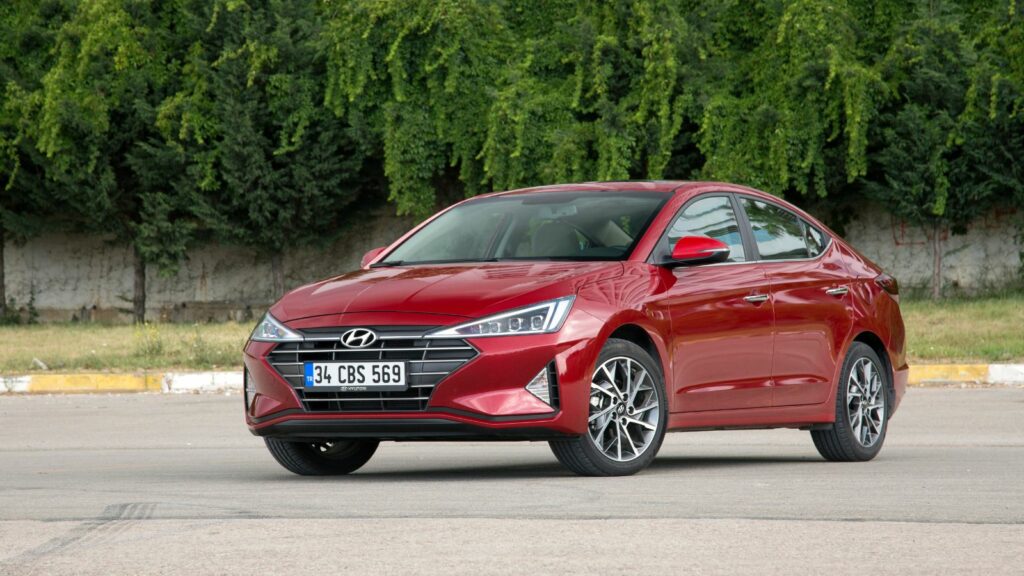
A small number of Hyundai Elantra sedans are at the centre of a safety recall involving a manufacturing problem that could have serious consequences on the road. Bolts securing the front suspension struts to the steering knuckles may not have been tightened correctly during assembly, potentially allowing critical components to loosen or separate. The defect could affect vehicle stability and, in more serious cases, lead to a loss of steering control.
Transport Canada has identified three affected 2026 Elantras, while Hyundai’s American recall covers 20 Elantras and four Tucson Hybrids. Although the number of vehicles involved is relatively small, the potential consequences make this a significant safety concern. Hyundai has outlined a repair program, identified possible warning signs, and begun notifying authorities about the manufacturing issue.
Which Hyundai Elantra Models Are Affected?
The group under review is much smaller than a model-wide recall. Hyundai’s October 20, 2026 filing with the U.S. National Highway Traffic Safety Administration identifies 20 Elantra sedans from the 2026 model year, assembled between December 30, 2025, and July 6, 2026. Four 2026 Tucson Hybrids are included in the same American campaign, bringing its total to 24 vehicles. The vehicles were manufactured in South Korea. Hyundai estimates that approximately 10% of the American recall population may actually have the defect, although every vehicle included in the campaign still requires the prescribed inspection.
Transport Canada has separately recorded three affected 2026 Elantras under recall number 2026-508. This distinction matters because the U.S. count is not a Canadian total, and the production dates alone cannot confirm whether an individual vehicle is affected. An Elantra built within the stated period is not automatically defective, while an owner cannot rule out a recall simply because the car appears to operate normally. Vehicle identification numbers provide the most reliable way to confirm whether a particular car requires attention. For the families who rely on one of these vehicles every day, the limited recall population does not make the potential safety consequences any less important.
Why Improperly Tightened Suspension Bolts Pose a Serious Safety Risk
The front suspension does considerably more than absorb bumps and improve ride comfort. A strut is a structural component that helps maintain the position of the wheel, while the steering knuckle connects important steering and suspension components. The fasteners joining these parts must withstand repeated forces as the vehicle accelerates, brakes, corners, and travels across uneven pavement. When those connections are not tightened to the manufacturer’s specifications, the relationship between the wheel and suspension can become compromised. What initially appears to be a minor assembly error can therefore have implications far beyond an occasional rattle.
Hyundai’s regulatory filing explains that insufficiently tightened fasteners could allow the adjoining suspension components to separate partially or completely. Transport Canada similarly warns that the problem could change vehicle stability or cause a loss of steering control. That does not mean every recalled Elantra will suddenly become uncontrollable, but the possibility is serious. During an ordinary highway lane change, for example, a driver expects the front wheels to respond predictably. A compromised suspension connection could undermine that stability at a particularly dangerous moment, potentially leaving the driver with less control than anticipated.
How Hyundai’s Manufacturing Process Failed to Catch the Problem
Hyundai traced the issue to the front strut installation process at its Ulsan manufacturing operations in South Korea. According to its American safety filing, an assembly-line operator may have installed one or more fasteners without applying enough tightening force, commonly called torque. The investigation also uncovered a problem with the verification process. Torque-measurement data used to confirm that the fasteners had been tightened correctly was improperly recorded, preventing the system from identifying some potentially insecure connections. The findings suggest that both the initial assembly operation and the inspection process contributed to the problem.
The regulatory filing identifies South Korean supplier Samjin Nut as the manufacturer of the affected fastener, but Hyundai attributes the recall to installation practices rather than defective nuts. That distinction helps explain why the repair centres on checking and correcting the existing connections. Hyundai also reports introducing improved torque-monitoring logic and additional production sign-off requirements to help prevent similar mistakes. Those improvements were fully integrated into production by September 9, 2026. Although the manufacturing changes address the process that allowed the problem to develop, they do not eliminate the need to inspect vehicles that may have already left the factory.
An Unusual Suspension Noise Helped Uncover the Defect
The investigation began with a problem that many motorists might initially mistake for ordinary suspension wear. On July 20, 2026, Hyundai’s North America Safety Office received a report involving a 2026 Elantra that produced suspension noise while travelling over road bumps. The report prompted Hyundai to investigate the condition. Engineers reviewed their initial findings with Hyundai Motor Company on August 13 and began examining potentially affected vehicles that had not yet been sold. That inspection program continued through October 5 and identified two vehicles with front suspension fasteners tightened below the required specifications.
Hyundai’s regulatory timeline also identifies a U.S. incident involving an affected vehicle on June 29, 2026. Following its investigation, the automaker decided on October 13 to conduct a safety recall and subsequently submitted its report to American regulators on October 20. Importantly, Hyundai stated that it knew of one U.S. incident but no related crashes, fires, or injuries as of the recall decision. The absence of reported injuries is reassuring, although it does not diminish the potential seriousness of the defect. The investigation demonstrates how a seemingly ordinary suspension noise can lead to the discovery of a manufacturing problem with much broader safety implications.
Warning Signs Hyundai Elantra Owners Should Watch For
Hyundai has identified two main categories of potential warning signs: suspension noise or vibration, and a vehicle that pulls to one side. In everyday driving, these symptoms could appear as an unfamiliar sound when crossing a speed bump, vibrations from the front suspension, or a noticeable tendency for the car to drift away from its intended direction. Such behaviour does not automatically mean the suspension bolts are loose. Similar symptoms can arise from tire problems, alignment issues, or other mechanical faults. However, they warrant particular attention when the vehicle may be included in a recall involving steering control.
The concern is that a potentially compromised connection may not produce a dramatic warning before its condition worsens. Hyundai’s American filing does not designate this as a formal do-not-drive recall, but owners should not interpret that as a reason to overlook unusual handling. If an Elantra begins pulling unexpectedly, develops pronounced suspension noise, or becomes difficult to steer, the safest approach is to reduce speed, stop in a safe location, and arrange a professional assessment rather than continue driving. Even vehicles without noticeable symptoms should receive the required inspection when identified by the recall, since the objective is to prevent a dangerous failure before it occurs.
Three Canadian Vehicles Are Included in the Recall
Canadian Elantra owners do not have to rely exclusively on American recall information to determine whether the problem affects vehicles sold domestically. Transport Canada’s official safety database confirms that three 2026 Hyundai Elantras are included under recall number 2026-508. Hyundai’s Canadian manufacturer recall identifier is R0321 (61D314). The notice was originally published on October 20, 2026, and updated on October 26. Canadian regulators specifically identify the possibility that the front strut bolts could loosen or separate, leading to changes in stability or a loss of steering control.
While three vehicles represent an unusually small Canadian recall population, the consequences could still be significant for the affected owners. Hyundai Canada’s vehicle recall lookup allows motorists to check their vehicle identification numbers, although the Canadian system applies to vehicles originally retailed in Canada. Owners of imported vehicles may need additional assistance from Hyundai to verify their recall status. Transport Canada also recommends keeping manufacturer contact information updated, especially after moving or purchasing a used vehicle. Hyundai has committed to notifying affected Canadian owners in writing, although the Canadian recall record does not specify an exact mailing date.
What Hyundai Dealerships Will Do to Fix the Problem
Fortunately, the recall does not automatically require replacing the entire steering system or front suspension. Hyundai’s repair instructions focus on inspecting the fasteners connecting the front strut assemblies to the steering knuckles. Under the American recall program, dealerships will examine the connections on both sides of the front suspension and tighten the fasteners to the correct specifications where necessary. Technicians may also replace associated hardware and perform a wheel alignment. Transport Canada’s recall notice describes a similar process involving inspection and, when required, tightening or replacing the affected bolts.
The alignment procedure is an important part of restoring proper vehicle operation. Work involving the front struts can influence wheel alignment, potentially affecting steering behaviour and tire wear if the final adjustments are incorrect. Although the problem may sound like a straightforward matter of tightening bolts, it requires proper equipment and manufacturer specifications. Hyundai confirms that American recall repairs will be provided at no cost, including for affected vehicles outside the normal warranty period. Hyundai Canada also states that recall work is performed without charge at authorized dealerships. Owners should retain their service documentation, particularly if related repairs were completed before receiving the recall notice.
How Owners Can Check Their Vehicles and Arrange Repairs
Owners concerned about the recall can begin by locating their vehicle identification number, commonly called the VIN. This 17-character identifier is generally visible near the base of the windshield on the driver’s side and can also be found on vehicle registration documents. Canadian owners can enter the number into Hyundai Canada’s official recall lookup or contact an authorized dealership and reference Transport Canada recall 2026-508. In the United States, owners can use the National Highway Traffic Safety Administration’s recall database and reference campaign 26V692000, which Hyundai identifies internally as recall 309.
Hyundai’s American filing scheduled owner notification letters for December 19, 2026, while identifying October 23 as the date affected VINs would become searchable. Those American notification dates should not be confused with the Canadian recall schedule. Owners whose vehicles are identified should arrange an inspection promptly rather than postpone the repair simply because no symptoms are noticeable. If a recall does not appear in an online search but the vehicle has concerning steering or suspension behaviour, a Hyundai dealership can help investigate further. Ultimately, this recall highlights why even a small manufacturing error deserves attention when it involves components responsible for keeping a vehicle stable and responding predictably to the driver’s steering inputs.
