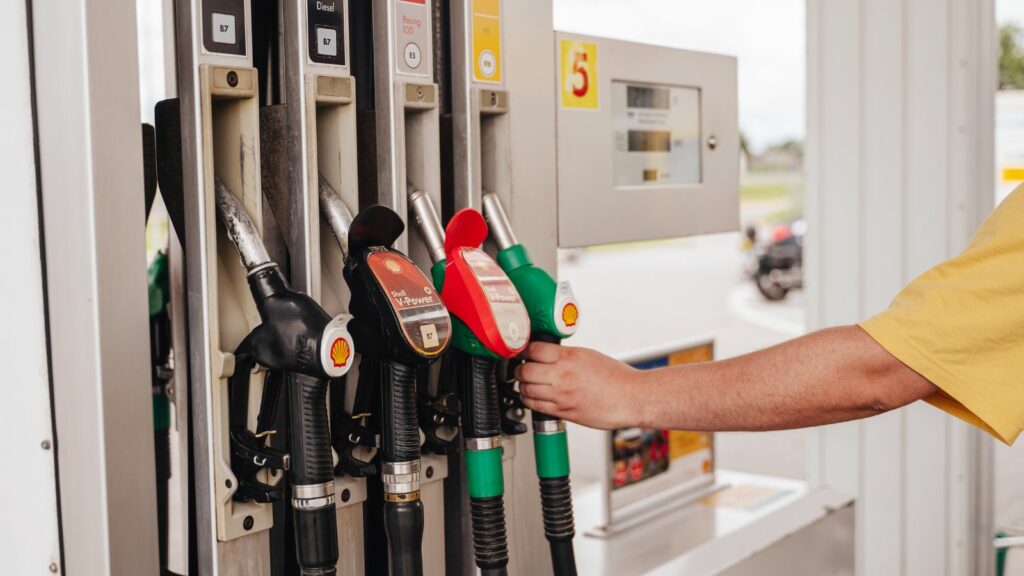
Prince Edward Island motorists are getting some welcome relief at the pumps after a significant overnight fuel-price reduction, but diesel prices remain stubbornly high despite the latest adjustment.
Effective Friday, November 20, 2026, the Prince Edward Island Regulatory and Appeals Commission (IRAC) approved an eight-cent-per-litre reduction in regular gasoline prices, bringing the regulated self-serve range to approximately $1.60 per litre. Premium gasoline, diesel, and home heating oil also became cheaper, although diesel remains above $2.33 per litre.
The changes offer a financial break for commuters, families, and businesses facing elevated energy costs. However, the substantial difference between gasoline and diesel prices highlights the continued pressure on transportation, agriculture, and household budgets across the province.
Regular Gasoline Falls Back Toward $1.60 a Litre
The latest change took effect at 12:01 a.m. on November 20, with the commission listing regular self-serve gasoline between 159.7 and 160.9 cents a litre. That range replaces 168.9 to 170.1 cents from November 17. For Islanders who had grown accustomed to seeing pump displays above $1.70, the move is immediately noticeable, even though it does not return prices to levels seen a year earlier.
The eight-cent reduction described by the regulator is a pre-sales-tax adjustment. Because the 15% harmonized sales tax is applied afterward, the equivalent change in published self-serve pump prices is 9.2 cents a litre. On a hypothetical 50-litre purchase, that works out to $4.60 less than under the previous schedule, assuming a comparable station price. The savings will not rewrite a household budget, but repeated fill-ups can make an ordinary Friday commute a little less expensive. That matters most to families making several trips every week.
Diesel Remains Above $2.33 Despite Another Price Cut
Diesel remains the most striking number in Friday’s announcement. Even after its six-cent-per-litre regulatory reduction, self-serve prices range from 233.1 to 234.3 cents per litre. On November 17, the range was 240.0 to 241.2 cents. Once the sales tax is included, the latest change amounts to a 6.9-cent decline at the pump. Relief is real, but diesel still costs 73.4 cents more per litre than regular gasoline when comparing their respective minimum prices.
At Friday’s minimum regulated diesel price, an illustrative 80-litre fill costs $186.48. The same volume of regular gasoline costs $127.76, although different vehicles consume fuel at different rates. That comparison helps explain why the diesel issue extends beyond individual motorists. Provincial officials identify trucks, delivery vehicles, snow-removal equipment and farm machinery among the users affected by diesel costs. A modest decline eases their immediate expenses without eliminating pressure on businesses that depend on fuel every working day.
Premium and Mid-Grade Gasoline Also Become Cheaper
Friday’s reduction was not limited to the fuel grade. Premium gasoline received a six-cent regulatory cut, leaving the self-serve range at 175.3 to 176.4 cents per litre. Mid-grade now ranges from 167.6 to 168.7 cents. That creates a spread among fuel grades even as all prices move within the same provincial regulatory system. At their respective minimums, premium is 15.6 cents more expensive than regular gasoline.
The posted figures also depend on the type of service being purchased. IRAC permits self-serve stations to charge within approved minimum and maximum ranges, while full-service pumps can have higher ceilings. Friday’s maximum full-service price is 163.8 cents for regular and 179.3 cents for premium. An illustrative 50-litre premium fill at the minimum self-serve price costs $87.65, compared with $79.85 for regular. Motorists need to follow their vehicle’s fuel requirements; the comparison simply shows how much grade and service choices can affect the receipt.
Home Heating Oil Prices Fall as Winter Approaches
Households that heat with furnace oil also received relief in Friday’s price reset. IRAC reduced the regulated furnace-oil price by six cents per litre before tax, lowering its maximum to 176.6 cents per litre. The regulator’s detailed schedule shows a five-per-cent tax on this product, producing a maximum price of 185.4 cents per litre after tax. Those figures describe two stages of the same calculation, not competing prices.
The distinction matters when families budget for deliveries rather than filling a vehicle at a service station. On an illustrative 500-litre order, a six-cent pre-tax reduction saves $30 before tax, or about $31.50 after applying the five-per-cent tax. That is useful relief, but a substantial delivery can still cost more than $900 at the published maximum. For households relying on furnace oil through the colder months, the question is whether future adjustments continue to provide relief before the next large tank refill.
Provincial and Federal Fuel Taxes Are Already Suspended
Friday’s cuts come amid unusual fuel-tax rules. Prince Edward Island suspended its provincial fuel tax on September 26, removing the normal 8.47-cent levy on gasoline and 14.15 cents on diesel. The federal government has also suspended its excise taxes on gasoline and diesel, ordinarily 10 cents and four cents per litre respectively. IRAC’s November 20 pricing table accordingly shows zero for both excise and provincial fuel taxes.
Those measures do not make fuel tax-free. The 15% harmonized sales tax still appears in the regulated pump calculation. Both governments have scheduled their temporary fuel-tax suspensions to last through January 31, 2027, followed by partial reinstatement in February and full restoration in April. That schedule is important for households comparing today’s prices with possible costs next spring. The market price can move independently of taxes, so Friday’s welcome decrease should not be mistaken for a permanent reduction in future transportation costs.
Wholesale Fuel Prices Help Explain the Diesel Gap
Behind every pump display is a calculation that starts well before fuel reaches a service station. IRAC tracks prices for refined products, including the Charlottetown rack price, and considers daily, recent-average and longer-term pricing information. Wholesale margins, forward-averaging adjustments, retail margins and sales tax then help determine the regulated prices consumers see. This approach explains why an eight-cent change announced by the commission does not appear as exactly eight cents on a tax-inclusive receipt.
Friday’s detailed breakdown puts the period-average rack price at 125.7 cents per litre for regular gasoline, compared with 190.5 cents for diesel. That is a 64.8-cent gap before the remaining price components are added. The regulator lists a five-cent wholesale margin for both products and a seven-to-eight-cent self-serve retail margin. Diesel’s high pump price therefore cannot be explained simply by a larger dealer markup. The underlying refined-fuel price is substantially higher as well for the period.
High Diesel Costs Continue to Challenge P.E.I. Farmers and Businesses
The diesel figure matters especially in an economy where farms and freight operators depend on equipment that burns large quantities of fuel. Statistics Canada reported that Prince Edward Island farmers planted 83,700 acres of potatoes in 2026, the second-largest provincial area after Alberta. That figure illustrates the scale of agricultural activity whose machinery, trucking and supply chains can be sensitive to fuel costs.
The provincial government has explicitly identified farm equipment, delivery vehicles and snow-removal machinery as diesel users. At Friday’s minimum retail price, 300 litres of diesel would cost $699.30, a hypothetical illustration rather than an estimate of what a farm actually pays under its purchasing arrangements. For a small contractor or delivery business, even a six-cent regulatory reduction can help, while the absolute cost remains difficult to ignore. Higher transportation expenses may influence operating budgets and pricing decisions, but they do not translate automatically into immediate store-price increases.
Gasoline Is Still More Expensive Than a Year Ago
Despite the latest decrease, gasoline remains more expensive than at roughly the same point last year. IRAC’s comparison cited a regular-gas price of 147.9 cents per litre on November 19, 2025. Friday’s minimum self-serve price is 159.7 cents, or 11.8 cents higher. The comparison is useful as a snapshot of what motorists paid, although fuel-tax arrangements have changed since last November and the figures should not be treated as identical underlying market costs.
Oil-market figures underline that broader context. The regulator’s November comparison placed Brent crude at US$91.40 a barrel on November 19, 2026, versus US$64.73 a year earlier, an increase of US$26.67, or about 41%. But crude oil and refined gasoline do not always move together. IRAC’s pricing methodology also accounts for product-market conditions, averages and margins. Friday’s cut is therefore significant in the short term without proving that fuel prices have returned to normal or will keep falling.
Fuel-Efficient Driving Can Help Stretch the Savings
There is another way to understand Friday’s reduction: the price per litre is only one part of a driver’s total fuel bill. Natural Resources Canada says adopting fuel-efficient driving techniques can reduce consumption by as much as 25%. Gentle acceleration, steady speeds and anticipating traffic can help conserve fuel without requiring motorists to change vehicles. The actual benefit depends on the car, the route and driving conditions.
Maintenance matters as well. The Canadian Automobile Association warns that underinflated tires can increase fuel consumption by up to four per cent, while unnecessary idling burns fuel without covering any distance. For Islanders travelling repeatedly between work, school, shops and appointments, combining errands where practical may reduce the number of cold starts and kilometres driven. None of these measures removes the burden of diesel exceeding $2.33 a litre. But lower consumption can help households retain more of the savings from regulated price cuts.
Another Fuel-Price Adjustment Is Scheduled for November 24
Islanders should not assume Friday’s lower prices will remain in place for the rest of November. IRAC now schedules gasoline, diesel and furnace-oil adjustments twice a week, effective at 12:01 a.m. on Tuesdays and Fridays. Its next scheduled review is November 24. The recent sequence already shows how quickly the direction can change: regular gasoline increased by four cents in the November 17 adjustment before receiving Friday’s eight-cent regulatory cut.
The regulator also monitors market developments between scheduled decisions and can consider an unscheduled adjustment when changes are significant. That leaves no reliable basis for promising another reduction next Tuesday. The central takeaway is more measured: drivers buying regular gasoline have a reprieve, households using furnace oil get some breathing room, and diesel-dependent operators still face unusually large bills. With tax suspensions scheduled to phase out in 2027, future fuel costs will reflect both changing market conditions and government policy.
