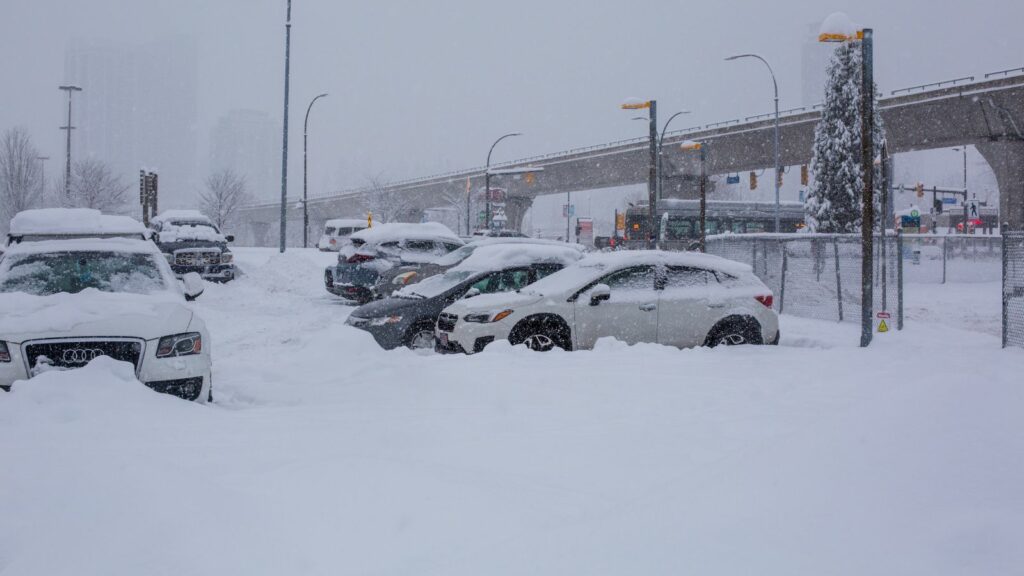
Snow tires can transform a vehicle in winter, but rubber is only part of the equation. Two cars wearing similarly capable winter tires can behave very differently once the road disappears under packed snow, deep ruts or an icy hill. Ground clearance, drivetrain design, suspension geometry and even software calibration all influence how effectively a vehicle can use the traction available.
Some weaknesses become obvious while pulling away from a snowy intersection. Others appear only when a vehicle encounters an unplowed driveway, uneven snowpack or a sudden need to slow down. These 17 factors help explain why certain cars seem naturally comfortable in snow while others can feel difficult before tire choice even enters the discussion.
Low Ground Clearance Turns the Car Into a Snowplow

Ground clearance rarely matters on a lightly dusted highway, but the equation changes quickly when snow becomes deep enough to contact the underside of the vehicle. A low car must begin pushing and compacting snow with its bumper, undertray and chassis. That creates resistance the drivetrain must overcome in addition to moving the vehicle itself. Eventually, accumulated snow can support part of the car’s weight, reducing the load carried by the wheels and making forward progress increasingly difficult.
Deep-snow research supports the importance of clearance. An experimental Journal of Terramechanics study using a tracked test vehicle found that increasing belly clearance from 215 to 365 millimetres increased drawbar pull by about 15 percent under its test conditions. Passenger cars are obviously different machines, but the underlying problem of belly drag remains relevant. Ford even programs some vehicles with air suspension to raise roughly 30 millimetres in a deep-conditions mode. A low sports sedan may have excellent electronics and AWD, yet still lose the fight once its floor starts riding on the snow.
Long Overhangs and Poor Breakover Geometry Cause Problems
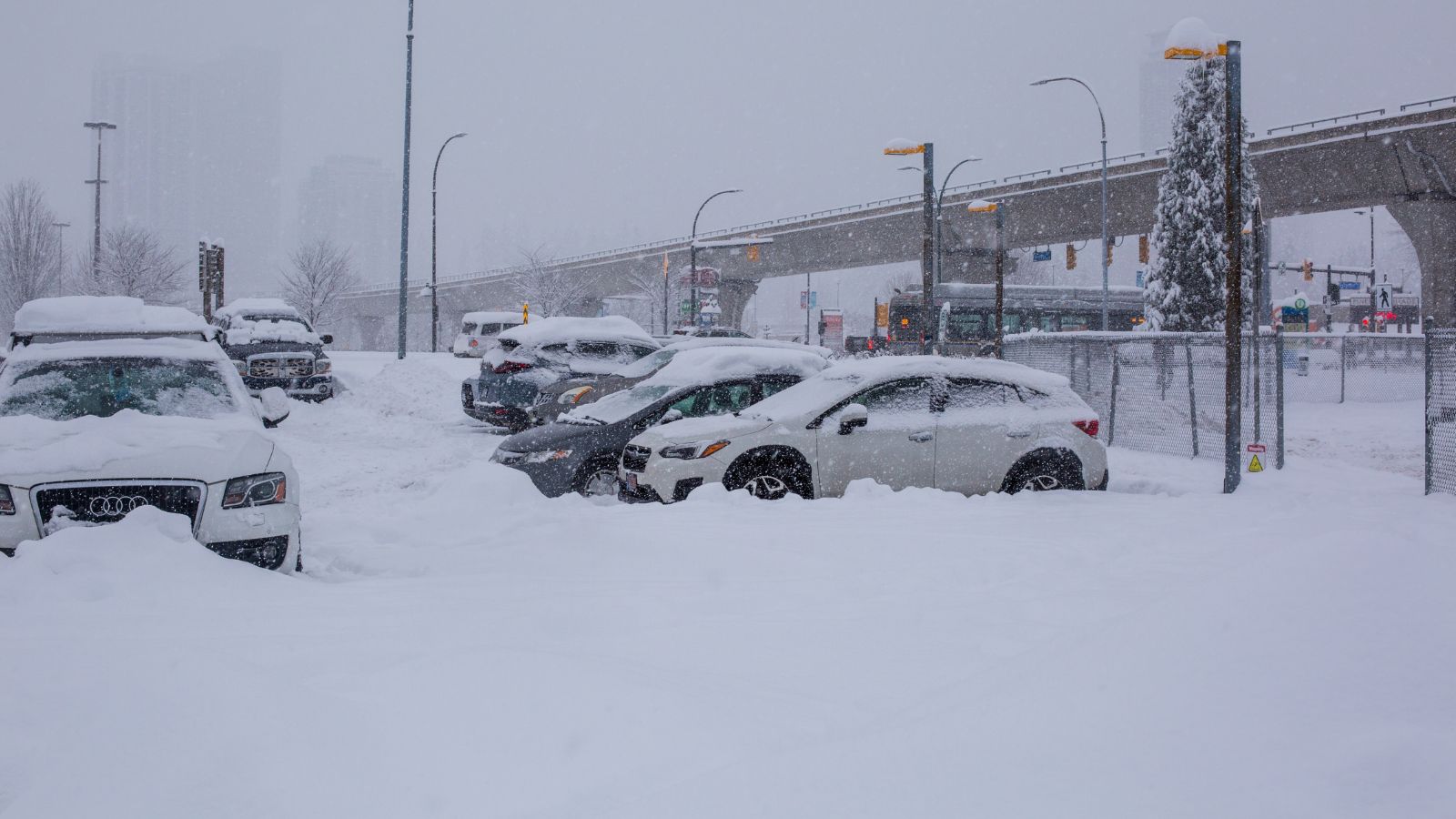
Ride height does not tell the entire story. The shape of the vehicle also determines how easily it can get over a plowed ridge, frozen driveway entrance or uneven pile of packed snow. Approach angle describes how steep an obstacle the front of a vehicle can meet without the bumper contacting it. Departure angle performs the same job at the rear, while breakover angle indicates whether the middle of the vehicle can clear a crest without becoming hung up.
Long front and rear overhangs generally reduce approach and departure angles, while a long wheelbase combined with limited centre clearance reduces breakover capability. These measurements are commonly associated with off-roading, and NHTSA uses such geometry when discussing off-highway vehicle capability. Winter drivers encounter milder versions of the same problem after snowplows leave hard ridges at intersections and driveway entrances. A low nose or long bumper can hit the ridge before the wheels reach it. Even with four powered wheels, a vehicle that physically cannot clear the snow has reached a limitation that extra traction cannot solve.
Having Only One Driven Axle Limits the Traction Available
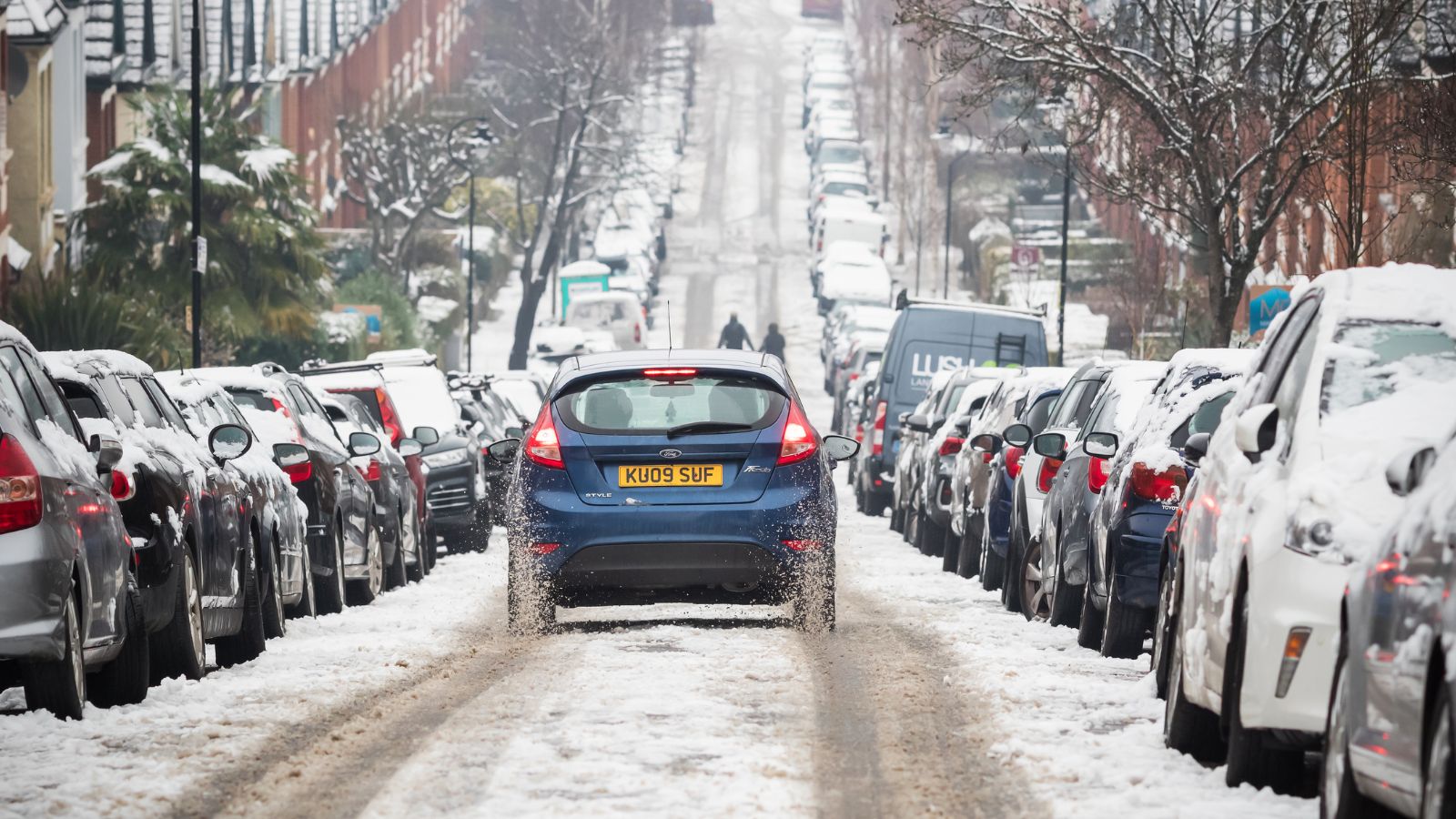
A two-wheel-drive car asks only two wheels to produce the force that moves the vehicle forward. On dry pavement, that generally presents little difficulty because substantial traction is available. Snow changes the calculation. When surface friction drops sharply, the driven wheels can reach their available traction limit much more easily, particularly when starting uphill or trying to accelerate through deeper snow.
An SAE study comparing driveline configurations found the benefits of four-wheel drive became especially noticeable on low-friction surfaces including snow, ice and wet pavement. Another engineering study examining a motor-assisted 4WD system identified start-off traction on low-friction roads as an especially important requirement in snowy regions. AWD should not be confused with better braking, however. It mainly expands the vehicle’s ability to distribute propulsion among more contact patches. A well-designed front-wheel-drive car can still perform effectively in winter, but when otherwise comparable vehicles are trying to climb the same snowy grade, having torque available at both axles provides another tool for maintaining forward motion.
Too Little Weight Over the Driven Wheels Hurts
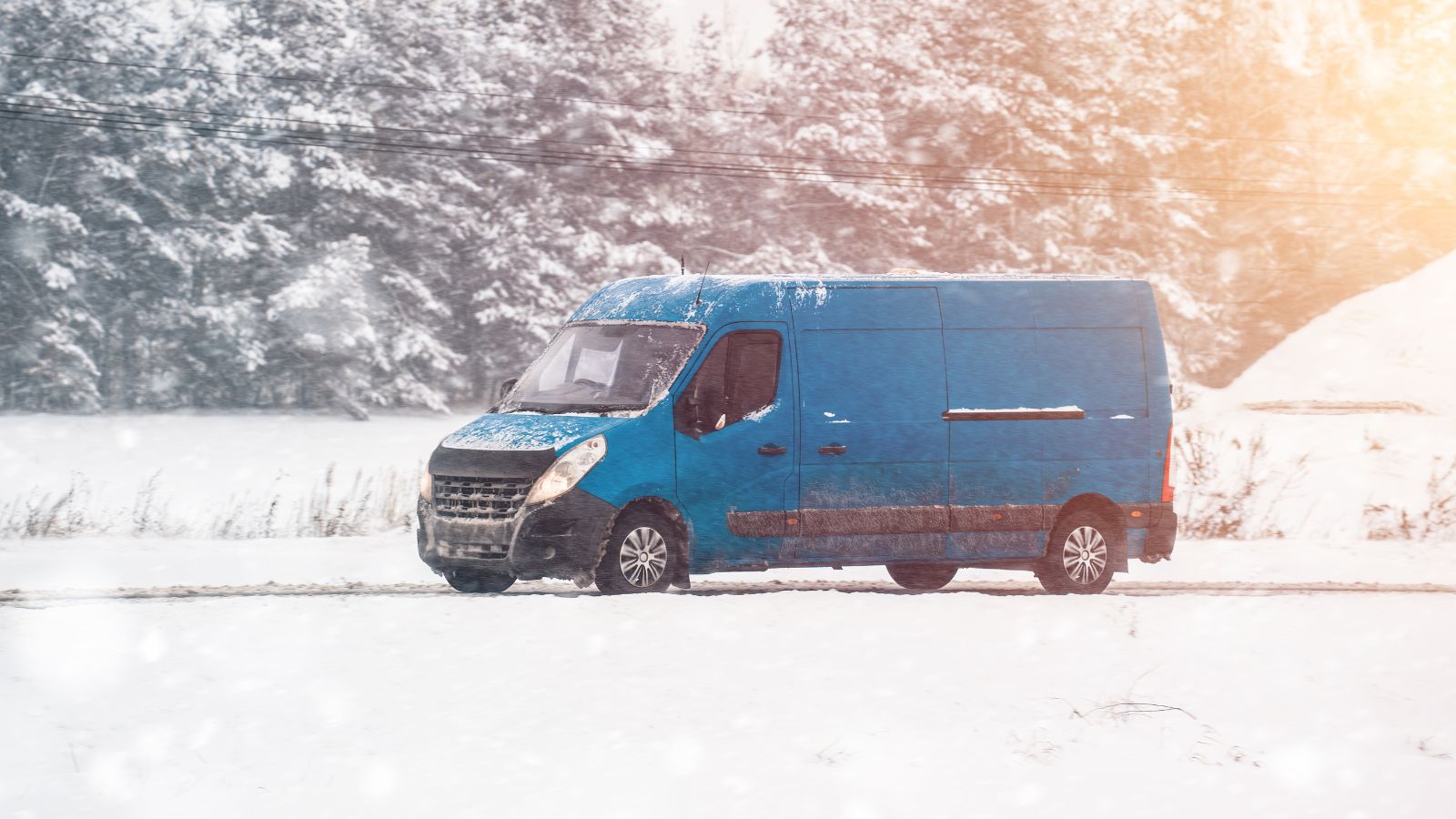
Drivetrain labels do not explain everything. The amount of vehicle weight pressing down over the wheels being asked to provide propulsion also affects how easily those wheels can use available grip. This is one reason traditional front-engine, front-wheel-drive cars developed such a strong reputation for everyday winter mobility. The engine and transaxle place substantial mass near the driven front axle.
General Motors has specifically noted this characteristic in technical information about winter driving, explaining that front-wheel-drive vehicles can gain winter-traction advantages from the engine and transaxle sitting above the driving wheels. That does not mean rear-wheel drive is automatically unsuitable for snow. Modern vehicles may have much more balanced weight distribution, sophisticated traction control, limited-slip differentials or electric motors capable of extremely precise torque management. The broader point is that drivetrain configuration and axle loading work together. A vehicle with relatively little static load over its driven axle can encounter wheelspin sooner when trying to launch on snow, especially before acceleration produces a meaningful weight transfer.
An Open Differential Can Waste the Grip One Side Still Has
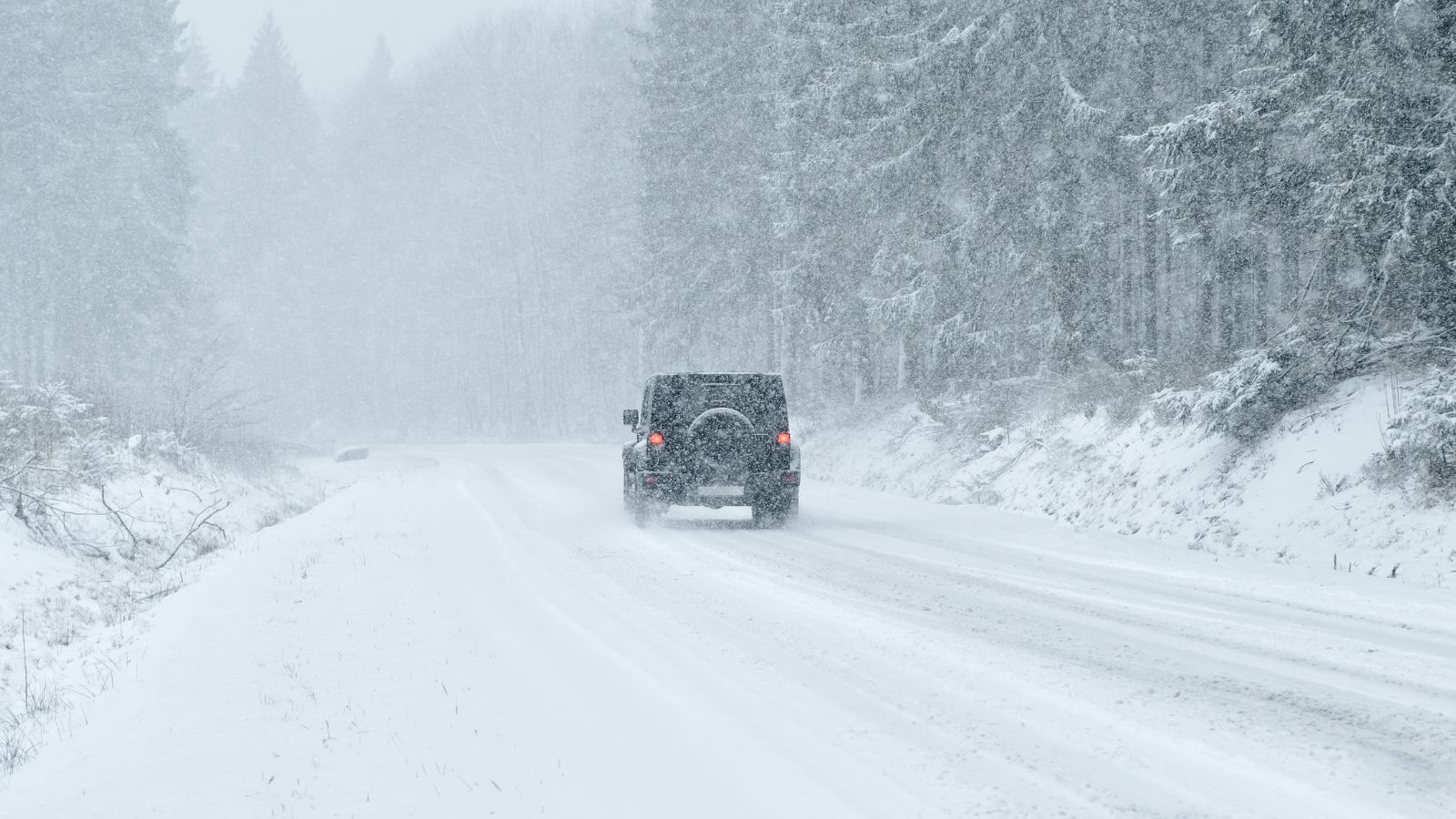
Imagine one driven wheel sitting on packed snow while the wheel on the opposite side finds a comparatively grippy patch of pavement. A conventional open differential allows the wheels to rotate at different speeds, which is extremely useful during normal cornering. The disadvantage appears when available traction differs dramatically between the two sides. The low-grip wheel can begin spinning while the wheel with more usable traction receives too little torque to move the vehicle effectively.
Limited-slip differentials, locking differentials and brake-based electronic systems were developed partly to address that limitation. SAE literature specifically describes open differentials struggling when one wheel encounters a slippery surface, while limited-slip systems can keep more useful drive effort available at the wheel that still has grip. Ram owner documentation similarly identifies limited-slip differentials as useful on snow, ice, mud, sand and gravel when surface traction differs between the left and right wheels. This becomes especially noticeable in uneven snow, where one side of a car may be travelling through a polished rut while the other sits on rougher snow.
Reactive AWD Can Be a Step Behind the Surface
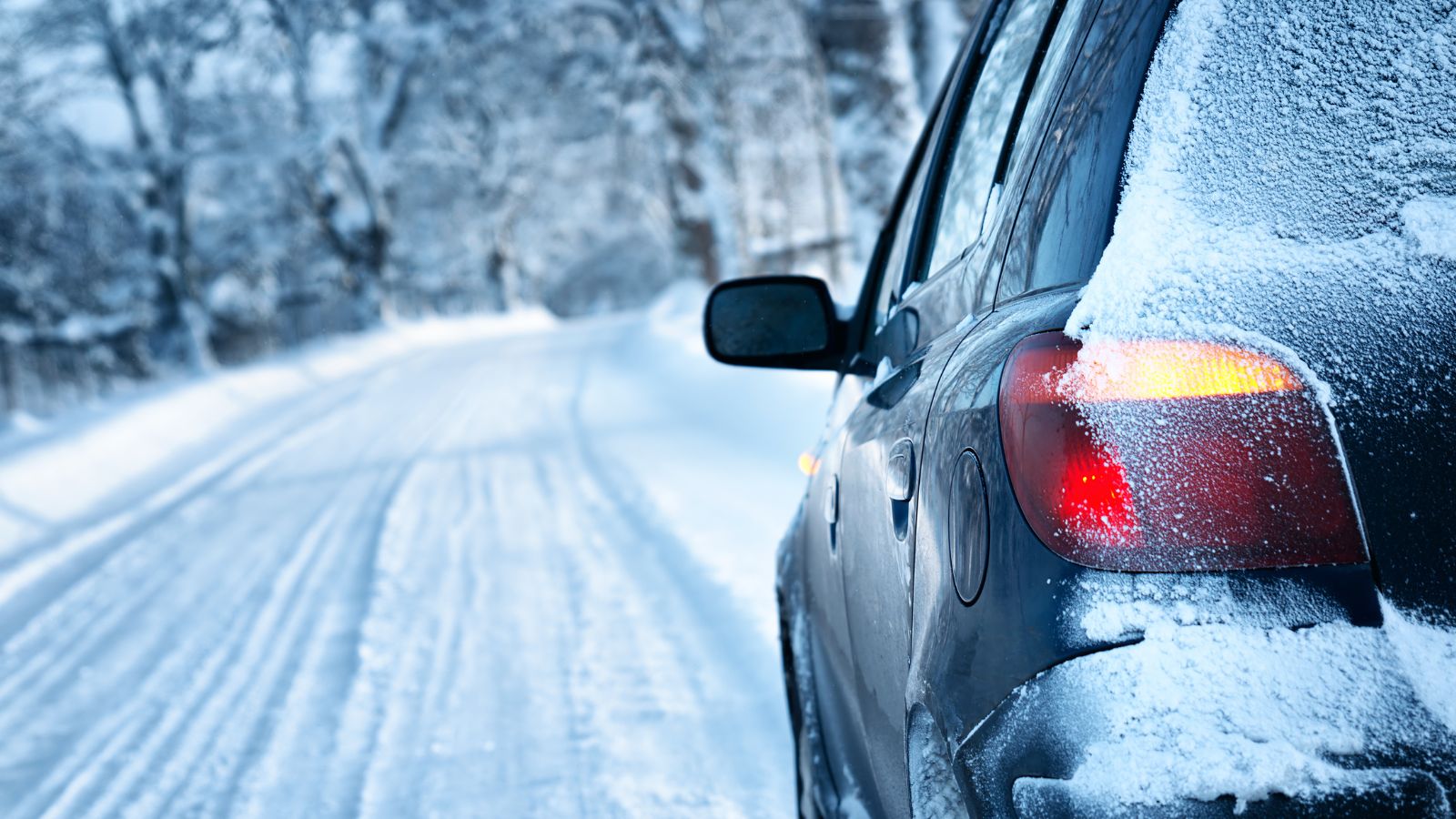
The letters “AWD” on a liftgate do not reveal exactly how an all-wheel-drive system behaves. Some systems normally operate primarily through one axle and transfer additional torque only when conditions indicate it is necessary. More advanced strategies use throttle position, steering input, wheel speed and other data to anticipate traction loss and begin adjusting torque distribution before significant wheelspin develops.
Honda describes its current Real Time AWD system as predicting driving conditions and optimizing front-to-rear drive force for snow-covered and slippery surfaces. Hyundai takes a similar approach with certain Snow modes, pre-distributing power to all four wheels before wheel slip occurs. That distinction can matter when pulling away from an icy intersection or applying power midway up a snowy hill. A well-calibrated reactive system can still work quickly, but there is inherently value in preparing the driveline before large slip develops. This is why two crossovers both advertised as AWD can feel surprisingly different in the same winter conditions: the control strategy matters almost as much as the number of driven wheels.
No Snow Mode Leaves Dry-Road Calibration in Charge
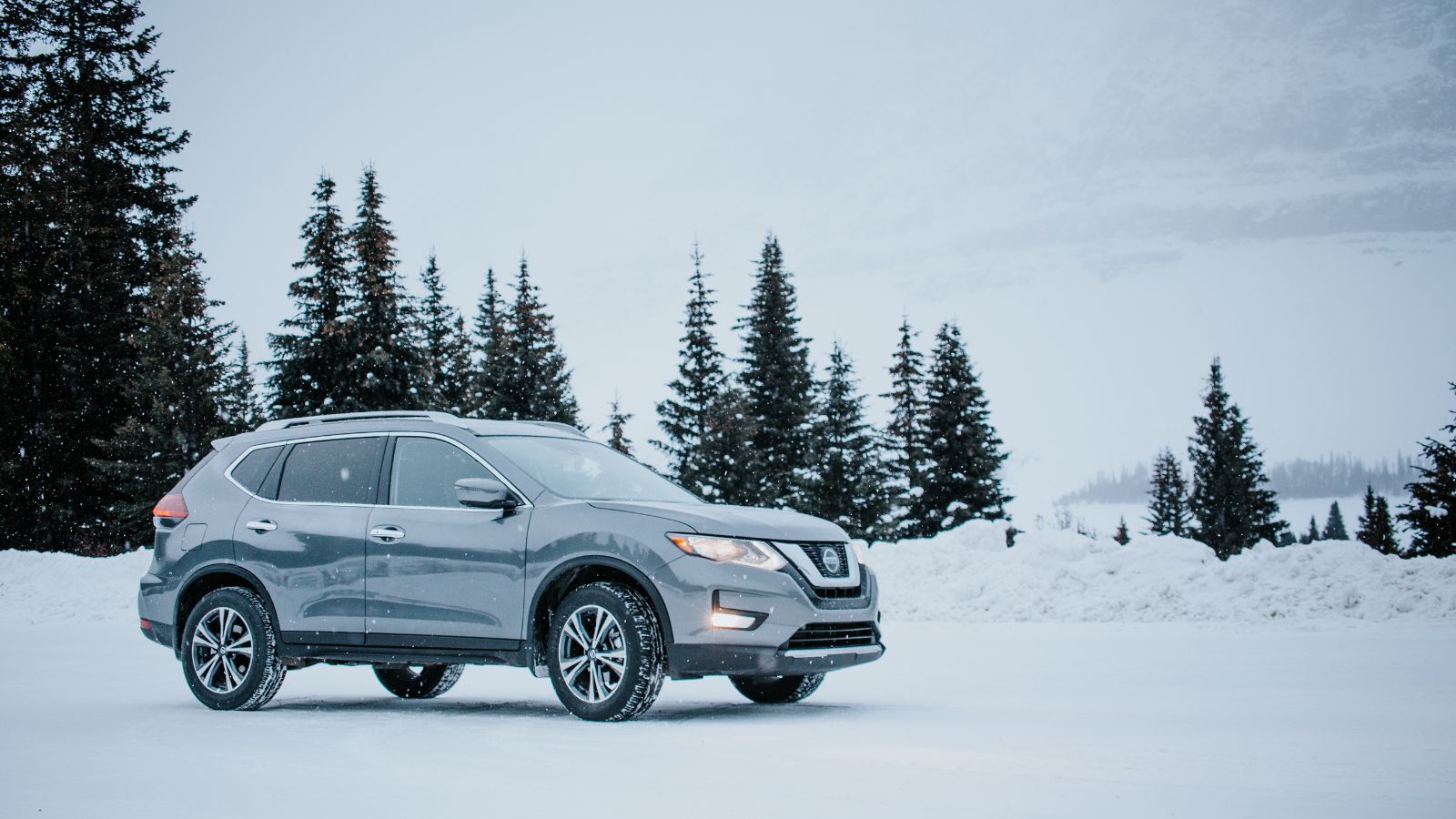
A dedicated Snow mode can sound like a marketing feature until the list of systems it changes is examined. Depending on the vehicle, selecting it may alter accelerator response, transmission behaviour, stability control, brake intervention and AWD torque distribution simultaneously. Those changes are intended to make the vehicle less abrupt and more predictable when the available traction becomes very small.
Honda’s current Pilot and Passport provide useful examples. Their Snow modes dampen throttle response and use second-gear starts, while the vehicles’ broader drive-mode systems can alter throttle, transmission, steering, braking and AWD characteristics. Other manufacturers take different approaches, but the concept is the same: dry-road calibration is not necessarily ideal for a snow-covered road. A car without a specialized mode can still perform well if its default software is intelligently calibrated. However, dedicated winter programming gives engineers an opportunity to optimize several interacting systems specifically for slippery conditions rather than forcing one compromise calibration to handle dry pavement, rain, snow and performance driving equally well.
Sharp Throttle Response Makes Torque Harder to Meter
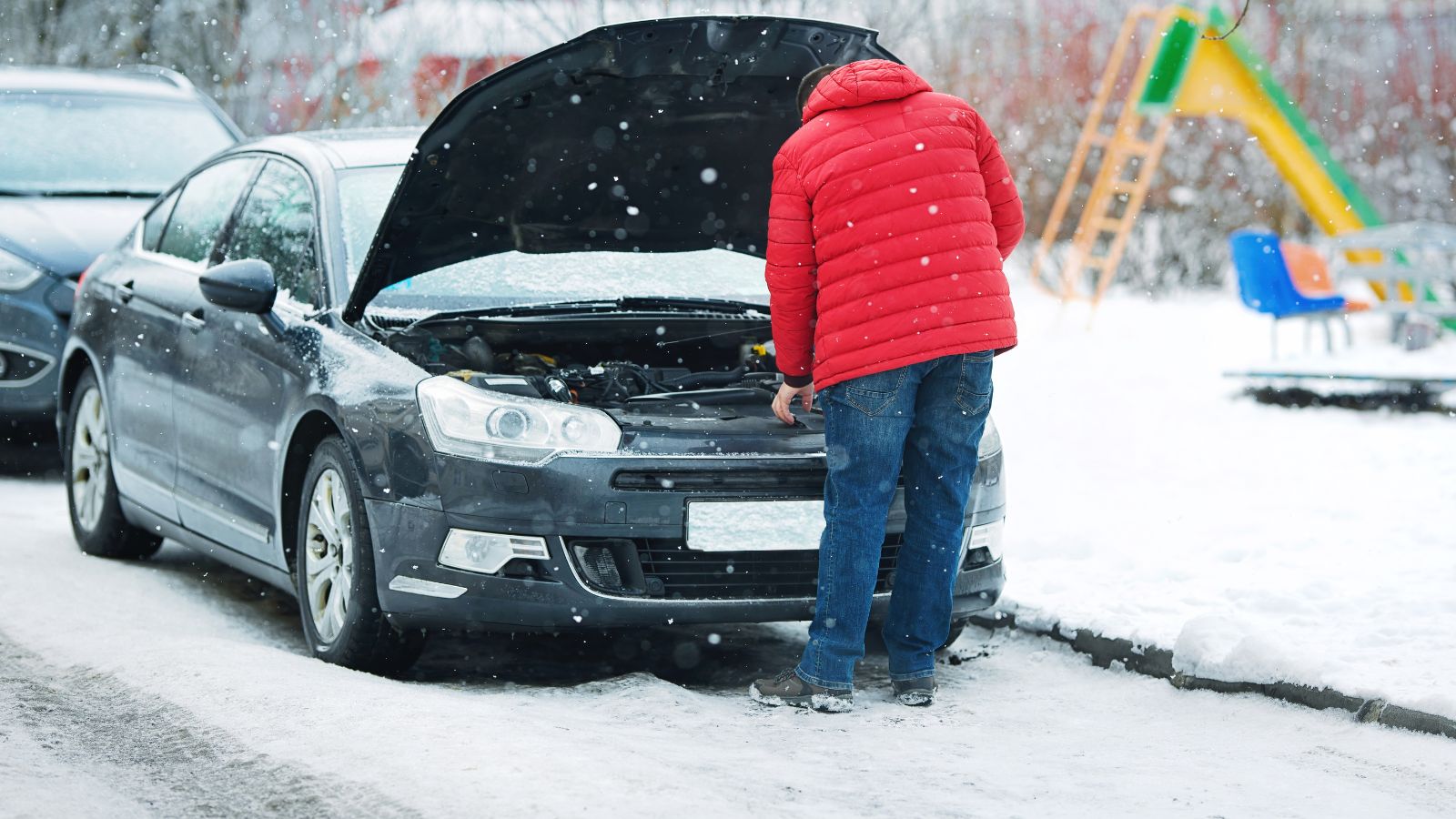
Responsive accelerator tuning feels desirable when pavement is warm and dry. In snow, an accelerator that commands a large increase in torque from a tiny pedal movement can become much harder to manage. The available traction may be so limited that the difference between smoothly moving away and spinning the wheels is only a modest change in delivered torque.
Manufacturers openly change throttle mapping for this reason. Honda says Snow mode in vehicles such as the CR-V and HR-V smooths drive-by-wire throttle response specifically to minimize wheelspin and improve control. Chevrolet’s Snow/Ice calibration similarly slows acceleration and torque response through changes to the pedal map. Subaru describes its X-MODE system as delivering torque gradually on slippery terrain rather than immediately providing everything requested by the accelerator. These systems demonstrate an important point: maximum engine or motor output is rarely the goal in snow. What matters is how precisely the driver and control systems can meter the smaller amount of torque the surface can actually accept without breaking traction.
Aggressive First-Gear Launches Can Trigger Wheelspin

First gear is designed to multiply engine torque strongly enough to get a stationary vehicle moving. That multiplication is useful on dry pavement, but it can become counterproductive when only a small amount of torque can be transferred through a snowy surface. Applying too much wheel torque too quickly can simply overwhelm the available grip and turn acceleration into wheelspin.
That is why some manufacturers deliberately bypass first gear when their winter modes are activated. Honda states that Snow mode on vehicles including the Ridgeline starts the automatic transmission in second gear to help minimize wheel slippage. Dodge has used the same strategy in Snow mode on performance-oriented AWD vehicles, pairing second-gear launches with full stability control and a winter-oriented AWD setting. The idea is mechanical as much as electronic: a taller launch gear reduces torque multiplication at the wheels. A vehicle that lacks either a dedicated snow calibration or enough transmission flexibility may therefore be harder to launch smoothly, especially if its normal programming emphasizes quick response and strong low-speed acceleration.
Traction Control That Cannot Adapt to Deep Snow Can Work Against Progress
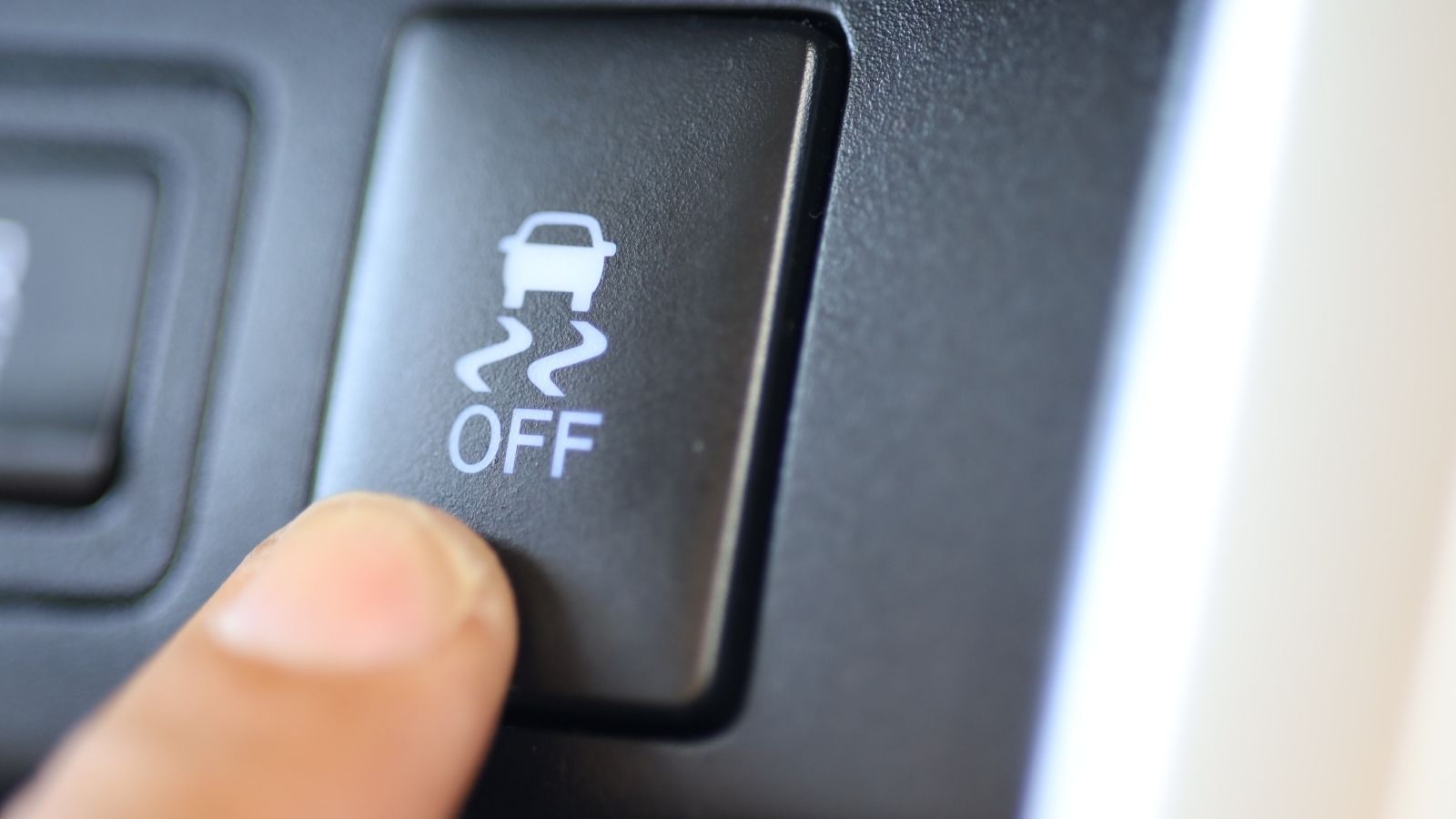
Traction control normally prevents excessive wheelspin by reducing power or applying individual brakes, and that is exactly what drivers want on most slippery roads. Deep snow can create an unusual exception. Sometimes a small amount of wheelspin is useful for maintaining momentum, clearing loose material or rocking a stuck vehicle out of a depression. A system that aggressively removes power every time a wheel slips may leave the vehicle almost unwilling to move.
Manufacturers account for this problem in different ways. Ford owner manuals state that switching traction control off can be beneficial when a vehicle is stuck in mud or snow because it permits wheelspin. Some Ford models offer dedicated Deep Snow/Sand programming that changes accelerator response, traction settings and stability-control behaviour. Tesla similarly provides a Slip Start function intended for circumstances including loose snow, deep snow and rocking out of a rut. None of these features eliminates the need for restraint; uncontrolled high-speed wheelspin is dangerous and can dig a vehicle in deeper. The valuable feature is controlled flexibility rather than simply having traction control.
Stability-Control Calibration Matters More Than Many Drivers Realize
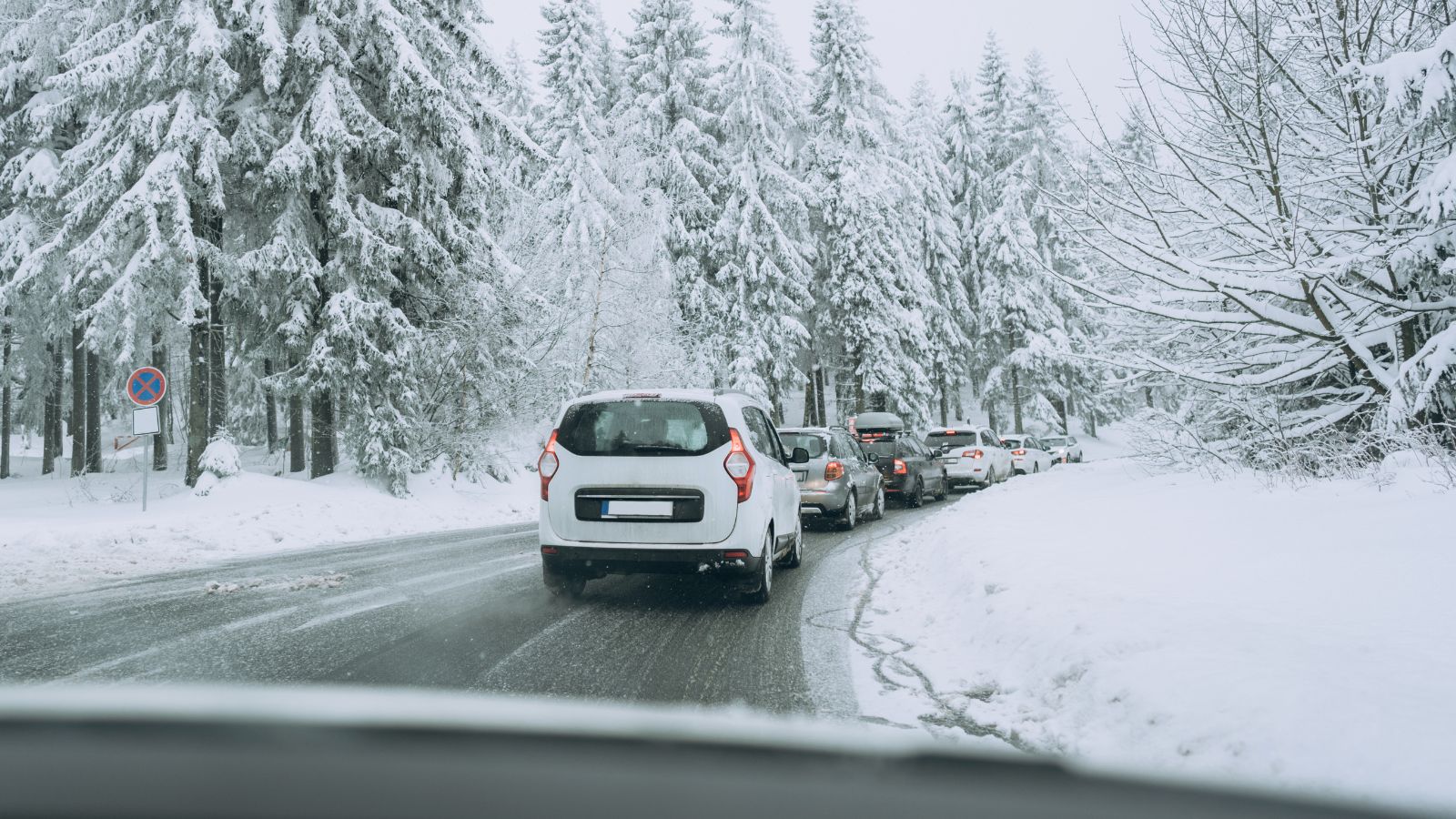
Traction control primarily deals with driven-wheel slip, while electronic stability control also watches the direction the vehicle is actually travelling compared with the direction the driver intends to go. It can reduce power and selectively apply individual brakes to influence yaw. On packed snow, where small changes in available grip can produce relatively large changes in vehicle motion, the quality of that calibration becomes particularly noticeable.
Engineering research has tested stability systems directly on snow and ice. An SAE study involving electronic limited-slip differential control evaluated full-throttle launches on split-friction ice and snow as well as yaw-control manoeuvres on packed snow, reporting improved stability from the enhanced control strategy. Separate research involving four-wheel slip control demonstrated improved stability and steerability during tests on ice- and snow-covered roads. The important distinction is that merely possessing electronic stability control does not make every vehicle respond identically. Sensor interpretation, brake intervention, torque reduction and driveline coordination are all calibration decisions, helping explain why one car can feel composed on a snowy bend while another feels noticeably more intrusive or unsettled.
Poor ABS and Wheel-Slip Control Can Undermine Braking Confidence
When hard braking begins on snow, the available grip at each wheel can change rapidly. Anti-lock braking systems attempt to keep wheel slip in a useful range rather than allowing the wheels to remain locked. Modern control systems continually monitor wheel behaviour and adjust brake pressure, allowing the driver to retain more directional control during emergency braking.
The engineering challenge is not simply whether ABS exists but how accurately and quickly the system manages slip on different surfaces. SAE researchers have demonstrated brake-by-wire controllers capable of maintaining desired wheel-slip levels across ice, snow and dry asphalt. A 2020 SAE investigation likewise described wheel-slip control as crucial to both traction control and ABS, comparing different control strategies using high-fidelity vehicle simulations. This means winter braking performance has a software and actuator component alongside basic mechanical grip. A well-developed system can recognize changing conditions and modulate braking smoothly. Poorly matched control behaviour can feel coarse or inconsistent when snow alternates between loose powder, packed sections and exposed pavement within only a few metres.
Strong One-Pedal Regeneration Can Be Awkward on Slippery Roads
Electric vehicles introduce another winter variable: lifting off the accelerator can produce meaningful deceleration through regenerative braking before the driver touches the brake pedal. Strong one-pedal driving is convenient on dry roads, but abrupt lift-off deceleration is less desirable when the available grip is low. The vehicle still has to transmit that braking force through the road surface, regardless of whether the deceleration comes from an electric motor or conventional friction brakes.
Several manufacturers explicitly acknowledge this. Chevrolet says One-Pedal Driving is not recommended on wet, snowy or icy roads. Kia warns against suddenly increasing regenerative-braking levels on slippery surfaces because tire slip and vehicle skidding can result. Some vehicles automatically reduce or coordinate regeneration when wheel slip is detected, making the behaviour far more sophisticated than early systems. Even so, the amount of lift-off regeneration and how seamlessly it adapts matter in winter. A car that allows gentler deceleration settings gives the driver another way to avoid abrupt longitudinal forces when crossing polished snow or ice.
Poor Brake Blending or Regen Bias Can Upset the Chassis

Electrified vehicles must decide not only how much regenerative braking to provide, but where that braking force should occur. A single electric motor may recuperate energy through only one axle, while the hydraulic brakes can act at all four wheels. Engineers therefore need to blend regenerative and friction braking without creating an undesirable front-to-rear brake balance as surface grip changes.
SAE research has demonstrated why this matters on low-friction roads. A study of a hybrid with an electrically driven rear axle noted that maximizing rear-axle regeneration on a low-friction surface could compromise stability, then developed a controller that redistributed braking torque to address the problem. More recent 2026 research into rear-wheel-drive EVs likewise focused on adaptive brake-force allocation so regenerative energy recovery would not undermine braking stability. Drivers should rarely notice this complexity when a system is calibrated well. That invisibility is the achievement. Snow exposes poor coordination quickly because an axle reaching its traction limit during deceleration can alter the vehicle’s balance before conventional ABS or stability intervention becomes obvious.
Overly Stiff Suspension Can Struggle on Rutted Snow
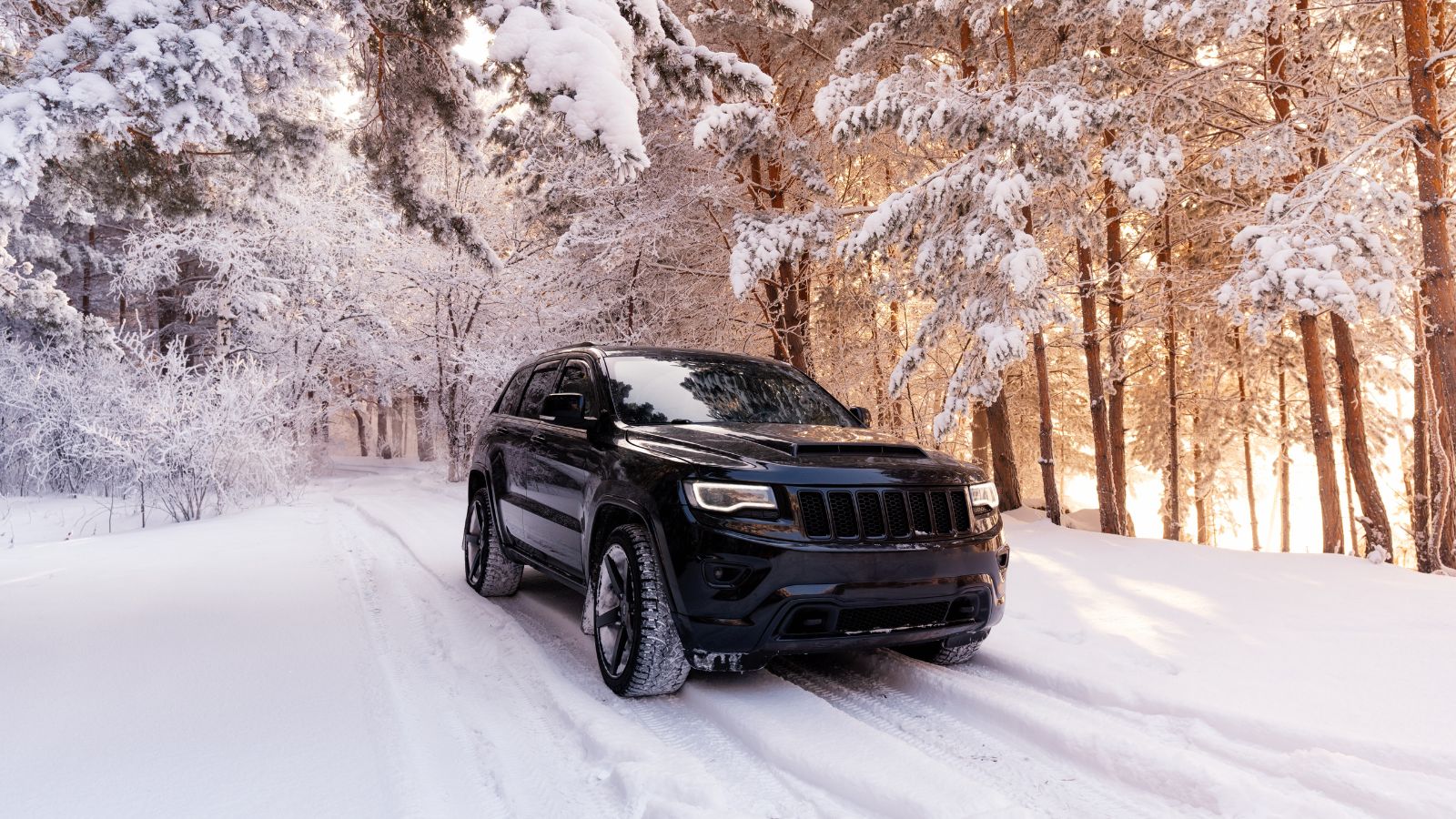
Sporty suspension tuning is designed to control body motion and provide quick responses on relatively smooth pavement. Winter roads can present almost the opposite environment. Frozen ruts, packed snow ridges, potholes hidden beneath slush and irregular surfaces force each wheel to move vertically while the vehicle is simultaneously trying to accelerate, steer or brake.
Suspension has to keep the tires following those irregularities rather than allowing them to skip across the surface. Academic work describing suspension design notes that maintaining optimum wheel-to-road contact is one of the suspension system’s fundamental purposes and that racing-style stiffness is better suited to smooth surfaces than severe unevenness. SAE work on supple suspension has similarly discussed how overly stiff race-car setups can lose grip over uneven ground. This does not mean soft suspension is automatically superior; excessive body movement introduces its own handling compromises. The winter advantage comes from compliance that is appropriately matched to the vehicle, allowing each wheel to remain loaded consistently as it moves across rutted or broken snow.
Limited Wheel Travel and Articulation Reduce Contact
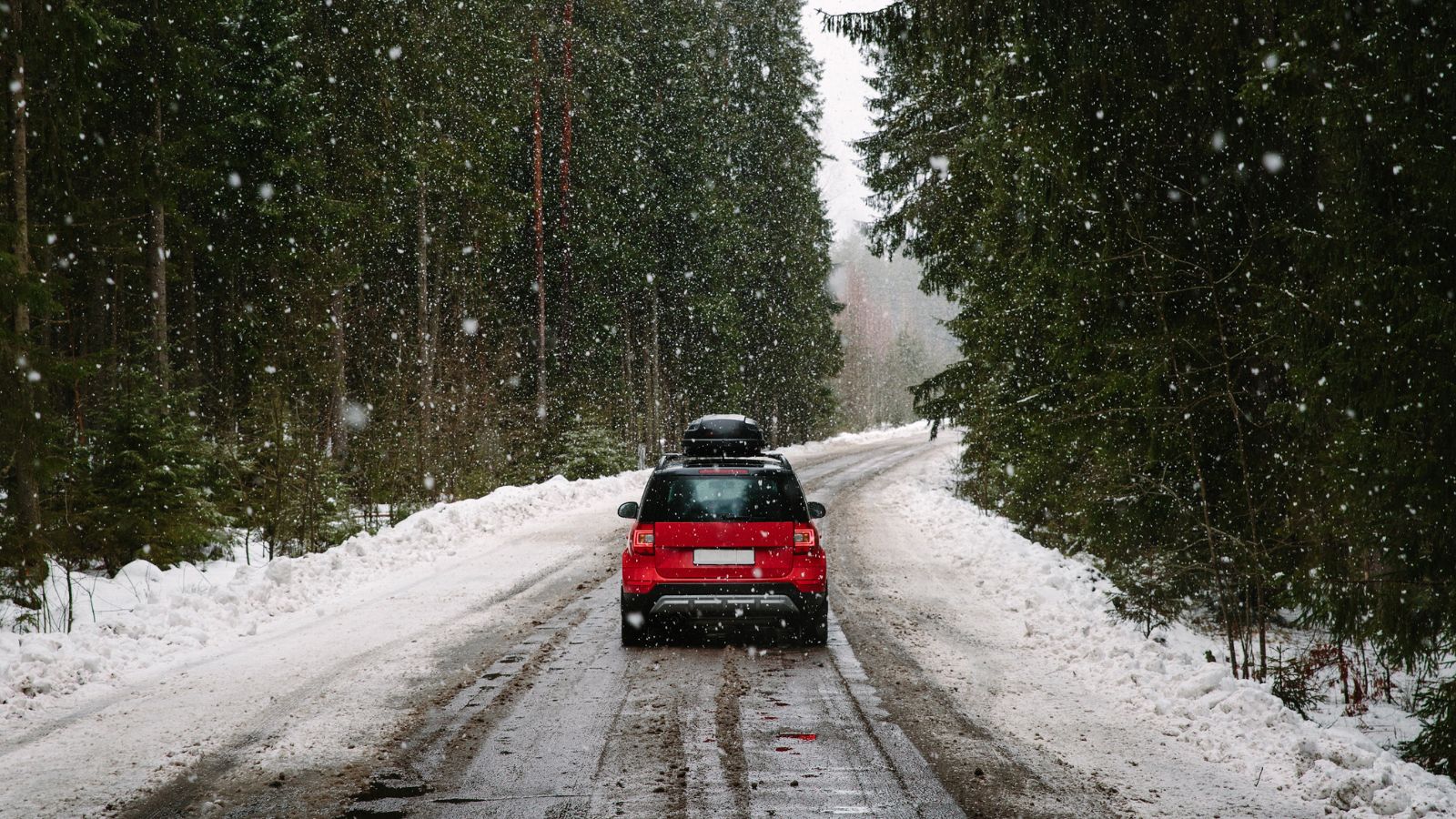
Suspension stiffness and suspension travel are related, but they are not identical. A vehicle can have comfortable springs yet still possess relatively little usable wheel travel. When one wheel climbs onto a hard snow ridge while another drops into a rut, greater articulation allows the suspension to accommodate the difference while keeping more of the tires engaged with the surface.
A 2026 SAE paper examining passenger-vehicle off-road capability described articulation as a critical performance factor because independent wheel movement helps maintain contact and stability on uneven terrain. Jeep defines articulation in similar terms: keeping as many tires as possible on the ground allows power to be transferred more efficiently. Deep, tracked snow can create exactly this kind of uneven surface, particularly on unmaintained roads and driveways. A vehicle designed almost exclusively for smooth pavement may reach the limit of its suspension travel sooner, unloading a wheel and leaving its electronic traction systems with less physical grip to work with. Good articulation cannot manufacture traction, but it helps preserve the contact needed to use whatever traction exists.
Weak Defrosting and Winter Visibility Hardware Make Snow Driving Worse
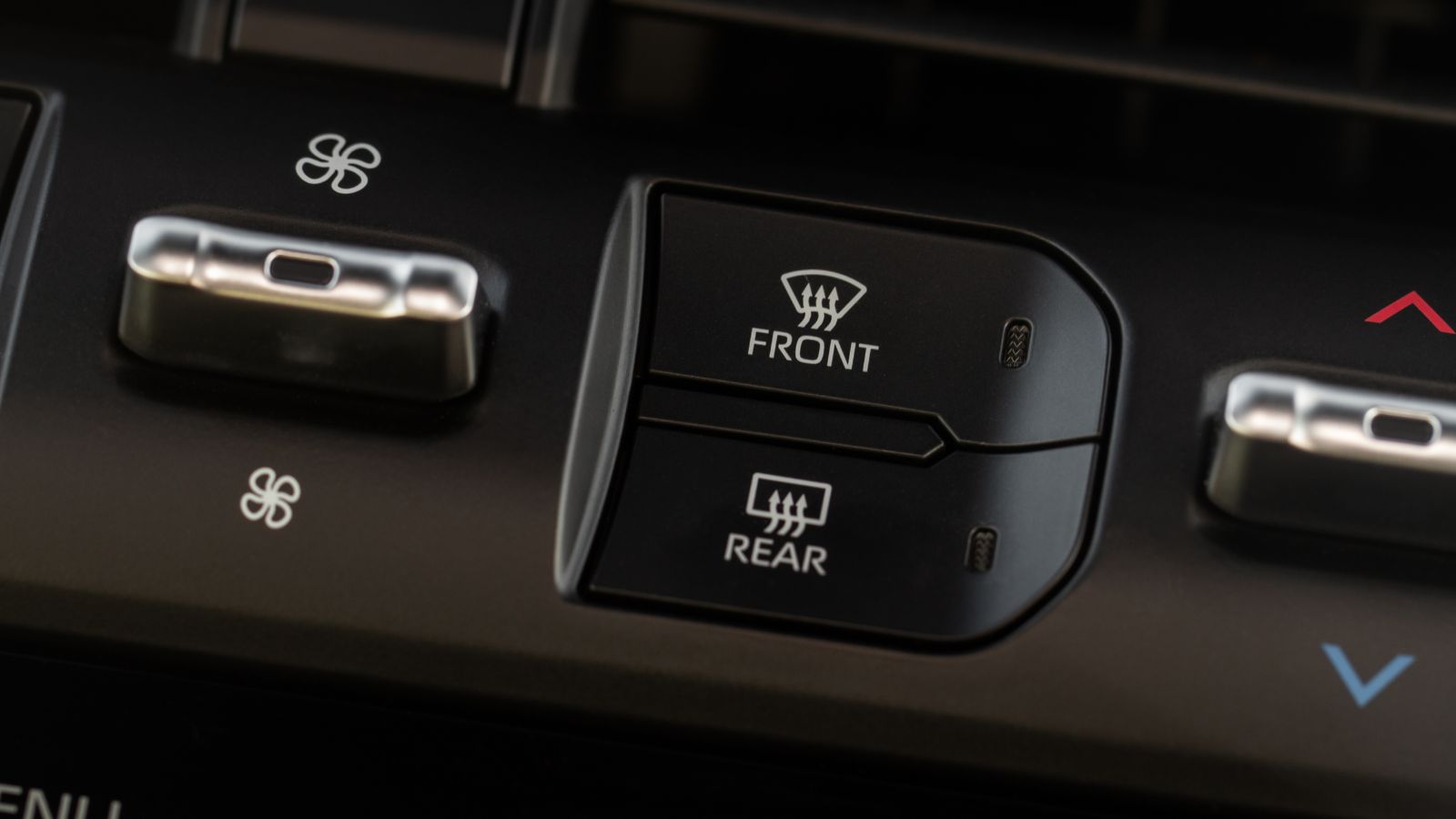
A vehicle can have excellent AWD, intelligent differentials and sophisticated stability software yet still be miserable in winter if the driver cannot see clearly. Falling snow, freezing spray, interior condensation and frost place heavy demands on the heating, ventilation, windshield-wiper and washer systems. Visibility therefore becomes a genuine part of winter capability rather than simply a comfort issue.
Transport Canada specifically advises drivers to clear frost and fog from all windows and lists a properly functioning heater and defroster among important winter-preparation checks. It also recommends good wiper blades and washer fluid rated for very low temperatures. Windshield defrosting is important enough that U.S. federal vehicle standards prescribe performance requirements for defrosting and defogging systems. Real-world differences remain, however: vent placement, blower capacity, heated glass areas, wiper design and washer performance can make one vehicle much easier to keep clear in a snowstorm than another. Tires determine how the car meets the road, but visibility determines whether the driver can safely use any of that capability.
19 Used Cars Canadians Should Avoid in 2026 (Based on Owner Complaints)

Buying a used car in Canada can feel safe until repair bills start stacking up. Owner complaints tell a different story than glossy listings. Transmission failures, electrical problems, and weak winter reliability show up again and again in consumer reports. Many of these issues appear after warranties expire, when owners least expect them. Some vehicles look affordable upfront, but become expensive to keep on the road. Others struggle in cold weather, urban driving, or long highway commutes. Here are 19 used cars Canadians should avoid in 2026 (based on owner complaints).
19 Used Cars Canadians Should Avoid in 2026 (Based on Owner Complaints)

Alanna Rosen is an experienced content writer that focuses on many EV and educational content. Her articles are regularly published on Get CyberTrucked and syndicated on large publications.